A spicy start: Oklahoma town loving first restaurant in more than a decade

By Samson Tamijani

Click here for updates on this story

    OILTON, Oklahoma (KJRH) — While Oilton has grappled with the departures of police chiefs and revenue shortfalls recently, its first local restaurant in 11 years offers hope and appetites.

Lalo’s Grill On 99 is Oilton’s first sit-down diner that’s not a gas station or a two-table pizza chain. It’s something that Oilton’s mayor hasn’t seen around town since she was in high school.

“If you go by there on any lunch or dinner time, you can’t hardly find a table,” Mayor Julia Bagwell told 2 News Oklahoma about the grill, which had its soft opening on April 22.

City Hall was well aware of its restaurant desert and starving sales-tax revenue dating back for years, Mayor Bagwell said.

“We just made an agreement that they couldn’t turn down and made sure that they got into the restaurant with as little startup costs as possible,” Bagwell said.

Brian Montoya and Kayla Young of Mannford checked out the restaurant for the first time on April 28.

“I’m so happy for them. Their food truck is fantastic. Everything about that was great. I really love the carnitas,” Montoya said.

“The food has always been great, so for them to just have their spot here, we had to make the drive and just support local, you know? We’re all for that,” Young said.

Co-owner Angie Macias said she’s just fine opening in one of the smaller towns in the area.

“We just came to love it. I mean, I’m from Mannford. My heart’s with Mannford. But we love it here too,” Macias said, adding that the business’s first Monday open was a little too successful.

“We thought we bought enough and we stocked this kitchen enough for at least a week, and we ran out of food,” she said. “So we’ve had a very good response, and I really appreciate it.”

Please note: This story was provided to CNN Wire by an affiliate and does not contain original CNN reporting. This content carries a strict local market embargo. If you share the same market as the contributor of this article, you may not use it on any platform.

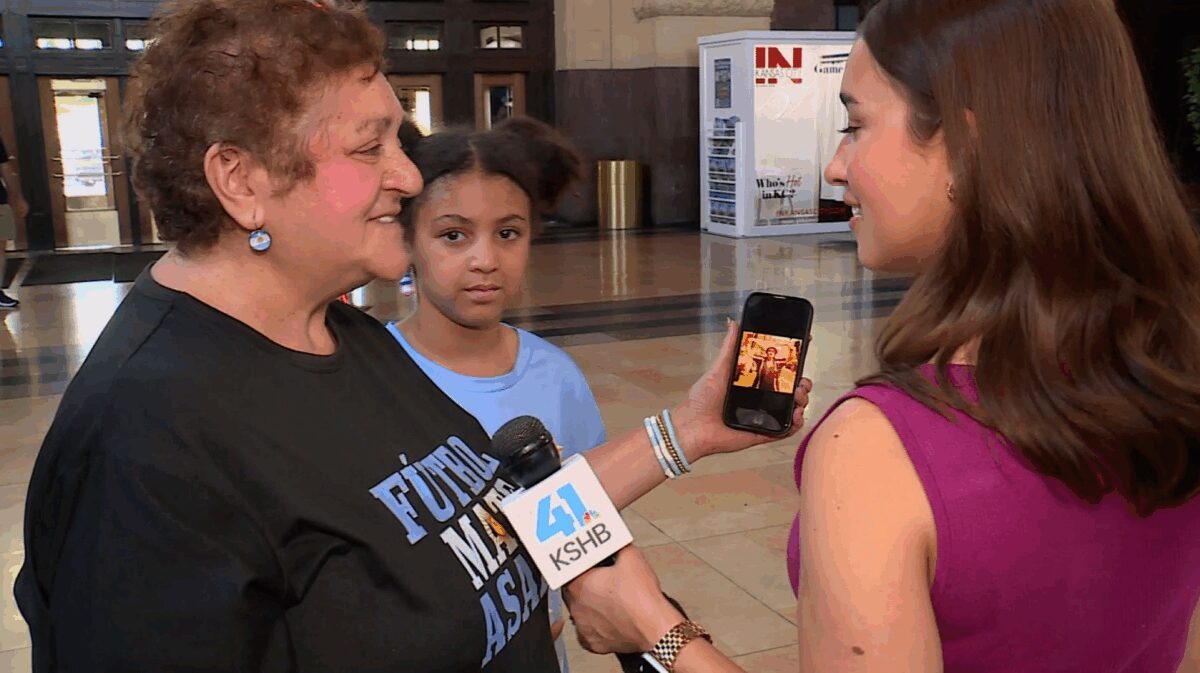
The Colorado Springs Police Department is testing an AI agent for staffing its non-emergency line

By KOAA, Colorado Springs

Click here for updates on this story

    4/30/2026 (KOAA) — COLORADO SPRINGS, Colo. (KOAA) — The Colorado Springs Police Department (CSPD) is turning to an AI software to answer calls for its non-emergency line: (719) 444-7000. This is the phone number people are encouraged to call for non-emergency public safety concerns that are non-life-threatening.

The first round of testing for the AI system took place Wednesday from 9:00am to 5:00pm. If someone calls during the next testing day, they’ll be greeted by the AI system called “Sarah”, it’s an acronym for “Service, Assessment and Response Assistance Helper”.

Callers may not realize it’s AI, but CSPD said the point of the software is about efficiency and improving response times for emergencies. Colorado Springs Police Deputy Chief John Koch said the non-emergency lines can sometimes get calls completely unrelated to public safety; people asking for directions to a gas station or even asking the start time for a Nuggets game.

“If a call taker is on the telephone for that call, they’re not able to immediately pick up a 911 call,” Koch said.

CSPD is testing the technology before fully implementing it, but it’s something that will likely be here to stay. After testing the system, an evaluation process will take place before it is fully rolled out.

“This is a system that we have purchased; we are testing it to ensure that it meets the requirements that we have and that it will do what we need it to do for our community members,” Koch said.

During the testing period, the department said activity will be monitored by communications personnel, and this will have no impact on 911 services.

CSPD has faced staffing issues both with its communications center, which takes the 911 and non-emergency line calls, and with officers. Koch said the goal is not for the AI system to eliminate call taker jobs, but to make it a more efficient process.

“The system has programmed safeguards into it where if it anticipates or hears that there’s an emergency situation, a disturbance, a fight, some type of violence, it routes that call immediately to a 911human call taker to be able to process it and first get responders out,” Koch said.

This is just the latest piece of technology the department has implemented over the years. CSPD, in a recent press conference with Mayor Mobolade, Chief of Police Adrian Vasquez discussed some of the technological advances the department has made and how that has impacted response times across the city.

Please note: This story was provided to CNN Wire by an affiliate and does not contain original CNN reporting. This content carries a strict local market embargo. If you share the same market as the contributor of this article, you may not use it on any platform.
Governor Polis signs bill banning pet stores from selling dogs and cats

By KOAA, Colorado Springs

Click here for updates on this story

    4/30/2026 (KOAA) — COLORADO (KOAA) – On Wednesday, Governor Jared Polis signed House Bill 26-1011 (HB26-1011), Transfers of Certain Pet Animals, prohibiting pet stores in Colorado from selling, leasing, or offering to transfer ownership of a dog or a cat.

Governor Police says this bill aims to target harmful breeding practices by puppy mills and protect the health of consumers and pets.

“Colorado’s furry four-legged friends deserve loving homes. We are stopping the harmful overbreeding of dogs and cats in terrible conditions in the puppy mill industry, and encourage Coloradans to adopt, not shop or purchase from a legitimate breeder. I am grateful to the sponsors of this bill for standing up for these animals, helping them find a forever home in our Colorado for all.” Governor Polis The new law, which will go into effect on January 1, 2027, will require pet stores to stop selling dogs or cats.

The following exceptions are below:

law enforcement animals can still be sold to a governmental agency adoption of a dog bred or trained for hunting can still be purchased/adopted by those with a valid hunting license guide, signal, or service dogs can still be purchased an animal shelter or a pet animal rescue may still sell animals health-related research facilities can purchase/adopt an animal

The video player is currently playing an ad. You can skip the ad in 5 sec with a mouse or keyboard The law says original breeders can still sell dogs and cats, but a bona fide owner, that isn’t the original breeder, can only sell a dog or cat to a new owner as long as they don’t do it more than three times per calendar year.

While pet stores will be prevented from selling these pets, HB26-1011 says stores can have displays by a licensed animal shelter or pet rescue as long as the store doesn’t receive a fee related to the display.

Dogs and cats that are displayed must be sterilized per state and local regulations.

The bill says that commercial breeding facilities, or puppy mills, are harmful to both animals and consumers, and current federal regulations aren’t enough to prevent animal cruelty to animals in these facilities.

Please note: This story was provided to CNN Wire by an affiliate and does not contain original CNN reporting. This content carries a strict local market embargo. If you share the same market as the contributor of this article, you may not use it on any platform.
90-year-old Eaton Fire survivor returns home with her best friend of 50 years

By Kara Finnstrom

Click here for updates on this story

    LOS ANGELES, California (KCAL, KCBS) — Georgia Dooley’s granddaughter said there was no time to waste with the rebuild of her 90-year-old grandmother’s home after it was destroyed in the Eaton Fire.

The two hope to start moving in over the next couple of weeks, and for Dooley, one of the highlights of her homecoming was sharing the moment with her bestie.

Dooley was born in Mississippi, but the green house she bought in Altadena, which the Eaton Fire destroyed, is home.

“It was very hard for African-Americans to have ownership here, and she has had hers since she was pretty young,” Christina Smith, Dooley’s granddaughter, said.

Her family prayed she’d see the rebuild after losing a lifetime of belongings and fleeing for her life. “The house was full of smoke, and then when we got out, the fire blew up under the car. It was just terrible,” Dooley said.

Her son, Lawrence Coleman, said contractors pushed for a 14-month rebuild, acknowledging the need to get his mom home as soon as possible.

Through life’s big and little moments, Janice Thomas and Dooley have been there for each other since meeting at work half a century ago. Smith said her grandma needed her bestie with her at homecoming. “I call them my golden girls,” she said as the two friends strolled up to the house.

“I gave her a ride home, and ever since then, we have been soulmates, friends,” Thomas said.

Dooley’s bestie is already back in her remediated home, blocks away. “With me and you, and the grace of God, we could do anything,” Dooley said.

Please note: This story was provided to CNN Wire by an affiliate and does not contain original CNN reporting. This content carries a strict local market embargo. If you share the same market as the contributor of this article, you may not use it on any platform.

Colorado to crack down on “highly problematic,” contaminated marijuana products

By Karen Morfitt

Click here for updates on this story

    DENVER, Colorado (KCNC) — State regulators are putting Colorado’s marijuana industry on notice.

They’re warning bad actors who are bringing hemp‑derived, often chemically-altered products into the state’s legal marijuana system that there will be consequences.

Regulators say they’re seeing the practice more frequently, putting public health at risk while also costing the state tax revenue. Exactly how much money is being lost, however, remains unclear.

CBS Colorado Investigator Karen Morfitt began looking into the issue last fall after federal agents swarmed a warehouse on the northern edge of Denver.

“You will see people in clan lab uniforms on the site; they are there to assess and address any potential hazardous threats,” one federal official told members of the media in November 2025.

The facility targeted by the Drug Enforcement Administration and the Environmental Protection Agency belonged to Hau Processing.

The company is legally allowed to produce a variety of hemp‑derived products, including synthetic THC, as long as those products are shipped out of Colorado and sold elsewhere.

The company has past citations from the EPA for exposing staff to methylene chloride, a toxic chemical commonly used in paint thinner known to increase cancer risk.

Methylene chloride can also be used to chemically convert hemp into THC.

The same owner also operated a marijuana business called Ware Hause Cannabis. In 2024, its products were recalled after state regulators discovered vape cartridges contained illegal pesticides and methylene chloride.

A tainted supply chain can put other companies at risk. CBS Colorado visited a local Denver company following the rules.

“We ask for a (certificate of analysis). It ensures the potency we’re looking for, but also that there are no contaminants — no yeast, no molds,” Mark Krieger, general manager of The Clear Brands, said.

Inside the facility, cannabis material is weighed precisely, processed, and rolled by specialized machinery.

The equipment, which rolls double‑ended joints and cuts them into individual one‑gram products, produces thousands of joints a day.

The machine, unique in Colorado, costs nearly $300,000 — an example of what operators call “the cost of hypercompliance.”

“You should see this type of compliance in every manufacturer,” Krieger said. “We like to play by the book.”

Rich Batenburg, founder and CEO of The Clear Brands, says competitors who skirt the rules gain an unfair advantage.

“I can’t compete with somebody who is skirting the rules,” Batenburg said.

He said suspiciously cheap or unusually available materials in a tight market are red flags.

“When a supplier shows up with something that is dramatically less expensive or abundantly available in a constricted market, it’s a ‘buyer‑beware’ situation,” he said.

What appears to be standard distillate — liquid THC refined from cannabis flower — may not always be what it claims to be.

Recent testing on distillate from one of their potential suppliers showed high levels of delta‑8 THC, a sign that it was likely converted from hemp; products that shouldn’t be in Colorado’s marijuana market.

“That is not natural. I shouldn’t be seeing that in any kind of compliant distillate derived from cannabis alone,” Compliance/Lab Director, Alex Wiggans, said. “I rejected that oil. We did not buy it.”

Every one of their products starts as a plant and is tracked at each step through the state’s seed‑to‑sale system, known as the MED Marijuana Inventory Tracking System or METRC, before reaching consumers.

“There are literally tens of thousands of records going into that system every day,” Batenburg said.

When the data doesn’t add up, regulators and industry leaders say it can signal two potential problems: tax evasion or illegal products being laundered into the legal market.

“To describe it as ‘laundering’ is probably a good analogy,” Batenburg said. “It’s certainly provocative — and probably dead on.”

The alleged scheme is known as inversion. Operators enter marijuana waste into the tracking system, discard it, then replace it with cheaper, sometimes chemically-altered, hemp‑derived product.

The practice contaminates the legal supply chain, threatens public health, and erases tax liability, industry insiders and officials say. Money meant for schools, roads, and community programs never reaches its destination.

“There was a lot of price compression,” said Chuck Smith, CEO of Colorado Leads, a nonprofit cannabis trade group. “People were saying, ‘I know how much it costs to grow a pound of cannabis and make a product — how can others be making money at those prices?’ The math just doesn’t math.”

Smith said the risks of inversion are clear.

“First and foremost, there’s a potential threat to public safety for consumers and patients,” he said. “Second, it hurts all the good actors who are trying to play by the rules in an already difficult industry.”

State regulators say they’ve investigated this type of activity before.

“It is serious,” said Dominique Mendiola, director of the Colorado Marijuana Enforcement Division. “It involves a pattern of conduct that we see as highly problematic.”

In mid-April, the agency issued a public bulletin warning the industry about compliance issues that pose “serious risks to public safety, market integrity and the tax revenue framework supporting Colorado’s regulated marijuana industry.” Mendiola said the agency is focused on prevention as much as enforcement.

“It’s not just about catching activity that’s occurring. It’s about being proactive and doing everything we can to prevent these risks from being introduced,” she said.

Changes to the state’s testing requirements are scheduled to take effect this summer, allowing regulators to require specific tests designed to better detect inversion.

Businesses that cannot explain discrepancies could face product holds, license suspension, or criminal investigation.

“These systems are in place to protect the integrity of the industry and ensure safe products,” Smith said. “Colorado has the most rigorous regulatory framework in the country, and we need to protect that.”

CBS Colorado’s investigation into the issue started with that raid on Hau Processing. Thanh Hau is the owner of that facility as well as Ware Hause Cannabis.

Nearly 20 years ago, Hau was indicted on 59 counts related to drug trafficking and money laundering. He later pleaded guilty to two federal counts of conspiracy to distribute marijuana.

He was later allowed to apply for a social equity license and legally sell marijuana in Colorado.

Following the state recall, Hau surrendered that license.

CBS Colorado attempted to reach Than Hau for comment. He declined.

For companies following the rules, the state’s crackdown is welcome — though many question the timing.

“I’m happy they’re here,” Batenburg, of The Clear Brands, said. “You could argue, ‘what took so long?’ But that’s crying over spilled milk. They have a plan, and it will get better going forward.”

A recent state health department inspection report obtained by CBS Colorado says samples taken from Hau Processing in November showed some of its products did not come from hemp at all and were entirely chemically manufactured, a practice not allowed in Colorado.

Please note: This story was provided to CNN Wire by an affiliate and does not contain original CNN reporting. This content carries a strict local market embargo. If you share the same market as the contributor of this article, you may not use it on any platform.

Oysters raised by students added to oyster reef

By Colter Anstaett

Click here for updates on this story

    HAMPTON, Virginia (WTKR) — Hampton City Schools elementary students excitedly crowded the bank of the Hampton River Wednesday morning to watch the oysters they raised in their classrooms be dumped into the river. Roughly 1,000 oysters were added to an oyster reef in the river near the Elizabeth Lake Estates pool.

This is part of a unique project offered by the school district.

“This is actually the first oyster sanctuary reef in the Hampton River,” Elizabeth Lake Environmental Stewardship Committee Member said.

The committee created the reef several years ago.

“Out of that came the awareness that we wanted to do even more for our neighborhood. So, from the reef we started to design and build other projects so that we, as a community, could enjoy them and so that we could also help nature,” Neubert explained.

Before the oysters were added, the HCS students tossed oyster shells into the water.

“I try to teach the children that no one is too small to make a big difference in the world,” said teacher Missy Powell-Riedl.

She also teaches her students about oysters and how they can help the environment.

Kindergartner Andrew Shaheen had been paying attention.

“They suck up all the dirt and water,” Shahenn responded when asked what oysters do. “[They’re important] so we keep our water clean.”

The president of the neighborhood’s civic association, Kurt Wallace, said the oysters are working.

“We have seen the water clarity,” Wallace explained.

That could be good news for the Chesapeake Bay, too. The river drains into it. According to the latest data, the bay’s health was given a grade of C in 2025, down a bit from 2024.

“I’m excited about what’s happening here and we have the opportunity to be a part of something much bigger than us,” said Wallace.

Ten schools and 15 teachers participated in the 2026 event, according to Hampton City Schools. Each class that raised oysters started with 1,000 spat.

As of 2026, 170,000 oysters had been released into the water since 2016.

Please note: This story was provided to CNN Wire by an affiliate and does not contain original CNN reporting. This content carries a strict local market embargo. If you share the same market as the contributor of this article, you may not use it on any platform.

‘I might have died’: Student’s car hit by gunfire near high school

By Jay Greene

Click here for updates on this story

    NORFOLK, Virginia (WTKR) — A day after gunfire rang out near Granby High School, a student is still trying to process how close she may have come to danger.

Sadie Amodio showed News 3’s Jay Greene the damage to her car, parked along Harvard Street during Tuesday afternoon’s shooting.

“…if that had happened two hours earlier I might have died…” she said.

Standing next to the vehicle, Amodio pointed out the bullet damage — one round through the hood, another through the side, and a third into the driver’s door.

At the time, she was inside the school taking a test. She said students were later told they wouldn’t be able to return to their cars right away.

“They told us that we’d have to get a ride home because there was police cars here and we couldn’t get access to our cars,” she said.

What makes the situation even more surreal, she said, is how she found out her car had been hit.

“My friends were like, ‘oh my gosh, what if your car got shot?’ And I would be like, ‘yeah, that, that would suck, that would be pretty bad.’ And then later that night I came to find out that it got shot 3 times,” she said.

According to Norfolk Police, shots were fired around 1:20 p.m. Tuesday in the 200 block of Harvard Street, just steps from campus.

Within minutes, both Granby High School and the nearby elementary school were placed on lockdown.

Norfolk Public Schools says families were first notified just after 2 p.m., with a broader message sent later in the afternoon. The lockdowns were lifted around 2:46 p.m., and buses began leaving campus shortly after.

For some parents, that timeline didn’t match what they say they were experiencing in real time.

Penny Martin, who has three children at the school, said she first learned about the situation from her daughter — not the district.

“I called her phone because I still hadn’t heard from the school yet… I’ve now talked to two of my children… I can’t get a hold of the 3rd… and still no call,” Martin said.

She described the experience as chaotic and frightening as she tried to reach all three of her children.

“I’m in full blown like hysterics trying to find my children… nobody’s saying anything… I had no idea what was going on,” she said. “We’re all still in just complete shock at this point of how this happened.”

Police say no one was injured, but three vehicles were damaged by gunfire. Investigators are still working to identify those responsible, and no charges have been announced.

Anyone with information is asked to contact Norfolk Crime Line at 1-888-LOCK-U-UP or submit a tip through the P3Tips app.

For Amodio, the reality of what happened is still setting in.

“It’s kind of surreal to see it in real life… I mean like literally somebody shot my car… I would have never thought that I’d actually have to say that, and it’s just something that happened I guess… I’m just glad I wasn’t in it, because I mean, if that had happened earlier, I don’t even know… it’s just crazy to think about.”

Please note: This story was provided to CNN Wire by an affiliate and does not contain original CNN reporting. This content carries a strict local market embargo. If you share the same market as the contributor of this article, you may not use it on any platform.

Sheriff: Woman arrested after children found with duct tape over their mouths, noses

By Cherish Walters

Click here for updates on this story

    WAYNE COUNTY, Kentucky (WLEX) — The Wayne County Sheriff’s Office reports that a woman was arrested on Tuesday afternoon after two children were found with duct tape “across their mouths and nose areas.”

According to the sheriff’s office, they received a complaint from dispatch that a woman was reportedly “screaming at and yanking on a child while being parked in the back parking lot of the Wayne County Judicial Center.”

The sheriff’s office, along with the Monticello Police Department, responded to the area and conducted a traffic stop on the vehicle as it was leaving the parking lot.

According to the sheriff’s office, when officers made contact, they found four children, two of which had duct tape across their faces.

The sheriff’s office says that officers immediately removed the tape, and while interviewing the woman, she reportedly stated that “it was her children and she could discipline her children however she wanted, and this act was routinely done.”

As a result, the sheriff’s office says that Anna Benscome was arrested and charged with two counts of first-degree strangulation (domestic violence), two counts of endangering the welfare of a minor, and two counts of first-degree wanton endangerment.

According to the sheriff’s office, Benscome was booked in the Wayne County Detention Center, and an investigation has been opened with the Kentucky Department of Child Protection Cabinet.

Please note: This story was provided to CNN Wire by an affiliate and does not contain original CNN reporting. This content carries a strict local market embargo. If you share the same market as the contributor of this article, you may not use it on any platform.

UK student charged with 1st-degree assault after bar fight left victim with brain bleed

By WLEX Web Staff

Click here for updates on this story

    LEXINGTON, Kentucky (WLEX) — A University of Kentucky student was arrested April 28 on a first-degree assault charge stemming from an April 10 attack at a Lexington bar that left the victim with a fractured skull, brain bleed, and possible traumatic brain injury, according to court documents.

20-year-old Hunter Hawthorne was taken into custody by the Lexington Police Department on a complaint warrant issued by Fayette District Court.

A second citation issued the same night charged Hawthorne with criminal possession of forged instruments in the second degree after investigators reportedly found nine fake identification cards in his bedroom during the execution of a search warrant.

According to a criminal complaint filed by a Lexington Police Department investigator, officers were called to UK Hospital on April 10 at around 6:30 a.m. in reference to an assault that had occurred earlier that date.

Officers met with the victim in the emergency department, where he was accompanied by his parents. The victim told officers that he was at a bar with friends when a male college student allegedly began a verbal altercation with one of his acquaintances.

The complaint added that the victim said he “attempted to diffuse the situation and calm the suspect down, and was subsequently punched in the face, rendering him unconscious and causing him to hit his head as he fell.”

He was taken to the hospital, where he received treatment for approximately a week, the complaint reported.

Investigators with the UK Police Department confirmed Hawthorne was a current student and provided identifying information. Using investigative resources, investigators confirmed Hawthorne as the suspect.

An investigator met with the owner of the bar, who provided security footage of the incident. According to the complaint, the footage shows a group of four college-aged males on the top floor of the bar. Two of the subjects appear to be accosting an unknown person across the bar.

The complaint read that the victim can be seen speaking with the suspect, who at some point shoves the victim before turning to address an unidentified individual across the room. The victim then places his hand on the suspect’s back, when Hawthorne allegedly punches him in the facial region, immediately knocking him to the ground.

According to the complaint, the victim was treated at UK Hospital for a severe concussion, possible traumatic brain injury, a fractured skull, and a brain bleed, and was set to continue receiving treatment for head injuries.

“Due to the suspect’s actions, I believe he wantonly created a grave risk of death by assaulting the victim, thus resulting in multiple significant brain injuries, which can commonly become fatal,” the complaint stated.

On the second citation, the complaint stated that during the execution of a search warrant at Hawthorne’s residence, investigators located nine identification cards with various names and pictures, all of which were confirmed to be false.

Hawthorne’s bail was set at $50,000, secured by Fayette County, with a condition of no contact with the alleged victim.

Please note: This story was provided to CNN Wire by an affiliate and does not contain original CNN reporting. This content carries a strict local market embargo. If you share the same market as the contributor of this article, you may not use it on any platform.

15-year-old catches record-breaking golden rainbow trout in West Virginia

By Michael Guise

Click here for updates on this story

    BUCKHANNON, West Virginia (KDKA) — A 15-year-old boy in West Virginia caught a record-breaking golden rainbow trout this week.

Hunter Rohr of Buckhannon landed a state record golden rainbow trout on Monday during the West Virginia Division of Natural Resources’ annual Gold Rush event, the agency said in a news release. The 28-inch, 11.84-pound fish set a record for both length and weight, according to officials.

Gerald Estep held the previous record for length after he reeled in a 27.5-inch golden rainbow trout in 1987 at Stonecoal Lake in Lewis County. Charles Lilly Jr. held the previous weight record after nabbing a 9.72-pound golden rainbow trout during the Gold Rush event in 2023 at Little Beaver Lake in Raleigh County.

Rohr caught the record-breaking fish on Monday in the Smoke Hole section of the South Branch of the Potomac River in Pendleton County, according to the news release. He used an egg sack on a 4-pound test line. WVDNR District 3 Fisheries Biologist Jim Walker certified the catch.

“We are proud to recognize Hunter’s accomplishment,” said Brett McMillion, director of the WVDNR. “His record-setting golden rainbow trout showcases the many fishing opportunities here in West Virginia and demonstrates the passion anglers of all ages bring to the sport.”

The WVDNR is in charge of tracking records for the largest fish of each species by length and weight that are caught in state waters. Anglers 15 and older in West Virginia must have a fishing license.

What is a golden rainbow trout? According to the WVDNR, the golden rainbow trout is “one of the most treasured fish” in the state. It is known for its bright yellow color, and the state stocks the fish in its streams and lakes.

“Getting a golden rainbow trout to bite is difficult, but when they do take the bait you’ll be able to say you found gold in the hills of West Virginia,” the WVDNR said.

Please note: This story was provided to CNN Wire by an affiliate and does not contain original CNN reporting. This content carries a strict local market embargo. If you share the same market as the contributor of this article, you may not use it on any platform.