UM System President worried tight state budget could mean cuts for the university

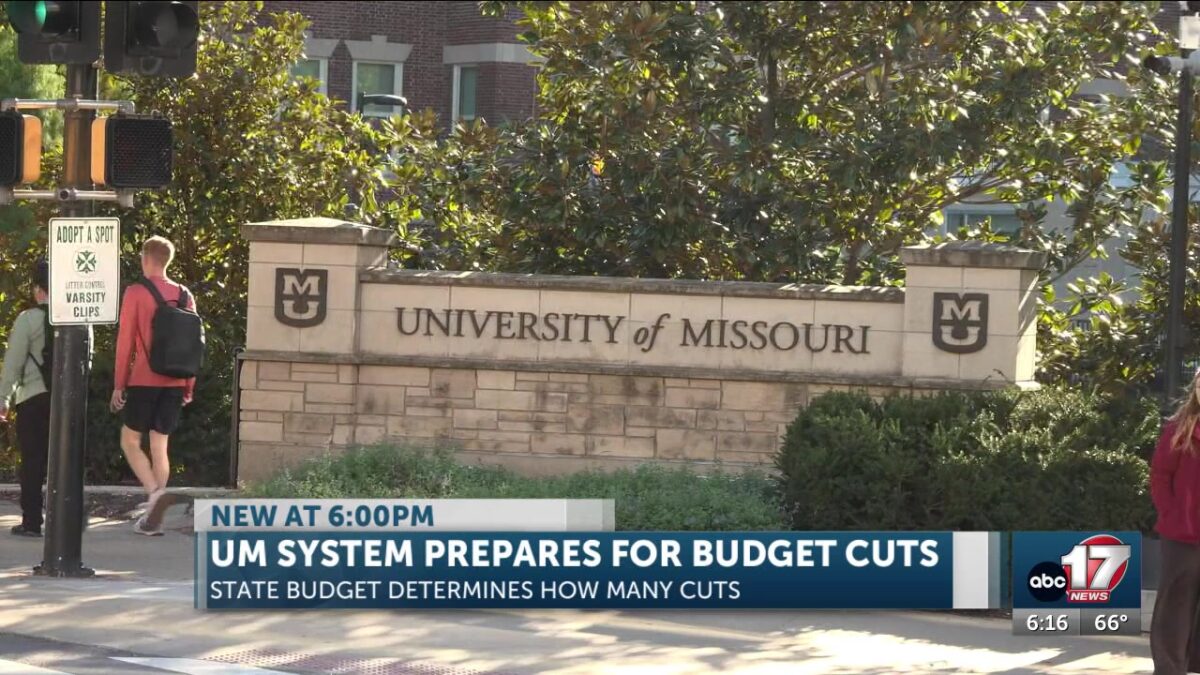
COLUMBIA, Mo. (KMIZ)
University of Missouri System President Mun Choi warned staff and faculty last week that cuts could come as the state works to balance its budget.
In an email sent to faculty and staff a week ago, Choi said reductions in indirect cost returns, reductions for sponsored project expenditures and uncertainty in the state budget have resulted in university leadership carefully reviewing planning.
“While the timing and magnitude of these reductions are not yet fully known, it is prudent for us to take proactive steps now to protect our core teaching, research and engagement missions and position the university to respond effectively as additional information becomes available,” the email states.
Choi told Faculty Council members last month that the state has to address a $1.5 billion budget deficit within the next two years, according to a draft of the meeting minutes. Choi also said university leaders are trying to make the argument that UM is contributing to research, workforce development and engagement.
In the email, Choi wrote that faculty should expect budget cuts this fiscal year, and university leaders will have to prepare cuts to the fiscal 2028 core budget.
MU Faculty Affairs Committee Chair Jo Britt-Rankin said the goal is to not disrupt student’s experience.
“We have faced this in the past, and our goal is always that students would not feel this impact,” Britt-Rankin said.
In June, Missouri Auditor Scott Fitzpatrick urged Gov. Mike Kehoe to balance the budget before deeper cuts are necessary.
Kehoe signed off on a $49.8 billion operating budget in June for fiscal 2027, with $52 million in vetoes, according to previous reporting. Kehoe also restricted about $441.3 million.
Missouri Budget Project’s research director Lindsey Baker said the budget deficit lies within the general revenue, which is about $13 billion, and $15 billion worth of spending, which creates the $2 billion budget deficit.
The rest of the operating fund has already been earmarked for certain projects.
Lawmakers will have the final say on what is cut, but Baker said there are three funding groups that could see cuts: the Department of Elementary and Secondary Education, Medicaid and higher education.
“Higher education does not get a lot of federal funding. They do not get a lot of local funding. They are one of the areas of the budget that is most heavily reliant on general revenue. In the past, when large budget shortfalls come up, higher education is one of those places that lawmakers have gone,” Baker said.
Baker said DESE didn’t request the full amount of funding for public schools. Even during budget shortfalls in the past, DESE requested what it could, and the state chose not to fund it.
“That’s a real, I think, red flag to show you that we’re looking at some pretty significant shortfalls,” Baker said.
Finally, federal changes to Medicaid have shifted much of the funding responsibility to the state, Baker said.
Kehoe is working on budget recommendations, which will be announced at the beginning of the legislative session. The session starts Jan. 7, 2027.
Click here to follow the original article.