Consumer advocates warn Missouri lacks data center cost safeguards, but regulators disagree

COLUMBIA, Mo. (KMIZ)
Large-scale data center projects are popping in rural areas of Mid-Missouri, and opposition has formed to battle them.
However, local opponents so far have had little success in stopping tech giants such as Amazon and Google from building in Mid-Missouri.
Among the major concerns cited by opponents of data centers is the huge energy demand of many of these facilities. Will that demand drive up costs for regular consumers?
The Consumers Council of Missouri believes state regulators do not have strong enough safeguards in place to ensure data center power costs are not falling back on the average Missouri ratepayer.
“The decision makers in Missouri have tended to err on the side of promoting data centers rather than protecting the public,” Consumer Council of Missouri Executive Director John Coffman said. “It’s an ongoing regulatory battle.”
Coffman teaches energy utility law as an adjunct professor at Washington University in St. Louis, and represents the Consumers Council as a consumer advocate attorney, fighting for lower electric rates for residential consumers across the state.
“We [the Consumers Council] really hope that everyday residential households are the priority for our electric system,” Coffman said. “But as these data centers are being built out in a very sudden rate, the power companies are trying to plan ahead and building a whole new fleet of power plants. And so we’re expecting many new power plants over the next few years. And that’s going to bring a lot of stresses.”
Coffman has attended several forums and discussions with private utility Ameren Missouri regarding data centers, where he has continued to advocate for tighter utility regulations. He said he is already seeing an increase in power plant demand drive up electric rates.
“There is a demand for power plant component parts. There’s a demand for power plant construction workers. And this is raising the price of building power plants,” Coffman said. “That is happening right now, even before the data centers are online and part of the grid.”
ABC 17 News asked Ameren if recent or near-future spikes in rates are directly or indirectly tied to data centers.
“As we upgrade aging infrastructure, as we harden our system, as technology improves and we can more efficiently run a system that’s more reliable, that obviously takes investment within the system,” Senior Manager of Economic Development for Ameren Missouri James O’Mara said. “And so investing in new poles and wires and switches, more smart equipment, all of that is the investment that’s driving some of those rate adjustments.”
Ameren is seeking a rate hike of about 10% in 2027, it announced in a July 1 press release. Ameren filed a request with the Missouri Public Service Commission for a $343 million annual electric base rate increase that could raise average residential bills by roughly $13 a month.
According to O’Mara, data centers are not the reason for that request.
“That’s just the general upgrades and investment that we’re doing to the grid to ensure we have that reliable and affordable network that our customers need,” O’Mara said.
He noted that rate increases are common, as improvements are being made across the entire grid.
But the Consumers Council said these “improvements” are linked to what’s needed for data centers, and regardless, come at a time when the centers are predicted to drive up demand for energy in Missouri.
“There is an expectation that energy demand is going to double over a very short amount of time and that data centers could be as much as 50% of the load someday,” Coffman said.
With such high data-driven projections, the council has urged state regulators to be precise in planning for the boom.
The role of ‘large-load tariffs’The biggest point of contention for the council is the requirements outlined in Ameren Missouri’s large-load data center tariff. The Missouri Public Service Commission unanimously approved the contract in November 2025, and it went into effect on Dec. 4.
The agreement aims to shield customers from larger bills that could come from “large load customers” like data centers. The contract defines such customers as using 75 megawatts or more of energy per month.
These are some of the requirements of large load customers outlined in the contract:
Sign a minimum 12-year contract with Ameren, with an option to extend the contract for five more years if the company scales up operations. Cover full grid hookup and infrastructure costs upfront. Pay a monthly demand charge set at 80% of their contracted maximum electric demand, even if they use less electricity than projected. Provide collateral funds equal to two years of minimum monthly bills, in the event of bankruptcy or closure. Give 36 months’ written notice to end service and pay exit and early termination fees.Similar protections were built into Ameren Missouri’s Powering Missouri Growth Plan. The plan, which was approved by the Public Service Commission in November 2025, is designed to ensure high-usage customers pay their fair share.
But the Consumers Council prefers much stricter rules. The consumer advocacy organization urged the Public Service Commission to require 15- to 20-year contract terms, a monthly demand charge of 95%, and 10 years’ credit and collateral.
Under the large-load tariff, Ameren is also allowed “at its sole discretion” to aggregate loads and to grant variances without PSC approval. The Consumer Council opposes this, citing the need for regulatory oversight.
“There have been some rules, some guardrails put in place to make sure that data centers pay their fair share. But we’re not sure that those guardrails are good enough. We’ve proposed more protective conditions,” Coffman said.
Rich Germinder, senior policy adviser at the PSC, said the White House Ratepayer Protection Pledge and Missouri Senate Bill 4 helped lay the groundwork for consumer protections.
Gov. Mike Kehoe signed Senate Bill 4 into law in April 2025. It changed the way the Public Service Commission deals with electric rates and the adoption of electric facilities in Missouri.
“One of the key components related to Senate Bill 4 was changing the integrated resource planning process,” Germinder said. “Basically, understanding that we’ve, for the first time in several decades, have had large-load growth. So what do we need to do from a planning perspective to be more prepared?”
A critical component of the bill was the adoption of the large-load tariff requirement. The law requires Missouri’s investor-owned utilities to establish a contract with the Public Service Commission for the procurement of utility or electric services. Germinder said the tariff ensures better planning and collaboration upfront.
“How do they deal with these large loads, these really large customers that use a lot of energy, use a lot of resources,” Germinder said. “What are the terms and conditions that we need to have in place in order for those customers to come onto the system to protect other ratepayers?”
Consumer protections are also being discussed at the federal level with the Ratepayer Protection Act.
“It largely follows that same kind of model of establishing parameters for when you have large load come on that requires significant investment,” Germinder said. “That they’re paying their share upfront, that the residential ratepayers or the commercial ratepayers are not being saddled with the cost to serve that additional large load.”
Even though these new laws have outlined some safeguards, Coffman said the rate at which large data centers are popping up across Missouri is worrisome.
Public records detail more than a dozen large-scale data center projects in the Show-Me State, with multiple proposed or under construction across Mid-Missouri.
At least five large-scale centers are already up and running. Two in St. Louis — an H5 data center and a TierPoint data center — and three in Kansas City — two DataBank data centers and a Meta data center.
A Google data center is being built in New Florence in Montgomery County. The project includes a $15 billion infrastructure investment from the tech giant, Kehoe announced in May.
Google also announced a $20 million energy impact fund to support programs to drive down monthly energy bills to households in Missouri, previous reporting says.
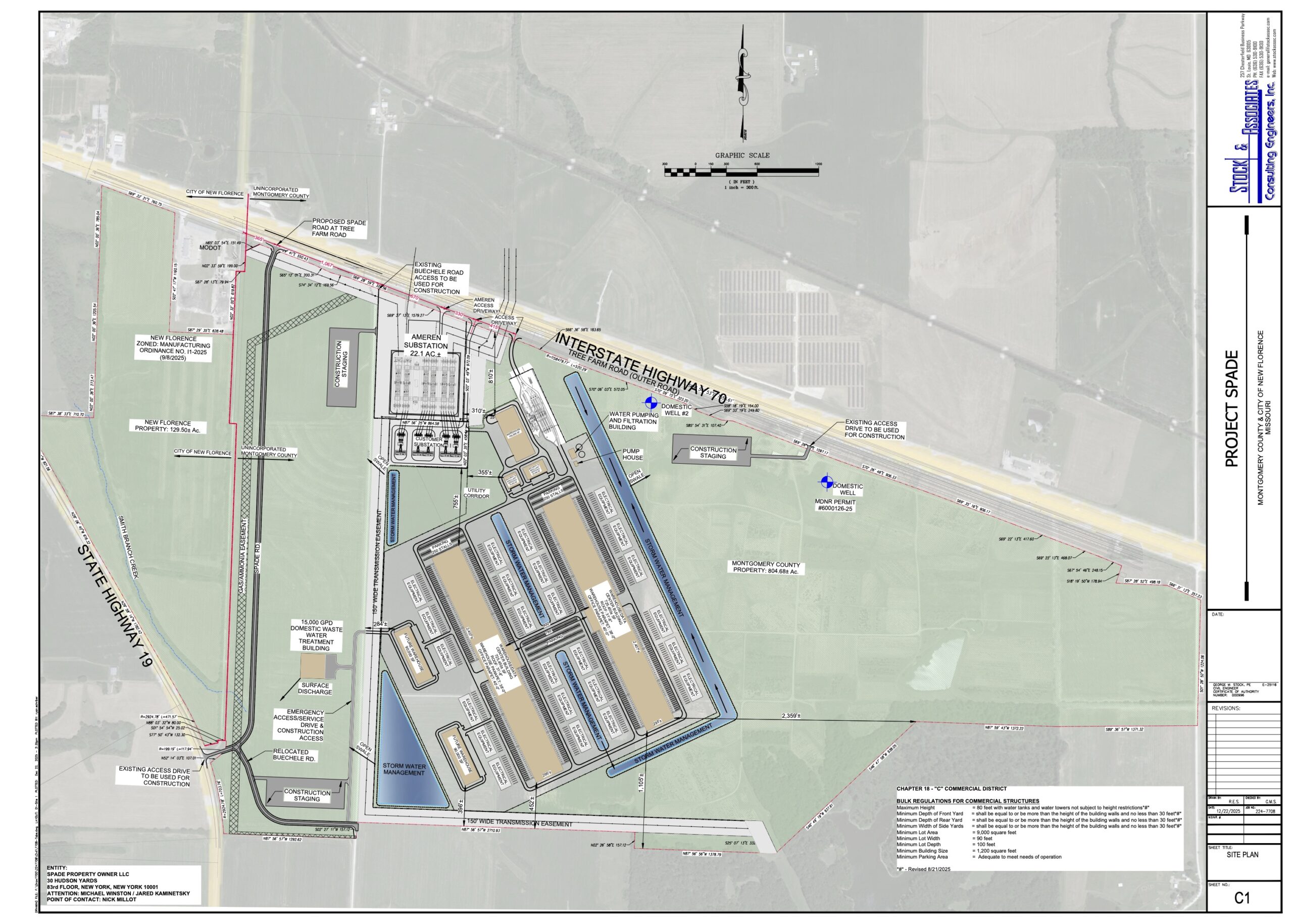 Map detailing plans for Project Spade, a massive, $15 billion data center site in New Florence in Montgomery County. [Courtesy: Project Spade]
The more than 900-acre campus will house about 1.5 million square feet of physical facility space, project documents say. The multi-building operation is set to target a whopping 1.2 gigawatts of utility and power capacity through Ameren.
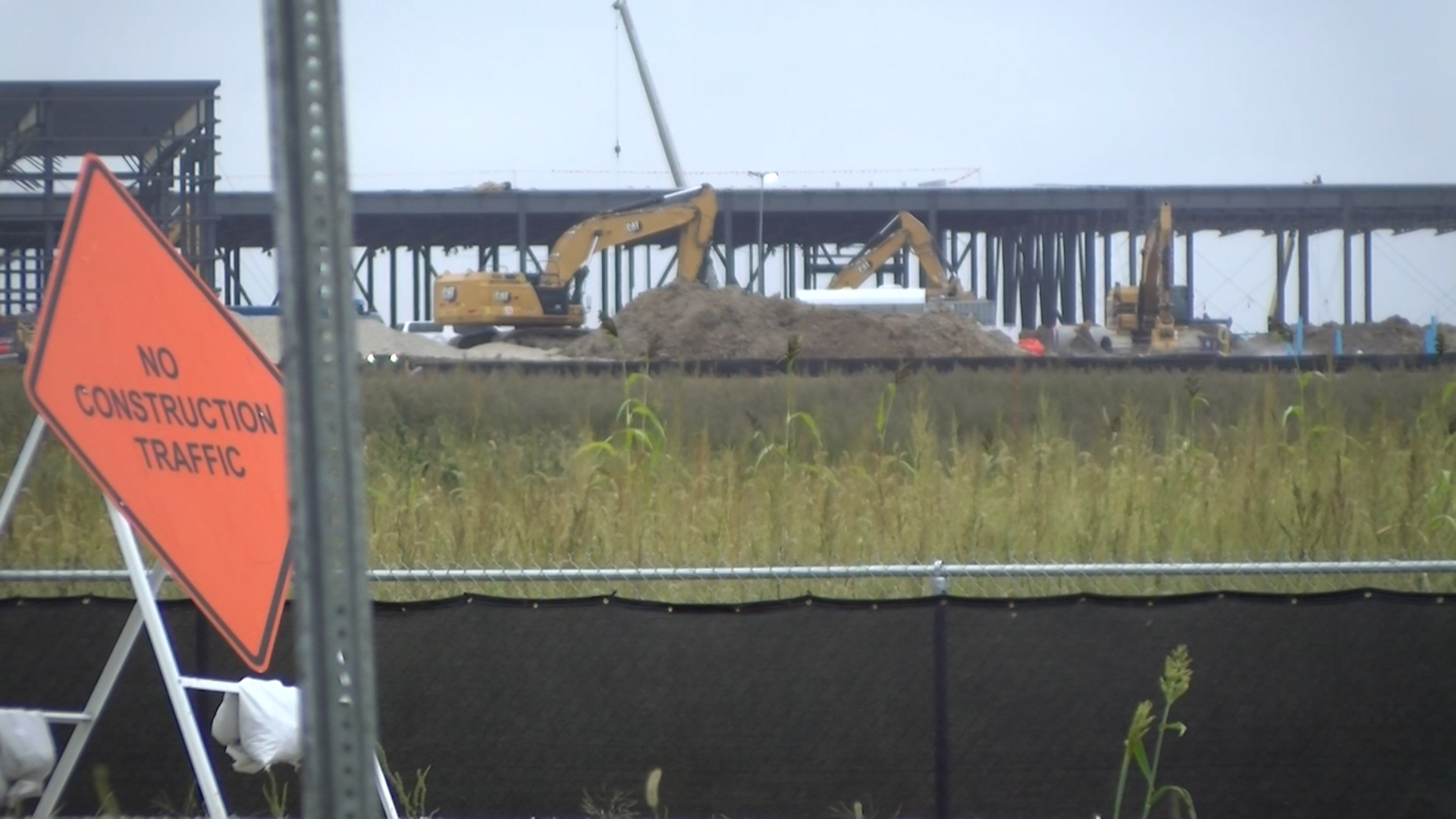 Construction on Google data center in New Florence in Montgomery County on Oct. 14, 2026.
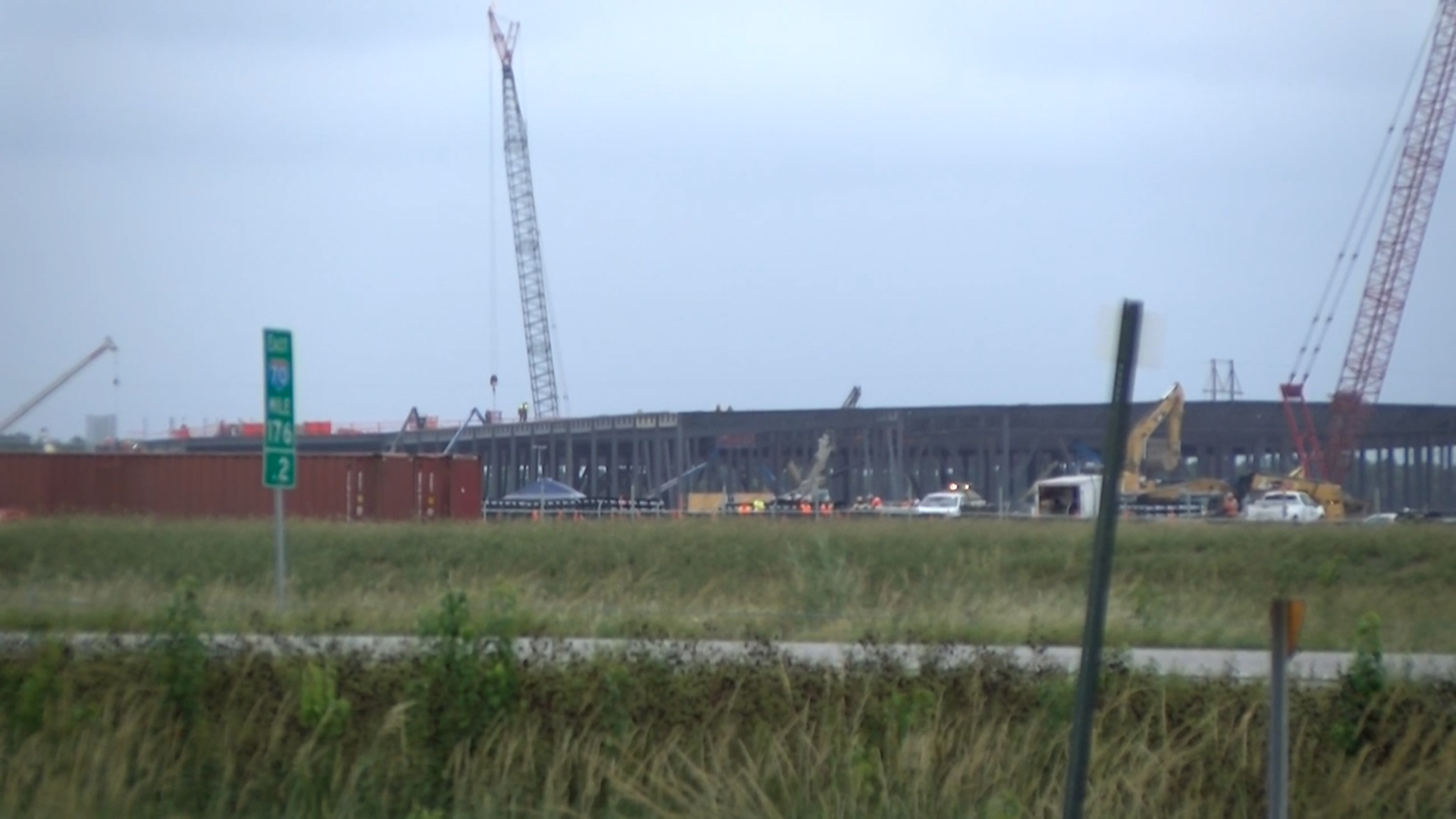 Construction on Google data center in New Florence in Montgomery County on Oct. 14, 2026.
Just across Interstate 70, an Amazon Web Services data center is also under construction in New Florence.
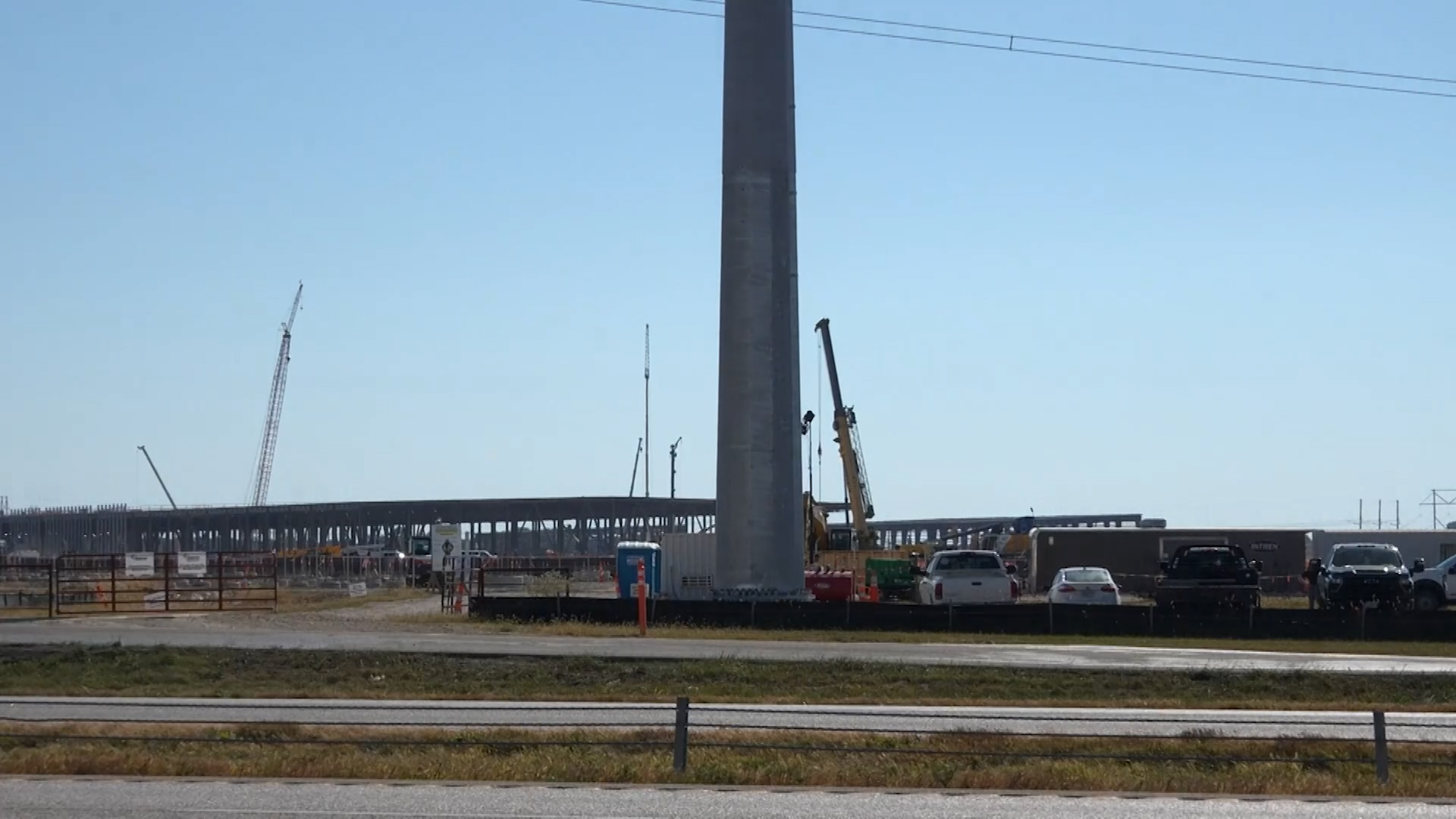 Construction on Amazon data center in New Florence in Montgomery County on Oct. 22, 2026.
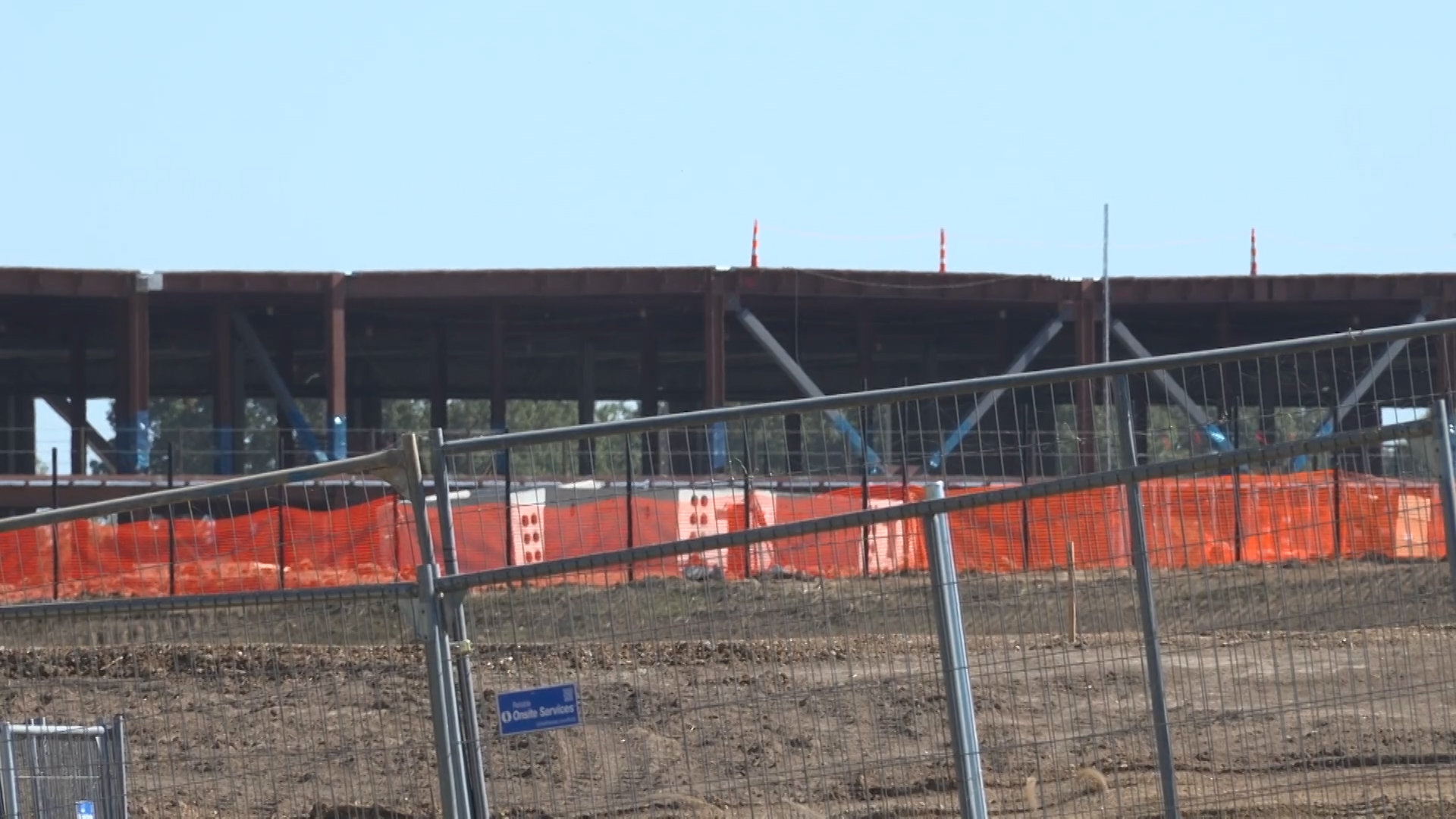 Construction on Amazon data center in New Florence in Montgomery County on Oct. 22, 2026.
The $10 billion Amazon data center campus spans roughly 1,000 acres, according to project documents.
At least 10 data centers have been proposed in Missouri over the past year:
Amazon Web Services data center near Danville in Montgomery County Crusoe data center in northern Callaway County NSIC6 LLC data center in Warsaw in Benton County Nebius AI data center in Independence in Jackson County NSIC6 LLC data center in Springfield in Greene County Wildwood Ranch data center in Joplin in Jasper County Lumon Solutions data center in Marshfield in Webster County Two data center proposals in Nodaway County Armory Innovation data center at the former Armory site in St. LouisCoffman said there has been continued controversy surrounding a possible data center near the old St. Louis Armory.
“The city has put in place some protections that are greater actually than any other data center in the state with regard to environmental and noise type issues,” Coffman said.
Coffman said the center would be methodically placed next to a substation.
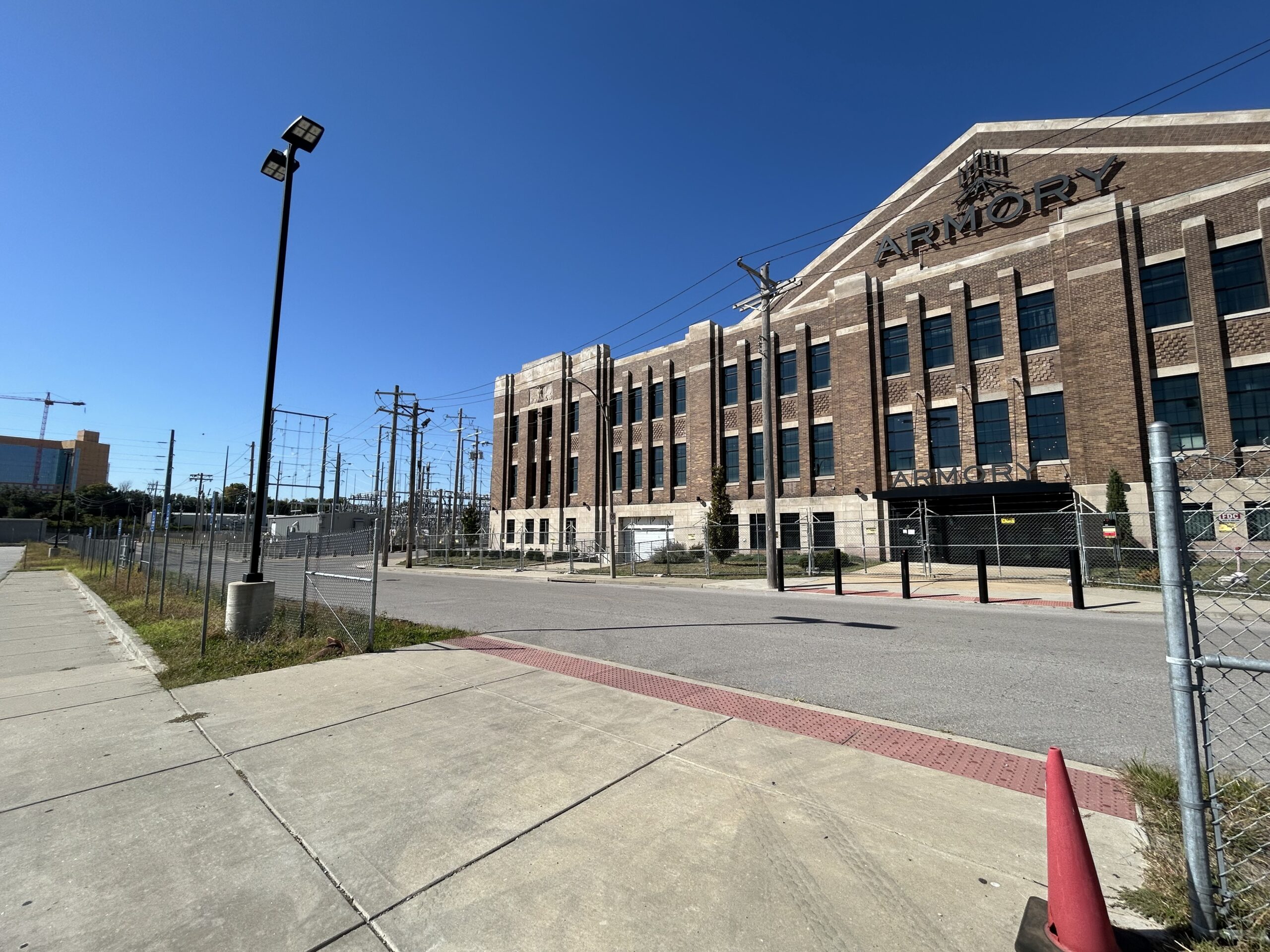 Site of a proposed data center near the historic St. Louis Armory on Oct. 8, 2026. [Haley Swaino/KMIZ]
Under Conditional Use Provisions, the center promises to prioritize the environment, community and finances.
The proposal says the center would source at least 50% of energy from renewables within five years, fully enclose noise equipment in acoustically-treated structures, immediately collect full property tax revenue with no public subsidies and hire St. Louis residents first. Armory Innovation Data Center leaders claim there would be financial penalties for non-compliance.
But across Missouri, who ensures state regulators are in compliance with their safeguard promises?
Ameren and Evergy are regulated by the Public Service Commission.
“They’re ensuring that we’re we’re living up to these agreements. They’re ensuring that we live up to Senate Bill 4 and the law that’s been established. And additionally, we have designated teams that ensure compliance for these customers,” O’Mara with Ameren Missouri said.
‘Left holding the bag’?ABC 17 News asked the Public Service Commission how cost oversight works there. Germinder said the commission works to ensure fairness across all parties and will hold rate case hearings should need be.
“The large-load tariff dictates out the contract between the utility and the customer,” Germinder said. “And then when the utility company comes in for a rate case, all the intervening parties, the Office of Public Counsel, other parties that are interested in the construction of utility rates for investor-owned utilities in Missouri, would have an opportunity to intervene and have their say on, ‘What is the company proposing to implement in this particular rate case and what do we think is appropriate? Where should those costs be assigned?'”
The commission is considering rules to fully implement the changes to its integrated resource planning process, according to Germinder.
“We’re hoping to get those in place as soon as possible so that when utilities come in with their integrated resource plans, that we are having as robust and thorough and thoughtful conversations around the needs to meet the services and to meet the needs of Missourians,” Germinder said.
Coffman remains unconvinced that state regulators are as prepared as they can be.
“There is a lot of concern about what happens if things don’t go as planned,” Coffman said. “What if not all of the data centers come online or come to fruition? And yet the power plants have already been built to pay for those extra power plants, that extra generation capacity. That’s something that could really come back on the public generally.”
While contractually, large-load customers must provide collateral and three-year notice of closure, Coffman said it’s the power plants that could still leave residents to foot the bill.
Coffman worries the “AI bubble” could burst, creating a risk of a sudden market crash if corporate profits fail to match high spending levels.
“We don’t want to be left holding the bag. We don’t want to have higher rates just because of this big push to data centers,” Coffman said.
Some counties have halted data center discussions until more regulations can be put in place.
In Mid-Missouri, Pettis County recently passed a temporary moratorium on data center development. An Oct. 15 press release from the county commission says the moratorium will remain in place “until an economic development study, an environmental impact study, or both, as determined necessary by the Commission, have been completed and the Commission has had a reasonable opportunity to review the findings and consider recommendations.”
The Public Service Commission said changes to how it approaches planning for large-load customers at the state level have set projects like data centers up for success.
As the integrated resource planning process operates now, when a utility submits a plan to the commission, the commission doesn’t have any authority to approve the plan or to disprove components of the plan. The new process would be a contested one, where the commission would be able to make feedback-driven decisions in determining whether a plan is sufficient to meet the needs of customers, safely and at a reasonable rate.
“If the utility has submitted a plan that is insufficient, there will then be a path to correct those deficiencies or to make sure that the utility doesn’t have the opportunity to move forward,” Germinder said.
Overall, the PSC feels changes made to get ahead of the AI boom will prove sufficient.
“I think it’s going to be interesting to see how the policies that are implemented play out over time. No one can predict the future, but you have to be prepared for it. And so we’ve put in the mechanisms in place to be better prepared,” Germinder said.
Click here to follow the original article.