Santa Rosa and San Jacinto Mountains National Monument celebrates 25 years of conservation

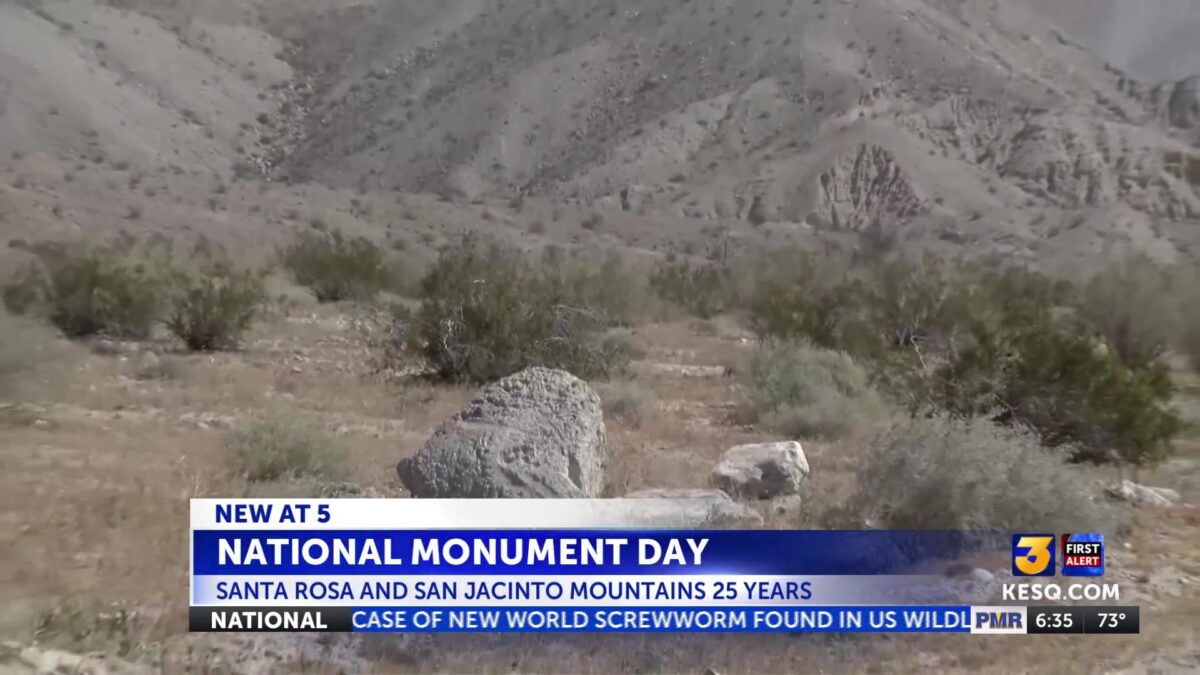
PALM DESERT, Calif. (KESQ) – Nearly 280,000 acres of protected land sit right in the Coachella Valley’s backyard. For 25 years, the Santa Rosa and San Jacinto Mountains National Monument has helped preserve some of the region’s most recognizable landscapes.
On Friday, community members, conservation leaders, and those who helped establish the monument gathered in Palm Desert to celebrate its legacy and look ahead to the challenges of protecting the land for future generations.
The celebration at the Santa Rosa and San Jacinto Mountains National Monument Visitor Center featured guided hikes, educational programs, family activities, and a time capsule installation commemorating the milestone.
Established by Congress on October 24, 2000, the national monument protects approximately 280,000 acres of desert landscapes, rugged mountains, wildlife habitats, and culturally significant sites.
Looking back at 25 years of protectionFormer Congresswoman Mary Bono, who represented the region when the monument was established, returned Friday to reflect on the effort that brought federal protection to the mountains.
Bono said the designation was made possible through collaboration among environmental advocates, developers, local leaders, and other community stakeholders.
“It was important because there were a lot of people who care deeply about these lands. They wanted to preserve them,” Bono said.
She emphasized that bringing different interests together was an important part of the process.
“We wanted everybody to have a seat at the table,” Bono said. “It’s not only what we did, it’s how we did it. It was such a collaborative process.”
Looking back more than two decades later, Bono said the monument has exceeded her expectations.
“I think the monument has done more than what I’ve envisioned,” Bono said, adding that it has become an attraction for visitors to the region.
Conservation efforts continue across the valleyWhile the monument’s designation marked a major milestone in protecting the region’s natural resources, local conservation organizations say their work is far from finished.
Tammy Martin, executive director of Friends of the Desert Mountains, said her organization has helped protect more than 63,000 acres throughout the Coachella Valley and currently owns approximately 18,000 acres.
“We’ve helped protect over 63,000 acres here in the valley, and we currently own about 18,000 acres,” Martin said.
Martin said the organization recently completed the acquisition of another ten parcels as part of its ongoing conservation efforts.
She has also witnessed significant changes in public interest and participation over the past two decades.
When she first arrived in the area 22 years ago, Martin said fewer people were visiting the monument and participating in outdoor activities. Today, increased demand has contributed to expanded parking, educational opportunities, and volunteer involvement.
But increased visitation also brings challenges.
Martin identified climate change and illegal dumping as two major concerns facing the region’s protected landscapes.
She said discarded trash, appliances, and other materials can damage the environment that conservation groups have worked to preserve.
The organization continues to focus on educating visitors about native plants, wildlife, and responsible recreation.
Balancing development and conservationAs Palm Desert and the surrounding Coachella Valley continue to grow, local leaders say protecting open space remains an important consideration.
Palm Desert Mayor Evan Trubee said the monument offers residents and visitors access to outdoor recreation while helping preserve the natural landscape surrounding the city.
“Everybody who visits our valley, everybody who lives here gets to wake up and enjoy the splendor of our local mountains,” Trubee said.
The mayor pointed to the Coachella Valley Multiple Species Habitat Conservation Plan as an important tool for balancing development with environmental protection.
Trubee said established conservation boundaries provide greater clarity about where development can take place.
“We’ve already established the boundaries,” Trubee said. “The balance has already been struck, I think. And we’re benefiting from that.”
He also highlighted the city’s partnership with Friends of the Desert Mountains, which helps maintain trails and remove debris within Palm Desert.
According to Trubee, the city contracts with the organization annually to help keep local trails clean and accessible for residents and visitors.
Protecting the next 25 yearsFor former national monument manager Jim Foote, who began his role in 2006, protecting the landscape has always required cooperation among agencies, conservation organizations, and the public.
Foote recalled the challenges of coordinating management efforts with broader habitat conservation planning throughout the Coachella Valley.
He said one of the most significant changes he has witnessed is the growth of Friends of the Desert Mountains and its volunteer network.
Looking toward the future, Foote hopes residents recognize the importance of preserving the land while continuing to enjoy its recreational opportunities.
“I would hope that people would gain and hold on to that respect and just treat the land gently and leave it as they found it,” Foote said.
Martin said educating younger generations will also play a critical role in protecting the monument over the next 25 years.
Friends of the Desert Mountains operates youth education programs that bring students directly onto protected lands to learn about conservation and the natural environment.
The organization provides transportation and supplies to help students experience the landscape firsthand.
For community member Saida Hernandez, Friday’s celebration was an opportunity to visit the monument’s visitor center for the first time and recognize the natural beauty surrounding the Coachella Valley.
“It means a lot because the thing is, like, it’s the history of the Coachella Valley,” Hernandez said.
She hopes more residents will take advantage of the opportunity to explore the mountains while respecting the land.
“Come out to nature. Like explore your own backyard,” Hernandez said. “It’s free too. So it’s just beautiful.”
As the national monument celebrates its 25th anniversary year, conservation leaders say preserving the landscape for the next generation will require continued education, responsible recreation, and cooperation throughout the Coachella Valley.
Residents can learn more about the Santa Rosa and San Jacinto Mountains National Monument, including hiking opportunities, educational programs, and volunteer opportunities, by visiting DesertMountains.org.
Click here to follow the original article.