“Massive shellfish die-offs continue” along Maine coast due to red tide

By Adam Bartow
Click here for updates on this story
MAINE (WMTW) — The massive algae bloom along the Maine coast is starting to dissipate, at least in some areas, but the severe impacts continue to grow.
The Friends of Casco Bay says it, along with several other groups and the state, has been monitoring the Karenia mikimotoi bloom, commonly known as red tide, in Casco Bay for over a month.
The dense blooms that were present throughout September discolored the water, lowered dissolved oxygen levels, and caused die-offs of marine organisms, particularly soft-shell clams and marine worms.
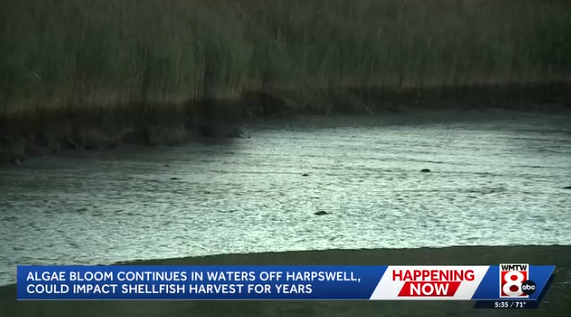
In late September, testing found high-density blooms near Harpswell. High-density blooms are generally considered those having a density of more than one million cells per liter. Testing in Maine at the time found a density of 20 million cells per liter. Video shared by Harpswell Marine Resources & Harbor Management showed very brown and murky water.
In Casco Bay, the Friends of Casco Bay said on Friday that the bloom is still present but appears to be dissipating. The Maine Department of Marine Resources reports that Karenia cell counts are declining in inner Casco Bay, although some areas continue to have very low oxygen.
“We are still seeing massive shellfish die-offs. Last week, Casco Baykeeper Ivy Frignoca surveyed Maquoit Bay in Brunswick by airboat and found white bacterial mats and extensive soft-shell clam die-offs. Meanwhile, Mike Doan has been keeping an eye on pH and dissolved oxygen levels, both of which are still low,” Friends said.
The algae is not dangerous to humans and the state says it is still safe to eat shellfish and fish harvested from Maine waters. However, Maquoit Bay and the eastern side of Middle Bay remain closed to shellfish harvesting, due to concerns about additional stress on the shellfish.
Friends of Casco Bay says its science team plans to collect sediment samples to learn more about what is happening below the surface.
On Sept. 8, sampling confirmed the presence of Karenia mikimotoi in Portland Harbor at levels known to affect fish and shellfish.
On Sept. 10, Harpswell Harbormaster Darcie Couture told Maine’s Total Coverage she had received reports of dead and dying clams and worms from clam harvesters.
She said this problem could impact shellfish harvesting in Harpswell for two years.
You can track all current shellfish closures online.
Please note: This story was provided to CNN Wire by an affiliate and does not contain original CNN reporting. This content carries a strict local market embargo. If you share the same market as the contributor of this article, you may not use it on any platform.