New report finds supportive housing programs helped thousands of Oregonians remain housed

BEND, Ore. (KTVZ) — A five-year report released by Oregon Housing and Community Services shows the state’s Permanent Supportive Housing program funded 1,136 units across 41 projects between 2020 and 2025. The review found that 87% of participating households remained in their supportive housing or moved into other permanent housing.
The program pairs long-term affordable rental housing with support services tailored to help people who have experienced chronic homelessness maintain their homes. Depending on individual needs, these services include case management, physical and behavioral health connections, peer support and employment assistance.
By the end of 2025, 27 of the funded developments representing 763 homes were open and operating, with remaining projects under construction or in development. Among projects operating for at least 13 months, 71% of households remained housed for at least one year, with an average stay of 609 days. Additionally, partners reported improved health outcomes across 100% of operating projects.
Oregon Housing and Community Services Executive Director Andrea Bell highlighted the broader vision behind the supportive housing model.
“Communities across Oregon are delivering local solutions to make everyday life better and more affordable,” Bell said. “Collectively, we are committed to realizing an Oregon where every person, regardless of income or background, can have an affordable and dignified place to call home.”
In Eugene, a resident living in a supportive housing community developed by Homes for Good described receiving assistance with budgeting and resource navigation.
“My kids and I were homeless and needed support,” the resident said. “We have been supported with quality items and with a system that helps us learn more about budgeting and we have consistent support to help us meet obtainable goals with staff who never give up and always follow through with finding resources and even helping access them. I finally feel like my family has a support system that is consistent and that I can count on and learn from.”
Projects in Bend and across the state illustrate the implementation of the program in different regions.
In Bend, Cleveland Commons opened in 2025 as Central Oregon’s first multifamily supportive housing community, providing 33 homes specifically for individuals who experienced chronic homelessness.
Colleen Sinsky, executive director of Fuse Housing Collaborative, noted that roughly half of the residents transitioned directly from living outdoors to having health care and support services on-site.
“Cleveland Commons in Bend has ended homelessness for some of our most medically-vulnerable neighbors,” Sinsky said. “Cleveland Commons exists because of dedicated local partners and long-term investment from OHCS and the Oregon Legislature and it is part of how Central Oregon reduced homelessness by 19% this year.”
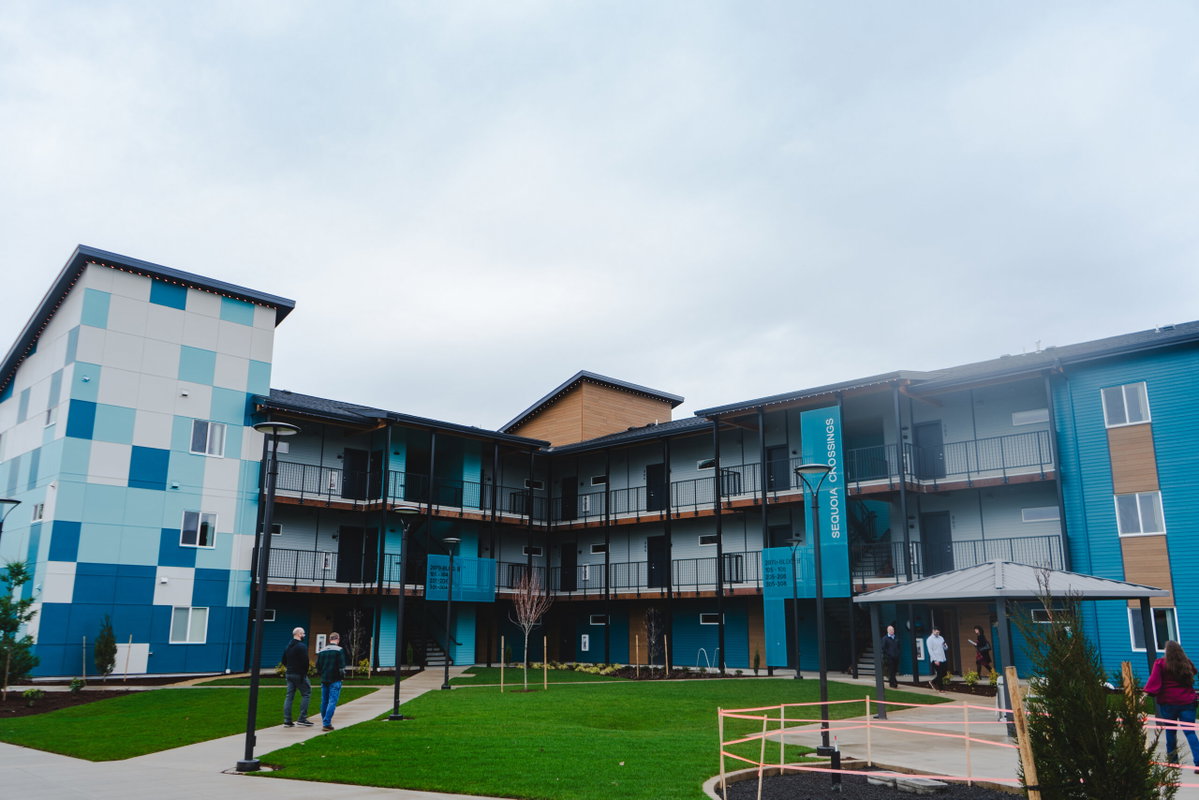
In Salem, Sequoia Crossings opened in January 2024 as an affordable rental housing development featuring supportive housing units. Lucy Briseno of the Mid-Willamette Valley Community Action Agency noted the impact of stable housing on resident health and personal development.
“At Sequoia Crossings in Salem, we see every day that PSH is about much more than providing a place to live,” Briseno said. “A stable home creates the foundation for people to focus on their health, connect with their community and pursue their own goals.”
In Eastern Oregon, River Bend Place in Ontario includes six supportive housing units sponsored by Northwest Housing Alternatives. Clayton Crowhurst, a housing developer at Northwest Housing Alternatives, pointed to the development as an example of community collaboration in frontier areas.
“River Bend Place is proof that supportive housing is only the beginning,” Crowhurst said. “When a community aligns around a shared vision, it can create an entire ecosystem of services to strengthen a city and a region.”
Click here to follow the original article.