Wildwood Park and Zoo welcomes new audad ewes

By Justin Betti
Click here for updates on this story
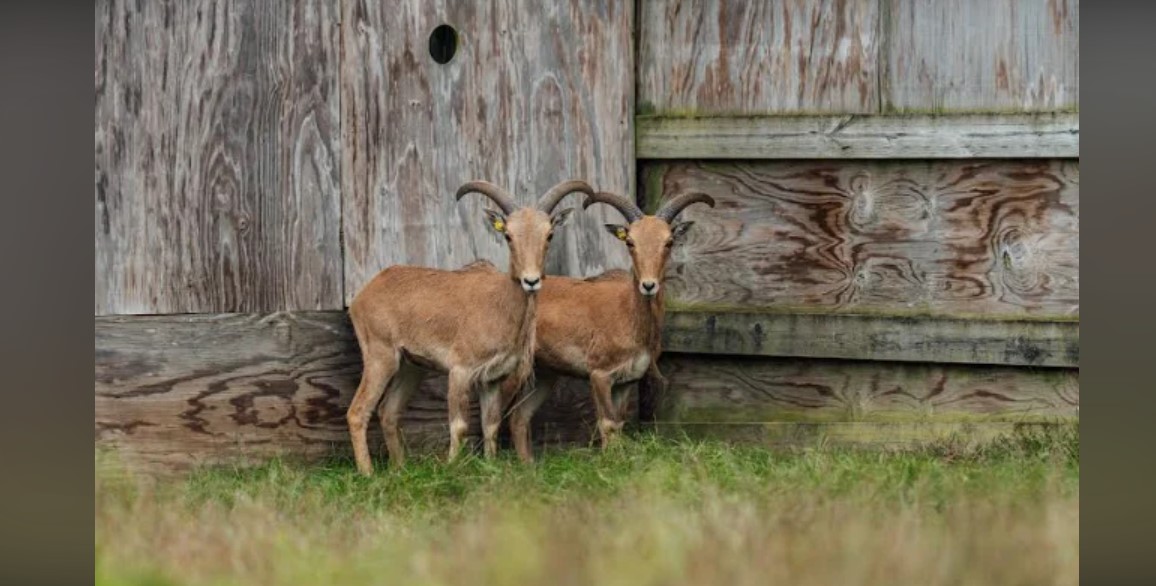
MARSHFIELD, Wisconsin (WAOW) — Wildwood Park & Zoo has welcomed two new aoudad ewes from another accredited Wisconsin zoo.
The young females, named Ember and Ash, were selected for their docile temperaments, strong health and reproductive soundness. Zoo officials say they have been successfully introduced to Wildwood’s existing aoudad group.
The two new ewes are settling in well and have been observed spending time with the resident animals. The group is already beginning to move together throughout the habitat, with the new arrivals frequently staying close to the established animals and showing encouraging signs of forming a cohesive herd.
The addition comes with an unexpected development involving one of Wildwood’s original aoudads.
When the original group arrived approximately a year ago, all of the animals were believed to be female.
After nearly a year of observation and continued familiarity with the animals, staff recently determined that one of the animals originally identified as an ewe is, in fact, a ram. Acadia is actually Atlas.
Misidentification of sex can occur with animals that have limited interaction with human caregivers, particularly when they are newly acquired, extremely flighty or difficult to safely handle. As the aoudads have become more established at Wildwood and staff has been able to observe their behavior and physical characteristics over time, the mystery surrounding Atlas’ identity was finally solved.
And in this case, the discovery is particularly good news.
With Atlas now confirmed as a ram and three females making up the herd, Wildwood Zoo has the beginnings of a potential breeding group. If breeding occurs as expected, the zoo could welcome its first aoudad lambs as early as March or April.
Aoudads, also known as Barbary sheep, are native to the mountainous regions of North Africa. They were introduced into the United States in the early 1900s and subsequently established populations in several parts of the country, particularly in the southwestern United States.
“We couldn’t have planned this any better,” said Kyle Kirk, zoo manager.
“What we thought was a group of females has turned out to include a ram, and now we’ve added two carefully selected females,” Kirk said. “Watching these animals go from extremely difficult to handle to beginning to function as a herd has been incredibly rewarding. And if everything goes as we hope, we may have some very exciting little additions to introduce to the community next spring.”
Please note: This story was provided to CNN Wire by an affiliate and does not contain original CNN reporting. This content carries a strict local market embargo. If you share the same market as the contributor of this article, you may not use it on any platform.