Inside the classroom: How PSUSD’s new phone policy is working

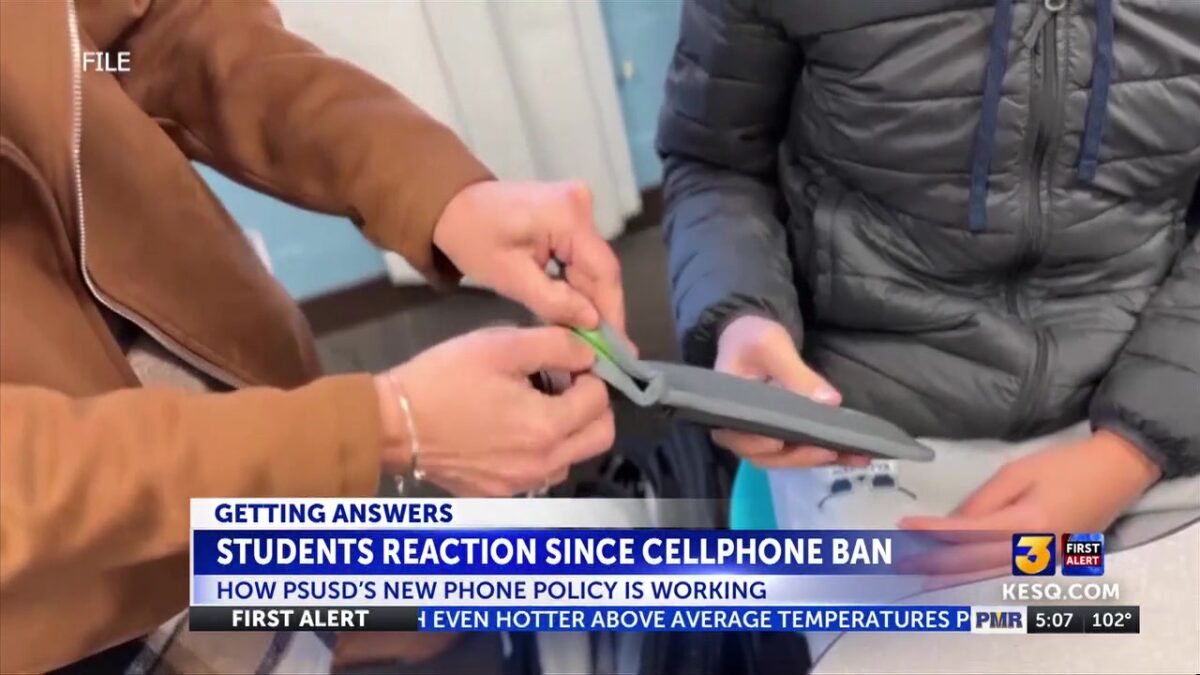
PALM SPRINGS, Calif. (KESQ) – Weeks into the school year, students at Rancho Mirage High School are sharing how Palm Springs Unified School District’s new cellphone policy is affecting their day — and some say their opinions have changed since the policy took effect.
News Channel 3 previously reported on the new restrictions before the school year began. Now, we’re following up with students and teachers to see how the changes are working.
News Channel 3 spoke with three Rancho Mirage High School students and teacher about what they’ve noticed, including changes in focus, classroom engagement and the challenges of spending more of the school day without immediate access to their phones.
For senior Nicholas Arias, the change took some getting used to.
“At first I was like, oh, I don’t want to lose my phone,” Arias said, explaining that he also worried about losing the ability to listen to music while studying.
But after living with the policy for several weeks, he said his perspective began to change.
“I was more focused. I had my work done, had my agenda already. I was getting more of the stuff done,” Arias said.
He told News Channel 3 the change has extended beyond his schoolwork. He said he now tries to use his phone less outside of school and believes it has helped him communicate more with other people face-to-face.
“I think it’s helped me a lot,” he said. “It’s benefited not just in school, like focusing, but like outside of school and kind of getting involved more and talking to my parents and to customers at my work.”
Another student, Emma Weeks, said she was also initially upset about the new restrictions, particularly after hearing students would face limits on phone use during passing periods.
Now, she says her opinion has changed.
“I think it has definitely positively affected my day because I’m more able to pay attention in class,” Weeks said. “When I had my phone before, I was always tempted to, when I don’t want to do the work, to be on my phone and scroll and just not do my work.”
Weeks said she has also noticed a difference in how quickly she gets her schoolwork done.
“Without my phone to distract me, I’ve been very on top of doing all my assignments and getting them done and turned in on time,” she said.
Valentina Macias also described feeling more engaged without the constant distraction of notifications.
She said students in many of her classes put their phones into assigned spaces when they enter the classroom, removing the temptation to check a text message or social media notification during instruction.
Macias said the change has helped students focus more on what is happening in front of them, but she also acknowledged a downside.
“Probably the hardest part is probably not knowing what’s going on,” Macias said, pointing to potentially missing a text from a parent or friend.
She described sometimes feeling disconnected without immediately knowing what is happening outside of school or on social media.
A teacher’s perspectiveFor Rancho Mirage High School teacher Athena Martinez O’Grady, keeping phones out of the classroom is not new.
Martinez O’Grady told News Channel 3 she has used what she calls a “phone farm” in her classroom for years. Students place their devices there at the beginning of class and receive them back at the end.
Before the broader policy was implemented, she said enforcing her own classroom rules could sometimes lead to pushback from students or parents.
Now, she says having a consistent expectation has made a significant difference.
“I love that now all the students and the parents are on the same page,” Martinez O’Grady said. “There’s no pushback at all because it’s the law and everyone’s doing it, and it’s an expectation.”
She said phones previously took away a significant amount of time from instruction.
“I would spend 15 to 20% of my time asking the same students over and over again to put away their phone,” Martinez O’Grady said. “‘Can you put away your phone? Can you put away your phone? Can you put away your phone?’ And then it was just like a battle all period long.”
Martinez O’Grady said removing that distraction allows her students to spend more time working and communicating with one another.
She also believes limiting phones can help students develop face-to-face communication skills. In her classroom, she said much of the work involves group activities, discussions and students working together rather than individually sitting behind a screen.
The teacher said she noticed communication challenges among students returning from the COVID-19 pandemic and believes phones had become a “comfort zone” for some students.
She said taking the devices away for portions of the school day forces students to engage with the people around them, make eye contact and work through situations that may initially feel socially uncomfortable.
Martinez O’Grady said she has also heard concerns from parents in previous years who wanted their children to keep their phones nearby in case of an emergency. Before the broader policy, she said she worked individually with those families to find solutions.
She says that pushback has largely disappeared now that the expectations apply more broadly.
Students adjust to a new routineThe three students News Channel 3 spoke with all described some benefit from limiting their phone use, even as they acknowledged the adjustment has not always been easy.
Weeks said she recognizes how attached she had become to her device.
“The hardest part is, I have definitely become slightly addicted to my phone and I love to be on it,” she said, adding that being without it during the school day has still been manageable.
Arias said one of the biggest challenges for him is not being able to communicate as frequently with his mother during the day. But he said the policy has ultimately helped him become less dependent on his phone.
“I just love not having our phones on us because it’s not like we’re attached to it anymore,” he said. “We’re just able to be our own people and, like, just talk.”
News Channel 3 will continue following the implementation of the cellphone policy and its impact on students, teachers and families across Palm Springs Unified School District.
Click here to follow the original article.