Fulton selected for rural innovation initiative, receives $30,000 grant to guide downtown growth

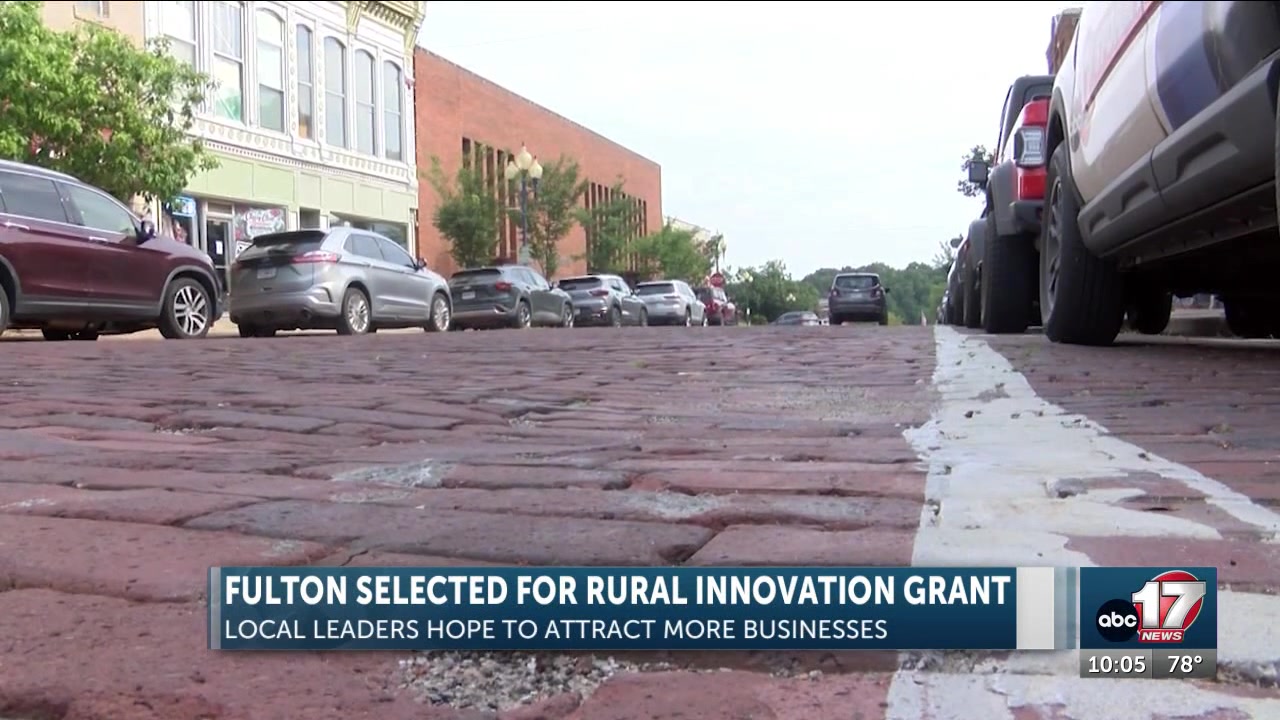
FULTON, Mo. (KMIZ)
Fulton is one of just three Missouri communities selected to receive a $30,000 grant through the Center on Rural Innovation’s Heartland Rural Innovators Initiative, a program local leaders say could help lay the groundwork for long-term economic development and downtown revitalization.
The Center on Rural Innovation works with small communities to develop technology-based economic development strategies through consulting, workforce development programs, broadband advocacy and entrepreneurship initiatives.
For Fulton leaders, the hope is the initiative will help create a roadmap that attracts new investment while preserving the community’s historic downtown and small-town identity.
The grant is funded by Upward Momentum, a Missouri-based philanthropic collaborative focused on increasing economic mobility through community-led investments. The 12-month initiative provides participating communities with an economic assessment, support for implementing a strategic plan and funding assistance to build innovation-driven economies.
In addition to Fulton, Maryville and Rolla were selected following what the Center on Rural Innovation described as a highly competitive application process.
Since launching its Rural Innovation Network in 2017, the Center on Rural Innovation has expanded to 43 communities across 26 states. The nonprofit says its partner communities have leveraged millions of dollars in outside investment, including nearly $30 million through the federal Build to Scale program, while supporting the growth of rural technology startups and local innovation ecosystems.
The seven-person Callaway County leadership team overseeing the initiative includes William Woods University President Sarah Wisdom, Brick District Association President and Beks Restaurant owner Garry Vaught, and University of Missouri Small Business Development Center Director Mark Christian.
Local business owner and Porter Consulting LLC partner Seth Weinger, who manages Untethered Fulton and serves on the local leadership team, said the group is about a month into the planning process.
“The strategic plan is probably way more valuable, way more expensive if our city were to have gone and done this,” Weinger said. “And it’s about bringing city leaders and decision makers, not only city, county, community influencers, people that have the history of where of our hurdles have been and have knowledge of where our strengths are and have the connections on how to make this grow.”
However, two weeks after an announcement that Fulton had received the grant, Weinger said some residents have misunderstood what the initiative is intended to accomplish.
“There’s a lot of people who are confusing a strategic plan with us being the big-tech company. We have no affiliation with any large data centers, tech people at all,” Weinger said. “We are small business people who live in a small community who want to help that become a successful, walkable, fun location to live that has the services that we can keep our tax dollars here in our county.”
The grant was available for rural Missouri communities with fewer than 50,000 residents that demonstrate strong broadband infrastructure, workforce development assets, leadership collaboration and a commitment to innovation-based economic development.
As part of the program, Fulton will receive a custom technology economy assessment, implementation and funding-readiness support, peer learning opportunities with other Heartland communities and participation in a regional summit, along with $30,000 to begin implementing recommendations from the strategic plan.
Weinger said while the funding is welcome, the planning process could have the greatest long-term impact.
“The $30,000 is a great kickstart. Don’t get me wrong. That’s going to go a long way. It’s money that’s going to be infused into the community,” Weinger said. “But that plan can then be utilized for a plethora of other opportunities, whether that be through state and federal funding, whether it be through small business development, whether it be through private grant, or whether it just be investors saying, you know, that’s going to be a growth area. Let me let me go in while I still can.”
The Center on Rural Innovation highlighted several factors that made Callaway County a strong candidate, including its mix of higher education, manufacturing, agriculture, energy and government employers, along with recent investments in entrepreneurship and downtown redevelopment.
The organization also cited ongoing efforts by Untethered Fulton, the Fulton Area Chamber of Commerce, the Missouri Small Business Development Center, the Brick District Association, local investors and higher-education partners to strengthen workforce development and revitalize downtown.
Weinger believes Fulton is well positioned to benefit from regional growth as nearby Columbia and Jefferson City continue to expand.
“As Columbia grows towards our direction, as Jefferson City comes our direction, I have heard that as much as 30% of our rental population doesn’t work here. They work in those two communities but can afford to live here or would prefer to live here rather than being in the big city,” Weinger said.
His own business, Untethered Fulton, offers work space, conference rooms, rental offices and living accommodations for remote workers. Weinger said he has spent the past 25 years investing in rural communities and hopes this new initiative continues to drive people to want to work and live in Fulton.
“My whole goal is to bring more people into the community on a regular basis, to bring people to support the shops, to support the restaurants,” Weinger said. “We have businesses that are expanding from Columbia, Jeff City, that see the growth here in Fulton that can affordably get an office in here and expand without having the overhead of full manpower or paying the utility bills and so forth.”
The announcement comes weeks after the partial collapse of a downtown Fulton building that disrupted plans for a new coffee shop and displaced residents and businesses.
“The grant had just been submitted the week earlier. We had a very confident feeling that based on the leadership team that we had put together something that would be very hard for anybody to turn down,” Weinger said. “We had not been announced yet, but I didn’t want the sky-is-falling to have an influence on that decision.”
Weinger said the incident also underscored the importance of continuing downtown revitalization.
“We need a coffee shop downtown desperately; we hear that all the time and that’s what was going in the unfortunate circumstance,” Weinger said. “That building was being worked on, being revitalized, getting a new life. And the unfortunate thing is, is the person that did it didn’t do it the right way, and it’s unfortunate, caused a ripple effect that hurt other businesses, hurt the community. It hurt residents that live here. They’re still scrambling because we don’t have a lot of vacancy in our town.”
While infrastructure projects are not the initiative’s primary focus, Weinger said conversations have included adding more downtown parking.
“The only thing structure anybody’s talked about is a parking lot downtown,” Weinger said. “But I think that it will, give us a fresh look. It will bring people to fill some of the empty buildings.”
Click here to follow the original article.