Fourth advanced US reactor achieves criticality at INL, surpassing White House goal

Seth Ratliff
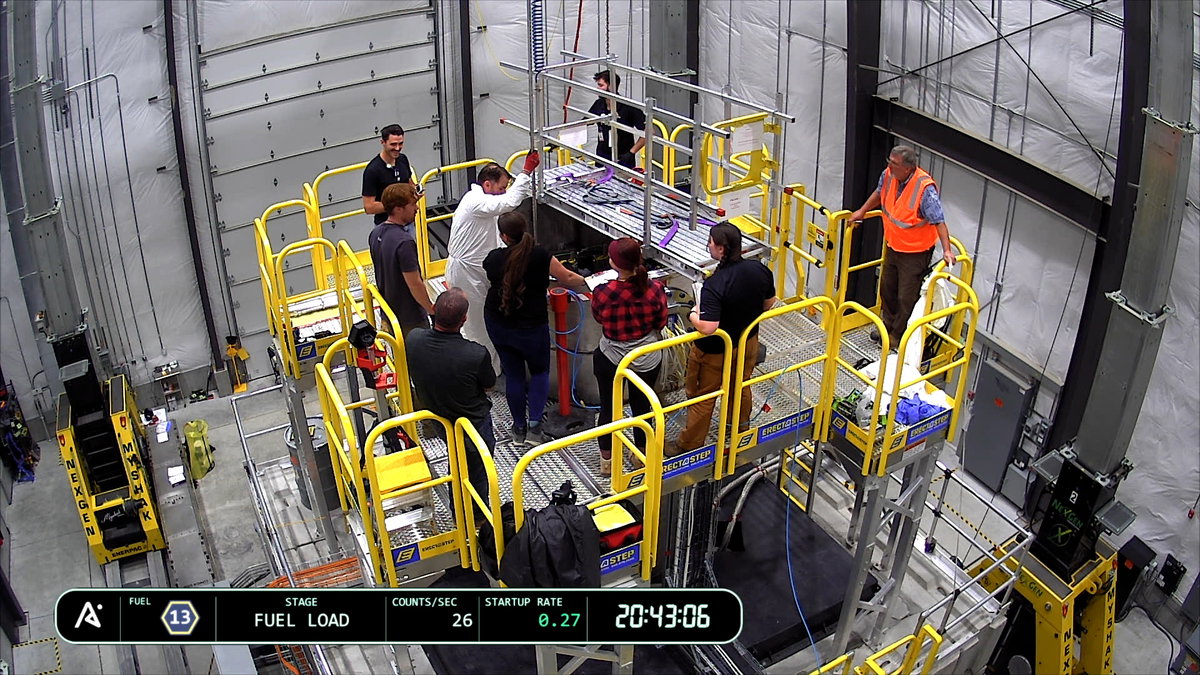
IDAHO FALLS, Idaho (KIFI) — Over the Independence Day weekend, another major nuclear milestone took place in Idaho. Aalo Atomics’ advanced reactor design, the Aalo-X, successfully completed a zero-power fueled criticality demonstration at the Idaho National Laboratory (INL).
The milestone officially surpasses the goal set by President Trump to have three advanced reactors achieve criticality before the United States’ 250th birthday.
“Congratulations to the entire Aalo Atomics team. Aalo-X is now the fourth criticality achieved this year, and the third at Idaho National Laboratory,” said INL Director John Wagner. “This is exactly what a nuclear renaissance looks like: American companies, moving at American speed, proving novel reactor designs, one after another.”
Energy Secretary Chris Wright echoed the praise, noting how impressed he was by Aalo’s determination during his tour of the INL facility last month.
“President Trump asked for three advanced reactors to be authorized and achieve criticality before the 250th anniversary of our great country,” Secretary Wright said. “I’m pleased to share that through the dedication and hard work of Aalo, INL, and DOE, we have surpassed that ask and delivered four!”
A Growing List of Successes
The Department of Energy states Aalo-X joins a rapidly growing list of successful advanced reactor designs, spotlighting the momentum behind participants in the Department of Energy’s (DOE) Reactor Pilot Program and the Nuclear Energy Launch Pad initiative. Just last month, three other reactors achieved criticality:
Antares Nuclear’s Mark-0
Valar Atomics’ Ward 250
Deployable Energy’s Unity
“The hardest problem in nuclear was never the physics; our country simply forgot how to build. The success of the Department of Energy Reactor Pilot Program is proof America can execute again,” said Yasir Arafat, President and CTO of Aalo Atomics. “We are proud to play a major role in America’s nuclear renaissance, going from breaking ground to a sustained chain reaction in just eight months—one of the fastest reactor builds in modern American history.”
For more information on the Reactor Pilot Program, click HERE.