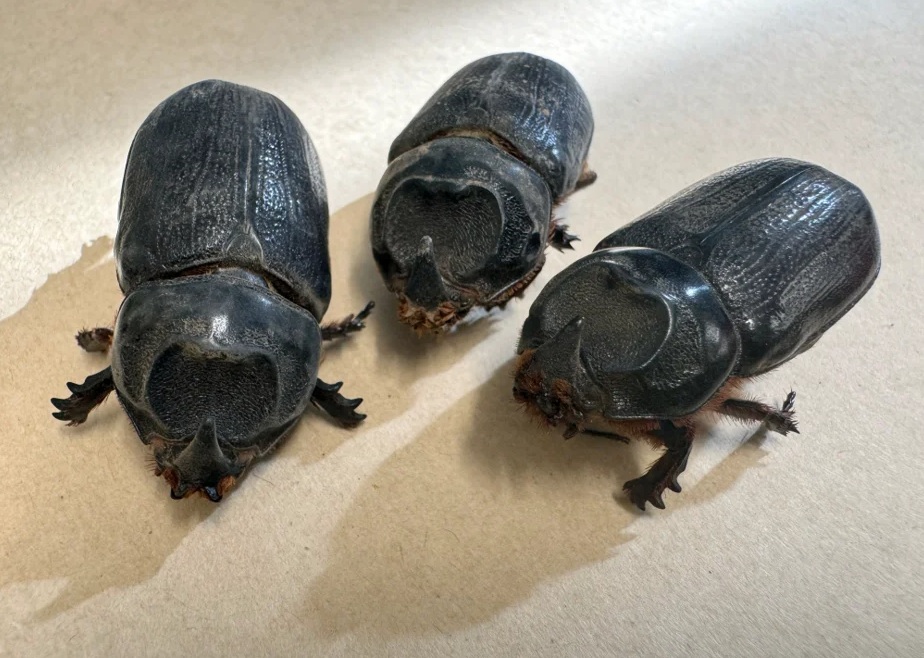
Three coconut rhinoceros beetles found dead in traps in Waikapu

By KITV Web Staff
Click here for updates on this story
WAIKAPHU, Hawaii (KITV) — State agriculture officials are investigating the presence of coconut rhinoceros beetles (CRB) after several were found dead in detection traps in Waikapu earlier this month.
According to the Hawaii Department of Agriculture and Biosecurity (DAB), three dead adult beetles were collected on June 4, 2026 from two traps in the Waikapu area. The insects were later confirmed by a state taxonomist in Honolulu to be female coconut rhinoceros beetles.
Officials said the traps had been checked just weeks earlier on May 15, with no beetles detected at that time.
Following the discovery, DAB crews conducted surveys in the surrounding area on June 5, searching for potential breeding sites such as green waste piles, compost and decaying coconut material. Additional inspections of nearby palm trees are also underway to check for signs of feeding damage.
On June 8, crews returned to the area and recovered two more dead beetles from separate traps.
DAB noted that since a prior detection of a dead beetle at Kahului Airport in April, no live adult beetles or larvae have been found on Maui.
The coconut rhinoceros beetle poses a serious threat to palm trees and local agriculture, as the insects bore into trees to feed, damaging fronds and potentially killing the plant over time.
State and county agencies are working together through the Maui CRB Working Group, which includes multiple partners focused on preventing the spread of the invasive pest.
Residents are being asked to remain vigilant by checking palm trees for damage, avoiding the movement of green waste and inspecting mulch or compost products for signs of infestation.
DAB said early detection is critical to preventing a wider outbreak and protecting the island’s food supply and environment.
Anyone who spots possible beetle damage or larvae is urged to report it to the state’s pest hotline at 808-643-PEST or online at 643PEST.org.
For more information on how to detect the signs of CRB damage and how to identify CRB life stages, visit the CRB Response website.
Please note: This story was provided to CNN Wire by an affiliate and does not contain original CNN reporting. This content carries a strict local market embargo. If you share the same market as the contributor of this article, you may not use it on any platform.