Columbia Public Schools to dip into reserves to cover deficit spending

Mitchell Kaminski
COLUMBIA, Mo. (KMIZ)
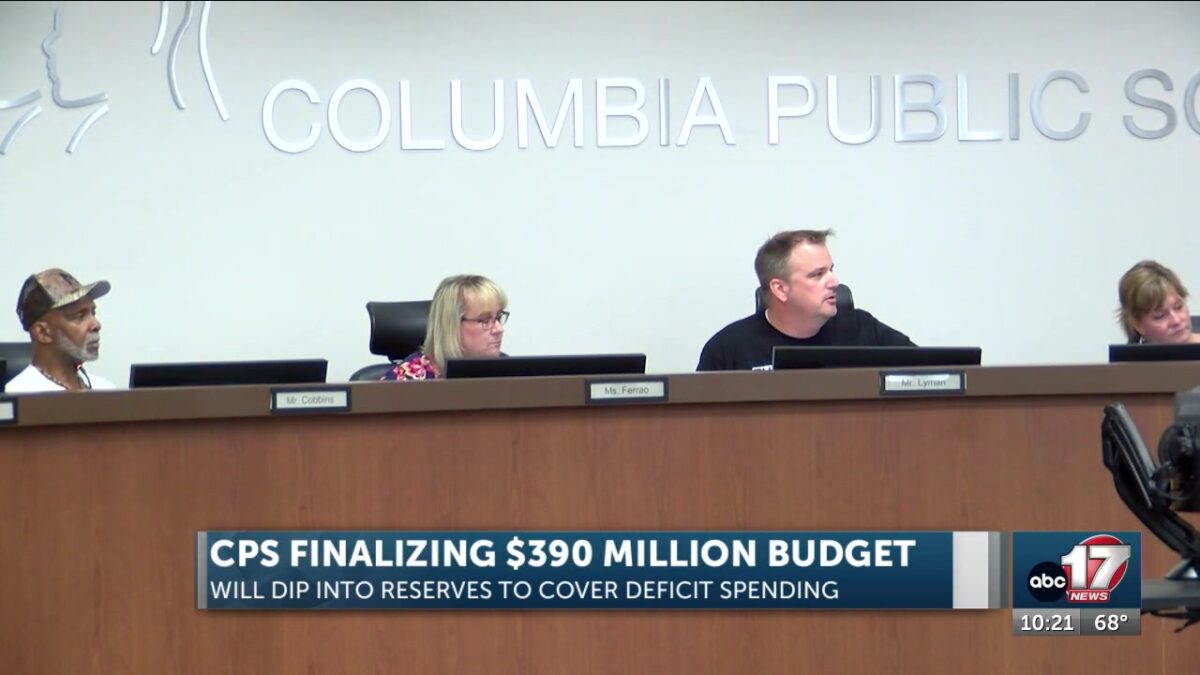
Columbia Public Schools is proposing a roughly $390.7 million budget for the 2026-27 school year that relies on dipping into reserves to cover rising costs, most notably the opening of a new elementary school and uncertainties surrounding state funding.
The district’s operating budget, or General and Teachers funds, accounts for roughly 80% of the proposed budget, with salaries representing just over half of General Fund expenditures.
The operating budget projects $309.8 million in revenue compared with $321.5 million in expenditures, resulting in a planned use of approximately $11.7 million in reserves. Across all funds, the proposed budget totals $390.7 million and includes an overall drawdown of about $18.6 million from the district’s fund balance.
Officials say the district intentionally built up reserves in recent years specifically to help absorb the costs of opening new schools and other one-time needs. Columbia Board of Education President John Lyman said the board has long prioritized strong reserves.
“One of the big things that the board many years ago decided was that there needed to be, X-number of months or three months worth of reserves, kind of on hand at all times to make sure that we have it,” Lyman said. “Ultimately, we have a payroll to keep. We have a district of 19,000 employees to keep running, and so making sure that we have those reserves is important.”
The biggest new expense is Eagle Bluffs Elementary, scheduled to open in fall 2026 on the John Warner Middle School campus in southwest Columbia. The new school will require 27 additional staff positions at a cost of about $1.5 million.
“It was a big chunk of money. We’re hiring more teachers, and more administrators for that building, more support staff and then it’s an additional several thousand square feet of space that we have to heat and cool,” Lyman said. “For the last several years, we’ve been kind of squirreling that money away to make sure that we have it for when it’s time to open that building this fall.”
District leaders say the planned drawdown would still leave the operating fund with a healthy projected ending balance of about $121 million, or more than 37% of expenditures, well above the board’s minimum reserve target.
The budget includes meaningful improvements to employee pay and benefits. District leaders approved salary schedule adjustments and experience steps for all employees totaling more than $8.65 million. When benefits and other related costs are included, the total investment in compensation and benefits exceeds $14.25 million.
Key elements include continued funding of medical, dental and life insurance for full-time employees and projected increases in health insurance costs, with medical insurance rising from about $7,956 to $9,552 per employee.
These enhancements are part of the district’s effort to attract and retain staff while supporting its strategic goals.
“Payroll is one of our biggest things that we expanded on. So when we get the same amount of money that we got last year, but we want to pay all of our teachers more, we have to start looking at some different things. That’s when you start dipping into those reserves because again, we want to pay our teachers more than we did last year,” Lyman said.
Compared with the current 2025-26 budget, the proposed 2026-27 operating expenditures rise by about $17.2 million. The district is shifting from a projected surplus of $7.4 million this year to a planned deficit of $11.7 million next year.
State aid continues to fall short of rising costs. CPS Chief Financial Officer Heather McArthur told ABC 17 News that CPS is assuming a flat state adequacy target of $6,900 per pupil. According to McArthur, while increased weighted average daily attendance, weighted average membership and a calendar incentive are expected to generate $2.3 million in additional foundation formula funding, an increase in the per-pupil amount for the classroom trust fund results in a net decrease of $1 million in new state money overall.
This modest state revenue growth, combined with only partial transportation funding, has forced the district to use reserves to balance the budget.
McArthur is projecting only 90% of the expected state transportation funding due to shortfalls at the state level. Local property taxes, projected to grow a modest 2%, remain the largest revenue source but are not enough to fully cover increased costs without using reserves.
The Board of Education is expected to hold a public hearing and consider final approval of the budget at the end of the month ahead of the July 1 start of the new fiscal year.