Water to be released into the canal and the Rio Grande today; Water Rescue Team speaks about risks

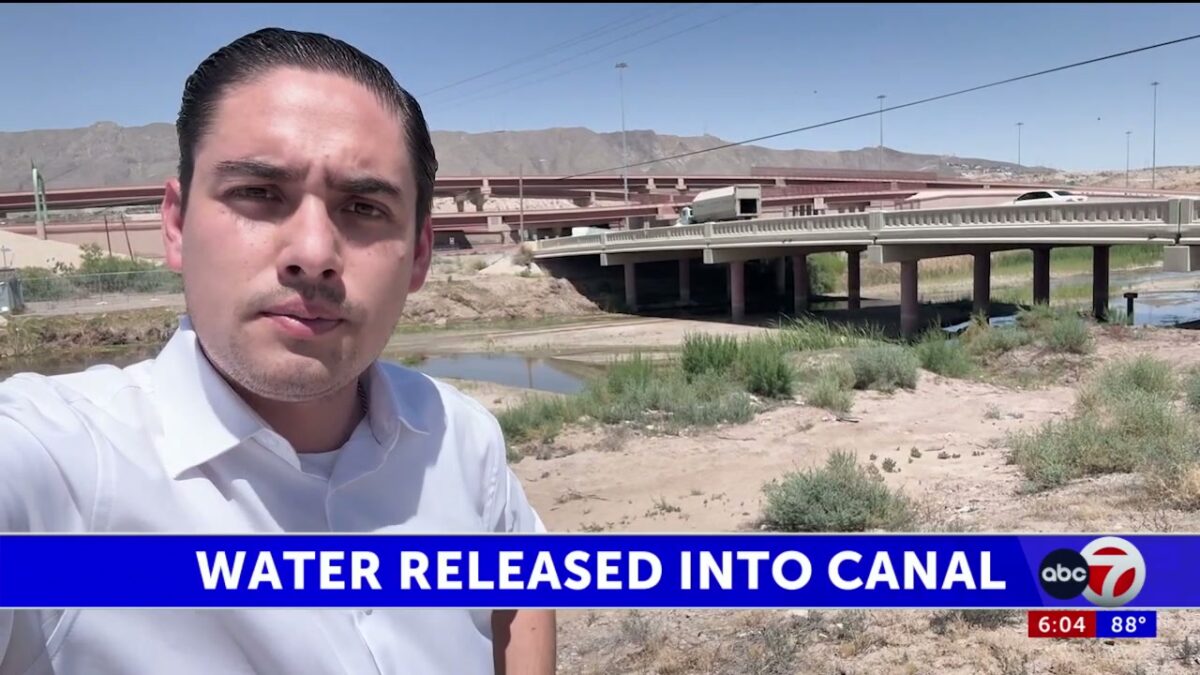
Heriberto Perez Lara
EL PASO, Texas (KVIA) — The season has arrived when water is released into the canal adjacent to the U.S.-Mexico border, as well as into the Rio Grande; there, the El Paso Fire Department’s Water Rescue Team is raising awareness about the risks and dangers that anyone may face while in the water in that area and even on the roadways.
According to Kris Menendez, water rescue coordinator and battalion chief for the El Paso Fire Department’s Water Rescue Team, the upcoming water season will be shorter than in previous years, impacting the number of emergency calls the Fire Department receives.
The water was released from Caballo Dam into the El Paso water canal and the Rio Grande, and Chief Menendez says the misconception is that people think they can cross the canal with ease, but that’s not the case. “What they don’t understand is that the canal system is designed to move water; it is designed to get water downstream to the farmers, to other cities that are south of our location,” said Chief Menendez.
“We always advise everybody to stay out of the canal system; they are not meant to be played with. There’s a fence on both sides for a reason to keep people out of the canal system, but we still have people going through the canals and putting themselves in harm’s way,” Chief Menendez added.
According to him, over the past several years, they have seen a significant increase in water rescues, whether in the canal system or on roadways, due to the rainy season, which has caused widespread flooding.
Chief Menendez says that four years ago, the number of rescues was high, but now that number has been decreasing due to less rainfall and shorter water seasons, like this year.
“Last year was a shorter season for the canal system to flow water; this year is even going to be a slower season for the water to be in the canals and that has a huge effect on what and how we respond to calls for service for water rescues,” Chief Menendez added. “This year, experts are saying, potentially we will have a significant wet summer and if that does happen, the potential for more calls on the roadways, on those areas that we know flood, will increase, but then the calls in the canal systems will decrease because it’s going to be a shorter season.”
The El Paso Fire Department, through its Water Rescue Team, says that they are always prepared to respond to these types of emergencies and is ready to provide water rescue services.
“This is what we do and we are definitely blessed to be able to help our fellow El Pasoans that are here, our fellow people that are possibly getting or trying to cross canal systems,” Chief Menendez also told ABC-7.
Last year, they reported over 20 rescues and recoveries and they hope to see fewer this year.
Some areas across town could be dangerous for anyone, as Chief Menendez says, you should avoid those where you can’t see how deep the water is, as sinkholes have also been seen in El Paso lately.
Another tip is that if the main route is flooded, take a few extra minutes and look for alternative routes to reach your destination, even if it takes longer, because it can save your life.
The El Paso Fire Department’s Water Rescue Team has about 30 members citywide, trained and certified in various techniques, from swiftwater rescue to scuba diving, to respond to any emergency call.
Chief Menendez also states that collaboration with Border Patrol, the Emergency Services Districts #1 and #2, is essential when attempting to rescue someone in danger in the water canal or the Rio Grande.
“Having that common ground helps in regards to possibly rescuing somebody sooner and faster, because Border Patrol is on the front lines here, and if they see someone drowning or trying to cross and needs help, they’re the first responders in this case,” Chief Menendez said. “They activate 911, and we’re communicating with them, letting us know exactly where they’re at, where the person in the water is, so that we can get there quicker to help them and then ultimately rescue the individual if we have to jump in to get them out of the water.”
If you find yourself in any such situation, whether in the water canal, the Rio Grande, or any flooded area, call 911 immediately.
“Our team is very well trained, but we expose ourselves to the same hazards that you and our fellow El Pasoans might be exposed to,” said Chief Menendez.
“We might have the gear, the personal protection devices, the helmet, the gloves, the boots and the dry suits that keep us dry, but at the end of the day, we have experienced our members have gotten hurt rescuing other people, as they’ve slipped and fallen on the side of the embankments and really have caused some injury to themselves; so we’re not exempt from getting hurt,” he added. “When we put ourselves in those situations, the potential of us getting hurt is also very high and that’s one of the things I think we fail to realize is that we’re providing the service to make sure that you’re safe, but at the same time, while we’re doing that, we have the potential of also getting hurt.”
The El Paso Fire Department’s Water Rescue Team is set to start preparing and training for this summer season early next month.
“At the end of the day, we always say turn around, don’t drown. If you’re on the roadways, there’s lots of rain, avoid the known flooded areas if you can, seek alternate routes if you can, to get to where you have to go and if you don’t know how to swim, take lessons, they’re free, they’re all available throughout the City of El Paso and if we do all those things, I think we can truly minimize the impact on our community when it comes to water emergencies,” Chief Menendez added.