Smoke-affected hops change beer taste based on when they are added

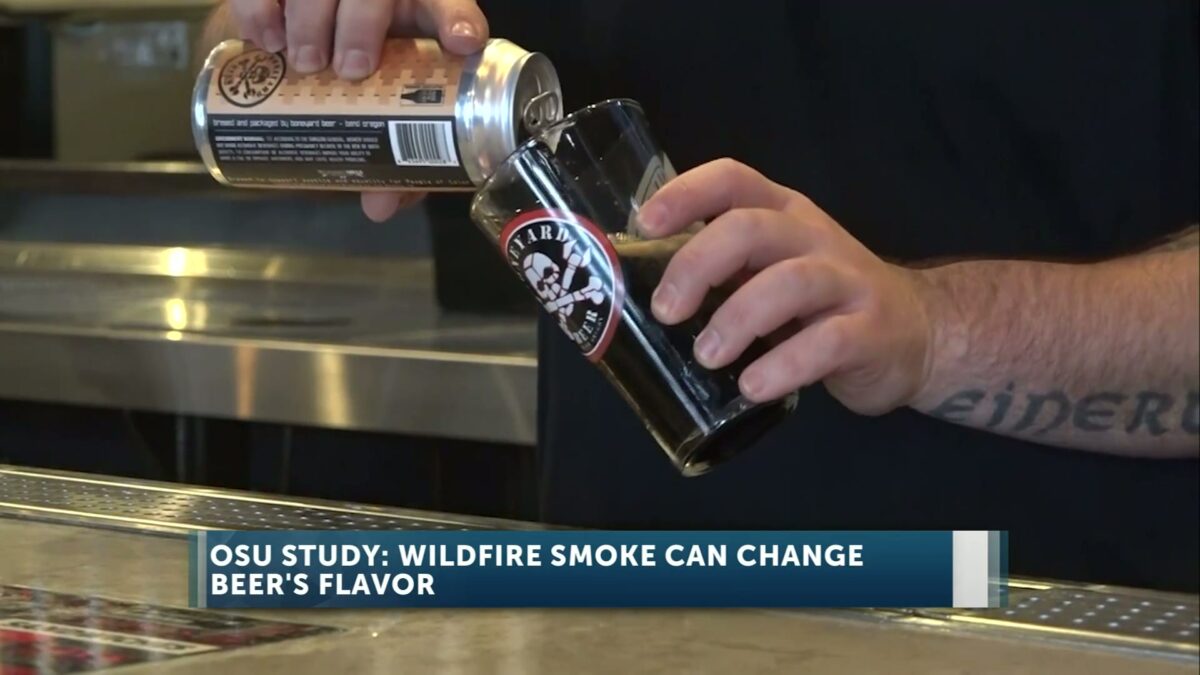
BEND, Ore. (KTVZ) — Smoke-affected hops alter beer taste and aroma depending on how much is used and when they are added during the brewing process, with the greatest impact occurring after fermentation, according to research from Oregon State University.
The study addresses growing concerns across the Pacific Northwest, which produces more than 95% of U.S. hops and about 40% of the world’s supply. Because the region’s late summer and early fall hop harvest coincides with peak wildfire season, smoke exposure has prompted worries about agricultural losses, even though little research previously existed on how wildfire smoke alters hops or the beer made with them.
Cade Jobe, a doctoral student at Oregon State University, conducted the study alongside Tom Shellhammer, a professor of fermentation science at the university. Jobe noted that commercial producers have needed evidence-based direction when facing smoky harvests.
“Hop growers and brewers are looking for guidance on whether and how to use smoke-affected hops,” Jobe said. “This research begins to provide some practical information to help hop growers and brewers understand how smoky hops impact beer so that they can make the best decisions.”
To test the effects, the researchers brewed beers using smoke-exposed hops and recruited a sensory panel to assess them. The team evaluated hops introduced during two standard phases of the brewing cycle: the hot side and the cool side.
On the hot side, hops are added while the liquid is boiling, a process intended primarily to contribute bitterness. On the cool side, hops are introduced post-fermentation after the beer has cooled—a technique called dry-hopping that imparts flavor and aroma, widely used in pale ales and India pale ales.
Evaluation by the sensory panel revealed substantial differences based on timing. When smoke-affected hops were added during the hot boiling phase, panelists could not reliably tell the difference between beers brewed with 100% smoke-affected hops and those brewed with no smoky hops at all.
Cool-side additions produced the opposite outcome. As the proportion of smoke-affected hops increased during dry-hopping, panelists reported progressively stronger smoke aromas in the finished beer.
The sensory panel documented specific flavor profiles across different hop mixtures. Beers dry-hopped with 0% or 25% smoke-affected hops were associated with fruity descriptions, including tropical fruit, citrus and stone fruit. In contrast, beers dry-hopped with 75% or 100% smoky hops drew descriptions such as woody, artificial BBQ and smoked meat.
Beers brewed with a 50% blend of smoky hops did not strongly align with either fruity or smoky characteristics, pointing to a possible sensory threshold in how people perceive smoke impact.
“These findings suggest blending smaller amounts of smoke-affected hops with unaffected hops may be a practical way to use those hops,” Shellhammer said.
Numerical ratings from the panel reflected that sharp rise in smoke perception. Smoke aroma intensity measured nine on a 100-point scale in beers dry-hopped without smoke-affected hops, rising to 27 in beers dry-hopped entirely with smoke-affected hops.
Laboratory measurements of volatile phenols, the compounds that cause smoky aromas and flavors, aligned with the panel’s evaluations. Chemical concentrations climbed as the share of smoke-affected hops grew, showing substantially higher levels when hops were introduced on the cool side compared to the hot side.
The findings build on broader work at Oregon State University involving smoke exposure in grapes and wine. Researchers noted that hops present different considerations because hops make up only a fraction of beer’s raw ingredients, whereas grapes account for nearly 100% of wine raw materials. Beer and wine also undergo distinct fermentation chemistry.
The study represents one component of a wider research project funded by the Hop Research Council. The non-profit organization, backed by U.S. hop growers, merchants and commercial brewers, funds scientific research dedicated to sustainable hop production and brewing quality.
The project follows a related paper published earlier this year by Shellhammer and Jobe, which evaluated the effects of smoke during the hop kilning, or drying, process and identified significant shifts in aroma.
A future paper from the researchers will examine the impact of smoke on hops during in-field exposure.
Click here to follow the original article.