Columbia committee discusses emerging opioids, including nitazenes and 7-OH

COLUMBIA, Mo. (KMIZ)
Columbia’s Substance Use Prevention Advisory Commission discussed new opioid-related public health threats during its Wednesday meeting.
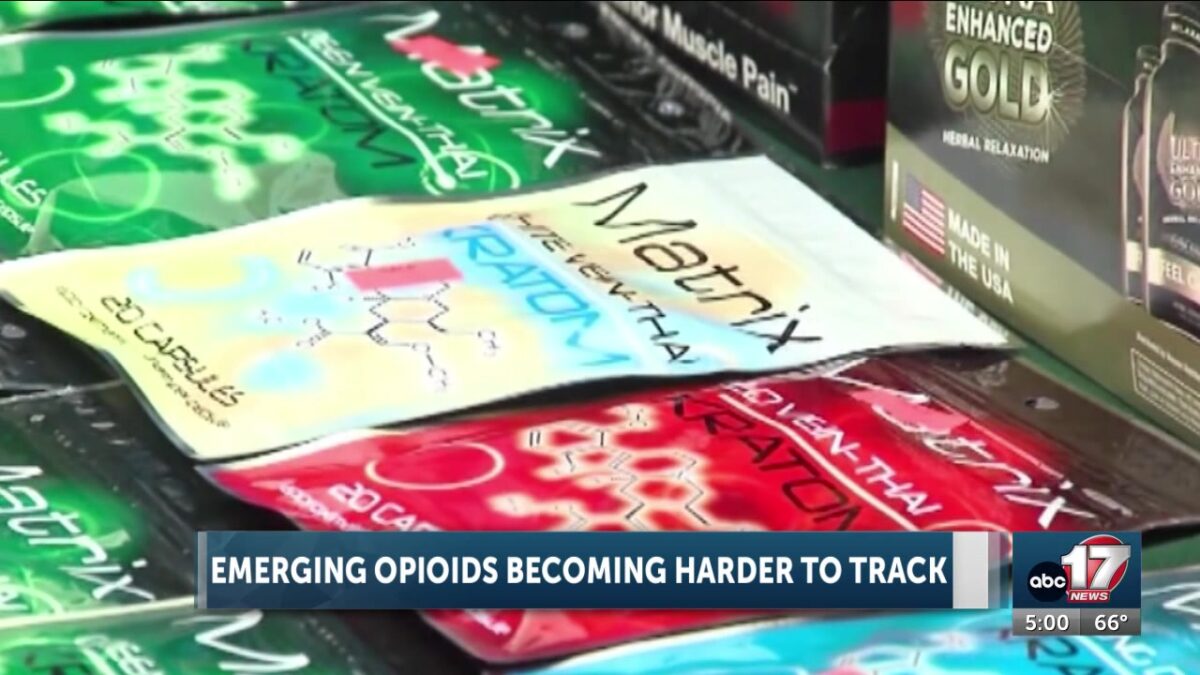
The agenda item was added after several people wanted to learn more about the substances and their potential harms, Commission Chair Molly Lindner said. The discussion was meant to educate commission members about substances such as nitazines, cychlorphine, kratom and 7-OH, said Columbia/Boone County Health Department spokesperson Austin Krohn.
A September fact sheet from Missouri Partners in Prevention covers those substances and tianeptine. It describes nitazenes and cychlorphine as synthetic opioids. Kratom comes from a Southeast Asian tree, and 7-OH is a compound found in kratom. Concentrated 7-OH products are different from products made from kratom leaf, the fact sheet says.
Missouri agencies warned in March that nitazenes had been found in counterfeit pills, powders, unregulated cannabis products and vape liquid. The Missouri Department of Health and Senior Services said nitazenes were used in 14 Missouri overdose deaths in 2024, more than triple the total recorded from 2019-23.
The state also has used sewage testing to monitor for drugs in schools. Nitazenes were detected in samples from 26 of 37 participating schools during the 2025–26 school year, according to the Department of Public Safety. The department says those detections declined and eventually disappeared by the end of the school year.
The current program is expected to test sewage from 164 school districts during the 2026–27 school year, including for nitazenes, cychlorphine and 7-OH.
Krohn said emerging substances can be difficult to track because they are not always included in routine drug tests.
“The tricky thing with these emerging ones is they’re often not tested for unless either a coroner or the person that’s using the drugs makes that known,” Krohn said.
Krohn said routine urine tests generally do not screen for kratom. He also said Boone County does not have take-home nitazene test strips comparable to those available for fentanyl. Missouri’s overall overdose deaths have declined for three consecutive years since 2023, according to the Missouri Department of Health and Senior Services. The department said opioid deaths fell 23% in 2025, while accidental drug poisonings declined 17.4%.
However, the Missouri Poison Center received 19 exposure reports involving kratom or 7-OH in 2023. That increased to 25 in 2024 and 47 during the first nine months of 2025. Those are statewide exposure reports, not confirmed overdoses.
Meeting materials also included a written statement from Al M. Jawadi, a charge nurse at Valley Hope of Boonville.
“We have been seeing an increase in patients seeking treatment for kratom dependence, especially 7-OH, and I can confirm withdrawal can be particularly difficult, especially in patients with prolonged or heavy use,” Jawadi wrote.
Jawadi said withdrawal can resemble opioid withdrawal and may include anxiety, restlessness, insomnia, muscle aches, gastrointestinal distress, sweating and cravings.
Molly Lindner with Substance Use Prevention Advisory Commission said “These substances are available, as I said, anywhere and everywhere, basically at your gas stations, in your market, so on and so forth, additionally, they can be more intense than even your fentanyl or your opioids.”
The Missouri Attorney General’s Office told ABC 17 News that products containing artificially elevated levels of 7-OH are considered Schedule I controlled-substance analogues and are subject to criminal penalties in Missouri.
Colbey Stosberg, a public affairs specialist with the Missouri Attorney General’s Office, said possession of a controlled substance is a Class D felony, punishable by up to seven years in prison and a fine of up to $10,000.
Stosberg claims deliberately mislabeling an addictive opioid as a benign product can be considered felony fraud. That is a Class E felony, punishable by up to four years in prison and a fine of up to $10,000.
The Attorney General’s Office has issued 31 civil investigative demands to kratom manufacturers, distributors and retailers. Those demands require businesses to provide information during an investigation but do not mean the businesses have been charged with crimes.
Health officials said naloxone can reverse an overdose involving these substances, although more than one dose may be required.
Click here to follow the original article.