U.S. Army expects small part of Macon County to be affected by Iowa detonation

COLUMBIA, Mo. (KMIZ)
In recent deposition maps from the U.S. Army, the airborne impact of the planned lead azide detonation has been reduced in Macon County.
The blast is set for 9 a.m. with a 6-mile evacuation zone.
In an X post around 5 a.m. Wednesday, the U.S. Army said airborne lead concentrations are expected to primarily affect residents in Missouri’s Knox, Scotland and Clark counties. Portions of Macon and Adair may also be affected.
 5 a.m. U.S. Army Deposition Map of Iowa Detonation on Nov. 25, 2026
The updated map shows a smaller area of potential impact than the U.S. Army projected Tuesday, when the expected hotspot extended farther into Macon County near Bloomington.
 U.S. Army Deposition Map of Iowa Detonation on Nov. 24, 2026
Lead dust is more likely to settle and accumulate in Clark and a small portion of Scotland County. Affected residents are being advised to remain indoors with the windows and doors closed.
The U.S. Department of Agriculture also reported that farmers in northern Missouri and in Iowa may have livestock impacted by the blast. Farmers are recommended to keep animals sheltered and test hay samples if they are concerned about contamination.
Gov. Mike Kehoe said Tuesday that the state expects minimal effects and that holiday travelers shouldn’t change their plans due to the detonation.
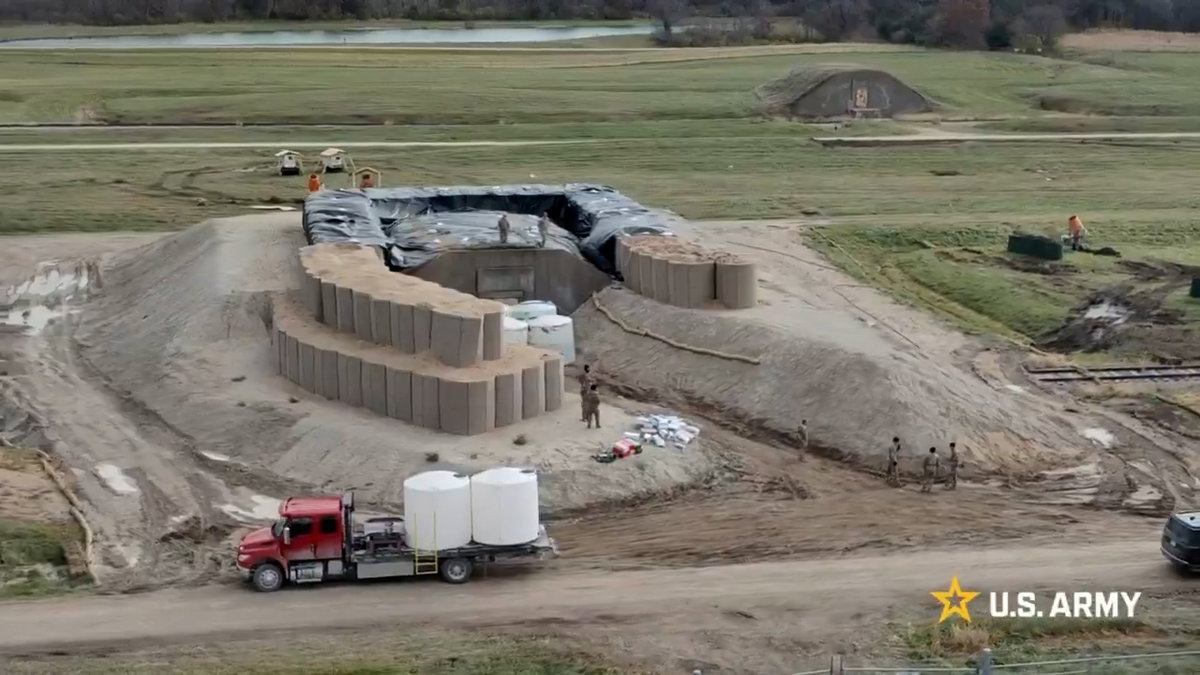
U.S. Army personnel are on site in Middletown, Iowa, and have worked around the clock to mitigate the impacts of the planned controlled detonation later this morning.
This includes a water wall filled with more than 100,000 gallons of water, earth berms, sand filled blocks, expert dispersion modeling, and temperature-regulating tarps.
Our foremost priority is public health and safety, so take a look at how we’re protecting the community ⬇️
— U.S. Army (@USArmy) November 25, 2026
In an X post, the U.S. Army also shared preparation plans for the detonation. This included lining the concrete-reinforced bunker where the lead is stored with gel and water tanks. Foam is also sprayed in the area to help catch lead particles in the air.
According to ABC News on Tuesday, the blast will be conducted with a combination of C-4 explosives, explosive charges and diesel fuel. The blast is expected to explode downward. Over 300 EPA personnel are also expected to be on site monitoring the blast Wednesday morning.
Check back for updates.
Click here to follow the original article.