ODOT faces $240 million shortfall as road fund revenue plummets

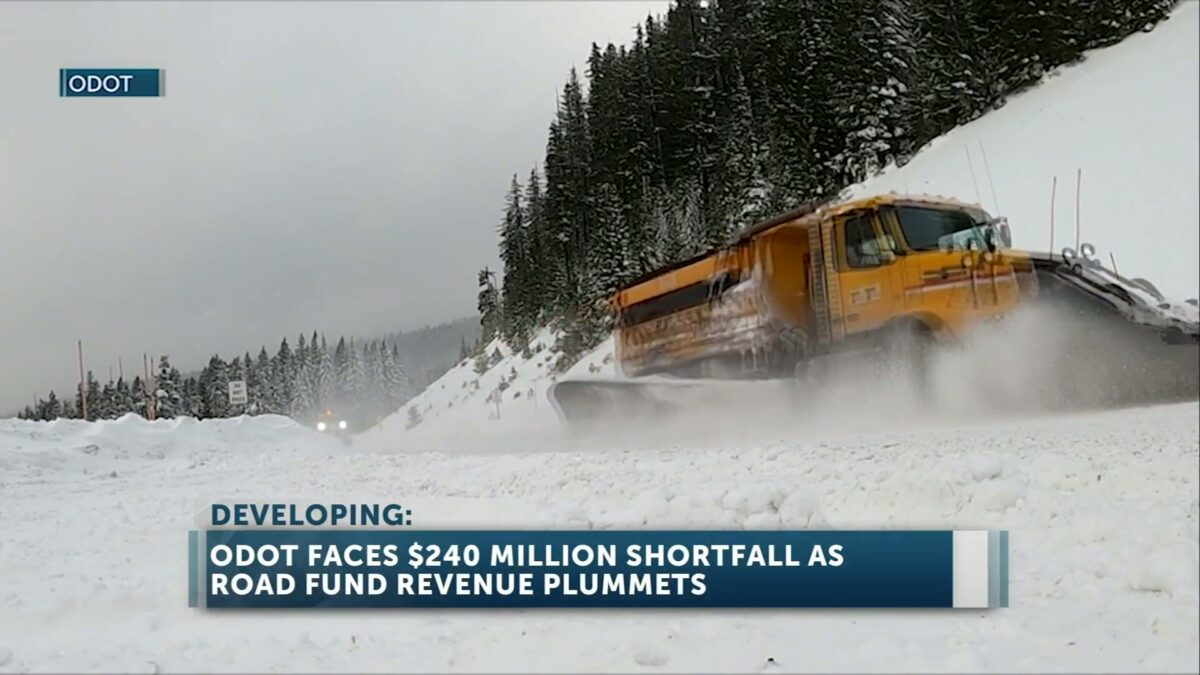
(KTVZ) — Oregon’s State Highway Fund revenue dropped by $32 million, or 2.4%, from January through September compared to the same period in 2025. The revenue reduction has widened the Oregon Department of Transportation’s projected budget shortfall to $240 million for the 2027–2029 biennium, likely requiring additional agency layoffs.
The State Highway Fund finances state, county and city transportation agencies through motor fuel taxes, driver and vehicle fees and commercial truck taxes. Economists had previously forecast long-term reductions in fuel tax receipts as drivers purchased more efficient vehicles and that downturn began earlier this year with motor fuel tax revenue falling 2.2% during the first nine months of 2026.
Driver and vehicle fee collections through the Driver and Motor Vehicle Services division also decreased. Driver and vehicle fee revenues dropped by $14.7 million during the first nine months of 2026 compared to the same period in 2025. Vehicle title and registration fee collections fell by $7.7 million due to slow car sales, while driver license fee revenue declined by approximately $6 million because fewer motorists chose to renew early for Real ID credentials.
Travis Brouwer, deputy director of the Oregon Department of Transportation, noted that the drop in collections has accelerated beyond initial expectations.
“While this decline was expected, revenue is declining faster than anticipated with drops both at the gas pump and at DMV—Oregon’s transportation system depends on these fees to function,” Brouwer said. “In the next several years, transportation agencies across Oregon at the city, county and state level will have fewer dollars to maintain and improve the transportation system. With inflation rising, each of those dollars will buy less. ODOT remains committed to using resources efficiently and making them go as far as possible.”
To help address long-term road funding, the Oregon Legislature passed House Bill 3991, establishing a mandatory road usage charge for electric and hybrid vehicles starting in 2027. Under the program, drivers of those vehicles will pay either two cents per mile or a flat fee of $340 annually. The state plans to phase in the system, projecting it will collect payments from more than 500,000 drivers by mid-2030.
Even with incoming revenue from the road usage charge, state forecasts project total highway fund receipts will remain below 2025 levels through 2029. Revenue is expected to grow by an average of less than eight-tenths of 1% per year through 2035, well below projected inflation. By 2035, state and local transportation agencies will collect roughly the same dollar amount as today, but inflation will reduce the purchasing power of those funds by approximately 20%.
The falling revenue compounds an existing budget deficit across the agency. Before recent declines in fuel taxes and vehicle registrations, ODOT expected a $200 million funding shortfall for the 2027–2029 biennium that would require cutting more than 500 jobs. With the shortfall now widened to $240 million, additional job reductions are expected. The agency currently employs fewer workers than at any time in the past 27 years after previously cutting hundreds of millions of dollars from its budget.
Local municipalities will also experience direct funding reductions, receiving about $40 million less through the end of the 2027–2029 budget cycle. Cities and counties receive nearly half of all State Highway Fund revenue while managing their own growing road maintenance backlogs and safety projects. In response, state officials plan to limit future agency hiring to essential positions, though seasonal crews have already been hired for winter highway maintenance and snowplowing.
Department officials indicated that without alternative funding solutions, ongoing revenue shortfalls will directly affect travel across Oregon. Continued reductions in maintenance and operational funding will result in rougher road surfaces, more frequent highway closures, extended delays and less reliable transit times statewide.
Click here to follow the original article.