Rep. Janelle Bynum leads call for merit-based subcommittee leadership

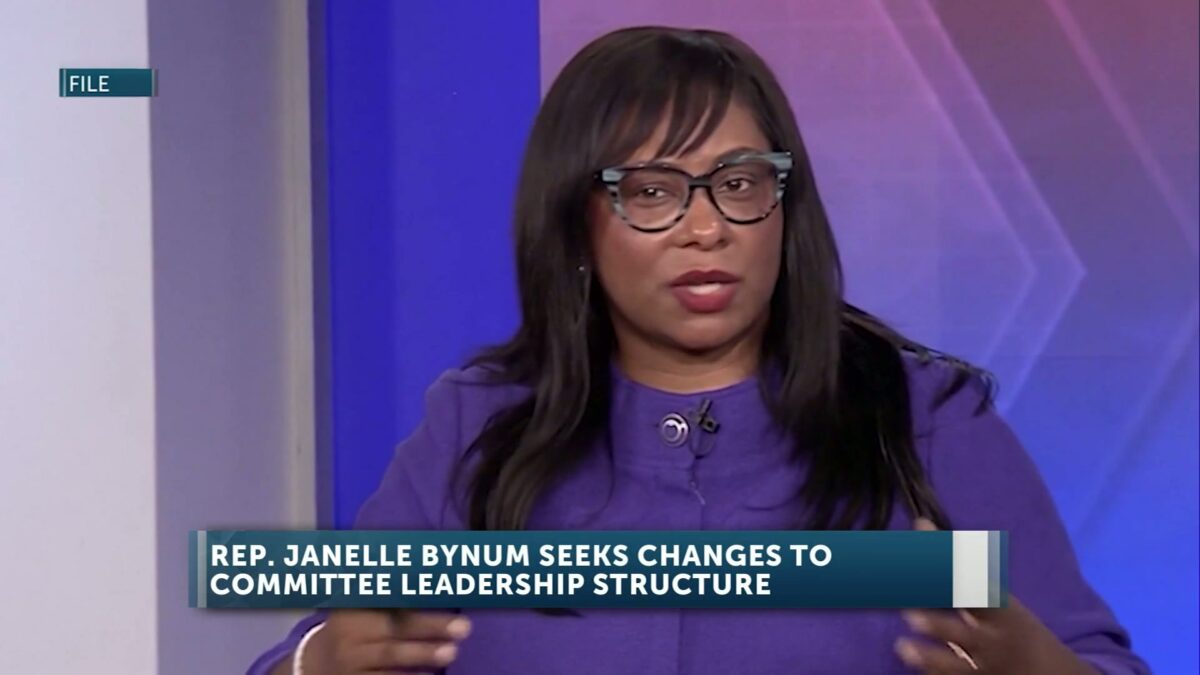
BEND, Ore. (KTVZ) — Rep. Janelle Bynum and a coalition of House Democrats are calling for major reforms to Democratic Caucus rules to choose subcommittee leadership based on merit rather than seniority alone.
In letters delivered to party leadership, members and members-elect urged the caucus to amend Caucus Rule 28 ahead of the 120th Congress following the Nov. 3 election.
Under current Democratic Caucus rules, subcommittee leadership is determined largely through seniority, with committee members bidding for open slots in order of full-committee or subcommittee tenure. Reform advocates argue the system creates barriers for lawmakers from battleground districts, younger members and those with specialized professional expertise.
Bynum, an electrical engineer, former Oregon state legislator and small business owner who defeated a Republican incumbent, is putting forward her own background as an example of why the rule change is necessary. She announced her candidacy for Chair of the House Financial Services Subcommittee on Digital Assets, Financial Technology and Artificial Intelligence.
“I’m proposing that our subcommittee leaders be chosen based on merit, not seniority alone,” Bynum wrote in a letter to her colleagues. “The American people are counting on us to lower costs, make health care more accessible and hold this Administration accountable. Delivering on those expectations will require us to put the full talent of our Caucus to work.”
Under Democratic Caucus Rule 28, members of each House committee bid for open subcommittee leadership slots in order of full-committee seniority, or subcommittee seniority for members of the House Committee on Appropriations. In most instances, the position is awarded to whichever member is highest on the seniority list and requests the post. Reform advocates argue that while long service has value, relying strictly on seniority does not guarantee that a lawmaker possesses the competence or specific expertise required to advance a policy agenda.
The formal letter requesting changes to the rule was sent to House Democratic Leader Hakeem Jeffries, Democratic Whip Katherine Clark, House Democratic Caucus Chair Pete Aguilar and Committee on Caucus Rules Chair Mike Levin. The signatories urged caucus leaders to address the issue before adopting official rules for the upcoming legislative term.
The signers outlined three specific requests for party leadership. First, they requested that the Committee on Caucus Rules hold an open discussion on subcommittee leadership selection prior to adopting rules for the 120th Congress, giving any member or member-elect an opportunity to present views. Second, they asked the committee to consider amendments to Rule 28 that would allow members to stand for subcommittee leadership posts and present their qualifications to committee colleagues. Third, they requested that any proposed rule amendments be brought before the full Democratic Caucus for debate and a vote.
In their letter, caucus members emphasized the need to replace wait-your-turn politics with a structure focused on performance and qualifications. The lawmakers argued that voters expected immediate action on key domestic issues following the election.
“As the American people are struggling with soaring costs, inaccessible health care and rampant corruption in the White House, now is not the time for wait-your-turn politics,” the Democratic signatories wrote in their letter to leadership.
The letter added that experience should be evaluated alongside other credentials: “That system rewards long service and while experience does have real value, it cannot be our top and only consideration.” The signers further stated: “We need a system that functions as a meritocracy.”
The letter also highlighted how the existing system affects caucus diversity and representation, noting that members waiting 10 to 15 years for leadership posts face structural hurdles. While acknowledging that seniority historically provided protections when Black members were excluded from party leadership, the signers noted that the caucus has become increasingly diverse across regional, political, educational and professional lines.
“Members from battleground districts, members who have family caregiving obligations and younger members who arrived more recently rarely reach the top of a seniority list, even when they bring deep expertise, fresh ideas and represent a significant constituency of this country,” the lawmakers wrote.
They also posed a fundamental question regarding the purpose of caucus rules: “We believe the Caucus should ask itself a simple question: does the current system serve the needs of the American people, or does it merely serve the members who have been here the longest?”
In her letter to colleagues, Bynum detailed her state legislative experience and background in technology. Prior to her election to Congress, Bynum served eight years in the Oregon State Legislature, where she served as chair of both the Judiciary Committee and the Committee on Economic Development and Small Business.
During her tenure in state government, Bynum spearheaded the passage of the Oregon CHIPS Act, a $210 million initiative aimed at strengthening the state’s semiconductor and advanced manufacturing industry. She also championed efforts to modernize legislative operations by incorporating new technologies into Oregon’s assembly.
On the House Financial Services Committee, Bynum worked with colleagues to advance housing legislation and bills designed to promote capital markets. She cited her background as an electrical engineer, small business owner and active user of artificial intelligence tools as key qualifications for overseeing digital asset and technology policy.
“I have deep immersion in these technologies as a user of AI tools because I believe you should know something about the products you are expected to regulate,” Bynum wrote in her message to incoming lawmakers.
Bynum also outlined several operational commitments if elected chair of the subcommittee. These commitments include organizing congressional delegations and official travel to inspect regulated industries firsthand, hosting in-district town halls and hearings and holding regular working lunches and dinners with subject matter experts.
Additionally, Bynum pledged to hold regular press conferences, run committee meetings on time and foster strong working relationships with committee staff. She also emphasized the importance of working across the aisle to achieve bipartisan progress and embracing diverse viewpoints within the Democratic Caucus.
Both Bynum and the signatories addressed previous efforts by party leadership to expand leadership roles that do not include subcommittee chairmanships. While acknowledging those efforts, the lawmakers stated that non-gavel positions do not fully utilize the available talent within the caucus.
Bynum stressed that lawmakers who won competitive seats must be given a meaningful opportunity to shape the party’s legislative agenda and lead subcommittees as Democrats prepare to govern in the 120th Congress.
The Committee on Caucus Rules is requested to hold an open discussion on subcommittee leadership selection before rules for the 120th Congress are officially adopted. Any proposed amendments to Caucus Rule 28 will be submitted to the full Democratic Caucus for debate and a vote.
FULL LETTERS:
Click here to follow the original article.