Three involved in robbery in Imperial County sentenced

Jessamyn Dodd

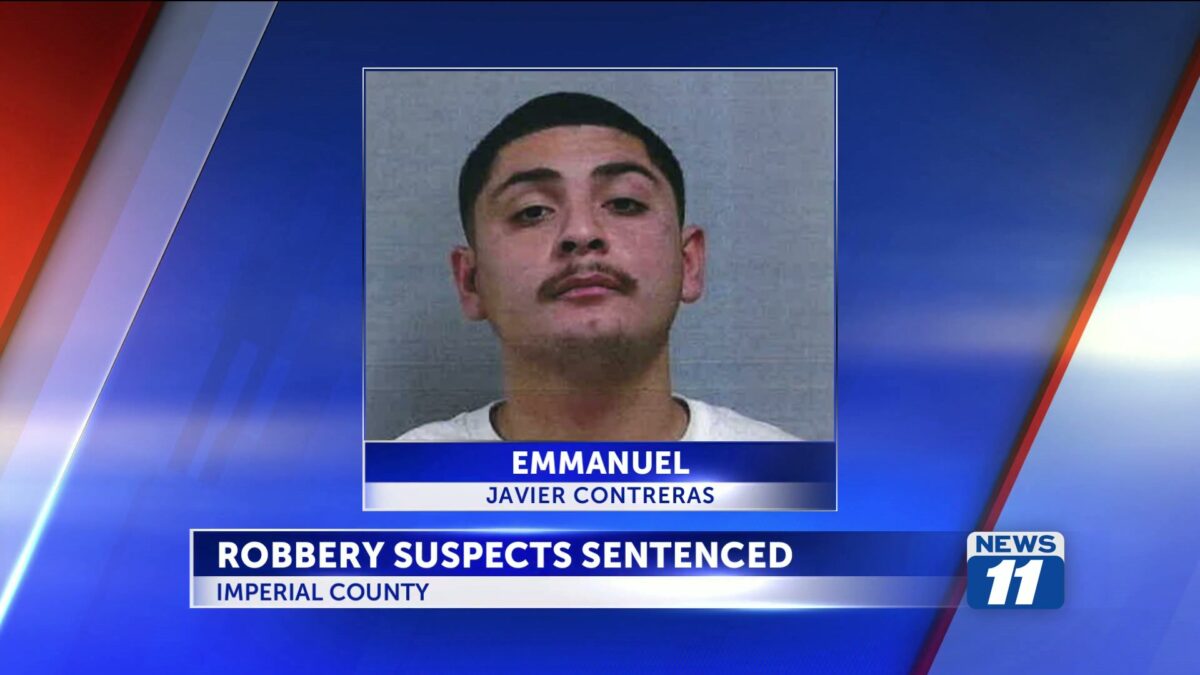
IMPERIAL COUNTY, Calif. (NBC, KYMA) – The three men who accepted a plea deal for being involved in a robbery were sentenced in Imperial County.

Emmanuel Contreras, 25, and Ernest Martinez, 23, received the same sentence of three years in state prison while Elijah Roberts, 24, was sentenced to two years due to the fact he’s serving three years in a separate case.

The three men accepted a plea deal last month for taking part in a violent robbery, which left one person hospitalized.

Veronica Henderson, Contreras’ attorney, said he received credit for 352 days served.

Depending on how prison officials calculate the credits, Contreras could serve about one more year if they qualify him for time off for good behavior.

Click here to follow the original article.

WYO 22 over the Teton Pass is back open after being closed

Curtis Jackson

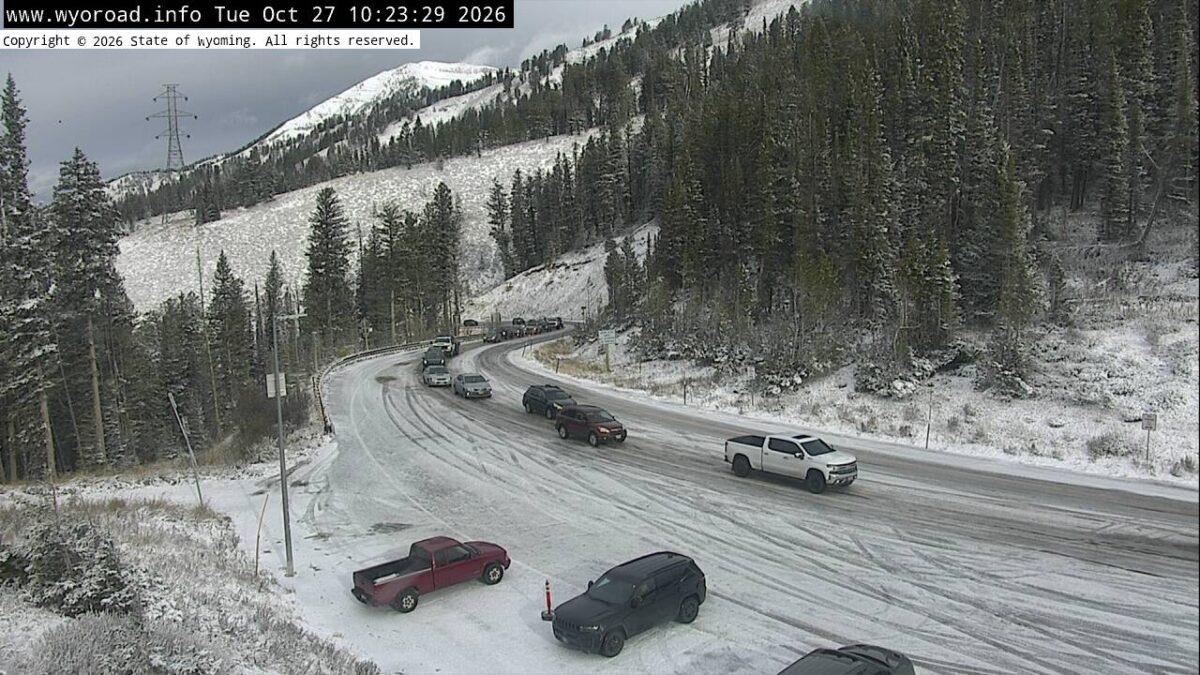
JACKSON, Wyo. (KIFI) – The Teton Pass is back open after being closed due to winter conditions and some crashes earlier Tuesday morning.

The Wyoming Dept. of Transportation closed Highway 22 around 9:45 a.m. between Wilson and the Idaho State Line and reopened it at 10:15 a.m.

A snow storm made the road icy at the summit.

No other details have been released.

Cars wait for Hwy 22 over the Teton Pass to reopen near Wilson.

Click here to follow the original article.

El Paso County jail inmate dies ‘while receiving care’ at hospital

Yvonne Suarez

EL PASO, Texas (KVIA) – The Texas Commission on Jail Standards was notified of the death of a man in his late 50s who had been in the custody of the El Paso County Sheriff’s Office since 2025.

The Sheriff reported that the 57-year-old man was taken to an area hospital for medical treatment on October 20, 2026. He died at the hospital today at 4:23 a.m.

The man had been in custody since November 16, 2025.

The Sheriff’s Office said in a release, “the official cause of death has not yet been determined. While the circumstances appear to be medical in nature, the cause of death remains under investigation.”

In addition to the TCJS, the Texas Rangers, and the El Paso County Sheriff’s Office Major Crimes Unit are investigating the death.

This is the fifth in-custody death this year compared to nine for the same time period in 2025, according to the Sheriff’s Office.

Click here to follow the original article.

Shooting at Northeast El Paso apartments hospitalizes 1

Gabrielle Lopez

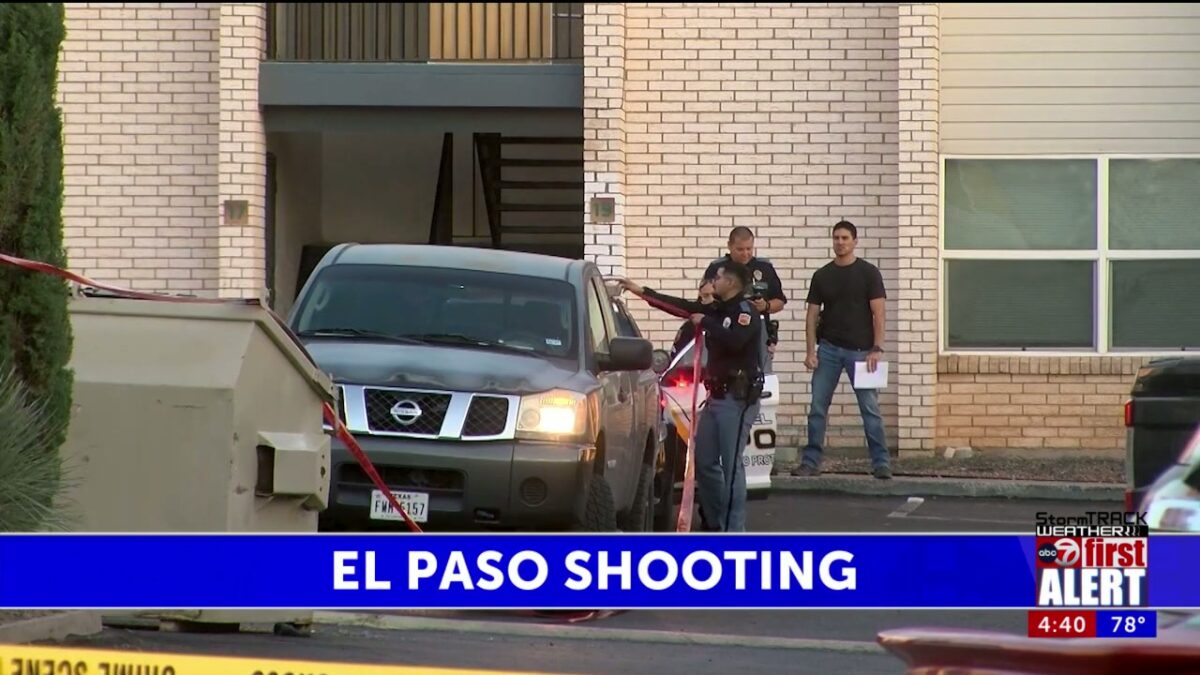
EL PASO, Texas (KVIA) — A man went to a hospital with serious injuries after being shot on Tuesday, according to the El Paso Police Department.

Police said it learned about a shooting at the Amigos Del Sol Apartments on Rushing Road and Woodrow Bean Transmountain in Northeast El Paso. EPPD said it received a call about the shooting Tuesday at 3:24 a.m.

Police found a man who had been shot. He went to a hospital with life-threatening injuries.

EPPD said no charges have been filed and police are still investigating.

Click here to follow the original article.

DUI suspect crashes into utility pole while evading CHP in Thermal

Julia Castro

Thermal, Calif. (KESQ) — An 18-year-old driver was arrested on suspicion of driving under the influence and evading police after a crash that brought down utility lines in Thermal early Tuesday morning.

According to the California Highway Patrol, officers were attempting to stop a 2014 Nissan Pathfinder traveling at high speeds northbound on Harrison Street near Avenue 63.

As the driver approached Avenue 60, he lost control and crashed into a stop sign and a utility pole along the right shoulder of the road.

Cal Fire crews responded to the single-vehicle crash near Harrison Street and Avenue 60 around 2:15 a.m. Firefighters reported downed utility lines and requested assistance from the Imperial Irrigation District.

CHP said the 18-year-old driver, who was alone in the vehicle, suffered minor injuries. He was subsequently arrested on suspicion of evading police and driving under the influence.

IID also reported a power outage affecting 15 customers in the Thermal area, including near Avenue 60, Van Buren Street and Highway 86, as of 6 a.m.

The outage remained unresolved in the utility’s report, with no estimated restoration time available.

It was not immediately confirmed whether the crash caused the power outage.

News Channel 3 is working to learn more about the incident and when power is expected to be restored.

Click here to follow the original article.

Could Trump’s Execution Push Help End the Death Penalty?

By Ben Jealous

Click here for updates on this story

    October 27, 2026 (Houston Style Magazine) — Could President Donald Trump’s push for more executions—and Defense Secretary Pete Hegseth’s plan to livestream one—help accelerate efforts to abolish the death penalty in America? After a tumultuous October, the question deserves a closer look.

The case is particularly close to home for Texans. Nidal Malik Hasan, convicted of killing 13 people at Fort Hood in 2009, is scheduled for a military firing-squad execution on December 3, 2026. Hegseth wanted Americans to watch it online. Lawmakers from both parties objected.

North Carolina Republican Sen. Thom Tillis called the proposal “beyond disgusting” and compared public executions to practices of oppressive dictatorships. Utah Republican Sen. John Curtis warned that “a civilization erodes” when executions become entertainment.

An ABC News–Washington Post–Ipsos poll found 80% of Americans opposed livestreaming Hasan’s execution, including 64% of Republicans. On October 15, Trump canceled the broadcast. The execution itself remains scheduled.

When Conservatives Question State Power Opposing a broadcast is not the same as opposing capital punishment. That same poll found 53% of Americans supported Hasan’s execution by firing squad. Yet other Republican leaders are reconsidering the state’s power to take a life.

On October 20, Alabama Gov. Kay Ivey commuted Toforest Johnson’s death sentence to life without parole. Convicted of murdering sheriff’s deputy William Hardy, Johnson has maintained his innocence. His conviction stands, and Ivey did not declare him innocent. She questioned whether the direct evidence was sufficient to justify execution—a punishment that leaves no room to correct a mistake.

Ohio Gov. Mike DeWine helped revive his state’s death penalty law in 1981. This June, after decades as a prosecutor, lawmaker and governor, he called for abolition. “The moral justification I had,” DeWine said, “no longer exists.” He argued that capital punishment does not deter murder and described the prolonged toll on victims’ families. Bipartisan repeal legislation faces opposition.

These are not identical positions. They nevertheless pose a shared question: How can Americans distrust government with ordinary powers, yet trust it never to make a fatal mistake? Why Texas and Harris County Matter For Houston readers, this debate is anything but abstract. Texas has executed more people than any other state since modern executions resumed. Harris County alone accounts for 136 executions—more than any other state except Texas itself, according to the Death Penalty Information Center. Victims’ families, defendants, jurors and entire communities live with the consequences.

Fifty Years After Gregg v. Georgia In 1976, Gregg v. Georgia allowed executions to resume under revised death penalty laws. But the Eighth Amendment still prohibits cruel and unusual punishment. In Atkins v. Virginia and Roper v. Simmons, the Supreme Court limited capital punishment by considering America’s “evolving standards of decency.”

Today, 23 states have abolished the death penalty. Another 10 retain it but have gone at least a decade without an execution. That makes 33 states where executions have ended in law or been absent for at least 10 years. Three more abolition states would create a numerical majority, though the Constitution establishes no automatic 26-state test.

Execution methods raise questions, too. Tennessee’s September attempt to execute Christa Pike by lethal injection failed; she survived. Republican Gov. Bill Lee ordered an independent review and halted the state’s remaining scheduled executions for 2026.

September also marked 15 years since Georgia executed Troy Davis. I stood outside that prison. Seven of nine key witnesses had recanted or changed their accounts. William Sessions, who led the FBI under Presidents Reagan and George H.W. Bush, urged Georgia to stop. It did not.

I helped lead Maryland’s successful abolition campaign in 2013. I learned that the cause can unite people who disagree on almost everything else: believers in redemption, skeptics of government power and citizens determined not to risk an irreversible injustice. Virginia followed in 2021, becoming the first former Confederate state to end capital punishment.

None of this guarantees abolition. Executions continue, and supporters argue that capital punishment can deliver justice for victims of heinous crimes. Still, this October raised questions that political labels cannot neatly contain.

Trump and Hegseth sought to demonstrate the severity of punishment. They may instead have encouraged more Americans to examine what government killing means. Fifty years after Gregg, that examination matters more than ever. Ben Jealous is a professor of practice at the University of Pennsylvania and former national president and CEO of the NAACP. He also served as the founding director of Amnesty International USA’s domestic human rights program.

Please note: This story was provided to CNN Wire by an affiliate and does not contain original CNN reporting. This content carries a strict local market embargo. If you share the same market as the contributor of this article, you may not use it on any platform.

kierra lee
KIELEESTYLE@GMAIL.COM
3465287733

Why I Vote on Election Day

By Donald Sparks

Click here for updates on this story

    October 27, 2026 (Houston Style Magazine) — For one retired military veteran, voting on November 3 is a personal tribute to African American military service, voting rights, and the enduring promise of American democracy.

In the days leading up to Election Day, I enjoy seeing social media photographs of friends proudly displaying their “I Voted” stickers. Their smiles, excitement, and enthusiasm remind me that participating in our nation’s democratic process is both a privilege and a responsibility.

Yet, despite sharing that enthusiasm, I choose to wait until Election Day.

Friends often ask why. My answer begins with my military service.

In 1988, just shy of my 20th birthday, I left home to serve my country. My military assignments took me across Europe, Asia, and several states. Because I was frequently stationed away from home, I exercised my voting rights through absentee ballots rather than visiting a polling place.

When I retired in 2018, I made myself a promise: I would stand in line and cast my ballot in person on Election Day, regardless of the weather.

But my commitment goes deeper than personal tradition. Honoring Black Veterans Who Fought for Democracy Throughout American history, African American military veterans have defended freedoms abroad while struggling to secure those same freedoms at home.

During World War II, Black service members helped fight tyranny overseas even as segregation, racial discrimination, and voter suppression denied many African Americans equal citizenship in the United States.

Their courage helped inspire a powerful movement that remains relevant 81 years after World War II ended.

On January 31, 1942, the influential Black newspaper Pittsburgh Courier published a letter from James G. Thompson, a defense-industry worker from Wichita, Kansas, who asked a question that challenged America’s conscience: “Should I sacrifice to live half-American?”

Thompson proposed a powerful concept: the Double V Campaign — victory against enemies abroad and victory against racial discrimination at home.

The Pittsburgh Courier embraced his message, transforming it into a nationwide campaign demanding that America’s democratic principles extend to African Americans.

For Black veterans returning home, the struggle continued. Many confronted Jim Crow segregation, discriminatory voting practices, and racial violence. Nevertheless, their determination helped strengthen the growing movement for civil rights and equal representation.

Their sacrifices remind me that the ballot represents far more than a political choice. Why My Vote Still Matters in 2026 Today, I find myself voting for many of the same principles those brave men and women defended.

I vote to oppose voter intimidation and discriminatory registration practices.

I vote for economic opportunity, fair representation, and equal treatment for African Americans and every American.

I vote to hold elected officials accountable, defend democratic institutions, and ensure that public officials respect the people they serve.

Most importantly, I vote because protecting voting rights is not the responsibility of one generation of veterans. It is a continuing obligation shared by every generation.

I respect everyone who votes early or by mail. Their votes carry the same importance as mine. But for me, standing in line on Election Day is a deeply personal expression of gratitude, remembrance, and citizenship.

When I enter that voting booth, I am honoring generations who fought for a voice in America’s democracy, including those who wore our nation’s uniform while being denied equal rights at home.

On Tuesday, November 3, 2026, you will find me standing in line to vote.

Not simply to mark a ballot, but to affirm the citizenship, dignity, representation, and freedoms I spent my military career defending.

And now you know why I vote on Election Day.

Please note: This story was provided to CNN Wire by an affiliate and does not contain original CNN reporting. This content carries a strict local market embargo. If you share the same market as the contributor of this article, you may not use it on any platform.

kier

Early Voting Continues to Shatter Harris County Records

By Burt Levine

Click here for updates on this story

    October 27, 2026 (Houston Style Magazine) — Harris County’s democracy is making noise—and it sounds like footsteps at the polls. As the November 3 midterm election approaches, residents weighing races for U.S. Senate, governor, Congress and county judge are turning ordinary community centers into extraordinary displays of civic participation.

By Tuesday morning, October 27, a local election tracker reported approximately 706,000 early votes through Monday. The figure is preliminary, but the historic pace is unmistakable: county data showed 624,533 ballots cast in person or returned by mail through Sunday, the strongest first-week midterm showing in records dating to 1998. On opening day alone, 104,659 residents voted in person, surpassing the comparable 2018 record of roughly 63,000.

Leading the parade of participation is Cypress. The Richard and Meg Weekley Community Center had logged 23,972 voters through Monday, according to the local site tracker. Houston’s Metropolitan Multi-Service Center on West Gray followed with 22,351; Juergens Hall Community Center recorded 18,819; and Houston City College’s West Loop South site counted 18,335. Those figures represent cumulative check-ins, not today’s waiting times.

In Cypress-Fairbanks ISD, voters also face consequential decisions close to home. Five district propositions—one tax-rate measure and four bond questions—address classroom operations, building repairs, technology, athletics and pools. Proposition A would raise the maintenance-and-operations tax rate by 12 cents per $100 of taxable value and, district officials estimate, produce $83.4 million locally plus $20.2 million in state funds each year. The district projects a nine-cent net overall tax-rate increase if all five measures pass.

“We are incredibly excited by the turnout up here,” said Kendra Camarena, a Cy-Fair ISD trustee elected in 2025, emphasizing the engagement of parents, educators and taxpayers. The proposals are not merely numbers on a ballot: they are choices about educational services, community priorities and tax costs that residents must weigh for themselves.

Across Houston, the surge reaches neighborhoods where organizers have worked to overcome years of lower participation. Harris County Democratic Party Chair Traci A. Gibson said turnout in parts of Acres Homes, Sunnyside and the Tidwell corridor has roughly doubled from the comparable stretch in 2022. In Acres Homes, approximately 5,000 residents voted during the first four days, compared with about 2,400 four years earlier.

Community engagement has taken many forms, including the October 25 “Souls to the Polls” gathering organized by the Community of Faith Church and partners, combining fellowship with a nonpartisan trip to vote. Such gatherings underscore a simple principle: the voting booth belongs to every eligible citizen, regardless of party or background.

Could Harris County surpass one million early ballots? The trajectory invites the question, but the final total remains unknown. What is certain is the deadline: early voting continues at 75 countywide centers through Friday, October 30, from 7 a.m. to 7 p.m. Election Day is Tuesday, November 3. Find sites, identification guidance and your sample ballot at HarrisVotes.com. Records may be made by numbers, but democracy is sustained by participation.

More Voting INFO: HarrisVotes.com

Please note: This story was provided to CNN Wire by an affiliate and does not contain original CNN reporting. This content carries a strict local market embargo. If you share the same market as the contributor of this article, you may not use it on any platform.

kierra lee
KIELEESTYLE@GMAIL.COM
3465287733

‘I asked to tighten this’: 911 call reveals moment after video board fell onto Florida student

By Meghan Moriarty

Click here for updates on this story

    PALM BAY, Florida (WESH) — Newly released 911 recordings reveal a distressed caller saying she asked someone to “tighten this the other day” after a Promethean board fell on top of a 5-year-old Palm Bay student.

“I have a student who (unintelligible) a Promethean board off of the door off the wall and land on him,” the caller said.

Family demands answers after video display board falls on boy at Palm Bay school, killing him About a minute later, she said, “He’s not responsive.”

The caller then said, “And I asked (unintelligible) to tighten this the other day.”

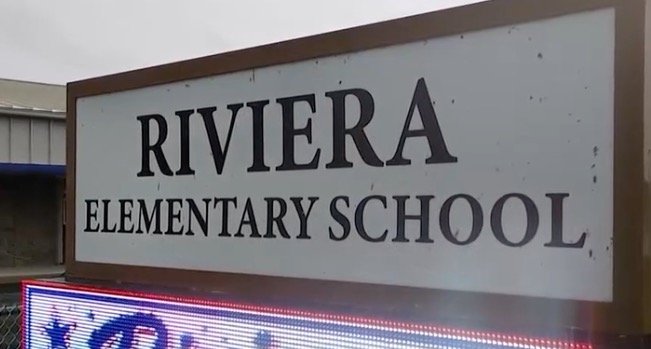
Following the death of Riviera Elementary student Bellamy Dawkins-Morris, the district issued a statement saying it would inspect all video boards districtwide.

On Monday, the district said, “The district has completed its inspection of more than 3,000 boards and found no pattern of improper installations. We are currently awaiting the final inspection report.”

“It is abundantly clear that there were failures associated with this particular equipment that caused the tragic and unfortunate death of Bellamy,” attorney Maegan Bridwell said.

Bridwell said the firm visited Riviera Elementary on Friday.

“We’re still in the endeavor to find out why this happened and how it happened, and we’re prepared to pursue litigation against those entities responsible, especially in light of the information that we’ve received as of the past couple of weeks since this has happened,” she said.

Palm Bay police said the investigation remains active.

The district has not said whether there were issues with the board that fell on Oct. 7.

Please note: This story was provided to CNN Wire by an affiliate and does not contain original CNN reporting. This content carries a strict local market embargo. If you share the same market as the contributor of this article, you may not use it on any platform.