Harris County Clerk’s Office Launches Harris Votes App

By Francis Page Jr.

Click here for updates on this story

    October 5, 2026 (Houston Style Magazine) — Democracy works best when voters can find trustworthy information before they reach the voting booth. That is why the Harris County Clerk’s Office deserves a hearty thank-you for putting a little more civic power in Houstonians’ pockets with the official Harris Votes app — a free mobile tool designed to make election preparation faster, clearer and more convenient.

With the Tuesday, November 3, 2026, General and Special Elections approaching, the new app brings several of the county’s most-used election resources into one place. Voters can check their registration status, locate Vote Centers, review a personalized sample ballot, track key election dates and receive official reminders and updates. In a county as sprawling and diverse as Harris County, that kind of convenience is not merely high-tech; it is good public service.

“We know voters want election information that is easy to access,” Harris County Clerk Teneshia Hudspeth said. “The Harris Votes app brings several of those resources together in one place, giving voters another convenient way to prepare for Election Day.”

And preparation matters. Early Voting is scheduled for October 19 through October 30. Election Day is Tuesday, November 3, with Vote Centers open from 7 a.m. to 7 p.m. The deadline to apply for a ballot by mail is October 23. For eligible Texans who are not yet registered, October 5 is the voter-registration deadline for the November election — so procrastination has officially reached its expiration date.

The app also gives voters access to directions and operating information for Vote Centers, making the familiar “Where do I go vote?” question easier to answer from a smartphone. Harris County uses a countywide Vote Center model, allowing registered voters to cast a ballot at any available Vote Center in the county during Early Voting and on Election Day. That flexibility can make voting easier for residents balancing work, school, caregiving and Houston traffic — a civic obstacle worthy of its own ballot proposition.

The Harris Votes app is available for iPhone and Android, and the Clerk’s Office says election information is offered in English, Spanish, Vietnamese and Chinese to better serve Harris County’s multilingual population. Users may also enable push notifications for election reminders and official updates. Download for iPhone at Apple App Store or for Android at Google Play.

For voters who prefer a browser, the county’s full election hub remains available at HarrisVotes.com, where residents can review election schedules, sample ballots, Vote Center information, mail-ballot resources, voter ID requirements and election results. Texans can also confirm statewide registration information through VoteTexas.gov.

Houston Style Magazine applauds public tools that make democracy more accessible, more understandable and more usable. Technology cannot cast a ballot for us — and thankfully it should not — but it can help remove the small barriers that cause big confusion. In that sense, Harris Votes is more than another app on the home screen. It is a digital reminder that informed participation remains one of democracy’s strongest habits.

So, download it, check your registration, study your ballot, make your voting plan and share the information with family, friends and neighbors. Democracy does not run on autopilot. It runs on people — informed, prepared and ready to vote.

DOWNLOAD THE APP: Harris Votes — Apple App Store Harris Votes — Google Play For voters who prefer a browser, the county’s election hub continues to provide election schedules, sample ballots, Vote Center information, mail-ballot resources, voter ID guidance and election results. Harris Votes

HarrisVotes.com — Official Harris County Election Information VoteTexas.gov — Official Texas Voter Information

Please note: This story was provided to CNN Wire by an affiliate and does not contain original CNN reporting. This content carries a strict local market embargo. If you share the same market as the contributor of this article, you may not use it on any platform.

kierra lee
KIELEESTYLE@GMAIL.COM
3465287733

Garnet Fredrick Coleman: Son, Husband, Father, Brother, Elected Representative, Community Advocate

By Coleman Family

Click here for updates on this story

    October 5, 2026 (Houston Style Magazine) — Garnet Fredrick Coleman was the third child born to John Brady Coleman and Gloria Letitia Jones Coleman on September 8, 1961, at the Howard University Freedmen’s Hospital in Washington, D.C. The Colemans lived near the Howard University campus, where Dr. Coleman was completing his residency, and near the area where Gloria Coleman grew up. The family attended St. George’s Episcopal Church; all three children, Kathleen Letitia, John Brady, Jr., and Garnet, were baptized there. Upon concluding his residency, Dr. Coleman brought his family, including his 10-month-old baby boy, Garnet, to his hometown of Houston. They lived on McGowen when they first arrived in Houston, then moved to Ewing Street in the Third Ward and joined St. James Episcopal Church. The neighborhood quickly became a place Garnet would grow to love and serve throughout his life.

The young Garnet attended St. Anne’s Catholic School through eighth-grade graduation. In high school, he was very proud of his placements in track and field and swimming at league competitions, and he graduated from Bellaire High School in the Class of 1979. The Coleman parents always encouraged their daughter and sons to consistently explore employment opportunities while keeping educational goals at the forefront. During high school, the enterprising Garnet worked as a DJ and concessionaire operator. His energy and drive foreshadowed an entrepreneurial spirit that later emerged as the proprietor of Fredrick’s Beer and Wine Bar. Garnet was always working and exploring innovative ways to serve and support his community.

As the son of a physician, Garnet and his siblings accompanied their parents to National Medical Association (NMA) conventions each summer. At the 1975 Miami, Florida convention, Garnet met Angelique Feaster, the daughter of another physician family with a similar NMA tradition. In 1977, Garnet and Angelique crossed paths again at the NMA Convention in Los Angeles, CA. They maintained communication and visits for a while, but over time their correspondence diminished. By a remarkable coincidence, Garnet and Angelique both enrolled at Howard University in 1979, the alma mater of Garnet’s and Angelique’s fathers’ medical school and of Angelique’s mother’s and sister’s undergraduate school, and their romance blossomed again. In the summer of 1983, Garnet surprised Angelique with a visit to her home in Los Angeles to formally announce their engagement. While Angelique’s parents were in on the plan, their family dog was not. Amid the excitement, the dog misinterpreted an enthusiastic hug and bit Garnet on the back. Angelique’s father took him to his office for a couple of stitches, and despite the unexpected mishap, the engagement remained a joyful and memorable occasion.

On July 14, 1984, Garnet and Angelique were wed at St. Bernadette Catholic Church in Los Angeles, CA. The newly married couple established a home in Houston’s Third Ward and were blessed with two children, Garnet Austin Coleman and Evan Angelique Coleman. Raising Austin and Evan was the center of family life. The working Coleman parents delicately coordinated job schedules with their kids’ school activities—all while sharing them with grandparents and taking them on extended-family trips to their California relatives. The parents never missed Austin’s music performances or Evan’s photography showings. Garnet’s love nurtured and encouraged.

Garnet was determined to fulfill the educational goals inspired by his parents. He enrolled in several institutions, exploring his academic interests at each. Although he faced challenges of balancing his employment with classes, he was undeterred from his target. Garnet’s undergraduate journey reflected the high priority he placed on education and his belief that scholastic achievement helped mold and serve as a strong foundation for an individual’s future. In 1990, Garnet received his Bachelor of Arts degree in Political Science from the University of Saint Thomas. Curious, driven, and committed to lifelong learning. Garnet also completed the following Harvard Kennedy Executive Programs: Senior Executives in State and Local Government, Leadership Without Easy Answers, Negotiations, in conjunction with Harvard Business School, and Understanding the New World of Health Care, jointly with Harvard Medical School.

For the remaining decades of his life, Garnet’s speeches to youth, support of internship programs, and efforts to fund education would reflect his passionate devotion to academic attainment. In 1991, he founded Operation S.M.A.R.T., a nonprofit educational program to provide mentors and role models to Houston students and their families. Operation S.M.A.R.T. is an acronym for (S) Shadowing, (M) Motivation (A) Assistance (R) Resources (T) Teamwork. Garnet’s vision was that strategic direction was necessary for success.

That same year, Garnet was elected in a runoff to serve as the Texas State Representative for a seat left vacant by the passing of Representative Larry Q. Evans. Once in the Texas Capitol, he was “a fierce warrior for his district, working across the aisle countless times” to pass policy improvements and fund construction at the University of Houston, Texas Southern University, the University of Texas Health Science Center at Houston, and Prairie View A&M University. His leadership led to the creation of both the University of Houston Hobby School of Public Affairs and the Texas Southern University Barbara Jordan-Mickey Leland School of Public Affairs. Public service was a calling for him.

Garnet was well known for his intricate knowledge of healthcare policy. In addition to his countless bills and amendments, there are millions of children that have been covered by health insurance in Texas over the last three decades because of his work simplifying Children’s Medicaid and creating the Children’s Health Insurance Program (CHIP) in Texas. He was an early pioneer in fighting to increase funding for HIV/AIDS treatment and mental health services. As Chair of the House Committee on County Affairs, Garnet was proud to advocate for local interests in all of Texas’ two hundred fifty-four counties – rural, suburban, and urban – including for the creation of local hospital districts throughout the state. In typical fashion, Garnet was always eager to use this position of power to help his fellow lawmakers in both parties meet the special needs of their own districts. A natural teacher, Garnet took great pride in seeing members who had served on his committee go on to become excellent committee chairs themselves.

Of his legislative accomplishments, Garnet was perhaps most proud of the passage of the Sandra Bland Act, a foundational criminal justice reform victory near the conclusion of his legislative career that mandates mental-health diversion, jail safety improvements, de-escalation training, and stronger reporting requirements for law enforcement in Texas. It was signed into law by Governor Abbott in 2017.

Garnet was extremely proud of his extensive legislative accomplishments and legacy. However, he said that his greatest career legacy was not legislative; it was the people he mentored. In his staff and fellow lawmakers, he cultivated and passed on the knowledge, judgment, and skill to turn a commitment to helping others into the ability to do so effectively. Those hundreds of former colleagues and former staff are spread across the state and the country, leveraging his wisdom into changing public policy for the better each and every day.

In addition to his service as a state representative, Garnet served as the Harris County field director for Bill Clinton’s presidential campaign and as a delegate to the 1992 Democratic National Convention in New York City. During President Barack Obama’s administration, Garnet was selected to serve as a member of President Obama’s State Legislators for Health Reform, a working group of 32 state legislators helping to write and pass the historic Affordable Care Act, also known as Obamacare. Garnet was Chair of the Legislative Study Group, a non-partisan house caucus dedicated to developing sound public policy, from 2003-2022. Throughout his 30 years of service, Garnet had a reputation as a leader in health care, economic development, criminal justice, and education. He was the Senior ranking member of the Public Health Committee and the County Affairs Committee Chairman. Garnet served 10 years on the House Appropriations Committee and 8 of those 10 on the Conference Committee on the Budget.

Beyond his public service, Garnet was an unapologetic fighter for improving the quality of life in his beloved southeast Houston communities. For years, he campaigned against displacement, distributing hundreds of signs that proclaimed, “This is our home; it is not for sale.” Garnet established non-profit organizations and served as the CEO of Apartments for America, Inc., a non-profit affordable housing corporation. In 2012, he founded the Center for Civic and Public Policy Improvement (CCPPI) to advocate for the causes he cherished – health care services, civil rights, social and economic reform, voter education and affordable housing. The CCPPI implementation of the Southeast Houston Affordable Housing Initiative resulted in the construction of over 300 single-family and more than 540 multi-family housing units, with an affordable housing hub designed to serve the area.

Garnet persuaded city leaders to restore Emancipation Park and to designate Third Ward’s major thoroughfare as “Emancipation Avenue.” This second renaming of the street was a tribute to Emancipation Park, similarly to how MacGregor Way, Hermann and Memorial Drives deliver access to those parks. He also served on the boards of numerous charitable organizations, including the South-Central Young Men’s Christian Association, the Third Ward Redevelopment Council, the Houston Drug and Alcohol Abuse Council, and The Ensemble Theater, raising funds for these and other organizations. The Ensemble Theater Green Room is named in recognition of the money raised for its operation. Supporting green spaces and the arts were his abiding passions.

The tenacity, advocacy, and accomplishments of Garnet Fredrick Coleman combined to create an incomparable legacy that demonstrates his love for the community. On Wednesday, September 23, 2026, Garnet rested from his devotion to earthly commitments. He leaves to celebrate the memories his beloved wife Angelique Feaster Coleman, son, Garnet Austin Coleman, and Austin’s husband, Jeremy Gray, daughter, Evan Angelique Coleman, his sister, Kathleen Letitia Coleman, and brother, John Brady Coleman, Jr., his mother-in law Rosenda D. Feaster, sister-in-law Monique F. Bond, niece Noelle M. Bond, cousin’s – Arthur W. Coleman, Annette Coleman Bracey (Arthur), Sabrina Whitfield Hammond Sellers, Terri Whitfield Sprouse, Susan Coleman Williams, Carol Coleman Adams (Kevin), Valerie Coleman Ferguson, and numerous friends.

Please note: This story was provided to CNN Wire by an affiliate and does not contain original CNN reporting. This content carries a strict local market embargo. If you share the same market as the contributor of this article, you may not use it on any platform.

kierra lee
KIELEESTYLE@GMAIL.COM
3465287733

Bayou City Art Festival Returns to Memorial Park for Three Days of Art, Music and Family Fun

By Francis Page Jr.

Click here for updates on this story

    October 5, 2026 (Houston Style Magazine) — Houston knows how to turn a park into a party, but this October, Memorial Park is trading ordinary scenery for extraordinary creativity.

The Bayou City Art Festival Memorial Park returns Friday through Sunday, October 9–11, 2026, transforming South Picnic Loop into a sprawling outdoor gallery filled with fine art, live entertainment, food, interactive experiences and plenty of Houston flavor. Gates are open 10 a.m. to 6 p.m. daily.

As a proud media sponsor, Houston Style Magazine celebrates an event that has spent more than half a century proving that art is not simply something to admire from across a velvet rope. At Bayou City Art Festival, you can meet the creators, hear their stories, discover how their pieces came to life — and perhaps take one home.

More than 250 artists representing 19 artistic disciplines are expected to showcase works ranging from paintings and sculpture to jewelry, photography, mixed media and more.

This year’s featured artist is Wisconsin-based acrylic painter Aubrey Hogan, whose richly textured work draws inspiration from French Impressionism while exploring wilderness, resilience, wonder and hope. His paintings are known for visible brushstrokes and imaginative subjects ranging from wildflowers and bison to wandering astronauts. In other words, prepare to look twice.

But Bayou City Art Festival has never been just an art walk.

Festivalgoers can catch live performances, visit the Food Truck Park, relax in the craft beer garden and wine bar, check out colorful Houston Art Car Klub creations and strike a pose at oversized festival selfie installations.

Families should make time for the Active Imagination Zone, where creativity becomes hands-on through arts activities, oversized bubbles, caricatures and experiences presented with Houston-area nonprofit partners.

That community connection runs deep. Producer Art Colony Association, Inc. traces the festival’s roots to the historic Westheimer Art Festival and reports that more than $4 million has been raised for local nonprofit organizations during its more than 50-year history.

For visitors looking to upgrade the weekend, VIP passes provide access to a hospitality lounge featuring light bites, complimentary beer and wine, refreshments and dedicated parking.

photo

Know Before You Go When: Friday–Sunday, October 9–11, 2026 Hours: 10 a.m.–6 p.m. daily Where: Memorial Park, South Picnic Loop, Houston Adult General Admission: $20 • Adult Weekend Pass: $30 Children ages 6–12: $5 • Children 5 and under: FREE

General admission parking is at Delmar Stadium, 2066 Mangum Road, with a $12 parking/shuttle pass serving the festival entrance. Online pre-purchased admission tickets are required.

Houston, bring comfortable shoes, curiosity and maybe a little blank wall space at home. With hundreds of artists, music, food and one of Houston’s most enduring cultural traditions waiting inside Memorial Park, Bayou City Art Festival offers three days to see just how colorful the Bayou City can be. TICKETS & FESTIVAL INFORMATION: BayouCityArtFestival.com

Please note: This story was provided to CNN Wire by an affiliate and does not contain original CNN reporting. This content carries a strict local market embargo. If you share the same market as the contributor of this article, you may not use it on any platform.

kierra lee
KIELEESTYLE@GMAIL.COM
3465287733

Texas Southern University Homecoming 2026 to Culminate with Tigers vs. Southern University at Reliant Stadium

By Francis Page Jr.

Click here for updates on this story

    October 5, 2026 (Houston Style Magazine) — HOUSTON — There are football games, there are Homecoming games—and then there are afternoons when history, rivalry, music and generations of HBCU pride all show up wearing maroon and gray.

On Saturday, October 24, 2026, Texas Southern University will bring its 99th Homecoming celebration to a roaring conclusion when the TSU Tigers battle the Southern University Jaguars at 2 p.m. at Reliant Stadium in Houston.

For Tiger Nation, this is much bigger than four quarters.

Homecoming 2026 carries the theme “Mission 99: The Final Ascent to 100,” marking Texas Southern’s final Homecoming before the University celebrates its Centennial in 2027. Nearly a century after its founding, TSU is preparing to salute 100 years of education, leadership, culture, public service and unmistakable Houston history.

And what better way to approach that milestone than with Southern University coming to town?

Tigers, Jaguars and HBCU Tradition The matchup brings together two of the Southwestern Athletic Conference’s best-known programs and renews a rivalry filled with generations of HBCU football memories. It will be the first time since 2015 that Texas Southern and Southern meet during TSU Homecoming Weekend, while TSU returns to play inside Reliant Stadium for the first time since 2014.

But everybody who knows HBCU football understands one thing: halftime is not the time to head for concessions.

photo

Texas Southern’s legendary Ocean of Soul Marching Band and Southern University’s internationally celebrated Human Jukebox will bring their own heavyweight showdown to the stadium. Expect brass, drums, precision, swagger and enough musical electricity to make the halftime performance nearly as anticipated as the scoreboard.

Homecoming Starts Early Saturday begins in Houston’s historic Third Ward with the Homecoming Parade at 8:30 a.m., beginning at Cleburne and Tierwester and concluding at Wheeler and Ennis.

At 10 a.m., The Ultimate Tailgate Experience takes over The Yard with Tiger families, alumni, students, music, food and vendors before fans make their way to Reliant Stadium.

TSU is also making transportation easier. Complimentary transportation will be available between campus and Reliant Stadium, including shuttle connections to METRORail and commemorative Mission 99 METRO passes. Alumni bus transportation will also be available.

Homecoming Week runs October 18–24, with worship, spirit days, Royal Court Coronation, alumni gatherings, Greek activities, Yard Fest and more leading toward Saturday’s celebration.

For Houston, this is more than another football weekend. Texas Southern is one of the institutions that helped shape this city—and Homecoming is its annual family reunion with Houston invited.

So wear the maroon. Bring the noise. Stay in your seat at halftime.

Mission 99 is preparing for liftoff. GET TICKETS lsse.net/tsu-southern-university-homecoming-2026 COMPLETE HOMECOMING SCHEDULE tsu.edu/homecoming

Please note: This story was provided to CNN Wire by an affiliate and does not contain original CNN reporting. This content carries a strict local market embargo. If you share the same market as the contributor of this article, you may not use it on any platform.

Kierra Lee
KIELEESTYLE@GMAIL.COM
3465287733

Precinct 2 at Work: Investing in Neighborhoods, Public Safety & Opportunity

By Francis Page Jr.

Click here for updates on this story

    October 5, 2026 (Houston Style Magazine) — In Harris County Precinct 2, the clearest measure of the success of government is not a slogan, ribbon cutting or campaign season promise. It is what residents can see on the block, feel in their pocketbooks and access when life gets complicated. From housing and public safety to health care and economic opportunity, the work of Precinct 2, under the leadership of Commissioner Adrian Garcia offers a practical case study in whatlocal government looks like when policy leaves downtown and reveals itself with the progress seen in neighborhoods.

Start with housing. Across Harris County, affordability has become one of the defining pressures on working families, seniors and longtimeresidents. County leaders have put their money where their mouth is, using both general fund and federal recovery dollars to create or preserve thousands of affordable units countywide. That includes a $9 million investment to acquire and rehabilitate all 220 units at Meadowbrook Plaza so they remain affordable to households at or below 60 percent of area median income. Under the direction of Commissioner Garcia, Precinct 2 has also backed the county land-trust model, designed to keep homeownership within reach by separating the cost of the land from the cost of the house. For families watching rent and the cost of homeownership rise faster than paychecks, these are not abstract policy experiments; they are attempts to keep a front door within reach.

Property-tax relief has been another part of Commissioner Garcia’s efforts to make life more affordable for residents. Harris County Commissioners Court unanimously approved Garcia’s proposals to expand the homestead exemption for qualifying seniors, disabled homeowners and veterans, eliminating county property-tax liability for qualifying homes valued at $336,000 or less and providing between $500 and $1000 in annual county tax savings for eligible homeowners under the plan. For residents on fixed incomes, that kind of relief canhelp determine whether “aging in place” is a phrase or a reality.

Public safety is equally personal for Commissioner Garcia. His efforts have led to Precinct 2 creating and funding the Violent Persons Task Force a.k.a VIPER initiative. The program brings together Harris County Sheriff and Constable Deputies for Violent Felony Warrant Roundups, focused on locating people wanted for serious violent offenses.

photo

Additionally, Garcia has brought to the table other law-enforcement and technology investments such as body cameras, video evidenceprocessing software, and 24-hour ankle monitoring. The practical goal is straightforward: remove dangerous offenders, prevent repeated violence, and give families more confidence in the streets, parks and commercial corridors they use every day. Public safety, after all, is not simply an arrest statistic. It is the freedom to live life without fear of being the victim of crime.

Then there is opportunity — especially where access has historically been uneven. Commissioner Garcia and Precinct 2 innovated the Access2Health program which brings screenings, immunizations and other services into communities through mobile and neighborhood-based care. The program includes an Access2Health mobile health unit, health kiosks and wellness facilities aimed at communities where transportation, insurance and provider shortages can turn routine care into a major undertaking. Precinct 2 has undertaken small business and workforce training via vendor education programs such as Biz2Empower, an eight-week small-business accelerator, and workforce programsthat connect residents to credentials, training and employment pathways. Over 100 businesses have graduated from Biz2Empower and they have collectively generated more than $12 million in contracts and financing.

Taken together, the story is less about one program than a neighborhood ecosystem: stable housing helps families stay rooted; safer streets help communities breathe; health access helps residents remain productive; and workforce and small-business programs help income grow closer to home. This is how the government closest to the people, locally elected officials such as Precinct 2’s Commissioner Adrian Garcia, serve their constituents in the best way possible.

For Houston Style Magazine readers, that is the useful civic lens for October: not campaign applause, but receipts.

In Precinct 2, residents can judge public investment by what has changed around them — one home, one safer block, one health screening and one new opportunity at a time. Harris County Precinct 2 — Commissioner Adrian Garcia

Please note: This story was provided to CNN Wire by an affiliate and does not contain original CNN reporting. This content carries a strict local market embargo. If you share the same market as the contributor of this article, you may not use it on any platform.

Kierra Lee
KIELEESTYLE@GMAIL.COM
3465287733

The First Columbus Day Was Declared in the Shadow of a Lynching

By Ben Jealous

Click here for updates on this story

    October 5, 2026 (Houston Style Magazine) — This month we mark Columbus Day. The first one was a Chicago story.

In the fall of 1892, the nation celebrated four hundred years since Columbus reached the Americas. Chicago was its grandest stage. The city dedicated the grounds of the World’s Columbian Exposition.

When the world arrived the next spring, Frederick Douglass was there. He was the most photographed American of his century. At seventy-five, he ran the Haitian Pavilion for the government of Haiti. Ida B. Wells worked beside him, putting a pamphlet into the hands of foreign visitors. She sent out 10,000 copies. When hecklers jeered one of his speeches, Douglass threw aside his notes and spoke right over them.

The pamphlet asked why African Americans had been shut out of the fair. Douglass wrote its opening as a wish list. Every item on it was something he could not honestly tell the world.

He wished he could say the national government “is not a rope of sand.” A rope of sand looks strong. It holds nothing. He wished he could say it would send warships to punish “the murder of its citizens in New Orleans.” It sent them fast enough to Chile and Haiti.

Everyone who received their message knew what had happened in New Orleans. Two years earlier, the city saw one of the largest mass lynchings in American history. The victims were Italians and Italian Americans.

On March 14, 1891, a lynch mob broke into the jail. It killed eleven men accused in the murder of the city’s police chief. Three had just been found not guilty. Three had a trial end with no verdict. Five had never been tried. No one was ever punished for their murders.

Italy’s top diplomat in Washington said only three or four of the dead were Italian citizens. The rest were Americans, or on their way to becoming Americans. Italy wanted the killers tried. It wanted payment for the victims’ families. Secretary of State James G. Blaine said Washington could not promise a trial. Murder was Louisiana’s business. Italy called its diplomat home.

President Benjamin Harrison admitted the problem to Congress. He asked Congress to let federal courts try crimes against foreigners. Congress did nothing.

So the government paid instead. In April 1892, the United States gave Italy 125,000 francs, about $25,000, for the victims’ families. Blaine wrote that the President hoped the money would “efface all memory of the unhappy tragedy.” In other words, forget it. Italy said the two nations were friends again.

photo Ben Jealous

Three months later, Harrison proclaimed a national holiday for Columbus. That fall, Washington sent two warships to Genoa for Italy’s own Columbus celebration.

The same government that could not protect eleven men in a New Orleans jail sent warships to honor Italy. The first Columbus Day was declared in the shadow of the lynching.

Italy had a king and a navy. The families of its citizens got paid. The families of the Italian Americans killed beside them got nothing.

When a lynch mob turned on this hated group of European immigrants, the world took notice. African Americans lived with that danger every day. In 1891 alone, the Chicago Tribune counted 169 African Americans killed by lynch mobs. Their families got nothing. No foreign power spoke for them. No warship sailed.

Congress waited 131 years to make lynching a federal crime. The Emmett Till Antilynching Act became law in 2022. Until then, the rope was sand.

The first Columbus Day asked Americans to look away from a lynch mob and toward a hero. In one sense, it worked. Italian Americans are safe today in ways their great-grandparents were not.

But the terror did not end. It moved. In time, the Ku Klux Klan would come for Catholic immigrants of every kind. Lynch mobs never stopped coming for African Americans. Too often, they had friends in government.

Douglass refused to let the world look away. He said what the government would not. Black Americans were being “tortured, shot, hanged or burned to death,” he wrote. They died “without ever seeing a judge, a jury or advocate.” In the same breath, he named New Orleans, reminding all that Black Americans were not the only ones whose rights and lives were put at risk by a weak federal response to lynch mobs.

He also held out something better. Douglass believed in a big America. He called for “a liberal and brotherly welcome to all who are likely to come.” Every nation has a mission, he said. Americas was plain. It was to become the most perfect “national illustration of the unity and dignity of the human family that the world has ever seen.”

That is still our mission. This Columbus Day, let us remember the context of the first one. And let us reflect on how far we have come, or not, since then.

Please note: This story was provided to CNN Wire by an affiliate and does not contain original CNN reporting. This content carries a strict local market embargo. If you share the same market as the contributor of this article, you may not use it on any platform.

Kierra Lee
KIELEESTYLE@GMAIL.COM
3465287733

Goode Company’s New Oyster Club Brings Gulf Coast Flavor, Fire & Fellowship to Houston This October

By Francis Page Jr.

Click here for updates on this story

    October 5, 2026 (Houston Style Magazine) — Houston knows a thing or two about good seafood, but this October, Goode Company is giving Gulf Coast food lovers another reason to come hungry.

The legendary Houston restaurant family is launching its new Oyster Club, a culinary series blending fresh Gulf seafood, spirited pairings and the kind of easygoing Texas hospitality that has helped make Goode Company a hometown institution since 1977.

The inaugural Oyster Club festivities arrive at an especially fitting moment: Goode Co. Seafood is celebrating its 40th anniversary in 2026, carrying forward the coastal traditions inspired by founder Jim Goode’s childhood experiences along the Texas and Louisiana Gulf Coast.

Chef and President Levi Goode describe Oyster Club as a tribute to those waters and the family history surrounding them. And judging from October’s lineup, this club isn’t interested in being stuffy. Think oysters over open flames, bubbles beside the raw bar and a full-fledged Texas fish fry.

photo

Embers & Oysters — October 9 First up is Embers & Oysters, Friday, October 9, from 5–7 p.m. at Goode Co. Fish Camp, 8865 Six Pines Drive, Suite 100, Shenandoah.

The outdoor kickoff turns up the heat with Romano oysters and Laguna Madre shrimp cooked over live fire. Admission is $35, including food and two drinks, with guests choosing from white wine or a martini. Reservations are required.

It sounds less like an ordinary Friday dinner and more like the Gulf Coast wandered into a backyard party — exactly the point.

Bubbles & Brine — October 16 On Friday, October 16, Oyster Club moves to Goode Co. Seafood Memorial, 10201 Katy Freeway, Suite 400, for Bubbles & Brine, also from 5–7 p.m.

Guests can dive into a raw-bar experience featuring oysters, shrimp cocktail and seared tuna, with additional seafood selections planned. The $35 ticket, plus tax and gratuity, includes a sparkling-wine welcome followed by two glasses of wine. Current reservations confirm the October 16 experience.

The Memorial restaurant itself combines Goode’s Gulf Coast heritage with an oyster-bar setting that makes it a natural home for the evening.

Texas Gulf Fish Fry — October 29 Oyster Club closes its 2026 launch series Thursday, October 29, from 5–7 p.m. at the original Goode Co. Seafood Westpark location, 2621 Westpark Drive.

The Texas Gulf Fish Fry gets gloriously casual with catfish beignets, fried shrimp, oysters and hush puppies. Tickets are $35; beverages are separate, including a planned $3 beer special and $15 beer buckets.

Beyond three dinners, Oyster Club represents something bigger: Goode Company introducing a new generation to the bounty, personality and communal spirit of the Texas Gulf Coast.

And there is more to come. Oyster Club programming is expected to continue expanding in 2027, giving October’s guests an early taste of a new Goode Company tradition.

Reservations are required, so seafood lovers should make plans early. LEARN MORE & RESERVATIONS: Goode Company Seafood Goode Company

Please note: This story was provided to CNN Wire by an affiliate and does not contain original CNN reporting. This content carries a strict local market embargo. If you share the same market as the contributor of this article, you may not use it on any platform.

Kierra Lee
KIELEESTYLE@GMAIL.COM
3465287733

Lifelong Balloon Fiesta dream takes flight for first-year pilot

By Alyssa Munoz

Click here for updates on this story

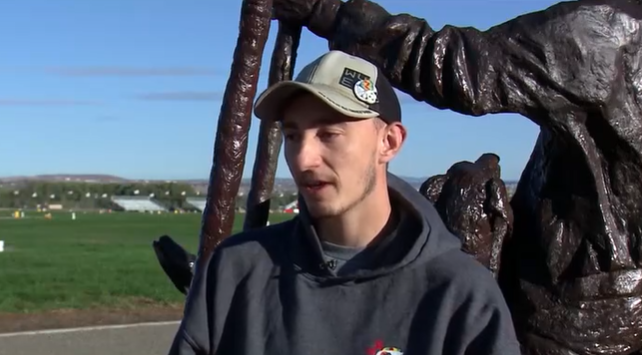
    ALBUQUERQUE, New Mexico (KOAT) — Piloting a hot air balloon for the first time is a mix of excitement and challenge, and Triston Garcia is one of 66 rookie pilots participating in this year’s balloon fiesta.

“My first balloon fiesta, I was just an infant wrapped in a blanket, and I’ve wanted to do it since I was a kid,” Garcia said.

Garcia attended his first fiesta at just three months old, while both of his parents were piloting balloons. After years of photographing balloons, he decided it was time to pursue his dream of flying one himself.

“It was a little easy, but a little difficult. Just having to find the right people to help me out and get where I wanted to go,” Garcia said.

As a first-year pilot, Garcia joined the fiesta’s mentor program, which pairs rookies with experienced pilots to provide guidance and support.

“They’ve made the advice of what not to do and how to do it safely. And also, just what if I feel unsafe or just don’t feel certain, but what I can do to help?” Garcia said.

With the help of his mentor, Garcia is ready to take to the skies in his balloon, Odeon, and experience the fiesta from a new perspective.

“It’s going to be a different view, a different overall emotion. I might break a little bit of a tear in the first flight once I get up off the field,” Garcia said.

Garcia is also excited to meet children at the event and inspire them to become pilots as well.

Please note: This story was provided to CNN Wire by an affiliate and does not contain original CNN reporting. This content carries a strict local market embargo. If you share the same market as the contributor of this article, you may not use it on any platform.

More than a card game: Chick-fil-A becomes a second home for a group of friends

By Amy Nay

Click here for updates on this story

    MURRAY, Utah (KSTU) — It’s a close-knit friendship between a group of ladies that maybe didn’t start with a game of cards, but that has certainly strengthened their bond.

Friends for years and years, but for more than a decade they’ve been meeting nearly each morning to play cards together and at a location that has become a caring community.

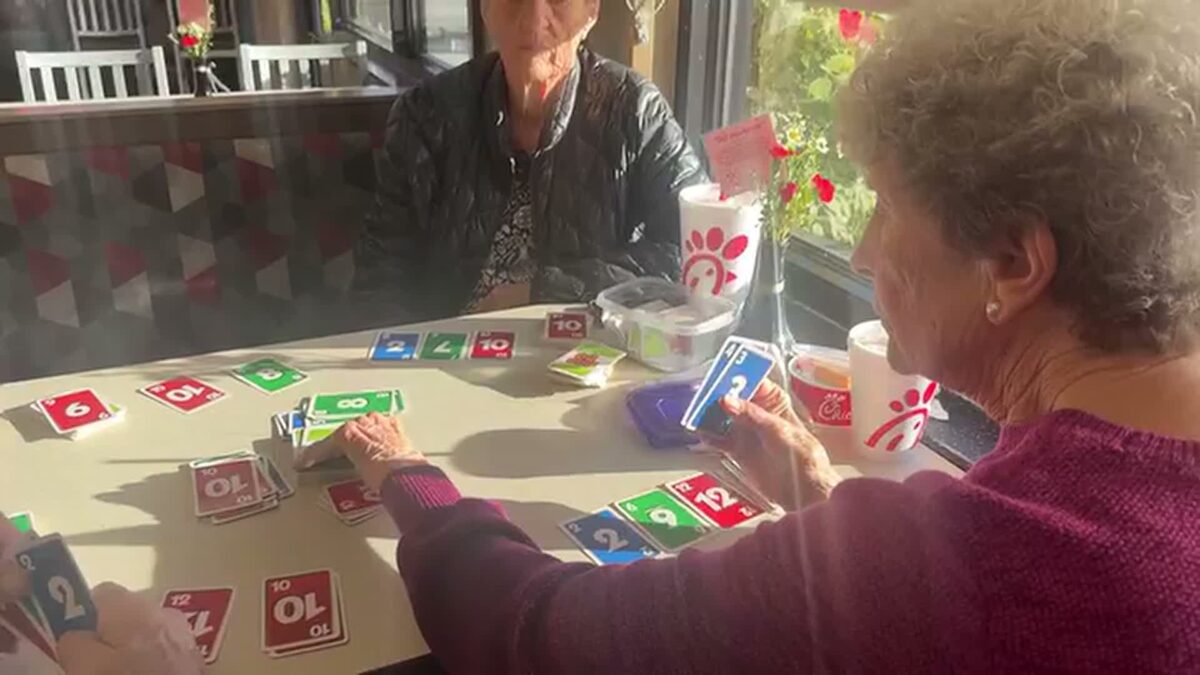
Nearly every morning, Marilyn Jensen and her two friends, both named Karen — Karen Childs and Karen Watkins — would meet at the Chick-fil-A near 51st and State Street in Murray. Sometimes they came three or four times a week. Sometimes they came every day.

They’d order their usual breakfast, grab their favorite drinks and settle in for a game of cards.

The Chick-fil-A employees knew them and knew their orders.

“They’ve been such a special part of our family and our Chick-fil-A community for so many years,” said Andrew Allman, owner/operator of the Chick-fil-A locations in Murray and Fort Union.

Allman said the restaurant’s team knows which drink each woman prefers, how much ice they like and even where their drink should come from.

“They know what fountain they like it from,” Allman said with a smile. “They know who they love to have serve them, and I love having their personalities and their smiles here in the morning each day.”

The women played games including Skip-Bo, Phase 10 and Rook, but the cards were really just the excuse to spend time together.

They traveled together over the years, shared countless mornings and became part of one another’s routines.

Then, last week, one of the women in this beloved trio sadly died unexpectedly.

Her husband, Russell Childs, came to Chick-fil-A Saturday to join the group and to thank the people who had become such an important part of his wife’s daily life.

“She liked it. She enjoyed it,” Russell said of Karen’s mornings at Chick-fil-A.

When the restaurant learned of Karen’s death, the Chick-fil-A team offered to cater her funeral and sent flowers to the family.

The gesture meant so much to Karen’s family that they reached out to share their appreciation, and not knowing how to properly thank the local franchise, they contacted FOX 13 News to try to share their story.

Russell said Chick-fil-A has always gone out of its way to take care of its customers.

“Chick-fil-A is a good place. They really take care of their customers,” he said.

Marilyn said she and Karen never let health issues or difficulty seeing the cards keep them from their morning tradition.

“We’ve never stopped,” Marilyn said. “We say, ‘Is it my turn to drive or yours?’ And she would pick me up or I would pick her up because we live nearby. We always meet Karen and we enjoy our time. It’s been fun. It’s been great. And I miss her like crazy.”

Now there is an empty spot at the table, but the cards are still being dealt.

And the friends say they plan to keep playing, remembering the friend who loved these mornings right alongside them.

On Saturday, they even invited FOX 13 reporter Amy Nay to sit down and join them for a hand, as she came to learn of their special bond and share their story.

What began as a simple game of cards became something much bigger: a community of friends, a familiar place to gather and a reminder that sometimes the people serving your breakfast can become part of your family, too.

“We started with a full booth, but it’s now just the two of us, but it’s been fun,” Marilyn said, vowing they’d continue to try to come and keep playing.

Please note: This story was provided to CNN Wire by an affiliate and does not contain original CNN reporting. This content carries a strict local market embargo. If you share the same market as the contributor of this article, you may not use it on any platform.

Sacramento artist brings Latino history to life with elaborate Southside Park mural

By Leticia Ordaz

Click here for updates on this story

    SACRAMENTO, California (KCRA) — A Sacramento artist is turning a neighborhood park into a living history museum, using colorful murals to celebrate Latino culture, honor community changemakers and inspire future generations.

For Hispanic Heritage Month, KCRA 3 is highlighting Richard Alcala, a longtime Sacramento resident and the founder of the Southside Park mural project.

Alcala recently opened Cultura Bookstore on Del Paso Boulevard to share his love of Latino literature with the community. But when he’s not busy at his new shop, you’ll likely find him at Southside Park, where he has spent years working to bring Sacramento’s rich cultural history to life.

“I would look at this blank wall at Southside Park, which means so much to all of us,” Alcala said. “Over the generations of fiestas and folklorico dancing, Aztec dancing, you know, it was just part of our history that needed to be told.”

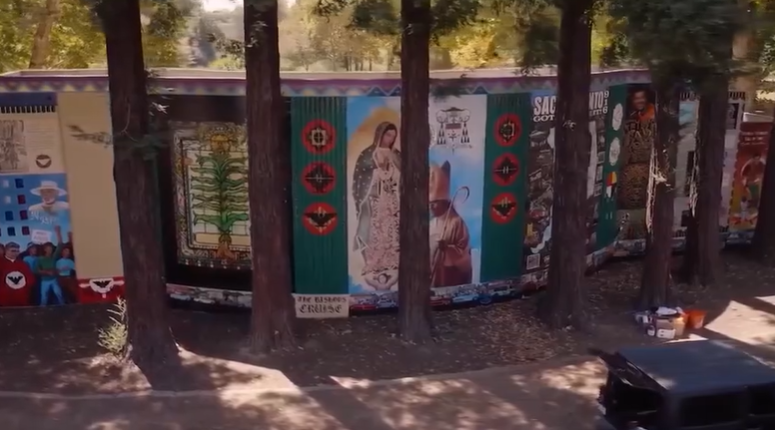
After a three-year effort to get the project approved, Alcala hired 10 local Latino and Indigenous artists to create 13 mural panels.

The elaborate mural took four months to complete and features colorful artwork highlighting Indigenous history, the Chicano movement, farmworkers and prominent Latino figures who have made a difference in the community.

Alcala personally invested more than $40,000 to make his vision a reality.

“I wanted to make sure it happened,” Alcala said. “And recruiting a bunch of the best Latino artists and Indigenous artists in Sacramento to be part of this. And thank God they wanted to be part of it. They came up with the concept and they made it happen. And it’s beautiful.”

The project faced setbacks along the way. Before the mural was completed, vandals damaged portions of the artwork, forcing artists to redo some of their work.

But Alcala refused to let the vandalism derail his mission to beautify South Side Park.

“Well, you’re not going to stop us. We turn negatives into positive, as you can see,” he said.

One of the mural’s panels highlights the struggles of farmworkers and the historic 1966 march from Delano to the California State Capitol.

Sacramento artist Gustavo Reynoso, who contributed to the project, hopes the colorful artwork will encourage people to stop and learn more about the history depicted on the walls.

“You pass by in a car, you see a lot of bright colors and you see images of people in protest. It makes you want to stop to see what it is all about,” Reynoso said.

For Alcala, the mural is about making history and art accessible to everyone.

Unlike a traditional museum, there is no admission fee. Visitors can experience the artwork while enjoying their neighborhood park.

“It is exactly that, a living history,” Alcala said. “The community comes by every day asking questions. And I give them a little tour about our culture, where we started with the Indigenous tribes. This is their land, and this is where we came from. And then the Chicano movement and where we are now, as opposed to where we were then.”

Arturo Vallejo, the owner of Bueno Cafe, said the mural is helping revitalize the neighborhood while giving younger generations an opportunity to connect with their cultural roots.

“It makes me very emotional because we needed this in Sacramento and it’s so good,” Vallejo said.

“It means where we come from, our roots. Our roots are showing our new generation what we all about. This is a beautiful artwork.”

One of the mural’s most meaningful features is a changemakers panel that honors Latinos who have made significant contributions to their communities.

The artwork features individuals from a variety of professions, including sports, education and journalism, with the message: “If you can see it, you can be it.”

KCRA 3’s Leticia Ordaz is among those featured on the Changemakers panel.

“Because of your accomplishments, being a Mexican-American and proud. Look what you’ve done. You’re an author. You’re a journalist,” Alcala told Ordaz.

Artist Nadeen Haduca, who contributed to the changemakers panel, said the experience helped her connect more deeply with her Mexican heritage.

Growing up in a mixed household, Haduca said she wishes she had been exposed to more examples of Latino success when she was younger.

“I think this is just something really beautiful that they can tie themselves to and inspire themselves,” Haduca said.

She hopes children who visit the park will see Latino athletes, judges, educators and other accomplished figures and realize they can pursue those same dreams.

For Alcala, that message is at the heart of the entire project.

“What I hope that the young generation takes is to learn from your past and be proud of where we came from, no matter where it is,” he said.

Alcala hopes the mural will serve as a lasting reminder that children don’t have to look far to find role models who share their cultural backgrounds.

“Here’s the examples right here,” Alcala said. “Step by step, whatever career you choose, take a look at it and go for it. Don’t be afraid.”

Alcala hopes to continue expanding the educational experience by adding QR codes to each mural panel. Visitors would be able to scan the codes to learn more about the historical events and individuals featured in the artwork, even when Alcala is not available to provide a personal tour.

He is currently seeking additional funding to make that possible.

Please note: This story was provided to CNN Wire by an affiliate and does not contain original CNN reporting. This content carries a strict local market embargo. If you share the same market as the contributor of this article, you may not use it on any platform.