City of Yuma hosts Hotel Del Sol redevelopment ceremony

Lauren Duffel

YUMA, Ariz. (KYMA) – The Hotel Del Sol has been a historic landmark for nearly a century.

It has hosted multiple Hollywood films, but has sat vacant since 1970, and now, after decades of vacancy, the hotel is beginning its next chapter.

The Hotel Del Sol redevelopment is expected to 18 months, with the City of Yuma hosting a redevelopment ceremony Thursday to mark the start of a major transformation for the Hotel Del Sol.

When asked if he was excited for the project, Yuma Mayor Doug Nicholls said, “Very excited…this is a great investment for our future and looking forward to getting it done.”

The project will turn the historic site into a transportation hub, bringing rail, bus, and other transportation services together in Downtown Yuma.

“For 27 years, we have been working on this project. Today, we begin in earnest the Del Sol Multimodal Center redevelopment project, and so we are celebrating the demolition phase, which is the first thing that has to happen,” Mayor Nicholls expressed.

The city will preserve the building’s north and east façades, along with its historic signage and iconic wrought-iron balconies. The project is expected to be completed in 18 months.

“It’s a bit of time. It’s a complicated project. They have to keep the east and the north façades, that’s the historic piece, but then, they’ve got to be able to rebuild a whole new building right behind it,” Nicholls said. “So it’s not your average build-it-from-the-ground-up type of project. It’s going to take some time to get it done and get it done right.”

The project’s total estimated cost is just over $19 million.

“That sounds like a lot of money, but $16 million of that is coming from the federal government, state government, and a series of grants, from an FRA grant to the RAISE grant to state matching funds. Those are the things that make this project possible,” the mayor explained. “That’s how we can do a project like this and have someone else pay for the majority of it.”

The City of Yuma said the renovated Hotel Del Sol could create new opportunities for growth.

The next chapter for the Hotel Del Sol is underway. For more information about the iconic Yuma landmark, click here.

Click here to follow the original article.

Rollover crash at Desert South at Transmountain injures 3

Gabrielle Lopez

UPDATE (Oct. 30, 2026): TxDOT said all lanes reopened Thursday at 8:30 p.m.

UPDATE (6:15 p.m.): Three people were hospitalized after Thursday’s crash. One has life-threatening injuries, according to the El Paso Fire Department.

All lanes are now closed at Woodrow Bean/Transmountain East at Desert South Intersection, according to TxDOT. There’s no clearing time.

CANUTILLO, Texas (KVIA) — A rollover crash closed the right lane on South Desert Boulevard at Transmountain, according to the Texas Department of Transportation.

(Courtesy: TxDOT El Paso)

TxDOT confirmed the crash happened around 4:57 p.m. Thursday.

The El Paso County Sheriff’s Office is responding to the crash.

The area has seen multiple serious crashes, including one that killed a man on Oct. 19.

Click here to follow the original article.

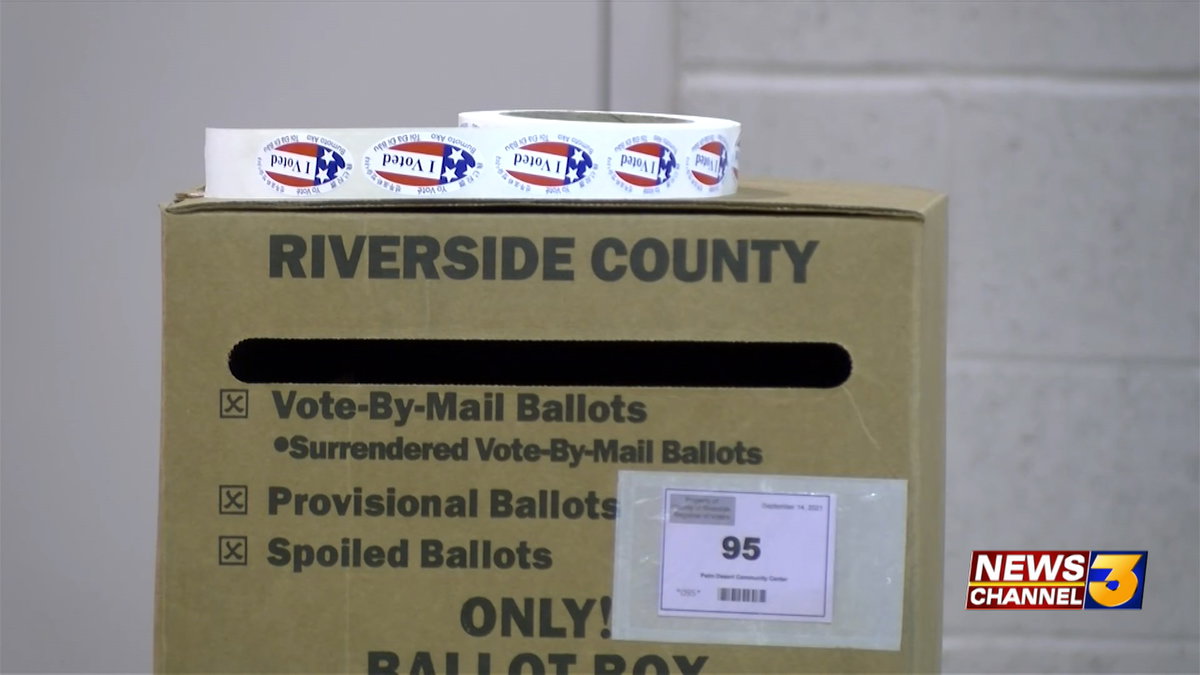
DOJ attempted to stop more than 1,300 Riverside County ballots from being counted

Jesus Reyes

RIVERSIDE, Calif. (KESQ) – The Justice Department’s emergency bid to stop California from processing more than 20,000 ballots from suspected non-citizens included more than 1,300 ballots in Riverside County.

In a letter dated Monday, Oct. 26, Bill Essayli, the top federal prosecutor in the Los Angeles area, gave Riverside County Registrar of Voters Art Tinoco 48 hours to “commit to working with the DOJ and DHS to identify who on the accompanying list is a citizen and who is not.”

“For individuals whom citizenship status cannot be confirmed, we request that you immeditely instruct the appropriate elections official to segregate-not cancel-those individuals’ vote-by-mail ballots until their citizenship can be determined,” Essayli wrote.

Riverside County responded on Thursday through the Office of County Counsel, citing the logistical impossibility and the court rejecting the DOJ’s bid on Wednesday.

“In light of the Court’s order issued on October 28, 2026, and the logistical impossibility, the ROV is unable to segregate the 1,355 ballots of named individuals as requested,” writes a letter to Essayli from County Counsel.

Check Out: Congress members tour Riverside County Registrar ahead of Election Day

The DOJ sued California on Oct. 15, more than a week after mail ballots were sent to all registered voters, demanding it set aside 20,000 ballots from alleged non-citizens after the state refused to voluntarily sequester those votes.

On Wednesday, U.S. District Judge David O. Carter rejected the DOJ’s bid, saying it “would wreak havoc and disrupt the election that is already underway, create a chilling effect on election workers and voters alike, and discount the votes of United States citizens.”

“The Executive Branch cannot replace the remedy Congress carefully enacted with its own unlawful and unconstitutional solution instead. Eroded trust in our democracy is irreparable. Once a vote is segregated, lasting harm has occurred,” Carter wrote in a 26-page order Wednesday.. “If the Executive can discount votes and threaten an ongoing election due to unproven allegations, then our democracy is in danger. This Court declines to be a party to such process.”

The judge said election officials have until Dec. 3 — the date by which election results must be certified — to resolve the issue, suggesting there was no immediate need for a last-minute temporary restraining order.

The DOJ filed renewed its bid with the 9th Circuit Court of Appeals late Wednesday, seeking a ruling by Friday.

In opposition to the administration’s TRO demand, Secretary of State Shirley Weber and Los Angeles County Registrar-Recorder/County Clerk Dean Logan argued they lack the mechanisms and legal authority to freeze mail ballots until voters’ citizenship can be verified.

“Voting is already underway in Los Angeles County,” the motion states. “Ballots have been mailed, returned and processed, and election officials are working toward fixed deadlines for counting and certification. Plaintiff United States of America, through the Department of Justice … now asks this court to interrupt that work and enjoin the withholding of 20,000 registered California voters’ ballots pending investigation based solely on an unreliable voter roll maintenance list.”

Weber’s office said federal officials claimed in July that California had 190,000 non-citizens on its voter rolls. When her office asked for evidence, “They refused and provided California with nothing.”

The Trump administration has long alleged that large numbers of non- citizens were casting ballots in California and elsewhere, but officials have not provided proof or documentation of widespread fraud.

Also on Wednesday, the San Diego County Registrar of Voters refused a request from the DOJ to set aside the ballots of 1,709 San Diego County voters who federal officials allege are non-citizens.

A letter signed last week by San Diego U.S. Attorney Adam Gordon requested the ballots be left uncounted until the voters’ citizenship status could be verified, while hinting at “legal consequences” if votes ended up cast for non-citizens.

The Orange County Registrar of Voters told Essayli in a letter Wednesday that the federal government’s request of a list of 1,754 individuals prosecutors allege are likely non-citizens is “impracticable and potentially disenfranchising” because the election is already underway.

The letter from county counsel Leon Page said that latest demand was “vastly more expansive and burdensome” than last year’s request for confidential voter information, which was rejected by Carter and was being appealed.

Prosecutors demanded that the 1,754 potential votes be put aside and not counted, but the county has received more than 360,000 votes so far.

Page added, “There is currently no streamlined process established for flagging any of the 1,754 individuals that may appear in the (Orange County) voter database and segregating their ballots, and such a process would require substantial time and effort to develop, test and implement.”

Officials estimate it would take “several hundred man hours of effort” to do the work, Page said. And that’s aside from overseeing the election, he said.

Essayli has repeatedly threatened to prosecute election officials if they don’t meet the DOJ’s demands to set aside ballots until citizenship status is confirmed. “Knowingly processing non-citizen ballots is a federal crime … We will hold election officials accountable,” he recently posted on X. “No one is above the law.”

Click here to follow the original article.

Quick-thinking Officer rescues Jackson family from house fire

Seth Ratliff

JACKSON, Idaho (KIFI) — A Jackson family is safe and unharmed after a police officer rescued them from a house fire on Flat Creek Drive on Thursday morning.

Jackson Police Officer Liam Fowler was on patrol just after 9:00 a.m. when he spotted smoke coming from the home, according to Jackson Hole Fire/EMS. Fowler immediately rushed inside and evacuated the family.

Assisting officers arrived just 10 minutes later, as flames from an exterior deck quickly spread into the attic. Firefighters arrived shortly after, tackling the blaze on the exterior of the house before moving indoors to extinguish the remaining fire.

The Jackson Fire Department says Officer Fowler’s quick action prevented any loss of life and additional damage to the home.

“I’m proud of the coordinated response from Teton County Sheriff’s Office dispatchers, Jackson Police officers, and firefighters,” said Incident Commander Jackson Hole Fire/EMS Battalion Chief Chris Stiehl in a news release. ” They safely and efficiently mitigated the fire, keeping firefighter and public safety as the top priority.”

Click here to follow the original article.

Kalshi files lawsuit against Missouri AG over cease-and-desist letter

Ryan Shiner

COLUMBIA, Mo. (KMIZ)

Online prediction market app Kalshi filed a lawsuit on Tuesday against Missouri Attorney General Catherine Hanaway after she issued a cease-and-desist letter last month.

Hanaway had sent letters to Kalshi, Polymarket, Crypto.com, Novig, Underdog and Robinhood cease-and-desist letters after claiming sports-related contracts is considered unlicensed sports gambling under Missouri law.

Kalshi argues in its lawsuit – which was filed in Missouri’s Eastern District Court – that state laws attempting to regulate the “contract market” violates the Supremacy Clause of the U.S. Constitution.

The lawsuit claims Kalshi cannot be regulated by state laws because it is already federally regulated and “operates under the exclusive oversight of the CFTC and its enabling statute.”

Kalshi v HanawayDownload

Click here to follow the original article.

Art Museum of Eastern Idaho opens ‘Shared Ground: Art and the Animal’ exhibition

Kaelyn Blessinger

IDAHO FALLS, Idaho (KIFI) – A new exhibit has opened at The Art Museum of Eastern Idaho, “Shared Ground: Art and the Animal” featuring art by Jessie Wilber and sculptures by Dan Burgette.

The exhibit is all about nature around us – such as the many bird statues decorating the museum, all handmade by Burgette. He was a wildlife conservationist for many years and found inspiration in his work and the lives of birds.

“We need to be concerned when we’re losing our birds,” Burgette explained. “There’s a number of the pieces in the show that are kind of subtly talking about the influence of humans and how they have affected [birds].”

The exhibit aims to show both Wilber and Burgette’s view of the natural environment, as well as promote conservation of wildlife.

“Research has shown that we’ve lost 10 billion birds in the last 50 years,” Burgette said. “That’s a real canary in the coal mine, so to speak, which says that the humans are affecting the natural world and humans are part of the natural world.”

Students learn stop-motion animation

The Art Museum of Eastern Idaho is offering a class Thursday night and Friday evening for students to learn about stop-motion animation from an animator for LAIKA Studios. Lars C. Larsen has worked on such animated films as Coraline and their newest feature Wild Wood.

Larsen will be teaching students the fundamentals of stop-motion animation as well as get a chance to see the new movie for free.

“It’s really fun to just teach the fundamentals and help people of all ages kind of have a greater appreciation for stop motion,” Larsen said. “I think it’s really satisfying to make it accessible because you could watch something like Coraline or Wildwood and be like, ‘Whoa, that’s insane.’ But when you see it and you’re like, ‘Wow, that’s insane. But I can do that.’ Which is really what I’m going after.”

If you want to find more information about the classes and the new exhibit, here is the link to the Art Museum’s website.

Click here to follow the original article.

Schneider Electric celebrates economic development honor in El Paso

Yvonne Suarez

EL PASO, Texas (KVIA) — Schneider Electric earned the Woody L. Hunt Excellence in Economic Development Award and celebrated with a ceremony on Thursday.

A global leader in energy technology, Schneider Electric recently expanded its largest U.S. manufacturing campus in El Paso as part of a $700 million investment. The company has been in El Paso for 25 years.

“They have been a tremendous part of the El Paso community for the past quarter century, and for 25 years they’ve done an amazing job hiring folks from all over the place and especially in our region,” said Jon Barela, CEO of Borderplex Alliance.

Schneider Electric’s investments support local jobs and community programs, including a major county-wide energy modernization effort. It refers to itself as the most sustainable company in the world.

“When you include the 2,500 and the various suppliers, it’s well over 3,000 individuals, at least, that are being provided jobs and opportunity here in the El Paso Borderplex region,” Barela said.

The World Economic Forum also recognized the facility for its advances customer-centric manufacturing.

Click here to follow the original article.

Lanes reopen after flooding at Gateway North, Dyer in Northeast El Paso

Gabrielle Lopez

UPDATE (5:27 p.m.): TxDOT cameras show the area cleared and traffic is flowing.

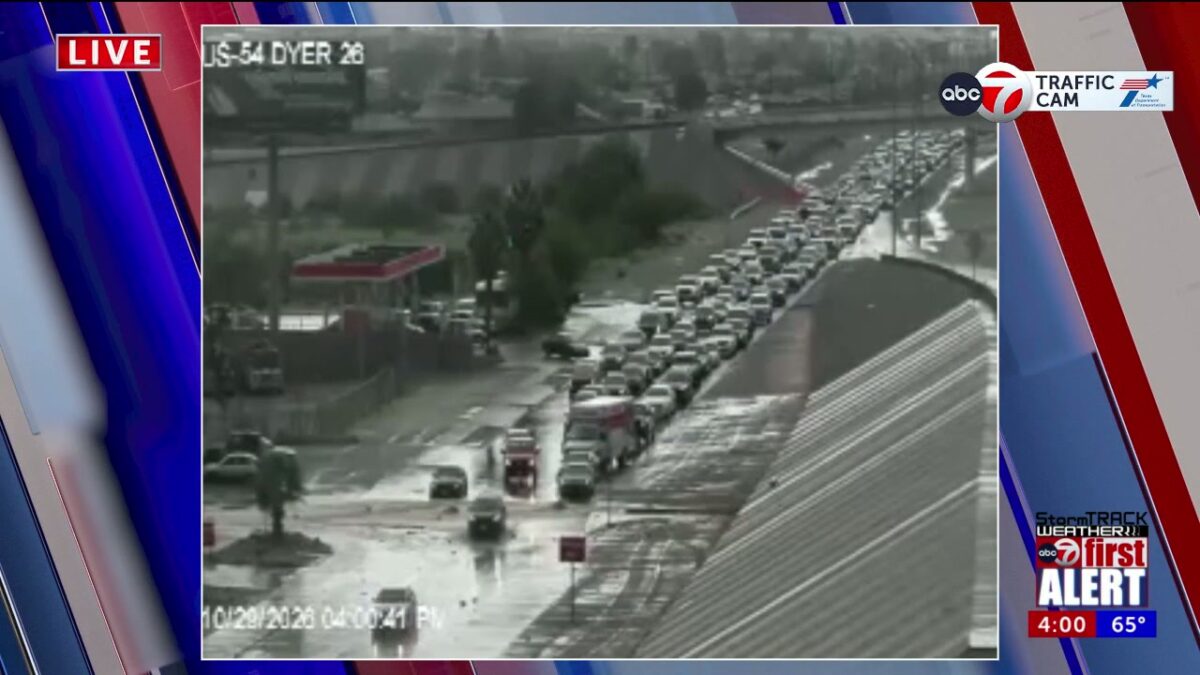
EL PASO, Texas (KVIA) — Drivers should avoid the intersection of Gateway North and Vulcan Avenue due to reports of flooding, police said Thursday.

The El Paso Police Department said at 3:50 p.m., reports of flooding at the intersection came in. The intersection is located in Northeast El Paso off the U.S. 54.

(Courtesy: TxDOT Cameras)

Police said drivers should avoid the area.

The Texas Department of Transportation reported all lanes on Gateway North at Dyer are closed due to high water.

Click here to follow the original article.

Proposed Marijuana and English language State Constitutional amendments are on Idaho’s ballot

Hadley Bodell

IDAHO (KIFI) – Two House Joint Resolutions are on the Idaho midterms ballot for next week’s election. Both resolutions limit the abilities of voters to create initiatives and raise questions about how necessary items are to move from statutes to State Constitutional law.

Local News 8 spoke with political expert Ryan Sargent, lead government relations specialist at Idaho State University, about the implications of both proposals.

House Joint Resolution 4 – Marijuana amendment

The Vote Idaho website describes the resolution as outlined below:

“Shall Section 26, Article III of the Constitution of the State of Idaho be amended to provide that only the Idaho Legislature shall have power and authority to legalize the growing, producing, manufacturing, transporting, selling, delivering, dispensing, administering, prescribing, distributing, possessing, or using of marijuana, narcotics, or other psychoactive substances?”

The Idaho Legislature proposed this constitutional amendment, meaning it received a two-thirds vote in both the House and Senate before the item went to voters for ratification.

While the resolution is based around marijuana and narcotic drug policy, the root of controversy lies in the ability of voters to make their own initiatives.

If the resolution passes, the ability to govern psychoactive drugs would lie solely in the hands of lawmakers. Voters would no longer be able to proceed with an initiative process for proposals dealing with these drugs.

“It would be exclusively the right of the Idaho Legislature to make laws about marijuana, other narcotics or anything psychoactive,” Sargent said.

Idaho has passed two other proposals similar to HJR 4 in the last ten years. In 2022, the voters allowed only legislative bodies to call special sessions. In 2016, the people reserved the right for the Legislature for administrative rules. Both were “inside baseball” kind of amendments which had little effect on constituents.

Idaho already has some of the strictest controlled-substance laws in the nation. Regardless of if the ballot item passes, Idaho policy on marijuana and narcotic drugs remains the same.

“Their [the Legislature] basic argument has been that that power should reside exclusively with the Legislature because they’re the ones that hold hearings,” Sargent said. “They’re thinking about the long-term effects of changing drug policy…[The Legislature thinks] that [power] should remain with the Legislature, so that if drug policy ever changes, it’s done under that framework.”

With drug use policy in mind, HJR 4 at its core is a proposal that passes all power on those policies to the Legislature. Opponents of the resolution argue that power lies with the people and it is their right to create initiatives on issues, including psychoactive drugs.

House Joint Resolution 6 – English language amendment

The Vote Idaho website describes the resolution as outlined below:

“Shall Article X of the Constitution of the State of Idaho be amended by the addition of a new Section 8, to provide that the English language shall be the official language for the state of Idaho, and to further provide that, except as required by federal law, English shall be used in all public proceedings, public documents, public instruction, and any other public acts of any public institution in the state of Idaho?”

The constitutional amendment would enshrine English as the state’s official language. Idaho has already recognized English as the state language through a statute passed in 2007. HJR 6 would change the legal framework to place that item into the Constitution, making the policy more difficult to change in the future.

A vast majority of laws we think of as presiding aren’t in the State Constitution – they’re statutes. Sargent explained a statute may be changed in one of two ways: the Legislature can run a bill that is signed by the governor, or changes can be imposed through a citizen initiative.

As a piece of the Constitution, the item would need a two-thirds vote from both houses in the state Legislature to amend. Citizens themselves cannot start a petition on a constitutional policy. In this way, HJR 4 and 6 are similar in that they remove the right of voters to make an initiative on a particular issue.

“The Legislature brought this forward by a pretty wide majority that think establishing English in the Constitution is important and should be long lasting,” Sargent said. “[It’s] similar reasoning as to when it was put into statute in 2007, which is that it’s a common language, provides unity, gives clear expectations of how to receive and give information.”

Some opponents think the amendment is unneccessary, since Idaho already recognizes English via the statute, and they argue the language is far more vague in the proposal. There are certain exemptions in the 2007 statute that ensure public safety and some instruction is offered in other languages. Opponents argue it will be a legal question if those exemptions still exist with the wording of the amendment.

Vote Idaho and the amendment itself say English would be mandated to use in all “public instruction” except as required by federal law.

“HJR 6 specifically says that public proceedings, state documents and instruction have to be in English,” Sargent said. “Proponents of it are very clear that it won’t affect foreign language classes or anything like that, leaving exemptions for when federal law requires things to be offered in other languages.”

Opponents say those exemptions are not as clear or widespread as what is established in the 2007 statute. They’re expecting the courts themselves to have to figure out what the amendment says. When lawmakers move to pass something from a statute to a constitutional amendment, the language and framework is usually changed from the original policy.

“The Legislature and proponents of this amendment believe that defining English as the official language is so important that the legal framework needs to be protected at a constitutional level,” Sargent said.

Importantly, Sargent says, the Supreme Court has been undeniably clear that citizens have rights to an interpreter if they don’t speak English, and no one may be convicted in a trial without an interpreter, etc. Proponents of the resolution have also been clear that English Second-Language Learners (ESL) in public institutions will still have accommodations.

In 2025, President Trump signed an executive order making English the official language of the nation. Currently, 30 other states in the U.S. have state languages, including English, Hawaiian and others. Twenty-one of those states have their state language in statute, while nine have it in their Constitutions.

Click here to follow the original article.

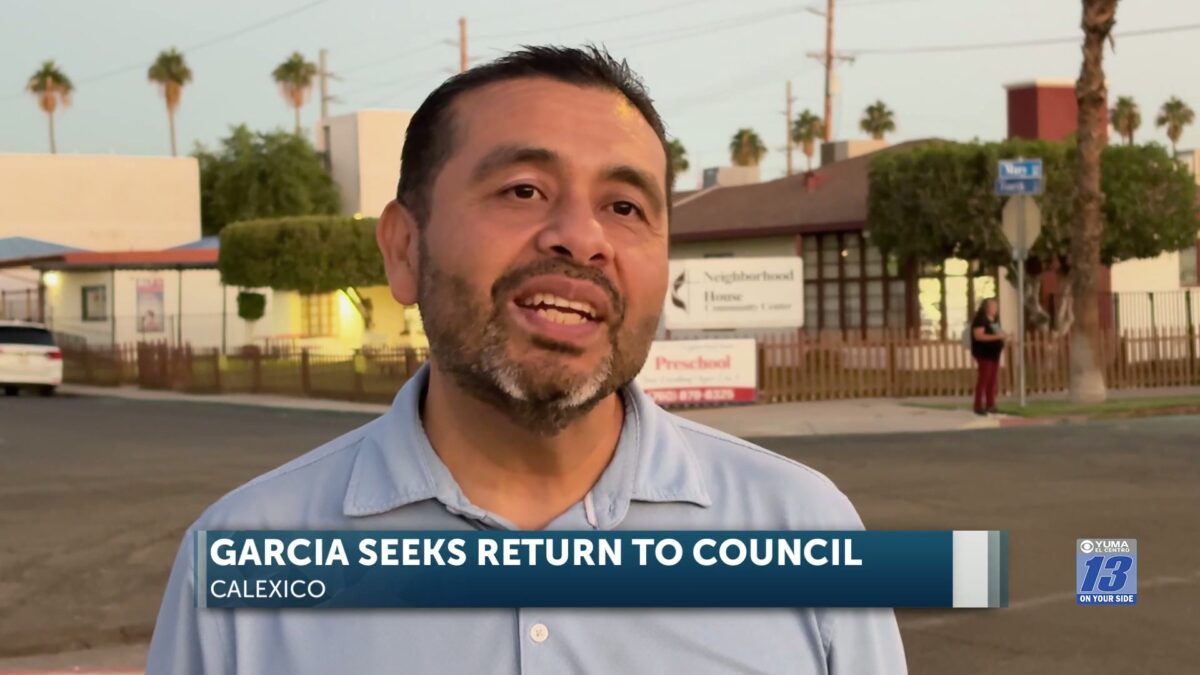
Camilo García runs for Calexico City Council

Carolina Garcia

CALEXICO, Calif. (KYMA) – News 11 is introducing another candidate running for Calexico City Council ahead of the November 3 election.

Camilo García is running for Calexico City Council, with a focus on economic development.

García, who previously served on the City Council and as mayor between 2020 and 2024, is one of seven candidates seeking a seat on the council.

He said his experience securing funding could help Calexico become more financially self-sufficient and support the city’s future development.

“Our businesses have been closing, you know, so we need to stop, make sure that we stop those business closures and we attract, you know, development, more investment. Why? Because I’m a firm believer,” García remarked. “And this is not even something that I say, but we know that in order for us to be sustainable, we have to generate our own revenues.”

He also said he would avoid political conflicts and focus on working together within the City Council amid the political divisions in Calexico.

Click here to follow the original article.