Truck driver caught in viral video trying to run Pittsburgh-area motorcyclists off the road

By Erika Stanish

Click here for updates on this story

    PITTSBURGH, Pennsylvania (KDKA) — A motorcyclist said she and two other bikers were almost run off the road by a Pittsburgh-area contractor’s pickup truck in an apparent road rage incident that was caught on camera and has since gone viral.

New Sewickley Township police said an investigation is underway after video appears to show a truck driver trying to run over several motorcyclists in Beaver County.

“I was like, ‘I’m going in the grass. I’m gone,'” said Sarah Miller, one of the motorcyclists.

Miller said she and two other bikers were taking their last joy ride of the season on Tuesday when the incident happened.

“We’re out enjoying our ride, it was probably going to be the last ride of the season, given that the weather’s turning. There were two lanes; we were in the left lane, the truck’s in the right lane. He had already been driving pretty aggressive at that point. He tried to cut us off and kind of break up our group so that some would be ahead, some would be behind, and he could kind of get in the middle and I guess control whatever traffic he wanted to,” Miller said.

Miller’s video, taken on an Insta 360 camera, shows the white truck approaching behind her before the driver cuts off another motorcyclist.

“Truck cut him off, and we go and merge, and then he gets behind us, and I get ran off road, my buddy gets ran off the road,” Miller said.

In the video, you can see CE Little Contracting on the side of the truck before Miller speeds ahead to get away from the truck.

As the video continues, you can see the white truck cross into the opposite lane of traffic to catch up to Miller when she began pointing at her camera.

“As soon as I pointed to that camera, it looks like he kind of backs off and slows down a little bit. Maybe he didn’t realize I was recording,” Miller said.

KDKA-TV asked Miller what led up to the encounter.

“No idea. We weren’t really doing anything you shouldn’t be doing. Just out trying to enjoy the last ride, and he came out of nowhere on that side lane or whatever, and tried to get in front of us. He couldn’t,” Miller said.

She said nothing like this has ever happened to her on the road before and believes it could have ended a lot differently.

“I’m only 115 pounds. My bike’s probably 450 pounds. Truck’s at least 10,000 pounds, if not. I mean, a slight bump, it really could have been a different kind of story,” Miller said.

Since Miller posted the video on social media, it’s gone viral. KDKA-TV asked her what she wanted to see happen to the driver involved.

“I didn’t post the video to get anybody in trouble. I just posted it to bring attention to bad drivers in Pittsburgh. We have a lot of those,” Miller said. “It was very dangerous what he did. Hopefully, he can learn from this.”

She said she plans to take extra precautions moving forward and will always have the camera rolling.

“We just want to get point A to point B safely, just as cars do. We’re never looking for any trouble. We just want to enjoy the ride, the wind, the sun,” Miller said.

KDKA-TV reached out to CE Little Contracting several times for comment. We never heard back.

New Sewickley Township police said they are investigating the incident and are asking all of those involved to give them a call at 724-774-2473.

Please note: This story was provided to CNN Wire by an affiliate and does not contain original CNN reporting. This content carries a strict local market embargo. If you share the same market as the contributor of this article, you may not use it on any platform.

Bones found at Horsch “house of horrors” in Olney section of Philadelphia, sources say

By Joe Holden, Will Kenworthy

Click here for updates on this story

    PHILADELPHIA, Pennsylvania (KYW) — Bones were discovered outside the so-called house of horrors in the Olney section of Philadelphia, but it’s unclear whether they are related to the ongoing investigation into Raymond “R.C.” Horsch, a suspected serial killer who died last year, sources told CBS News Philadelphia on Thursday.

The Philadelphia Medical Examiner’s Office responded to the house at 417 West Chew Ave. on Thursday, sources close to the investigation confirmed.

The bones were found in the backyard, where agents and detectives have been painstakingly searching for any sign of human remains and any evidence of at least seven women connected to Horsch and the house, some of whom are feared dead, sources told CBS News Philadelphia.

It’s not clear whether they were human or animal bones, sources stressed. More testing is needed to determine the bones’ origin and whether they are connected to the investigation.

Richard Marx, a retired FBI supervisory agent who specialized in evidence collection, said the presence of the medical examiner is a significant development.

“If they find something related to the body, then that’s when they would want to call the medical examiner, bring them aboard, have them collect it, and have them take it to their office for examination,” Marx said.

Investigators have been methodically sifting through the soil in layers, going down about 3 feet.

Investigators found human DNA when they used luminol to search the home, police sources confirmed earlier this week.

A source also said investigators had found opossum carcasses near the house. The remnants of a brick outhouse were also uncovered in the yard.

The investigation at the house is expected to continue until at least the middle of next week, sources said. Investigators are set to dig up the front yard when they are finished in the back.

Investigators believe Horsch used a process known as alkaline hydrolysis to dispose of bodies, law enforcement sources said. He detailed the steps in one of his books in which he called himself an empathetic serial killer. Chemicals found in the home have been sent to laboratories for testing.

Before his death, Horsch lived in the house with his son, Eugene, whose arrest during a traffic stop in June kicked off this massive investigation.

Please note: This story was provided to CNN Wire by an affiliate and does not contain original CNN reporting. This content carries a strict local market embargo. If you share the same market as the contributor of this article, you may not use it on any platform.

How scientists in Boston are using AI to decipher the secret language of rats

By Mike Sullivan

Click here for updates on this story

    BOSTON, Massachusetts (WBZ) — A group of scientists in the Boston area are using AI and other technologies to understand how rats communicate.

“They are doing it all night long. If we could hear them, it would be like listening to birds during the day,” said Nick Jourjine, a researcher with Basis Research Institute.

They are using microphones, thermal cameras and AI to try to decipher rats’ secret language. The group places microphone boxes in strategic areas around Boston, such as dumpsters, to record the high-pitched vocalization rats make when communicating.

“That’s the start, just trying to match up what animals do with what they say,” Jourjine said.

Though the boxes sometimes pick up human chatter, all human sounds are redacted then deleted for privacy before the audio is sent through AI models.

“Then we train those models to go do that on a scale and quantity of data we could never listen to ourselves,” Jourjine said.

This data may help researchers understand what rats are saying or about to do, allowing cities to be more proactive about rat prevention.

“When we see those black bait box traps across buildings, that means the rats are already there. The problem is already persisting, and you have already failed,” says Ricky Meinke, Director of the Rat City Arts Festival.

The Rat City Arts Festival works to educate people on rodent prevention through rat walks and mitigation education, particularly in the Allston and Brighton areas.

“Maybe through vocalization of rats, we understand how active rats are at certain times of the day or at night, so that maybe we can place bait for rodent control at specific times,” Meinke said.

This may allow poisonous rat boxes to be on the street for less time. The poison inside can sometimes be harmful to other animals.

“AI being so expansive as it is, we could only fathom it would just take a little bit of time to reach the rats,” Meinke said.

All that is left to wonder is what the rats are saying about all of this. One day, we may actually know.

Please note: This story was provided to CNN Wire by an affiliate and does not contain original CNN reporting. This content carries a strict local market embargo. If you share the same market as the contributor of this article, you may not use it on any platform.
University of Maryland tennis club issues public apology following backlash over racist imagery

By Bryan Lynn

Click here for updates on this story

    COLLEGE PARK, Maryland (WJZ) — The University of Maryland’s (UMD) tennis club has issued a public apology for distributing a flyer to other schools that included racist imagery after Howard University’s tennis club called for more accountability regarding the incident.

The apology was posted to UMD’s official Instagram page.

Previously, UMD officials had apologized for a racial symbol that was included in program materials sent to other tennis organizations, including Howard University’s. UMD also suspended its tennis club after the incident was discovered.

Howard’s tennis club said those actions fell short of being fully accountable for the distribution of the racist imagery, which included a graphic that depicted Ku Klux Klan hoods. Howard called additionally for a public apology from UMD’s tennis club, sensitivity training for players and a donation of tournament funds to a local museum focused on African American history.

The latest apology from UMD’s tennis club addresses each of those requests.

UMD tennis club members regret inclusion of “abhorrent image” “Last weekend, our club shared an abhorrent image which was included in a tournament program and distributed to teams from visiting universities. We deeply regret sharing this image and the pain this caused as a results of our actions,” the statement by UMD’s tennis club said.

“Although we previously met with the visiting teams to apologize in person and followed up by email to all teams captains directly, a public apology is warranted when the impact of our actions extends beyond those who received the tournament program directly,” it added. “Notably, but not limited to members of the Howard University community, the other visiting teams, the University of Maryland community, and members of our own club team who have experienced harm deserve an apology.”

The apology stated further that the UMD tennis club players “recognize the hateful history and significance of the symbol and deeply regret the hurt is has caused.”

“Although we did not intend to share an image evoking hate and racism, we take full responsibility for failing to identify and remove it. We understand this was unacceptable and does not reflect the values of our club,” the statement said.

The school said it is “committed to engaging in education and training about the history and impact of racism and hate symbols” and that it made a donation to the National Museum of African American History & Culture.

The call for more accountability Howard University’s club tennis team had called for further accountability after discovering imagery associated with the Ku Klux Klan in a Google document shared with teams participating in a tournament, according to the club.

Club tennis president Toni Rachal said she noticed the graphic on the first page of the document emailed to participating teams.

The Howard club team described the image as showing “KKK pointed hood masks complete with eye holes” in the top-right and lower-left quadrants, replacing the Crossland coat of arms on the official Maryland state flag.

“The imagery is a recognizable symbol of white supremacy, organized hate and violence,” the Howard club tennis team stated.

The team said it raised its concerns with the University of Maryland’s club tennis executive board.

Although Maryland’s club tennis team has been suspended and issued a general apology, Howard’s team had said “true accountability has yet to come.”

Howard called for a public apology to the university and its tennis club, a formal investigation to determine who created the document containing the imagery, and sensitivity training for Maryland club team leaders and advisers.

The team also asked for funds from the tournament to be donated to the National Museum of African American History and Culture to promote cultural awareness.

Please note: This story was provided to CNN Wire by an affiliate and does not contain original CNN reporting. This content carries a strict local market embargo. If you share the same market as the contributor of this article, you may not use it on any platform.

Horses tie the knot at special wedding on Georgia farm: “They just really fell in love”

By Kaley Fedko

Click here for updates on this story

    MILTON, Georgia (WUPA) — It was a wedding fit for a fairy tale with a few unexpected twists.

One couple’s big day at Fortitude Farm in Milton had guests cheering, plenty of reasons to smile, and a bride and groom who were a little distracted.

This was no ordinary wedding.

Eddie is the groom. His full name is Eddie Manhattan Project, and he is a former big-time racehorse.

Annie, the bride, is a beautiful brown and white mare described as a small-town country girl.

Their love story began at a horse rehab in Cobb County.

Grania Holman owns Sunnybrook Stables, once the home of her nonprofit Red Heart Horse Retirement, Rehab, & Rescue.

“We had Eddie first. We didn’t have a pair for him. He was really missing having a special relationship. We had an uneven number of horses at the time, so he was alone in his paddock, and then we got Annie,” Holman said.

At Red Heart, horses are paired up as they recover and work through their individual needs.

Annie and Eddie’s bond went a little further.

“They just really fell in love, and during camp last year, the kids said we should do a horse wedding,” Holman said.

The kids got their wish in the fall of 2026, complete with wedding attire, an officiant, and vows.

Holman read Eddie’s vows.

“Annie, I found you forever at Fortitude Farms. You taught me I didn’t have to spend the rest of my life trying to prove what I could do. You are my dream girl, my small-town country girl who I didn’t need to keep chasing,” Eddie told his bride through Holman.

Annie’s caretaker then read her vows to Eddie.

“Now I known something I didn’t know before. Sometimes home isn’t a place, but a heart standing beside yours. Eddie, I’m choosing your story,” according to the bride.

While the sentiments were read, the bride and groom were a little busy eating the landscaping.

The couple did not exchange rings, but there was a symbolic exchange of horseshoes. There were no objections from the happy couple, although neither had much to say.

Debora Selinger, an ordained minister and horse owner, was the big day’s officiant.

“The horses do love each other,” Selinger said. “People come in, they brush their horse, hook it up, ride it, bring it back, and put it back in their stall, but people don’t realize horses are incredibly empathetic.”

When it was time to make things official, Selinger pronounced the couple gelding and mare. Their official newlywed name is Annie and Eddie Manhattan Project.

From the racetrack to the wedding aisle, Eddie finally found his “mane” squeeze.

There’s no word on a honeymoon, but for Eddie, Annie, and their loved ones, it was a wedding to remember.

The pair will continue their happily ever after at Fortitude Farms in Milton, Red Heart’s new home.

The nonprofit provides lifelong care for aging, retired, rescued, and rehabilitating horses, while also offering volunteer opportunities and summer camps to teach kids about horse care.

Please note: This story was provided to CNN Wire by an affiliate and does not contain original CNN reporting. This content carries a strict local market embargo. If you share the same market as the contributor of this article, you may not use it on any platform.

After vision loss cost him his job and home, Atlanta veteran finds new independence with Meta smart glasses

By La’Tasha Givens

Click here for updates on this story

    ATLANTA, Georgia (WUPA) — Dennis Darnes began losing his vision at age 50 after being diagnosed with glaucoma and cataracts.

“I felt like the world had closed in on me,” Darnes recalled. “It was depressing, I was not feeling good about myself. It felt like I was less than.”

The vision loss quickly changed his life. Darnes lost his job and eventually his home. Simple daily routines became daunting hurdles. “I was afraid to cross the street, afraid to ask people for help,” he said.

A chance conversation with a fellow bus passenger changed everything, leading him to the Center for the Visually Impaired (CVI) in Midtown. For 60 years, CVI has operated as the only comprehensive low-vision clinic in the state. Inside a training apartment on-site, specialists taught Darnes how to navigate daily life using touch, sound, bump dots, and his remaining senses.

On White Cane Awareness Day, an annual observance celebrating the achievements and independence of visually impaired individuals, Darnes and more than 50 other veterans received a free pair of Meta smart glasses.

The smart glasses use built-in cameras and artificial intelligence to scan written documents, read street and store signs aloud. The Meta glasses can also describe the surrounding environment in real time.

For Darnes, now 70, the wearable technology has transformed his independence both at home and out in the community.

“By pairing the glasses, the Be My Eyes app, I got some of my independence back. I can go to the grocery store and say, direct me to the lemon pepper seasoning, then it does it.” Darnes continues with, “I ask the glasses what color shirt am I holding up or if I drop a quarter on the floor, the glasses can help me find it.

“It really opens up possibilities that we just couldn’t imagine a few years ago,” said Jodi Taylor, Center for the Visually Impaired Board Chair.

CVI partnered with Meta to provide more than 50 pairs of smart glasses to visually impaired veterans, along with comprehensive hands-on training.

“We have a new technology guide that is available regardless of age, regardless of income level,” Taylor said. “We want to make sure that as the new tech is coming out, you have the opportunity if you need it to access it.”

For Darnes, having access to these tools has broken down barriers that once kept him isolated.

Now at 70, the world that seemed to close in on Darnes now feels open. “There’s no box, ain’t no box,” Darnes said. “You can almost do anything. I have a better quality of life.”

CVI offers training programs, assistive technology resources, and clinical services for individuals experiencing vision loss. Details on available programs and technology guides can be found on CVI’s website.

Please note: This story was provided to CNN Wire by an affiliate and does not contain original CNN reporting. This content carries a strict local market embargo. If you share the same market as the contributor of this article, you may not use it on any platform.

Two women charged in 2007 Broward robbery killing cold case after tip from prison, deputies say

By Ted Scouten

Click here for updates on this story

    LAUDERDALE LAKES, Florida (WFOR) — Nearly two decades after 34-year-old Leon Heron was fatally shot during a robbery in an apartment complex parking lot, authorities have charged two women in connection with his murder.

The cold case dates back to May 2007 in Lauderdale Lakes, where Heron was confronted after getting out of his car. According to Broward Sheriff’s Office Cold Case Det. David Towsley, two 17-year-old women were driving around Broward County in a stolen SUV looking for someone to rob.

“He got out of his car, and they confronted him and demanded that he give up his stuff,” Towsley said.

Investigators said Heron fought back against the robbers. “At some point he started getting the best of them physically; that’s when one of them decided to shoot him,” Towsley explained.

A tip originating from prison eventually led detectives to inmate Brittany Hanfield. Hanfield initially told investigators she was merely a witness, but later disclosed detailed information about the incident.

“What she told me ultimately was that two 17-year-old young ladies were driving around Broward County in a stolen SUV looking for someone to rob,” Towsley said. “Unfortunately, one of these ladies brought a handgun.”

Hanfield was subsequently charged with first-degree murder, and last week, a second suspect, Sheila Arstil, was also charged with murder. Both suspects are being held without bond at the Broward County Jail.

The break in the case has brought long-awaited relief to Heron’s relatives. Towsley shared that Heron’s family is “extremely happy to know finally what happened to him and that he can rest in peace.”

Please note: This story was provided to CNN Wire by an affiliate and does not contain original CNN reporting. This content carries a strict local market embargo. If you share the same market as the contributor of this article, you may not use it on any platform.

Jefferson City Lodging Association files appeal in lawsuit against city

Ryan Shiner

COLUMBIA, Mo. (KMIZ)

The Jefferson City Lodging Association has filed an appeal in its case against the city.

The lodging association filed a lawsuit in 2025 against the city, the Jefferson City Area Chamber of Commerce and the Jefferson City Convention and Visitors Bureau.

It alleges that lodging tax funds collected for the Jefferson City Convention and Visitors Bureau violates the Missouri Constitution.

“Therefore, for the reasons stated herein, the Court finds that Rule 74.04 requires the Court to rule on Defendants’ fully briefed summary judgment motion. And because Defendants have shown there is no genuine issue as to any material fact and that they are entitled to judgment as a matter of law on all counts in Plaintiff’s First Amended Petition, the Court grants summary judgment in favor of Defendants on all counts,” the judgement filed in August says.

The appeal this week argues that ruling “disregards the General Assembly’s own distinction between promoting tourism and building tourism facilities as described” Missouri law.

Click here to follow the original article.

Columbia considers $2.1 million roundabout project on south side

Euphenie Andre

COLUMBIA, Mo. (KMIZ)

The City of Columbia Public Works is considering a roundabout at East Green Meadows Road and East Nifong Boulevard in an effort to improve traffic flow and reduce crashes on the city’s south side.

The Public Works Department hosted its first public open house Thursday evening to give residents a look at the proposed project. About five residents signed in at the event.

The project has an estimated budget of $2.1 million, which would be funded through the city’s quarter-cent capital improvement sales tax.

According to the department, 26 crashes involving 53 vehicles and nine injuries were reported in the area from 2021-25.

The proposed project would replace the existing two-way stop-controlled intersection with a roundabout.

Assistant Public Works Director Lee White said the department believes a roundabout is the safest option for the intersection.

“There’s less of the sideswipe collisions. That can be present. More of just your rear end type of collisions are present with the reduced conflict points as well as the efficiency within the intersection,” White said.

The project would also include pavement maintenance, new asphalt and pavement improvements, and sidewalk replacements. The department has completed pavement surface and subsurface investigations.

According to materials provided to residents, construction could begin in summer 2028 if the project is approved by the City Council.

Click here to follow the original article.

Columbia’s public hearing on Flock expected Nov. 9

Ryan Shiner

COLUMBIA, Mo.  (KMIZ)

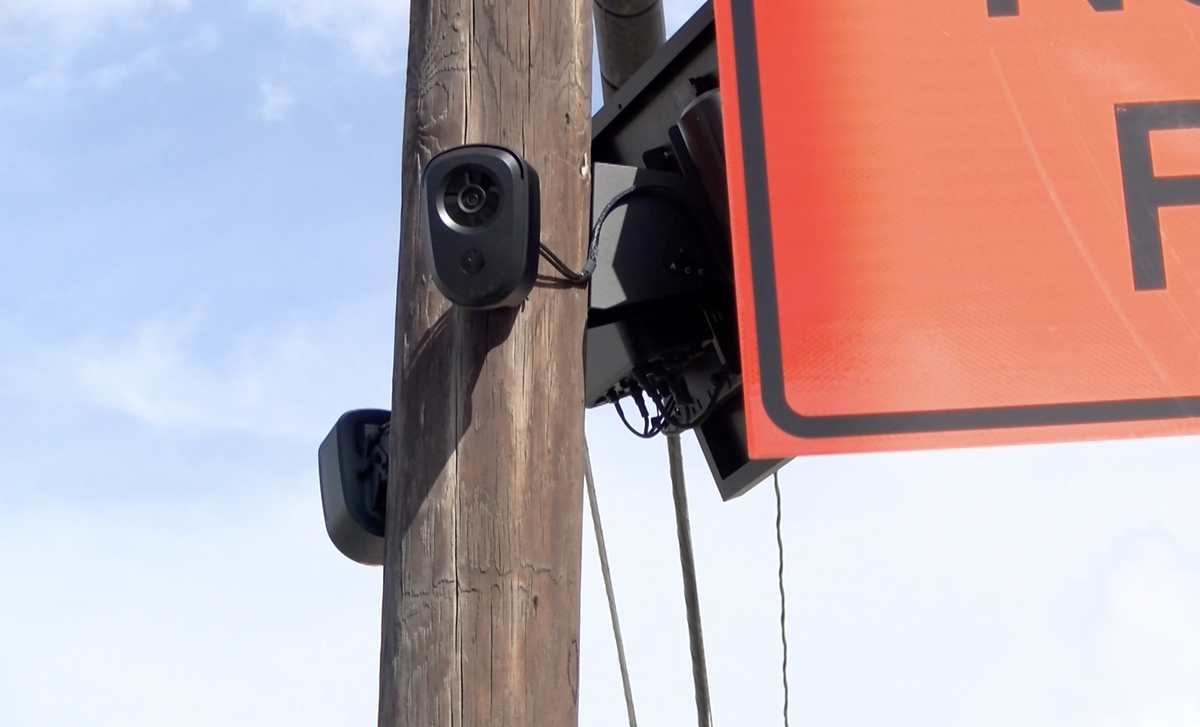
Columbia’s public hearing on Flock cameras is expected to be held Monday, Nov. 9, according to city documents.

The City Council’s agenda for Monday shows the council is voting on holding the public hearing. A first read was held last month. The measure is listed on the consent agenda.

The Flock camera system was first approved in October 2024. In August, Pulaski County terminated its contract with Flock after holding a community forum to receive feedback on Flock. Jefferson City renewed its own agreement in August.

This hearing comes as more communities nationwide have been ending their contracts with Flock over concerns of its use. U.S. Sen. Josh Hawley (R-MO) introduced a bill last month targeting the technology.

FLOCK MEMODownload

Click here to follow the original article.