Ping-pong offers exercise and connection for people living with Parkinson’s

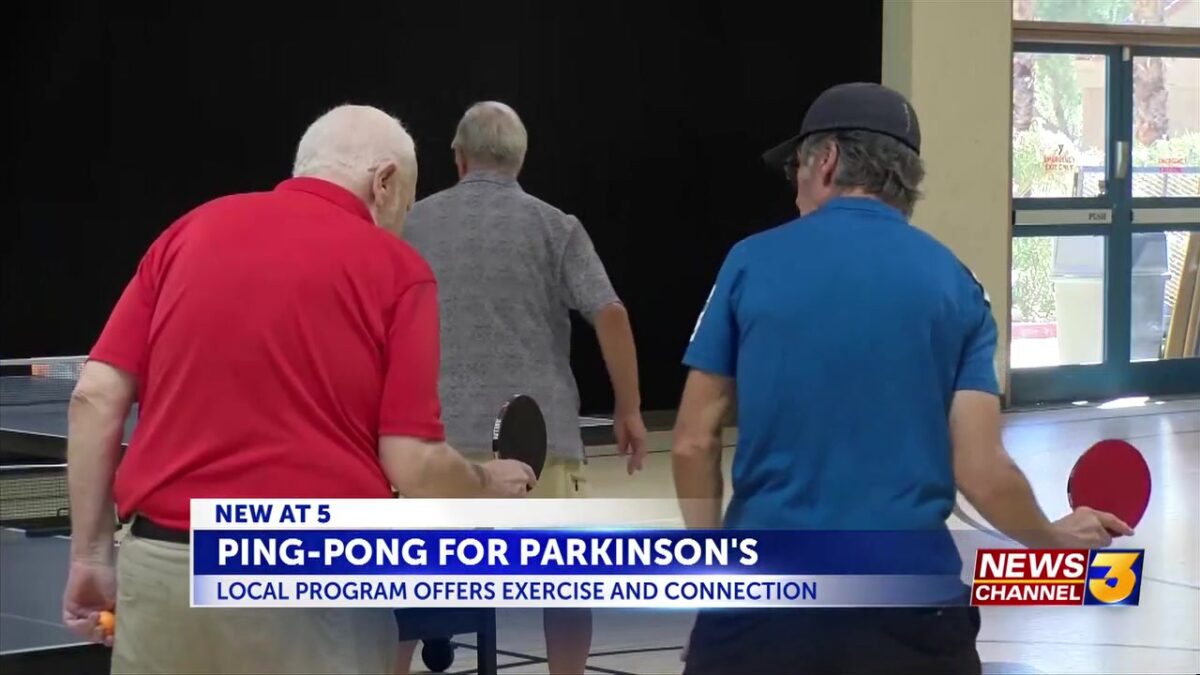
PALM DESERT, Calif. (KESQ) — A ping-pong program in Palm Desert is giving people with neurological conditions a place to stay active and connect with others.
Arthur Gregoire wasn’t sure he wanted to play. Then he watched another participant’s face light up across the ping-pong table.
“It wasn’t five or 10 minutes into the game and I was enjoying it, I was smiling,” Gregoire said.
Gregoire lives with Parkinson’s disease and participates in NeuroPong, a table tennis program at the Family YMCA in Palm Desert. The program is designed for people living with Parkinson’s, multiple sclerosis, dementia and other neurological conditions.
How the program works
NeuroPong board member Trent MacLean said the Palm Desert sessions are adjusted for each participant’s abilities, symptoms and how they feel that day.
Players practice following the ball, positioning their paddles and reacting to each shot. MacLean said the emphasis is on working together across the table rather than winning trophies.
People using walkers or wheelchairs can participate, and players are allowed to use the table for support. MacLean said safety comes first, followed by fun and skill development.
“We’re not looking for a cure. We’re looking to improve your quality of life,” MacLean said.
Understanding Parkinson’s symptoms
An estimated 1.1 million people in the United States live with Parkinson’s, and nearly 90,000 are diagnosed each year, according to the Parkinson’s Foundation.
Parkinson’s is a progressive brain disorder. Symptoms vary from person to person and can include:
Tremors Slow movement Muscle stiffness Balance problemsThe disease can also affect sleep, mood and other functions beyond movement. Not everyone with Parkinson’s has tremors.
Why exercise matters
There is currently no cure for Parkinson’s, but treatments can help manage symptoms. Exercise is an important part of that care.
According to the Parkinson’s Foundation, physical activity can help maintain or improve balance, mobility and flexibility. It can also help with some symptoms beyond movement, including depression and constipation.
Exercise programs should be tailored to each person’s needs and abilities. NeuroPong’s stated goals include supporting physical activity, social connection and quality of life.
Gregoire said he feels the game challenges his endurance, concentration and balance. He now plans to practice between classes after buying a table for his home.
“I have a six-foot table behind my couch, and I’ll be practicing at home in between classes,” he said.
How to participate
NeuroPong meets Tuesdays and Thursdays at 10:45 a.m. at the Family YMCA in Palm Desert. People interested in joining can learn more at neuropong.org
 Click here to follow the original article.