Gov. Kathy Hochul declares state of emergency over measles outbreak in rural New York

By Molly Ormsbee
Click here for updates on this story
PLATTSBURGH, New York (WPTZ) — New York Gov. Kathy Hochul is sounding the alarm over a rise in measles cases, and while New York City has the state’s highest concentration of residents, the outbreak appears to be more of a concern in rural counties.
Hochul issued an emergency declaration yesterday in response to the growing number of cases across rural parts of New York and neighboring states.
The governor’s executive order expands who can administer vaccines to include paramedics, advanced EMS providers, pharmacists, and midwives. It also allows nurses to order testing.
“No one should get seriously ill or die from a vaccine-preventable disease,” Hochul said. “That is why I have taken steps to increase the number of health professionals who can vaccinate and test.”
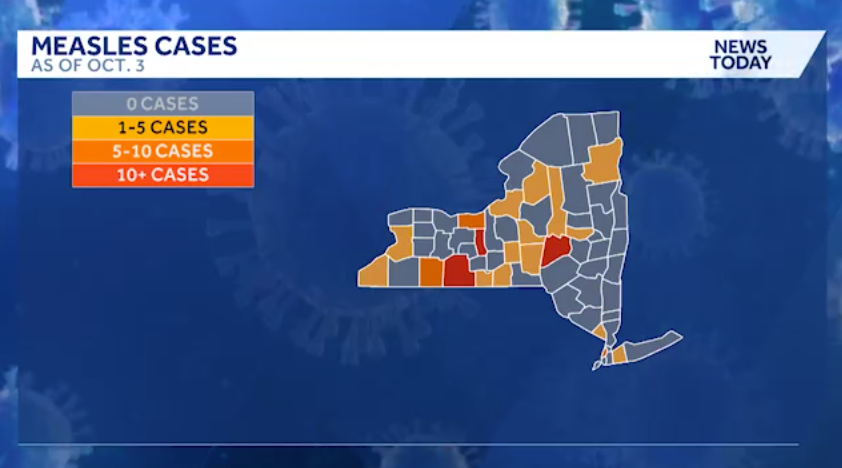
According to the latest data from the New York State Department of Health, there were seven confirmed cases in New York City as of Oct. 3. Another 101 cases were confirmed across the state in counties outside of New York City.
Since July 15, Hochul’s office said there have been 92 measles cases reported among under-immunized, rural communities in 18 counties. Local health departments have administered over 1,000 doses of the MMR vaccine across rural areas in response.
In the North Country, one case was confirmed over the summer in Essex County. The Essex County Health Department confirmed that the patient was an unvaccinated individual who followed the department’s guidelines and went through a quarantine period. The patient’s family also opted to get the vaccine.
Cases have also been confirmed in Lewis County and Herkimer County, which border Hamilton and St. Lawrence counties. According to data from the New York State Department of Health, the outbreak appears to be concentrated in Otsego County, Steuben County, and Seneca County.
The incubation period for measles is up to 21 days. Symptoms include high fever, cough, and runny nose. A rash can occur three to five days after symptoms become apparent. When the rash appears, a patient’s fever may spike to more than 104° Fahrenheit.
Officials said the best protection is vaccination. Individuals should check with their healthcare provider or their local health department if they don’t know their vaccination status.
Most people born before 1957 are considered immune because they were exposed to the virus. Those who received a vaccine between 1963 and 1967 may have received a dose that wasn’t as effective and should talk to their physician about getting revaccinated.
Please note: This story was provided to CNN Wire by an affiliate and does not contain original CNN reporting. This content carries a strict local market embargo. If you share the same market as the contributor of this article, you may not use it on any platform.