Spice Up September: 2026 Chile Pepper Challenge Ignites El Paso for a Cause

Nichole Gomez

EL PASO, Texas — Spicy excitement is heating up in El Paso as the 2026 Chile Pepper Challenge Charity Ride & 5K Walk/Run gears up for Sunday, September 27 at Grace Gardens. Hosted by the El Paso Bicycle Club, this annual event welcomes cyclists, runners, walkers, families, and friends for a day of fun, fitness, and philanthropy—all to benefit the Alzheimer’s Association West Texas Chapter.

With multiple cycling routes, a 5-mile Family Fun Ride, and a 5K Walk/Run, participants of all ages and abilities can find a challenge tailored to them. After crossing the finish line, attendees can celebrate with live music, delicious food, cold beverages, and official Chile Pepper Challenge gear. Every participant receives an event shirt and finisher medal.

Registration remains open through the day of the event, with early packet pickup available at locations across El Paso starting Saturday, September 19. Volunteers are also needed.

Join the fun, feel the heat, and help fight Alzheimer’s this September 27.

https://runsignup.com/Race/Info/TX/ElPaso/ElPasoBicycleClubChilePepperChallengeCharityRide

Click here to follow the original article.

Idaho CEO arrested for allegedly hiding company’s Russian ties to win U.S. Gov. contracts

Seth Ratliff

BOISE, Idaho (KIFI) — An Idaho tech CEO has been arrested as part of what the New York Post has dubbed a “Cold War-style plot” to land lucrative U.S. government contracts.

Oxygen Forensics CEO Lee Reiber, 55, of Boise, Idaho, and a Russian national have been charged in federal court with conspiracy to commit wire fraud after allegedly concealing the Russian ownership and development of the company, the U.S. Attorney’s Office of Idaho announced today.

Reiber was arrested Sunday, September 20th, by federal agents in Idaho. He made his initial appearance Tuesday, Sept. 22, in U.S. District Court in Boise, where he was released on bond.

His co-defendant, 52-year-old Oleg Sergeyevich Davydov of Moscow, was arrested the same day at London’s Heathrow Airport while attempting to board a flight to Istanbul. The U.S. is currently seeking Davydov’s extradition.

Among the deals landed through the alleged scheme was a five-year contract with the U.S. Secret Service’s National Computer Forensics Institute, alongside contracts with the Department of Defense and components of the Department of Homeland Security (DHS).

Digital forensics software is used by law enforcement agencies “to recover, preserve, and analyze electronic data from digital devices while keeping the original files unchanged,” according to the U.S. Attorney’s Office.

Concealing Russian Ownership and Sanctions Evasion

According to the U.S. Attorney’s Office, after the United States imposed expanded sanctions on Russia in early 2022 in response to Russia’s invasion of Ukraine, Davydov, Reiber, and the Russian co-conspirators agreed to conceal Oxygen Forensics’ true ownership and the development of its software in Russia.

In reality, federal prosecutors allege Oxygen Forensics was secretly owned and controlled by five Russian nationals through a Cyprus-based holding company. The owners also control MKO Systems LLC (formerly Oxygen Software LLC), a Russian firm co-founded by Davydov in 2000.

“Davydov was the Russian company’s chief technology officer and was responsible for the development of its software. He helped establish Oxygen Forensics in Virginia in 2013. Reiber joined the company in August 2015,” said Ciaran McEvoy, Public Information Officer for the U.S. Attorney’s Office for the Central District of California, in a news release.

The court affidavit states that developers writing the software worked in Russia. Under different product names, MKO sold the same software in Russia to high-profile state entities, including the Federal Security Service (FSB), the Russian Investigative Committee, and the Ministry of Internal Affairs.

Beginning in March 2022 and continuing to the present, Reiber was installed as the company’s CEO, president, and chairman of the board, and Russian owners were then removed from the company’s public corporate filings in a conspiracy to secure contracts from federal agencies through Oxygen Forensics Inc.

“The company’s Russian owners continued to make significant decisions and set Reiber’s compensation, overruled him on payments, and held signatory authority over the company’s bank accounts,” prosecutors noted.

Prosecutors allege Reiber also actively misled government officials about the software’s background. In his role as CEO, Reiber repeatedly certified to government agencies that Oxygen Forensics had no foreign ownership or control and that its software was developed in the United States, according to court filings.

The complaint does not allege that the software contained malicious code or that it was used to gain unauthorized access to any customer’s computer systems or data.

What Happens Now

If convicted, each defendant faces a statutory maximum penalty of 20 years in federal prison.

The case is being investigated by the U.S. Department of Commerce’s Bureau of Industry and Security, with assistance from the Department of Defense Office of Inspector General’s Defense Criminal Investigative Service Cyber Field Office. The Justice Department’s Office of International Affairs is assisting with Davydov’s extradition.

A criminal complaint merely contains allegations. All defendants are presumed innocent until proven guilty beyond a reasonable doubt in a court of law.

Editor’s Note: AI tools were utilized in the initial research and structural development of this article. All content is thoroughly reviewed and verified for accuracy by the Local News 8 editorial team.

Click here to follow the original article.

Are motorcycle crashes still rising in the Valley?

Kiera McKinney

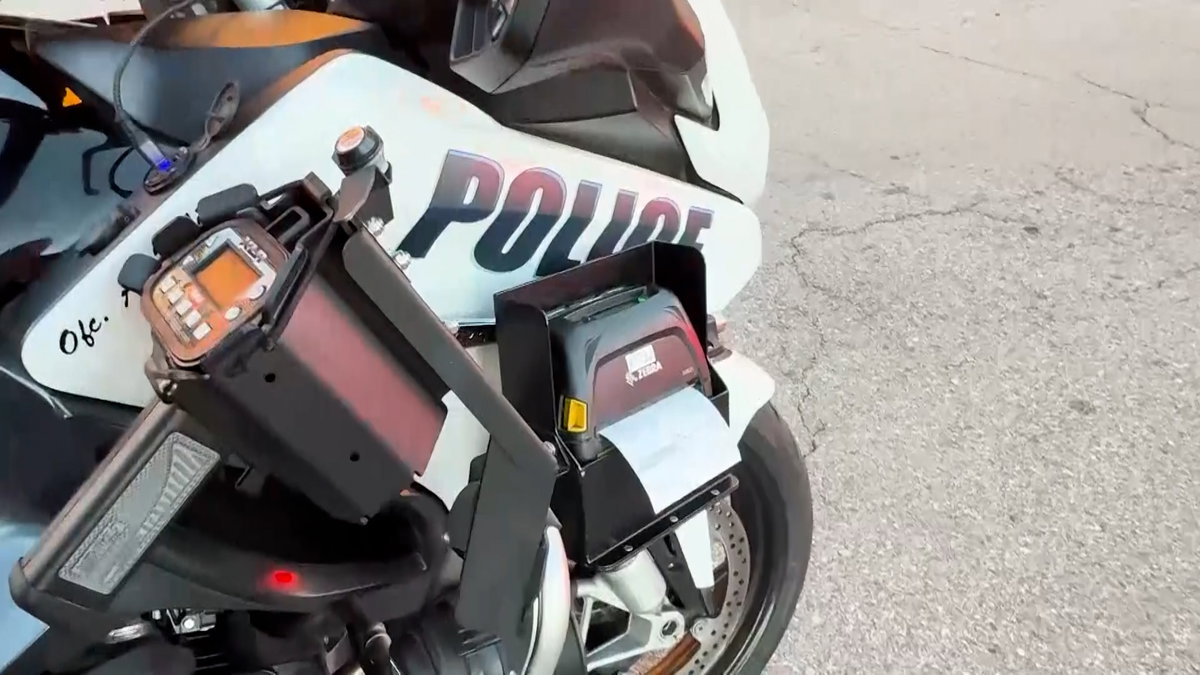
THOUSAND PALMS, Calif. (KESQ)- Motorcycle crash numbers in Palm Springs are holding steady compared to this point last year, but local police say speed continues to stand out as a major concern.

Palm Springs Police have recorded 16 motorcycle crashes so far in 2026, the same number reported at this point in 2025. Since the start of 2025, the department has recorded 37 motorcycle crashes, including one fatal crash.

Police data shows unsafe speed was the top factor in 10 crashes. Improper turning was listed in seven crashes, while six involved a driver violating a motorcycle rider’s right of way.

Lt. Andrew Leyva with the Indio Police Department said speed and impairment are two of the biggest factors officers see involving motorcycle crashes.

“Number one is going to be speed. People need to slow down,” Leyva said. “And the second one is being under the influence, whether it’s drugs or alcohol.”

Leyva has been riding motorcycles for more than 30 years and said he has also seen how quickly a ride can become dangerous while working as a police officer.

In Indio, police recorded two fatal motorcycle crashes in 2025 and one so far in 2026. Leyva said speed and alcohol were factors in both of last year’s deadly crashes.

Safety starts before hitting the road

At Engine Joe’s Custom Cycles, co-owner Leslie Boniface said motorcycle safety begins before a rider ever pulls onto the road.

She said riders should pay close attention to their tires and brakes, including proper tire pressure, tread and brake pads.

“Primarily not keeping track of their tires and their brakes,” Boniface said. “It’s very important that tire pressures are maintained at the proper level, and brake pads are in good working order.”

Both Boniface and Leyva also stressed the importance of wearing the right helmet. Leyva recommends a properly fitted, DOT-compliant helmet, while Boniface showed News Channel 3 the DOT label on the full-face helmet she wears.

California law requires motorcycle riders and passengers to wear a helmet that meets federal safety standards. Leyva also encouraged riders to take motorcycle safety courses, even if they already have a license or years of riding experience.

For drivers, he said staying off the phone, slowing down and checking carefully before changing lanes or making turns can help prevent crashes.

Leyva recommends drivers use what he calls “SMOG”… signal, mirror, observe and go, before making a move on the road.

Police say whether someone is riding on two wheels or driving a car, slowing down and paying attention can give everyone more time to react.

Click here to follow the original article.

MU investigating comments about Kirk shooting at TPUSA ‘Pick up the Mic’ session

Melissa Houston

COLUMBIA, Mo. (KMIZ)

EDITOR’S NOTE: The story has been corrected to reflect that the person involved was not an MU student.

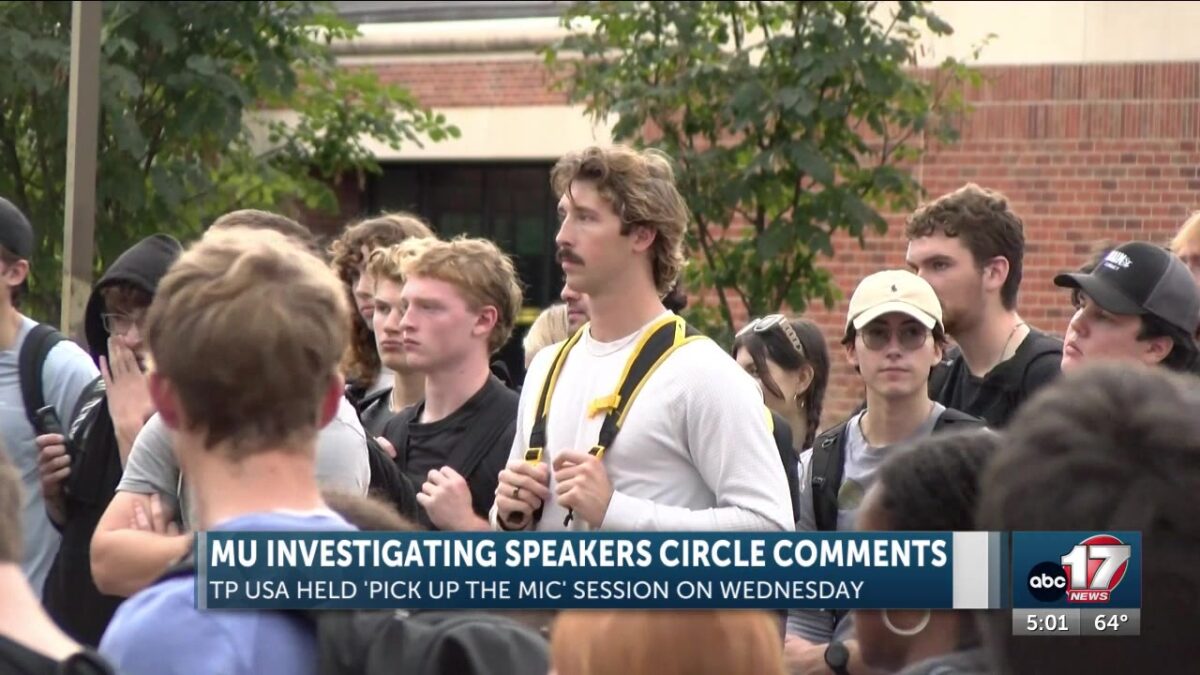
The University of Missouri said Thursday that it is investigating a person for comments made during a Turning Point USA “Pick up the Mic” session on Speakers Circle.

During the session Wednesday hosted by Shane Winnings, Chloe Carter came to the mic to discuss the First and Second Amendments.

“It is worth it to have a couple gun deaths every couple years to keep our Second Amendment right,” Carter said.

Winnings responded with “I agree.”

The conversation then moved to talk about Charlie Kirk when the person said that Charlie Kirk would have agreed and “died by his word.”

Winnings then said that Kirk died with the same mindset, calling it a conviction, and recommended the student “finds out what that means one day.”

Winnings asked if Carter was “for people being killed for freedom of speech.”

Carter responded with “yeah, absolutely.”

In a social media post, the university commented that it will investigate Carter and will “hold the individual to account.” An MU spokesperson later said that Carter is not a student and has been trespassed from campus.

Zach Greenberg, Director of faculty legal defense with the FIRE organization, said that the First Amendment protects any discussions of violence. The only time it does not, is when it falls into a category of true threat.

“The First Amendment protects, calls for violence, discussions of violence, even justifications for the moral propriety of violence,” said Greenberg. “It protects speech unless it falls into the narrow protected category of a true threat: the serious intent to commit unlawful violence, direct, imminent, specific.”

Greenberg said technically Carter’s comments did not violate the First Amendment; however, the university trespassing on Carter could be a violation of her First Amendment rights because it is a government state university.

“I think that’s a punishment that government inflicting for the exercise of someone’s free speech rights, so their student are not student you shouldn’t be punished for expressing yourself,” said Greenberg.

Carter could potentially take legal action against the university for being trespassed from a public campus, according to Greenberg.

“I think if the university were to say to ban the speaker from campus, you know, maybe a no-contact order, or a trespass order, it would be problematic if it’s based on the students’ or the speaker’s protected speech,” said Greenberg.

The university says the Columbia Police Department and FBI have been contacted, in addition to the University of Missouri Police Department.

“We denounce any form of violence, and it is totally unacceptable to wish harm upon a person for exercising their First Amendment rights. This is a very serious matter for which we’ve launched a full investigation. We will hold the individual to account,” the university stated in a social media post.

State Sen. Stephen Webber (D-Columbia) criticized Carter’s statements in an X post.

“This is deeply sick behavior (and so were the words). If you see someone acting like this at Mizzou (or anywhere) you should absolutely call them out for it,” Webber wrote.

Carter said that she knew she was taking a risk stepping up to the mic, but did not realize how far people would take the backlash.

“I didn’t expect the situation to get quite this large. I knew that what I was doing was provocative and that there would be some kind of backlash, but this has really caught on in right-wing social media,” said Carter. “Honestly, the worst part is that people are coming after everyone associated with me as well.”

Carter criticized the backlash, saying that right-wing media figures frequently talk about and celebrate violence, such as the death of George Floyd, Israel’s attacks in Palestine and shooting deaths tied to ICE agents.

“These are the people who were anti-cancel culture in the late 2010s and the people who are supposedly the strongest supporters of the first amendment, but you see them here calling for me to be expelled, fired, imprisoned, and even killed,” said Carter. “People often forget that the American right is an ideology based entirely off of the normalization of violence and oppression.”

Click here to follow the original article.

CHP explains dangers of laser strikes after Palm Springs-area incident

Raymond Kalra

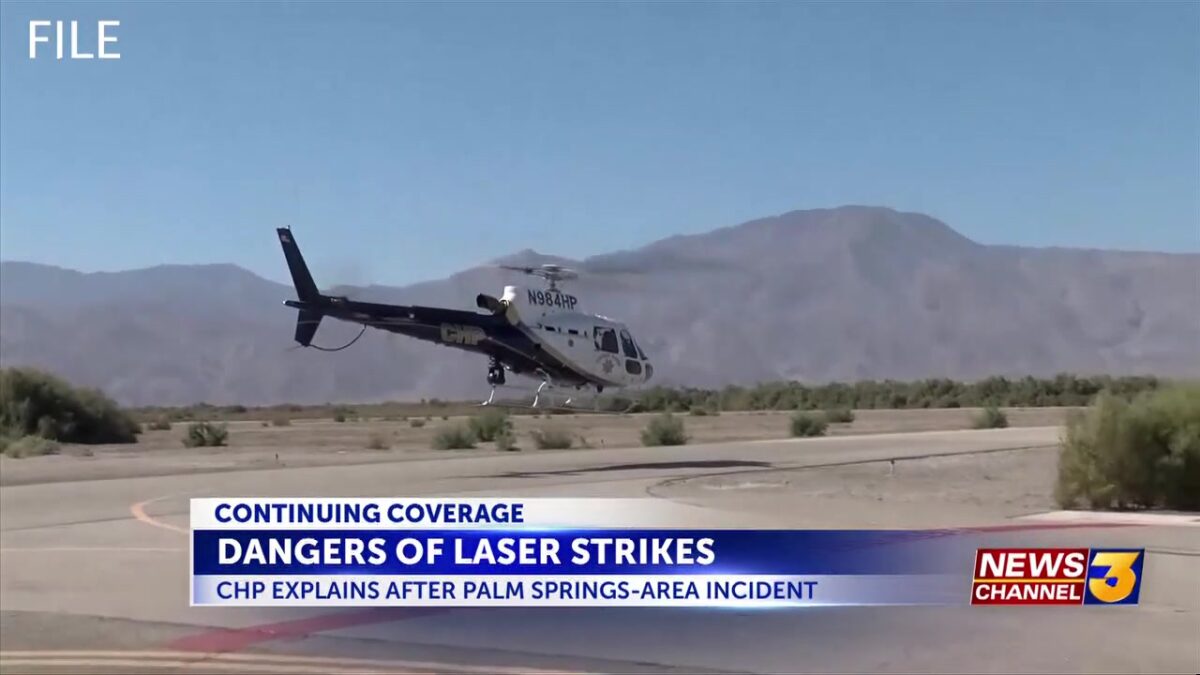
THERMAL, Calif. (KESQ) – A recent laser strike involving a California Highway Patrol helicopter near Palm Springs is putting new attention on the danger a beam of light can create for crews in the air — and for people on the ground.

The incident happened Aug. 21 while a CHP pilot and flight officer were conducting a training flight near Palm Springs. According to CHP, the helicopter was struck by a laser several times over the course of several minutes.

The crew was able to trace the source of the laser to Desert Hot Springs using technology aboard the aircraft. Local law enforcement later responded and took a person into custody.

CHP Flight Officer and Paramedic Matthew Napier told News Channel 3 the danger can begin the moment the light reaches the cockpit.

“The dangers of a laser strike are immediate,” Napier said. “As soon as that light hits the cockpit … their vision can immediately be taken away.”

Napier said pilots rely heavily on their vision, whether they are looking outside the aircraft or at instruments inside the cockpit. He compared the experience to someone shining a bright light into a driver’s eyes while they are traveling down a freeway.

A laser can also leave what Napier described as an afterimage, meaning the effect on a crew member’s vision may continue even after the beam is gone.

How CHP crews respond

Napier said CHP pilots and flight crews receive extensive training for emergency situations, including laser strikes, loss of vision and situations where crews lose outside visual references.

The first priority is maintaining control of the aircraft.

Pilots may rely on their instruments while other members of the crew work to determine where the laser is coming from. Napier cautioned that even looking at instruments can become difficult if a crew member’s vision has been impaired.

CHP aircraft are also equipped with technology that can help crews locate the source of a laser.

Napier said aircraft used by CHP in the area are equipped with thermal imaging and cameras. A flight officer can use those tools while the pilot focuses on flying the aircraft.

“He’s able to use his camera to then find the laser and then pinpoint an address or location,” Napier said.

Once crews identify a location, they can communicate directly with law enforcement officers on the ground and provide them with information to help locate the person responsible.

In the August incident, Napier said the investigation was turned over to the Desert Hot Springs Police Department after officers responded and took a person into custody. Any decisions on charges would be handled by investigating authorities.

A danger that can extend beyond the aircraft

Napier said many CHP pilots and crews have experienced laser strikes during their careers.

He also cited more than 1,300 laser strikes reported to the Federal Aviation Administration in California in 2025.

CHP says the concern is not limited to high-powered lasers.

Napier said any intense light directed into a cockpit can interfere with a pilot’s ability to see, including a high-powered flashlight.

“So it removes that pilot’s ability to see, takes away their safety of flight and can potentially lead to worst case scenario being an aircraft crash,” Napier said.

He said the danger can extend to pilots, crew members, passengers and people on the ground if a pilot loses the ability to safely control an aircraft.

Possible criminal consequences

Napier said pointing a laser at an aircraft is taken seriously at both the state and federal levels.

Someone accused of doing so could potentially face criminal charges, fines and imprisonment.

CHP’s message is simple: what may appear to be a harmless light from the ground can create an immediate safety risk in the air.

News Channel 3 is continuing to follow the investigation into the August incident.

Click here to follow the original article.

Human remains found in remote Targhee National Forest area

Danielle Mullenix

TETON COUNTY, Wyo (KIFI) – Law enforcement in Teton County, Wyoming, is currently working to identify human remains recently discovered in a remote section of the Targhee National Forest earlier this month.

The discovery was first reported by the Jackson Hole News & Guide. The remains were found on Sept. 13 by two bow hunters tracking a wounded elk near Starvation Peak and Mosquito Creek, within the Palisades Wilderness Study Area.

“We are doing a forensic and anthropological examination to determine identification, cause, and manner of death,” said Teton County Coroner Brent Blue. “It will probably be some period of time before any details will be available.”

At this time, the Teton County Sheriff’s Office and Search & Rescue have told Jackson Hole News & Guide that they have no suspicion of foul play.

Investigators are reviewing missing-person reports in Teton County and nearby areas, including Teton and Bonneville counties in Idaho. Due to the location of the recovery site, Sgt. John Faicco mentioned that the deceased individual may have entered the area from the Idaho side near Palisades Reservoir.

Teton County Deputy Coroner Russell Nelson, a forensic anthropologist, stated that the remains were those of a robust man, approximately 5 feet 8 inches in height, and estimated to be between 45 and 65 years old. The remains are estimated to be between three and four years old.

The Sheriff’s Office urges anyone who can identify the description or knows of a man who has gone missing in the area over the last few years to contact the agency at its non-emergency number, 307-733-2331.

Local News 8 will continue to track this developing story.

Click here to follow the original article.

Suspect in Columbia standoff charged with making terrorist threat

Demetra Alarcon

COLUMBIA, MO. (KMIZ)

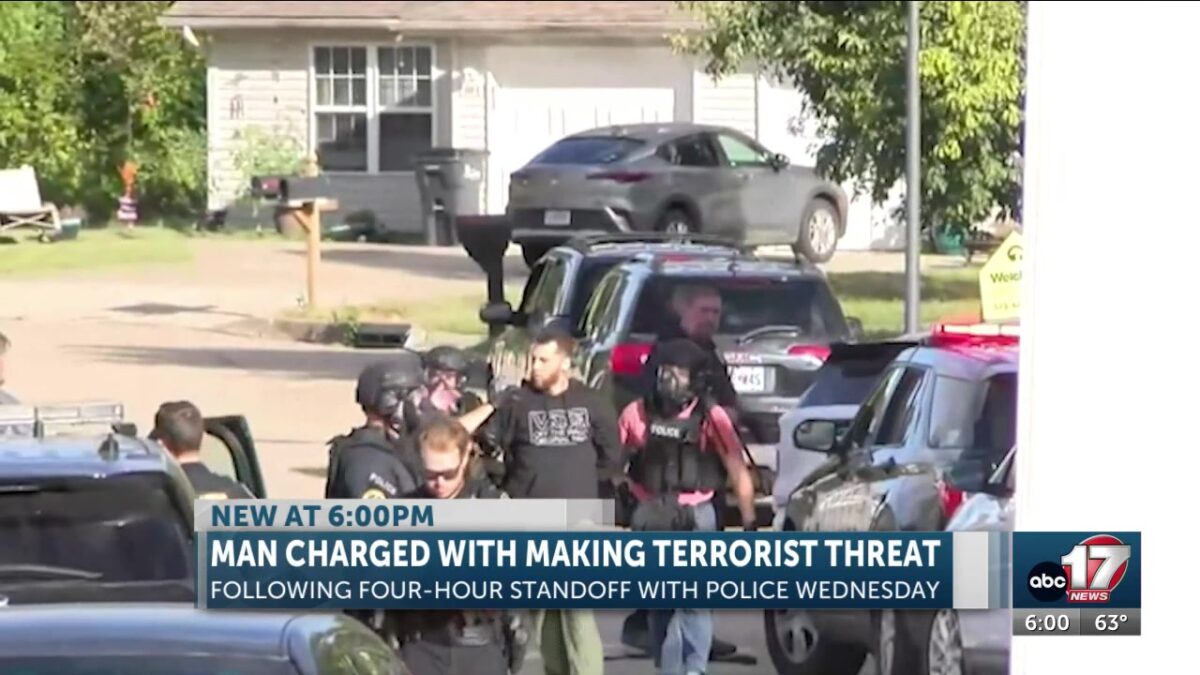
Prosecutors have charged a man with first-degree terrorist threat and resisting arrest following a four-hour standoff on Wednesday.

Police identified the suspect as 34-year-old Christopher Dow of Columbia. Officers arrested Dow shortly before 5 p.m. Wednesday at his home on Hidden Creek Court on a warrant for third-degree domestic assault.

According to a probable cause statement released by CPD, an officer made contact over the phone with Dow. Dow told officers that he was armed and that if any officers entered the residence, Dow would open fire.

The officer stated that Dow said he would shoot the gas line and blow up the house, “to kill himself and as many officers as he could,” said the probable cause statement.

The home is in a residential area, and school buses were dropping off children nearby during the standoff. Police escorted children to their homes from the bus stop.

According to the statement, Dow showed an officer during a video call that he was standing next to a gas water heater with two different handguns. Dow reportedly told the officer he “would blow up the house and kill everyone he could before he came out.”

According to the statement, there were approximately 20-30 officers at the scene. Officers cleared the street and evacuated nearby residents in fear that Dow would carry out his threats.

Dow did not leave the residence until officers deployed gas.

The statement says they believe Dow will not appear in court if he receives bond, writing that “Dow stated he would rather die than spend one night in jail,” according to the statement.

Dow remained in jail without bond on Thursday morning.

Click here to follow the original article.

MU students highlight drug use among student body following Ole Miss death investigation

Marie Moyer

COLUMBIA, Mo. (KMIZ)

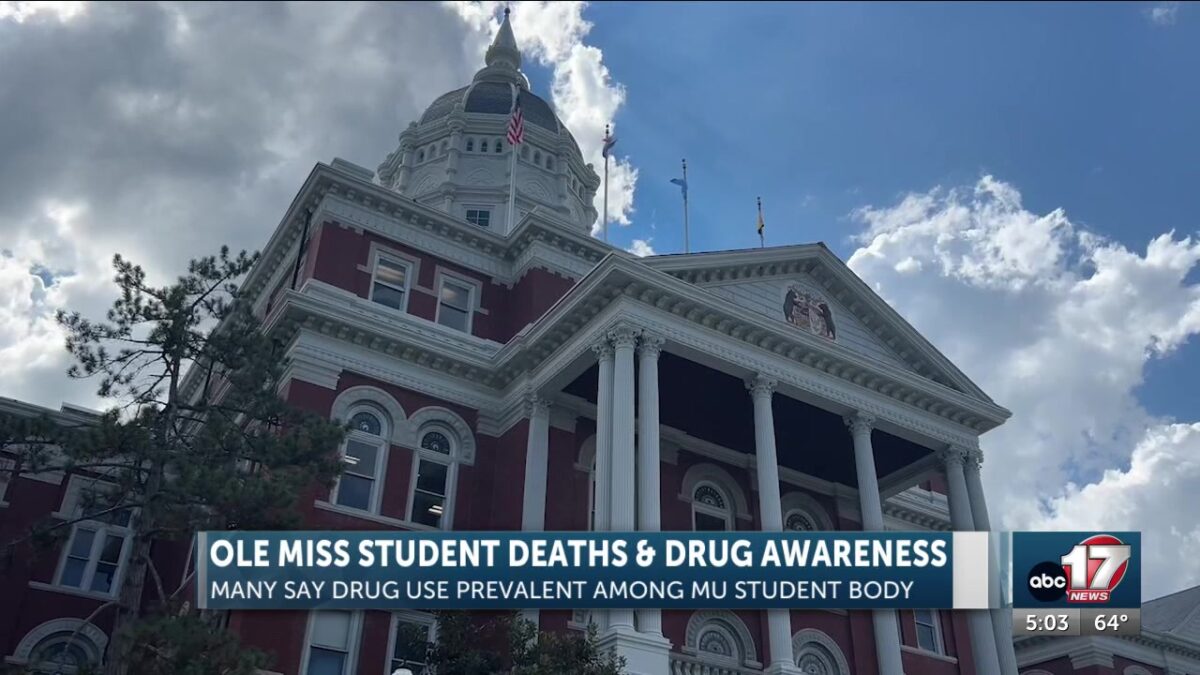
University of Missouri students report drug use is “prevalent” among the student body as conversations surrounding college drug use grow following a death investigation at the University of Mississippi.

Two students at Ole Miss were found dead in their off-campus homes Monday. They were identified as 20-year-old Robert Strang from Atlanta and 18-year-old Aidan Hamilton from Colorado. Authorities reported that the unregulated drug kratom was found nearby, with student groups circulating warnings about a new fentanyl-like synthetic opioid called cychlorphine.

The University of Missouri Interfraternity Council later notified students about the risks of drug use in a Facebook post in support of the University of Mississippi Interfraternity Council.

“The Mizzou Interfraternity Council Stands with the Ole Miss Interfraternity Council, the University of Mississippi community, and everyone affected by the events that occurred in Oxford this weekend,” the Facebook post said. “We have a responsibility to look out for one another and to take seriously the risks that can come with unknown or counterfeit substances.”

Authorities in Mississippi are yet to say whether kratom and cychlorphine had a role in the deaths.

ABC 17 News spoke with around a dozen University of Missouri students, with around half reporting they have seen a culture of drug use at the school. One student even shared that a friend who began using while at the University of Missouri later died of a cocaine overdose after college.

“The main one is cocaine, and it’s is very prevalent within like off-campus, like when you’re out at a bar in the bathroom or something like that and people are either offering it to you or asking you for it,” the student said.

“Kratom is very popular I would say, around downtown with students,” another student said. “It used to be like 18+ and they don’t even check for that, so if you just walk into the store and look like somewhat young adult, they’ll just give it to you.”

Both students added that they have seen several smoke shops and convenience stores downtown continue to sell kratom and 7-OH despite recent state government crackdowns.

Cychlorphine has gained notoriety for being more than 10 times stronger than fentanyl and has been increasingly seen in domestic Midwest drug markets. It also has no smell or taste and does not appear on fentanyl test strips.

“There’s an increased risk of overdose from people that may be using those drugs,” Boone County Public Health and Human Services Public Health Information Specialist Austin Krohn said. “Important to note, Narcan still works, but it may require additional doses and maybe up to more than two that usually come in the packages.”

According to the City of Columbia, Narcan, which stops opioid overdoses, can be found 24/7 in distribution boxes across the city, including at the Columbia Fire stations, the local health department and the Activity & Recreation Center.

University of Missouri sophomores Neer Patel and Grady Wright are working to bring awareness to drug education and safety through the Atlas Health Equity Group. The group hopes to lead state initiatives on naloxone access and public health education, including handing out free boxes of naloxone on campus.

“I think as of yesterday, we gave out 3,500 units and then today we’re planning on giving out another 1000 units,” Wright said. “We want to keep 500 in storage so we can hand that out to the bigger Greek life around campus.”

The naloxone is supplied by the University of Missouri St. Louis Addiction Science Team.

“I think it’s a misconception of naloxone that people think if they have it, they’re considered drug users, but naloxone is not for yourself, because if you’re overdosing, then you’re not going to be able to use naloxone, it’s just in case something ever does happen,” Patel said.

Both students add that their work comes from their own experiences of seeing overdoses while living in Columbia and Kansas City.

“Last year I saw someone overdose outside of the student center, which was kind of crazy because it takes so long for EMT to respond even when they’re so close, so that kind of prompted me to kind of get on it more for sure,” Wright said.

According to the University, naloxone can be found at the Wellness Resource Center inside the Student Center.

Students ABC 17 News spoke to added that naloxone can be found in some dorm halls.

“You talk to one of the members there, they can get you in contact with one of the people there that is able to do big group orders of Narcan as well as single ones,” one student said.

“The Mizzou IFC encourages every member of our community to educate themselves about overdose prevention, know where to access Narcan, and take action when a fellow student or brother may be in danger,” the University of Missouri IFC said in its Facebook post.

Krohn adds that 911 should be on the line during an emergency scenario before naloxone is given and to follow instructions throughout the treatment.

Click here to follow the original article.

Boone County 911 completes switch from Brightspeed to AT&T

Ellyse Edwards

COLUMBIA, Mo. (KMIZ)

Boone County’s 911 center switched its phone service provider from Brightspeed to AT&T on Wednesday, a week after a Brightspeed outage disrupted 911 service across Mid-Missouri.

Christie Davis with Boone County Joint Communications confirmed the switch Thursday. Boone County Joint Communications’ 911 service went offline Sept. 16 for several hours because of a Brightspeed disruption. During the outage, people who needed emergency assistance were directed to call 311.

The Boone County Office of Emergency Management said the disruption affected 911 centers across Missouri but was concentrated in Mid-Missouri. Boone County announced shortly before 5 p.m. that service had been restored.

Jefferson City and Cole County were also affected by the outage. Jefferson City police said 911 calls continued to come in but had to be rerouted. Service was restored after about four hours.

Jefferson City Police Lt. Curtis Finke said there was no disruption or delay in emergency services during the outage.

The outage happened as Jefferson City works toward modernizing its 911 infrastructure.

In March, the Jefferson City Council tabled a proposal to replace the police department’s older copper-based call-delivery system with a next-generation emergency services internet protocol network, also known as ESInet.

City documents said the newer system would support voice calls, texts and other emergency data while improving call routing. The proposal also included renewing the city’s five-year contract with Intrado for 911 call-handling services and upgrading the system’s hardware.

The project was estimated to cost $458,351 over five years.

Davis said Boone County’s transition took close to two years. The county entered into its contract about one year ago, and implementation took approximately nine months.

The transition was originally scheduled for July but was delayed while the county waited for additional equipment. Davis said previous outages were one factor in the decision, but the change also prepares the county for future Next Generation 911 features.

Under the new system, 911 calls are delivered through AT&T’s secure emergency services internet protocol network instead of the older CAMA trunks and copper lines. Brightspeed remains involved by providing the last-mile fiber connection. Boone County also added a wireless FirstNet connection as another backup if the fiber service fails.

Davis said Boone County’s previous system had one point of failure along the route from Jefferson City. The new system provides additional paths for incoming calls and allows the center to reroute calls to its administrative lines more quickly.

During the Sept. 16 outage, Davis said calls that did not reach the 911 center still appeared in RapidSOS, a mapping system used by dispatchers. That allowed telecommunicators to see where calls originated and return them using phone lines that were still working.

Davis said Boone County could not determine exactly how many emergency calls were affected because the calls were routed through administrative lines, which prevented the center from collecting its usual statistics.

Jefferson City Police Capt. Chad Stieferman said the city is still receiving 911 calls through Brightspeed’s analog CAMA trunks. The city has signed a contract with AT&T for a Next Generation 911 core and anticipates placing the system into service in April.

During last week’s outage, Jefferson City’s 911 calls rolled over to administrative lines. Stieferman said everyone was still able to reach the center, but dispatchers received emergency and nonemergency calls on the same lines and had to determine which calls needed immediate attention.

Stieferman said the AT&T system will use multiple data paths and redundant data centers instead of relying on the single point of failure in the current system. He said the newer infrastructure cannot guarantee that an outage will never happen, but it should reduce the risk of one failure disrupting call delivery.

Jefferson City is also completing a separate hardware refresh for its call-answering equipment. Stieferman said that project includes new servers and workstations through a five-year agreement with Intrado.

Click here to follow the original article.

Boise man hospitalized after crash on southbound I-15

Seth Ratliff

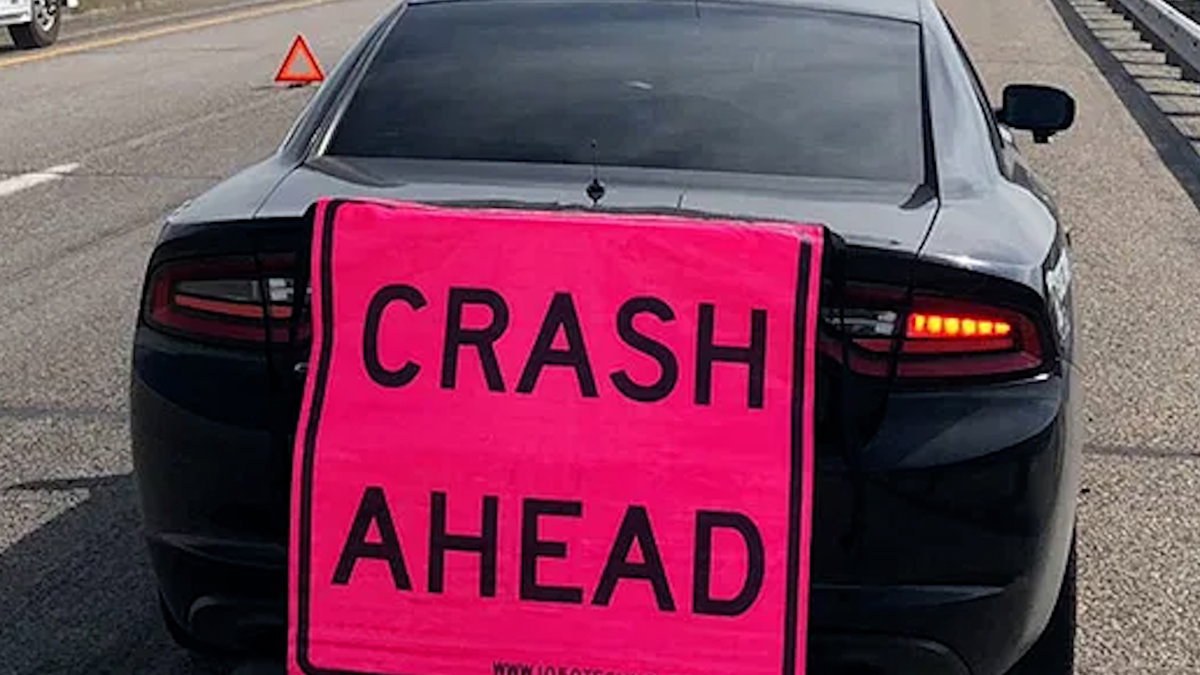
BLACKFOOT, Idaho (KIFI) — All lanes of southbound Interstate 15 near the Blackfoot Rest Area have reopened after emergency crews cleared a two-truck crash that hospitalized a Boise man Thursday.

The crash happened at 8:13 a.m. near the Blackfoot Rest Area (mile marker 101). Idaho State Police says a 30-year-old Boise man was driving south in a 2007 box truck when he rear-ended a southbound 1986 dump truck.

Both drivers were wearing their seatbelts. Lt. Todd Orr with the Idaho State Police confirmed that emergency responders took the Boise driver to the Eastern Idaho Regional Medical Center in Idaho Falls. The extent of the driver’s injuries is currently unknown.

The southbound lanes were blocked for around 3 hours while crews investigated the crash and worked to clear the scene.

The Idaho Transportation Department is directing drivers to use caution while traveling through the area.

Click here to follow the original article.