Pedestrian killed in 70th avenue crash identified as 39-year-old Mecca man

Tommy Gallegos

MECCA, CA (KESQ)- A 39-year-old Mecca man was killed Thursday evening after being struck by a vehicle on 70th Avenue east of Cleveland Street, according to the California Highway Patrol.

The crash was reported at approximately 7:26 p.m. on September 10, 2026.

The Riverside County Coroner’s Office identified the victim as Ramiro Gonzalez Jr., 39, of Mecca.

According to the CHP, a white Honda Accord driven by a male was traveling on 70th Avenue and approaching Gonzalez, who was walking in a westerly direction. The Honda struck Gonzalez, and he was pronounced dead at the scene.

Investigators are still working to determine which portion of the roadway Gonzalez was walking in at the time of the collision.

CHP said alcohol did not appear to be a factor in the crash.

The collision remains under investigation. Anyone with additional information is asked to contact the CHP Indio office.

Click here to follow the original article.

Fatal head-on crash near Palisades kills 1, injures 2

Seth Ratliff

UPDATED:

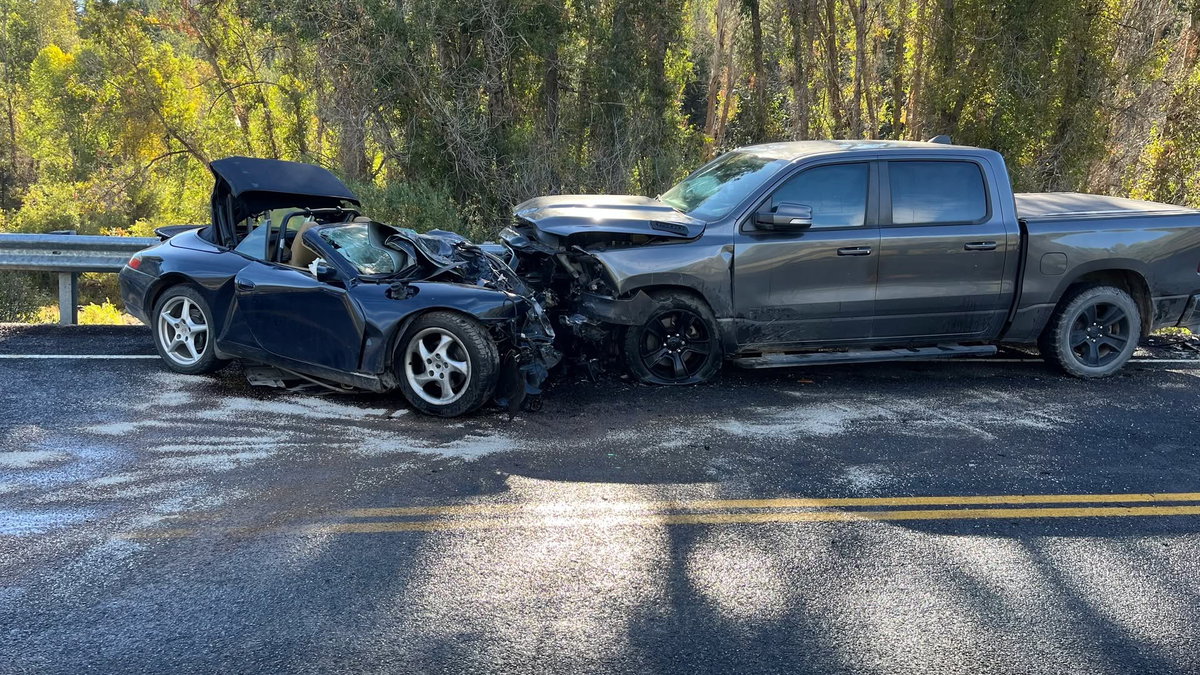
ALPINE, Wyo. (KIFI) — A head-on crash on Highway 26 near Palisades left a Texas man dead and two Wyoming residents hospitalized Friday morning.

The crash happened shortly after 8 a.m. near mile marker 397 at Indian Creek, just east of Irwin. Multiple emergency response agencies, including the Bonneville County Sheriff’s Office, Idaho State Police, and the Alpine Fire District, responded.

According to the Idaho State Police, a 71-year-old Texas man was driving eastbound in a 1998 Porsche Carrera when he crossed over the center line. The Porsche collided head-on with a westbound 2020 Ram 1500 pickup, driven by a 36-year-old male from Afton, Wyoming.

Paramedics with Star Valley Health took the driver of the Ram pickup and a passenger, a 27-year-old female from Afton, by ambulance to the Alpine ER with minor injuries, according to the Alpine Fire Department. The driver of the Porsche Carrera died of his injuries at the scene of the crash.

The crash temporarily blocked the westbound lane for five hours while crews conducted an extensive investigation and cleared the debris.

In a statement posted following the response, the Alpine Fire Department thanked drivers for their patience and urged the public to “Please drive safe, no distractions, safe speeds.”

The crash remains under investigation by ISP.

Click here to follow the original article.

Record $4.5 million in funding to support arts and culture across Oregon

Adrielle Hasara

Bend, Ore. (KTVZ) — The Oregon Cultural Trust announced Friday it is awarding a record $4.5 million to more than 450 organizations across the state for the 2027 fiscal year. The funding supports arts, culture, heritage and humanities programs in every county and tribe in Oregon.

The distribution of funds is defined under Oregon statute ORS 359, which directs resources to state cultural partners, regional coalitions and nonprofit organizations. The record funding was made possible by donations from more than 10,000 Oregonians during the 2026 fiscal year through the state’s Cultural Tax Credit, a program created by the Oregon Legislature 25 years ago.

The $4.5 million distribution includes $1,125,423 split equally among the trust’s five core cultural partners: the Oregon Arts Commission, Oregon Heritage Commission, Oregon Humanities, Oregon Historical Society and the State Historic Preservation Office. Another $1,125,423 is allocated to 45 regional County and Tribal Cultural Coalitions through a per capita formula, allowing volunteer-led coalitions to regrant funds within their local communities.

The remaining $2,250,846 is being distributed to 104 cultural nonprofits through the competitive Cultural Development Program. Individual grant awards range from $5,000 to $40,000, with 49% of eligible applications receiving between 75% and 100% of their requested amounts following peer panel reviews.

Amy Lewin, Oregon’s director of arts and culture, noted that community requests have grown alongside donor contributions.

“Oregon’s big idea of funding arts, heritage and humanities, established a generation ago, continues to sustain the core components of community vitality and resilience – and yet as we have received an increase in donations, so have the requests for support increased,” Lewin said. “This unique funding model is becoming a critical resource for supporting learning, historic preservation and valued engagement for communities large and small and in every corner of the state.”

Several major cultural development grants focus on digital archiving and media inclusion. The Albina Music Trust in Portland received $40,000 to support the Albina Community Archive, which preserves photos, audio recordings and oral histories documenting Black Oregonians. Capital Community Media in Salem was awarded $40,000 to create hyper-local Spanish-language TV programming, while the Clatsop County Historical Society in Warrenton received $14,000 to acquire large-format scanning and video preservation equipment.

Other grant recipients are expanding facilities and public programming across Oregon. The Dry Canyon Arts Association in Redmond received $31,000 to renovate 1,500 square feet into additional classroom and workshop space for its community art center. In Portland, the Portland Art Museum was awarded $40,000 to plan and conserve its Native American permanent collections galleries and The Vanport Mosaic received $40,000 to launch a public digital archive documenting the history of Vanport prior to the 1948 flood.

Grants were also awarded for statewide access initiatives and performance projects. The Portland Gay Men’s Chorus received $12,000 for its Rural Harmony Tour in Prineville, Madras, Sisters and Klamath Falls. SMART Reading in Portland received $10,000 to distribute diverse children’s literature in rural communities and enTaiko in Portland was awarded $38,000 for an inclusive performance project incorporating deaf, blind and disabled artists.

For projects with multi-year timelines, the Josephine Community Library Foundation in Grants Pass received $40,000 to complete design construction documents for a new downtown library, where groundbreaking is scheduled for 2028. Additionally, the Eastside Jewish Commons in Portland received $28,000 to support the third annual Portland Jewish Music Festival, scheduled for May 5-16, 2027.

Click here to follow the original article.

Mizzou-Kansas Border War in sports replaces violent, Civil War-era rivalry

Alison Patton

COLUMBIA, Mo. (KMIZ)

The rivalry between the University of Missouri Tigers and the University of Kansas Jayhawks is well known in college sports.

But the passion infused into it actually started as a way to move past the bloody conflict between pro-slavery groups in Missouri and anti-slavery settlers in Kansas.

University of Missouri history professor Jay Sexton said there’s no big monument to honor the civilians who died in the bloody Border War of the mid-1800s.

“Historically, the football game actually functioned as the way in which the violence was remembered,” Sexton said.

The violence starts in the early 1850s, when Kansas settlers were trying to decide whether the state should allow slavery or not.

Kansas’ neighbor, Missouri, wasn’t a strong slave state, but there were groups of pro-slavery people who would sneak into Kansas and illegally vote in the election, Sexton said. They were called Border Ruffians.

Eventually, the anti-slavery sentiment overpowered the pro-slavery minority in Kansas, and it becomes a Union state in 1861, Sexton said.

“In fact, it’ll become the most hardcore anti-slavery state in the Union, and this is when the Kansas Jayhawks seek their revenge on the pro-slavery West Missourians,” Sexton said.

The Civil War started in 1861 and ended in 1865. Sexton said the Jayhawk revenge era was one of the deadliest.

“Before you know it, the border has descended into anarchy and violence, in which no civilian is safe. Lots of innocent lives are lost, most tragically in the Quantrill raid of Lawrence, Kansas, in the summer of 1863,” Sexton said.

Confederate guerrilla William Quantrill led his band of a few hundred pro-Confederate raiders into Lawrence, burning a large swath of the town, looting it and killing scores of men and boys.

Sexton also said Western Missouri was forcibly depopulated in the fall of 1863.

“This is where the Civil War is most severe in its violence to civilians,” Sexton said.

About a year later, in 1864, Columbia created its own Union-aligned militia to defend the city and the University of Missouri from pro-slavery guerrillas called Bushwhackers. The unit was called the Missouri Tigers.

“The irony is that the Columbia Tigers and the Kansas Jayhawks are actually on the same side, or at least have the same enemy during the Civil War. It’s only later that they’re imagined to be rivals,” Sexton said.

The first football game between MU and KU in 1891 was over 25 years after the Civil War ended, and it was a way to put the violence behind the two states.

“The Border War football game, when it was created in the 1890s, in part, is to airbrush sort of the worst bits of the history out of people’s imaginations, and replace it with a regulated, good-spirited rivalry with clear sides, and most of all, a final whistle,” Sexton said.

It wasn’t until the mid-1900s that fans started imagining the games as a revival of the Civil War, Sexton said.

These days, it’s unlikely that many fans know about the rivalry’s roots — they’re just happy to be part of it.

Click here to follow the original article.

Idaho Statesman hit by McClatchy layoffs, 10 Idaho journalists affected

KIVI Staff

By: Chloe Johnston

Originally Published: 4:15 PM MDT September 10, 2026

IDAHO (KIVI) — McClatchy Media, the parent company of the Idaho Statesman, is laying off journalists at several newspapers in Idaho and Washington, including 10 in Idaho.

The Pacific Northwest Newspaper Guild says that McClatchy is laying off 33% of its unionized workers at the Idaho Statesman, The News Tribune in Tacoma, the Tri-City Herald, The Olympian and the Bellingham Herald.

The cuts include 10 journalists in Idaho and seven in Washington, according to the guild, with the affected Idaho Statesman employees’ last day set for Oct. 11.

The layoffs come less than four months after Idaho Statesman journalists walked off the job over wages, contract negotiations and concerns about McClatchy’s use of artificial intelligence. The May 26 walkout included reporters, photographers and columnists, according to the Idaho News Guild.

RELATED | Idaho Statesman journalists walk off the job over wages, AI concerns, and contract negotiations

In a statement on Thursday, the guild said the layoffs will reduce local news coverage throughout the Northwest.

“These severe cuts will hobble these news organizations and leave the public throughout the Northwest less informed about the events and decisions that affect them, and with fewer people holding the powerful to account,” the guild said.

The guild criticized McClatchy’s decision, saying the company was prioritizing short-term profits over the communities its newspapers serve.

Idaho News 6 has reached out to McClatchy Media for comment and has yet to hear back.

This story was initially reported by a journalist and has been, in part, converted to this platform with the assistance of AI. Our editorial team verifies all reporting on all platforms for fairness and accuracy.

Click here to follow the original article.

First Interstate Bank will close branches for ninth annual Volunteer Day

Adrielle Hasara

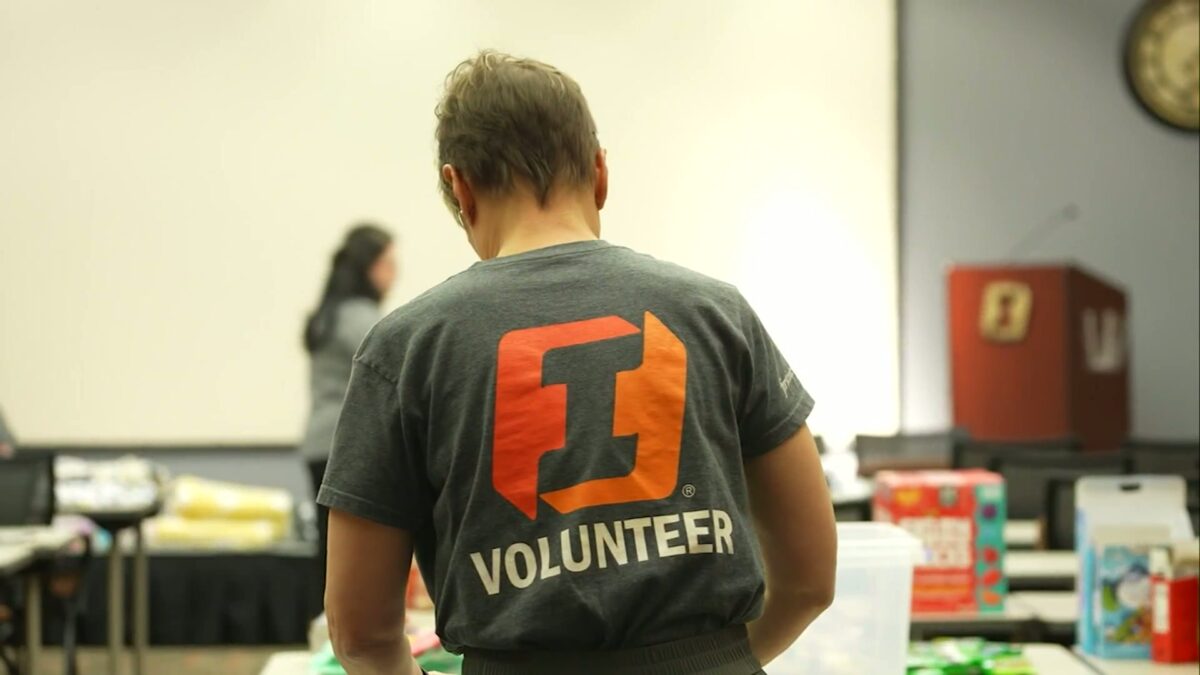
Bend, Ore. (KTVZ) — First Interstate Bank will close all of its branches at noon on Wednesday, Sept. 16, to host its ninth annual Volunteer Day. Nearly 400 community service projects are planned across the company’s 10-state footprint.

The companywide initiative provides thousands of employees paid time off during the afternoon to volunteer for local nonprofits, schools and community programs. Participating projects span communities in Colorado, Idaho, Iowa, Mo., Mont., Neb., Ore., S.D., Wash. and Wyoming.

Volunteer Day began in 2018 as part of the bank’s 50th anniversary celebration. Headquartered in Billings, Mont., First Interstate operates nearly 300 offices. The company’s corporate philanthropy program includes matching employees’ personal financial contributions and donating $10 per hour for volunteer work conducted at qualifying organizations.

Jim Reuter serves as president and chief executive officer of First Interstate BancSystem, Inc. He emphasized the initiative’s focus on direct community involvement.

“Volunteer Day is one of the many ways we invest in the communities that support us every day,” Reuter said. “By stepping outside the workplace and into our neighborhoods, our employees build meaningful connections and help make a difference where it matters most.”

In Bend and Redmond, Ore., 100 local bank employees will participate in 13 service projects for area nonprofits. Volunteers will partner with the Upper Deschutes Watershed Council on garbage removal and non-native plant removal. Other activities include completing exterior landscaping at the Heart of Oregon Corps campus, sewing blankets for HeartWarmers, building a display for Healing Reins and making blankets for patients at St. Charles Health System.

Bank branches across the 10 states will close at noon local time on Wednesday, Sept. 16, with employee volunteer projects taking place throughout the afternoon.

Click here to follow the original article.

Missouri couple embraces divided household ahead of Mizzou-Kansas Border War

Erika McGuire

COLUMBIA, Mo. (KMIZ)

The Mizzou Tigers and Kansas Jayhawks are facing off for their second Border War showdown since the two teams renewed their series. For one Missouri couple, the rivalry isn’t just played out on the field; it’s a divide inside their own home.

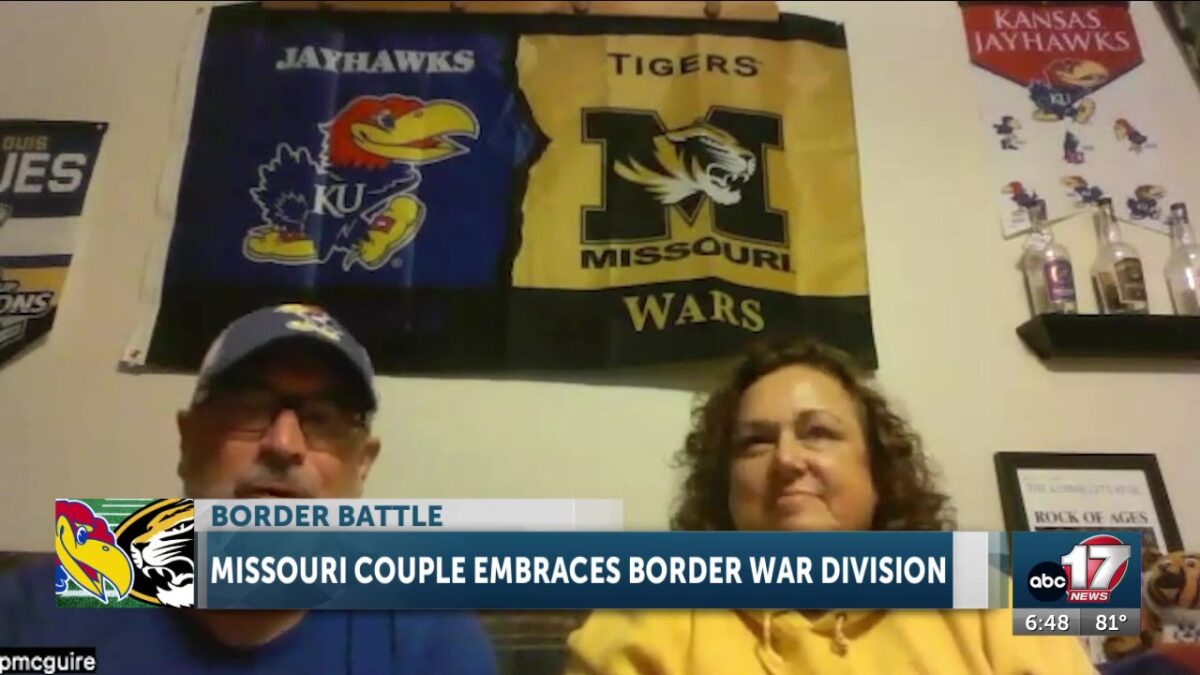
Phil and Shelly McGuire live in St. Louis and have been married since 1999, and while they are united when it comes to love and marriage, they’re divided when it comes to choosing loyalty to their favorite team.

Phil cheers for Kansas, where he went to school briefly before switching majors, while Shelley proudly keeps her loyalty to the Mizzou Tigers, where she graduated in 1997.

The long-time border clash has divided the two teams for years, but the couple’s shared love of sports helped tighten their bond.

“I think this was kind of one of the fun areas that we enjoyed each other immediately; we both like sports,” Shelley said. “I definitely love to go to everything and have a good time, so we definitely fit together when it comes to that.”

“I really do think it helped us grow as a couple and grow together,” Phil added.

Shelly said the two met through Shelly’s friend and Phil’s co-worker at the time, who worked at a health club. She says they hit it off immediately, although she hesitated a little when she learned Phil was a Jayhawks fan.

“When he said he went to KU, I was like, ‘I don’t know if this is going to work,’ we jokingly said,” she said.

“I think it bothered her dad more that I was a Kansas guy than anyone in my family or me,” Phil said. “I know she did have some people she went to college with that weren’t very happy with her dating the Jayhawk. I think my friends were just happy I found somebody.”

The division has been part of their relationship since they met, but that didn’t stop them from giving the spotlight to their favorite team on their wedding day, as their groom’s cake featured Truman Tiger and a Jayhawk.

“One of my favorite things that we did when we got married, I was like, ‘we got to have something that’s MU and KU,'” Shelly said. “It was definitely the most popular thing that was there, and everyone got a kick out of it.”

“You embrace each other’s teams, and you may not be specifically rooting for them, but it’s fun,” Phil said.

Phil McGuire’s groom cake.

Game-day traditions are a big part of college football for some fans. But for the McGuires, there isn’t much of a traditional routine when the two teams face off.

Instead, they keep the rivalry alive in their home year-round, holding onto Border War merchandise that has become harder to find over the years.

The couple has a divided flag that features the KU Jayhawk mascot and Mizzou mascot that Shelly purchased years ago.

Their home also features a license plate placed on a wall that says “The House Divided” with both teams’ logos.

Signs that hang in the McGuires’ home.

While both teams are represented in their home year-round, that doesn’t stop the trash-talk.

“We bring up old players and who they played for … and so it’s kind of small little bashing back and forth through the years,” Shelly said.

The two won’t be at Friday night’s game in Lawrence, Kansas, at David Booth Memorial Stadium, but the pair will be paying attention to the outcome.

“I just hope if my team wins, I make sure ESPN is on,” Phil said. “If my team loses, I kind of make sure it’s not so that way I won’t be reminded. We’ve never really made any fun bets or friendly bets.”

Phil is a teacher in the St. Louis area, and the rivalry doesn’t stop at home, as he says he has a classroom full of students who are ready to remind him if his team loses the game.

“I’m more scared of what happens to me at school on Monday,” Phil said. “I’ve had kids sneak into my office over the last few years and just decorate my office with so much Mizzou stuff, and I’m more worried of what my office will look like for me Monday morning.”

The Kansas Jayhawks and Mizzou Tigers kick off Friday at 7 p.m. from Lawrence.

Click here to follow the original article.

Save the Date: Eastern Cascades Model Railroad Open House, The Veterans Club 9/11 Memorial Ceremony, and More Events Happening This Weekend in Central Oregon

Adrielle Hasara

Are you looking for something to do this weekend in Central Oregon? Adrielle Hasara highlights three local events, from the return of the Eastern Cascades Model Railroad Open House to The Veterans Club 9/11 Memorial Ceremony.

For many more and to submit your own events, visit https://events.ktvz.com.

Click here to follow the original article.

Kotek reports 6,286 shelter beds maintained through emergency state actions

Adrielle Hasara

Bend, Ore. (KTVZ) — Gov. Tina Kotek and state housing leaders presented progress reports on Oregon’s housing and homelessness strategies this week before the Legislature’s House Interim Committee on Housing and Homelessness. State emergency actions between January 2023 and September 2025 created or maintained 6,286 shelter beds and rehoused 5,539 people from unsheltered homelessness.

According to the Governor’s Office press release, the state’s emergency response also provided short-term eviction prevention assistance to 25,942 households. The overall strategy focuses on four key areas: expanding shelter capacity, providing rehousing services, offering long-term rent assistance and delivering eviction prevention support.

Gov. Kotek highlighted the administration’s focus on expanding housing options across the state. “Whether you’re renting, buying a home for the first time, or needing temporary shelter to get back on your feet, we’re fighting to create more options for you,” Kotek said. “Housing has been a priority since day one of my administration and we’re seeing tangible progress.”

Liz Weber, director of housing stabilization at Oregon Housing and Community Services, emphasized the impact of ongoing state investments on local communities. “Every shelter bed maintained, every household that avoids homelessness and every person who moves into a stable home represents someone with a safer place to sleep and a stronger foundation for what comes next,” Weber said. “We’ve made meaningful progress and continued investment is critical to sustaining that progress and reaching more Oregonians.”

In Southern Oregon, local leaders in Jackson County reduced unsheltered homelessness by 24% and chronic homelessness by 58%. The county also decreased the average wait time to get into housing by nearly three months and moved more than 1,000 families and individuals into permanent housing. Melanie Doshier, chief program officer for ACCESS in Jackson County, attributed the results to ongoing funding. “Sustained investment and support from leaders like Gov. Kotek keeping housing front and center is what keeps these numbers moving in the right direction,” Doshier said.

In Central Oregon, homelessness across three counties and the Confederated Tribes of Warm Springs decreased by 19.1% following state investments in a regional care system. State Rep. Pam Marsh, D-Southern Jackson County, who serves as chair of the House Interim Committee on Housing and Homelessness, pointed to the collaborative effort behind the figures. “This is an all-hands-on-deck effort focusing on outcomes and investing in proven solutions,” Marsh said. “Housing is part of every family’s monthly budget and remains a top priority across the state. I’m grateful for the Governor’s partnership to sustain our shelter system and build more housing for more Oregonians.”

In Coos County, streamlined local processes combined with state support led to a 40.9% drop in unsheltered homelessness, an 85.5% reduction in unsheltered veterans and a 22.8% decrease in overall homelessness. Local service provider Alternative Youth Services doubled the number of individuals and households served. Nichole Rutherford, city manager of the City of Coos Bay, noted the effect of state resources on local outcomes. “For years, communities like ours were asked whether these approaches work. Our experience over this biennium gives us an answer: when resources reached the ground at sufficient scale, the outcomes changed,” Rutherford said. “We aren’t finished, but we aren’t starting over, either. The Governor’s advocacy and leadership on this issue and the state’s investment have given us something real to build from.”

Beyond shelter and rehousing initiatives, state data show Oregon housing starts increased 11.3% year-over-year in the first half of 2026, compared to a 1.3% decline nationally. State efforts have placed more than 50,000 future homes in the production pipeline. Maria Elena Guerra of the Farmworker Housing Development Corporation stressed the importance of early-stage funding for development. “Building affordable housing is critical to an Oregon where everyone has stable housing,” Guerra said. “Making sure that we invest on the front end in creative financing tools for developers—especially in land acquisition and predevelopment—will help us reach this shared goal faster. Thank you to Gov. Kotek for being a champion on this issue and doing the work of speaking to both public and private sector partners to move the needle.”

Click here to follow the original article.

Inflation, Energy Costs and Treasury Yields Rise Ahead of Fed Rate Decision

By Tom LoBianco | Quincy News Correspondent

Click here for updates on this story

    Washington (Quincy News) — Consumer prices rose in August as higher gasoline costs contributed to the largest monthly increase in the Consumer Price Index (CPI) since May, adding new inflation data for Federal Reserve officials ahead of their meeting next week.

The CPI rose 0.4% in August and 3.4% from a year earlier, the Bureau of Labor Statistics reported Friday. The annual rate was unchanged from July. Gasoline prices increased 3.9% during the month and accounted for more than one-third of the overall monthly increase.

Core CPI, which excludes food and energy, rose 0.3% in August after increasing 0.2% in July.

The CPI report followed mixed producer-price data released Thursday. The Producer Price Index (PPI) for final demand increased 0.4% in August after rising 0.1% in July. Producer prices were up 5.4% from a year earlier.

The reports shifted market expectations ahead of the Federal Reserve’s Sept. 15-16 meeting. CME FedWatch showed traders pricing around an 85% probability of a quarter-point rate increase following Friday’s CPI report, up from 72% a day earlier.

Consumer surveys also showed increased concern about inflation in early September. The University of Michigan’s preliminary consumer sentiment index fell to 47.8 from 51.7 in August, while consumers’ one-year inflation expectations increased to 4.6% from 4.0%.

The economic data arrived during a Republican midterm convention in Dallas, where President Donald Trump pledged to provide $5,000 payments to adult U.S. citizens if Republicans retain control of the House and Senate in November.

The proposal has not been accompanied by detailed eligibility, funding or implementation plans. Providing $5,000 to every U.S. adult would cost approximately $1.35 trillion, according to estimates. Such payments would also require congressional authorization.

Treasury yields have also risen this week as investors responded to inflation data, higher energy prices and other factors affecting the bond market.

The Treasury Department expanded its program for buying back older government securities this week. Treasury announced in August that it would increase the maximum size of liquidity-support buybacks in longer-dated securities from $2 billion per operation to at least $4 billion beginning Sept. 9.

For Thursday’s operation involving securities in the 10- to 20-year maturity range, Treasury set a maximum purchase amount of $6 billion. It ultimately accepted about $5.2 billion of securities.

Long-term Treasury yields nevertheless moved higher Thursday. The benchmark 10-year yield rose about 10 basis points to 4.943%, while the 30-year yield climbed to 5.36%. Rising Treasury yields can translate into higher borrowing costs elsewhere in the economy because rates on mortgages, corporate debt and other forms of credit are influenced by Treasury yields.

The Fed will announce its rate decision Wednesday following its two-day meeting.

Please note: This story was provided to CNN Wire by an affiliate and does not contain original CNN reporting. This content carries a strict local market embargo. If you share the same market as the contributor of this article, you may not use it on any platform.