New smart-farm network aims to connect Arizona agriculture

By Manoah Tuiasosopo

Click here for updates on this story

    YUMA, Arizona (KYMA-DT) — New technology could soon give Yuma farmers more ways to monitor and manage their fields through a new smart-farm network being tested at the University of Arizona Yuma Agricultural Center.

Researchers, industry partners and local growers recently gathered at the center to learn more about the technology and how it could be used in Yuma agriculture.

The center is serving as a pilot site for the network, which is part of a broadband project covering more than 160,000 acres of agricultural land in Yuma County.

The project includes 34 towers, with about 24 expected to be installed during the current phase of construction.

The network is designed to provide reliable connectivity in the field. That could allow farmers to remotely manage irrigation pumps, monitor water pressure, check fuel levels and track equipment.

Connor Osgood, manager of agricultural technology at the Yuma Center of Excellence for Desert Agriculture, said the project is about creating infrastructure that can support multiple technologies rather than relying on one tool.

“The fundamental way to think about all of this too is that it’s not any one technology, but rather it’s the infrastructure that allows us to create an ecosystem,” he said.

That connectivity could eventually support sensors and other tools capable of collecting information about field conditions.

Researchers say connected sensors could help monitor soil moisture, equipment activity and other conditions. That information could eventually help farmers better understand crop water needs and identify potential pest or disease pressures earlier.

Tanya Hodges, Executive Director of the Yuma Center of Excellence for Desert Agriculture, said the project represents significant progress in a relatively short amount of time.

“Where we’ve been over the last, even just two years, we’ve come a long way, and I really applaud again Yuma County for managing the project and the work that’s being done,” she said.

The long-term goal is to create a connected system where different technologies can work together and provide farmers with more information in the field.

For Yuma agriculture, researchers say the network could help pave the way for more connected and efficient farming operations.

Please note: This story was provided to CNN Wire by an affiliate and does not contain original CNN reporting. This content carries a strict local market embargo. If you share the same market as the contributor of this article, you may not use it on any platform.
Carondelet St. Joseph’s Hospital upgrades robotic surgical system for joint replacements

By Vanessa Gongora

Click here for updates on this story

    TUCSON, Arizona (KGUN) — Carondelet Health Network introduced the Mako 4 robotic surgical system to the Tucson community about two months ago. Patients can now benefit from this advanced technology for joint replacement at Carondelet St. Joseph’s Hospital.

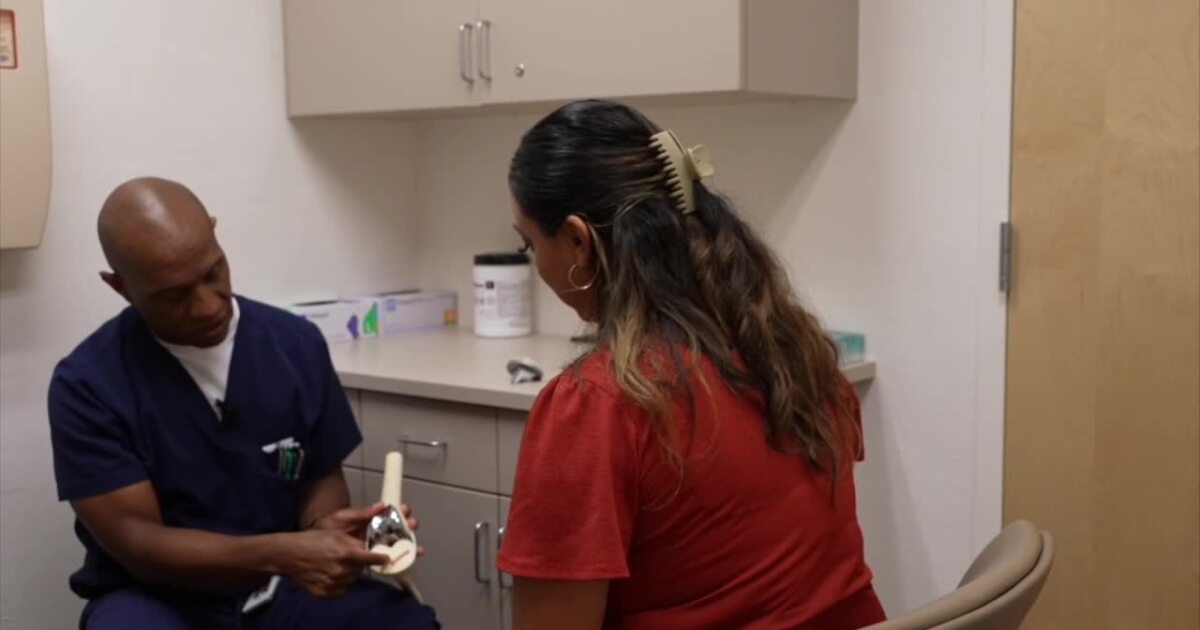
Orthopedic surgeons at St. Joseph’s like Dr. Brett Haywood have already been using this system for about three years to perform knee and hip replacements, but Mako 4 is the updated version offering several enhancements.

“This latest version, we’ll soon be able to do shoulder replacement surgery,” Dr. Haywood said. “Any kind of redo replacement. It’ll be able to soon be able to handle that as well.”

Dr. Haywood said the technology allows for more precision and less room for error.

“So what we do is first we get a CT scan of the joint, or in my case, I mostly just use it for knees, knee replacements, and then we plug that information into a computer that we have in the OR (operation room) with us, and that allows to see the knee or the joint in 3D. And then with that, we can plan exactly how we want to cut the bone or cut the joint,” Dr. Haywood explained.

He says when using this robot, less bone is cut and they are able to make it more patient specific.

“I’m guiding the saw, but the saw is set to cut the bones in, in only one way. And if you veer off, it will stop,” Haywood said.

“I love the results. It gives me instant feedback. While in the OR, it helps you plan the surgeries better, and I can custom plan the surgeries better for each patient. And for me, my results are more consistent with it.”

Howard Cyrus is one of Dr. Haywood’s patients. He had right knee replacement surgery using the robotic system in January to remove the damaged cartilage and bone, which eliminates arthritis.

“It went really well. I couldn’t be happier,” Cyrus said.

Cyrus said the recovery time really surprised him.

“It was much shorter than I thought. I mean, my tech had me walking in like six weeks, five or six weeks, not far, but we went outside the house,” Cyrus said. “I followed the PT’s advice a lot.”

Dr. Haywood says because less bone is removed, patients should feel less pain which allows recovery to be faster. Full recovery usually takes four to six months, but could go up to a year.

“That was another thing I was surprised with was how little pain, you know, two weeks after, I was doing really well. I probably didn’t take half of the narcotics, Cyrus said. “I would have no objections or even doubts about doing it again on my left knee. Same procedure, just was wonderful.”

Cyrus is already back to some of his daily activities.

“I’m 69-years-old. I ride bikes. I golf. I lift weights. I do a lot of core. So I’ve been doing all that since March, April,” Cyrus said.

Haywood said the MAKO system should be ready for shoulder replacements by the end of this year or the beginning of 2027.

He wants people to know, the procedure will also have a surgeon. The system cannot perform surgery on its own.

“It still needs a surgeon to verify how the bones are gonna be cut,” Dr. Haywood said.

If you’re in need of a joint replacement, visit Carondelet Health Network’s website to learn more.

Cyrus shares a message to anyone hesitant about the surgery.

“Don’t be afraid. It’s a little daunting at first. I wouldn’t watch any YouTube videos. I did, but I’m not sure about watching videos on it,” Cyrus said. “It’s a lot smoother than you think it’s going to go, and God, is it worth it when the results are so much worth the time.”

This story was reported on-air by a journalist and has been converted to this platform with the assistance of AI. KGUN’s editorial team verifies all reporting on all platforms for fairness and accuracy.

Please note: This story was provided to CNN Wire by an affiliate and does not contain original CNN reporting. This content carries a strict local market embargo. If you share the same market as the contributor of this article, you may not use it on any platform.
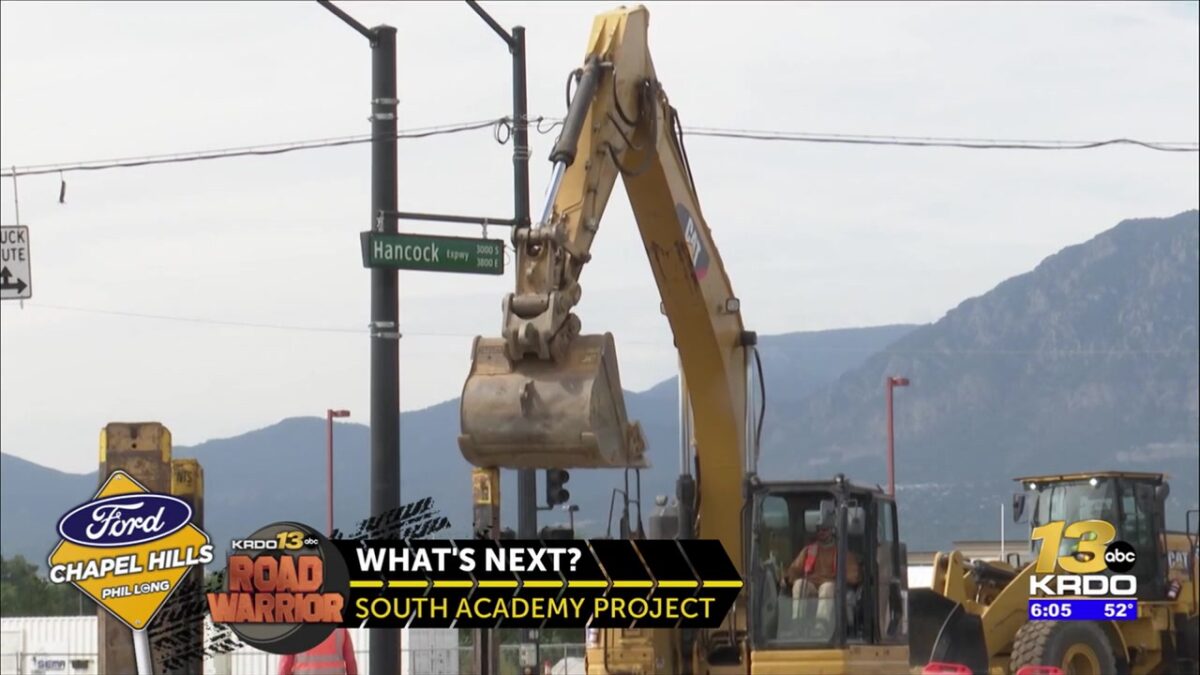
UPDATE: More traffic changes, closures this week on South Academy Boulevard project in Colorado Springs

Scott Harrison

COLORADO SPRINGS, Colo. (KRDO) — Lane changes and even intersection closures have been frequent in the ongoing project to improve two miles of South Academy Boulevard, between Fountain Boulevard and Jet Wing Drive.

Earlier this week, some traffic impacts began, and more will start this weekend.

Traffic on southbound Academy has been reduced to one lane since Monday morning near Hancock Expressway while crews excavate part of the street to install storm sewer structures.

That change continues until Friday evening.

A longer change begins on Friday night and will continue for two weeks, as Hancock, immediately west of Academy, closes until noon on Oct.3.

Crews will install new storm sewer pipes, pave the street, and rebuild the median and sidewalks.

The right lane of southbound Academy Boulevard will also close near Hancock to provide space for construction equipment and protect workers and drivers.

The project won’t be finished until 2028, partly because of a year-long delay as the city worked to avoid the negative business impacts associated with the similar project on the north end of South Academy.

“We’re coordinating more closely with those businesses,” said Ryan Phipps, the city’s capital improvements manager. “Again, we’re implementing the newsletters, the website content, the text alerts, trying to get our message out as best as possible with that project and our contractors. Doing really well. They’re staying on schedule.”

KRDO13’s The Road Warrior spoke with four merchants at the nearby Mission Trace shopping center who told him that construction has had little or no impact on their sales.

However, it’s a different story at the Smoke Academy, owned by Mike Ezzat since 2011.

“If you want to talk only about the last two years, I have lost 70% of my business,” he said. “And this is documented already for what I report to the IRS on how much income I’ve made since, because people find it very hard to go around and come to the business here.”

Ezzat said that although there have been at least six other businesses in the center to close during the past year, he will try to hold on because he believes sales will improve after the project is finished.

“What else can I do?” he chuckled. “I’m between a rock and a hard place.”

Stay up to date with the latest local news, sports, and investigations by downloading the KRDO13 app. Click here to download it from the Apple App Store. Android users can download it from Google Play here.

Click here to follow the original article.

Dozens line up around Best Buy overnight for the chance to buy Pokémon 30th Anniversary set

Bradley Davis

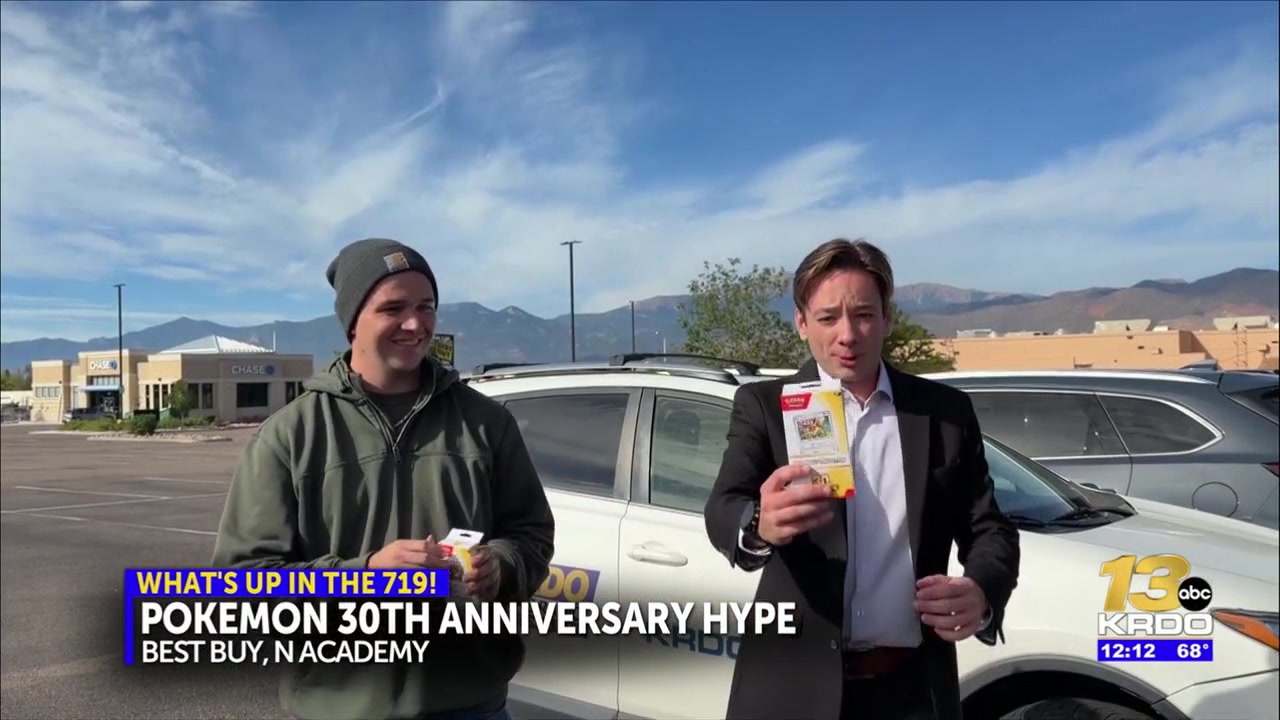
COLORADO SPRINGS, Colo. (KRDO) – Wednesday morning, the Best Buy off North Academy looked like a scene straight out of Black Friday 2005.

Dozens lined around the building waiting for the new Pokémon 30th Celebration set, one group camping out overnight as early as 9 p.m. Tuesday night, 13 hours before the store opens at 10 a.m.

The popularity of Pokémon cards has exploded since 2020. Finding packs has become more and more challenging, leading to the lines we’re seeing Wednesday morning outside of Best Buy.

KRDO13 talked to some customers bright and early who are no strangers to waiting for Pokémon drops. They told us this set in particular has brought larger lines to Best Buy.

The 25th Anniversary Celebration set found huge popularity in 2021. The 30th Celebration set follows a similar style, reprinting some of the most popular classic cards from the previous decades with the characteristic “Celebration” logo in the corner of the design. One change: every pack of the 30th Celebration pack has a Pikachu in it.

Stay up to date with the latest local news, sports, and investigations by downloading the KRDO13 app. Click here to download it from the Apple App Store. Android users can download it from Google Play here.

Click here to follow the original article.

Arizona Gov. Katie Hobbs signs 264 bills into law after record 2,100 measures presented

By Marc Monroy

Click here for updates on this story

    ARIZONA (KGUN) — Arizona Gov. Katie Hobbs signed 264 bills into law and vetoed 151 others after a record 2,100 laws were presented to her — capping a lengthy partisan battle over educational issues in the state.

The new laws cover a wide range of issues, from food labeling and public safety to distracted driving and drone restrictions.

Lab-grown meat labeling

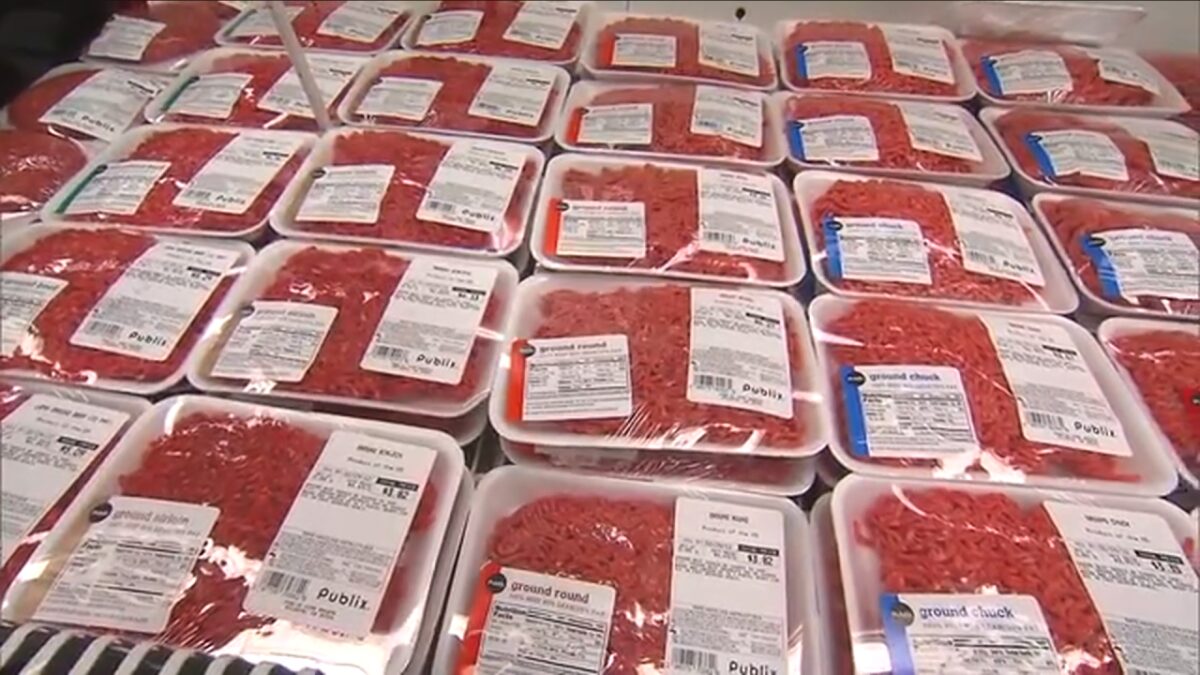
Arizona House Bill 2762 mandates clear labeling on lab-grown meat packaging for customer transparency. The move comes after the FDA approved lab-grown meat as safe to eat, though joint approval from the USDA is still required before it can be sold to consumers.

Arizona joins Colorado and Utah among states passing transparency laws for the sale of lab-grown meat. Unlike Mississippi and Texas, Arizona has not fully banned the product.

Cade’s Law Arizona expanded manslaughter charges under what is now known as Cade’s Law. Adults who encourage a minor — online or verbally — to commit suicide could face serious felony charges.

The law is named after Cade Keller, who died in 2022.

Religious services protection House Bill 4117 makes interfering with religious services a serious offense. The charge escalates from a misdemeanor to a felony if there is a prior conviction, threats, or group disruption involved.

Fentanyl sentencing Sentencing for fentanyl sales has been increased. Selling over 100 grams now carries longer prison terms, with previous convictions adding additional years to a sentence.

Distracted driving fines Fines for texting while driving are going up. Drivers now face fines between 75and75and149. Repeat offenders face penalties of $400, up from $250.

Shade structures and HOAs Homeowners associations can no longer ban shade structures, including umbrellas and canopies.

Drone restrictions Drone rules near events are now tighter. Operators cannot fly within a mile of ticketed events without a permit.

Other laws already in effect Several other bills passed earlier with an emergency clause. Those include a measure repealing Cesar Chavez Day in the state, and a law allowing businesses to round costs to the nearest 5 cents as pennies are no longer being minted.

This story was reported on-air by a journalist and has been converted to this platform with the assistance of AI. KGUN’s editorial team verifies all reporting on all platforms for fairness and accuracy.

Please note: This story was provided to CNN Wire by an affiliate and does not contain original CNN reporting. This content carries a strict local market embargo. If you share the same market as the contributor of this article, you may not use it on any platform.

Dove hunting season brings thousands of visitors, boosts Arizona economy

By Lauren Duffel

Click here for updates on this story

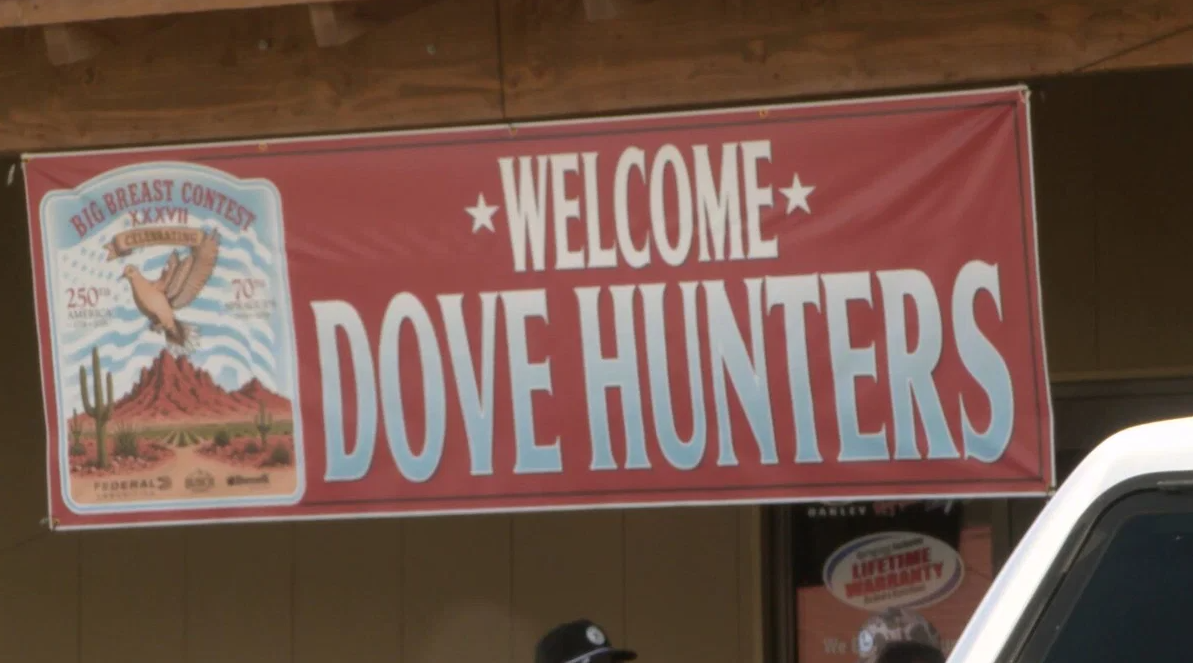
    YUMA, Arizona (KYMA-DT) — The early dove-hunting season has come to an end, attracting thousands of hunters from across the region.

Dove hunting is a million-dollar industry that continues to generate revenue for the local economy through tourism.

Yuma sees an average of 10,000 dove hunters each season, benefiting local hotels, restaurants, and other businesses.

Visit Yuma says the dove-hunting season plays an important role in the local economy.

“Hunters are booking their hotel rooms a year in advance, so our hotels are filling up with people who come back every single year,” said Marcus Carney with Visit Yuma. “Hunters are such methodical creatures of nature…it’s something our hotel industry really relies on.”

The hotel industry sees a significant increase in business during dove-hunting season.

“We have right around 4,000 hotel rooms. Almost all of those hotel rooms were filled for September 1 for the dove-hunt opener, so our hotels did really well,” Carney said. “There were a lot of people sleeping in our hotels.”

One of those hotel rooms was booked by Kirk Cowan, a San Diego resident who has been coming to Yuma to hunt for more than 30 years.

“We usually stay in a hotel. I think this year, we stayed at the Springfield because it was close to where we knew we were going to hunt,” Cowan said. “The main reason we knew where we wanted to hunt was because we went to Sprague’s, and I met the best guy I’ve ever met, named Ken, who showed us where to go.”

Cowan said some of the best times of his life have been spent hunting with his family and friends.

“It’s something that builds a bond different than anything else. We live in a concrete world, even in San Diego, and to get out and do things like that is so important in life…and for your children to experience something different,” Cowan said.

The next wave of hunters is expected to return for the late dove-hunting season, which begins November 20 and runs through January 3, 2027.

Please note: This story was provided to CNN Wire by an affiliate and does not contain original CNN reporting. This content carries a strict local market embargo. If you share the same market as the contributor of this article, you may not use it on any platform.

Researchers warn of arsenic risk in Iowa private wells

By KCCI Staff

Click here for updates on this story

    IOWA CITY, Iowa (KCCI) — Researchers are warning that Iowans relying on private water wells may face a higher risk of arsenic contamination, with free testing now being offered in select counties.

The Iowa INSIGHT program estimates that 5 to 7 percent of Iowans get their drinking water from private wells, which are unregulated and untested. Arsenic, a naturally occurring element, can seep into groundwater and has been found in higher concentrations in the northern and central parts of the state. Iowa INSIGHT analyzed data from the Iowa Department of Natural Resources over a ten-year period.

Researchers are now providing free testing for arsenic in five counties identified as vulnerable: Benton, Cedar, Jones, Mitchell, and Plymouth. The DNR says its Private Well Grants Program will also provide free testing for arsenic to private well owners.

“If we’re having a conversation about environmental determinants that could be influencing Iowans’ health with regard to forms of cancer that we know we struggle with, like lung cancer and certain forms of skin cancer, then we need to be understanding arsenic is a vulnerability for Iowans, particularly Iowans that rely on private wells, because they’re unregulated, they’re untested,” said David Cwiertny, director of the Center for Health Effects of Environmental Contamination at the University of Iowa.

Arsenic is a known carcinogen linked to skin, lung, and bladder cancer. The Environmental Protection Agency states that any amount of arsenic poses a risk to humans. Public water utilities are required to remove arsenic under the Safe Drinking Water Act, but private wells are not subject to the same regulations.

The DNR encourages private well owners to take advantage of the free testing programs to ensure their water is safe.

Please note: This story was provided to CNN Wire by an affiliate and does not contain original CNN reporting. This content carries a strict local market embargo. If you share the same market as the contributor of this article, you may not use it on any platform.

Community stepping up to help volunteer firefighters protecting them from Caddo County wildfire

By Olivia Hickey

Click here for updates on this story

    CADDO COUNTY, Okla. (KOCO) — For days, volunteer firefighters have been working around the clock to contain wildfires in Caddo County.

Many people have been forced to evacuate, and several structures have been destroyed by the flames. Now, community members stepping up to help the first responders who have been keeping them safe.

A woman told KOCO 5 that she’s been dropping off drinks for volunteer firefighters, including her grandson who is one of the firefighters working to protect Caddo County.

“He’s been out since Sunday night. Got a break in last night to sleep a little bit, and he’s back out there,” Neva Meiwes said.

Up the road from the Gracemont Fire, Longview Church has opened its doors to the public, offering snacks and supplies to everyone who comes through. They’ve even made stops to drop off supplies to firefighters.

Around 3,000 acres have burned in the wildfires over the course of the last several days. The cause is still under investigation.

Please note: This story was provided to CNN Wire by an affiliate and does not contain original CNN reporting. This content carries a strict local market embargo. If you share the same market as the contributor of this article, you may not use it on any platform.

NC teen who died from brain-eating amoeba ‘most likely’ contracted infection in Durham: Officials

By Starletta Watson

Click here for updates on this story

    DURHAM, N.C. (WXII) — The North Carolina Department of Health and Human Services has released more information surrounding the death of the teen who died in August from Naegleria fowleri, a microscopic amoeba found in warm freshwater.

According to health officials, interviews and tests on four different locations concluded that the teen “most likely” contracted the infection at a “community-based organization in Durham.” The facility, El Futuro, was mentioned in an NCDHHS report that detailed the source of the amoeba.

“While this investigation does not allow us to conclusively determine the location of exposure, the epidemiologic, laboratory, and environmental findings suggest that the El Futuro water feature was the most likely source,” the NCDHHS report said. “The lack of effective disinfection, visible algal growth, and detection of non-viable N. fowleri from the water feature support this conclusion.”

A photo from NCDHHS showed one location at EL Futuro where officials collected water samples to detect the amoeba. According to the report, the mental health nonprofit organization and clinic has a garden area that resembles a manmade creek with a pump and multiple fountains.

“The design of this creek was interactive with a play water pump and fire hydrant fountain,” the report said. “The center reported that the feature was cleaned by power washing and hand-fed chlorination. Algal growth was observed throughout the manmade creek with heavier growth at the top portion of the creek than the bottom. Organic material and debris were observed around the pump system and covered the filter.”

Results from the samples showed that “non-viable” Naegleria fowleri was detected in the place’s storage tank.

Officials said it was reported that the teen likely had contact with the water by splashing their face at the facility. “This is also consistent with information shared by family members indicating that the patient had contact with the water feature during the likely exposure period,” the report said.

Officials said Naegleria fowleri infections are not contracted by swallowing water but by amoebas entering the nasal passages. With water, officials said that typically happens from activities such as jumping, diving, rafting, water-skiing, or any type of cleansing of the nasal passage.

Officials said the teen was in the hospital critically ill on Thursday, Aug. 28, and died the following Monday. The identity of the teen has been withheld due to the family wishing to maintain privacy.

Please note: This story was provided to CNN Wire by an affiliate and does not contain original CNN reporting. This content carries a strict local market embargo. If you share the same market as the contributor of this article, you may not use it on any platform.

New Orleans diocese accused of being ‘morally repugnant’, church disputes claim

By Erin Lowrey

Click here for updates on this story

    NEW ORLEANS (WDSU) — A new court filing claims the Archdiocese of New Orleans is not meeting certain nonmonetary obligations under its bankruptcy settlement with clergy sexual-abuse survivors.

Donald Massey, the settlement trustee, raises several concerns in his latest filing.

“ANO flatly refuses to conduct IRB investigations of the alleged perpetrators,” Massey alleges in the filing.

“It is believed that some of these clergy are still alive. Yet somehow, these individuals have not been investigated or added to the list,” the filing alleges.

As part of the court-approved settlement plan, the Archdiocese agreed to new child-protection measures and changes to how it handles reports of sexual abuse. Those provisions include reporting and investigation protocols, outside oversight, survivor protections and the creation of a public document archive. The filing says that archive is not yet publicly available, although the Archdiocese has begun providing documents to LSU for review and preparation, records show.

Massey also accuses the Archdiocese of failing to demonstrate transparency or a change in institutional culture:

“ANO flatly refuses to conduct IRB investigations of the alleged perpetrators,” the document alleges.

In the document it is also alleged “ANO is not demonstrating transparency nor a culture of change. Finally, it is morally repugnant and unconscionable to allow ANO to continue to suppress identities of credibly accused abusers, as has been the case for decades.”

A follow up conference at federal court is set for this week.

The Archdiocese of New Orleans issued the following statement regarding the allegations made in Massey’s filing:

“Archbishop Checchio and archdiocesan leadership work tirelessly everyday to honor our commitments to survivors and to keep children entrusted to our ministries safe. We continue to implement the nonmonetary provisions and in many cases are doing more than agreed upon in these provisions. We are surprised by the tone of the trustee’s report and confused by the apparent misunderstandings included in the report.

“Archbishop Checchio continues to meet regularly with individual survivors upon their request. What he hears often are concerns about the delay in payments and processes of the trust.

“In regards to the Settlement Trustee’s assertions that we are not investigating claims against clergy, this is a misrepresentation of the facts. All living archdiocesan clergy named in a proof of claim have been presented to the IRB or are still under investigation for presentation to the IRB for its recommendation on suitability for ministry. Furthermore, Archbishop Checchio has ordered a review of all deceased archdiocesan clergy named in a proof of claim to be presented to the IRB. That process is already underway.

“The nonmonetary provisions require a written request directly from the survivor for an investigation into his or her accused so as to avoid retraumatizing the survivor through unsolicited contact from the archdiocese. The archdiocese welcomes these requests directly from a survivor of abuse.

“Under Archbishop Checchio, any allegation of sexual abuse is reported to law enforcement. The archdiocese continues to wait for the Settlement Trust Advisory Committee to provide the required written consent from each survivor so that we may in turn provide law enforcement unredacted proofs of claim which include individual contact information of the survivor and the description of his or her abuse.

Please note: This story was provided to CNN Wire by an affiliate and does not contain original CNN reporting. This content carries a strict local market embargo. If you share the same market as the contributor of this article, you may not use it on any platform.