Voters in Idaho Falls hear from Idaho AG candidate Lori Hickman

Dylan Carder

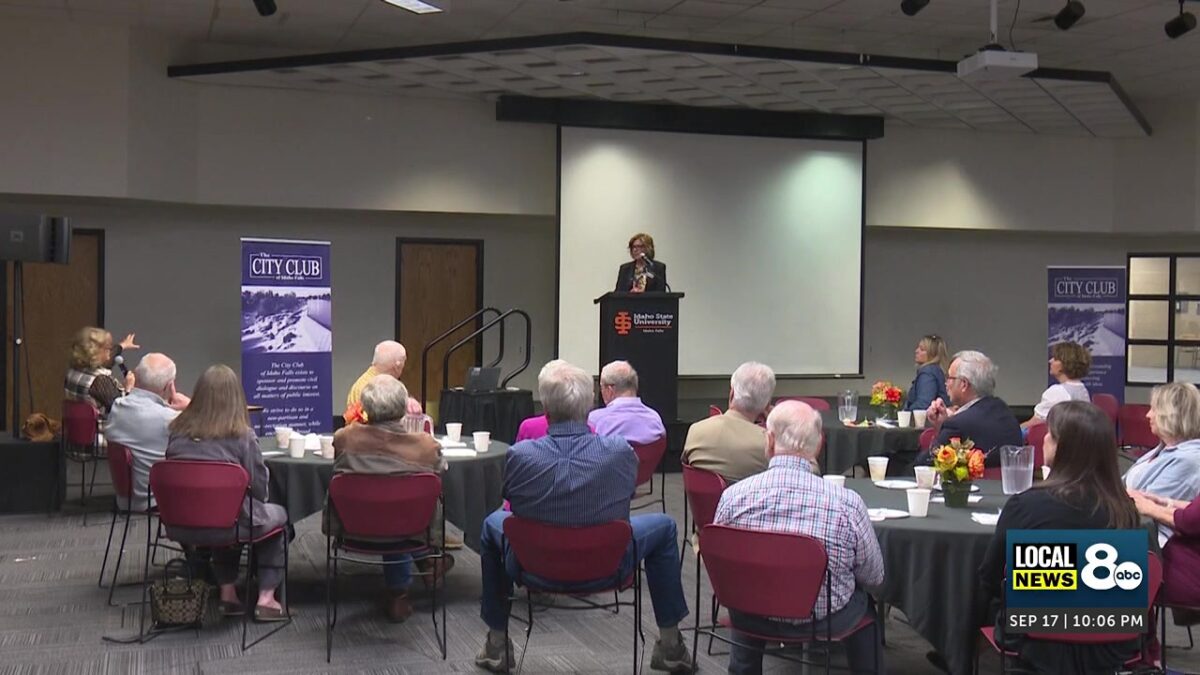
IDAHO FALLS, Idaho (KIFI)- Voters in eastern Idaho had the opportunity to hear from a candidate in the race for Idaho Attorney General during an event in Idaho Falls. The City Club of Idaho Falls hosted a gathering at University Place featuring Democratic candidate Lori Hickman, while incumbent Republican Attorney General Raul Labrador chose not to attend.

The event allowed local residents to become more familiar with the candidates competing for the state’s chief legal position. Hickman addressed attendees about her legislative perspectives and goals for the office, while Labrador’s record as attorney general and past public service served as a backdrop for the campaign discussion.

Lori Hickman, a Boise-based lawyer who previously led Mormon Women for Ethical Government, outlined her platform to attendees. She emphasized a return to nonpartisan legal representation, pointing to past state legal leadership.

“For many years Idaho has had several attorneys general from Jim Jones to Larry Echohawk to Lawrence Wasden for 20 years. Two Republicans and a Democrat that just followed the rule of law and applied the law as written and reached across both sides of the aisle if that’s what it is. Didn’t matter who came to their office for representation, politics did not come into play. That is what I want to restore the office to,” Hickman said.

Hickman also addressed current legal policies, citing Idaho’s abortion statute as a primary concern regarding current office leadership. “I have to uphold the law as written. I can’t change the law. I cannot disregard it. But the extreme interpretations that Mr. Labrador has taken has resulted in even further, confusion and terror and, really endangering, women in Idaho and led to the departure of so many of those physicians,” Hickman said.

Labrador was elected Idaho Attorney General in 2022. Prior to taking office as state attorney general, he served eight years in the U.S. Congress and served as a representative in the Idaho state Legislature.

More information on Labrador’s work as Attorney General can be found here.

To learn more about Hickman’s campaign, go to this link.

Election Day is on Tuesday, November 3.

Click here to follow the original article.

Arizona minimum wage to increase 50 cents next year

Adrik Vargas

YUMA, Ariz. (KYMA) – Arizona’s minimum wage is going up by 50 cents next year. Starting Jan. 1, 2027, the state’s minimum wage will increase from $15.15 to $15.65 an hour.

Arizona law ties the minimum wage to inflation, meaning the wage is adjusted each year based on changes in the cost of living.

For some Yuma residents, though, the increase doesn’t feel like much.

“50 cents…that’s like an extra Slim Jim,” Michael Campbell, a Yuma resident who wants a higher increase, said. “I don’t feel like it’s a whole lot.”

Olivia Martinez, another Yuma resident, said she’s seen the cost of everyday expenses rise since moving to Arizona.

“Ever since I moved here, things have been going up, such as rent, light, water, everything,” she said.

Martinez said she’d rather see the cost of living come down.

“I would like the minimum wage to go up, but not if our prices are going to go up higher,” she explained.

The 50-cent increase takes effect Jan. 1, 2027.

Click here to follow the original article.

Salute to troops tree-cleaning service at Evergreen Cemetery

Tanner Buck

COLORADO SPRINGS, Colo. (KRDO) — Volunteers helped clean the historic Evergreen Cemetery for veterans on Wednesday as part of an effort through a non-profit organization.

Evergreen Cemetery is one of the most historic cemeteries in the Pikes Peak region and is the final resting place of more than 4,000 veterans, with some sites dating back to the Civil War.

About 203 volunteers showed up to restore the cemetery through a non-profit organization called “Saluting Branches.”

According to City Forester Matt Puckett the organization “is dedicated to enhancing the landscape around veteran cemeteries and veteran sites.”

The volunteers who showed up were local companies who care for trees, people in the military and members of the community. This event has been happening annually for the last five years.

“It’s fantastic for our community. It’s fantastic for our veterans, and it’s amazing to see that level of support,” Puckett said.

Restoring the cemetery meant much more to the community than just giving back, it meant paying homage to loved ones who served.

“Green Berets coming by saying thank you for what you are doing. From the volunteers that have their uncle, their father buried here that served in our country. I mean the impact is near and dear,” Puckett said.

The event on Wednesday brought in more than $100,000 dollars in professional care for the 2,800 trees, according to officials.

Stay up to date with the latest local news, sports, and investigations by downloading the KRDO13 app. Click here to download it from the Apple App Store. Android users can download it from Google Play here.

Click here to follow the original article.

Columbia, Boone County to propose plan to buy old animal hospital location

Ryan Shiner

COLUMBIA, Mo. (KMIZ)

A plan to buy a property of a former animal hospital will be introduced at the next Columbia City Council meeting.

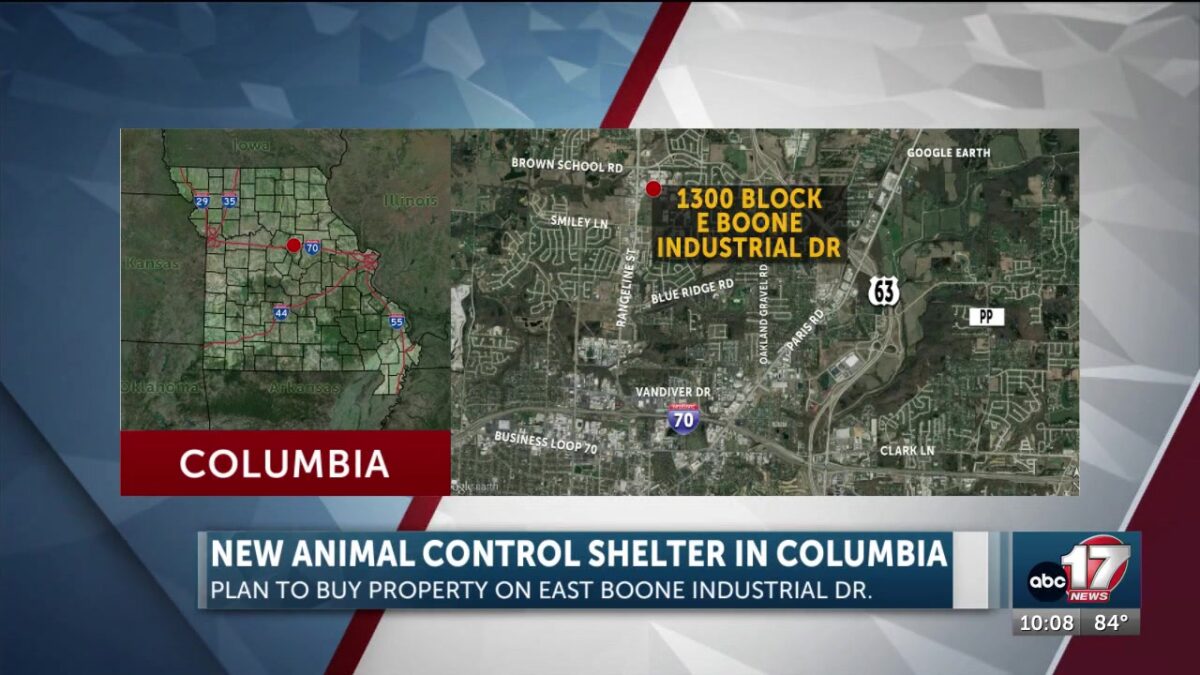
The city and Boone County will propose to buy the former site of Columbia Animal Hospital at 1300 East Boone Industrial Dr. The Columbia Animal Hospital closed in March.

The property costs $995,000, which city documents show the city would put up $595,000 and the county would provide $400,000. It includes a 3,600-square-foot building on a 2-acre lot, city documents show.

City documents say Public Health and Human Services would use the space for an animal shelter for the city and county’s animal control services. Animals that are currently in animal control’s custody are housed at the Central Missouri Humane Society.

The Columbia City Council meets at 7 p.m. Monday.

Click here to follow the original article.

Prediction markets raise questions about Missouri sports betting tax revenue

Mitchell Kaminski

COLUMBIA, Mo. (KMIZ) 

With football season underway, Missouri is poised to collect some of its highest taxable revenue from sports betting.

But the rise of prediction markets could divert some of that wagering activity — and the tax revenue it generates — away from the state.

Missouri launched legal sports wagering in December 2025 after voters approved Amendment 2. The state taxes sports betting revenue at 10%, with proceeds supporting state programs including education. At the same time, prediction markets have rapidly expanded nationwide.

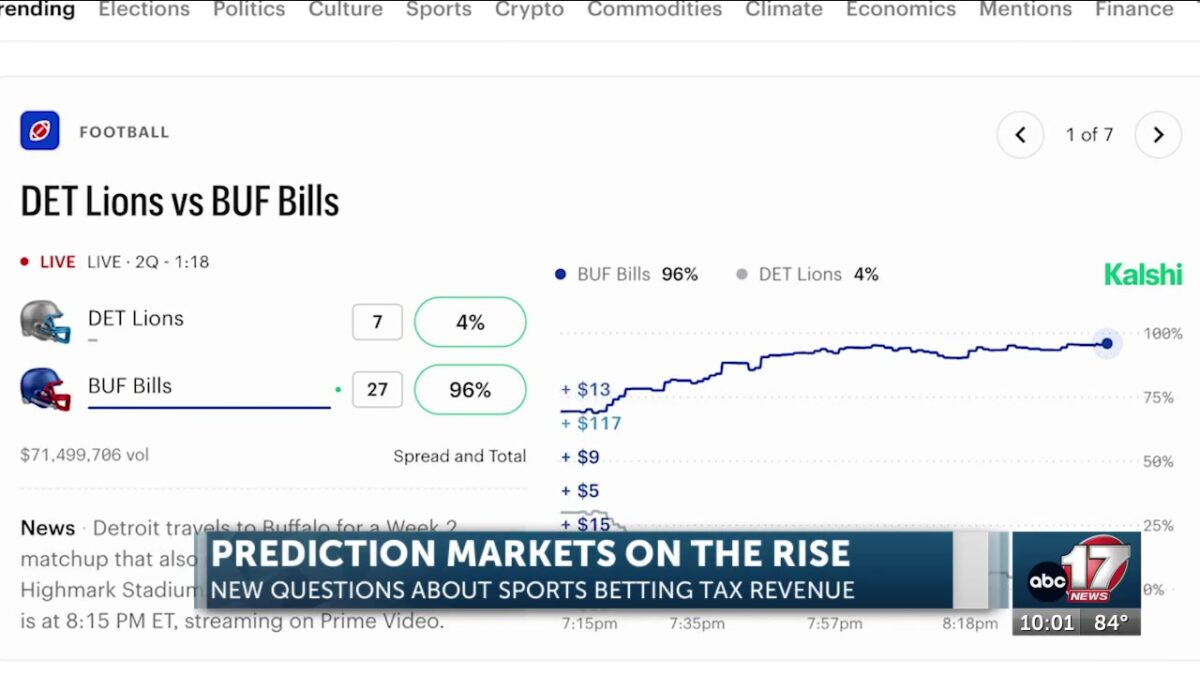
Platforms such as Kalshi and Polymarket allow users to buy and sell contracts tied to the outcome of events. Instead of placing a traditional sports bet with a sportsbook, users trade contracts that can pay a set amount depending on whether an event happens.

Ryan Butler, senior news analyst at Covers.com, said the prices on prediction markets can look a lot like traditional betting odds.

“The prediction markets have to use probabilities or percentages instead of traditional American betting odds. They were using those for a while, and they are almost identical,” Butler said. “So for traders in prediction markets and bettors for sportsbooks, they are almost indistinguishable sides of that percentage.”

The key legal distinction, Butler said, is how the transactions are structured.

“The reason why legally, is that technically, when you trade on an event contract platform, you are trading with someone else,” Butler said. “Now that other person might be a hedge fund or something, but you’re technically trading, and it’s like a stock, just like Microsoft or Coca-Cola or IBM or whatever.”

That distinction has become the center of a growing legal fight between prediction-market companies and state regulators. Butler said the issue could eventually reach the U.S. Supreme Court, and one case in New Jersey did earlier this month with that state asking the high court to shutter prediction markets in its state.

“They found a workaround, a creative way of looking at a law and determining that a trade on the Chiefs game coming up is actually more akin to a stock trade than it is a sports bet,” he said.

A rapidly growing market

According to the Tax Policy Center, a think tank that promotes itself as nonpartisan, trading volume on prediction markets such as Polymarket and Kalshi grew from roughly $9 billion in 2024 to more than $40 billion in 2025.

The growth has made prediction markets an increasingly significant competitor to sports betting. While some states have restrictions, it is now legal in all 50 states. 

In the first week of the NFL season alone, prediction markets generated roughly $3 billion in trading volume. However, Butler cautioned that trading volume and sportsbook handle are not directly comparable.

“A trading volume is hard to even compare to a sports betting handle,” Butler said. “It’s multitudes larger. There’s very big divides about how much you should compare trading volume to handle. It’s five-ten times bigger.”

The distinction matters because prediction-market trading volume can include transactions between buyers and sellers, while sportsbook handle generally refers to the amount wagered with a sportsbook.

Why states are watching

Sportsbooks operate under state gambling laws. They generally must obtain licenses and pay taxes on gambling revenue.

Prediction markets have argued their event contracts are financial products subject to federal regulation rather than state-regulated sports wagers.

That difference could have a direct effect on state budgets if wagering moves from taxed sportsbooks to prediction markets.

According to the Tax Policy Center, New York provides one example of the potential exposure. During the state’s 2026 fiscal year, mobile sportsbooks generated approximately $2.6 billion in gross gambling revenue. With a 51% tax rate, that activity produced roughly $1.3 billion in tax collections dedicated to education, youth programs and problem-gambling services.

The Tax Policy Center examined what could happen if just 1%, 5% or 10% of sportsbook activity shifted to prediction markets. It found that even relatively small shifts could mean significant losses in tax revenue for states with large sports betting markets.

Sports betting revenue is concentrated in a handful of states. The Tax Policy Center said New York accounts for roughly one-third of all state sports betting tax collections, while New York and Illinois together generate nearly half.

For Missouri, the potential impact is different. The state is just beginning to build a track record of sports betting tax collections, meaning there is less historical data to determine how much activity could shift and what that would mean for state revenue.

“States are absolutely concerned. Forty-plus state Attorneys General have filed lawsuits against these platforms and more than a dozen states have specifically taken them to court. There’s a lot of pushback from gaming regulators,” Butler said. “Nevada has, not surprisingly, been a leader. New Jersey has been a leader. There are a lot of states pushing back against this.”

Sportsbooks see a different picture

While state regulators have raised concerns, Butler said sportsbooks themselves do not necessarily view prediction markets as a direct replacement for traditional sports betting.

Some operators, including DraftKings, have launched prediction-market products of their own.

“What’s interesting is that the prediction market platforms, so the ones we can see DraftKings, which has a sportsbook and a prediction market platform, they’re saying that they’re not seeing any overlap, that it’s new customers,” Butler said. “A typical sportsbook has hundreds of different player props available for that, and I can stack them in hundreds of thousands of combinations. If I wanted to do that on a prediction market, I would have to have somebody on the other side who’s willing to buy the opposite of every single one of those ten-leg parlays, which is almost impossible.”

Parlays are important to sportsbooks because they allow bettors to combine multiple wagers into a single bet. Prediction markets generally operate differently, with contracts requiring a buyer and seller on opposite sides of a particular outcome.

Butler said that difference makes it difficult to determine how much traditional sportsbook business is actually moving to prediction markets.

“We’re not seeing a tremendous dent in sportsbook betting revenue by prediction markets, but it’s hard to look at those numbers. It’s hard to compare those numbers. We don’t have the full picture of it,” Butler said. “Overall, gaming regulators just do not like this. They do not like being stepped on. They don’t like circumventing their state laws. They don’t want that and they’re going after it.”

A question for state tax systems

The Tax Policy Center said lawmakers in several states are already considering ways to address prediction markets through licensing, regulation or taxation.

According to the National Conference of State Legislatures, proposals introduced in 2026 range from licensing and regulatory requirements to measures that would explicitly tax prediction-market activity or treat certain contracts similarly to sports wagering.

The debate goes beyond whether prediction markets should be legal. It also raises the question of whether states will continue collecting revenue when people shift some of their wagering from state-regulated sportsbooks to federally regulated prediction markets.

Butler said the legal uncertainty could remain for years. Lawyers he has spoken with are divided over when the Supreme Court could take up the issue, with some expecting a case as soon as 2027 and others saying it could be 2028.

“In the meantime, we are going to have dozens of court battles across the country, and we’re going to have one court rule one way and we’re going to have one court rule another, as we’ve seen. For example, in Nevada the Nevada area appellate court ruled for Nevada against the prediction markets, where the New Jersey area appellate court ruled against the state and for the prediction markets,” Butler told ABC 17 News. 

For states such as Missouri, the outcome could determine whether sports-related prediction contracts become another taxable form of wagering or remain outside state sports betting systems.

ABC 17 News reached out to the Missouri Gaming Commission.

Click here to follow the original article.

Onvida Health announces 43% reduction in sepsis-related deaths

Lauren Duffel

YUMA, Ariz. (KYMA) – Onvida Health is announcing a major patient care milestone as hospitals and health organizations mark Sepsis Awareness Month.

Onvida Health said it has reduced its sepsis-related death rate by 43% this year.

Sepsis is a life-threatening emergency that happens when the body’s response to an infection damages its own tissues and organs. It can lead to severe sepsis and septic shock.

News 11 spoke with Onvida Health to learn how the hospital is making a difference in lowering its sepsis-related death rate.

Alexis Keane, Sepsis Program Coordinator with Onvida Health, said the hospital implemented a program through its electronic health system.

“We instituted a program through our electronic health system. It analyzes charts to see whether or not patients are likely to develop sepsis within the next few hours. It alerts doctors before symptoms arise, allowing them to provide care as early as possible,” Keane said.

Sepsis is a life-threatening illness. If it is not treated immediately, it can become fatal.

Symptoms can include a high or low fever, an infection, and extreme illness. Keane said confusion can also be an important warning sign, especially among older adults.

“Especially with the older population, one of the biggest signs you can kind of write off is that confusion. If they weren’t confused before and all of a sudden, they’re confused, that’s a big warning sign,” Keane said.

If you suspect you or your loved one might have sepsis, call 911 or go to the nearest emergency room immediately.

Click here to follow the original article.
Fostering Hope Yuma hosts fourth annual conference Saturday

Lauren Duffel

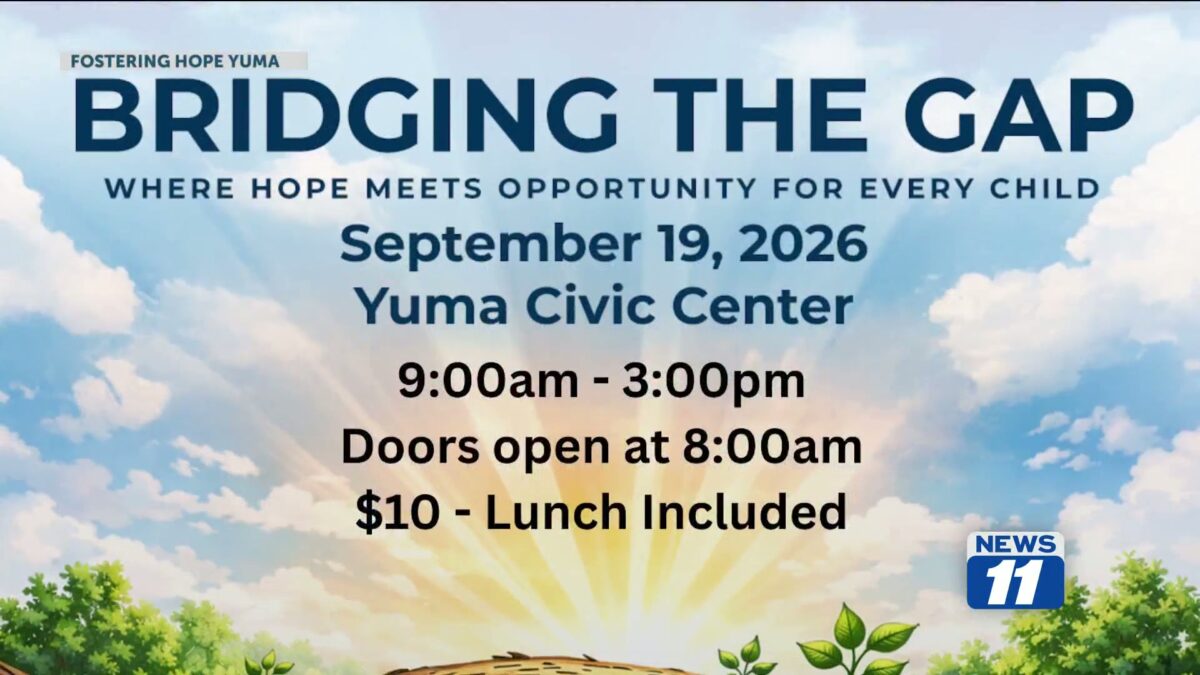
YUMA, Ariz. (KYMA) – Fostering Hope Yuma is hosting its fourth annual conference this Saturday. This year’s theme is “Bridging the Gap.”

The conference is a day of connection, learning, and support for Yuma’s foster-care community.

Attendees will have the opportunity to hear from professionals in the field and connect with more than 30 exhibitors offering resources for children and families.

Scott Little, President of Fostering Hope Yuma, said the conference is designed to support those providing care.

“It’s a support conference for foster care parents, kinship parents, and people who are curious about what it means to be a foster care parent. It’s really meant to support those providing care,” Little said.

This year’s conference will be held at the Yuma Civic Center on Saturday from 9 a.m. to 3 p.m. Admission is $10 per person and includes lunch.

Everyone in the community is welcome to attend.

Click here to follow the original article.

2 YISD schools earn El Paso’s first Lone Star Ribbon School honors

Gabrielle Lopez

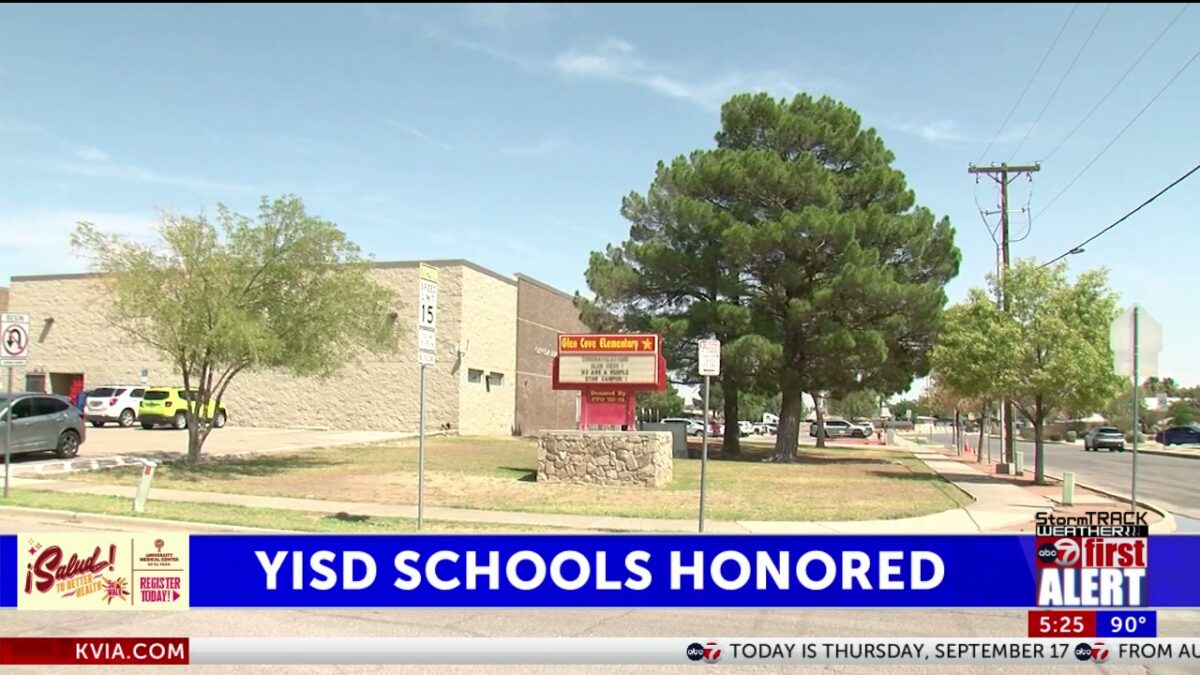
EL PASO, Texas (KVIA) — Two Ysleta Independent School District Schools made their way to Texas Governor Greg Abbott’s 2026 Lone Star Ribbon Schools list. The district said the honors are El Paso’s first two.

Established by Gov. Abbott, the program recognizes “outstanding academic performance” in Texas public schools. Eligible campuses have to earn an “A” rating from the Texas Education Agency (TEA) and demonstrate consistent student success.

Glen Cove and Presa Elementary Schools are two of 25 Texas schools that made this year’s list.

“Young Texans are the future of our state, and it is critical that they have access to a high-quality education,” said Gov. Abbott in a statement. “We will invest in the students, teachers, staff, and parents who are essential to building a bigger, brighter Texas for generations to come.”

Thursday, YISD shared a statement celebrating its two elementary schools’ recognition. YISD Superintendent Xavier De La Torre said the following:

“This is an incredibly proud moment for us. To win this kind of prestigious recognition from the state of Texas – and to be the first in the El Paso region to achieve this success – is a huge point of pride for our students, families, teachers, and leaders at these exceptional schools.

Without a doubt, both Glen Cove Elementary and Presa Elementary have demonstrated what can happen when a school community believes in every student’s potential.”

YISD said Presa and Glen Cove earned “A” ratings for the past five years.

Click here to follow the original article.

A gift to Texas Tech Health El Paso will establish a fellowship

Miroslava Lem Quinonez

EL PASO, Texas (KVIA) – A gift from the Burgess family to Texas Tech Health El Paso will establish a fellowship to train dentist to care for patients with special health needs, according to the university.

The donation will create an endowment supporting the Hunt School of Dental Medicine’s first graduate fellowship in special needs dentistry. A dental school graduate selected for the fellowship will spend on year gaining advanced experience caring for patients.

The gift was inspired by the family’s experience with their sister Karen, who received specialized dental care from faculty and students at the Texas Tech Dental Oral Health Clinic.

According to the university, the fellowship will make the Hunt School of Dental Medicine the 10th dental school nationwide to offer a dedicated postdoctoral fellowship focused on special needs dentistry.

Click here to follow the original article.

What you need to know about Meadows Union Measures P & Q

Lynette Niebla

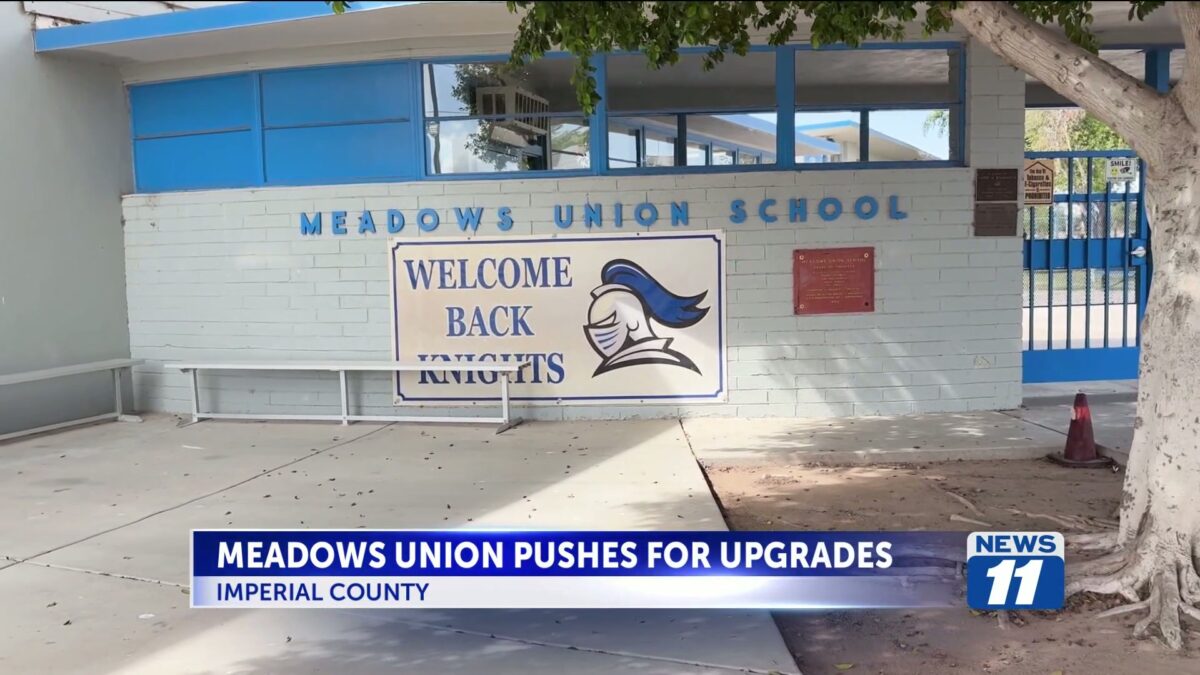
IMPERIAL COUNTY, Calif. (KYMA) – Voters within the Meadows Union School District will decide the future of local campus infrastructure this November as two distinct general obligation bonds head to the ballot box.

Measures P and Q seek a combined $4 million in funding to address critical, long-neglected repairs at Meadows Elementary School, the single-campus district’s only facility.

Located just outside El Centro, the rural single-school district serves approximately 300 students from transitional kindergarten through eighth grade.

Superintendent and Principal Keila Rodriguez, now in her ninth year leading the campus, emphasizes that addressing the school’s mounting facility woes requires a collaborative effort with local residents.

“That’s a lot of different areas where we need a lot of fixing and renovation of our facilities,” Rodriguez explained. “In order for us to do that without tapping into our general fund…that was one of the ideas that was brought up…to put it on the ballot.”

The money is strictly dedicated to repairing aging buildings and upgrading the campus. Key priorities include upgrading classrooms, repairing deteriorating school site parking lots, and replacing failing roof structures.

“Our roofs in our buildings, with the winds and the rain, have had a lot of damage to some of our wings,” Rodriguez noted. “We have fixed some of it, but it’s temporary. Because of the cost, we just haven’t been able to do a more permanent solution.”

Beyond the buildings, the aging infrastructure heavily restricts the use of the school’s expansive grounds. The campus features sports fields with physical light poles already erected, but they remain completely unpowered.

“We have amazing fields. We have a lot of land, but we can’t use them after certain hours because of lighting,” Rodriguez said.

District officials note that connecting those light poles to electrical power would not only expand athletic options for students but would also transform the campus into a vital community asset.

Neighboring school districts and regional youth sports leagues would finally gain an accessible, fully lit space to practice and play after sunset.

“At the end of the day, it is for the community, and it is from the community as well,” Rodriguez added.

While school funding initiatives frequently appear before Imperial County voters, the presence of two separate bond measures on a single ballot has sparked questions.

According to Rodriguez, the total dollar amount was split intentionally to remain legally compliant with strict, state-mandated property tax assessment ceilings.

“We’re not sure how the community is going to respond, and so we want to make sure that we’re able to address at least one of the many areas that we need to work on,” Rodriguez stated regarding the strategic split. “Whether we get one or the other, or both, there are just different benefits with each of them.”

If both Measure P and Measure Q secure voter approval, the combined cost to local property owners is estimated at $45 annually per one hundred thousand dollars of taxable value.

To protect taxpayers and ensure institutional transparency, state law mandates the formation of an independent citizens’ oversight committee if the bonds pass.

The panel will strictly monitor expenditures to guarantee that all funds are spent locally on the outlined construction goals and never diverted to administrative or teacher salaries.

As Election Day nears, school administrators are urging the community to evaluate the structural realities facing the district’s children and make an educated choice.

“We encourage every resident of the Meadows Union School District to go out there and vote, and not just for these measures, but for everything on the ballot that is going to impact our community,” Rodriguez urged.

Superintendent Rodriguez advises all residents to fully research the ballot measures and contact the school district office directly with any facility or tax-related questions before casting their votes.

Click here to follow the original article.