Death penalty phase of trial begins for man who admitted killing wife, her 2 daughters

By Sergio Candido, Anna McAllister
Click here for updates on this story
MIAMI (WFOR) — The death penalty phase of the trial for a Miami man who pleaded guilty to killing his estranged wife and her two young daughters in 2012 began this Tuesday.
Alberto Sierra, 42, pleaded guilty in August to three counts of first-degree murder and other charges in the deaths of Gladys Machado and her daughters, Julia and Daniela Padron, who were ages 6 and 3 at the time of the murders.
A jury was selected Sept. 16 for the penalty phase, which will determine whether Sierra is sentenced to death or life in prison without the possibility of parole.
Sierra admitted his guilt in a Miami-Dade courtroom on Aug. 7, nearly 14 years after the killings. When Miami-Dade Circuit Judge Marisa Tinkler Mendez asked whether he was ready to enter his plea, Sierra responded, “It’s been 14 years, so.” He then told the judge, “I’m guilty.”
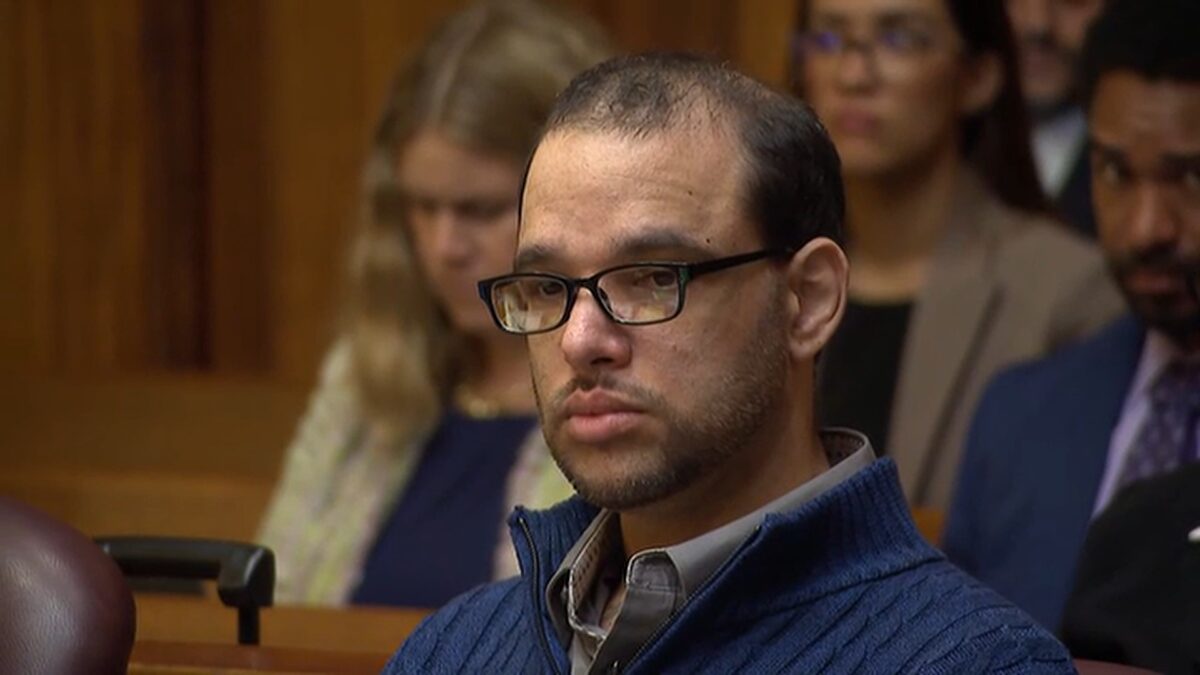
Sierra sat in court as a prosecutor told jurors of the murders of Machado and her daughters on Nov. 10, 2012.
“Gladys and her little girls never came home again, all because of that person — right over there. He decided that that day would be their last,” the prosecutor said.
Prosecutors say Sierra initially tried to cover up the crimes but was ultimately linked to them by DNA evidence.
The defense argued that Sierra has brain damage that impairs his decision-making because he was hit by a car when he was 12.
“He is missing a portion of his frontal lobe,” a defense attorney said.
Tuesday afternoon, prosecutors began questioning the neighbor who found the bodies in a bedroom closet.
Earlier in the day, it was brought to the judge’s attention that someone allegedly took a picture of the jury. The judge said the person needs to be identified so the photo can be deleted.
The killings happened in November 2012 after Sierra, Machado, and her daughters went to the Mall of the Americas on West Flagler Street, according to investigators.
Police said Sierra and Machado got into an argument during the visit and Sierra stabbed her. He then drove Machado and the girls to the family’s home on Northwest 4th Street in west Miami-Dade.
Investigators said Sierra forced the family inside the home and locked the girls in a bedroom before taking Machado into the master bedroom and suffocating her with a plastic bag. Police said he then suffocated the two girls.
Investigators also accused Sierra of sexually assaulting Machado and one of the girls after their deaths.
“It was deliberate; it was cold. It was calculated, and it showed a heightened level of premeditation,” the prosecutor said.
A third child, a 6-year-old boy, was with his grandmother at the time and was not harmed.
The bodies were discovered days later after a neighbor noticed a foul odor coming from the home.
Police said Sierra confessed to the killings during questioning.
Search warrant records obtained by CBS News Miami after the killings detailed evidence investigators collected from the home, the victims and Machado’s vehicle.
According to those records, DNA collected from one of the girls was analyzed and matched Sierra. Investigators also recovered blood-stained clothing and bedding from the home, as well as used latex gloves from a trash bag in the laundry room.
Investigators also searched an apartment Sierra shared with his mother and seized blood-stained towels, a camera and a memory card. Police found apparent blood stains in several areas of Machado’s car, which investigators said Sierra used to drive the victims from the mall to the home.
A Miami-Dade grand jury later indicted Sierra on three counts of first-degree murder, allowing prosecutors to pursue the death penalty. He was also charged with kidnapping, armed burglary and abuse of a human body.
Sierra initially pleaded not guilty before changing his plea in August 2026.
The trial continues Wednesday morning.
Please note: This story was provided to CNN Wire by an affiliate and does not contain original CNN reporting. This content carries a strict local market embargo. If you share the same market as the contributor of this article, you may not use it on any platform.