Educators push back on use of AI in classrooms

By Christa Delcamp
Click here for updates on this story
MANCHESTER, New Hampshire (WMUR) — As students head back to school, artificial intelligence is rapidly changing the educational environment they’re encountering, but some teachers are pushing back against the technology.
Like much of higher education, the University of New Hampshire is navigating the shifting academic landscape in the age of AI.
“AI papers have no grammatical errors, no argument and no soul,” said history professor Kurk Dorsey.
“When I read the paper, it’s a little bit like looking at a Van Gogh that also has some Rembrandt in it,” said history chair Molly Dorsey. “It doesn’t fit.”
The professors said AI writing as a substitute for student work has been easy to spot, so far. But it’s getting tougher to call out.
“AI would hallucinate citations. But AI is getting better,” Kurk Dorsey said. “And we understand that AI is getting to a place where it can imitate the kind of mistakes students make, which makes it increasingly hard to both be sure that the student has used AI, but also to do something about it. If the student denies it, it’s hard to prove.”
They’ve both increasingly turned to old-school assessments, such as one-to-one oral exams and writing tests with no screens and no keyboards.
“Work on your handwriting, because at the freshman level, we have decided – most of my colleagues have decided – that assigning papers is a challenge,” Kurk Dorsey said. “It’s almost impossible to use AI to write a blue book exam. And so, this is the way we want to test our students, have them write in class.”
“The mechanical effort of writing for that long is hard,” Molly Dorsey said.
“I would actually have one-on-one conversations instead of a written test with children, because if they can explain it to me, then I knew they knew it,” said Megan Tuttle, president of the NEA-New Hampshire.
The president of New Hampshire’s largest teachers union said she’s getting similar feedback from K-12 educators.
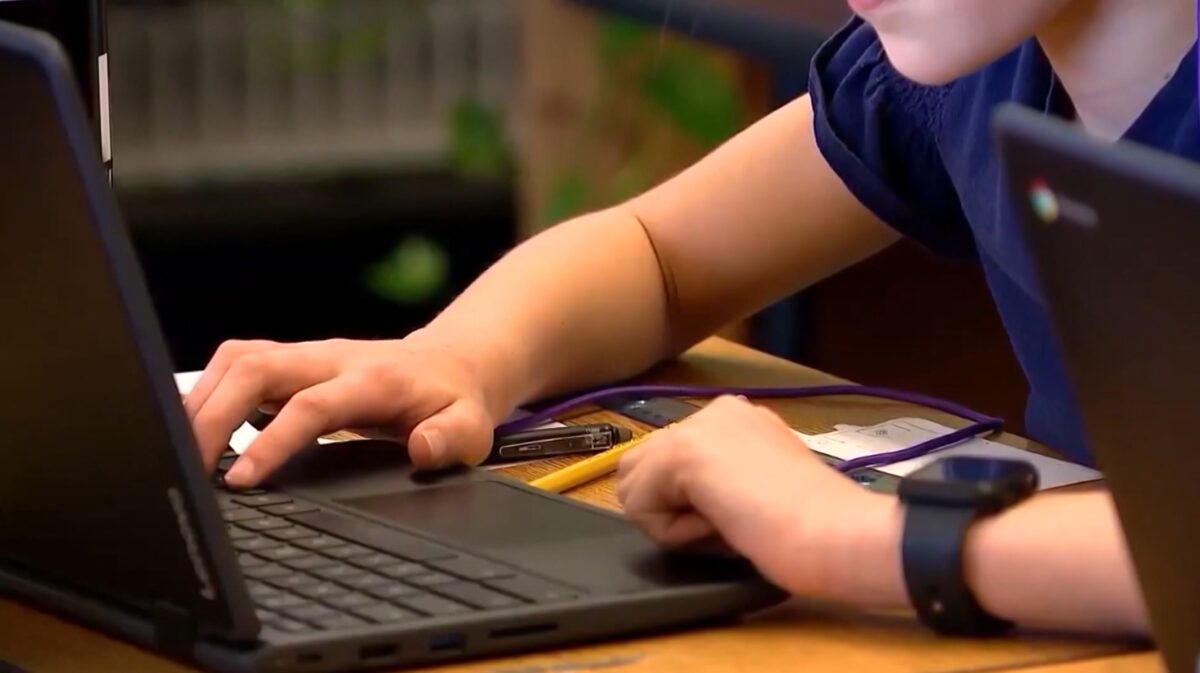
“There’s districts in New Hampshire who have already gone back to turning in assignments not on the Chromebook,” she said. “And I’ve been told that the turn-in rate has actually increased.”
This summer, the Department of Education launched a broader, statewide school screen time task force to help assess the benefits and drawbacks of their use in class.
“We are being flooded with edtech companies saying, ‘We have this amazing tool for you,’ and I’m just not ready to trust that yet,” said Concord High School English teacher Heidi Crumrine.
Crumrine, a former state educator of the year, said she sees parallels with artificial intelligence.
“I think that we will grow to regret it if we don’t develop thoughtful policy,” she said. “If we don’t jump on every AI train that comes in front of us the way that edtech companies are really loving to do right now. I even read an article called ‘Students are consumers,’ where a particular company said you’re not helping your consumers if you don’t teach them AI. And I push back on that. They’re not consumers. They’re children. They’re young people. They’re learning.”
Shawn Powers, senior director of AI policy at SNHU, is working with Phil Magnuszewski of the New Hampshire Tech Alliance AI task force. They said educators are calling for consistent AI standards.
“New Hampshire has a very interesting approach, in terms of more of a hands-off approach, in terms of what they’re dictating from a state level,” Magnuszewski said.
He said while employers demand AI literacy, critical thinking and curiosity come first.
At UNH, the Dorseys said that’s their ultimate goal.
“There are times when they’re going to need to be the value-added human to keep their jobs, to be a good citizen, to do anything else,” Molly Dorsey said. “They’re not going to turn to AI if their boss says, ‘Walk with me down the hall and tell me what you think about this project.'”
“They’re going to have to make a decision themselves. Make an argument, think of reasons right then. They have to be able to develop these skills, not just to use AI in a better way, but because they are still going to need to make `these decisions in their jobs, in their decisions about who should they vote for, when they read a newspaper article, when they have a conversation.”
The Tech Alliance AI Task Force hopes to present its findings at its innovation summit on Oct. 6.
Please note: This story was provided to CNN Wire by an affiliate and does not contain original CNN reporting. This content carries a strict local market embargo. If you share the same market as the contributor of this article, you may not use it on any platform.