Family’s journey inspires new Ohio program to fight pediatric cancer

By Rachel Whelan
Click here for updates on this story
WEST CHESTER TOWNSHIP, Ohio (WLWT) — Months after 20-year-old Jayden Zurlinden died from a rare cancer, his family’s fight to find him treatment is changing how Ohio helps other families facing a pediatric cancer diagnosis.
Ohio Gov. Mike DeWine announced the creation of the Pediatric Complex Care Navigation Program this week, coinciding with the beginning of Childhood Cancer Awareness Month.
DeWine said the program was inspired by Jayden’s experience.
“What this tragedy told me was that we have to do a better job,” DeWine said.
The program, housed within the Ohio Department of Health, will give families a single point of contact who can connect them with resources involving insurance and Medicaid coverage, medication support, physicians, nonprofit assistance and travel for clinical trials.
The navigation services will be available to all Ohio families, regardless of income.
“This program is going to be so helpful to families trying to navigate something that’s impossible,” Jayden’s mother, Cassie Zurlinden, said.
Jayden’s experience showed his family how difficult that system can be.
Jayden was first diagnosed with perineal rhabdomyosarcoma, a rare childhood cancer, when he was 18 months old. He survived, but years later was diagnosed with a rare, radiation-induced osteosarcoma.
When WLWT first met Jayden in May, the cancer had spread and his family was racing to get him to California for an experimental clinical trial.
Cassie had flown to California on Mother’s Day and waited outside the treatment center for it to open, determined to find another option for her son.
After the family met with DeWine, the governor’s team helped coordinate a medically supported flight to California that would be covered by insurance. Jayden’s parents said the resources had existed, but no single person or agency knew how to bring all of them together.
The flight and medical support were eventually arranged, but one day before the family was supposed to leave, Jayden became too sick to complete the scans required for the trial.
“He felt like he was letting us — and everybody that was rooting for him — down,” Cassie said. “I wish I could tell him that nobody was angry. It’s not fair.”
Jayden died in June at 20 years old.
His parents said the new navigator could spare other families from spending precious time searching for answers, filing appeals and trying to determine who can help.
Cassie recalled spending an entire day trying to resolve an insurance denial involving one of Jayden’s medications. She later learned it was caused by a clerical error.
“That’s not fair to families, because time matters in all of this,” she said.
The new program expands work already being done through Ohio’s Complex Medical Help Program, which covers some treatment costs for families who meet medical and financial eligibility requirements. The state is adding staff to operate the new navigation program.
DeWine said families should not have to reach the governor’s office before they can find someone capable of cutting through delays and connecting them with the right resources.
The Zurlindens call the program an important first step, but their work is far from finished.
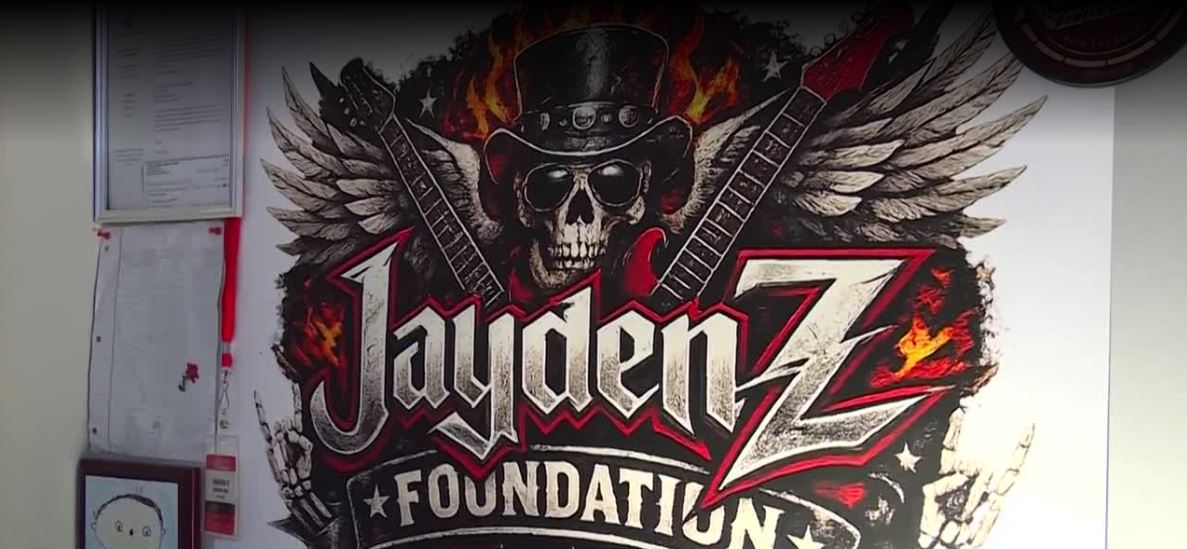
The family has established the JaydenZ Foundation, which supports families affected by pediatric sarcomas and raises money for research into better treatments and a cure.
Jayden helped develop the idea for the foundation and designed its logo before his death. His parents formally launched it afterward.
Jay and Cassie have filled a whiteboard in their home with goals for Childhood Cancer Awareness Month. The first was meeting with DeWine as he announced the new navigation program. Other goals include raising money for the foundation, contacting lawmakers and expanding their network of families, medical professionals and supporters.
Jay Zurlinden said pediatric cancer research remains severely underfunded, pointing to estimates that childhood cancers receive only about 4% of national cancer research funding.
He said Jayden made both parents promise they would continue advocating for children with cancer.
“It would be easy for us to stop,” Jay said. “But we made that promise to our son, and we will never stop until real change in the landscape for pediatric cancer is made. Ohio made a first step in that, but we have a lot of work to do.”
Families seeking information about Ohio’s Pediatric Complex Care Navigation Program can email BCMH@odh.ohio.gov.
Please note: This story was provided to CNN Wire by an affiliate and does not contain original CNN reporting. This content carries a strict local market embargo. If you share the same market as the contributor of this article, you may not use it on any platform.