Iowa officials warn of rising kratom deaths as Gov. Reynolds calls for total ban

By Amanda Rooker
Click here for updates on this story
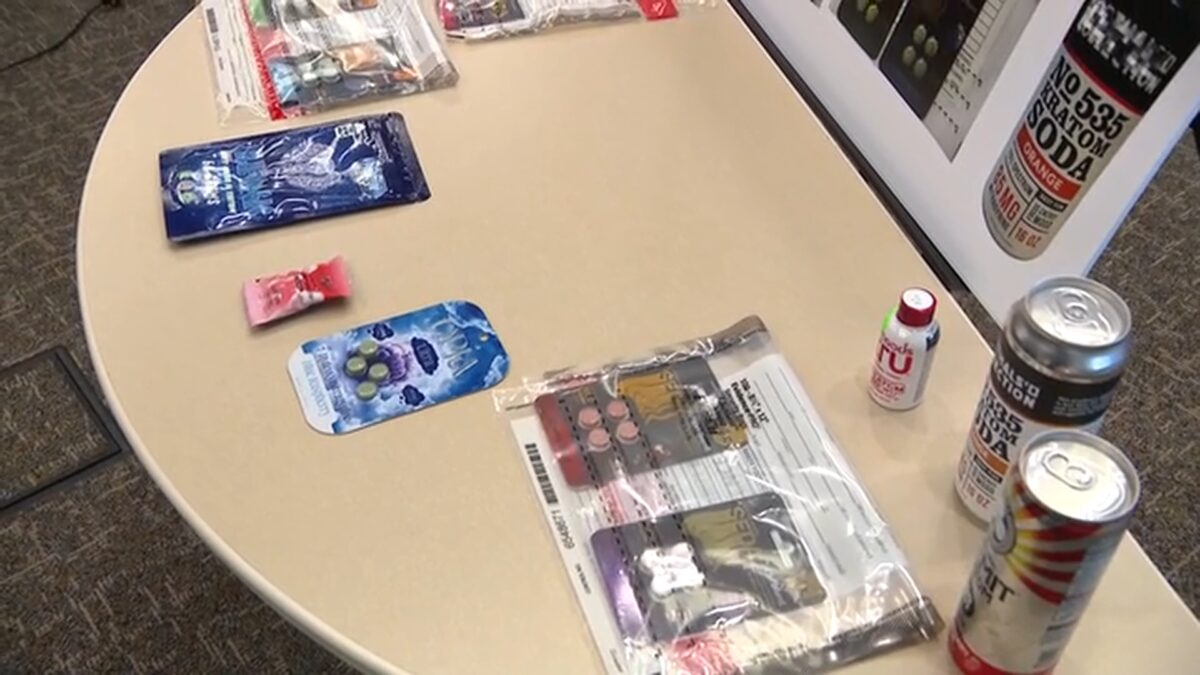
DES MOINES, Iowa (KCCI) — Products sold as powders, gummies, tablets, drinks and energy shots are drawing a new warning from Iowa officials after the state recorded 45 kratom-associated deaths since 2024.
Sixteen of those deaths occurred in the first seven months of 2026. Iowa officials also say poison control calls involving kratom have increased nearly 500% since 2024.
“We’re at a point where this issue cannot be ignored any longer,” Gov. Kim Reynolds said Tuesday.
The growing concern comes as state health and public safety officials say newer, highly concentrated and synthetic kratom products are becoming more common and can have powerful opioid-like effects. Three synthetic kratom-related compounds became federally controlled substances last week, and Reynolds is now calling on Iowa lawmakers to go further by banning kratom altogether.
“Kratom is not a supplement. It is not a medicine, and it’s not safe,” Reynolds said.
Kratom comes from a plant native to Southeast Asia and contains compounds that act on opioid receptors in the brain. It has been marketed for uses ranging from pain and anxiety relief to helping people manage opioid withdrawal.
But Iowa State Medical Director Dr. Robert Kruse said the effects can become more powerful as doses increase, particularly with concentrated products.
“We can see extreme sleepiness, confusion, hallucinations, seizures, slowed or stop breathing, and even cardiac arrest,” Kruse said.
State officials say their concern has increasingly shifted toward concentrated and laboratory-made products that can be far more potent than traditional kratom plant material.
“What we are seeing with greater frequency are highly concentrated doses of these compounds, or extremely potent variants, that were synthetically created in a lab,” Iowa Department of Public Safety Commissioner Stephan Bayens said.
Bayens said those concentrated or synthetic substances can be added to gummies, tablets, drinks and energy shots. In some cases, he said, concentrated liquids can also be sprayed onto leafy material and passed off as natural kratom.
The products are also widely available.
Bayens said kratom products are “virtually unregulated” and can be found in smoke shops and gas stations, sometimes displayed alongside snacks and canned drinks. There is currently no statewide minimum age to purchase kratom in Iowa.
The Food and Drug Administration has not approved kratom for medical use.
“There is no way of knowing what these products actually contain,” Bayens said. “They are often misbranded, and if you choose to use them, you could be playing a dangerous game of Russian roulette.”
Last week, the Drug Enforcement Administration placed three synthetic kratom-derived substances on the federal Schedule I controlled substance list. The DEA is also considering emergency action involving 7-OH, another potent kratom-related substance.
That distinction between traditional kratom and newer synthetic products is one some Iowa retailers say they already make.
Carol Horton has sold kratom at her store, Unkl Ruckus, for roughly a decade. She said some customers seek it out for pain, anxiety, stress or energy, while others have used it while trying to stop taking opioids.
But Horton said she decided not to sell synthetic 7-OH products when they began gaining popularity.
“We chose not to carry that at all because it’s a synthetic. It’s not a natural product, and we’re not here to be the demise of our community,” Horton said.
Horton said her store researches the products it carries and has stuck with traditional forms of kratom. She believes those products should remain available for people who say they benefit from them.
“For the people that need it, I feel that it should still be available for them, especially if it’s helping them in the ways they needed helped,” Horton said.
Reynolds argues a narrower approach will not solve the problem.
State officials compared the challenge to Iowa’s experience with synthetic cannabinoids more than a decade ago. Bayens said manufacturers can make small chemical changes that create new substances not yet specifically covered by existing laws.
Reynolds said that is why she favors banning kratom itself instead of continuing to outlaw individual compounds as they emerge.
“I do want to see a total ban. Otherwise, it’s just too easy to skirt around it,” Reynolds said.
The Iowa House approved legislation earlier this year that would have banned kratom, but the Senate did not take up the measure before lawmakers adjourned.
Reynolds said her administration supported the bill and wants lawmakers to revisit the issue.
“We now have 12 states that have outlawed kratom, and I hope that Iowa will soon follow in those footsteps,” Reynolds said.
For retailers, some of the legal landscape has already changed.
Bayens said the three synthetic substances placed on the federal Schedule I list last week can no longer legally be possessed or sold.
Undercover state narcotics agents purchased an assortment of products at an Iowa store two days after the federal action took effect, according to Bayens. He said roughly 300 products valued at more than $20,000 were later seized from one store because they were listed as containing one or more of the newly banned substances.
Bayens said retailers are responsible for educating themselves about the products they carry and keeping federally controlled substances off their shelves.
“You’re on notice,” Bayens said. “It violates federal law.”
State officials acknowledge Iowa law has not fully caught up with the new federal restrictions. Bayens said state authorities can seize federally controlled substances as contraband, but federal prosecutors would currently handle potential criminal prosecution until Iowa adopts corresponding state rules.
The Iowa Board of Pharmacy is working on rules addressing the newly controlled substances.
State health officials are also urging people not to assume a kratom product is safe simply because it is labeled natural, herbal or a supplement, or because it can be purchased at a gas station or convenience store.
Kruse said anyone who cannot be awakened, is breathing very slowly or has stopped breathing after taking a kratom-related product should receive immediate emergency care. He said people should call 911 and administer naloxone if it is available when an opioid-type overdose is suspected.
Iowa also plans to add warnings about kratom and related products to a statewide public health campaign beginning next month.
“We’re talking, I should say, about this today, because we do not want you to wait until it becomes a larger problem,” Kruse said.
Please note: This story was provided to CNN Wire by an affiliate and does not contain original CNN reporting. This content carries a strict local market embargo. If you share the same market as the contributor of this article, you may not use it on any platform.