Video shows Hollywood lifeguard rescuing family from water in Aruba after crash

By Steve Maugeri

Click here for updates on this story

    HOLLYWOOD, Florida (WFOR) — Hollywood lifeguard Marcelo Lorenzo didn’t hesitate when disaster struck.

Vacationing with family in Aruba on Aug. 11, he watched a float carrying his father, cousin, and aunt slam into a catamaran.

Within two seconds, he was in the water, racing to help them.

“It wasn’t even thinking,” he said. “It was flow state. I saw it, and I just jumped into action.”

He said his father was trapped under the catamaran.

“Swimming over there, I was like ‘This is scary,’ and I don’t know if I was thinking of the worst,” he said. “I didn’t know if they were dead or possibly very hurt.”

Lorenzo said that since there were no other first responders around, he pulled his father towards a ladder to get him to safety.

He said he also made a sling out of a life vest for his aunt’s injured arm, and he kept his unconscious cousin afloat.

“I don’t wanna say I’m a hero. I was just doing the right thing, taking care of my family,” Lorenzo said.

Lorenzo said he learned all these skills in his training.

“I’m grateful that the beach taught me so many different maneuvers, and I didn’t want to extend her injuries more,” Lorenzo said.

Lorenzo’s mother said she wasn’t there, but when she heard about what her son did, she said he didn’t react; he just acted.

“He went from one minute from having the time of his life to seeing his family like this,” said Claudia Chavez. “That’s just a testament for the amazing love that he has for them.”

Lorenzo says his family is still recovering in Aruba but should be OK.

Beach safety says the city of Hollywood plans on honoring Lorenzo at the next city commission meeting on Aug. 26.

Please note: This story was provided to CNN Wire by an affiliate and does not contain original CNN reporting. This content carries a strict local market embargo. If you share the same market as the contributor of this article, you may not use it on any platform.

Two incumbents will not seek re-election to the Desert Healthcare District board

Jesus Reyes

PALM SPRINGS, Calif. (KESQ) – Two more incumbents will not be seeking re-election to their positions on the Desert Healthcare District & Foundation board in the upcoming election.

Carole Rogers, the longest-serving member of the current Board, and Kimberly Barraza, who serves as board president, will not be on the November ballot.

‘It has been a tremendous honor to serve my community on the Desert Healthcare District & Foundation Board and to help advance its mission across the entire Coachella Valley,” Board President Kimberly Barraza said about her decision. “I am incredibly proud of what we have accomplished over the past four years and grateful to have played a role in strengthening the District and positioning it for a strong future.

“While I have decided not to seek another term, my work is not finished, and I look forward to continuing to serve as Board president through December,” Barraza added. “I have great confidence in the District’s future and its ability to bring our communities and partners together, expand access to care, and ensure our resources have the greatest impact where the need is highest.”

“My service on the Desert Healthcare District & Foundation Board has been an absolute honor,” Director Carole Rogers said. “It’s allowed me to share the knowledge and experience I’ve gained during more than 50 years as a registered nurse, healthcare executive, patient advocate, and as a resident of Desert Hot Springs, a community I love. However, after 12 years on the Board and 20 years total in public service, I’ve decided to not seek re-election.

“It’s time to bring new ideas and energy to the future of our Healthcare District and its important role in our community’s well-being,” Rogers said. “I will continue to support our nonprofit friends in their mission and plan to volunteer for District & Foundation programs in the future.”

Earlier this year, Greg Rodriguez resigned from the board as he seeks to apply for the vacant CEO position.

The remaining incumbents whose terms are ending — Evett PerezGil and Anyse Smith — have filed to run again. The other two seats of the seven-member Board — occupied by Dr. Daniel Logsdon and Leticia De Lara — are not up for election this year.

Each Board Director is a citizen of one of the District & Foundation’s seven geographical areas or zones, each of which consists of about 60,000 residents. Please see the zone descriptions to help determine which zone you live in:

Zone 1 (now vacant) encompasses the communities of Palm Springs, parts of Cathedral City and Rancho Mirage

Zone 2 (Carole Rogers, RN) includes the communities of Desert Hot Springs, Garnet, Desert Edge and Sky Valley

Zone 3 (Dr. Daniel Logsdon) encompasses La Quinta, Indian Wells and parts of Indio south of Highway 111

Zone 4 (Evett PerezGil) primarily encompasses Cathedral City

Zone 5 (Anyse Smith, esquire) covers parts of Palm Desert, Bermuda Dunes and Indio

Zone 6 (Kimberly Barraza) encompasses the communities of Coachella and Indio

Zone 7 (Leticia De Lara, MPA) includes parts of Coachella as well as Thermal, Mecca and other unincorporated communities in eastern Coachella Valley

Still uncertain? Find your zone on our interactive District map (Please select the “Hummingbird Plan.”).

To see all the candidates who have filed in the Desert Healthcare District & Foundation races and other Riverside County elections, visit the county registrar’s website.

Click here to follow the original article.

Healing Reins expands therapeutic services in Central Oregon, guided by new mission

Kelsey Merison

TUMALO, Ore. (KTVZ) — For some Central Oregon families, healing can come from an unexpected place–the back of a horse.

At Healing Reins in Tumalo, equine-assisted therapy and outdoor-based services are helping people facing physical, mental and emotional challenges.

The nonprofit has served Central Oregon since 1999, but leaders say the organization has experienced significant growth over the past two years after moving into its new 30-acre home in Tumalo.

“It’s the only place that you can drive up to and park and be greeted by goats, chickens, pigs and surrounded by 24 horses that are just waiting for you to interact with,” said Polly Cohen, the executive director. “The location is absolutely amazing for us to reach so many different, rural communities.”

Cohen said moving into the organization’s new home has allowed Healing Reins to listen more closely to the community and adapt its services to meet changing needs.

“Healing Reins has grown a lot,” Cohen said. “Settling into our forever home here in Tumalo has been absolutely a gift, and one that has allowed us to really listen to the community, to what they need, and be able to adapt our services and grow.”

That growth includes mental health services, outdoor occupational therapy, horsemanship programs, as well as services for veterans and people experiencing brain changes.

Adaptive Horsemanship Fall Registration is now open, you can visit the website to fill out an application. 

The organization is also putting that expanded focus into words with a new mission statement:

“Healing Reins provides adaptable equine and outdoor based therapeutic services that support healing, growth and belonging.”

That mission can be seen throughout the ranch.

Four miniature horses are currently in training to potentially visit memory care facilities, hospitals, and other locations.

“These two, actually, there’s four of them in total, are in a training program to be able to go off site to memory care facilities, hospitals in different locations because they’re so kind and sweet and less intimidating than a large horse,” Cohen said.

The miniature horses are already becoming popular around the ranch, but caring for them — along with 24 horses and the organization’s other animals — comes with significant costs.

Healing Reins says community support is critical as demand for its services grows.

“It’s a challenge to be a nonprofit these days. There’s a lot of variables. Life. It’s expensive. Caring for animals is expensive,” Cohen said. “And so we’re very thankful to the foundations who are supporting us, the community.”

One opportunity to support the organization is through its annual Diamonds and Dust Gala, which takes place September 26th. The Western-themed event will include opportunities to meet the horses, a special unveiling, and other activities.

“Our Diamonds and Dust Gala event will be absolutely amazing,” Cohen said. “And so much fun and a great opportunity for people to learn more about us.”

Healing Reins says its gates are open to everyone. As the organization continues to grow, leaders say its new mission will help guide the next chapter.

“We’ve really enjoyed this location and really have enjoyed providing the care that is needed by the community,” Cohen said. “We have a bilingual therapist that provides mental health services here. Our two amazing outdoor occupational therapists. The goals for these children are being accomplished here on this beautiful property. And we’re thrilled.”

For more information about Healing Reins, its services or ways to get involved, click here.

To learn more about KTVZ’s 21 Cares for Kids partners, click here.

Click here to follow the original article.

Deschutes County opens managed homeless camp in Redmond

Tyson Beauchemin

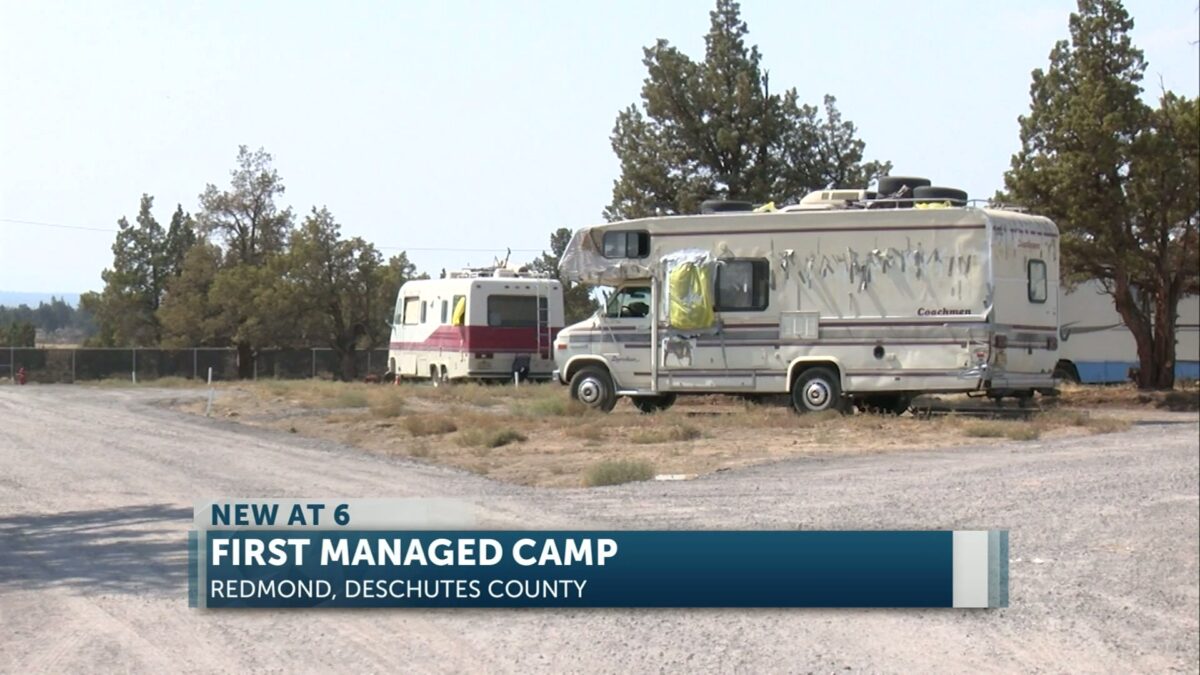
BEND, Ore. (KTVZ) — Deschutes County has opened its first managed homeless camp in Redmond. The new site will serve around 36 people.

Located next to Oasis Village, another transitional housing program, the site offers an alternative approach to assist individuals who are unable to access traditional shelters or other resources.

The camp is managed by First Light, a Bend-based nonprofit organization. The group calls the program “A Healing Village” and aims to provide residents with the space and protection necessary to stabilize while working with each person to develop an individual path forward.

Deschutes County Administrator Erik Kropp outlined the expectations for residents living at the site. “The rules really fall into four main categories. The first is for people to, be safe and keep others safe, be a good neighbor, keep their campsite clean and have a plan to get out of homelessness and work toward that plan,” Kropp said.

First Light is slowly moving people into the area, and there may be room to expand the program in the future.

Click here to follow the original article.

Problem Solvers: More Central Oregon residents than ever without irrigation water following driest winter on record

Claire Elmer

BEND, Ore. (KTVZ) — The battle over water is a tale as old as time. In Oregon, just how much time has passed since a water right was established can determine who gets water — and who goes dry.

“Mark Twain said, ‘Whiskey is for drinking and water is for fighting over’,” said Tumalo resident Jerry Kosman.

For Kosman, that familiar saying is no longer figurative.

He has lived in Tumalo for 60 years and said he never had trouble getting irrigation water from the nearby Deschutes River until this year, following the driest winter on record and amid severe drought.

“Out of the blue, we got smashed in the face with this: cease all water pumping out of this pump,” Kosman said. “No notice, no nothing. Walk down and that’s on our pump. I thought I had deeded water rights. And here I am in the middle of fighting for my water rights.”

Kosman believed the irrigation right serving his property dated to the early 1900s. After digging further into the property’s history, he learned its priority date was actually from the 1950s.

That difference proved decisive this year.

The Deschutes is flowing about 25% to 30% below historical levels, according to Deschutes River Basin Watermaster Jeremy Giffin. Water officials have curtailed rights dating back to 1900 — deeper than ever before.

“We’re cutting back deeper than we’ve ever cut back before,” Giffin said. “We’re back to 1900.”

“First in time, first in right”

The decisions are based on a system known as prior appropriation, often summarized as “first in time, first in right.”

To use water in Oregon, a person or entity must have a water right issued by the Oregon Water Resources Department. Each right carries a priority date that determines its place in line during a shortage.

“In times of shortage, such as now, we curtail the usage by priority date, shutting off the junior users — most recent users — first, and working our way down to senior users,” Giffin said.

The state does not decide based on whether the user is a homeowner, farmer, or large business.

“We don’t look at the type of use, but we look at the priority date,” Giffin said. “The priority date drives who gets the water and who does not get the water.”

The system dates to the settlement and development of the West, when access to land and water was used to encourage people to move into the region. More than a century later, those early claims still determine who is protected first when there is not enough water for everyone.

“We were already over-appropriated, maybe even in the 1800s,” Rep. Emerson Levy, D-Bend, said. “And so water rights have continued, but we’re out of water. There’s nothing left to appropriate, to assign.”

Emily Cureton Cook, a reporter and editor for Oregon Public Broadcasting who investigated the region’s water system with ProPublica, described prior appropriation as a bedrock concept of Western water law.

“When you own land with the oldest water rights attached to it, you are first in line to get that water in times of shortages,” Cook said. “And people who are behind you in line, if you have the senior water rights, they have to cut back to protect your share.”

For Kosman, being farther back in that line has meant being shut off completely. He said he is not asking for his full allotment — only an alternative that would allow junior users to share in the shortage.

“When they had drought, they would tell people, ‘We’re going to cut your water back. Start conserving,’” Kosman said. “Me, flat cut. Not even one day, four hours a day, one day a week — nothing.”

“Use it or lose it”

Oregon water law includes another longstanding principle: To retain a water right, the holder must put the water to “beneficial use” without waste.

That requirement is commonly called “use it or lose it.” Because water rights can increase a property’s value, critics say the rule can encourage landowners to use water even when they do not need it rather than risk losing the right.

“In order to keep your place in line, you have to put that water to beneficial use without waste,” Cook said. “What I didn’t know was that Oregon has almost never defined waste.”

Cook said the scarcity of water increasingly amplifies the value and influence of senior rights.

“In the West, water is power,” she said. “And as the climate changes, and there are more droughts, and there’s less water to go around, that power is increasingly consolidated in the people with senior water rights.”

Water protected in the river

Kosman also questions whether water once available to landowners is now being kept in the river for fish, wildlife and recreation.

Giffin said environmental protections have changed how water is managed in the basin. Historically, water that remained after out-of-stream rights were satisfied stayed in the river and supported habitat. In recent decades, more rights have been converted to legally protected instream uses.

Those protections are one reason some users who had never previously lost access are now being regulated, Giffin said, but they are not the only reason.

“We have a lot of water that’s protected in-stream for fish, wildlife, and recreation that we didn’t have 25 to 30 years ago,” Giffin said. “So that’s the reason that we’re starting to regulate off users that probably have never been regulated off before — that, and the prolonged drought bringing in these incredibly low flows.”

Where does the diverted water go?

The OPB and ProPublica investigation also examined how efficiently water diverted from the Deschutes is used.

The Central Oregon Irrigation District holds rights to more than half the river’s volume. Cook said the investigation, using state satellite data, found that only about one of every four gallons diverted by the district was absorbed by crops.

COID rejected that analysis, saying it did not trust the state satellite data used by the news organizations. Cook said she later found estimates in a state report of the amount of water COID’s crops require that aligned with the investigation’s finding.

Cook also emphasized that inefficient use is not necessarily illegal under the current system.

“I should be very clear that what I’m describing has the state’s blessing,” she said. “There are very few restrictions on what you can grow or how efficient you have to be, as long as you are within the letter of your water rights.”

COID points in part to open canals built through porous volcanic rock more than a century ago, where water is lost before reaching customers.

Piping those canals could conserve a significant amount of water, but Cook said the work could take 50 years and cost more than $700 million. Piping alone would also not address how much water is delivered to customers or what they use it to grow, she said.

“It won’t stop COID from delivering more water than its customers need, or from delivering a lot of water to residential properties that are mostly growing grass and pasture,” Cook said.

Could a water bank help?

Another proposed solution is the Deschutes River Water Bank, a pilot program intended to let some senior users temporarily lease water to others without permanently surrendering their rights.

Under Oregon law, a deeded water right is attached to the property. Levy said the water bank could create more flexibility within that structure.

“If that senior water right has enough water, they could lease that water,” Levy said. “You can lease that water for a certain amount of time, but it still is owned by that senior water right.”

The program is also intended to reduce the incentive to use water solely to protect a right.

“Through the water banking bill, they get to keep their beneficial use,” Levy said. “And so you can maintain your water right while still helping out your neighbor.”

Levy said any changes must protect the rights and financial value held by senior users while finding ways to get water to those farther downstream.

“The system we have is really archaic. It dates back to settling the West, but we’re still balanced with those original terms,” Levy said. “We need to make sure people downstream can get water. And we can do that through water banking and through water leasing. But it really will take collaboration from everyone in the various basin to do that.”

The Deschutes River Water Bank pilot went into effect January 1st, 2026, and sunsets in January 2034.

Piping, leasing, and better measurement could all help stretch the available supply, but none offers immediate relief to residents who have already been shut off.

For now, a system built around who got here first continues to decide who receives water. Time will tell whether new approaches are enough when what nature provides is too little.

Click here to follow the original article.

Mizzou football home opener to affect parking on MU’s campus

Ryan Shiner

COLUMBIA, Mo. (KMIZ)

The University of Missouri warned on its social media on Thursday that people who regularly park on campus may need to find a different spot the day of Mizzou football’s season opener.

“Students, faculty and staff who remain on campus may need to park somewhere other than their usual designated lot or garage for the day,” the university wrote on its social media.

A press release on the university’s website says alternative parking location are in effect for home football games and weekday men’s basketball games.

Several parking areas are affected for Mizzou’s home opener on Thursday, Sept. 3.

Image courtesy of the University of Missouri.

Employees who park in CG1/X, CG3X, PS7, TAPS, TAPSE, TAPSR must move their vehicles to either Parking Structure No. 7, Virginia Avenue Surface Lot, Turner Avenue Garage or Hitt Street Parking Structure between 5-10 p.m. Wednesday, Sept. 2.

RP10 MURR employees must move to the western section of RP10 by 5 p.m. Wednesday, Sept. 2.

RP10 (non-MURR) employees and students must move their vehicles to the Conley Avenue, Hitt Street, Turner Avenue or University Avenue parking garages or Contractor Lot south of AV14B off Ashland Road by 5 p.m. Wednesday, Sept. 2.  

Students and employees who park in RP2, RP3, RP4, RP5, SG4/M, SG4/N, SG4/O, SG5/I, SG5/P, SG7, TAPSD, WG1 or WG6 must move their vehicles to the Conley Avenue, Hitt Street, Turner Avenue or University Avenue parking garages between 5-10 p.m. Wednesday, Sept. 2.

TAPSD students who normally park in SG4/O must move their vehicles to the Tiger Avenue parking structure after 10 p.m. Wednesday, Sept. 2.

Vehicles can be returned after the game “and no later than 7 a.m. Friday,” the release says. The release says vehicles not moved to alternative parking can be ticketed or towed.

The Tigers kick off their season against Arkansas-Pine Bluff at 7 p.m. Thursday, Sept. 3 at Faurot Field.

Click here to follow the original article.

IVC and University of Arizona Yuma formalize partnership

Adrik Vargas

IMPERIAL, Calif. (KYMA) – Imperial Valley College (IVC) and the University of Arizona Yuma are teaming up to give local students more ways to earn a four-year degree without leaving the Valley.

The two schools signed a new partnership Thursday focused on agriculture and STEM programs.

The partnership will help build the “ValleyCats Initiative,” creating transfer pathways from IVC into four-year programs.

College leaders say the goal is to remove some of the barriers that can come with leaving home for college.

IVC says the partnership also fills a gap in the Valley, where students previously did not have local STEM bachelor’s degree options.

The schools say the program will continue to grow as they work to create more opportunities for students locally.

Click here to follow the original article.

YSPC holds annual food safety refresher training for local agriculture workers

Lauren Duffel

YUMA, Ariz. (KYMA) – The Yuma Safe Produce Council (YSPC) held its annual food safety refresher training for local agriculture workers.

YSPC said it was founded by food safety professionals to strengthen education in the community and help protect public health through safe, high-quality produce.

Local agriculture workers gathered for training on proper food handling, personal hygiene, preventing the spread of disease, and the recent Cyclospora outbreak.

Valentin Sierra of Amigo Farms said, “To prevent…that’s what we’re doing here. It’s a preventative measure to prevent any type of possible outbreak and keep a refresher for all of our employees.”

The training also featured guest speakers from the Yuma County Health Department and researchers from the University of Arizona.

Lupe Camarena of NatureFresh Farms said, “Cyclospora is a topic, and there’s a lot of interest in what’s going on in the industry. So we have the Yuma County Public Health Department here, and they specialize in that, to explain in detail what Cyclospora is, including some other pathogens, to educate our community.”

The leafy vegetable growing season begins in mid-October and runs through May.

Amigo Farms Director of Food Safety Valentin Sierra says Cyclospora won’t be a major concern during the growing season because it is typically more common in the summer months.

Instead, workers are more concerned about other pathogens like E. coli 157, salmonella, and listeria, which were also covered during the training.

To learn more about YSPC and the work they do, you can check out their website here.

Click here to follow the original article.

Deputies arrest man who allegedly fired gun at victim in Boone County home

Ryan Shiner

COLUMBIA, Mo. (KMIZ)

Boone County deputies arrested a man who allegedly fired a shot at a victim on Thursday morning at a Boone County home.

Clinton McLain, 47, was arrested on suspicion of first-degree domestic assault, armed criminal action, unlawful use of a weapon and two counts of endangering the welfare of a child. Charges were not available on Casenet on Thursday evening.

McLain is being held at the Boone County Jail without bond, according to online jail records. A mugshot was not available on Thursday evening.

A social media post from the Boone County Sheriff’s Office says deputies were called to the 10800 block of East Bozarth Lane after McLain allegedly fired a gun inside the home. The victim had left the residence, but allegedly told deputies McLain pointed a gin at them during an argument and threatened them, the post says.

The department wrote that McLain fired the gun “in the direction of the victim, and a bullet struck a wall near where the victim was seated.” Two children allegedly saw the incident occur, the post says.

No injuries were reported.

Click here to follow the original article.

Rep. Andy Biggs faces criticism over past decisions

Madeline Murray

YUMA COUNTY, Ariz. (KYMA) – Rep. Andy Biggs (R-Ariz.), the Republican candidate for Arizona governor, is facing criticism over decisions he made while in office involving child protection and the Colorado City Marshal’s Office.

The Copper State War Room held a press conference Thursday with several speakers, including a former state legislator, a domestic violence survivor and victim advocate, a school board member and an attorney.

The group accused Rep. Biggs of failing to do enough to protect children and said Arizona voters deserve an explanation for his decisions.

“A vote for governor is very important and both candidates have records, very clear records,” said Debbie McCune Davis, a former state legislator. “They served in public office for a number of years and the contrast is very clear as to who stands up for women and children.”

Lauren Easter, a domestic violence survivor and victim advocate, said Biggs should address the concerns raised by survivors and families.

“And I believe Andy Biggs owes survivors and families across Arizona an explanation for the decision he made,” Easter said.

The group also criticized Biggs over a bipartisan bill involving the Colorado City Marshal’s Office. The legislation would have removed the marshal’s law enforcement authority following allegations of abuse and religious discrimination.

The Arizona House passed the bill, but it never received a vote in the Senate. The group accused Biggs, who was Senate president at the time, of preventing the bill from moving forward.

Stephanie Miller, a Tucson social worker and school board member, said Biggs should have taken action.

“That is why what Andy Biggs did in Colorado City is so utterly reprehensible to me,” Miller said. “Andy Biggs knew what was happening to those children.”

Clint Smith, an attorney and independent voter, said the issue should be considered by voters ahead of the governor’s race.

“I do believe that he is not in favor of a pure democracy where we let things come to a vote,” Smith said. “I think this is an important issue for Arizona voters before we go into this Arizona governor’s race any further.”

The Biggs campaign responded by criticizing Gov. Katie Hobbs (D-Ariz.), who is running for reelection, and pointing to legislation she has vetoed.

“Katie Hobbs has a disturbing record of protecting predators and pornographers through misguided vetoes,” the campaign said in a statement. “Hobbs is being held accountable for vetoes on bipartisan bills, passed by both chambers of the State Legislature, throughout her tenure that would have kept women and children safer in Arizona.”

Biggs and Gov. Hobbs are expected to face each other in the November general election. Hobbs has said she does not plan to debate Biggs.

Click here to follow the original article.