Greater Idaho Falls Chamber searching for new CEO

David Pace

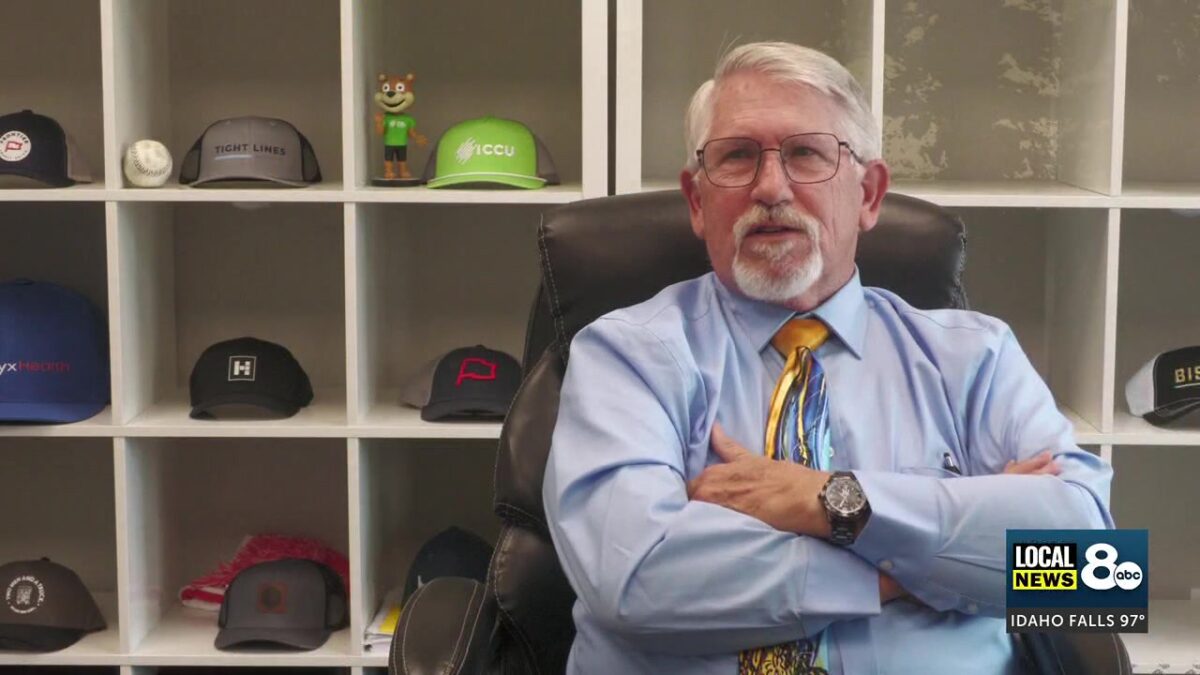
IDAHO FALLS, Idaho (KIFI) – Greater Idaho Falls Chamber Interim CEO Steve Hunter is leading the way as the Chamber searches for its new, permanent leader.

Local News 8 spoke with Hunter about the transition process.

Hunter is a local business owner who has previously served on the Chamber’s Board, as interim CEO and has been involved with the Chamber for 40 years. He is a strong advocate for the Chamber’s work and role in the community.

He was appointed after previous Chamber CEO Paul Baker stepped down in July.

Baker’s departure followed public scrutiny regarding his link to Cristie Stone, the former Portneuf Valley Soccer Club president recently charged with felony grand theft.

No charges have been filed against Baker.

Hunter reiterated the board’s statement that to date there is no evidence of any financial mismanagement during Baker’s time at the Chamber, adding that an independent financial audit by Wipfli is still underway.

Hunter said the Chamber is moving full steam ahead with its mission to strengthen area businesses and provide opportunities for growth and support.

“We are always there to educate and network and be proactive in helping those businesses succeed,” he said.

The Chamber is actively looking for a new permanent CEO and hopes to select a new leader by the end of this year.

Hunter didn’t apply for the role himself.

“They’re in the process now. They have some candidates and they’re working through that,” he said. “Once they work through the candidates, then they’ll start interviewing, and then we’ll get there.”

He expects the next CEO will likely be a local business leader.

Click here to follow the original article.

San Marcos begins new era under energetic and eager head coach Isaiah Veal

Mike Klan

SANTA BARBARA, Calif. (KEYT) – Isaiah Veal reached great heights as a high school wide receiver for Bishop Diego, helping the Cardinals win a CIF-State title in 2017.

Now he will try and build up a San Marcos program that has not won a CIF-Southern Section playoff game in over 20 years.

The former College of Idaho receiver is excited for the challenge but knows success won’t happen overnight.

“We are loving every single day,” smiled Veal. “Just developing the boys and ourselves as staff members, yeah we are just having a great time. It’s not going to be an easy job. I won’t say we are starting from scratch but we have a lot of first time players.”

(Veal is a first-time head coach but he was an assistant coach for several years at Bishop Diego. Entenza Design).

Veal knows he is fortunate to inherit a senior quarterback in Hayden Feleay who has a strong arm.

“Having a senior quarterback goes a long way in terms of just knowing the guys on the team and I think him just wanting to see a real change in the program and so he helps lead that charge for us.”

“The energy, the love and the care for the game and care for us is a whole different ballgame,” said Feleay.

The senior quarterback has a couple of fellow seniors that he will count on to make splash plays in wide receiver Isaac Murillo and running back Tommy Diaz.

(Senior Tommy Diaz will be the featured running back. Entenza Design).

“Hayden has a huge arm,” said Diaz. “He can throw the ball, that will be fun to see.”

The Royals plan to have an uptempo offensive attack.

San Marcos does not have a lot of depth as their varsity numbers are down but they have plenty of excitement heading into Friday’s opener versus Dana Hills.

Click here to follow the original article.

Bond Yields Rebound, BJ’s Beats Estimates, S&P Global PMI Ahead

By Juliegrace Brufke | Quincy News Correspondent

Click here for updates on this story

    Washington (Quincy News) — Market Recap: Stocks fell Thursday as Treasury yields rebounded, largely reversing the decline that followed the Treasury Department’s announcement that it would expand long-term debt buybacks. The S&P 500 dropped 0.9%, the Nasdaq fell 1.0% and the Dow lost 1.3%.

Walmart led the decline, with its shares falling more than 9%, after the retailer reported its slowest U.S. comparable sales growth in six years. Walmart said higher gasoline prices were contributing to changes in consumer spending.

The Treasury said Wednesday it would at least double certain long-end debt buybacks to $4 billion per operation. Yields rebounded Thursday, with the 10-year ending around 4.70% and the 30-year around 5.25%. Oil also rose after President Trump said the U.S. would intensify economic pressure on Iran.

Today’s Focus: The calendar is relatively light Friday, with S&P Global’s preliminary August U.S. manufacturing and services PMIs due at 9:45 a.m. ET. BJ’s Wholesale Club reported stronger-than-expected second-quarter results before the opening bell and also raised its full-year profit outlook.

Attention is also turning to next week’s Jackson Hole symposium, which runs Aug. 27-29 and will mark Fed Chair Kevin Warsh’s first appearance at the annual gathering as chair. Investors will be watching for signals on the path of interest rates as Fed officials remain divided over whether further tightening is needed.

ON THE SCHEDULE FOR FRIDAY, AUGUST 21, 2026

-Friday, 9:45 a.m. ET – August S&P Global Flash US PMI

-Earnings – BJ’s Wholesale Club

Please note: This story was provided to CNN Wire by an affiliate and does not contain original CNN reporting. This content carries a strict local market embargo. If you share the same market as the contributor of this article, you may not use it on any platform.

Rigby looks to dominate athletically with new 60,000-square-foot Broulim’s Fieldhouse

David Pace

RIGBY, Idaho (KIFI) – Jefferson School District 251 officially unveiled the brand-new, 60,000-square-foot Broulim’s Field House at a ribbon-cutting – just in time for the first bell.

“Dad and I said, ‘We got to do something here to help these kids stay in southeastern Idaho.’ So, we’re just proud of this track and this field house,” said Broulim’s Fresh Food CEO Robert Broulim, who graduated from Rigby High School in 1986. “It will encompass and help all of the spring sports.”

Traditionally, Rigby athletes have had to dig out their tennis courts and track from underneath the snow and ice.

“At the beginning of track season, we have had to shovel our track outside just so that we could use it and access it,” said Head Track Coach Monica Seward. “I had 194 kids on the track team last season. So having that large amount of students to be able to use this facility and use it to its fullest potential will be a game changer for our team and our program.”

The Fieldhouse features state-of-the-art facilities for “pole vault, high jump, long jump, baseball, two batting cages, softball, football, soccer, shotput and discus,” said Vonnie Lue Broulim, wife of Richard ‘Dick’ Broulim, whose father founded the grocery chain. ”It also has retractable nets for multiple sports, a track with five lanes – two for sprinting – three tennis courts, and six pickleball courts.”

The community can also access or rent the Broulim’s Fieldhouse in mornings, evenings and on weekends.

Students are motivated to perform at their peak levels in the new Broulim’s Fieldhouse.

“We’re going to be able to throw here all year round and especially in the winter months,” said Easton Hammer, a senior aiming to set a school record in discus and shot put. “It’s really going to benefit us and it’s obviously going to be awesome. I’m super excited.”

The coaches are just as thrilled.

“It’s going to be a huge game changer – being able to be inside all the time when it’s cold and windy and snowy and just being able to train all the athletes that we have in the program,” Seward said.

The Fieldhouse is a gift that will bless generations of Rigby student-athletes.

“It’s been a blessing to me to be able to get to know the Broulim’s family and to see their vision,” said Jefferson School District 251 Superintendent Chad Martin.

With the doors officially open, Trojan athletes are pumped to train in their new home.

“Thank you so much! I feel like this is like, this is the best thing that happened all of my high school years,” said Dieter Short, a Rigby High School senior and 100M, 200M and 400M sprinter.

Classes start next Monday, August 24th.

Jefferson School District 251 and Broulim’s family members cut the ribbon on a state-of-the-art, 60,0000 square-foot Broulim’s Fieldhouse Thursday.

Click here to follow the original article.

How one Davis lab is trying to stop California’s golden mussel invasion

By Ashley Sharp

Click here for updates on this story

    DAVIS, California (KOVR) — The first known detection of the invasive golden mussel in all of North America happened in California.

This invasive species has prompted states of emergency, both in San Joaquin County, where they were found at the Port of Stockton, and in Yolo County, where they were found to have spread to the Port of West Sacramento. It’s posing a huge threat to Sacramento-San Joaquin Delta waterways.

It’s threatening billions of dollars in losses for farmers and could choke California’s water supply. Working to help stop it is the Davis-based Invasive Species Corporation, which is stepping up with a possible solution.

Research scientist Brady Hirschfeld studies how to stop the rapid golden mussel invasion.

“It’s really rewarding to be on this side of things,” Hirschfeld said. “I’m really proud to be part of the solution to kill golden mussels.”

The patent-protected product being tested is zequanox, created first to kill other invasive zebra and quagga mussels. Now, it’s being redeveloped and retested to root out the goldens, which are notoriously resilient and hard to kill.

Also trying to slow down the spread is Pam Marrone.

“These mussels are ranked the top five worst invasive species on the planet, causing many billions of dollars of damage,” Marrone said. “So we’re really tackling a big problem. We’re excited we can do that.”

She is working to get zequanox approved for full use in golden mussels.

“We’re alone. In fact, we’re the only company, I think, in the world that’s actually tackling invasive species in water,” Marrone said.

How it works In the lab, the mussels are exposed to zequanox, where Marrone says, “they’ll eat it, it’ll slowly take effect and they’ll die.”

Marrone noted that zequanox is biodegradable, with no impact on surrounding creatures and habitat.

“It doesn’t harm fish or the native mollusks or anything, anything else,” he said.

The test subjects were collected in Stockton, and a local marina there will be the first site to test zequanox on golden mussels in the wild this fall.

The city’s port is ground zero for the delta invasion.

“Eradication is, in my opinion, unthinkable. They’re here to stay,” said San Joaquin County Supervisor Mario Gardea. “It’s about mitigation.”

Gardea sits on a board committee to tackle golden mussels and said the response requires local, state and federal action.

“Anything that touches our delta, anything that has to do with water is going to be affected,” he said.

Golden mussels can eradicate fish populations and erode delta habitats, and California farmers could lose their water.

Marrone said the impact on community members could mean water flows being stopped due to infestations.

Next steps involve getting zequanox approved for use in golden mussels through the California Environmental Protection Agency and hoping to get this rolled out in local waterways next year, possibly sooner, if California approves an emergency use.

Please note: This story was provided to CNN Wire by an affiliate and does not contain original CNN reporting. This content carries a strict local market embargo. If you share the same market as the contributor of this article, you may not use it on any platform.

St. Helena brown water problem getting worse as residents’ frustration grows

By Web Staff

Click here for updates on this story

    ST. HELENA, California (KPIX) — St. Helena residents say they are still dealing with discolored, foul-smelling water months after the city’s water system came under scrutiny in a Napa County Civil Grand Jury report.

Resident Michelle Liu Covell, who sent us video of the discolored water back in March, says the problem has only gotten worse.

“Discoloration, esthetics, smell, it’s hard to shower because sometimes you’ll shower and smells like you are showering in a swamp,” Covell said.

Covell is a St. Helena planning commissioner, but she says she is speaking to us as a resident. She says this has been the worst summer of brown water she can remember.

“I’m in a group chat with about twenty neighbors right now and it’s just pictures from people of their water that’s brown,” Covell said.

Covell says the problem peaked on July 18, when a private bus hit a fire hydrant, leaving some residents without water they felt was safe to drink for days.

And she says she’s not alone.

Covell walked us over to her neighbor Kelly’s house, where Kelly showed us the water filter she had just replaced as an example of what she has been experiencing.

In late June, a Napa County Civil Grand Jury released a report also calling out St. Helena’s water system, saying it found years of deferred maintenance and poor planning. The report also noted that water rates rose about 183% between 2011 and 2025.

The city has acknowledged the report and told us it is working on a final copy of its response to send back in the coming weeks.

The city also recognized the frustration some residents had following the July 18 bus crash and encouraged them to submit formal claims.

In a statement Thursday, a city spokesperson said, in part:

“System improvements are the City’s top priority. Nearly $15 million has been invested recently or is committed to active projects, with additional bond financing planned for future rounds of infrastructure work.”

Covell says she appreciates the people working to fix the system. But she says the bottom line is simple: The bills keep coming, and the problem remains.

Please note: This story was provided to CNN Wire by an affiliate and does not contain original CNN reporting. This content carries a strict local market embargo. If you share the same market as the contributor of this article, you may not use it on any platform.

LA County deputy shoots dog while arresting grand theft suspect at park

By Matthew Rodriguez

Click here for updates on this story

    LOS ANGELES, California (KCAL, KCBS) — A Los Angeles County deputy shot a dog that attacked him while he was arresting a grand theft suspect in a Sunland park on Thursday.

The LA County Sheriff’s Department said deputies spotted the suspect near the Sunland Park Recreation Center in the 8100 block of Foothill Boulevard at about 4 p.m.

The suspect tried to get away by running into the park, but deputies quickly caught up and apprehended the woman. While they were arresting her, the woman’s dog attacked the deputies and attempted to bite them. One deputy tried to use a taser to get the dog to stop, but to no avail.

The sheriff’s department said the deputy shot the pit bull after it continued to attack. The dog was taken to a local veterinary hospital for treatment.

“This is an unfortunate incident, and I applaud the deputies for their extraordinary efforts to de-escalate the situation with the animal before resorting to potentially lethal force,” Capt. Ryan Vienna said. “Thank you to the Los Angeles Police and Fire Departments for their response and assistance to our personnel during this incident.”

Deputies encouraged anyone who witnessed the shooting to contact Detective Salvador Ponce at (818) 248-3464.

Please note: This story was provided to CNN Wire by an affiliate and does not contain original CNN reporting. This content carries a strict local market embargo. If you share the same market as the contributor of this article, you may not use it on any platform.

Bear’s messy jaunt through Aspen restaurant one of thousands of encounters as drought leaves food sources scarce

By Spencer Wilson

Click here for updates on this story

    ASPEN, Colorado (KCNC) — Colorado Parks and Wildlife has received more than 6,000 bear reports so far this year, roughly double the number during the same period last year. Wildlife officials say drought conditions are reducing natural food sources and pushing bears into communities as they search for calories. The encounters have happened across the state.

A bear recently wandered into a restaurant in Aspen, while another was spotted on Colorado State University’s campus during move-in week. In Colorado Springs, a 250-pound black bear got into an unlocked car, became trapped and eventually died inside the vehicle. In Eagle-Vail, CPW is also investigating after a bear encountered a person at an apartment complex, resulting in a minor injury.

The U.S. Forest Service says the reason we’re seeing so much activity right now is simple: bears are hungry.

“They just don’t have the natural food source that they normally would have this time of year,” said David Boyd with the U.S. Forest Service. Late summer is normally when bears are packing on calories for winter, eating foods like berries and acorns. But the USFS said drought and late frosts have affected those food sources this year.

“They’re just really hungry and just getting a little desperate to start getting those calories,” Boyd said.

That search for food is bringing bears into campgrounds, dispersed campsites, communities and even deeper into the backcountry.

“I think it’s pretty much off the charts for the number of encounters,” Boyd said.

The Forest Service says people can help prevent those encounters by making sure bears never get a “food reward.”

“We want to make sure that they don’t get anything,” Boyd said. “Once they’re rewarded, then they just get more persistent and eventually, typically, become more aggressive and dangerous.”

Colorado also recently changed the law regarding people who leave food or edible waste in a way that attracts bears. House Bill 26-1342 became law Aug. 12 and changes the standard for the offense while removing the requirement that a first violation receive a warning.

For people heading into the backcountry, the Forest Service recommends using bear-resistant food containers and storing food away from campsites. At home or in town, officials say the basics still matter: lock your vehicle, remove food and trash, and secure your garbage.

The goal is to keep bears wild and healthy, and keep them from learning that being around people means an easy meal.

Please note: This story was provided to CNN Wire by an affiliate and does not contain original CNN reporting. This content carries a strict local market embargo. If you share the same market as the contributor of this article, you may not use it on any platform.

Michigan Stadium will display advertisements for the first time in 99 years

By Karma Sabbah

Click here for updates on this story

    ANN ARBOR, Michigan (WWJ) — Michigan Athletics will be displaying advertisements for Coca-Cola, Meijer and Google Gemini at the 99-year-old Michigan Stadium for the first time.

The Leaders and Best Champion Partners Program, announced Wednesday, is described as a strategic approach to supporting student-athletes amid the fast-changing college athletics landscape.

Historically, Michigan Stadium was known for avoiding extensive commercialization and limiting in-stadium branding to select elements.

The program was developed in collaboration with Learfield’s Michigan Sports Properties and designed to align revenue opportunities with Michigan’s traditions and fan expectations, according to the university.

The financial terms of the agreement were not disclosed.

The program can include on-field and stadium-based branding, scoreboard integrations and end zone placements, digital and in-game sponsorship activations, with an exploration of jersey patches and additional premium assets.

University of Michigan Director of Athletics Warde Manuel described the program as the next step in Michigan Athletics’ proud tradition of excellence.

“This is not a departure from who we are, but an evolution that strengthens our ability to remain a national leader, compete for championships, and support our student-athletes in the modern era of college athletics,” Manuel said.

“Michigan Stadium is one of the most iconic and cherished venues in all of sports, and we have been deeply intentional about preserving its tradition, character, and identity. As we introduce this partner program, we will do so with care and purpose, ensuring that any brand partner presence is strategic, tasteful, and aligned with the values of the University of Michigan,” he adds.

The vice president of Frontline Marketing at Coca-Cola North America, Felicia Hale, thanked the University of Michigan for selecting Coca-Cola as its exclusive beverage provider.

“As an organization, we share many of the same values as U-M, including a focus on sustainability and community engagement,” Hale said.

“As a Michigan-based company, we’re honored to stand alongside an organization committed to creating memories and incredible experiences for our communities,” said Melissa Conway, director of community partnerships and giving at Meijer.

“We are grateful for the meaningful investment these partners are making in Michigan Athletics and, most importantly, in our student-athletes. Their support will help position Michigan to thrive in the evolving revenue-sharing and NIL landscape while continuing to pursue championship success at the highest level,” Manuel added.

Please note: This story was provided to CNN Wire by an affiliate and does not contain original CNN reporting. This content carries a strict local market embargo. If you share the same market as the contributor of this article, you may not use it on any platform.

Woman’s life saved by ECMO machine thanks to new program designed to help rural Minnesotans

By Ubah Ali

Click here for updates on this story

    ZIMMERMAN, Minnesota (WCCO) — When your heart stops, time is everything.

Michelle Brant suffered a cardiac arrest while at her home in Zimmerman, Minnesota, back in March. In the United States, survival rates for out-of-hospital cardiac arrest are less than 12%.

That day, something went right. Her family was home, EMT quickly responded and an ECMO helicopter was called to Fairview Princeton from Fairview East Bank University.

“If they didn’t do that, I probably would not be sitting here now,” Brant said.

“During a cardiac arrest, there is no blood flow. Hearts [are] unable to pump blood,” said Dr. Jason Bartos, a cardiologist and lead for Fairview’s mobile ECMO program.

For years, extracorporeal membrane oxygenation, or ECMO, has been available only in major Twin Cities hospitals. It’s a machine that temporarily takes over the work of the heart and lungs, keeping oxygen flowing through the body after a cardiac arrest.

In January, the program expanded giving rural Minnesotans a better chance at survival by flying in lifesaving equipment and specialists when time is running out.

“In the United States we are the number one program delivering this type of care with ECMO via helicopter,” Bartos said.

Months after cardiac arrest, Brant is happy and healthy and Thursday, she finally met the people who helped save her life and the vessel they used.

A rare reunion and a stark contrast to the emergency that brought them all together back in eight months ago. This time no emergency just smiles and gratitude.

“They risk their lives everyday for people like me and I just wanted to thank them,” smiled Brant.

For her, the helicopter and ECMO machine are more than emergency equipment but symbolized a second chance at life.

So far, 12 patients have benefitted from this program, with 50% survival rate. Three of those patients were flown from Princeton.

Dr. Bartos says he has one main goal for future of medicine in the state.

“My hope is every Minnesotan has this therapy available to them between 1-5 years,” he said. “So, everyone has a chance to survive like Michelle.”

Michelle has a device implanted to prevent another cardiac arrest.

Please note: This story was provided to CNN Wire by an affiliate and does not contain original CNN reporting. This content carries a strict local market embargo. If you share the same market as the contributor of this article, you may not use it on any platform.