Beaumont man who beat, starved child to death sentenced

City News Service

RIVERSIDE, Calif. (KESQ) – A Beaumont man who severely beat his girlfriend’s 4-year-old daughter, as well as starved the child for weeks until she died, was sentenced today to 18 years in state prison.

Tyler Lawrence Finley, 30, pleaded guilty last week to murder and three counts of child cruelty, along with sentence-enhancing allegations of inflicting great bodily injury on a victim under 5 years old. Finley’s plea was directly to Superior Court Judge Brian Hill, without input or negotiation by the Riverside County District Attorney’s Office.

The plea was offered by the defense immediately after a jury had been seated for trial.

During a hearing at the Riverside Hall of Justice Friday, Hill suspended sentencing on the murder count, for reasons unclear. The judge proceeded to impose an upper term sentence for one of the child abuse counts, and then one-third terms for the remaining ones. Factoring in the enhancements, the sentence totaled 18 years.

Hill is a visiting judge, not originally from Riverside County.

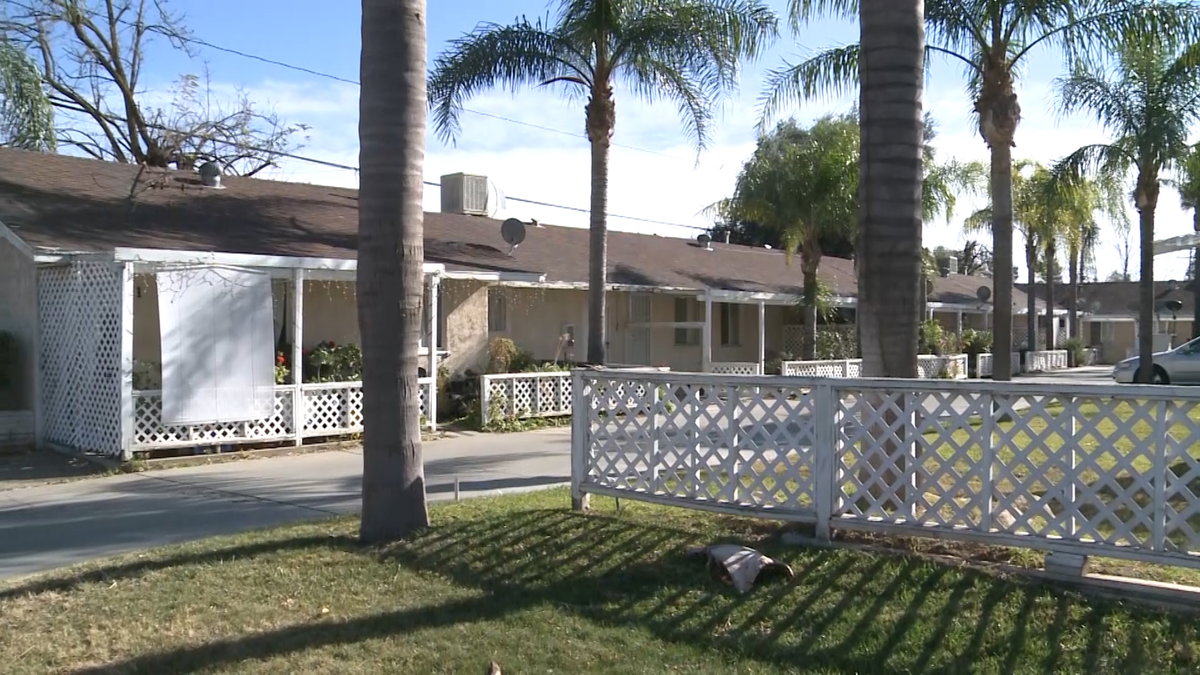
According to a trial brief filed by the prosecution, 4-year-old Nicole Blackerby suffered physical trauma that lasted nearly a month before her death in mid-December 2020 in a studio apartment near the intersection of East Sixth Street and Palm Avenue.

The child resided there with her mother, 24-year-old Cheyenne Blackerby, and Finley, who had begun dating the woman after she relocated to the Inland Empire from Arizona in the summer of 2019.

Prosecutors said that not long after the relationship started, Nicole began manifesting signs of abuse and neglect, prompting calls to Child Protective Services in San Bernardino and Riverside counties.

The brief said agents made multiple visits to check on Nicole’s welfare, but they did not find anything incriminating, and the girl appeared to be healthy. A visit to a pediatrician in September 2020 also revealed Nicole was at a healthy weight for her height, and there were no outward appearances of physical abuse.

Prosecutors said circumstances likely turned for the worse when Finely and Blackerby moved in together with Nicole at the Beaumont apartment a week before Thanksgiving 2020. At the time, Finley was employed at a Redlands manufacturing plant. However, on Dec. 4, 2020, he suffered an unspecified hand injury and never returned to work.

Autopsy evidence later revealed that just before or around this time, Finley and Blackerby began inflicting injuries to Nicole. Beaumont Police Department detectives and pathologists uncovered that she had been struck with fists or heavy objects to her head, face, thighs, knees and torso.

“The bruising even extended to her feet,” according to the brief.

The child’s nourishment also stopped. By the time of her death, the county’s then-chief medical examiner, Dr. Mark Fajardo, estimated she’d stopped receiving food for at least three weeks. Fluids were also withheld, with evidence that she hadn’t received water at least three days before she finally succumbed.

The only person to enter the apartment during the critical period in which the child might have been saved was a handyman, who visited on Dec. 11, 2020, to repair a broken shower head.

He later told police that he had seen the defendant and Cheyenne Blackerby sitting on their sofa foldout bed, with Finley talking on his mobile phone and Blackerby silent.

“Nicole was lying on her back in her bed, with a mask covering her entire face, other than her eyes,” the brief stated. “(The handyman) noticed that her eyes were tracking him, as he walked through the apartment, but he never saw any other part of her move.”

He completed the repair job and left.

On Dec. 16, Finley and Blackerby visited several stores, and in none of the security surveillance videos were there signs that Nicole was with them. Prosecutors said the pair purchased numerous bottles of sleep aids. That afternoon, Finley sent an obscure text message to Beaumont police, saying “I fear the suicide of someone close,” but when a police dispatcher inquired about the person and place, there was no response, according to court papers.

That night, Finley went to a neighbor’s apartment, exhibiting signs of drug-induced lethargy, including slurred speech, and asked the person to call 911 due to a medical emergency. When paramedic arrived, they found Blackerby dead from a drug overdose, at which point they also spotted the emaciated figure of Nicole, lying on her back in bed, eyes wide open but deceased, the brief said.

Finley was hospitalized for a brief period for drug toxicity before he was arrested for Nicole’s death.

“Dr. Fajardo noticed over 60 separate impacts to her body, including ones to her head,” the brief said of the autopsy. “He could see all of Nicole’s rib bones, and her hip bones were extremely pronounced. Nicole had a half dozen bruises to her face. All of the bruises were the result of blunt force impact. There were injuries to Nicole’s fingers, including a compression injury to her pinkie consistent with crushing. Dr. Fajardo also saw subdural hemorrhage, blood on her brain … the result of trauma from impact.”

Despite all of the wounds, the medical examiner ultimately determined that if she’d only been fed and given enough fluids — even several weeks after starvation — the little girl would have recovered and survived.

Her father had died several years earlier in Texas under undisclosed circumstances, according to the brief.

The defendant had no documented prior felony convictions in Riverside County.

Click here to follow the original article.
Family speaks out after Desert Hot Springs man killed in motorcycle crash

Luis Avila

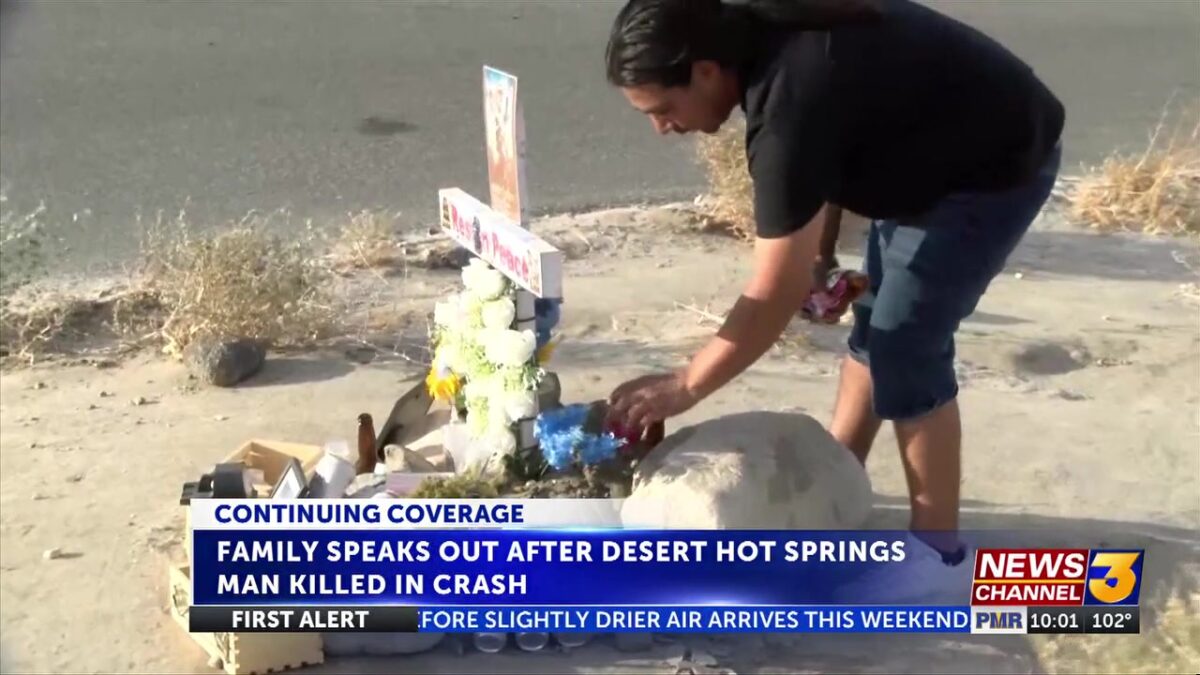
DESERT HOT SPRINGS, Calif. (KESQ) – A Desert Hot Springs family is speaking out after 36-year-old Lester Cordero was killed in a motorcycle crash last weekend in North Palm Springs.

According to the California Highway Patrol, Lester was riding a motorcycle on Indian Canyon Drive when a 61-year-old Desert Hot Springs woman driving a Kia turned left from westbound Teagarden Drive. The Kia entered the motorcycle’s path, causing Lester to collide with the left side of the vehicle. He was ejected from the motorcycle and suffered fatal injuries. He was pronounced dead at the scene.

The Kia driver was taken to Desert Regional Medical Center with complaints of pain. CHP says alcohol and drugs are not suspected as factors in the crash.

His brother, Johann Cordero, says Lester was on his way to meet family.

“The moment that all this happened, he was actually on his way to get to us so he could get ready to take out my mom to eat,” said Johann. “We’ve never gone out together in years.”

The family is now dealing with the sudden loss, which Johann says has been especially difficult for their mother.

“She’s trying to be strong but from time to time she has her panic attacks at night. We have to keep an eye on her,” said Johann.

The family is also raising concerns about road safety near the intersection where Lester was killed.

“I think I’ve seen more accidents here but no one ever has an eye witness because there are no cameras,” said Johann. “You could put more lights, I would recommend that because everyone here… people are speeding.”

He is also urging drivers to slow down and stay aware of others on the road.

The family has created a GoFundMe to help pay for Lester’s funeral and memorial expenses and support his loved ones.

If you would like to help, you can find the family’s fundraiser click here.

The family will also be selling tacos tomorrow, August 22, at 67921 20th Ave., Desert Hot Springs.

The crash remains under investigation. Anyone with information is asked to contact CHP’s Indio Area at 760-772-5300.

Stay with News Channel 3 for more.

Click here to follow the original article.

Three Colorado River states must take big water cuts as biggest US reservoirs plunge to record lows

CNN Newsource

By Laura Paddison, CNN

(CNN) — Arizona, California and Nevada will be forced to make deep cuts to the water they draw from the imperiled Colorado River under a new two-year operating plan published Friday, intended to help stave off an escalating crisis in the beleaguered waterway.

The long-awaited plan from the Department of the Interior comes after years of fraught negotiations between the seven states that rely on Colorado River water failed to produce a deal. And it arrives at a time when the river’s two key reservoirs, Lake Mead and Lake Powell, have both fallen to record lows — threatening water and power supplies for tens of millions of people.

🌧️ Get your local forecast with the CNN Weather app

In July, the US Bureau of Reclamation published an operating framework for the waterway which set out the broad parameters of water sharing over the next 10 years, including a provision that cuts be set out every two years.

The new plan covers the first of these two-year periods, stipulating cuts for the three lower basin states through 2028. California will have the smallest at 440,000 acre-feet; Nevada will take 50,000 acre-feet less water; and Arizona will endure the steepest cuts at 760,000 acre-feet. It sets out no mandatory cuts for the upper basin states of Utah, Colorado, Wyoming and New Mexico.

These cuts translate into about a 27% cut to Arizona, 10% cut to California and 16% reduction in water flowing to to Nevada, according to Sarah Porter, director of the Kyl Center for Water Policy at Arizona State University.

Arizona authorities have responded positively. Tom Buschatzke, director of the Arizona Department of Water Resources, told CNN the water cuts to his state take into account previous discussions and recommendations between the three downstream states. “It could have been draconian,” he said. “I would like the reductions for Arizona to be zero but that’s not the reality we’re facing,” he said. “It’s a pretty good outcome.”

Arizona’s Democratic Senators Ruben Gallego and Mark Kelly issued a joint statement also expressing support of the new operating guidelines. But Nevada and California have expressed disappointment, and even dissent.

The plan is the latest stage in the quest to divvy up the shrinking water of the Colorado River. Some experts expressed relief that something is finally in place, even if it only covers a short period, but others say it is far from enough as water levels reach record lows with little chance of relief anytime soon. There are also fears the plan may spark a lawsuit as tensions between the states over who shoulders the cuts bubble over.

“We are at a time of tremendous change in how we are managing water in this system and what that means for both communities and the river itself,” said Celene Hawkins, director of the Colorado River Program at the Nature Conservancy.

The Colorado River is a lifeline for the Southwest, providing water to around 40 million people and irrigating more than 5 million acres of farmland. For more than two decades, it has shrunk dramatically due to a climate change-fueled megadrought, high temperatures and years of heavy demand.

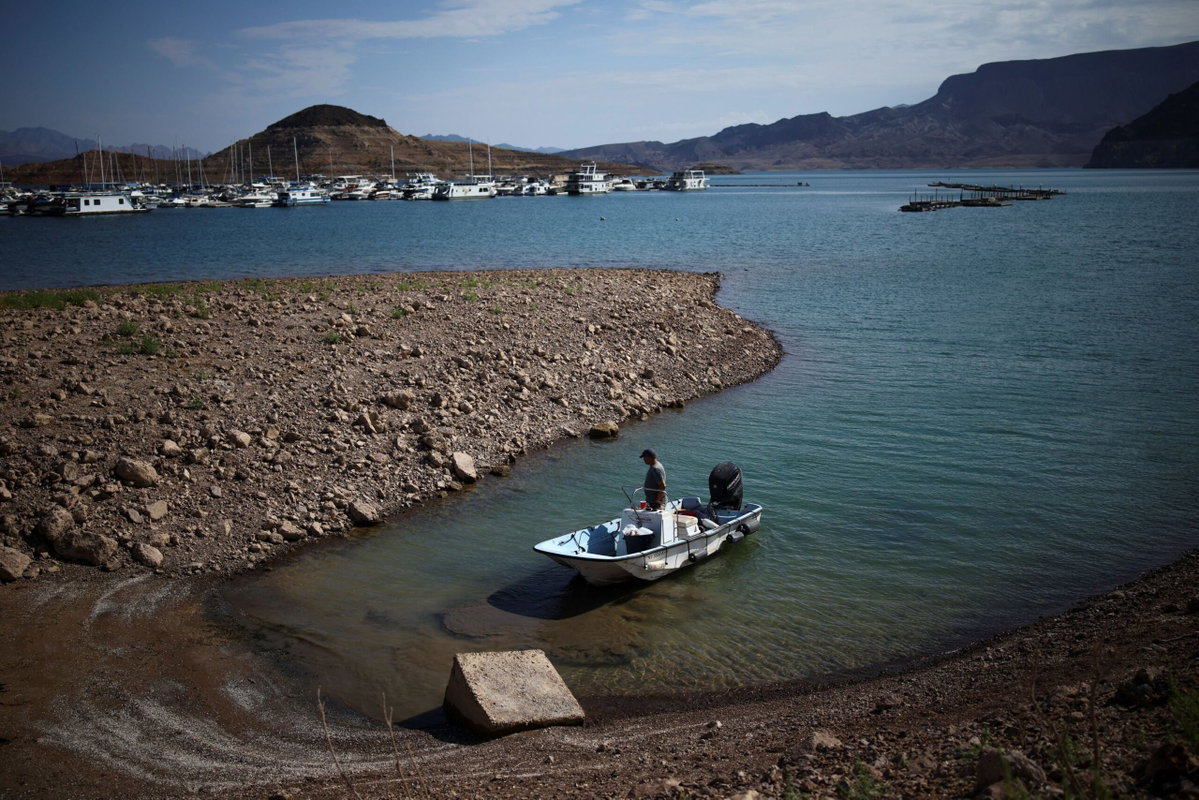
Water levels in its two key reservoirs plummeted to a combined record low last month. Lake Mead, the country’s largest reservoir, is now lower than it’s ever been since it was created nine decades ago, and Lake Powell reached a record low on August 15.

It’s “a dramatic signal that the system is at risk of crashing, meaning reservoir levels so low that water cannot be delivered from them,” Porter told CNN previously.

Colorado River water is divided between states under the 1922 Colorado River compact, which allots 7.5 million acre-feet of water yearly to the upper basin and another 7.5 million to the lower basin. The agreement was made at a time when the region had a smaller population and benefited from wetter years, with much more snow to feed the river’s headwaters in the Rocky Mountains. As water levels dwindle, it is no longer workable.

So, states have been locked in negotiations over how to share what remains. The lower basin states, which have historically used the most water to support vast farms and booming cities, have proposed cuts in their water use over the past few years but want the upper basin states to share in the pain.

California’s agriculture and urban water users will negotiate a plan to make the required cuts, Metropolitan Water District of Southern California General Manager Shivaji Deshmukh said in a statement. But, he added, “water users across the Basin must make a renewed effort to forge a longer-term agreement that produces additional reductions, including through participation of all seven Basin states.”

Nevada authorities echoed California. “… the federal government has produced a plan that provides little certainty for Nevada and other Lower Basin users,” said Nevada Governor Joe Lombardo in a statement. Over the long term, he said, this plan is “sacrificing the health and safety of Nevadans before requiring equal water responsibility for our shared water resources from the Upper Basin.”

The upper basin states — which, unlike the lower basin, cannot be compelled by federal authorities to reduce water use — have resisted cuts, arguing drought has already reduced the water available to them and that the lower basin uses far more water and should shoulder the cuts.

The new two-year guidelines provide an interim plan up to 2028 in the absence of a state-led agreement. Cuts will then be reassessed every two years.

In the meantime, the seven states can keep negotiating between themselves for a deal that would supersede the federal plan. “It’s very clear that a consensus is needed for us to manage the basin through what will likely be a permanently hotter and drier future,” TNC’s Hawkins said. But experts aren’t confident an agreement will be forged anytime soon.

A big fear is that the issue will wind up in court; states could sue each other or the federal government. “We definitely have seen some indications that some of the basin states are preparing for litigation,” TNC’s Hawkins said.

Nevada authorities have hinted as much in the wake of the announcement. “… in the absence of science-based operating regimes that demand reasonable water use reductions by all seven states, Nevada will fight to protect our community’s water supply,” said Southern Nevada Water Authority General Manager John Entsminger in a statement.

Arizona, which will experience the biggest cuts, has previously made noises about opting for a legal route and authorities there have previously criticized federal plans for the river. Last month the Arizona Department of Water Resources said the cuts proposed in the 10-year framework were “unacceptable” and “would devastate Arizona’s water users and its economy.”

Any lawsuit would likely rumble on for many years, during which the Colorado River looks set to continue its downward trajectory. “Renegotiating these issues every year means we could be one dry year away from crisis and one legal battle away from system failure,” California’s Deshmukh said.

Correction: A previous version of this story misstated statistics about who would be affected by water-use reductions in Arizona.

Additional reporting by Andrew Freedman

The-CNN-Wire™ & © 2026 Cable News Network, Inc., a Warner Bros. Discovery Company. All rights reserved.

Click here to follow the original article.

Idaho Museum of Natural History receives national accreditation for excellence, plans for a new exhibit in September

Hadley Bodell

POCATELLO, Idaho (KIFI) – The Idaho Museum of Natural History (IMNH) on the Idaho State University campus in Pocatello has received its accreditation from the American Alliance of Museums (AAM). This award is the highest national recognition for museums and places. The IMNH is one of only five accredited museums in the state.

The AAM is a nationwide organization that certifies museums for excellence in all aspects of professional practice. They look at both the care of the collections in a museum as well as the space and experience for patrons to learn about the exhibits.

The accreditation process is rigorous and can take up to a year. Education manager at IMNH, Robert Gay, said people from other museums come from out of state to review the museum’s policies, procedures, and paperwork for evaluation.

“They look at all of our facilities to make sure they’re up to snuff, signage, storage and our staffing to make sure we have an appropriate number of people for the amount of collections we care for,” Gay said. “It’s not just one thing, but it’s the whole nature of the museum.”

It doesn’t take just beautiful exhibits to be AAM accredited, rather, it takes a state-of-the-art, professional institution from the inside out. Museums have to be reevaluated for accreditation every ten years.

For the museum staff, this recognition is proof of their hard work and a promise that they will continue to serve at the highest level.

“It shows other museums in the state and the region that we are operating at the top level the country can expect a museum to be at,” Gay said. “We are the only accredited natural history museum in the entire state. It shows folks that we are doing what we need to do to take care of our collections and to present that information to the public, and provides a level of public trust.”

Gay explained IMNH is a publicly funded institution with the state legislature placing it on a special appropriation. He said the museum is committed to being good stewards of those taxpayer dollars.

“By being accredited, it’s a way that we can show we’re making the best use of taxpayer dollars and making sure these collectioons here in Idaho about Idaho’s natural history are safe for generations to come,” Gay stated.

The Idaho Museum of Natural History provides a snapshot of Idaho’s history, including dinosaur skeleton replicas, indigenous objects that are tens of thousands of years old, and rocks, minerals, gems, plants, and animals. Because it is on the university campus, the IMNH also has the opportunity to provide students with research experience.

Fall Fossil Fest is coming up in November, an event put on by the museum, with more details to be released soon. The festival will include researchers and hands-on exhibits, with specialists from across Idaho and some out-of-state visitors.

The gallery at the Idaho Museum of Natural History will be closing in September for a full revamp of the front-of-house exhibit. The grand re-opening will be September 26th, with free entry. Gay said they’ve had plans in the works for a new front exhibit for years, and they’re excited to finally put it together for the community.

“This is our first update in about five years, we’re also really excited to be opening a new gallery space sometime in the near future,” he said. “We can’t wait to reopen the gallery at the end of September and welcome everyone back to see all the cool stuff we’ve got coming up.”

Click here to follow the original article.

Woman accused of stabbing woman to death after Northeast El Paso party

Gabrielle Lopez

EL PASO, Texas (KVIA) — Police charged a woman accused of stabbing a woman to death after a fight at a party in Northeast El Paso.

Documents alleged Regan Shameika Anderson murdered Daissy Guadalupe Moreno.

Moreno went to a party on July 17 at her ex-girlfriend’s apartment. Documents said Anderson, Devyuan Jamal Williams Kee and Holli Ann Soper later showed up to the party on Leavell Avenue.

Toward the end, Moreno allegedly argued with the party host, Netolisa Jorge. Moreno claimed she was a police informant and accused Anderson, Kee and Soper of criminal activity, documents said.

Jorge allegedly dragged Moreno out of the apartment by her hair and into a black Nissan sedan. Documents said Moreno was last seen alive when placed in the sedan with Anderson, Kee and Soper after the party ended.

The sedan with all four people left the area, investigators wrote.

Jorge allegedly said she received Facebook Messenger texts from Soper that Anderson stabbed Moreno to death. Investigators searched her phone and alleged Soper deleted messages she sent.

Investigators found a Facebook Messenger call from July 18 where Soper allegedly said “they got rid of the problem,” documents said.

On July 19, Jorge found missed calls from Soper, documents said. When they spoke, Soper allegedly said Anderson stabbed Moreno.

That same day, a resident told an off-duty police officer about a dead body, documents said. The resident alleged Anderson showed up to his apartment and asked for help with disposing a body at Kee’s apartment on Fred Wilson Avenue.

Anderson allegedly offered $250 if the resident helped with the body.

On July 20, the Moreno was reported missing “under suspicious circumstances,” investigators wrote.

On July 22, police arrested Andrew Aguilar, who allegedly told police he knew about Moreno’s murder.

According to documents, Aguilar was contacted by an unknown man with the nickname “Tattoo.” Tattoo said Anderson was looking for people to help clean up and apartment in exchange for drugs and money, documents said.

Aguilar told police he met Anderson at a “kick-back” at Jorge’s apartment, documents said. Anderson allegedly said she wanted to remove a body from an apartment.

Aguilar alleged Anderson said she killed someone and needed to dump the body in New Mexico.

On July 23, detectives were investigating an unrelated murder on Fred Wilson Avenue when a resident told police about a “foul smell” coming from a nearby apartment, documents said.

Officers forcefully entered the apartment and found Moreno’s body wrapped in a shower curtain, documents said. They also saw suspected blood in the apartment’s bathroom and what appeared to be an attempted clean up. Investigators said a plastic bag was also wrapped around Moreno’s head.

Documents said Kee was the listed tenant of the apartment.

Authorities obtained a search warrant and found hidden prints left by Anderson and Kee, documents said.

An autopsy determined Moreno’s cause of death to be multiple stab wounds and strangulation, documents said.

According to the resident who reported to the off-duty officer, Anderson allegedly stabbed Moreno in the neck while Soper held her. Documents said Kee saw the stabbing and didn’t intervene.

The resident said Anderson stabbed Moreno because of drugs, documents said. Anderson allegedly told the resident that Moreno had sexual relations with Kee.

Investigators wrote that Kee is Anderson’s boyfriend.

On July 31, authorities obtained surveillance video taken in the area near Kee’s apartment. Documents said the video showed footage from July 18.

The video, timestamped at 6:32 a.m., showed Moreno and Anderson enter Kee’s apartment, documents said.

At 12:55 p.m., Anderson, Kee and Soper are seen leaving the apartment and area in the black sedan, investigators wrote.

Investigators wrote that authorities found Moreno’s body in the same clothes she was wearing in the video footage.

Documents alleged Anderson, Kee and Soper left the apartment with intent to conceal Moreno’s body.

Click here to follow the original article.

Walnut Water Tower maintenance may lead to low water pressure, discolored water

Ryan Shiner

COLUMBIA, Mo. (KMIZ)

Some Columbia water customers may notice water pressure issues and discolored water on Monday as maintenance work is done to Walnut Water Tower, according to a Friday press release from the city.

Utility crews will start draining the water tower on Monday.

Crews are replacing “interior and exterior coatings that will extend the life of the tower” and adding safety upgrades, the release says.

The release says those in the Walnut Street area who are experiencing discolored water in the evening should run a cold faucet for 10-15 minutes.

Click here to follow the original article.

THE MILITARY FAMILY: Pueblo native highlights resilience of military children in youth baseball tournament

Heather Skold

Bavaria, GERMANY (KRDO) — A Pueblo native is making international headlines.

Zean Whatley, 11, just competed in the Cal Ripken World Series, having been one of 12 boys to represent all of Europe and Africa during the elite youth baseball tournament.  While Whatley was born at Pueblo’s Parkview Hospital — same as his parents — he and his family have lived for the past two years in Germany, while his dad is stationed there with the Army. 

“It’s been a lot of fun. We’ve got to see a lot of different cultures and countries. It’s been a blast out here,” said Whatley, on video call. 

Whatley plays on two German teams, which has afforded him the chance to hone his baseball skills, while getting the benefit of learning a new language and making friends in his host country.

His resilience highlights the resilience of military children, who have one option: adapt to their new surroundings every few years. 

In order to be selected for the Cal Ripken World Series, Whatley had to send in a highlight reel and compete in a tournament in the Netherlands. 

Zean’s parents, Andrea and Frank, have deep roots in the Steel City, having met at Pueblo’s Central High School.

“Everyone is there — we are the only ones who left,” said Andrea Pacheco, Zean’s mom. 

And that family reunion is the icing on the cake to being selected for the baseball tournament.  

“I’m feeling excited to go back to the States and being able to see family, and letting them come and support me,” smiled Zean. 

The World Series was held in Branson, MO, Aug. 5-16.

Stay up to date with the latest local news, sports, and investigations by downloading the KRDO13 app. Click here to download it from the Apple App Store. Android users can download it from Google Play here.

Click here to follow the original article.

‘All the feels’ for kids heading back to class

Hillary Floren

EL PASO, Texas (KVIA) — The start of a new school year can put pressure on young students. The signs of that stress might be tricky for adults to spot, and many kids don’t know how to put those feelings into words.

Psychotherapist Dr. Jody Bumsteen says “It’s really up to us to give them the language they need to be able to communicate what they’re experiencing, and then also teaching them the coping skills to go along with that.”

She adds that the signs of stress to look out for include changes in sleep habits, shifts in diet, and stomach or headaches with no clear medical cause. Some children will stop taking part in activities they once loved, or simply not talk as much. There are slo may be mood shifts that don’t fit with their usual behavior. Instead of reacting to that behavior, Dr. Bumstein recommends parents delve deeper into the cause, without judgment or interpretation.

Some tips to open communication with your child include asking open-ended questions. When they answer, acknowledge and validate what they’re feeling.

“You don’t have to agree with it. You don’t have to know what that feels like to validate. You can just say it makes sense. It’s normal and OK for you to feel that way,” Bumstein adds.

Click here to follow the original article.

Injured hawk with fractured spine sent to Teton Raptor Center

Doug Long

Have you ever found an injured animal, be it a dog or cat or a wild animal or bird? What do you do if you find one?

Over the weekend Local News 8 anchor Doug Long and his wife were driving along 49th South in Ammon when they saw something in the middle of the road. As they approached and slowed down they could see it was a hawk.

They stopped the car and Doug got out to see if it would move out of the road as he got closer to it, but it just sat there looking up at him. At that point he knew it was injured bad enough that it either didn’t want to move or couldn’t.

He tried contacting local law enforcement, animal control, even the Tautphaus Park Zoo, but being Sunday all he got was voice mail. At that point he decided to move the bird and get it out of the road where it would most certainly be hit by a car or harmed by another animal.

After placing a towel over the bird, he was able to gently pick it up and place it in a basket in the trunk of his car. He then drove it home and placed the basket, with the bird, in his garage. The hawk never attempted to get out of the basket and remained there through the night.

On Monday morning, he was able to contact Bonneville County Sheriff Deputy, Brandon McIntier, who just happens to also work closely with the Teton Raptor Center in Jackson Hole, Wyoming. He came to Doug’s house and was able to get the hawk and transport it to Jackson and the raptor center.

Deputy McIntier said the best thing to do if you find an animal that is hurt is to call your county dispatch and report it. Let them know where it is and how to find it. In most cases attempting to move the animal, depending on what kind it is, could pose a danger to yourself and the animal, but in this case and under the circumstances moving the hawk was likely the best way to save the bird.

When the hawk arrived at the Teton Raptor Center it was x-rayed and found to have a core cord fracture in her spine, but there is good news. with three to four weeks of rest the fracture will heal on its own. After a few weeks they will put the hawk in their flight barn to make sure she can fly and do all of the things she needs to do to survive in the wild.

We’ve been in contact with the Teton Raptor Center and will be working with them to do a follow up story on the progress of the injured hawk and we are hopeful to be there when she is fully healed and released. We will provide updates on Local News 8 evening newscasts and here at Local News 8 dot com.

Click here to follow the original article.

Know before you go: La Union maze ticket prices, opening date

Gabrielle Lopez

ANTHONY, N.M. (KVIA) — La Union Maze announced the theme for its 27th fall season. This fall, the maze will celebrate New Mexico agriculture. The maze will open from Sept. 26-Nov. 8.

The 13-acre maze design pays tribute to farmers, ranchers, traditions and crops that shaped New Mexico communities, La Union said. You can spot iconic New Mexico symbols in the design, such as chile and a roadrunner.

An aerial view of La Union’s maze for the 2026 fall season.(Courtesy: La Union Maze)

“The annual maze has always been about more than finding the way out. It gives families anopportunity to spend time outdoors, learn a little more about where food and agricultural products come from, and enjoy the sights, sounds and traditions of fall on a New Mexico farm,” La Union said.

La Union also announced a partnership with GECU, which will sponsor some of the maze’s activities this year.

During opening weekend, the maze said it will offer 50% off admission for teachers, military members, veterans and first responders.

The maze said it will round out the season Saturday, Nov. 7 with a fireworks and drone show. The maze will close for the season Nov. 8.

According to the La Union website, ticket prices change on days expected to be the busiest. It’s cheaper to buy tickets online.

Fridays Saturdays and Sundays Busiest days with large crowds:Oct. 10, 11, 17, 18, 24, 25 Ages 6 and up $14 plus tax at the gate$12 plus tax and fees for online tickets $15.50 plus tax at the gate$13.50 plus tax and fees for online tickets $17 plus tax at the gate$15 plus tax and fees for online tickets Ages 2-5 $8 plus tax at the gate$6 plus tax and fees for online tickets $9.50 plus tax at the gate$7.50 plus tax and fees for online tickets $11 plus tax at the gate$9 plus tax and fees for online tickets

The maze’s website said children under 2 years old and adults over 75 can enter for free.

Additionally, active military members, military children ages 2-5 and seniors aged 65-75 get a 15% discount at the gate with a valid ID.

The maze doesn’t take cash, according to its website.

Click here to follow the original article.