Treasury Launches New Sanctions Push to Further Isolate Iran

By Tom LoBianco | Quincy News Correspondent

Click here for updates on this story

    Washington (Quincy News) — Treasury Secretary Scott Bessent announced new economic measures Monday aimed at further isolating Iran and pressuring countries that continue doing business with Tehran, part of a broader effort to reopen the Strait of Hormuz.

Bessent said President Donald Trump directed him to launch Operation Economic Outcast, an effort to restrict Iran’s access to the global economy.

“Our objective is to sever every economic lifeline that sustains this tyrannical regime until Tehran stands alone,” Bessent said at a press conference Monday.

The move comes after months of stalled peace negotiations, while the closure of the Strait of Hormuz has pushed up energy costs and contributed to broader price pressures in the U.S.

“Any entity that facilitates money laundering on behalf of Iran will be removed from the U.S. dollar system,” Bessent said. “The clock just started ticking.”

Bessent said the U.S. Treasury was broadening secondary sanctions in five areas: “digital assets, technology, gold, aviation and shipping.” Oil was not among the five sectors, though Iranian oil revenue remains a target of the broader campaign.

“Iran can survive economically as long as China keeps buying their oil. And there is no sign they are stopping,” said Sen. Chris Murphy, D-Conn., in a statement on X.com. “Worse, Trump’s Iran obsession has given China NEW leverage.”

Murphy, a senior Democrat on the Senate Foreign Relations Committee, argued that the U.S. is effectively unable to pressure China because of the country’s control over critical minerals essential to the AI industry.

Asked whether Chinese banks would be targeted, Bessent declined to say, saying only that “no one is above the reach of U.S. sanctions.” Monday’s sanctions included companies and individuals in mainland China and Hong Kong, but no major Chinese financial institutions. Bessent said he expects a major financial institution to be sanctioned over Iran by the end of the week.

Iranian Deputy Foreign Minister Kazem Gharibabadi responded to Bessent’s Financial Times op-ed previewing the sanctions, calling the planned offensive an “admission of defeat.”

“Your narrative doesn’t add up,” Gharibabadi wrote on X, questioning why the U.S. would need what Bessent called “the single greatest financial offensive ever marshaled against an adversary” if Iran’s military and nuclear capabilities had already been dismantled.

The U.S., across multiple administrations led by both parties, has relied on sanctions as a standard tool in its dealings with Iran for more than four decades.

But sanctions have yielded mixed results over the years, as Democratic and Republican administrations have alternated between economic pressure and diplomatic engagement with Iran, according to a policy assessment by Columbia University’s Center on Global Energy Policy.

Please note: This story was provided to CNN Wire by an affiliate and does not contain original CNN reporting. This content carries a strict local market embargo. If you share the same market as the contributor of this article, you may not use it on any platform.

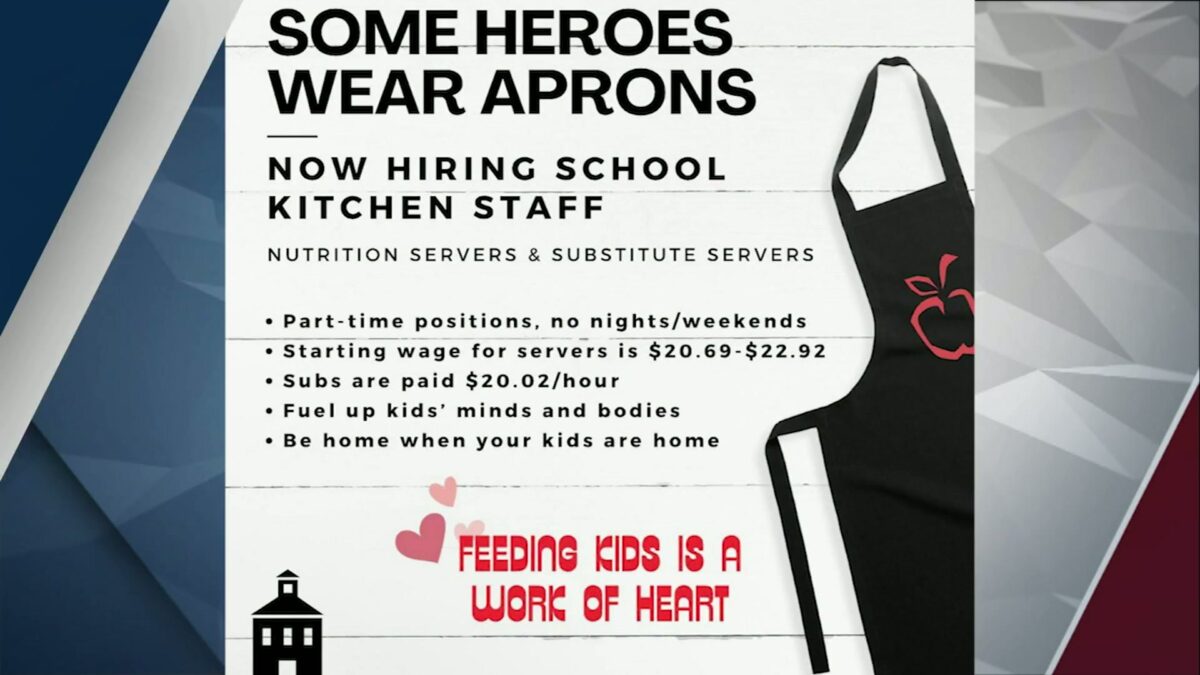
Bend La-Pine Schools seeks new nutrition servers and substitutes

Adrielle Hasara

Bend, ORE. (KTVZ) — Bend La-Pine Schools is seeking to hire nutrition servers and substitute servers for its nutrition team. Servers will earn between $22.99 and $26.69 per hour, while substitutes will earn $20 per hour.

Click here to follow the original article.

American Men Have Been In Crisis for Generations. A Remedy from 1879 Offers Hope.

By Ben Jealous

Click here for updates on this story

    August 24, 2026 (Houston Style Magazine) — I understood the depth of it first at a friend’s twenty-first birthday party in college. Somebody raised a glass to celebrate him. Then another raised his and, before it reached his shoulder, tipped it.

He poured libations for the ones who did not make it. Shot, or sent away, before the rest of us got to college. In a room of nothing but young Black and Latino men, we all joined in.

A Latino friend from childhood, hiding from his own gang the last time I saw him. My best friend, Black, locked up for taking sunglasses from a Goodwill. A Filipino buddy shot dead that summer over a drug deal, folks said.

Splash. Splash. Splash.

Then a friend lifted his glass and toasted the plain fact that one more of us had lived to twenty-one.

That cut me like a knife. In the richest country on earth we were congratulating a Black man for breathing past his birthday.

That grief runs deep in our community. But it floats on deeper American water.

Not long after, my mind raced through every young man I knew who was suffering or gone. Among them, White friends whose father killed himself when we were teenagers, after the plant let him go.

Last week I promised you numbers on the crisis facing our nation’s men. Here are a few.

Start with work. About seven million American men between twenty-five and fifty-four are neither working nor looking for a job. More than one in ten. Every recovery of the last fifty years has left that share higher.

Then violence, which wears two extreme faces. In 2023 Black men were murdered, usually by other Black men, at roughly eight times the rate of White men. Meanwhile White men killed themselves at nearly twice the rate of Black men.

Then prison. America locks up more of its people than almost any nation on earth. Here is what nobody says. Count White Americans alone and they are still locked up at several times the rate of Canada, Germany, or Japan.

This is a national problem, far bigger than any one community.

And yet we stay a house divided. Divide and conquer is the oldest game in America. The British brought it here to keep the king rich. The Revolution should have killed it. It did not, because it works just as well at helping the rich get richer.

Whenever working people have reason to stand together, somebody pits them against each other. Dr. King named it in Montgomery in 1965. Borrowing from historian C. Vann Woodward, he called segregation a strategy to keep the masses divided and labor cheap.

After that party I went to my grandmother’s house and laid the burden on her table.

Her grandfather was Edward David Bland, born enslaved in Virginia in 1848. He was sixteen when he walked out of slavery in the last days of the war, and he learned to make shoes.

Then he went into politics at the worst moment imaginable. Reconstruction was over, the troops sent home, the men who once ran the Confederacy taking it back with rifles.

He did the arithmetic anyway. Poor White farmers wanted the same free schools his people wanted. Together they were a majority. Apart they cancelled each other out.

So, he pushed for a deal with the unlikeliest partner in Virginia, a railroad magnate and former Confederate general named William Mahone. In 1879 Bland stood before his own people and made the case. He won them over.

They called themselves Readjusters, and they swept into power. In a few short years they abolished the whipping post, repealed the poll tax, and funded schools for every child. Virginia had 415 Black teachers in 1879. Soon it had 1,588.

Then, in Danville, on November 3, 1883, after a circular full of lies about Black rule swept the town, white gunmen killed at least five people, four of them Black. Three days later white supremacists took back the legislature. The oldest trick, right on time.

Still, they had governed four years, in the old capital of the Confederacy.

The men in trouble today are in trouble together. The White man in the hollowed-out mill town and the Black man on the South Side want the same thing. A better future for their children.

They are not each other’s problem. Nobody is coming to tell them so.

Bland did not wait for anyone. He did the math, organized, and made it real.

The old Readjuster arithmetic still works. Divided we cancel out our children’s dreams. Together our families are the majority that can make them real. Let’s get to work.

Ben Jealous is a professor of practice at the University of Pennsylvania and former president and CEO of the NAACP.

photo

Please note: This story was provided to CNN Wire by an affiliate and does not contain original CNN reporting. This content carries a strict local market embargo. If you share the same market as the contributor of this article, you may not use it on any platform.

Kierra Lee
KIELEESTYLE@GMAIL.COM
3465287733

Apple Event — September 2026 | What to Expect iPhone 18 Pro Release Date Has Already Crushed the Competition

By Francis Page Jr.

Click here for updates on this story

    August 24, 2026 (Houston Style Magazine) — Apple has mastered many things over the years — silicon, cameras, retail, ecosystem loyalty — but one of its least appreciated superpowers may simply be the calendar.

Apple’s expected September 2026 event is shaping up to prove that point again.

Industry reporting currently points to Wednesday, September 9, for Apple’s next major product showcase, although Apple had not formally confirmed the date as of August 23. If that timetable holds, the iPhone 18 Pro and iPhone 18 Pro Max should headline the event, with retail availability expected later in September.

And before Apple sells a single new phone, that timing is already making noise.

Apple Owns September — Almost Literally IFA Berlin, one of the world’s largest consumer-electronics gatherings, runs September 4–8, 2026. Then, potentially one day later, Apple takes the stage. For smartphone manufacturers fighting for attention at IFA, that is the technological equivalent of performing the opening act while the stadium is already chanting for the headliner.

The strategy also lets Apple arrive after many of its biggest premium competitors.

Samsung unveiled its Galaxy S26 series February 25, while Google introduced the Pixel 11 family August 12, putting Pixel 11 phones on store shelves August 20. Apple consequently enters the fall conversation after competitors have shown their hands — an enviable last-mover position in the premium market.

photo Apple 2026 iPhone 18 Pro Max Galaxy S26 Ultra

That does not mean Apple automatically wins every specification battle. It means Apple has built an extraordinarily powerful annual rhythm around September — manufacturing, shipping, software, carriers, marketing and holiday purchasing all moving toward roughly the same moment.

History backs up the pattern. In 2025, Apple announced the iPhone 17 on September 9, opened preorders September 12 and put devices in stores September 19.

iPhone 18 Pro — Evolution With Serious Muscle Rumors suggest the iPhone 18 Pro and Pro Max will retain much of the iPhone 17 Pro design while making meaningful changes underneath.

Reported upgrades include Apple’s 2-nanometer A20 Pro chip, a smaller Dynamic Island, improved battery efficiency, Apple’s next-generation C2 cellular modem and a possible variable-aperture main camera capable of giving photographers greater control over light and depth of field.

But the show-stealer may fold.

Apple is widely expected to introduce its first foldable iPhone, increasingly rumored to carry the iPhone Ultra name. Reports point toward a book-style device with an approximately 5.5-inch outer screen and 7.8-inch inner display. Pricing estimates have hovered around a decidedly “bring your good credit” $2,000-plus range.

photo Apple 2026 iPhone 18 Ultra Folding

Another major change: Apple reportedly plans to split the iPhone calendar, launching the premium Pro models and foldable this September while moving the standard iPhone 18, iPhone 18e and next iPhone Air into spring 2027.

Apple Watch — And Maybe a Smarter Home The more certain supporting cast includes the expected Apple Watch Series 12 and Apple Watch Ultra 4, with faster processors and incremental health and fitness improvements reportedly on tap.

A refreshed Apple TV 4K and HomePod mini are also reportedly nearing release. Apple’s long-rumored seven-inch smart-home command center — sometimes informally dubbed “HomePad” — remains more uncertain; the latest reporting suggests it could arrive between October and early 2027 rather than necessarily sharing the September stage.

Pricing could be the wild card. Apple raised prices across numerous Mac, iPad and home-product categories this summer amid higher memory and storage costs, fueling speculation that premium iPhones could be next. Nothing is official yet.

And Houston Has a Front-Row Seat For Houston, Apple’s 2026 story extends well beyond a new smartphone.

On August 13, Apple opened its new Advanced Manufacturing Center in Houston, located inside the same Houston facility producing and shipping advanced AI servers. Apple also plans to begin Mac mini manufacturing in Houston later this year, connecting the Bayou City directly to one of the world’s most influential technology ecosystems.

So when Apple’s September curtain finally rises, Houston Style Magazine will be watching more than another gadget launch.

We will be watching a company that helped redefine personal computing once again attempt to redefine the calendar, the premium smartphone market — and perhaps the very shape of the iPhone.

September 9 is not official yet.

But the competition already has it circled.

More information, go to: apple.com

Please note: This story was provided to CNN Wire by an affiliate and does not contain original CNN reporting. This content carries a strict local market embargo. If you share the same market as the contributor of this article, you may not use it on any platform.

Kierra Lee
KIELEESTYLE@GMAIL.COM
3465287733

Abbott Rallies Behind Paxton — But Talarico Has Turned Texas Into a Toss-Up

By Burt Levine

Click here for updates on this story

    August 24, 2026 (Houston Style Magazine) — HOUSTON — Texas Gov. Greg Abbott may be telling Republicans not to panic about Attorney General Ken Paxton’s increasingly competitive race for the U.S. Senate, but there is one inconvenient little detail staring both campaigns squarely in the face: James Talarico has made Texas competitive.

Appearing Sunday on ABC News’ This Week, Abbott confidently predicted that once Texans take a closer look at Democratic nominee Talarico, they will be “rushing to vote for Ken Paxton.” Abbott blamed Paxton’s sluggish general-election start partly on the costly Republican runoff against outgoing U.S. Sen. John Cornyn.

But if Democrats were nowhere close to winning Texas, Republicans probably would not need the governor of Texas spending national television time explaining why they eventually will.

That is the political plot twist of 2026.

Talarico, the 37-year-old state representative and former public-school teacher, has transformed himself from an ambitious young Texas Democrat into a nationally watched Senate contender. His campaign has leaned heavily into a kitchen-table argument: Texans are working hard, yet housing, groceries, health care and raising a family increasingly feel beyond reach.

And voters appear to be listening.

An August 9–10 Emerson College Polling/Nexstar survey of 1,000 likely Texas voters showed Paxton at 47% and Talarico at 46%, with the difference well inside the poll’s three-point credibility interval. Talarico held a commanding advantage among voters under 50, 53% to 38%, while Hispanic voters favored him by 19 points.

Another July poll from Texas Public Opinion Research had Talarico ahead 45% to 40%. Individual polls differ, but the unmistakable storyline is competitiveness.

Then came perhaps the biggest flashing political billboard yet.

On August 20, the respected Cook Political Report moved the Texas Senate race from “Lean Republican” to “Toss-Up,” citing public and private polling showing a race too competitive to continue treating Texas as reliably Republican.

That is no small accomplishment in a state where Democrats have not won a U.S. Senate election since 1988.

Talarico Is Talking — and Texans Are Hearing Him Money is helping him carry that message.

Federal filings show Talarico had raised approximately $68.6 million through June, dwarfing Paxton’s roughly $9.2 million. Even more striking is the television battlefield: according to AdImpact data reported by The Texas Tribune, Talarico has spent more than $25 million advertising since the general election began, while Paxton’s campaign had spent only about $119,000—a greater than 200-to-1 difference.

Texans have seen Talarico talking about grocery prices, faith, family and affordability. Hispanic Texans have also seen a Spanish-language campaign message designed to meet voters where they are—not simply during election season, but culturally and conversationally.

Republicans are responding. A Ted Cruz-aligned super PAC recently launched a $1.7 million advertising campaign supporting Paxton, including television placements in Houston, while President Donald Trump is scheduled to appear in Houston August 27 as Republican fundraising efforts intensify.

Translation: Texas is getting expensive because Texas is getting competitive.

Houston Could Help Write the Ending For Talarico, the road to history runs straight through Houston and Harris County.

His Pasadena outreach to Hispanic families, appeal to younger voters, emphasis on public education and working-class economics, and deliberate effort to court Republicans uneasy with Paxton form the outline of an ambitious coalition.

No Democrat can win Texas on enthusiasm alone. Talarico will need enormous turnout in Harris County, Dallas County, Bexar County and the state’s other urban centers—while improving Democratic performance in suburbs and persuading independents and some Republicans that this election should be about more than the letter beside a candidate’s name.

That is difficult.

But “difficult” and “impossible” are no longer synonyms in the 2026 Texas Senate race.

Abbott may be confident Paxton will ultimately prevail. Paxton’s supporters have every right to make their case. Talarico has the same opportunity.

And that is exactly how democracy is supposed to work. Texas voters—not governors, billionaires, political consultants or party establishments—get the final word.

When early voting begins Monday, October 19, followed by Election Day Tuesday, November 3, Texans will decide whether nearly four decades of Republican U.S. Senate victories continue—or whether James Talarico turns a summer toss-up into a November political earthquake.

For the first time in a long time, Texas Democrats have more than hope. They have a race.

photo

Here’s the official Texas Secretary of State online voter portal: Texas My Voter Portal — Check Registration

You can use it to check voter-registration status, find your VUID, and view voting/polling information.

Please note: This story was provided to CNN Wire by an affiliate and does not contain original CNN reporting. This content carries a strict local market embargo. If you share the same market as the contributor of this article, you may not use it on any platform.
Kierra Lee
KIELEESTYLE@GMAIL.COM
3465287733

Houston City College Celebrates Helen Callier and 10 Years of Permit Us Now Success

By Francis Page Jr.

Click here for updates on this story

    August 24, 2026 (Houston Style Magazine) — HOUSTON — Some business plans stay in binders. Others become businesses. And every once in a while, one grows into a company helping keep some of Texas’ biggest construction projects moving.

That is the entrepreneurial story of Helen Callier, President and Founder of Permit Us Now, who is celebrating 10 years of building a company that specializes in building permit management and regulatory approvals for commercial and government clients.

Callier’s journey has deep roots at Houston City College, where she participated in the HCC Business Plan Competition in 2016 after graduating from Cohort 9 of the Goldman Sachs 10,000 Small Businesses program. Already an entrepreneur through Bradlink, LLC, Callier entered the competition with another idea demanding her attention: build a strategic growth plan for a new company called Permit Us Now.

The objective, she has said, was bigger than winning prize money. She wanted the training, advising, accountability and structure necessary to turn an idea into an enterprise.

By summer 2016, Permit Us Now was open for business.

photo Helen Callier and Permit-Us-Now-2025 Sponsor Spotlight

Then came Houston’s Super Bowl moment.

Permit Us Now played a permitting role connected to Super Bowl LI, eventually earning recognition among small businesses highlighted in the commemorative NFL Super Bowl program and Texas Monthly. That visibility helped put the company on H-E-B’s radar, leading to work on H-E-B Curbside locations during 2017 and 2018 and a client relationship that has now stretched roughly a decade.

Not bad for something that began with a business plan. From Houston Startup to Texas-Sized Projects Today, Permit Us Now’s résumé reads increasingly like a roll call of major Texas institutions.

Through spring 2026, the company reported continued permitting work for H-E-B projects throughout Texas, United Airlines operations and concession projects at George Bush Intercontinental Airport, and projects for BRIZO Construction across Greater Houston, San Antonio and Florida.

Permit Us Now is also providing permitting and regulatory-agency coordination for the $2.1 billion-plus Harris Health John M. O’Quinn Hospital expansion, encompassing its central utility plant, parking garage and heliport. The company continues work associated with the $2.44 billion Austin ISD 2022 Bond Program as well.

And Callier has not forgotten the institution that helped sharpen the blueprint.

Since 2023, Permit Us Now has permitted more than 20 Houston City College System bond projects, with projects continuing during 2026. The company is also expanding staff and using an AI platform to address opportunities across Houston, Austin, San Antonio and North Texas. Coming Back to Lift the Next Entrepreneur Perhaps the most Houston part of Callier’s story is that success did not lead her away from HCC — it brought her back.

Since 2017, Callier has repeatedly supported the HCC Business Plan Competition Alumni Circle, serving as a sponsor, speaker, judge, advocate and ambassador, while raising her support in recent years to the Bronze level.

That matters because HCC’s entrepreneurial mission extends well beyond classroom theory. Houston City College says its entrepreneurial initiatives are designed to strengthen the local economy, create jobs and help grow small businesses, including minority-, micro-, veteran-, LGBT- and women-owned enterprises. Its current Business Plan Competition provides entrepreneurs with training, one-on-one advising and opportunities for seed funding.

Callier now marks 20 years with Bradlink, LLC and 10 years with Permit Us Now — proof that entrepreneurial success is rarely an overnight story. It is more often a collection of early mornings, late-night decisions, relationships, calculated risks and the occasional permit that simply refuses to cooperate.

photo Helen Callier and Permit-Us-Now employees

For Houston’s next generation of entrepreneurs, Callier’s journey offers a powerful lesson: the business plan is not the finish line. It is the blueprint.

And Helen Callier is still building.

Learn more: PermitUsNow.com Houston City College Business Plan Competition: HCC Business Plan Competition

Please note: This story was provided to CNN Wire by an affiliate and does not contain original CNN reporting. This content carries a strict local market embargo. If you share the same market as the contributor of this article, you may not use it on any platform.

Kierra Lee
KIELEESTYLE@GMAIL.COM
3465287733

Partial lunar eclipse will peak Thursday night

Dakota Makinen

COACHELLA VALLEY, Calif. (KESQ) – Skywatchers have a reason to look up Thursday night as a partial lunar eclipse will be visible across the Coachella Valley.

The eclipse will peak around 9:12 p.m. Thursday, Aug. 27, with the moon visible toward the east and southeast. During a partial lunar eclipse, Earth’s shadow covers only part of the moon.

The event is also drawing attention from astrologers, who view lunar eclipses as periods of change and reflection.

For the best view Thursday night, find a spot with a clear view of the eastern and southeastern sky.

Stay with News Channel 3 for the latest updates.

Click here to follow the original article.

Jet skier speaks out on dramatic rescue after 16 hours at sea: ‘I knew my time was up’

By Jericho Tran

Click here for updates on this story

    LONG BEACH, California (KABC) — A Long Beach man who was knocked off a rented jet ski spent about 16 hours stranded at sea before the U.S. Coast Guard rescued him near Seal Beach earlier this week.

Paul Carbullido Jr. said he began to fear he would not survive as he waited overnight for rescuers to find him.

“I was telling myself, ‘What’s the best way to die? Should I just drown? Should I just bite myself? Bleed? Let something eat me?’ I was really nervous. I was really scared,” Carbullido said.

Carbullido and a co-worker headed onto the water around 7:20 p.m. Sunday using jet skis rented from a company they identified as Air-B-N-Ski. About 10 minutes later, a wave knocked Carbullido into the water.

His co-worker attempted to pull him onto her jet ski before jumping into the water to help him.

“She jumped off her jet ski. Her jet ski, I remember, it was just going. And then she came to where I was at, and she was like, ‘Come on!’ And I was trying to tell her, ‘I need to catch my breath. I need to catch my breath.’ Because I didn’t even know what hit me,” Carbullido said.

After realizing Carbullido was too dazed to move, his co-worker swam for about an hour to reach shore and seek help.

Rescue teams began searching for Carbullido around 10:30 p.m., about three hours after he fell into the water. He remained at sea through the night.

“There was so many thoughts that was going through my mind. I was out there, I was just looking around. I was hearing noises, everything else. I was calling for help, praying to God. Just doing everything, you know? I didn’t want to give up, because I would keep getting splashed. I was like, ‘Where are these waves coming from?'” he said.

Carbullido said he eventually felt like he didn’t have much time left.

“I probably had just a little bit of time left, you know? Because I knew my time was up. I was like, ‘I can’t do this no more.’ I gave all I could gave,” he said.

The U.S. Coast Guard located Carbullido around 11 a.m. Monday, about 16 hours after he first entered the water. He said he was found about three miles from where the wave knocked him off the jet ski.

“I remember seeing it. It was right above me, and I was just jumping up. ‘Help! Help! Help!’ You know? And they circled down, I saw them doing the eye contact. They threw everything down. They pulled me up, and it was just relief,” Carbullido said. ” And he was just looking at me, and he said, ‘People don’t survive this.'”

Luke Singer, an aviation survival technician with the USCG, said rescuers were surprised to locate Carbullido alive in the water.

“We’re not used to finding a person in the water too consistently, so that was a big surprise when we found him in the water,” Singer said.

Carbullido was diagnosed with pneumonia and a low white blood cell count because of the amount of saltwater he swallowed.

California requires riders to have a boater card to operate a jet ski. Carbullido said Air-B-N-Ski did not ask him for a boater card or provide basic training.

The company insisted during a phone conversation with Eyewitness News that it offered training. It declined to comment further.

The two rented jet skis were later recovered.

Carbullido said the rescue has given him a renewed sense of purpose.

“I got a purpose in life, you know? I’m going to find out. Tomorrow I plan on going to church. I’m going to see where it takes me from there. I got a purpose in this life,” he said.

Please note: This story was provided to CNN Wire by an affiliate and does not contain original CNN reporting. This content carries a strict local market embargo. If you share the same market as the contributor of this article, you may not use it on any platform.

Nearly 200 women unite for mega challah bake ahead of Rosh Hashana

By Gracie Palmer

Click here for updates on this story

    ASHEVILLE, North Carolina (WLOS) — Nearly 200 women from across western North Carolina gathered Sunday at the Country Club of Asheville for a community-wide mega challah bake.

The event, hosted by the Asheville Jewish Women’s Circle, gave attendees of all skill levels a chance to learn how to make challah — the traditional Jewish bread — ahead of Rosh Hashana, the Jewish New Year, which begins in September.

Organizers said the gathering also celebrated 20 years of the Jewish Women’s Circle.

“It is our largest women’s event,” said Chana Susskind, director of women and children’s programs for Chabad Asheville.

For some attendees, it was their first time making challah. Natalie Shaw said the event was about much more than getting the bread exactly right.

“Don’t worry if your challah isn’t perfect,” Shaw said. “It’s about friends and people being together and bringing in light.”

Susskind said the goal was to create a welcoming space where everyone feels included.

“We just want to make sure that no one feels alone,” Susskind said. “No one feels on the outside — everyone’s on the inside.”

This was the Jewish Women’s Circle’s second mega challah bake. Susskind said she hopes attendees leave with hope for the new year, new friendships and, of course, a fresh loaf of challah.

Please note: This story was provided to CNN Wire by an affiliate and does not contain original CNN reporting. This content carries a strict local market embargo. If you share the same market as the contributor of this article, you may not use it on any platform.

Students at Pikes Peak State College using new smartphone app to make finding classrooms easier

Scott Harrison

COLORADO SPRINGS, Colo. (KRDO) — A new student adjusting to life on a college campus has plenty of responsibilities, such as registering for classes, buying books, and checking on financial aid.

But the first day of the new semester may be the most hectic, as those new students try to find their classes — and with many speaking English as a second language.

Those thoughts ran through the mind of Moises Hinojosa, the director of accessibility services at Pikes Peak State College (PPSC) and its four campuses, with a total enrollment of 12,000.

It led him to attend a technology conference last fall, hoping to find ideas to improve students’ ability to navigate indoors.

Hinojosa said he watched a presentation about an indoor GPS app that helps people find gates at major airports and exhibit halls at museums.

He wondered if that same technology could be applied to indoor spaces on college campuses.

The result is GoodMaps, an indoor GPS app available for the start of the fall semester at PPSC last week.

Hinojosa said that the app releases usage data weekly, so we won’t know until sometime this week how many students are using it.

According to a PPSC release: The free GoodMaps app uses camera-based technology to identify a person’s location and provide precise directions through complex indoor spaces. Users can receive audio and visual guidance, select step-free routes, and navigate the platform in more than 25 languages.

It’s unknown how many campuses use GoodMaps, but one user is Michigan State University, with more than 51,000 students.

Click here to follow the original article.