Fire restrictions remain in effect on Oregon and Washington BLM public lands

Kelsey Merison

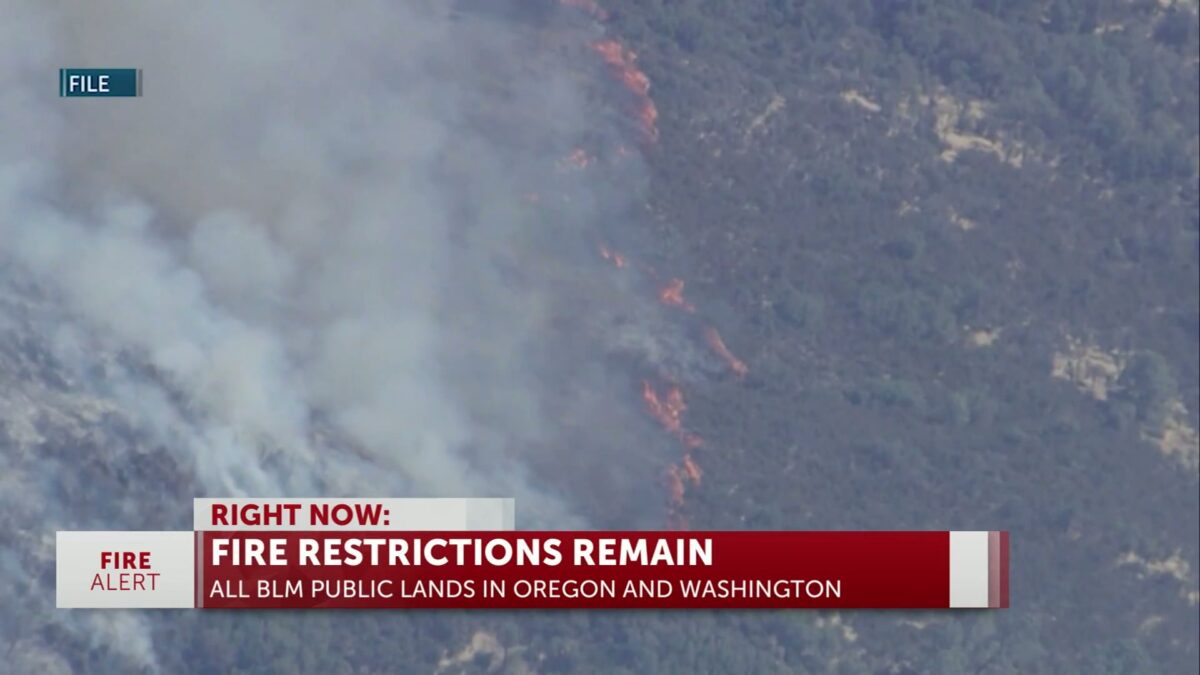
OREGON (KTVZ) — Fire restrictions remain in effect on all BLM public lands in Oregon and Washington as the Pacific Northwest faces a record-setting wildfire season.

More than 2.5 million acres have already burned across the Northwest.

BLM officials are urging hikers, hunters, and other recreators to use extreme caution and follow all fire restrictions and closures.

Officials say anyone heading to public lands should check local restrictions before they go.

Click here to follow the original article.

Trump’s plan to import cheaper foreign beef draws pushback from experts, Missouri cattle producers

Mitchell Kaminski

COLUMBIA, Mo. (KMIZ) 

President Donald Trump’s plan to bring more foreign beef into the U.S. market is intended to help lower prices for consumers, but Missouri cattle producers and agricultural economists question how much shoppers will actually save,  and whether the move could hurt the domestic cattle industry in the long run.

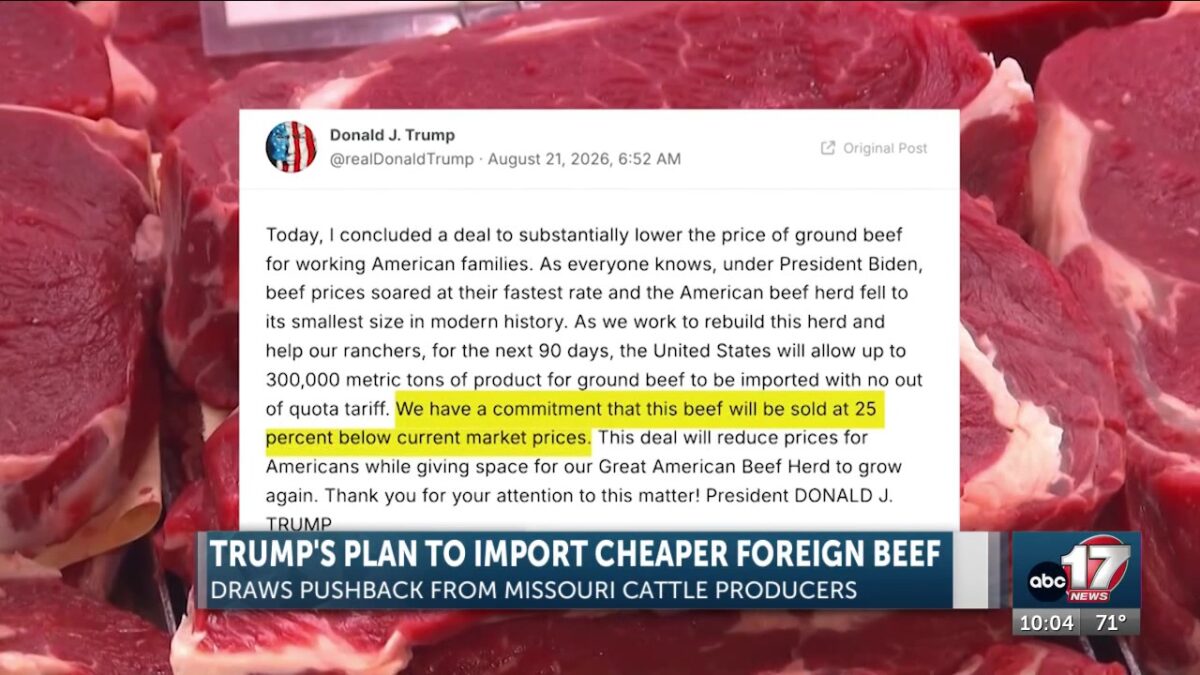
Trump said the United States will allow up to 300,000 metric tons of ground beef to be imported over the next three months without being subject to out-of-quota tariffs.

He also said the beef would be sold at 25% below current market prices, although the administration has not specified which companies made that commitment or which foreign exporters are involved.

The move comes as Americans continue to face historically high beef prices. The nation’s cattle herd has fallen to its lowest level since the 1950s following years of drought, high feed and input costs, and herd liquidation.

A May report from the American Farm Bureau Federation noted imports entering under quota generally face a tariff of 4.4 cents per kilogram, while imports above quota face a 26.4% tariff. According to the report, for beef valued at about $7 per kilogram, the difference can amount to more than $1.80 per kilogram in tariff costs.

The Trump administration’s decision would temporarily eliminate those higher out-of-quota tariffs for the additional imports.

But Wesley Tucker, a University of Missouri field specialist in agricultural business, said the high price of beef is largely the result of a supply-and-demand imbalance. Years of drought and low profitability discouraged cattle producers from expanding their herds at the same time consumers continued to demand beef.

“As a nation, we are still suffering from drought and that is still holding back cattle numbers. That is having a major impact across the country, although not as big an impact in Missouri lately this year.” Tucker said. “It really is a perfect storm of low supply and an increased high demand at the same time. So the reality is, yes, the drought and low profitability for a number of years created a situation where there was no incentive for cattle producers to expand and to grow their herds, and because of the drought they were having to reduce their numbers.”

That demand has remained strong despite higher prices, Tucker said, with consumers often choosing ground beef over other meat options such as pork and chicken.

“One of the big reasons beef is too high is because the consumer has chosen to demand it. The question I like to ask is ‘Is beef too high if that’s what the consumer says they want?’ Just look at how much cheap pork and cheap chicken is available at the grocery store shelf whenever you go to buy food for the weekend,” Tucker said. “The reality is the consumer is saying, I may not be able to afford that steak, but I can instead of choosing an alternative meat source that’s just pork or chicken, I’m going to choose hamburger instead of steak.”

The National Cattlemen’s Beef Association, Missouri Cattlemen’s Association and Missouri Farm Bureau have all voiced frustration with the Trump administration’s decision, with Missouri Farm Bureau president Garrett Hawkins writing in a statement:

“This proposal does not solve the underlying causes of high food prices and unfairly places the blame on American farmers and ranchers. We strongly urge the Administration to reverse this decision and support American cattle producers.”

What does it mean for shoppers?

Gbenga Ajilore, chief economist for the Center on Budget and Policy Priorities and a former senior adviser in the Office of the Undersecretary for Rural Development at the USDA, said the administration’s strategy is essentially a short-term attempt to increase supply and bring down grocery costs.

But he said it does not address the underlying shortage of cattle.

“One of the things about these quick fixes in short term to try to lower prices, it never solves the fundamental problem,” Ajilore said. “We already know that with cattle farmers, they’re already struggling with drought. They’re struggling with higher costs. We’ve have increased costs of fertilizer because of the war in Iran. We’ve had tariffs that’s impacted their input costs. And generally, this is going to have a harsh impact on them without solving the problem of lower supply. So it’s just going to make it even a bigger struggle for these cattle farmers.”

For consumers hoping the additional imports will translate into significantly cheaper steaks and roasts, Tucker said there is an important distinction.

Most of the imported beef is expected to be lean, grinding beef used for hamburgers and food service rather than the higher-quality cuts shoppers typically purchase as steaks and roasts.

“Realize this beef that we’re talking about importing from these countries is grinding beef. It’s the lean, grinding beef that ends up in your food service long term. It’s not like it’s coming in as a packaged product ready to go in the grocery store. So we’re talking about huge chunks of processed beef that’s going to come in, go to the packer to be cut up and worked on, and then eventually make it to your fast food stations and a little bit of it into your grocery stores,” Tucker said.

Even if importers pay less for the beef, Tucker questioned whether those savings will necessarily make their way to consumers.

“That beef may have been going to come into the country at a higher tariff anyway and so it comes in at a cheaper price,” Tucker said. “What is the middleman’s incentive to pass that price through to the consumer? Do you really think just because that supplier of McDonald’s gets a little bit of cheaper product, that they’re going to lower the price of a Big Mac suddenly?”

Ajilore added the additional imports would represent only a small portion of the overall beef market.

“It will have an impact, but it’s just going to be so small,” Ajilore said. “So, for example, they’re importing 300,000 metric tons of ground beef, and that’s about 2% of the total market. And so if it does have an impact, we’re looking at maybe a quarter, maybe $0.35 lower.”

Ajilore believes consumers should be skeptical of expectations for a dramatic drop in grocery prices.

“When it comes to lowering prices, it’s a really complicated process and there are no quick fixes. And if any politician is promising a quick fix, then you have to be wary of that.”

Missouri cattle producers push back

Missouri ranks among the nation’s leading beef-producing states, and the cattle industry has been one of the brighter spots in the state’s agricultural economy in recent years.

Mike Deering, executive vice president of the Missouri Cattlemen’s Association, said producers have benefited from strong cattle prices, but those profits come after years of rising costs.

“The last couple of years, in terms of the cattle market has really been the bright spot of the ag industry as a whole in Missouri. Our crop friends and others are not doing as hot, but we’ve been doing pretty well in the cattle industry,” Deering told ABC 17 News.  “As far as the input cost, those are still through the roof and high and so it’s not it’s profitable, better than it has been, but it’s still not as glamorous as some people try to make it.”

Deering also pushed back on the idea that consumers are demanding relief from beef prices, pointing to continued strong demand.

“We have a historic consumer demand right now. So as these prices that you watch tick up, you’ve seen the demand follow that, which is unusual. But the consumer demand is going up, up, up. Consumers are sending a signal to cattle producers that the product isn’t too high and when it does get too high, they let us know,” Deering said. “I don’t really buy into beef prices are too high. We’re not hearing an outrage on that from consumers at all. And when you look at beef and you look at agriculture, we’re not crude oil. So when people go to the grocery store, they have choices.”

The Missouri Cattlemen’s Association has argued that bringing in more foreign beef at a discounted price could discourage producers from rebuilding the nation’s cattle herd.

Deering said he believes the problem is not necessarily the imports themselves, but the government’s decision to manipulate the market by offering them at a lower price.

“It really overshadows a lot of the great things that this administration has done for the cattle industry in terms of tax relief and other tax exemptions. And the list goes on and on. They’ve done a lot of good things and so this kind of overshadows some of that to some degree because it’s totally unnecessary,” Deering said. “It’s not necessary the imports that cause us all the heartburn it’s the market manipulation. When you are buying this product at 25% under market price and you’re undercutting the American producer, that’s where we have a problem.”

Deering believes the solution is to allow cattle prices to respond to supply and demand without government intervention.

“Let the markets work and stop the government interference. I don’t care if it’s Kleenex or beef, get the government out of it,” Deering said. 

Tucker echoed that argument, saying lower prices now could actually make it less attractive for cattle producers to make the long-term investment needed to rebuild the herd.

“It’s actually creating the opposite effect, and it’s dis-incentivizing producers to make the long term investment investment and expanding the herd,” Tucker said. “So the likelihood that they’re going to grow the herd now is less than it was before this happened. It’s probably not going to lower the price that consumers are paying all that much, but it’s actually possibly going to make the situation worse.”

Tucker said allowing the market to work could eventually lead to lower prices as producers respond to higher cattle prices by expanding their herds.

“The cure for high prices is high prices. The best way to keep the best way to lower beef prices is to let the market work,” Tucker said. “When the prices were high, it was creating an incentive for them [cattle farmers] to grow and expand. If you let the market work, in a few years they will expand and increase the herd and prices will come down. But when the government gets involved and tries to manipulate it, rarely does it have the effect that they want.”

According to Deering, Missouri cattle producers are now left to adjust to a decision they had no control over.

“What is done is done but if our government officials, if our elected leaders would stop doing that and manipulating with the market, interfering with the marketplace, that would be very helpful. I’ve been grateful for our congressional delegation, for the most part, speaking up and saying, hey, this isn’t right. So standing against this decision has hopefully will get will get the attention it deserves,” Deering said. 

The debate also comes as farmers face pressure from other directions, including higher input costs and trade tensions with Canada. Ajilore said Missouri producers could face additional pressure if retaliatory tariffs reduce demand for American agricultural exports.

“Missouri, one of the biggest export markets is Canada. For Kansas, it’s the second-biggest one. And now your going to have lower export demand,” Ajilore said. “You already have higher-rising costs because of tariffs, because of the war in Iran. And so, farmers just continue to struggle. And we’ve seen this in the data to the number of bankruptcies.”

In 2025 alone, Chapter 12 farm bankruptcies surged 46%, with Ajilore predicting those numbers could get even worse this year. 

For consumers, Tucker said the administration’s promise of a 25% reduction is unlikely to materialize at the grocery store.

“I think the likelihood of that 25% price reduction is very, very minimal. But I think the other thing the other story that I think keeps getting overlooked, is President Trump has chosen to have to focus on the price of beef because he says the price of beef is too high,” Tucker said. “Well, there’s lots of other products that you can look at. Look at the price of a bag of potato chips or the price of a bag and get a gallon of gasoline. There are lots of things that are too high today. Why he has chosen beef to be the target? I do not know.”

Click here to follow the original article.

Cherry Fire grows to 291 acres near Salmon

Curtis Jackson

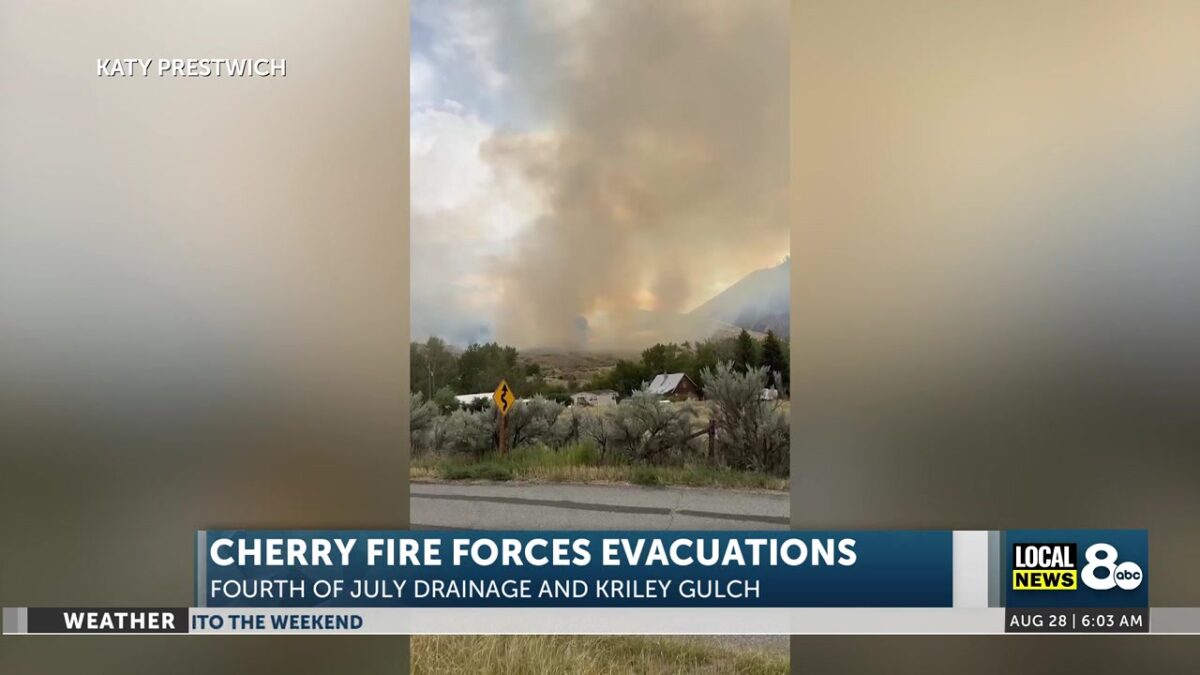
UPDATE 8/28/2026 10 AMSALMON, Idaho (KIFI) – The GO evacuation status remains for Fourth of July drainage and Kriley Gulch area, 14 miles north of Salmon Friday morning.

The fire is estimated to be 291 acres.

The Lemhi County Emergency Management said the evacuation order will be evaluated later today.

ORIGINAL STORY:

SALMON, Idaho (KIFI)— The Lemhi County Emergency Management is telling people in the Fourth of July drainage and Kriley Gulch to evacuate because of a wildfire.

Sheriff deputies are currently making notifications in the affected areas. They do not wait for an officer to reach your property.

The Cherry Fire was first spotted around 2:45 Thursday afternoon along US 93 between Salmon and North Fork.

The latest fire acreage was 40 acres.

This is a developing story and will be updated when more information is available.

Click here to follow the original article.
Over 200 Melaleuca volunteers clean up Idaho Falls Greenbelt

Dylan Carder

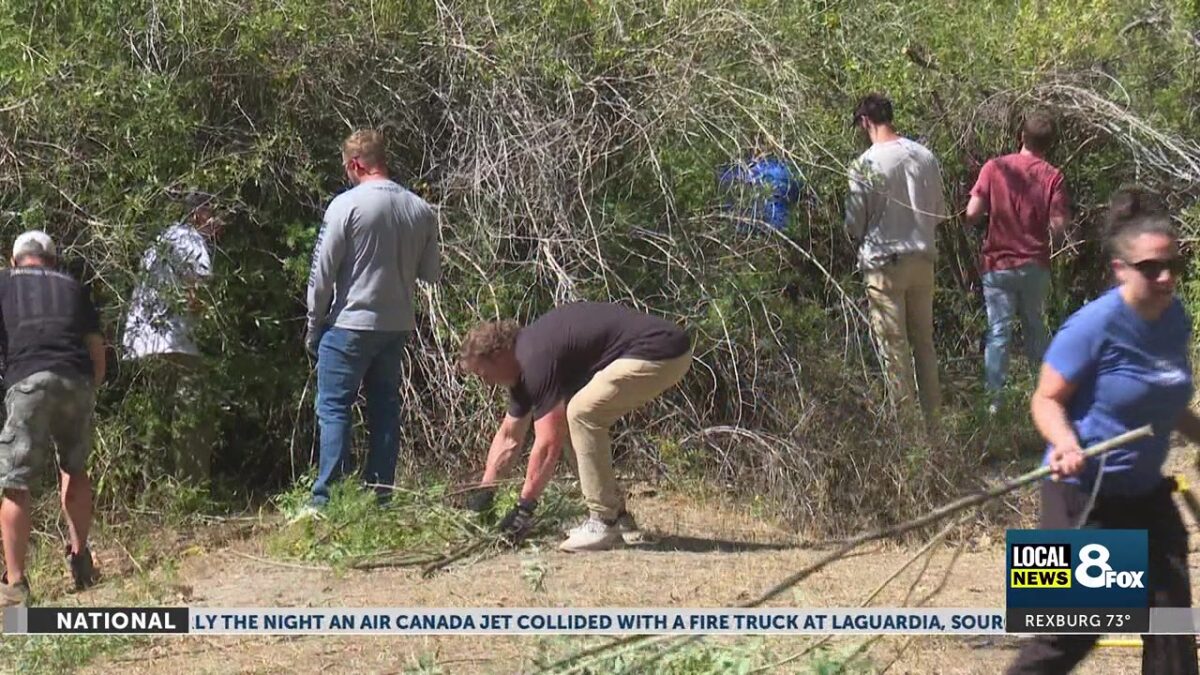
IDAHO FALLS, Idaho (KIFI)- More than 200 volunteers from Melaleuca partnered with the City of Idaho Falls Parks and Recreation Department on Thursday for the fourth annual cleanup project along the Idaho Falls greenbelt. Volunteers cleared trash, overgrown brush and invasive trees along the Riverwalk to improve community safety and restore riverfront sightlines.

The single-day effort is expected to remove approximately 300 yards of debris from the banks of the river at Freeman Park and surrounding areas. The large volunteer force allows the city to complete major maintenance tasks along the Riverwalk that would otherwise require weeks of labor from municipal park crews.

PJ Holm, Idaho Falls Parks and Recreation director, emphasized the community impact that the volunteer workforce provides to city operations. The parks department typically maintains a staff of about 35 full-time employees and roughly 100 seasonal workers, with daily work crews usually consisting of five to eight people.

“It’s just amazing to be able to see so many people come out from their organization and give back to the community, give back to, the, Riverwalk here in Freeman Park,” Holm said. He noted the efficiency of having more than 200 volunteers working simultaneously, adding, “You know, 20 days worth of work these guys can get done in, in one afternoon.”

The annual initiative originated through direct outreach between company leadership and municipal staff. “Melaleuca reached out to the city a handful of years ago and just said, hey, we want to we want to put together something that can be a team building effort, for their organization and, working with them and and then working with our, our volunteer coordinator,” Holm said.

Jamie Reynolds, chief human resource officer at Melaleuca, explained that the company opens participation to all team members across the organization, adjusting shift schedules and workloads so interested employees can join.

“Our mission is to enhance lives. And we see this as one of many ways that we can give back to our community and enhance lives. The greenbelt here, the Riverwalk is a gem and it is treasure to our families here,” Reynolds said.

Reynolds noted that participation has grown as staff members share their experiences. “The great thing about it is our team members are really excited to be part of it. And so how we do it is we give the opportunity to all of our team members. So we send out an email communication and all of our supervisors make sure that every single team member has the opportunity to receive the communication,” Reynolds said.

“One of the things that I love is the growth in those who are participating. Right. So we may have had some at first who are a little timid to try and come out and do something a little bit different, but then the team members come back and they hear the stories and they want to be part of it.”

McKay Shippen, a Melaleuca employee, reflected on the physical nature of the project and the shared effort among co-workers along the riverbanks. “It’s fun to get out. It’s a change of pace from, you know, our everyday work. But it’s fun to be in the community and help, you know, clear up trash and and take the twigs and make it beautiful,” Shippen said.

“I mean, there’s a lot of us, so it’s kind of fun to see how quickly we can make a big impact. And that’s evident. I mean, we’ve got huge piles. There’s tons of work that gets done, but it’s pretty fun to see how well we work together, especially as a big group.”

Click here to follow the original article.

2 Mexican nationals plead guilty to human smuggling, supporting designated terrorist organization

Heriberto Perez Lara

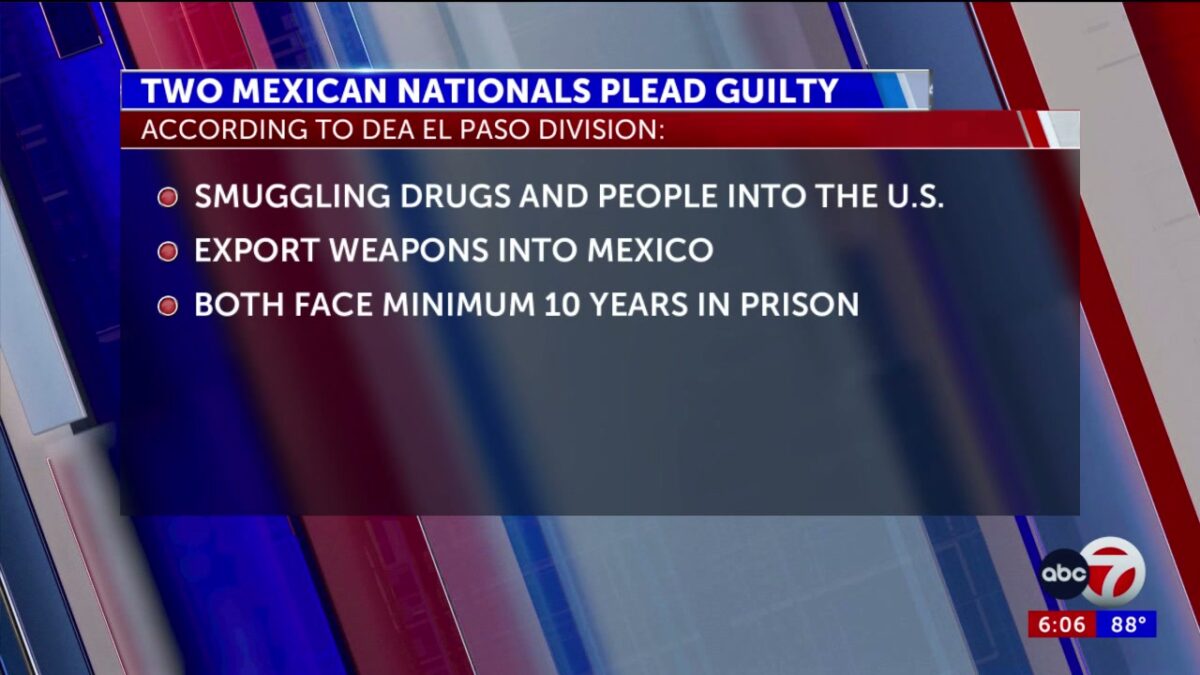
EL PASO, Texas (KVIA) — Thursday, two Mexican Nationals pleaded guilty in federal court to human smuggling and supporting the Jalisco New Generation Cartel in Mexico.

The Trump Administration designated the cartel as a foreign terrorist organization, the Drug Enforcement Administration El Paso Field Division said.

The DEA said Maria Del Rosario Navarro-Sanchez and Gustavo Castro-Medina pleaded guilty to federal charges, including drug trafficking and supporting a Mexican criminal group.

According to the Justice Department’s Criminal Division, the two smuggled methamphetamine and people into the U.S. in exchange for money. They also made money by conspiring to export AK-47-style weapons and rifles to Mexico for the cartel.

Navarro-Sanchez also had stash houses in El Paso, where she would warehouse firearms and narcotics, the DEA said.

Both participated in smuggling methamphetamine and people into the U.S., the DEA said. They also attempted to export high-powered weapons to Mexico in exchange for money, including rifles and AK-47-style weapons.

In April 2025, the pair and their co-conspirators were indicted. The DEA said the Mexican government transferred the two to the U.S. following national security law.

Navarro-Sanchez and Castro-Medina face a mandatory minimum of 10 years in prison. A sentencing date hasn’t been set.

Click here to follow the original article.
El Centro seeks $10 million for new emergency hub and upgraded fire station

Lynette Niebla

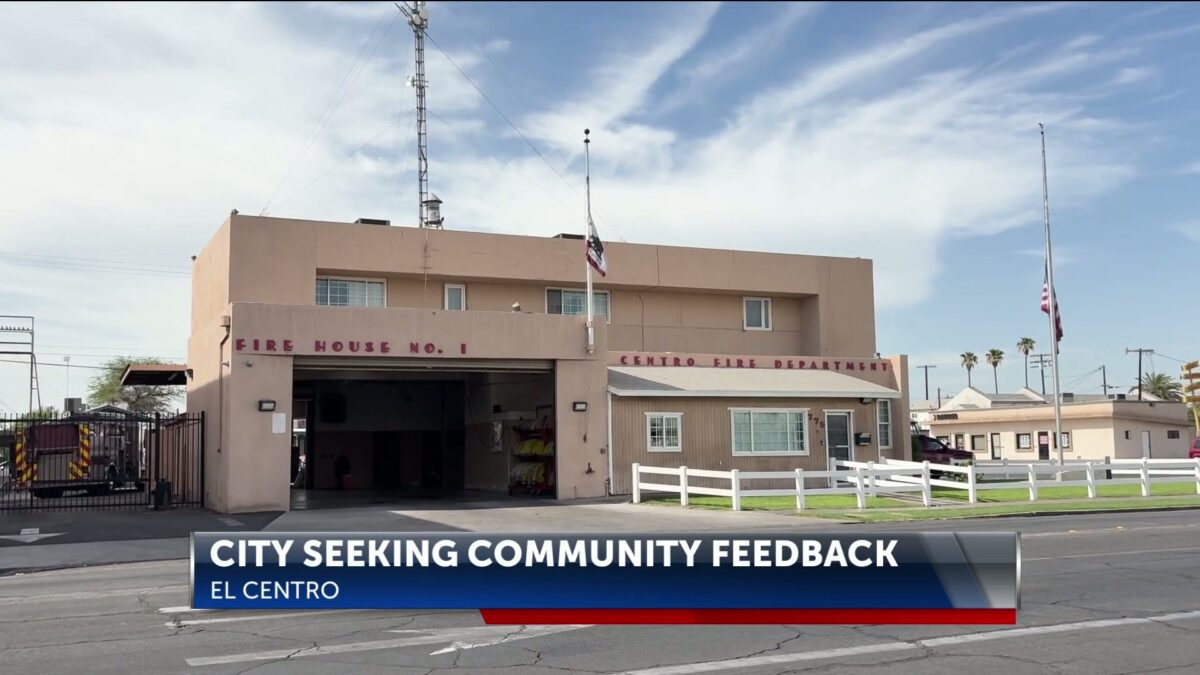
EL CENTRO, Calif. (KYMA) – The City of El Centro is mapping out a massive upgrade to its local emergency response network, but city leaders say they cannot secure the funding without direct input from local residents.

The city is actively seeking a $10 million grant through the California Strategic Growth Council’s Community Resilience Centers Implementation Grant Program.

If approved, the funding will build a brand-new, multi-purpose Community Resilience Campus near the southeast corner of State and Sixth streets.

The proposed blueprints feature a state-of-the-art emergency shelter system paired with a desperately needed replacement for El Centro’s busiest, most outdated fire station.

The current Fire Station One has protected the heart of El Centro for nearly eight decades. Built in the late 1940s, the facility handles 60% of the entire city’s emergency calls, managing nearly 5,500 annual responses.

Despite that massive workload, severe space limitations restrict the location to housing just a single fire engine.

“What the station does not allow for is the space, quite frankly,” said El Centro Fire Department Battalion Chief Eddie Ainza. “We don’t have the space here for the crew members, nor the apparatus or the machinery to operate with the demands for this portion of the city.”

Analytics indicate the busy district actually requires two active fire engines to maintain optimal response times. However, adding personnel or mechanics is structurally impossible in the current facility.

“Typically, we will have five persons running out of the station. Unfortunately, that quite doesn’t meet the demand,” Ainza explained. “This facility would be a huge upgrade…It allows our personnel to reside in a location and a building that is more suitable in 2026 for first responders to respond out of, but also still remain in the same response area.”

Beyond housing first responders, the proposed campus is designed as a direct community refuge hub during environmental emergencies.

The Imperial Valley has seen a steep rise in volatile weather, ranging from dangerous summer heatwaves to sudden blackout-inducing storms.

Right now, El Centro’s only designated cooling center is located entirely across town at the Imperial Valley Mall.

“This will put it central to the city, adjacent to the fire department. Quite frankly, there’s nowhere for people to escape the heat on this side of the city,” Chief Ainza said.

El Centro Community Services Director Adriana Nava noted that the state is shifting its funding models toward persistent, long-term disaster readiness due to changing climate threats.

“I think as we’ve had more wildfires and earthquakes, California is preparing itself now for natural disasters for the long run,” Nava said. “Before, it was an occurrence that would occur once or twice a year, but now we’re seeing that throughout the year we’re having multiple disasters.”

When completed, the multi-purpose resilience facility will provide a central location for several key community services:

Emergency shelter and immediate evacuation spaces.

Central cooling center operations during severe summer heatwaves.

Filtered, clean-air refuge during heavy dust storms and regional wildfire events.

Dedicated backup electricity generators and emergency communications equipment.

Distribution sites for emergency supplies, medical gear refrigeration, and clean food and water distribution.

Year-round neighborhood resources, including job training, health programs, and community meeting rooms.

“It would be a combo of assisting our most vulnerable population and incorporating workforce development aspects to it,” Nava added. “We’ve had a lot of inclement weather where it’s been really hot or we’ve had storms. So when people are displaced and have nowhere to go, this place would be able to help them.”

The state grant process relies heavily on proof of robust civic engagement. To win the competitive $10 million allocation, city officials need local residents to log on and rank their neighborhood’s highest safety priorities.

“For us, it’s important that we reach all members of the community and their voices are represented through a survey,” Nava emphasized. “That’s the only way we can get community feedback…as a community being an active participant and telling us what their needs are.”

The official community feedback survey is live now and available in both English and Spanish. Residents can choose their preferred language from the drop-down menu before submitting their rankings.

The submission portal will remain open until 5 p.m. on Wednesday, September 9. Local community members can access the official submission questionnaire online right now by visiting the secure portal.

Click here to follow the original article.

Yuma County Republican Party to host VIP dinner

Moses Femino

YUMA, Ariz. (KYMA) – The Yuma County Republican Party is hosting a VIP dinner event, bringing together local Republicans and several candidates ahead of the November election.

The event is on Monday, September 7, at the Elks Lodge in Yuma from 6 p.m. to 8 p.m. Scott Jennings, a senior political commentator for CNN, will serve as the keynote speaker.

Several Arizona Republican candidates are also expected to speak, including Rep. Andy Biggs and former State Sen. Sine Kerr, who are running for governor and lieutenant governor.

“The goal is to bring unity after the primary within the party. We usually don’t do a fall event, so this is not a fundraiser. This is just an event to bring everybody together,” said Tanya Wright with the Yuma County Republican Party.

The event will be business casual, and tickets are available through Monday, August 31. For more information and a full list of speakers, click here.

To watch the livestream of the story, see attached video.

Click here to follow the original article.
Nonprofit speaks on creating ‘culture change’ inside maximum security prisons

Demetra Alarcon

JEFFERSON CITY, Mo. (KMIZ)

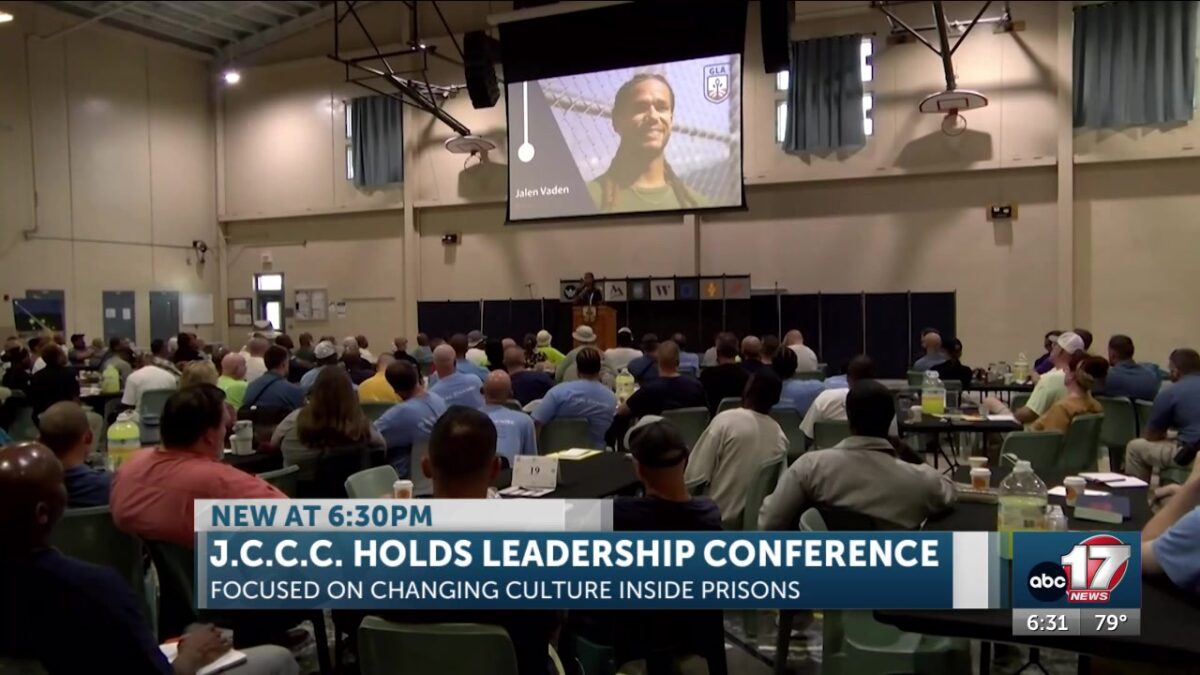
Second Mountain held a two-day leadership conference highlighting culture change inside maximum security prisons at Jefferson City Correctional Center.

Second Mountain is a nonprofit based out of Kansas City that focuses on creating culture change inside of prisons.

The prison leadership conference on Aug. 26 and Aug. 27 was an invitation-only event that brought together approximately 100 leaders from outside the faculty alongside 100 residents and staff members of JCCC to show firsthand the culture change happening inside the prison.

Bo Cornelius, executive director of Second Mountain, started the program with his wife after his release from prison three years ago. Cornelius said that programs don’t help people, but that people help people.

“Programs don’t help people. People help people. There are a lot of people in prison with real lived experiences. And through sharing their real lived experiences, I can get better,” Cornelius said.

Justin Davidson, chief of custody at the prison, said events like these can help change the culture inside of prison for the better.

“It involves where staff and residents come together and understand that there doesn’t have to be a negative always. That allows them both to realize that they’re humans, ” Davidson said.

James Dunn, a resident at the correctional center, said during the past few years, with more programs, the prison has become more of a community.

“Staff and offenders, more human, human contact. They still do their job. We still live our lives. You know, they work here. We live here. But it doesn’t have to be, animosity about the situation, ” Dunn said.

Inside the correctional center, residents can work towards change. The honors dorms bring together residents who have chosen to pursue growth and success.

Click here to follow the original article.

‘Gathering of the Juggalos’ weed supplier remains jailed; state files for asset forfeiture

Ryan Shiner

COLUMBIA, Mo. (KMIZ)

The man described as a marijuana supplier for the Gathering of the Juggalos remained behind bars on Thursday after a bond hearing earlier this week.

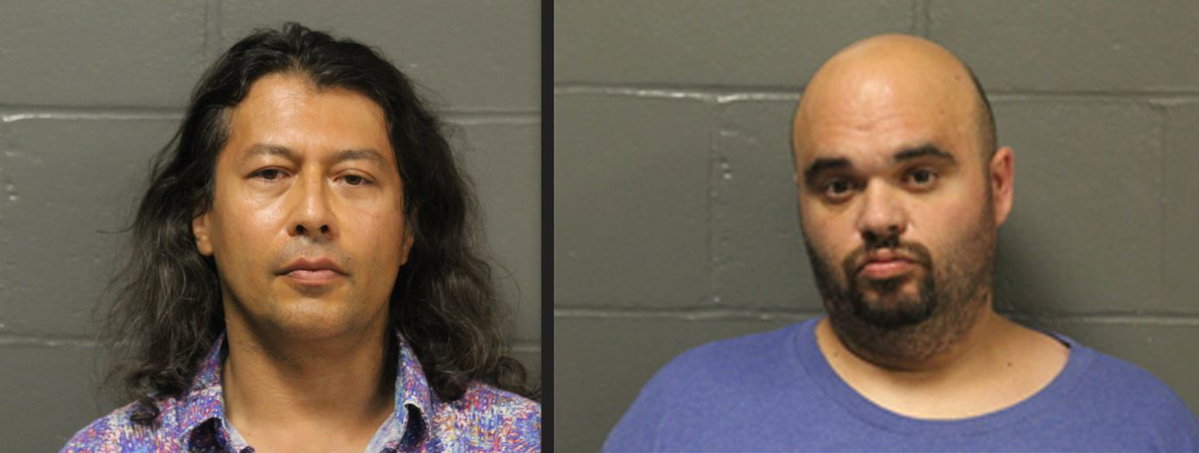
Kevin “Bluntman” Jones, 45, of Eastonm Pennsylvania, is charged in Camden County with first-degree drug trafficking. A bond hearing was held on Tuesday and he was denied bond again. A preliminary hearing is scheduled for 9 a.m. Tuesday, Sept. 22.

The festival was held last week.

Dennis A. Pradhan, 49, of Silver Springs, Maryland, was charged with three counts of first-degree drug trafficking and two counts of delivery of a controlled substance. He is also being held at the Camden County Jail without bond.

 Jones allegedly advertised his business on the festival’s website and found with 128 pounds of weed and 2.5 pounds of mushrooms on Monday in Osage Beach, court documents in previous reporting say.

Pradhan also had a business that advertised having drugs on the festival’s website. He was arrested while driving to the festival during a traffic stop and was allegedly found with 90 pounds of marijuana, 124.5 pounds of psilocybin mushroom products, about a third-of-a-pound of ketamine, 27 vials of ecstasy and 40 vials containing ketamine and fentanyl, among other products, court documents indicate.

The state filed separate cases on Thursday for asset forfeiture of the two men, which would result in them losing nearly a combined $6,000, their vehicles and trailers. Court filings on Thursday say a summons was issued to both men at the Camden County Jail.

Pradhan has a bond hearing in his criminal case at 8:30 a.m. Friday.

Click here to follow the original article.
City of Pocatello encourages volunteers for Saturday’s Annual Portneuf River Cleanup

Hadley Bodell

POCATELLO, Idaho (KIFI) – The City of Pocatello is gearing up for an annual volunteer opportunity– the Portneuf River Cleanup. The river is one of the city’s biggest natural resources and assets for tourism. Representatives say the event will continue for years to come to maintain its natural beauty.

Pocatello’s assistant planner, Jennifer Flynn, said the river is completely underutilized and an excellent economic tool for the city. “We’re encouraging folks to come and pull mainly trash out of the river. We’ll do a little bit of removing logjams or any big debris,” Flynn said. “For the most part, we’re focused on trash.”

Flynn said that in years past, volunteers have pulled items as big as wheelbarrows and shopping buggies out of the river. Because of that, volunteers are encouraged to bring power tools and winches attached to vehicles to haul out large items.

“I’d encourage folks to wear shoes that are good for the water and clothes that are okay to get dirty,” she said.

The city will provide gloves, trash bags, and garbage picker tools. Volunteers and city officials will meet at the Pacific Steel and Recycling Trailhead at 10 a.m. on Saturday and work until noon.

They will strategically place dumpsters across the Greenway for people to dispose of trash. Flynn says it’s an effort to get more people out on the river in all its beauty.

“We just want to keep it free of debris and litter to make it beautiful for both wildlife and for people that want to enjoy it,” she said.

Flynn also said people can bring a canoe or kayak to help remove trash from the water. There are several places along the river where you can launch them into the water.

“Volunteering in our community is such a great way to meet new people and also just to be engaged in things going on,” Flynn said. “If you’re an advocate for using the river or outdoor activities in general, it’s a really fun way to contribute.”

2026 River Cleanup

Dozens showed up on Saturday morning for the annual Portneuf River Cleanup, including members of the Pocatello City Council. Some volunteers even traversed over fallen logs and branches to reach trash in the middle of the river.

“The river just needs a lot of help,” said volutneer Julia Miller. “I think it needs a lot of grant money, a lot of labor, and I’m just happy all these volunteers are out here trying to make a difference and doing things that need to be done.”

Other volunteers found shelters and debris deep within the trees on the banks of the Portneuf. Councilmember Ann Swanson held up a sparkly disco ball found along the river and one of Miller’s friends found an entire Owala water bottle caught in the dam.

“We’re definitely seeing some improvement. It’s kind of crazy, the spot we’re cleaning is kind of a makeshift dam, so we’ve been thrown in a couple of times, but I feel like we’re making an impact,” said volunteer Andrew Baker.

The volunteers filled many garbage bags as well as dumpsters with larger items like bicycles. Volunteers ranged in age and ability, with several ISU students coming out to help the effort.

“It’s been a lot of work,” Miller added. “There’s a lot of bugs and trash out here. You can see that the river is really murky because a lot of the sediment and boats that are in the river. I’m proud of everyone who came out to try and help.”

Click here to follow the original article.