Pendleton’s mane event: Town roars over reported lioness sighting

By Cat Sandoval

Click here for updates on this story

    PENDLETON, Ind. (WRTV) — A reported sighting of a lioness and her cub prompted police to conduct an hourslong search Thursday through the farm fields of Madison and Hancock counties, in areas northeast of Indianapolis.

At 10 a.m. Thursday, the Madison County Sheriff’s Office received a tip about the exotic animals between Pendleton and Markleville, towns that are about a 50-minute drive northeast of downtown Indianapolis.

The news quickly spread through Pendleton, a town of about 6,000 people.

Mike Wagner, a Hancock County resident who was in Pendleton for lunch, said, “It’s not something you see every day in Indiana, and everyone was talking about it. Seems like someone would know who owns it.”

Madison and Hancock counties’ sheriff’s deputies joined Indiana State Police troopers to search the area. The lioness was reportedly wearing a blue collar.

Officers used heat-seeking drones but did not find any lions.

The possibility of a lion nearby excited and worried residents.

“It seems cool to have a lion here. We’ve never had something like this, but it also seems kinda scary because I don’t want to be chased by a lion,” said Palmer Hunt, a Pendleton High School student.

The story also gained a large online following. The Madison County Sheriff’s Office’s Facebook page received hundreds of comments and jokes, such as “In the jungle, the mighty jungle, the lion sleeps tonight,” and “Here, kitty, kitty.”

Dana Dale, a Pendleton resident, said she heard about the sightings all day at work and lives near the reported location.

Police could not confirm if the lions were actually roaming. Witnesses last saw the cats near Madison County Road 1100 South and Madison County Road 50 West, about a 10-minute drive southeast of Pendleton.

The heat-seeking drones briefly misled police when they spotted a pig instead of a lion.

Despite the false alarm, authorities were still trying to determine whether the report was legitimate.

“I really hope they find them so they’re safe,” Hunt said.

Authorities called off the search and were awaiting another lead before resuming.

Please note: This story was provided to CNN Wire by an affiliate and does not contain original CNN reporting. This content carries a strict local market embargo. If you share the same market as the contributor of this article, you may not use it on any platform.

Community members push back on Flock camera system

By Carlee Hogsten

Click here for updates on this story

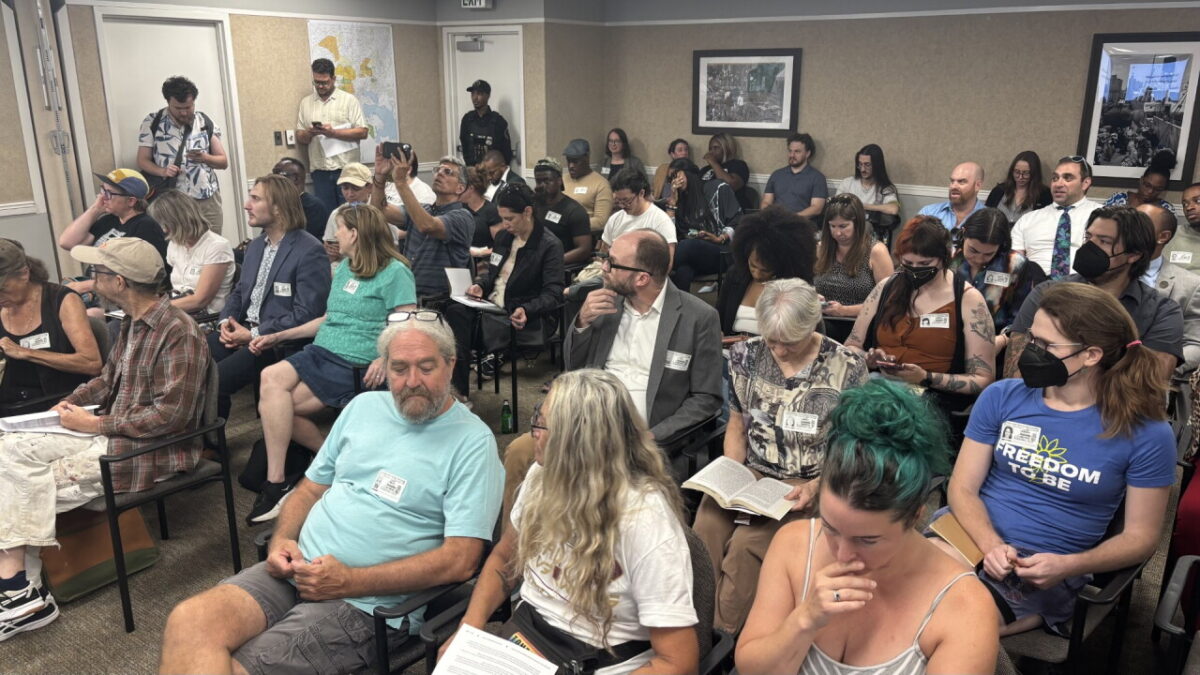
    LEXINGTON, Kentucky (WLEX) — Community members and organizations gathered at a Lexington city council meeting to voice opposition to the city’s Flock camera system, with some calling for the contract to be canceled outright.

Noah Cornett, representing the Bluegrass Democratic Socialists of America, presented what he called a “demand letter” requesting the city cancel its contract with Flock. Cornett said there is no data supporting the cameras’ effectiveness.

“The right to privacy is necessary for a free society and ALPRS inherently contradict those rights,” Cornett said.

“Where do we let it stop, in the effort to ‘catch crime’?” Cornett said.

According to Lexington’s website, as of December 2025, there are 125 city-owned automated license plate readers in Lexington. Per the city’s contract with Flock, Lexington would need to provide 30 days’ notice before canceling.

Luke Allen said the city has the opportunity to lead by example.

“That’s what the council has the power to do. We’ve seen others do it,” Allen said.

Council Member Emma Curtis spoke before open comment, saying she does not support Flock but believes Lexington police have not used the system maliciously.

“These cameras have farther greater potential for collective harm then collective good,” Curtis said.

Clay Davis, of local coalition We See You Watching Lexington, said the cameras are not always being used to fight crime, pointing to a recent case of an officer misusing them in Kentucky.

“Tracked his girlfriend 2,000 times using Flock cameras,” Davis said.

Not everyone at the meeting opposed the cameras. Lisa Guess and Billy Mallory spoke in support of the system.

“They have repeatedly helped solve violent crimes,” Guess said.

“Since Flock has been instated, violence has gone down significantly in the east end,” Mallory said.

As of now, there are no upcoming council discussions scheduled on ending the Flock contract.

Please note: This story was provided to CNN Wire by an affiliate and does not contain original CNN reporting. This content carries a strict local market embargo. If you share the same market as the contributor of this article, you may not use it on any platform.

Black lung rates soar in Appalachia, residents say more needs to be done

By Evelyn Schultz

Click here for updates on this story

    WHITESBURG, Kentucky (WLEX) — James Cook, a retired coal miner from Letcher County, doesn’t go anywhere without his oxygen tank.

“I’m on it 24/7 now,” he said. “It started out, I was on it at nighttime.”

He brought it with him to the Appalachian Citizens’ Law Center in downtown Whitesburg, a constant reminder of the battle he’s fighting at 54 years old. Cook is suffering from the effects of black lung.

The progressive disease is caused by inhaling coal and rock dust, and rates of the illness in Appalachia are at the highest rate in 50 years, according to new data in a letter from the National Institute for Occupational Safety and Health (NIOSH).

“I just started getting short of breath,” Cook said. “The things I used to do like go wading and fishing. I can’t do it anymore, and I loved it, you know, I loved going fishing like that.”

Before Cook went underground, he was an ambulance driver. He said he got married, needed more money, and mining jobs paid better. He retired from mining in 2015 after a more than 20-year career.

“People that don’t work in the mines, they can go home and take their shirt off and shake it and nothing happens,” Cook said. “I take my shirt off or another coal miner’s shirt and shake it, a big cloud of dust, and you imagine what’s going in your lungs, and it’s in that shirt.”

Experts LEX News spoke with say the disease is striking miners younger and progressing faster than ever before. They blame silica dust, which is far more toxic than coal dust.

“We’re just mining so much more rock along with the coal,” said Wes Addington, the executive director of the Appalachian Citizens’ Law Center. “Because the coal seams are so small now, miners are getting exposed to much more deadly silica dust than they ever have in the past.”

Addington represents coal miners and their families, providing free legal services to help survivors of black lung, like Cook, get the benefits they are owed.

“Unfortunately, the United States has done a terrible job over the past couple of decades protecting them from overexposure to dust,” he said.

And when miners do get sick, he says, legal cases for black lung benefits can take years to resolve.

“Many of these cases can last a decade, and when you’re dealing with miners that are sick as some of our clients are, they may not have that kind of time,” Addington said.

Dr. Brandon Crum, a radiologist in Pike County who specializes in diagnosing black lung from X-rays, has tracked a disturbing trend over the last decade. He says his patients are getting younger, and the disease is progressing faster.

Data from his clinic shows complicated black lung, the severe stage of the disease, makes up 12 to 15 percent of cases across central Appalachia.

“I don’t know how many 1,000 guys I have to evaluate or how many 1,000 guys have to die, before we fix a simple solvable problem,” Crum said. “The only thing higher than our rates of black lung are excuses that we get here.”

Crum, a fourth-generation miner himself, says he’s been sounding the alarm for years, pushing for increased safety regulations and better benefits.

“There is no doubting it anymore,” he said. “It’s something that’s here to stay. If you never mined another lump of coal, you would have this problem for decades because of the men that already have it and will be diagnosed with it.”

Crum, and others we spoke with, want to see increased benefits for survivors through legislation like the Support Our Miners Act, which would raise the monthly disability benefit from about $800 to more than $1,200. Rep. Summer Lee of Pennsylvania introduced the bill in June.

In a letter this week, the Black Lung Association of Southeastern Kentucky asked Representative Hal Rogers of Kentucky to sign on as a co-sponsor of the Support Our Miners Act.

LEX News contacted a spokesperson for Rep. Rogers for comment and received the following statement.

“We all agree that the Black Lung Disability Trust Fund needs significant reform to ensure that our coal miners get their hard-earned benefits before this painful disease robs them from seeing a dime. I have dedicated caseworkers who advocate for coal miners in Eastern Kentucky to get their benefits every single day. Our local leaders are doing their part to advocate for our shared constituents as well.

In June, I voted for an $18 million increase for the Black Lung Disability Trust Fund in the FY27 federal funding bill for Labor, Health and Human Services and related agencies. The bill also requires the Department of Labor to speed up claims processing and increases oversight. As a senior appropriator, I helped advance the bill out of the full House Appropriations Committee and it now awaits consideration by the full House of Representatives.

Washington Democrats, led by the Obama and Biden Administrations, regulated coal mines out of business across the country, leaving us with only 3,600 coal miners in Kentucky today. They now want taxpayers to bail out the trust fund that they nearly decimated by fast-tracking coal operators onto bankruptcy and working to increase their fines from $1,000 per day to $25,000 per day. Democrats talk openly about their desire to increase benefits, but they aren’t being transparent about their movement to destroy the trust fund through their targeted War on Coal, and sticking taxpayers with the bill.”

-U.S. Rep. Hal Rogers At his office in Pikeville, Crum says mining isn’t going anywhere, so he’s calling for increased cooperation from mining companies, politicians, and healthcare professionals.

“People have to admit there’s a problem,” he said. “The coal companies and the people that represent them have to admit there’s a problem or maybe even admit there could be a problem. We have to get our government agencies, the regulators together. We have to get medical professionals.”

New safety rules for mines proposed in 2024 are currently held up in federal courts.

“We have to limit how much silica dust miners are breathing, and we haven’t done that yet,” Addington said.

Like many other families in Kentucky and across Appalachia, Cook and Crum know firsthand how deadly that dust can be.

Both men’s fathers died in October of last year. Both were suffering from black lung.

“Sick of going to funerals, sick of hearing about it,” Crum said. “Sick of seeing people with oxygen tanks at ball games and restaurants, sick of it.”

Nearly one year after his father’s death, Cook is still waiting for the federal black lung benefits he is owed. He says he is hopeful because of the legal aid he is receiving. He is proud of the work he did underground but says if he could do it all over again, he would have made a different choice.

“I would not have been a coal miner. I would have stayed, probably went and got my paramedic or something,” he said. “I would have just stayed with the ambulance service. I loved that job.”

Please note: This story was provided to CNN Wire by an affiliate and does not contain original CNN reporting. This content carries a strict local market embargo. If you share the same market as the contributor of this article, you may not use it on any platform.
Coffee culture is a class at University of Kentucky

By Annie Brown

Click here for updates on this story

    LEXINGTON, Kentucky (WLEX) — The University of Kentucky now offers undergraduate students a 12-credit-hour certificate program called Coffee Science and Culture, giving them the opportunity to explore the history, science, economics, and ethical issues surrounding one of the world’s most consumed beverages.

About 150 students are currently enrolled in the certificate, which launched this year with support from the Bill Gatton Foundation.

Dr. David Gonthier, who first began teaching a coffee course as an elective eight years ago, developed the program after his own personal connection to the crop drew him deeper into the subject.

“I really got into coffee as my way into agriculture. My cousin is a coffee farmer in Honduras, and I moved down there and learned all about production,” Gonthier said.

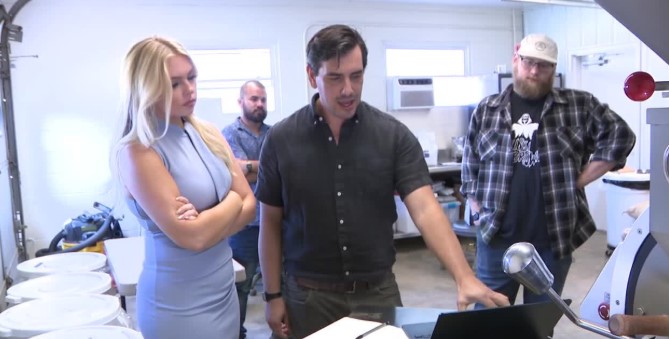
Students get hands-on experience inside UK’s Coffee Lab at the Horticulture Research Farm, where they learn how to brew coffee and explore the distinct flavor profiles different beans can produce.

“It’s like meditating, you have to be really focused. You can’t miss the first rack and things like that otherwise you’ll mess up what you’re doing so you have to be really focused,” Ph.D. student Mario Reyes said.

Head Roaster and Coffee Quality Specialist Bradley Bellman said the range of flavors coffee can offer has been eye-opening.

“I’ve seen coffees with notes of tomato and savory notes all the way to sweet fruity, jammy coffees,” Bellman said. Beyond brewing, the curriculum covers the economics and ethical issues that persist throughout the global coffee industry.

“This is an opportunity to study as a model for a lot of goods that are traded. And a lot of issues that appear in coffee appear in other goods. And it’s kind of a unique opportunity to kind of learn from origin or the farms that produce it all the way to the US where it finally is sold to consumers and that’s an eye-opening story, I think for just about anybody working in food or agriculture,” Gonthier said.

Coffee from UK’s Coffee Lab is available for purchase online here (Purchase Coffee | Coffee Lab) or at the Bluegrass Beans Coffee Shop in the Gatton Agricultural Science Building.

Please note: This story was provided to CNN Wire by an affiliate and does not contain original CNN reporting. This content carries a strict local market embargo. If you share the same market as the contributor of this article, you may not use it on any platform.

QUESTION OF THE DAY: What is the better name for the lake between New York and Canada?

Matthew Sanders

President Donald Trump signed an executive order to rename another body of water on Thursday.

This time, it’s Lake Ontario.

Amid a trade dispute with Canada, Trump decided that Lake Ontario should instead be known as Lake America. It remains to be seen whether mapmakers and other countries will follow suit.

Trump has previously renamed an international body of water, proclaiming the Gulf of Mexico would become the Gulf of America.

Do you think Lake America is a better name for the body of water between New York and Canada? Let us know by voting in the poll.

Click here to follow the original article.

Debate over Data Centers: Neighbors oppose proposed legislation

By Taylor Epps

Click here for updates on this story

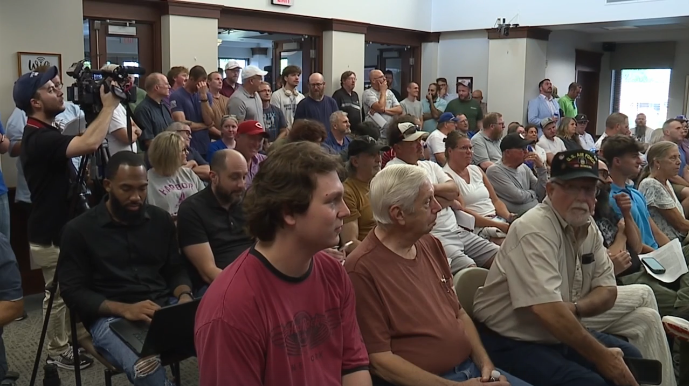
    BALTIMORE, Maryland (WMAR) — The debate over how Baltimore City should regulate data centers drew a packed crowd to a Baltimore Planning Commission meeting Thursday.

On the table is a proposal, sponsored by City Councilmember Phylicia Porter, that would require data center projects to go through a conditional use approval process that includes a health equity assessment, public input, and a vote by the Baltimore City Council.

“Bill 26-0174 establishes the framework of what should come next: conditional use by ordinance, health equity review, public participation, and accountable decision-making,” Porter told the commission.

The bill got a lot of social media attention and drew dozens of residents to Thursday’s meeting, concerned about the future of data center development in Baltimore.

Baltimore currently has a moratorium on new data center development while a city study examines the potential impacts of the facilities, due by March 2027.

While critics argued the legislation is premature, Porter said the bill is intended to strengthen existing protections and create a framework for reviewing projects once the moratorium ends.

“Bill 26-0174 does not greenlight data centers; it strategically and administratively blocks development at every step of the way that does not align with the community,” Porter said. “The moratorium is not public policy; that means we are fully unprotected at this point.”

She worries that the moratorium could be challenged by the federal government, leaving the city vulnerable without legislation in place.

Members of the planning commission did not share these concerns, and neighbors pushed for them to have the time to complete the study.

“I think we should be allowing the planning board to have the time to have the study, to really think this through because I think we can see how upset everyone is at even the mere thought of a data center coming to Baltimore,” neighbor Hillary Gonzalez said.

Though opinions differed on the legislation itself, many speakers shared a common goal: limiting or preventing future data center development in Baltimore.

At the conclusion of the meeting, the Planning Commission declined to support the bill. Commissioners did, however, agree with Porter’s recommendation that a health equity assessment should be included in the current study of data centers.

“The data center industry and the AI development we’re seeing across the nation is not going to stop,” Porter said. “I look to continue the fight to make sure my communities are well served and protected.”

The legislation will now move to the Baltimore City Council for consideration in September.

Please note: This story was provided to CNN Wire by an affiliate and does not contain original CNN reporting. This content carries a strict local market embargo. If you share the same market as the contributor of this article, you may not use it on any platform.

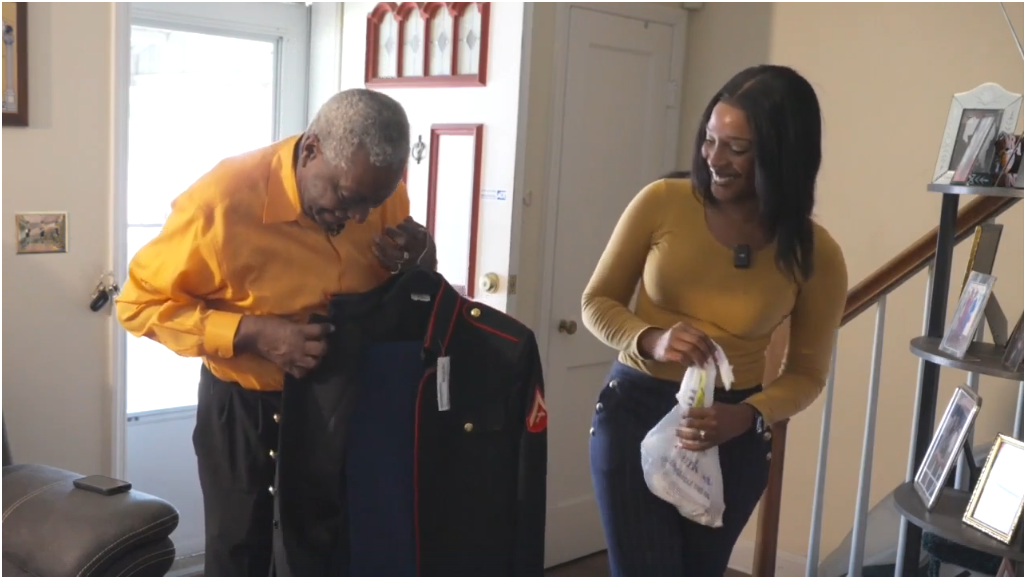
Vietnam Veteran back the uniform he once thought was gone forever

By Cyera Williams

Click here for updates on this story

    BALTIMORE, Maryland (WMAR) — A Vietnam veteran first introduced to WMAR viewers in July through a story by Voice for Veterans reporter Cyera Williams is now at the center of an emotional act of kindness.

Carroll “Sonny” Smith, a U.S. Marine Corps veteran who served from 1965 to 1969, told Williams in that original story that one of his biggest regrets was destroying his Marine dress blues after returning home from Vietnam.

For Smith, the uniform was part of the reason he wanted to become a Marine in the first place.

“I fell in love with the uniform,” Smith said.

He remembers being about 10 years old, watching Marines march in a parade near Patterson Park, and telling his mother that one day he would have one of those uniforms.

“I always wanted to be a Marine,” Smith said.

Smith did become a Marine, serving four years. But when he came home from Vietnam, he said the country’s treatment of returning service members was painful.

“It made us feel like we had done something wrong by going over there,” Smith said.

At the time, Smith said he put peace signs and stickers on his dress blues before eventually throwing them away. It was a decision he would regret for decades.

“I just wish I hadn’t destroyed my uniform. That’s all,” Smith said. After seeing WMAR’s story in July, an anonymous Maryland couple reached out. They wanted to replace Smith’s dress blues while keeping their identity private.

When Williams told Smith about the offer, he was overcome with gratitude.

“I don’t know how to thank them,” Smith said.

The anonymous donor later shared this statement:

“My gesture wasn’t about a uniform — it was about honoring a Marine’s service, preserving his story, and reminding him that people care about him and the sacrifices he made.

When I heard his story, how destroying his uniform was one of his biggest regrets, I knew I had the ability to fix that single issue. Too often, people wait for someone else to step forward and help. My message would be that when you can make a difference in someone’s life, no matter how small, you should act.

Real change happens when ordinary people choose to help where they can, when they can, rather than assuming someone else will do it. In this case, it was simply one Marylander helping another, and that’s exactly how it should be.

I am especially grateful to SSgt. Najafabadi, whose ‘can do’ attitude made “this mission” a success. From the moment I reached out, he demonstrated that the Marine Corps values of commitment, service, and brotherhood do not end with a deployment, a retirement, or even a generation. His willingness to go above and beyond reinforced a simple truth:

Once a Marine, always a Marine!

The “esprit de corps” that binds Marines together remains as strong today as it was decades ago.

My hope is that SSgt. Najafabadi’s actions serve as an example of the character and values the Marine Corps instills in its people. I also hope that those considering military service see this story as a reminder of how deeply Americans appreciate the men and women who serve this great nation.”

The Bel Air Marines helped make the moment possible. SSgt. Nima Najafabadi helped secure the uniform, and when there was no belt buckle, he removed his own and gave it so Smith’s dress blues would be complete.

When Smith learned that detail, he became emotional.

“Please do thank them all for me,” Smith said.

Please note: This story was provided to CNN Wire by an affiliate and does not contain original CNN reporting. This content carries a strict local market embargo. If you share the same market as the contributor of this article, you may not use it on any platform.
Flag Football wrap-up: San Marcos and Dos Pueblos score lopsided victories

Mike Klan

SANTA BARBARA, Calif. (KEYT) –

San Marcos 35, Notre Dame (Sherman Oaks) 36-6: Victoria Aldana threw 3 touchdown passes, two of them to freshman Bella Bazylewicz in the dominating home victory.

Bazylewicz also added a 38-yard rushing touchdown.

Sophomore Piper Kittle scored two touchdowns, one on a 57-yard pick-six and the other on a 15-yard receiving score.

The Royals led 23-0 at the half and never looked back.

Dos Pueblos 56, Channel Islands 0: Ruby Streatfeild led the offense accounting for 7 touchdowns. Streatfeild rushed for 3 touchdowns and threw for another 4. Streatfeild connected for two touchdowns to Brooklyn Hedricks, and one each to Kinda Ahmad-Reda and Jane Gibson.

Defensively, Hedricks hauled in two interceptions, including a pick 6. Gracie Baker also had an interception. Makyla Watt, Nya Ribbens and Yaretzi Arredondo all recorded sacks.

Click here to follow the original article.

Girls Volleyball wrap-up: Dons sweep DP

Mike Klan

GOLETA, Calif. (KEYT) –

Santa Barbara 3, Dos Pueblos 0: Senior Blake Saunders tallied a match-high 13 kills as the Dons swept the Chargers 25-16, 25-23, 25-17 in a non-league match.

(Saunders is reigning Female Athlete of the Week for Santa Barbara Athletic Round Table. Entenza Design).

(Faith Harrison led DP with 8 kills. Entenza Design).

Valencia 3, San Marcos 0: The Royals lost at home 20-25, 18-25, 20-25.

(Margaret Deakyne battles at the net for the Royals. Entenza Design).

Bishop Diego 3, Villanova Prep 0

Laguna Blanca 3, St. Bonaventure 1

Click here to follow the original article.

Cliff Bentz meets Prineville residents over Rowe Creek Complex fire impacts

Spencer Sacks

PRINEVILLE, Ore. (KTVZ) — U.S. Rep. Cliff Bentz held a town hall meeting in Prineville, Ore., to speak with local residents about the Rowe Creek Complex fire and hear about its impacts. The meeting lasted for more than 2 hours.

The gathering marked Bentz’s fifth fire-related town hall as he has traveled across his district. The Oregon representative organized the events to better understand local perspectives on wildfire impacts and to help leaders in Washington, D.C., gain a clearer understanding of the issues facing the state.

During the meeting in Prineville, residents raised concerns on a variety of topics, ranging from rebuilding efforts after the fire to the use of firefighting aircraft. Nationwide, 80 aircraft are designated for firefighting operations, though their deployment depends on very specific conditions.

Bentz addressed the community’s frustrations regarding immediate response during massive blazes, explaining the inherent challenges officials face when dealing with large-scale wildfires.

“I think what people are most were concerned about is that they would see the fire coming and they wouldn’t instantly have an engine and a team helping,” Bentz said. “But when you have fires of this immense size, as one of the people persons said, you could have thousands of people and still not be able to slow it down, particularly if there’s wind.”

Click here to follow the original article.