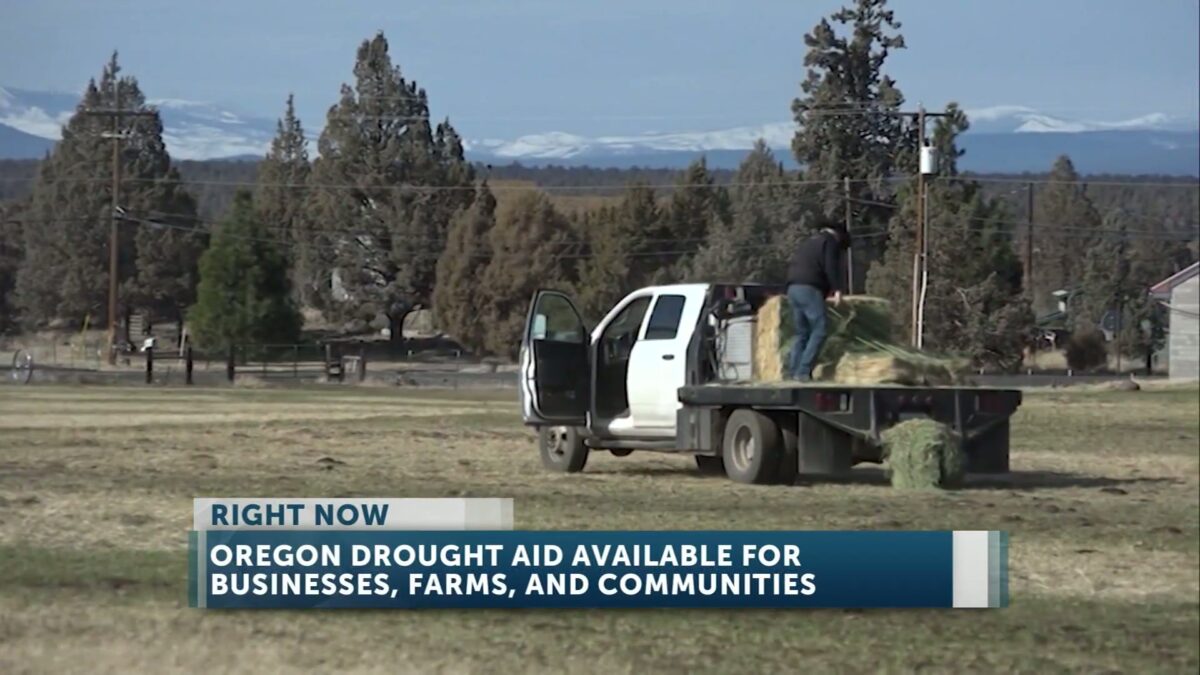
Oregon drought aid available for businesses, farms and communities

Campbell Porter

OREGON (KTVZ) — State and federal agencies are making multiple financial and technical assistance programs available to support Oregon communities, small businesses and agricultural producers affected by ongoing drought conditions.

Find the full press release here.

The available programs offer funding for local water infrastructure, drought mitigation planning and economic recovery.

The resources include low-interest disaster loans, emergency water grants and well repair assistance administered by agencies including the U.S. Small Business Administration, the U.S. Department of Agriculture and the Oregon Water Resources Department. State emergency officials are encouraging eligible groups to apply.

Erin Zysett serves as the public information officer for the Oregon Department of Emergency Management. “Drought impacts every region of Oregon differently, but the message is the same everywhere: help is available,” Zysett said.

The U.S. Small Business Administration is providing Economic Injury Disaster Loans of up to $2 million for working capital to small businesses, private nonprofits and agricultural cooperatives impacted by drought in designated Oregon counties. The loans feature terms of up to 30 years with no interest or required payments during the first 12 months after disbursement. Interest rates are set at 4% for small businesses and 3.625% for private non-profit organizations.

For rural communities and federally recognized Tribes with populations of 10,000 or fewer, the U.S. Department of Agriculture offers Emergency Community Water Assistance Grants. These grants provide up to $150,000 for water transmission line repairs and up to $1 million for water source development, such as new wells or treatment plants, provided applicants can document a significant decline in water quality or quantity within the last two years. Additionally, the U.S. Bureau of Reclamation’s WaterSMART program offers funding to help water districts and regional authorities develop drought contingency plans and expand water distribution infrastructure.

Homeowners with low-to-moderate incomes and members of federally recognized Tribes in Oregon can access the Well Abandonment, Repair and Replacement Fund administered by the Oregon Water Resources Department. The program reimburses up to $40,000 for professional work and materials needed to repair, replace or abandon dry or damaged wells, including wells affected by wildfire. Funding is allocated on a first-come, first-served basis and state officials encourage residents to report dry wells on the state’s tracking website.

Agricultural producers facing crop or grazing losses can access dedicated disaster programs through the USDA Farm Service Agency.

Available assistance includes:

The Livestock Forage Disaster Program (LFP) provides compensation to eligible livestock producers who suffered grazing losses for covered livestock due to drought on privately owned or cash leased land.

The Emergency Assistance for Livestock, Honeybees, and Farm-Raised Fish Program (ELAP) provides eligible producers with compensation for above-normal costs of hauling water and feed to livestock as well as transporting livestock to forage or other grazing acres.

The Noninsured Crop Disaster Assistance Program (NAP) provides financial assistance to producers of non-insurable crops when low yields, loss of inventory, or prevented planting occur due to natural disasters including qualifying drought (includes native grass for grazing). Producers must have obtained NAP coverage for the crop year in which the loss occurs.

The Tree Assistance Program (TAP) provides assistance to eligible orchardists and nursery tree growers for qualifying tree, shrub and vine losses due to natural disasters including excessive wind and qualifying drought.  

The Emergency Conservation Program (ECP) and Emergency Forest Restoration Program (EFRP)  provide landowners and forest stewards with financial assistance to restore damaged farmland and conservation structures or forests, including implementing emergency water conservation measures. This program may also help with damage to farmland due to natural disasters such as wildfire.

Emergency and non-emergency haying and grazing of Conservation Reserve Program (CRP) acres may be authorized to provide relief to livestock producers in areas affected by a severe drought.

USDA Farm Loans provide a variety of direct and guaranteed farm loans, including operating and direct emergency farm loans, to producers unable to secure commercial financing. Loans can help producers replace essential property, purchase inputs like livestock, equipment, feed and seed, cover family living expenses, or refinance farm-related debts and other needs.

The state also tracks drought conditions through the U.S. Drought Monitor, which classifies drought severity from abnormally dry to exceptional drought using streamflow, soil moisture and local field reports. Water right holders in counties under a governor-declared drought state can also utilize temporary emergency tools from the Oregon Water Resources Department, such as expedited water transfers, instream leases or temporary groundwater substitutions.

The application deadline for Small Business Administration Economic Injury Disaster Loans is March 1, 2027.

For agricultural producers, the USDA Farm Service Agency updates its list of counties eligible for livestock forage assistance every Thursday.

Additional resources:

Oregon Department of Emergency Management: oregon.gov/oem

Oregon Water Resources Department: oregon.gov/owrd

Click here to follow the original article.

New Flock camera placed at downtown Columbia intersection following brawl, shots-fired incident

Mitchell Kaminski

COLUMBIA, Mo. (KMIZ)

If you’re walking through downtown Columbia, you may notice a new Flock camera at the intersection of Ninth Street and Walnut Street.

The camera comes as University of Missouri System President Mun Choi has called the area a “danger zone” in a series of emails to city leaders following high-profile incidents along East Walnut Street. One incident was a brawl that led to seven arrests on July 26 and another was a shots-fired incident that occurred this past weekend that led to felony charges being filed.

Columbia Police Chief Jill Schlude told ABC 17 News the camera was installed on Tuesday, adding that it is a live camera included in Flock’s video package that officers can monitor in real time.

“We originally planned to put one in that area of Walnut (I don’t remember if it was at Ninth Street or 10th St.) but had issues with getting a power supply to the camera, and the solar-type camera was not functioning correctly,” Schulde told ABC 17 in an email. “When this issue happened, we looked at the Ninth and Walnut location and got some temporary power hooked up until utilities can get something more permanent rigged up.”

The camera is one of Flock’s pan-tilt-zoom, or PTZ, cameras. The cameras are designed to monitor areas such as parking lots, intersections, and parks.

The new camera is one of the more than 100 Flock cameras installed across Columbia after the City Council approved additional surveillance technology in 2024.

During the system’s first year of use, Columbia police reported 5,521 Flock alerts. Of those, 2,877 were linked to outstanding warrants, 1,452 involved stolen license plates and 1,192 were connected to stolen vehicles.

Police said the department only shares its Flock data with other law enforcement agencies in Missouri.

The use of Flock cameras has drawn scrutiny nationally, however, with privacy advocates raising concerns about data sharing and law enforcement access.

A national tracker of Flock contracts lists dozens of communities that have ended their agreements amid concerns about privacy, data sharing and law enforcement access.

Columbia police told ABC 17 News earlier this month that, despite concerns from some residents, the department has no plans to cancel its Flock contract. Police have described the technology as a valuable tool for the department.

The city’s current contract with Flock expires in March 2027.

Click here to follow the original article.
4 taken to hospital after crash occurs at Paris Road, Vandiver intersection in Columbia

Ryan Shiner

COLUMBIA, Mo. (KMIZ)

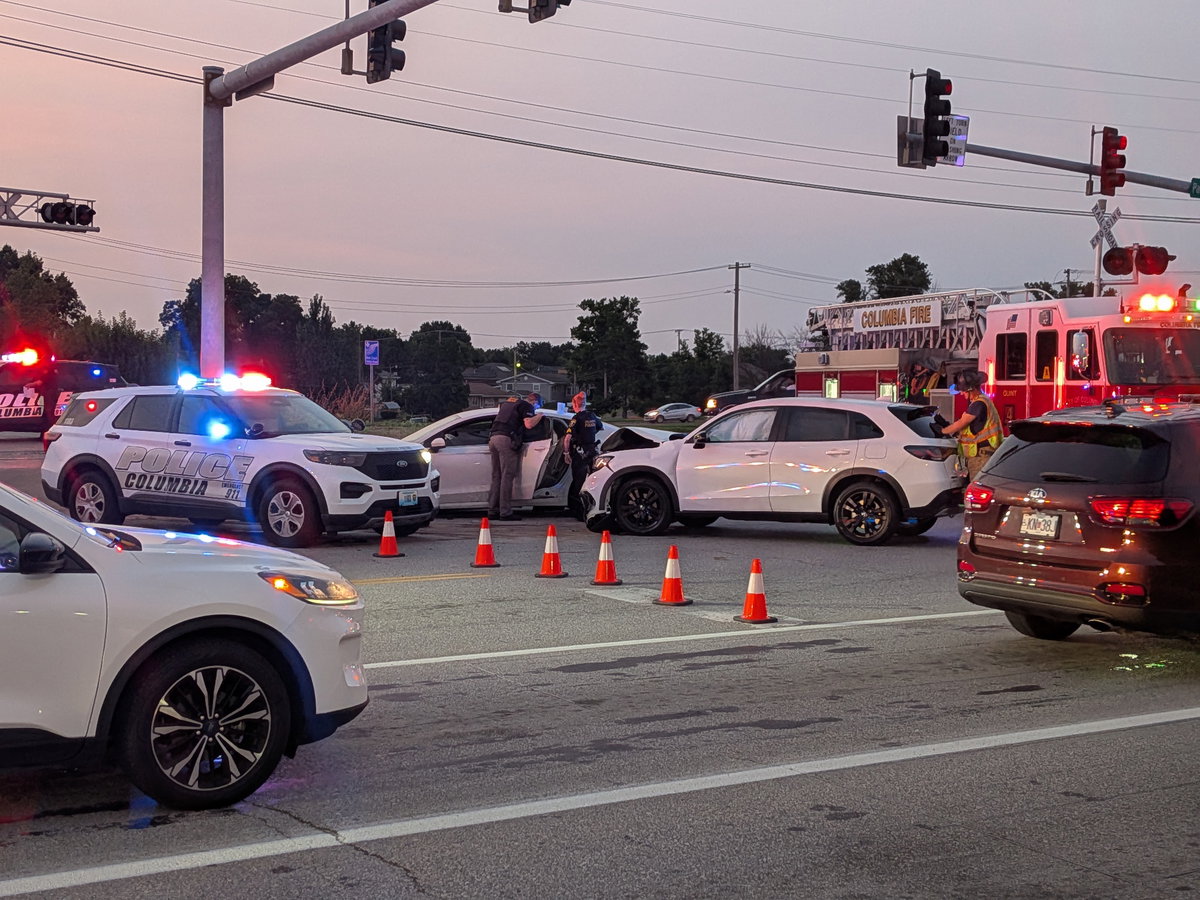
Four people were brought to an area hospital after a crash occurred at a busy Columbia intersection on Wednesday night.

The crash was reported at Paris Road and Vandiver Drive and led to the intersection shutting down.

Boone County Joint Communications announced the intersection was closed during an 8:09 p.m. notification. Columbia Fire Department Battalion Chief  Roger Mertensmeyer said two vehicles were involved and first responders were dispatched at 8:05 p.m.

At least one of the vehicles was seen with front-end damage.

An ABC 17 News reporter saw one person being put in an ambulance. Multiple Columbia police patrol vehicles, a firetruck and an ambulance were at the scene. Tow trucks were at the scene at 8:48 p.m.

ABC 17 News is working to learn more information. Check back for updates.

Click here to follow the original article.

Mosquito season brings West Nile virus concern in Yuma County

Lauren Duffel

YUMA, Ariz. (KYMA) – It’s that time of year again: Mosquito season, and with it comes the viruses mosquitoes can carry, including West Nile virus.

Peak mosquito season in Arizona happens during the hot, humid summer months, from July through September, and already we’re seeing some West Nile activity.

At least three mosquito pools in Yuma County have tested positive for the West Nile virus this year.

While there are no confirmed human cases in Yuma, the CDC has confirmed more than 70 human cases across the state. Last year, the Yuma County Public Health Services District confirmed one laboratory-verified human case.

“It’s pretty common. We find it every year. Typically, depending on the year and the rains, we may find more one year and less the next. This year is a pretty typical year for West Nile virus, but we’re only halfway through the season,” said Richard Cuming, vector control program supervisor with YCPHSD.

According to the CDC, there are more than 3,000 different types of mosquitoes worldwide. Mosquitoes become infected with germs, such as viruses and parasites, when they bite infected people and animals, and even a few infected mosquitoes can start an outbreak in a community.

“West Nile virus is actually the leading cause of mosquito-borne disease in the United States. Mosquitoes are called vectors because they can transmit diseases from one animal to another. West Nile virus not only affects humans, but it also impacts horses and dogs,” said Laura Rosenwald, entomologist with the National Pest Management Association.

According to the State of California, Imperial County also had one mosquito pool test positive last year, but no laboratory-verified human cases.

Last month, Imperial County reported three mosquito pool testing positive for the virus.

The CDC says mosquitoes are the deadliest animals on the planet, killing more people than any other creature in the world, but there are ways to protect yourself from the virus.

“If you notice mosquitoes, give us a call and we will set traps and do an investigation to try to find out where they’re breeding. To protect yourself, wear long sleeves, long pants, light-colored clothing, and use an EPA-approved insect repellent,” Cuming said.

As mosquito season continues, it’s important to stay alert.

Click here to follow the original article.

Kentucky Man Dies at Oregon Park After Falling from Top of Waterfall

Gregory Deffenbaugh

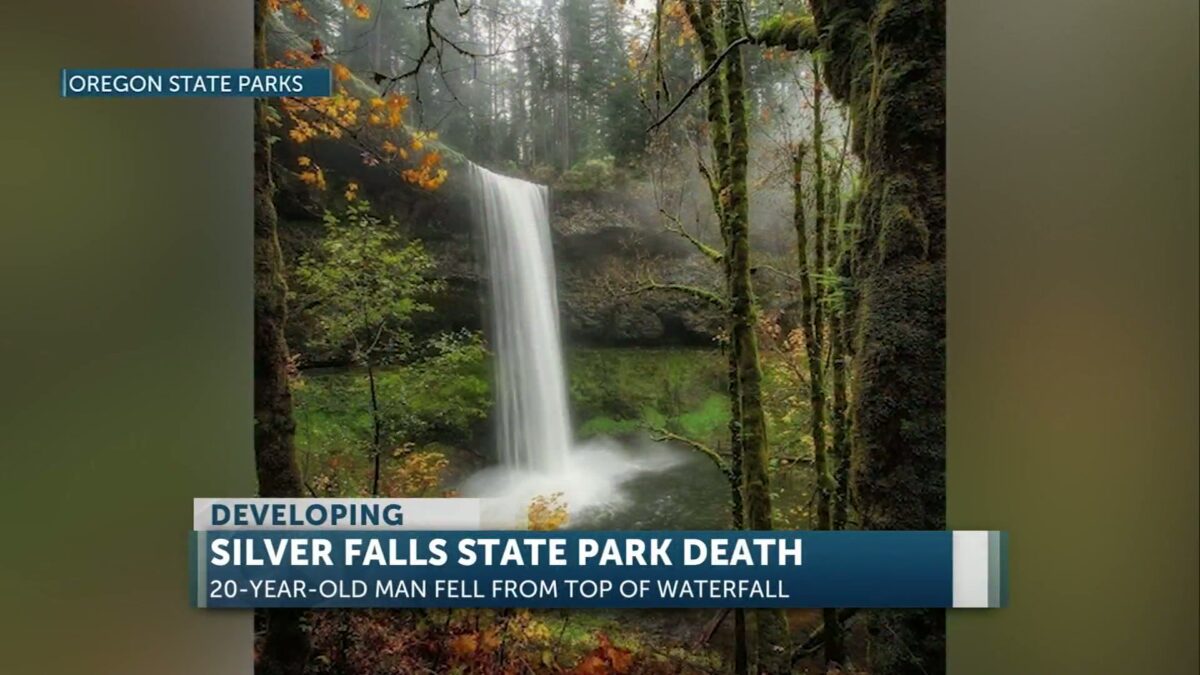
BEND, Ore. (KTVZ) — A 20-year-old Kentucky man died Monday evening after falling approximately 177 feet from South Falls at Silver Falls State Park in Marion County.

Authorities identified the victim as Zachary Nicholas Mertens of Burlington, Ky.

Troopers with the Oregon State Police and deputies with the Marion County Sheriff’s Office responded to the park following reports that someone had fallen from the top of the waterfall.

According to state police, Mertens entered a closed area at the top of the waterfall to pose for photographs before he slipped and fell into the water below.

OSP was assisted by the Marion County Sheriff’s Office, Marion County Search and Rescue, and park rangers from the Silver Falls State Park.

Click here to follow the original article.
Moberly Area Community College opens new aviation training facility at Columbia Regional Airport

Ellyse Edwards

COLUMBIA, Mo. (KMIZ)

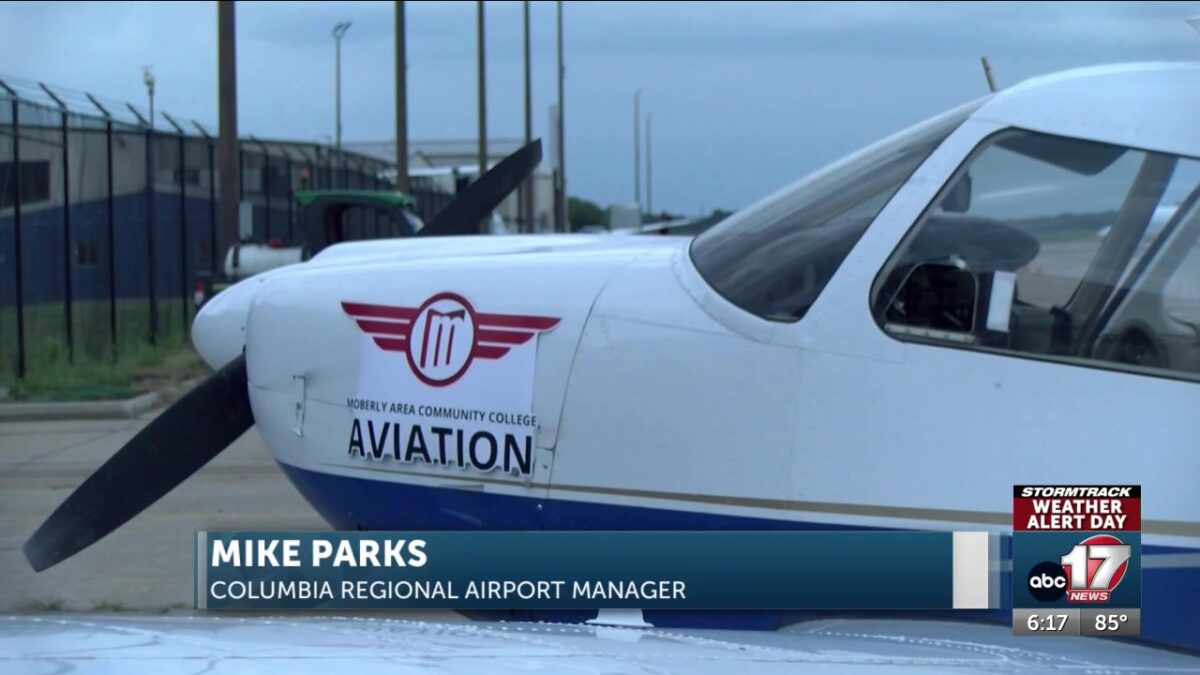
Moberly Area Community College opened a new aviation training facility at Columbia Regional Airport on Wednesday as the college prepares to welcome its first class of commercial pilot students.

MACC and the City of Columbia celebrated the opening with a ribbon-cutting ceremony at the former terminal. The facility is home to MACC’s new Associate of Applied Science in Aviation Commercial Pilot program.

The inaugural class includes 16 students, with classes scheduled to begin Aug. 24. The FAA Part 141 program is accelerated and can be completed in two years. The program was announced in 2023.

MACC Aviation Commercial Pilot Program Director Ed Longoria said the program comes as the industry faces a need for more pilots.

“Well, the vision is to help with the pilot shortage. So for 2026, there’s going to be about 24,000 pilots, a shortage of 24,000 pilots,” Longoria said.

The new training center includes classrooms, faculty offices, student learning spaces and an FAA-approved Advanced Aviation Training Device simulator. Flight training will be provided through MACC’s partnership with ATD Flight Systems. The program’s home also gives new life to Columbia Regional Airport’s former terminal, which had been vacant since newer terminal opened in 2022.

MACC and the city entered into a lease agreement in 2024 that initially provided MACC with about 1,900 square feet of space.

MACC added another 1,057 square feet in May to accommodate a Redbird flight simulator and additional training space.

The college says it has invested more than $350,000 in renovations to turn the former terminal into an aviation education and training center.

Airport Manager Michael Parks said the facility allows an unused part of the airport to serve a new role.

“Well, I think this is an absolute fantastic opportunity to utilize the old terminal here at the airport. A space that’s not being used or wasn’t previously being used in a way to help promote aviation, not just in central Missouri, but also just nationwide,” Parks said.

Students will also be learning in the middle of an active airport. Parks said students will be exposed to commercial and general aviation operations as well as the day-to-day work that goes into operating an airport.

Longoria said the demand for pilots is expected to continue beyond the immediate shortage.

“And then Boeing has just released a forecast for the next 20 years that we’re going to be short 660,000 pilots. So, it’s important that we start helping in the process of developing qualified, wide safety minded pilots to help with this dilemma,” Longoria said.

The college says the program is intended to prepare students for careers as professional pilots, with an emphasis on safety, technical training and industry standards.

Click here to follow the original article.
IID reports power outages in Imperial County

Dillon Fuhrman

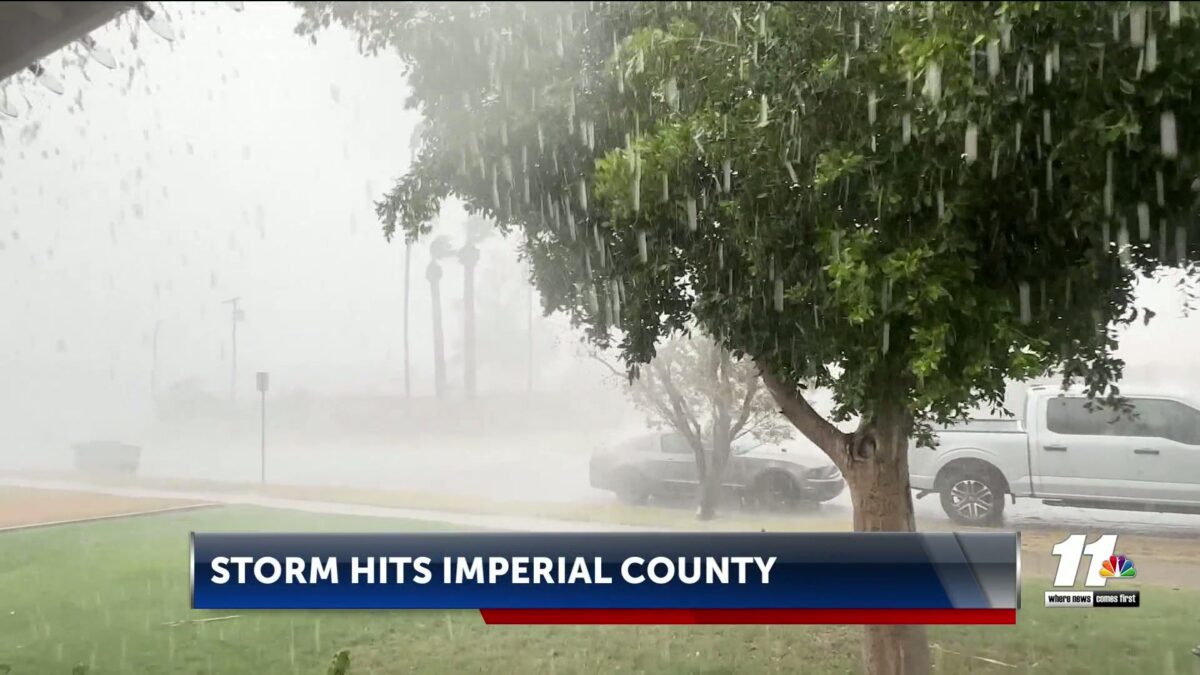
IMPERIAL COUNTY, Calif. (KYMA) – The Imperial Irrigation District (IID) says they are “experiencing scattered power outages in several areas” Wednesday.

In a post to Facebook, the areas include Calexico, Heber and Holtville, and said the outage is related to the “storm moving through the region.”

IID said crews are responding and inspecting the damage, and will “begin repairs as soon as conditions allow them to safely do so.”

“All IID directors are being kept informed and updated as conditions develop,” IID said.

In the meantime, IID is reminding residents to following these rule during an outage:

Stay away from downed power lines and always treat them as energized.

Use flashlights instead of candles when possible.

Keep refrigerator and freezer doors closed to help preserve food.

Unplug sensitive electronics to help protect them when power is restored.

Never operate generators indoors or in enclosed spaces.

Video captured and posted to Facebook by Elizabeth Samaniego shows a transformer in Calexico being blown out due to the storm.

News 11 will keep you updated on this developing story.

Click here to follow the original article.
I-Team: Local police ask for additional services as mental health resources strained

Gavin Nguyen

COACHELLA VALLEY, Calif. (KESQ) – A growing need among law enforcement in the Coachella Valley: mental health resources.

News Channel 3 investigated the way police respond to people in crisis. In many cases, these emergencies lead to life-or-death decisions.

“We meet people on their worst day,” said RSO Deputy Jose Soto-Barraza.

It’s the reality for law enforcement officers across the country. Responding to people experiencing mental health crises have become a nearly daily occurrence, according to Deputy Soto-Barraza.

He knows because he’s been there. In late July, with freeway traffic roaring below, he and his partner responded to an overpass crossing over Interstate 10.

The call that crackled over the radio: somebody was on the overpass. Moments later, a more urgent detail: that person had made it over the fence.

Soto-Barraza and his partner were the first deputies on scene. They asked other officers to shut down the freeway below, stopping traffic, as they began talking with the man in distress. Then, a powerful act of compassion: Deputy Soto-Barraza stayed by his side, holding his hand, and listening.

“What was that conversation like?” News Channel 3’s Gavin Nguyen asked the deputy.

“He was very distraught. Just a lot of things going on in his life that seemed that there was no there’s no solution for him,” the deputy answered carefully, remembering the tense moments.

After some time, firefighters brought a ladder truck. With another Spanish-speaking firefighter and the compassion of Deputy Soto-Barraza, the man was brought down safely and transported to a local hospital.

“Ultimately this situation turned out really good. We got him the help he needed. We don’t always get there on time, but we always are just doing our job, responding to these calls as best as we can,” he said.

“Do you think resources here in the county to help you assist someone who is like this?” we asked.

Thoughtfully, he answered, “I believe we do. We have enough resources. It’s just a matter of getting these the help to these people when they are needing it.”

What are officers doing now?

In the Coachella Valley, Palm Springs and Indio are considered the two largest hubs for homeless resources. From the Navigation Center to the mental health services the Palm Springs Police Department provides, there’s a lot that goes into the department’s goal of ensuring the well-being of its community.

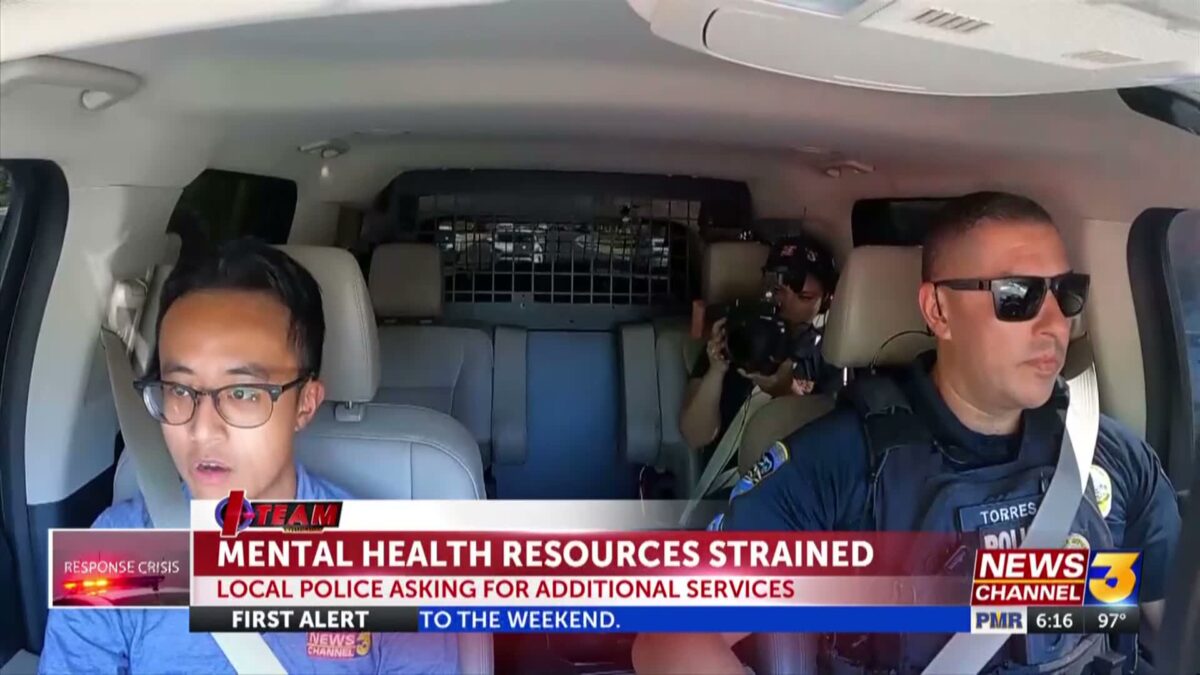
News Channel 3 crews followed along as Sgt. Miguel Torres, who oversees the teams responsible for homeless outreach. Under his leadership, four officers are a part of the Impact Team, which handles the enforcement side of the job. Another officer is paired with a clinician from Riverside County as a part of the Community Behavioral Assessment Team (CBAT). Code enforcement also falls under his leadership.

He drove to the hot spots where his teams interact with the most people.

“It’s kind of sporadic throughout the city,” the sergeant said as he drove out of the access center, adjacent to the police station. It’s the first point of entry to the Palm Springs Navigation Center. “Now you’ll see smaller patches here and there, whereas before, you’d see full on encampments on the street visible to the public.”

The first stop came at a bus stop along Ramon Road, where he noticed a man sleeping.

The sergeant and one of the officers in the Impact Team made contact with the man. Sgt. Torres put it bluntly: drug overdoses are common, and the team often checks on people like this to make sure they are, in fact, sleeping, and aren’t dead.

Thankfully, the man was awake and alert. The officers shared information with him for homeless and mental health resources before driving to the next stop: underneath Ramon Road.

Officers said the wash is a common place for the homeless to seek shade and sleep overnight. Because it’s considered trespassing, though, anyone under the bridge typically flee as soon as they hear them coming. That’s exactly what happened as Sgt. Torres drove onto the sand – one woman took off running almost immediately.

In the wash, officers often find heaps of trash and dug-out shelters with makeshift bedding. It’s an indicator of the limited number of resources there are for the homeless. At the Navigation Center, 50 beds are available. It sounds like a lot, until officers point out just how many homeless are competing for those beds. A good number of them, too, are from out of the area. At the end of the day, they said dozens – if not hundreds – of unhoused people from all over the valley (and beyond) are looking for those services.

Sgt. Torres took our crews to a motel parking lot next. He said many motels around town are hot spots for drug abuse.

“Some of the persons we already kind of know, their mannerisms and how they are when they’re normal and when they’re on drugs. We can pretty much tell right away because it’s not the same person that we’ve encountered in the past,” Sgt. Torres explained.

That’s when he noticed a man acting erratically, having trouble standing, in the corner of the parking lot. He and his partner made contact with him to make sure he wasn’t having any medical trouble. That’s when they recognized him, sat him down, and asked to search his bag. They found what they said was fentanyl, and he was taken into custody.

Sgt. Torres said they had talked with the man many times before, and, as he explained previously, could immediately tell something wasn’t right.

These encounters highlighted the different parts of solving homelessness and mental health. Lieutenant Michael Torres put it like this: “We talk about the people that we see very often. A lot of it has to do with a multiple things. … We look at it from an enforcement side, we look at it from mental health, and we look at it from a substance abuse.”

“If we got in front of it and we’re proactive with this or our approach to mental health, we believe that that will stop some of these, these moments of crisis that can lead to a very dangerous situation for all people involved, including the officers and the general public,” he continued.

The push for more

The top brass at Palm Springs Police Department have been trying to take that proactive approach to the problem, but even then, their resources are being stretched thin.

“Well, we must be honest. We don’t have any more resources. We have exhausted our resources pretty quickly,” Lt. Torres admitted.

The department’s goals are ambitious, but he believed it’s possible. In the lieutenant’s eyes, the only way to tackle the problem is a large-scale, valley-wide approach, that utilizes on-site and direct care, rather than waiting for those in need to seek care themselves.

Lt. Torres has been in talks with the County of Riverside. An effort led by Dr. Scott Weigold in the western portion of the county has shown success in recent years. It’s called Mobile Psychiatric Services (MPS).

The team of doctors, nurses, psychiatrists, and other support personnel seek out the people who most frequently use the county’s behavioral health resources. They are able to administer medication on-site.

In lieu of an interview, the county provided impressive information to News Channel 3. According to their numbers, roughly 80% of those who were contacted by MPS are homeless. 58% of those people have a primary diagnosis of schizophrenia or psychosis, and 14% of those people suffer from a substance use disorder.

Their patients tend to be in the program for up to two years. After that, they “graduate” out of the program. It gives them stability and a chance to recover.

“There’s been multiple successes. The problem is there’s only one team in the whole county that’s doing this,” said Lt. Torres. He thinks it’s the perfect tool to address the needs of the valley. “If these people were able to have the immediate resources and the immediate medication” … “maybe we can help them kind of get where they need to be in mentally in order to put them in the right direction and get the help they need substance abuse.”

We asked the county if the team would ever make its way to the Coachella Valley. Their answer was unclear, but they said several existing services are already here.

A spokesperson pointed to a newly-opened 24/7 walk-in crisis center in Indio and other behavioral health resources already in play:

“More broadly, RUHS-BH continues to expand access to behavioral health care throughout the Coachella Valley through more than 10 service locations and facilities, as well as mobile and field-based teams. This includes the recent opening of the 24/7 Indio Crisis Walk-In Center and 24/7 mobile crisis response provided by teams that include clinical and behavioral health professionals and peer support specialists.

These services operate alongside specialized co-response teams, outpatient and substance use treatment, follow-up and intensive case management, peer support, housing and resource linkages, and Full-Service Partnership programs that provide intensive, community-based treatment and support for individuals with significant behavioral health needs. Together, these programs provide a coordinated continuum of care for residents throughout the region.”

Spokesperson for Riverside University Health System

Lt. Torres speculated the biggest hurdle to overcome remains funding. Until it arrives in the valley, though, the department’s commitment to the community remains steadfast.

“We’re not going to give up on these people.”

Click here to follow the original article.

High Street viaduct in Jefferson City reopens

Melissa Houston

JEFFERSON CITY, Mo. (KMIZ)

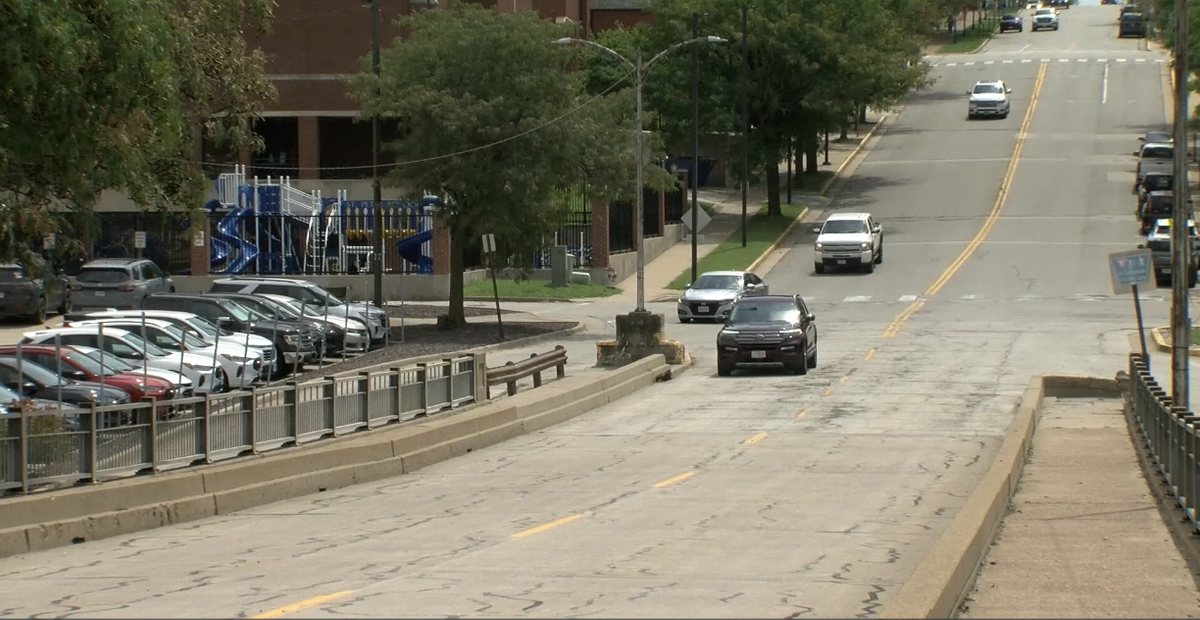
The viaduct at High Street in Jefferson City officially reopened on Wednesday after being closed for road repairs.

The viaduct was closed in February due to a hole that was impacting drivers and other deterioration of the road. The contracted cost for repairs with Double Arch Construction was estimated at $74,800 and the final cost totaled $70,000.

The city stated in a press release that only necessary work was done on the bridge, including two full-depth deck repairs, each roughly 8.5-feet-by-7 feet. The hole that initiated the closure was also repaired, and new reinforcing steel was installed in the repaired areas before new concrete was placed.

The city says they did the immediate necessary repairs to the bridge so it can be opened, but they want to do a complete renovation. The estimated cost for this is between $16-18 million dollars.

There are two federal grant applications pending to help with the cost of the project. And in the release, the city says it will continue to try and get federal, state and other funding opportunities to ensure this project happens.

In regard to the estimated start date of the renovation, City spokeswoman Molly Bryan said it is “not at the point of establishing a construction schedule for a replacement project.”

Click here to follow the original article.
Imperial County pushes for $8.5 million to fix crumbling bridges under state of emergency

Lynette Niebla

IMPERIAL COUNTY, Calif. (KYMA) – Multiple bridges across Imperial County remain under a state of emergency due to compromised integrity.

Local officials are aggressively pursuing an $8.5 million grant through the federal Bridge Investment Program to fund major replacements and repairs.

The structural crisis is heavily impacting the community, causing restricted farming routes, delayed school bus commutes, and dangerous traffic detours.

Meloland Road Bridge: This 85-year-old wooden pole bridge crosses a major drain and is actively sinking due to the increasing weight of modern heavy farming equipment. Past repairs failed, meaning the structure must be pulled out. The county plans to replace it using concrete culverts and dirt fill, though this requires ongoing coordination with the Imperial Irrigation District (IID) to prevent water flow interference and clear environmental issues.

Drew Road Bridge: This wooden pole bridge spans the New River and has forced local drivers into massive 12-to-14-mile detours just to get around it. The county is trying to secure approval from the State of California to encase the existing poles with concrete, allowing them to repair the bridge in place and quickly reopen the route.

Picacho Road Bridge: A century-old structure that was closed over a year ago due to extreme safety factors. A simple repair is out of the question for this vital regional connector. It requires a complete replacement.

While the state ultimately decides how to prioritize requests and distribute the federal funds, Imperial County is not waiting around. County crews are already digging up easement records and clearing environmental hurdles ahead of time.

“We’re trying to do all the groundwork before we ever get the funding so if we can get that done while we’re waiting then we’re ready to go,” says Imperial County District 5 Supervisor John Hawk. “The actual bridge building wouldn’t take more than probably four tofive months.”

The prolonged bridge closures have forced local travelers onto poorly maintained back roads, raising serious safety alarms.

“And they’re not safe. I see so many accidents almost happen all the time,” said Imperial Valley resident Elizabeth Franks.

Other locals are pushing for help but worry that the rural region will be ignored by decision-makers in Sacramento.

“Yeah, they’re pretty bad. It’s not like when I was a kid. I guess there’s not much we can do about it,” said Imperial Valley native Stephen Teague regarding the detour routes.

When asked about the likelihood of securing the multi-million dollar grant, Teague expressed doubt saying, “I don’t think they will. We’re not big enough. We don’t have that many people or voting power.”

A number of local agencies have written official letters to the state, urging them to prioritize Imperial County’s proposal due to the severe economic and safety impacts on the community.

“We’ve accomplished a lot, but we have a lot to go, and you can’t do it all in a couple of weeks,” Supervisor Hawk noted. “It takes an ongoing process and the road crews are very disciplined and they’re organized, so we’re happy to see that and I think we’re making good progress.”

Click here to follow the original article.