Blackfoot schools to begin daily 60-second moment of silence under new Idaho law

Par Kermani

BLACKFOOT, Idaho (KIFI) — Students in the Blackfoot School District will begin observing a daily 60-second moment of silence under a new Idaho law taking effect in public schools across the state.

Blackfoot School District Superintendent Brian Kress notified parents and guardians of the change in an update posted by the district.

According to Kress, House Bill 623, passed during the 2026 legislative session, requires all Idaho K-12 public schools to observe a moment of silence lasting at least 60 seconds each school day.

RELATED: Local schools brace themselves for new mandatory moment of silence law

Blackfoot schools will hold the one-minute period at or near the beginning of the school day.

“The goal of this new law is to provide students with a quiet moment to prepare mentally for the day ahead,” Kress wrote.

Students can choose how to use the time, including sitting quietly, reflecting, meditating or praying, as long as the activity is silent and does not disrupt others.

School employees will supervise students during the moment of silence but are not allowed to direct students on what to think about or how to spend the time.

Students will also be expected to remain quiet and respect other students during the 60-second period. Kress said disruptive behavior will be handled through normal classroom management procedures.

The district said the law also requires schools to notify families about the change and encourage parents to discuss it with their children.

“Since our educators cannot give guidance on how to spend this time, we encourage you to talk with your child(ren) about how they can best use this time of silent reflection,” Kress wrote.

Additional information about the policy is available through the “Superintendent Updates” section of the Blackfoot School District’s website.

Kress said the district is no longer including direct links in some emails because of concerns about phishing and artificial intelligence-generated attacks impersonating district communications.

Click here to follow the original article.

Missouri schools not expecting budget boost despite sports betting revenue

Mitchell Kaminski

COLUMBIA, Mo. (KMIZ)

When Missouri voters approved legal sportsbetting in November 2024, Winning for Missouri Education, backed by millions of dollars from DraftKings and FanDuel, touted millions in new revenue for the Department of Elementary and Secondary Education.

The Missouri Gaming Commission initially estimated the state would collect more than $6 million in its first year of legalized sports betting for education, with that figure expected to climb to about $20 million annually throughout the following four years.

However, despite $3.213 million being transferred into the Missouri Education Fund during fiscal year 2026 — the first year of legalized sports betting — school districts say they do not expect to see an increase in their budgets as a result.

After $1.084 million was transferred to the Sports Wagering Education Fund on June 9, ABC 17 News reached out to several Mid-Missouri school districts to find out when they expected to receive the funding.

As of Aug. 13, a spokesperson for Southern Boone County R-I School District told ABC 17 News the district had not received any payments from the Missouri Education Fund.

Under the Missouri Constitution, sports betting operators are required to pay 10% of their monthly gross gaming revenue to the state for education. However, sportsbooks can deduct certain expenses, including player winnings, promotional wagers and federal taxes, before that tax is calculated.

In June alone, sportsbooks deducted $244.5 million for those expenses. But those deductions are not the primary reason school districts are not expecting to see additional funding.

According to DESE Chief Communications Officer Lucas Bond, lawmakers have already designated how sports wagering revenue will be used in the state’s budget.

House Bill 2, the state’s appropriations bill, includes $6.805 million from the Sports Wagering for Education Fund for the foundation formula, which provides funding to school districts. It also includes $1.2 million for career-readiness assessments and $400,000 to establish an online parent portal.

Bond said if sports wagering revenue continues to come into the state as projected, those appropriations will be funded. However, the money going toward the foundation formula will not result in a net increase for schools.

“It should be noted that the Sports Wagering Fund dollars appropriated to the foundation formula would be part of the regular distribution,” Bond said. “Since the foundation formula appropriation for FY27 is the same as for FY26, this would not represent a net increase in foundation formula money to schools.”

In other words, sports betting revenue can help fund existing education appropriations without necessarily increasing the total amount of money schools receive.

Columbia Public Schools Chief Financial Officer Heather McArthur said districts also do not receive a breakdown showing exactly where each dollar in their state payment originates.

“When districts receive the monthly payment from DESE, it just lists the various revenues (Basic Formula, Classroom Trust Fund, Proposition C, Transportation, etc.) on the payment transmittal,” McArthur told ABC 17 News in an email.

McArthur said gaming revenue earmarked for education is generally included in the Classroom Trust Fund line on district payment statements. However, those funds are currently being distributed based on the state’s original budget appropriation.

She said that could change later in the fiscal year as the state gets a clearer picture of total revenue and DESE makes additional distributions or withholdings.

The distinction is important because the campaign supporting the passed amendment repeatedly highlighted education as a major beneficiary of legalized sports betting.

The amendment’s passage did create a new source of state revenue dedicated to education, but the amount ultimately reaching schools and whether it represents additional funding depends on how lawmakers appropriate that money through the state budget.

For fiscal year 2027, at least some of that sports wagering revenue is already accounted for in existing appropriations rather than being added on top of the state’s foundation formula funding.

As a result, Missouri schools are not expecting to see a budget windfall simply because sports betting revenue is now flowing into the state’s education funds.

Click here to follow the original article.

Idaho joins multistate trial against Meta over alleged harms to children

Par Kermani

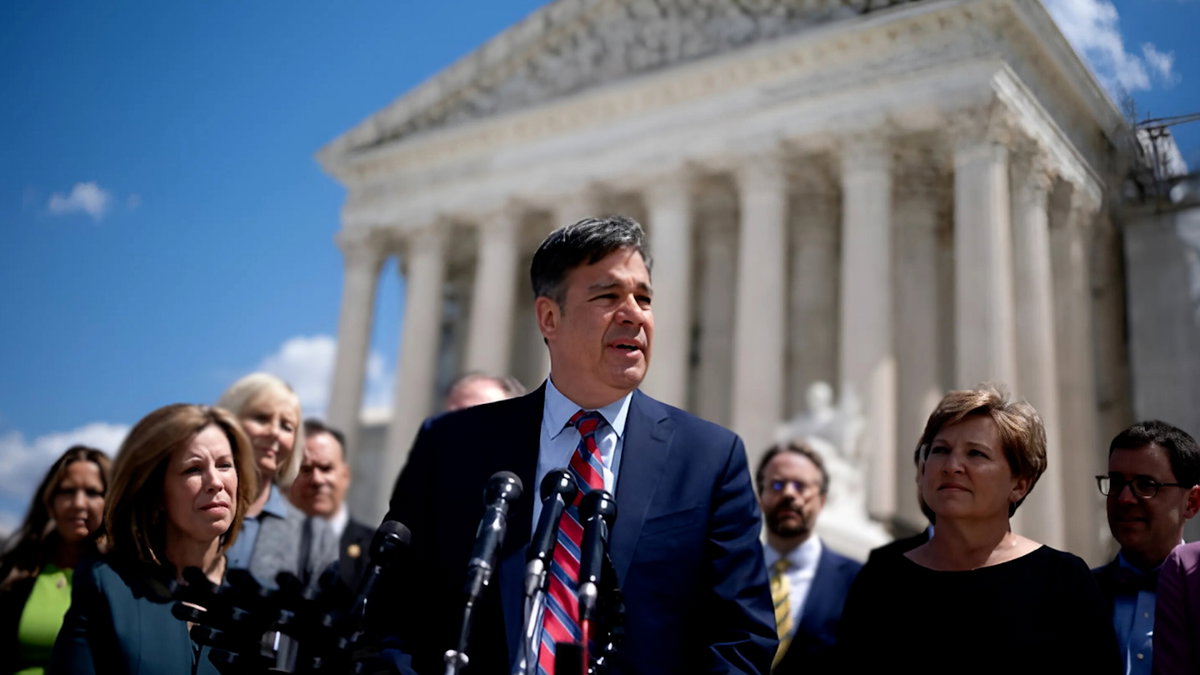
BOISE, Idaho (KIFI) — Idaho Attorney General Raul Labrador and a bipartisan coalition of attorneys general are taking Meta to trial over allegations the company designed Facebook and Instagram in ways that encouraged compulsive use among children and teens.

The states allege Meta knowingly designed features intended to keep young users on its platforms longer while misleading parents and the public about potential risks.

“Protecting children in Idaho is one of the most important responsibilities of my office,” said Attorney General Labrador. “Meta deliberately designed Facebook and Instagram to addict young, developing minds while misleading parents about the dangers of its platforms. Meta put profits ahead of the well-being of children, and we intend to hold the company fully accountable.” 

The coalition originally filed the lawsuit in October 2023 following a multiyear nationwide investigation.

According to the attorneys general, Meta allegedly designed its platforms to exploit vulnerabilities among younger users and encourage compulsive use. The lawsuit also claims the company knew about potential harms to children and teens but failed to adequately warn users and parents.

The states further allege Meta collected personal information from children under 13 without parental consent, in violation of the federal Children’s Online Privacy Protection Act.

Meta has challenged portions of the case in court.

In 2025, a judge rejected the company’s attempt to dismiss key claims involving allegedly addictive platform design and failure to warn users about potential risks.

The company later sought to stop the case from proceeding to trial after another court ruling in June 2026, but both the district court and the 9th U.S. Circuit Court of Appeals rejected those requests.

The trial is expected to last six to eight weeks.

The states are asking the court to order Meta to stop practices they allege are unlawful and comply with laws protecting children and consumers. They are also seeking monetary penalties and other relief available under federal and state law.

Attorneys general from California, Colorado, Kentucky and New Jersey are leading the trial, with support from Idaho and more than two dozen other states.

Meta has not been found liable. The allegations are being litigated in federal court.

Click here to follow the original article.

Judge rules Hoskins was in the right to reject signatures on petitions challenging ‘Missouri First’ map, group files notice of appeal

Ryan Shiner

COLUMBIA, Mo. (KMIZ)

A Cole County judge ruled on Monday that Secretary of State Denny Hoskins was allowed to toss out signatures that were gathered on a petition before a certain date.

Judge Christopher Limbaugh’s ruling was in relation to one of the lawsuits over the ongoing showdown between the state and a group trying to fight the “Missouri First” congressional map that was put in place in 2025.

The group People Not Politicians began gathering signatures prior to Hoskins approving a petition for circulation. Hoskins had argued that those signatures before Oct. 15, 2025, would not count.

Court filings show that People Not Politicians filed a notice of appeal in the case on Tuesday in the Western District Court.

Click here to follow the original article.

Idaho licensing agency warns professionals about impersonation scams

Par Kermani

BOISE, Idaho (KIFI) — The Idaho Division of Occupational and Professional Licenses is warning licensees about scammers impersonating the agency or professional licensing boards.

DOPL says scammers may contact licensees by phone, email or other methods while claiming to be investigators with the division. In some cases, scammers tell licensees they are under investigation for illegal activity and threaten to suspend or revoke their professional license.

The agency says scammers may also claim federal agencies or law enforcement are involved and ask for sensitive information, including Social Security numbers, dates of birth, payment information or other identifying details.

DOPL says licensees should be especially cautious of unexpected messages that ask them to provide personal information, make a payment, click a link or take immediate action.

According to the agency, DOPL will not initiate contact with a licensee to request sensitive personal information.

The division also warns that professional license numbers are public information, meaning scammers may use a real license number in an attempt to make a fraudulent call or message appear legitimate.

DOPL recommends licensees avoid providing personal or financial information in response to unexpected communications and not click links or open attachments in suspicious messages.

Anyone unsure whether a communication is legitimate should end the call or message and contact DOPL directly using information listed on the agency’s official website.

Licensees can also verify their license or registration information through DOPL’s online services.

DOPL’s main office can be reached at 208-334-3233 or dopl@dopl.idaho.gov.

The agency also encourages anyone targeted by a scam to report it to the Federal Trade Commission at ReportFraud.ftc.gov.

Click here to follow the original article.

Idaho Falls police investigate death at Guns N Gear

Par Kermani

IDAHO FALLS, Idaho (KIFI) — Idaho Falls Police say there is no ongoing threat to the public after a person was found dead Tuesday afternoon at Guns N Gear.

Police spokeswoman Jessica Clements told Local News 8 officers responded to the business at 1315 South Utah Avenue around 3:30 p.m.

Clements said the death appears to be a suicide.

Police have not released the identity of the person or any additional details about the circumstances surrounding the incident.

The investigation remains ongoing.

Call or text the 988 Suicide & Crisis Lifeline at 988, or visit https://988lifeline.org

Click here to follow the original article.

Cole County judge to have decision over initiative petition limiting lawmakers’ power Wednesday

Alison Patton

JEFFERSON CITY, Mo. (KMIZ)

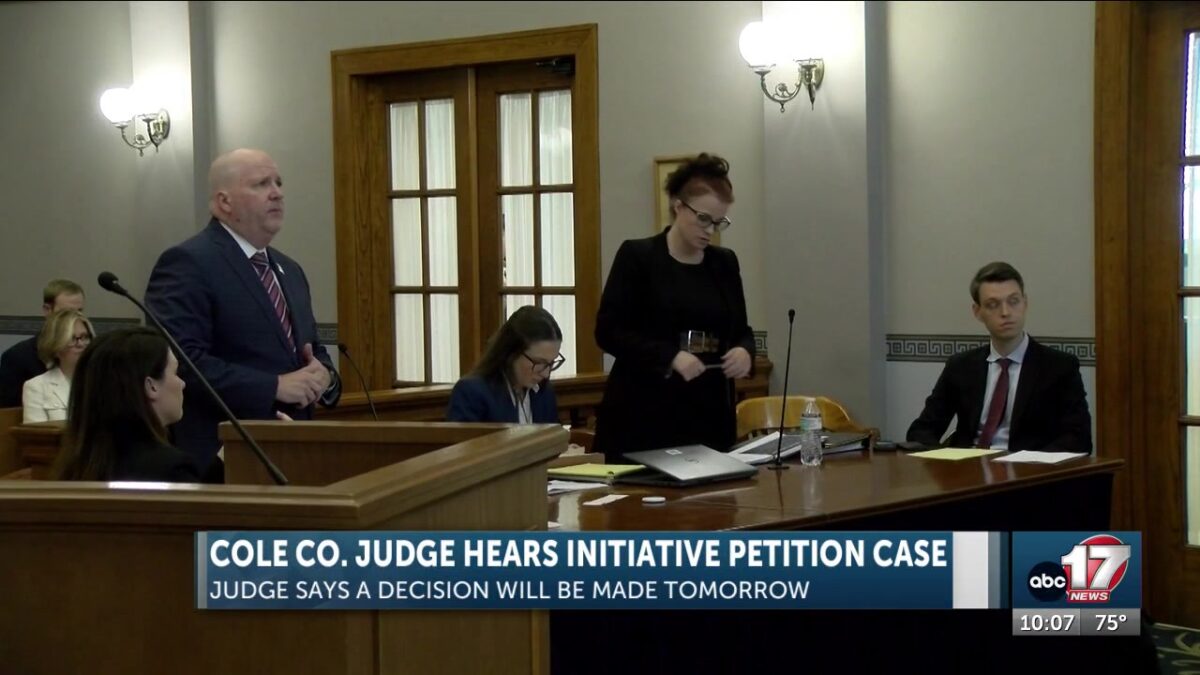
A Cole County judge heard arguments Tuesday afternoon on another initiative petition that Secretary of State Denny Hoskins determined was insufficient. Judge Daniel Green said he would have a decision on whether the initiative petition will go on the November ballot Wednesday.

The group Respect Missouri Voters submitted signatures for an initiative petition that, if approved, would make it harder for lawmakers to overturn citizen-led initiative petitions. It would require 80% of each chamber to change or pass laws to undo what citizens approved.

This stems from Amendment 4, which Missourians saw on the August ballot. Amendment 4 would have made it harder for initiative petitions to pass. That measure failed.

The Aug. 4 election was also the last day for Hoskins to approve or turn down initiative petitions, and he issued a certificate of insufficiency for the Respect Missouri Voters’ ballot measure and the initiative petition the group People Not Politicians turned in.

Both groups are now asking Cole County Judge Green to overturn the secretary’s decision before Sept. 8 — the last day to add ballot measures to the November ballot. Respect Missouri Voters has its first trial at 1:30 p.m. Tuesday.

Along with a certificate of insufficiency from Hoskins, a legal opinion from Attorney General Catherine Hanaway was also attached. Hanaway argued that Respect Missouri Voters’ ballot language touches on too many topics. She said it deals with ballot title reform, initiative reform and alters powers that lawmakers have to pass laws and amend the constitution.

Respect Missouri Voters claims the initiative petition addresses only one subject: how citizens can pass laws through the initiative petition and referendum processes.

“The people are tired of the legislature immediately undoing things that the people just passed,” Hatfield said during a press conference after the trial. “That’s what this measure is about. It’s about enshrining into the constitution protections of the power of the people to write and change laws.”

Hoskins made changes to the ballot title first approved in May, on the chance that a judge required the measure to be put on the ballot.

The state argues, in pretrial briefings, that the original version of this initiative petition violates the republican form of government, as set forth in the U.S. Constitution, which requires citizens to rely on representatives to pass laws for them.

“It [the initiative petition] binds the hands of future voters and revokes the General Assembly’s power to legislate on — and the right of future voters to vote on — an untold number of subjects,” the court document argues.

Kathleen Hunker, an attorney with the AGO, reiterated a similar statement in court.

“The initiative petition damages the people’s ability to effect change. It imposes the will, again, of today’s and yesterday’s voters on the people of tomorrow,” Hunker said.  

However, in court documents filed by Respect Missouri Voters, the group argues the secretary’s sole job is to decide if the intiative petition falls within Missouri law.

“The Secretary is not empowered to reach beyond Section 116.120.1 and ask the Attorney General to present novel legal theories on which to base an insufficiency determination,” court documents read.

If either party appeals Green’s decision, it’s likely to go to the Western District Court of Appeals.

Click here to follow the original article.
Back-to-School shopping: How much will school supplies cost Southeast Idaho parents this year?

Maile Sipraseuth

IDAHO FALLS, Idaho (KIFI) — Back-to-school shopping is in full swing, and the cost of getting students ready for the new school year is adding up for families.

A study shows that back-to-school costs are up 8% this year.

Using a D-91 school supply list for a kindergartner, Local News 8 compared prices at Target and Walmart.

For one student, the school supplies alone came to about $70.

That total includes basic classroom items such as notebooks, crayons, markers and other supplies.

It does not include other back-to-school expenses such as clothing, shoes, backpacks, classroom donations, school fees or extracurricular activities.

Families looking to save may want to compare prices between stores, shop sales and check what supplies they already have at home before buying new items.

Click here to follow the original article.
Boy arrested in woman’s assault in southwest Columbia

Ryan Shiner

COLUMBIA, Mo. (KMIZ)

A boy was arrested Tuesday in connection with an assault that occurred Monday evening near City Hill Court, the Columbia Police Department announced in a Tuesday night social media post.

Police wrote the boy assaulted a woman on a walking trail at 6:40 p.m. Monday. The woman had minor injuries.

The boy was arrested on suspicion of fourth-degree assault on Tuesday, police wrote.

The victim and the boy did not know each other, according to police.  

Click here to follow the original article.

Gov. Little appoints Judge Jason Scott to Idaho Supreme Court

Par Kermani

BOISE, Idaho (KIFI) — Gov. Brad Little has appointed Judge Jason Scott to serve on the Idaho Supreme Court.

Scott will fill the vacancy created by the upcoming retirement of Chief Justice Richard Bevan, effective Oct. 30.

“Judge Scott has dedicated his career to the law and to serving the people of Idaho,” Little said. “His experience as a practicing attorney and a district judge gives him a strong understanding of both the courtroom and the broader legal system.”

Scott is an Idaho native and earned an undergraduate degree in accounting from Idaho State University. After passing the CPA examination, he attended Duke University School of Law and earned his law degree in 1997.

After law school, Scott returned to Idaho and clerked for a U.S. District Judge.

He later spent about 15 years at Hawley Troxell, including seven years as a partner. His practice focused primarily on civil litigation and business-related disputes.

Scott was appointed a District Judge in Idaho’s Fourth Judicial District in 2014. He is chambered in Ada County and also serves as the presiding district judge in Valley County.

“For twelve years, I’ve given my all to serving the people of Idaho as a district judge,” Scott said. “I’m grateful to Governor Little for entrusting me with the opportunity to continue in public service as a justice of the Idaho Supreme Court.”

Scott said he looks forward to working with his new colleagues and deciding cases with care and fidelity to the law.

The Idaho Supreme Court recently selected Justice Robyn Brody to serve as chief justice after Bevan retires.

Click here to follow the original article.