Illinois Gov. JB Pritzker signs bill designating July 25 as Emmett Till Day

By Adam Harrington, Aida Mogos

Click here for updates on this story

    CHICAGO, Illiinois (WBBM) — Illinois Gov. JB Pritzker on Thursday signed a law designating July 25 as Emmett Till Day statewide.

July 25 is Till’s birthday. He would have turned 85 this year.

While visiting family in Mississippi in 1955, Till, 14 at the time, was kidnapped in the dead of night and then brutally lynched after reportedly whistling at a white woman.

When Till’s badly decomposed body was found three days later in the Tallahatchie River, his mother Mamie Till refused to allow a quick burial and instead brought his remains back to Chicago, where she insisted on an open casket funeral.

That open casket funeral, and photos from it which were printed in newspapers nationwide, are credited with sparking the modern-day Civil Rights Movement.

Pritzker signed the bill designating Emmett Till Day at the Roberts Temple Church of God in Christ, 4021 S. State St., where Till’s funeral was held.

The governor said he hopes the Emmett Till designation will encourage communities to mark July 25 each year for education, reflection, and public programming.

“Mamie Till-Mobley said, ‘Let the people see what they did to my boy!’ and today, Illinois is answering the call one more time,” Pritzker said. “By signing this legislation, we ensure that the lives of Emmett Till and Mamie Till-Mobley will not be forgotten.”

Please note: This story was provided to CNN Wire by an affiliate and does not contain original CNN reporting. This content carries a strict local market embargo. If you share the same market as the contributor of this article, you may not use it on any platform.

Powering the Future 2026 Energizes Houston’s Next Economic Frontier

By Francis Page Jr.

Click here for updates on this story

    July 23, 2026 (Houston Style Magazine) — The Houston Port Region did more than discuss the future—it switched it on. For generations, Greater Houston has met major economic shifts with engineering talent, entrepreneurial nerve and a willingness to build at Texas scale. That tradition was fully visible inside CPET.

More than 260 business, technology, construction and energy leaders filled San Jacinto College’s LyondellBasell Center for Petrochemical, Energy & Technology on Wednesday, July 15, 2026, for the Economic Alliance Houston Port Region’s “Powering the Future: Data Centers, Energy & Economic Growth.” The near-capacity gathering brought the people who generate power, construct infrastructure, finance development and train tomorrow’s workforce into one room for a timely conversation about artificial intelligence’s expanding appetite for energy.

photo Speakers Economic Alliance Port Region 2026 Powering The Future

That appetite is no small matter. AI may live in “the cloud,” but the cloud has an address, a construction schedule, a workforce and a very serious electric bill. As companies invest in increasingly powerful data centers, communities must consider generation capacity, transmission, reliability, sustainability, site preparation, water usage, construction and long-term economic benefits.

Texas grid operator ERCOT’s preliminary long-term forecast projects dramatic electricity-demand growth through 2032, largely reflecting proposed large-load projects and the state’s continued economic expansion. Not every project in that pipeline will be built, but the direction is clear: Texas must begin preparing today for the digital economy’s power requirements of tomorrow.

Microsoft’s Valeria Teran, representing Energy and Sustainability, and Mansur Masood, NRG Energy’s director of data-center origination, opened the program with perspectives on the intersection of technology, data-center investment and energy infrastructure. Their discussion helped frame a central question: How can the Houston Port Region capture this next generation of investment while maintaining dependable, affordable and increasingly efficient energy systems?

Economic Alliance President and CEO Chad Burke moderated the keynote conversation with the steady hand of someone who understands that regional growth is rarely accidental. It is planned, negotiated, financed, permitted, constructed and supported through partnerships. Burke kept the discussion grounded in the Houston Port Region’s competitive advantages—industrial expertise, global connectivity, available talent and a business community accustomed to solving enormous infrastructure challenges.

The “Energy Investments for Data Center Growth” panel added even more voltage. Participants included Abhi Mandhana of Calpine’s PowerFolio team; Matt Hobson, principal at Energy Edge Consulting; Junaid Ali, CEO of Prismecs; Omar David Land, director of operations at Bartlett Cocke General Contractors; and Allen Brookey, business development and growth strategy executive at Wood.

Moderated by Industry Business Roundtable Business Director Melissa Wolkenhauer, the panel examined energy-supply solutions, project development, construction readiness, investment opportunities and the future outlook for AI infrastructure.

What made the conversation especially meaningful was its location. San Jacinto College’s CPET facility represents the practical bridge between economic ambition and workforce readiness. New data-center and energy investments cannot operate on press releases alone. They require electricians, technicians, engineers, construction professionals, cybersecurity specialists, operators and creative problem-solvers.

Hosting the discussion at San Jacinto College underscored that education and industry must move together—or risk watching opportunity move elsewhere.

For more than 35 years, the Economic Alliance Houston Port Region has worked to grow and market a vibrant regional economy through economic development, public policy, workforce development, transportation, infrastructure and quality-of-life initiatives. Its membership connects 17 communities, Port Houston, Harris County and more than 200 private-sector industries surrounding the Houston Ship Channel.

“Powering the Future” continued that legacy by expanding the regional conversation beyond the industries that built Houston’s economic strength toward the technologies that will help define its next chapter.

Presenting sponsor UBS, event sponsors Harris County Precincts 2 and 3 and Texas Technical Trade School, host sponsor San Jacinto College, participating companies and regional partners helped make the program a success. As media sponsor, Houston Style Magazine proudly amplified an event that placed collaboration—not competition for the microphone—at center stage.

photo Media Sponsor Table Economic Alliance Port Region 2026 Powering The Future

Houston has never been content to simply observe the future from a safe distance. We build the port, train the workforce, engineer the solution and occasionally add a hard hat for good measure. The July 15 program showed that the Houston Port Region is prepared to transform AI’s massive power requirements into investment, employment, innovation and shared regional prosperity.

The message leaving CPET was unmistakable: when Houston’s energy intelligence meets artificial intelligence, opportunity is officially online.

To explore membership, task forces and future programs, visit AlliancePortRegion.com.

Please note: This story was provided to CNN Wire by an affiliate and does not contain original CNN reporting. This content carries a strict local market embargo. If you share the same market as the contributor of this article, you may not use it on any platform.

Kierra Lee
KIELEESTYLE@GMAIL.COM
4096658446

Bike and bus tour to commemorate victims of 1919 Chicago Race Riot, now honored with historical markers

By Adam Harrington, Audrina Sinclair

Click here for updates on this story

    CHICAGO, Illiinois (WBBM) — Monday marks 107 years since the start of the 1919 Chicago Race Riot, and a seven-mile bike and bus tour of sites related to the history of the riot is planned for this weekend.

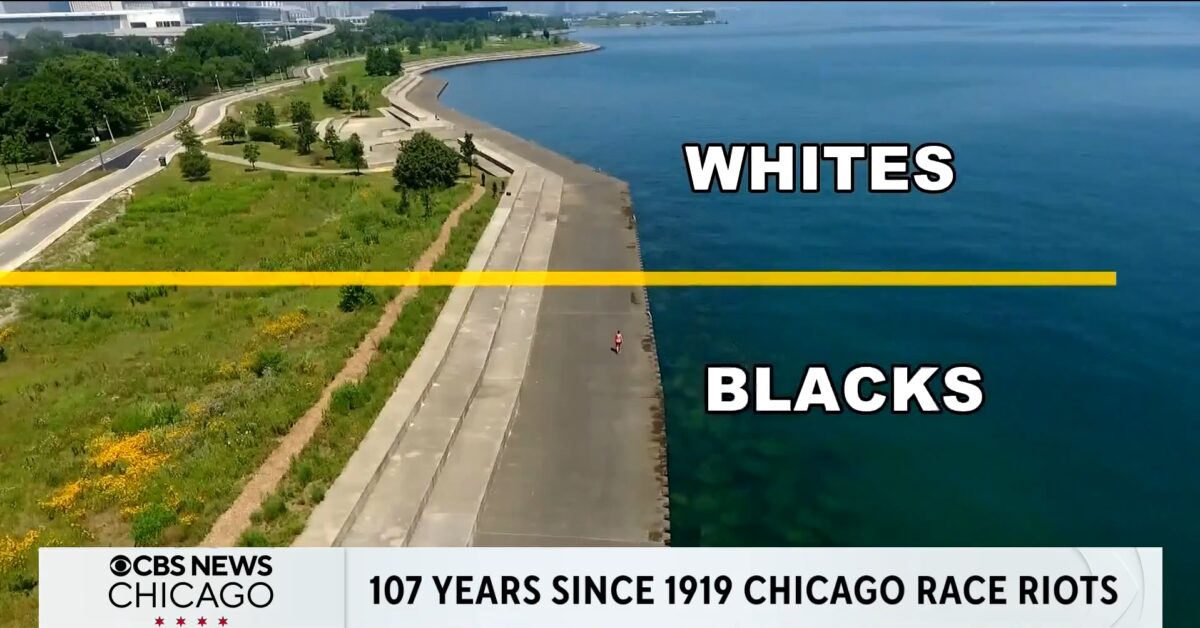
The riot started on July 27, 1919, after the murder of 17-year-old Eugene Williams. Williams, who was Black, was on a raft in Lake Michigan when he accidentally drifted into an area reserved for whites.

A group of whites threw stones at Williams, causing him to drown. No one was arrested, which fueled outrage and violence through Chicago’s South Side. Whites and police attacked African Americans as Black soldiers stood guard. A total of 38 people died and more than 500 were hurt.

About 5,000 families were also left homeless.

Dr. Peter Cole and Dr. Franklin Cosey-Gay are co-directors of the Chicago Race Riot of 1919 Commemoration Project. Cole said the 1919 riot still impacts us in 2026.

“Chicago is notorious for being very segregated. That didn’t just happen sometime randomly. It happened after the 1919 Race Riots, where basically political and business elites in the city chose segregation. Eugene Williams was murdered for being in a white part of the lake. Today, we still have people who are killed or sometimes harassed for being in the wrong place,” Cole said. “Right now, Black History is being erased by the current presidential administration. This matters now because if we don’t talk about it, it disappears, and then we suddenly don’t know our history. And if I don’t know my history, I don’t know who I am.”

The commemoration project recently completed the installation of 38 markers, one for each person killed in the riot. The handcrafted glass memorial markers were created by youth artists who are survivors of violence, in partnership with Firebird Community Arts’ Project FIRE.

The memorials are embedded at sites throughout Chicago and near the locations where the victims lost their lives.

“We know it’s very important to have public art, because you are able to engage individuals who might not be looking to engaged. You know, you don’t have to go to a library. You don’t have to attend a lecture. But you can just be walking in a public space, said Cosey-Gay. “We thought it was very important to the history of segregation and violence to survivors of violence today.”

One of the 38 markers can be found at 200 S. Wabash Ave., in the middle of the Loop, honoring the life of riot violence victim Paul Hardiwck.

“Paul Hardiwck was a Black man who worked at the Palmer House, and a mob of white people just steps from where we currently stand were looking for random Black people to attack,” Cole said in an interview at the CBS Chicago Broadcast Center downtown. “Two people were killed in the Loop. It didn’t just happen in one little part of the city — across 30 square miles of our city, including just a few blocks from here.”

The 8th annual CRR19 Historic Bike and Bus Tour starts at 10:30 a.m. Saturday, July 25, at Eugene Williams Memorial Plaza, located along the Lakefront Trail a couple of blocks north of 31st Street in Burnham Park. The ride ends at Illinois Institute of Technology Parking Lot D5, on the north side of 35th Street between the Chicago Transit Authority Green Line ‘L’ tracks and De La Salle Institute.

“This is a slow roll. We have children from 5 years old — my nieces, my daughters have participated — to our senior population,” said Cosey-Gay. “So we have a slow roll that covers not only the significance of the riots itself, but also the individuals and institutions that were important towards resistance against that, that still stand to this day. So it is an opportunity for everyone to ride.”

A bus trolley will be available for up to 40 riders for anyone not able to ride a bicycle.

“We stop multiple locations in Bronzeville and Bridgeport to tell the history of 1919, the legacy of 1919, but also to celebrate… really the resilience of the Black community,” said Cole.

This is also the first bike tour since all 38 markers for the victims of violence during the riot have been completed.

Check-in for the ride starts at 9:15 a.m. Organizers recommend using in IIT Parking Lot D5, which is free, as parking near the 31st Street Beach costs money and is expected to fill up.

Please note: This story was provided to CNN Wire by an affiliate and does not contain original CNN reporting. This content carries a strict local market embargo. If you share the same market as the contributor of this article, you may not use it on any platform.

2,000 gallon fish tank bursts at Fox Lake pet store, flooding business; friend starts fundraiser

By Sara Tenenbaum

Click here for updates on this story

    CHICAGO, Illiinois (WBBM) — Friends have started a fundraiser for a pet store in Fox Lake, Illinois, after a 2,000 gallon fish tank burst suddenly, flooding their business.

Something Fishy Pets posted to their Facebook page on Monday that the tank failed without warning, theorizing the top seam gave out.

“Thank god we were closed so no customers were here,” they wrote. “Thank god we were here so we could get right on clean up. Now time to rebuild. Very sad because we almost had it to where we wanted it.”

The store said in comments on their social media that the tank housed about 350 fish, and while they were able to save “a few hand fulls [sic],” it was “nothing close to what was in there.”

They said the tank is a loss, and will have to be thrown out, but they have to wait for their insurance to process it first.

In response, a friend who also works in the pet industry started a GoFundMe to raise money to help them rebuild and recoup the losses from the massive tank.

According to the fundraiser, the owners of Something Fishy Pets bought the store only about a year and a half ago, in February of 2025, when “it was pretty run down.” They wrote the owners have since worked nonstop to make improvements to the store, which is well-known for the massive tank that failed.

The organizer said when the tank failed it “destroyed everything in sight” and while the owners have insurance, it’s not known whether all of the damage will be covered.

“In the unfortunate event that that the full tank is not covered, they would truly need the fund to help replace the tank and see the vision come to life,” the wrote. “If you can support in any way, it would be amazing.”

Please note: This story was provided to CNN Wire by an affiliate and does not contain original CNN reporting. This content carries a strict local market embargo. If you share the same market as the contributor of this article, you may not use it on any platform.

CDOT responds to driver complaints, repairs aggravating bump on southbound I-25 in Colorado Springs

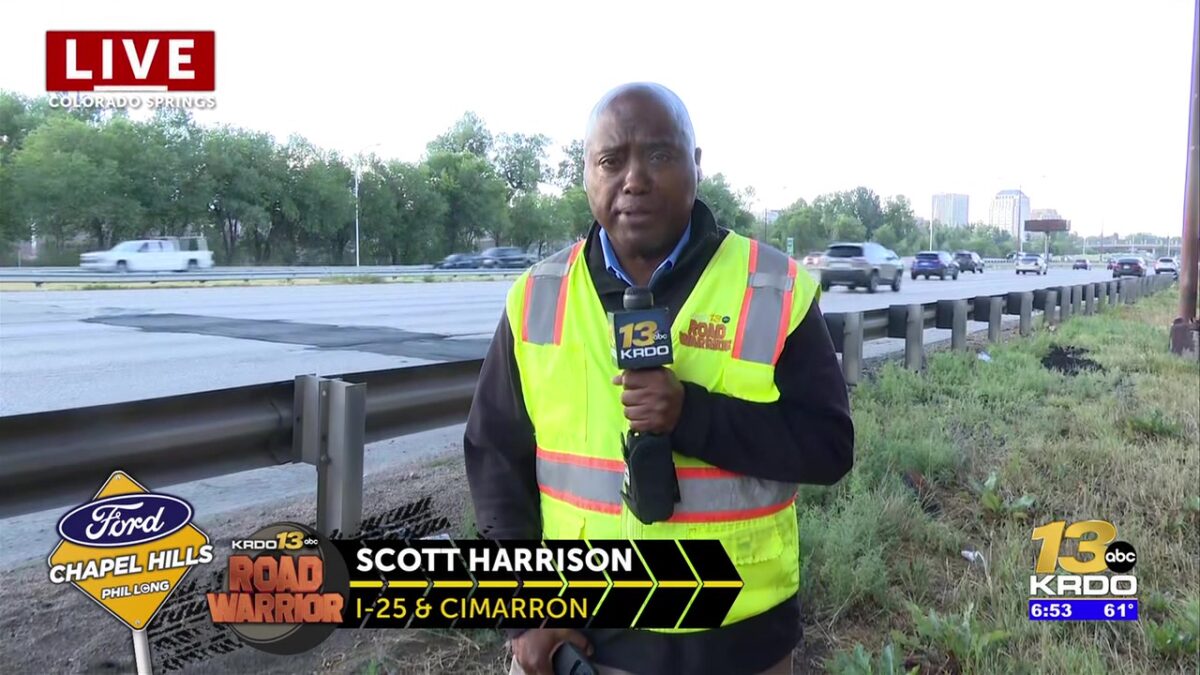
Scott Harrison

COLORADO SPRINGS, Colo. (KRDO) — A preexisting bump on southbound I-25 near the Bijou Street interchange recently worsened and caused many drivers to worry about damage to their vehicles.

“At least (provide) some warning that a bump is coming up,” one driver wrote in an email to KRDO 13’s The Road Warrior.

Another driver wrote: “It’s extremely hazardous, especially to motorcyclists, as it’s absolutely massive, comes with no warning, and is often hidden by shadows.”

Indeed, the bump stretched almost entirely across the southbound lanes and was practically impossible to avoid.

Those emails arrived on Monday, and The Road Warrior contacted the Colorado Department of Transportation (CDOT) about the matter that afternoon.

“The city (Colorado Springs) notified me this morning, and I’ve contacted the area (CDOT) supervisor,” a spokesperson said.

When The Road Warrior inspected the bump late Wednesday morning, it had been flattened and covered with either asphalt or a black material.

It was in the summer of 2024 that The Road Warrior first reported on driver complaints about two kinds of road bumps: Those like the one mentioned above that form from a pothole or other pavement damage; and those that form where older asphalt pavement meets newer concrete pavement — often on highway interchange ramps.

Examples of the latter category are at the interchange of I-25 and Cimarron Street (US 24); examples of the former category are on Powers Boulevard (Highway 21) near the Airport Road interchange.

CDOT has patched some of the pothole bumps with asphalt or materials such as Fibercrete or Gap-B to bond better with the pavement, but many drivers believe that approach hasn’t worked well.

A CDOT engineer previously said that the best solution is to replace the concrete panels where the pavement is damaged, but doing so is difficult with so much heavy traffic on highways.

As for the bumps where asphalt and concrete pavement meet, CDOT said that the process is fairly involved and expensive; one such repair happened two years ago on the northbound I-25 exit ramp in Fountain.

On Wednesday, CDOT released the following statement:

“Colorado’s broad range of temperatures, heavy rainfall (when we get it), snow, etc., are the primary drivers of roadway deterioration, ground heave, potholes, etc. CDOT maintenance patrols must prioritize road maintenance; our first priority is the safety of the traveling public. High-priority, safety-related projects include: guardrail and cable rail replacement/repair, pothole repair, and crisis response (fire, mudslides, rockslides, floods).” 

Click here to follow the original article.

California stabbing survivor shares frustration after not guilty verdict in attempted murder case

By Maricela De La Cruz

Click here for updates on this story

    YOLO, California (KCRA) — Kimberlee Ramona Guillory, a survivor of a stabbing attack in Davis, voiced her disappointment after a jury found Carlos Dominguez not guilty of attempted murder on Tuesday.

“I’m disappointed, I’m really disappointed. I mean, that was the most traumatic thing I’ve ever been through, and my daughter, she’s had to go through it. It’s just not fair. I don’t understand what the jurors were thinking,” Guillory said.

The case focused on whether Dominguez’s actions were crimes, given his mental health. Jurors considered arguments about whether his marijuana use worsened his schizophrenia and influenced his behavior.

“I’m very disappointed, and it’s almost like my life didn’t matter and neither did theirs,” Guillory said.

The jury did find Dominguez guilty of involuntary manslaughter in the deaths of David Breaux and Karim Abou Najm. However, Guillory remains skeptical about the role of his mental state in the attacks.

“If he was so mentally unstable, how come when the police officer asked him his name, he gave him all three – first, middle, and last – fake, but he didn’t know what he was doing? He was too mentally just distraught? I don’t buy it,” Guillory said.

Three years after the attack, Guillory said the incident continues to impact her daily life.

“He did a pretty good job of chopping the inside of me because when he came down with the knife, he cut the tent and it went straight into me,” she said.

Guillory added that she still experiences daily pain, and while her injuries have healed, she continues to live in fear.

“I’m not homeless anymore, thank goodness. But other than that, I live in fear every day, and I don’t think it’s ever going to stop,” she said.

In a statement to KCRA 3 News, Karim Abou Najm’s parents said they “feel betrayed and deeply disappointed by the justice system.”

David Breaux’s sister, Maria Breaux said she is relieved the trial is over and hopes “the overriding lesson from this tragedy is the importance of early intervention for severe mental illness and of treating every human being with compassion.”

Please note: This story was provided to CNN Wire by an affiliate and does not contain original CNN reporting. This content carries a strict local market embargo. If you share the same market as the contributor of this article, you may not use it on any platform.

‘It is musty’: Wisconsin residents fed up with odor, bad taste in tap water

By TJ Dysart

Click here for updates on this story

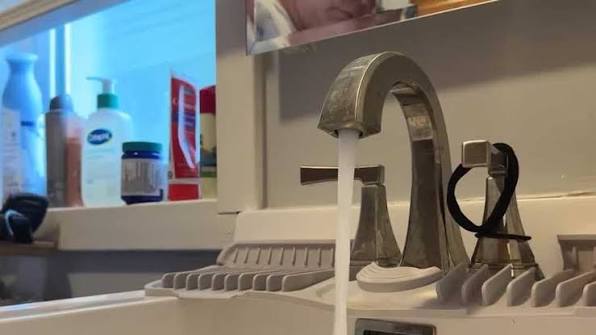
    RACINE, Wisconsin (WISN) — Racine residents are raising concerns about musty-smelling and tasting tap water, an issue city officials say is linked to Lake Michigan and warmer temperatures.

The city, which gained national recognition in 2011 for having the best-tasting tap water in the United States, acknowledged the problem on Tuesday, assuring residents via social media that the water remains safe to drink, cook, and bathe in. However, many residents remain dissatisfied.

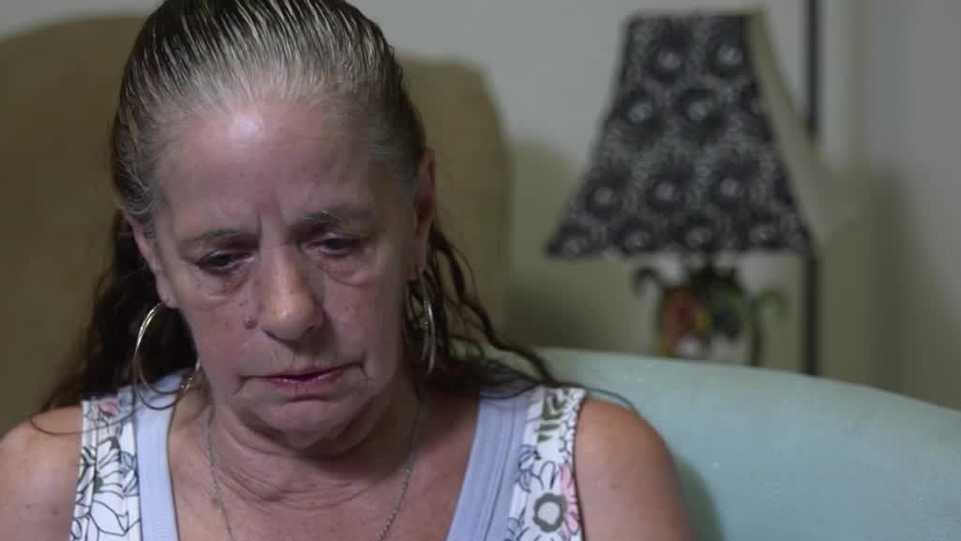
“I won’t even give it to my grandkids,” Katrinea Thornton said. “I won’t even make ice cubes out of it.”

Thornton has turned to bottled water, which she says tastes better and gives her peace of mind.

City officials attribute the issue to warmer temperatures causing increased bacteria growth in Lake Michigan. Joel Brunner, the city’s drinking water plant superintendent, said the same problem occurred last year, prompting the city to budget additional funds for water treatment and testing.

“We are also working with the DNR and engineering consultants utilizing our powder-activated carbon system,” Brunner said.

He explained that the carbon system, which still requires approval from the Department of Natural Resources, would significantly improve the water’s taste and odor.

“It wouldn’t completely remove it, but it would definitely help with the taste and odors,” Brunner said.

For residents like Thornton, relief cannot come soon enough.

“I think we should be able to drink the water that we pay for instead of going to the store and buy water,” she said.

WISN 12 News has reached out to the Department of Natural Resources for additional information but has not yet received a response.

Please note: This story was provided to CNN Wire by an affiliate and does not contain original CNN reporting. This content carries a strict local market embargo. If you share the same market as the contributor of this article, you may not use it on any platform.

Arkansas police officer died saving fiancée hours after proposing, her mother says

By Abner Sosa

Click here for updates on this story

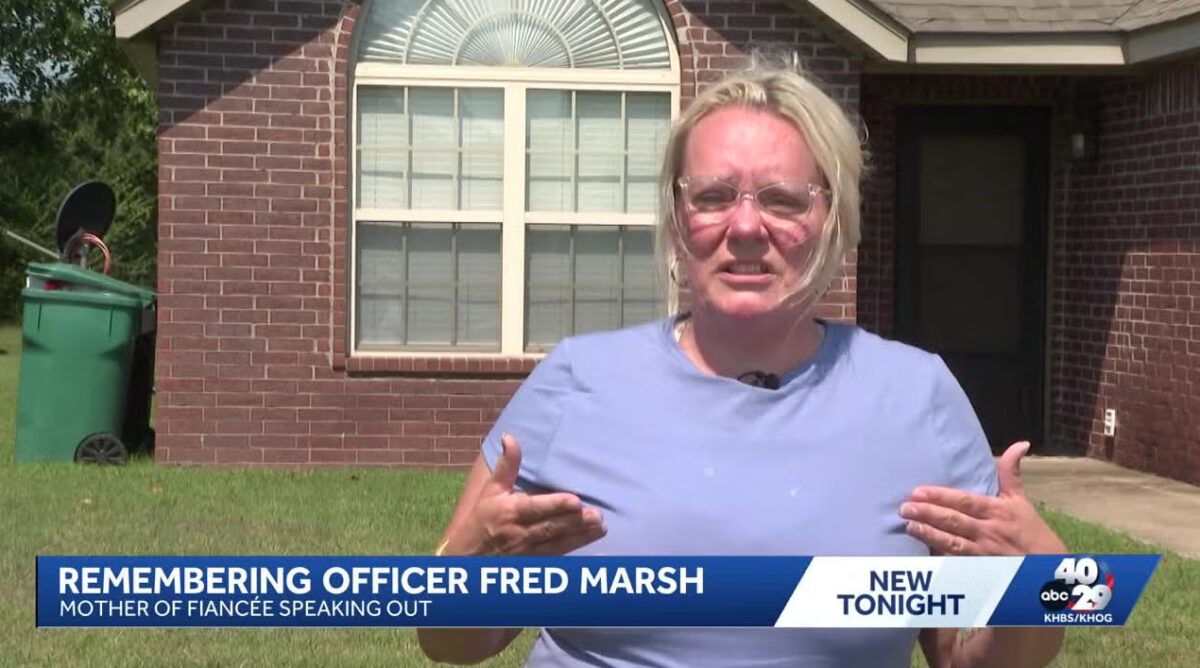
    ROGERS, Arkansas (KHBS, KHOG) — A Rogers police officer proposed to his girlfriend hours before he died while trying to save her from drowning in the Elk River, according to the woman’s mother.

Officer Fred Marsh, 24, died July 18 while canoeing with his fiancée and friends. Rogers police said Tuesday that Marsh died while trying to save a person who was drowning.

Sheryl Padgett said that person was her daughter, who had become engaged to Marsh earlier that morning.

“They had been together for three beautiful years, and they had a very beautiful, loving relationship,” Padgett said. “Even though legally he was not my son-in-law, he will forever be my son.”

Padgett said the couple was on the river with another Rogers police officer and that officer’s wife. The group had spent much of the day on the water before stopping as temperatures climbed.

Padgett said her daughter entered the water and began struggling against the current while trying to return to a kayak. The other officer went to help her, and Marsh joined the rescue effort when he saw his fiancée was in distress.

Padgett said her daughter was eventually pushed toward a canoe, but Marsh became caught in the current and began calling for help. The group and other people on the river tried to reach him, but he went underwater and did not resurface.

“He saw the love of his life in distress, and he was going to help his friend and do what a good human would do,” Padgett said. “He gave his life helping someone else.”

Marsh had proposed to Padgett’s daughter earlier that day as the couple prepared to build a life together in Northwest Arkansas.

Marsh was in his first year with the Rogers Police Department. He graduated from the Arkansas Law Enforcement Training Academy on April 9 and had recently begun serving as an officer.

Padgett described Marsh as a “gentle giant” who was loving, hardworking and guided by his Christian faith. She said he never hesitated when someone needed help.

“There’s nothing he wouldn’t do for anyone,” Padgett said. “You didn’t have to tell him. You didn’t have to beg him. He just was willing and would jump in there and do whatever it took to help someone.”

Padgett said she began calling Marsh her son soon after he entered the family. She had lost her only son in a fatal accident four years earlier and said Marsh helped fill part of the void that loss left behind.

“We instantly made a connection and a bond,” she said. “I called him son, and he called me mama.”

A motorcade escorted Marsh’s body through Northwest Arkansas on Monday as people gathered along the route to honor him. Padgett said the response from law enforcement and the Rogers community showed the family how many lives Marsh had touched.

“They made it very clear that Fred was not just their family, but so was my daughter, my family and, even more importantly, Fred’s family,” Padgett said.

Funeral arrangements are being handled by Marsh’s family. Padgett said the family expects officers, former classmates, childhood friends and others from across the state to attend.

She encouraged people who want to honor Marsh to follow the example he set by treating others with compassion.

“Let’s do something in Fred’s honor,” Padgett said. “Be kind to your fellow man. When Fred loved, he loved with everything he had, and he loved well.”

Please note: This story was provided to CNN Wire by an affiliate and does not contain original CNN reporting. This content carries a strict local market embargo. If you share the same market as the contributor of this article, you may not use it on any platform.

Kansas City 10-year-old with juvenile arthritis creates artwork to raise money for research

By Kelly Eckerman

Click here for updates on this story

    KANSAS CITY, Missouri (KMBC) — For most 10-year-olds, painting is a fun hobby.

For Grace Miller, it’s also a way to tell her story.

Grace loves to draw, color and paint. She especially loves sea otters.

But behind every piece of artwork is a challenge many people can’t see. She has lived with juvenile arthritis since she was 5 years old.

“It feels like you just got punched a lot of times. And it hurts so bad,” Grace said.

Explaining what she experiences isn’t always easy.

“It gets hard trying to tell people what it’s like because most people don’t understand,” Grace said. “But once they understand, it feels much better.”

Now, Grace is sharing her story through the “Art for Arthritis” program, where she’s paired with professional artist Laura Simmons. Together, they’ve created paintings that will be auctioned to raise money for arthritis research.

Simmons said the partnership is about more than creating art.

“On the outside they look like everybody else, but on the inside, they’re really suffering with a silent disease,” Simmons said. “So they do have to take breaks.”

She hopes the project not only raises money for research but also helps children with arthritis gain confidence and feel seen.

“Their eyes light up and they see what I’ve already seen the whole time,” Simmons said. “That’s the ‘aha’ moment, and it’s really wonderful.”

Grace said working alongside Simmons has been one of the highlights of the experience.

“It’s been very exciting and fun being able to work with Laura because she’s so, so nice,” Grace said. “The painting turned out so good.”

Simmons couldn’t agree more.

“I love what she did, and I’m so happy and so proud of her,” she said.

The artwork will be featured during the Arthritis Foundation’s Art for Arthritis event, where proceeds will support research and programs for people living with arthritis. Tickets and more information are available at arthritis.org/kcart.

Please note: This story was provided to CNN Wire by an affiliate and does not contain original CNN reporting. This content carries a strict local market embargo. If you share the same market as the contributor of this article, you may not use it on any platform.

3 Idaho Falls figure skaters carve a path to a national competition

Megan Lavin

REXBURG, Idaho (KIFI) — For years, competitive figure skaters in eastern Idaho faced a challenge many athletes never have to think about: finding a place to practice.

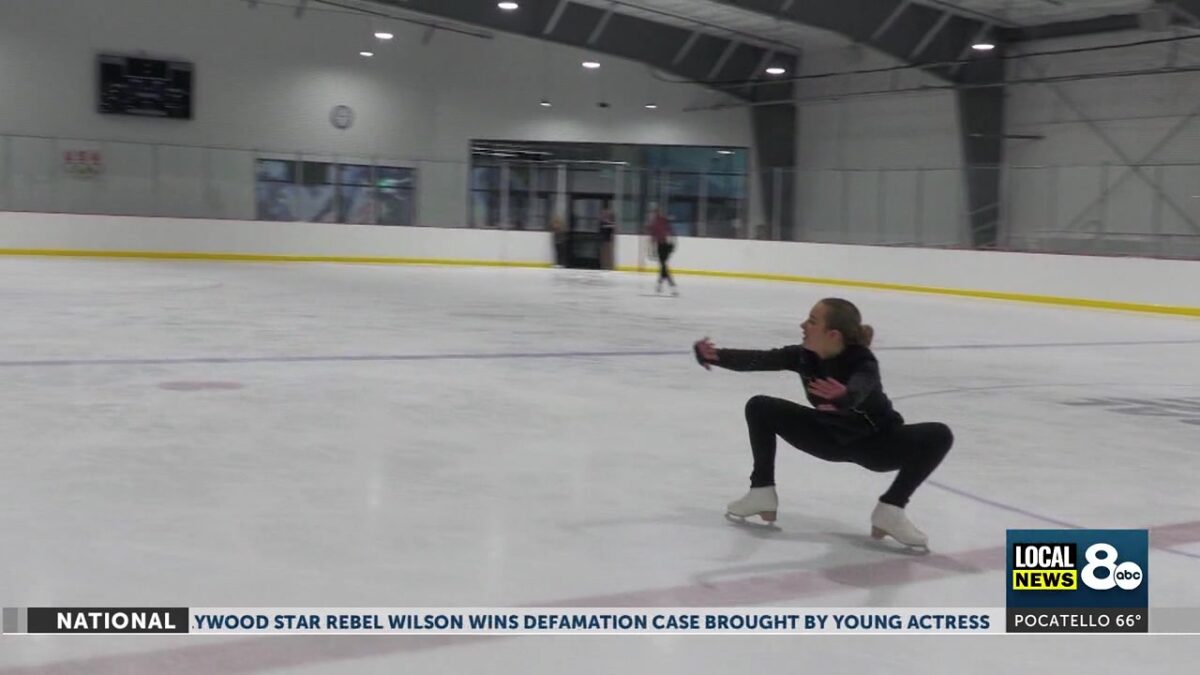
But that didn’t stop a determined coach and a group of dedicated athletes. So much so that three Idaho Falls teenagers — Alexis Lee-Maes, Kinlee Preussner and Lexee Yanex — are now headed to one of the country’s biggest amateur sporting events.

From Idaho to the State Games of America

The three skaters qualified for the State Games of America, an Olympic-style competition featuring some of the nation’s best amateur athletes.

Fifteen-year-old figure skater Alexis Lee-Maes is excited. “I’m really excited. This is something I’ve always wanted to do.”

The trio will represent Idaho against about 1,400 figure skaters from across the country. The event is unique because it features not only figure skating, but many of the sports found in both the Summer and Winter Olympics, complete with opening ceremonies and more than 14,000 athletes.

Searching for year-round ice

Getting there looked a little different than it does for many of their competitors.

The Idaho Falls rink closes from spring until October, so the athletes drive two hours each way to Logan, Utah, several times a week during the offseason just to find year-round ice.

Their coach, Sydnee Nethery, remembers those sacrifices.

“There have been times that we’ve left our camper in the parking lot and lived in the parking lot.”

Now, they’re training much closer to home thanks to the recent opening of the year-round Neutral Zone in Rexburg.

A coach who knows the journey

It’s a journey Nethery understands firsthand.

As a competitive skater, she spent weeks at a time living with coaches in Utah so she could continue training. Now, she’s worked to build something different for the next generation.

“I fought really hard to be able to do it,” Nethery said. “It’s not super accessible here, but I’ve done everything that I can to get these kids on the ice.”

That dedication has helped produce not only high-caliber athletes, but also resilient young women who aren’t afraid of falling, either in the sport or in life.

Her daughter, 12-year-old figure skater Kinlee Preussner, said everyone fears falling at first.

“We know that falling is a part of the sport. So we have to get past it.”

More than a sport: Learning to express emotion

Figure skating demands athleticism, but it also asks athletes to be vulnerable. Under the spotlight, they have to let their emotions shine through their facial expressions and movements.

Fourteen-year-old Lexee Yanex said that’s one of the things she enjoys most about skating.

“I can bring out some major emotion that I don’t think I could off the ice.”

Kinlee agrees.

“It’s a way for you to express your emotions through movement, which is a really good way to not put it on other people.”

Lessons that last beyond competition

Unlike many sports, there isn’t a referee telling skaters what went wrong in the moment.

“There’s an entire learning curve that comes with being in an individual artistic sport,” Nethery said. “We don’t have referees out there blowing whistles if we’ve done something wrong. We have to learn that after the score sheet comes out, and sometimes that’s a really hard lesson.”

Those lessons don’t just build better skaters. They build confident adults.

Nethery believes the experience will benefit them long after their competitive careers end.

“They’re going to be able to walk into a boardroom one day and lead a meeting because they’ve been performing for years and years of their life,” she said. “They don’t have to walk in feeling nervous or timid or shy — they’ve already worked through that.”

From long drives across state lines to representing Idaho on a national stage, this trio is proving that sometimes the hardest path helps you find your footing.

A sport that changed one skater’s life

For Alexis, the benefits of figure skating have gone far beyond competition.

Alexis has cerebral palsy. Doctors encouraged her family to keep her skating because of the positive effects it was having on her body.

“They told her time and time again, ‘Please don’t quit the figure skating because the figure skating is what’s helping you improve,'” Nethery said.

She said Alexis eventually no longer needed regular neurology appointments.

“She graduated from having to go to her neurology appointments consistently, and they attributed it to the figure skating.”

As the three skaters prepare to represent Idaho on the national stage, their story is about much more than medals. It’s about perseverance, sacrifice and the opportunities that come from refusing to let obstacles stand in the way.

To follow their journey at the State Games of America, visit Syd’z Kydz of Idaho Falls on Facebook.

Click here to follow the original article.