CNN
Originally Published: 30 MAY 24 11:40 ET
Updated: 29 JUL 26 14:50 ET
By Eric Levenson, Taylor Romine, Melissa Gray, Rebekah Riess, CNN
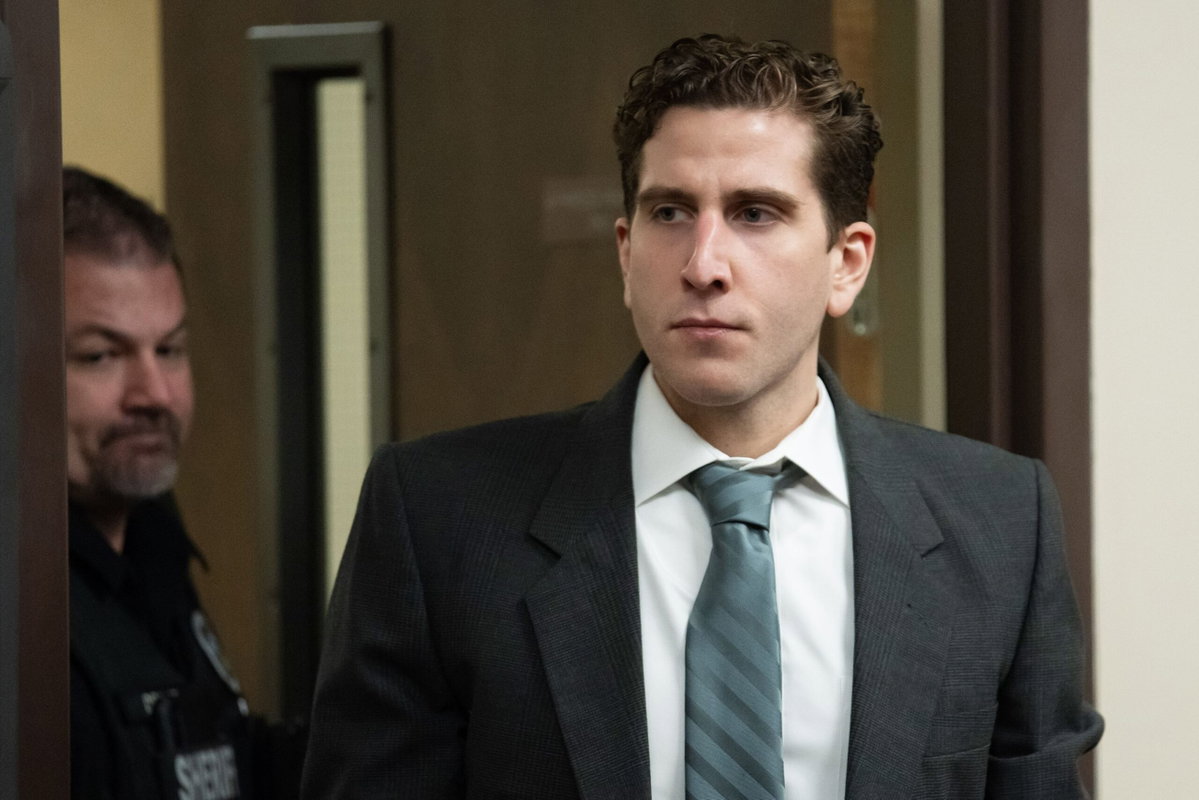
(CNN) — Bryan Kohberger, who pleaded guilty to the murders of four University of Idaho students in their off-campus home in 2022, has filed a petition to reopen the case and take back his guilty plea.
One year after a stunning hearing in which Kohberger admitted to his crimes in court, the former criminology graduate student says his defense team misled him and persuaded him to enter a false guilty plea.
His request to reverse his plea not only revives the case, but it also may renew the frustrations and emotions of the grieving families of his four victims: Kaylee Goncalves, Ethan Chapin, Xana Kernodle and Madison Mogen. They were fatally stabbed in the overnight hours of November 13, 2022.
Interviews with the surviving roommates in the docuseries, “The Idaho Murders: College Nightmare,” highlight their fear and confusion the night of the murders. The three-episode series, released Wednesday on Netflix, follows the case through Kohberger’s arrest and conviction.
The documentary, which includes interviews with family and friends of the victims, as well as investigators, lays out the timeline of the case and details of the investigation with body camera and surveillance video from the days and months surrounding the murders of the four students.
Being interviewed by an officer on scene, roommate Dylan Mortensen recalled hearing victim Goncalves scream and run inside their shared home. “And I remember hearing this guy’s voice that I didn’t recognize, saying: ‘You’re going to be OK. I’m going to help you,’” she told the officer. “It wasn’t in a nice way. It was a weird way. Like, a weird tone … After that I didn’t hear anything. So then I kept calling her name.”
As investigators are shown putting together the pieces of the case, roommate Bethany Funke is questioned about whether any of her roommates had complained about someone stalking them. In a police interview, Funke recalled Goncalves telling her she had seen “a man’s silhouette staring at her” while she took the dog out around a month before the murders.
The series also highlights some of the victims’ families’ disappointment over the news that Kohberger had entered a plea deal and would no longer face the death penalty. “Justice would only be if the kids came back,” Kaylee’s mother, Kristi Goncalves, says in an interview. “The kids are gone. They’re never coming back. But I want him to die.”
Now, the next legal steps for Kohberger to take back his guilty plea are unclear. Idaho law does permit a plea withdrawal, but a person must meet a high bar to prove the sort of claims he is making, lawyers say.
Here’s a timeline of the legal developments since Kohberger’s case reached the courtroom.
June 9, 2023: A coalition of media organizations and the family of one of the victims came to court to challenge the gag order placed on the parties in the case.
June 23, 2023: Latah County Judge John Judge denied both requests but issued a revised gag order allowing the parties to discuss topics that do not have a “substantial likelihood of materially prejudicing or otherwise influencing the outcome of the case.”
August 2, 2023: Kohberger’s attorneys said they would use an alibi defense but couldn’t pin down their client’s specific location on the night of the killings because he was “driving during the late night and early morning hours.”
“Mr. Kohberger is not claiming to be at a specific location at a specific time; at this time there is not a specific witness to say precisely where Mr. Kohberger was at each moment of the hours” of the attacks, his attorneys said in a court filing.
October 26, 2023: The judge denied a request to dismiss the grand jury indictment after the defense argued there was an error in the grand jury instructions.
December 18, 2023: The judge denied a second motion to dismiss the indictment after the defense argued prosecutors failed to comply fully with state rules on jury selection and the jury questionnaire.
February 28, 2024: Defense attorney Anne C. Taylor asked the court to allow three defense experts and others to view the investigative genetic genealogy evidence, which had been sealed, to understand the full timeline of how police began to focus on Kohberger.
Genetic genealogy is a practice that blends DNA analysis in the lab with genealogical research, such as tracing a person’s family tree. In this case, investigators found a single source of male DNA on the button snap of a leather knife sheath left at the crime scene, according to a probable cause affidavit. FBI investigators loaded the DNA profile to public genealogy sites to search for a match and then sent a tip to investigate Kohberger, according to a prosecution court filing.
The judge initially declined to give the defense investigators extended access to the investigative genetic genealogy, saying he would rather the experts already approved to view the material give justification for digging deeper.
April 4, 2024: The judge criticized Kohberger’s defense attorney, saying she commissioned phone surveys to potential jurors that could have hindered Kohberger’s ability to get a fair trial. However, Taylor said the judge violated her client’s right to due process by ordering a stop to the anonymous survey without hearing the defense’s side first.
The judge said he wanted a “hearing at least every month,” noting the importance of “cleaning up” the legal proceedings.
April 17, 2024: Kohberger’s defense lawyers filed a court document saying they planned to offer a cell phone tower and radio frequency expert to partially corroborate his proposed alibi that he was out driving west of Moscow on the night of the slayings.
April 19, 2024: The judge allowed surveys conducted with potential jurors to continue “without modification” after temporarily pausing them.
April 29, 2024: The prosecution asked the court to deny Kohberger the opportunity to add to his alibi and to preclude anyone other than the defendant to testify as to his whereabouts on the night of the killings.
May 2, 2024: Kohberger’s defense had asked for an upcoming evidentiary hearing with witnesses be made public, while the prosecution asked for it to be sealed. The judge ruled it would be closed to the public.
After the hearing, the family of Goncalves, one of the victims, criticized the slow pace of the proceedings, saying, “This case is turning into a hamster wheel of motions, hearings, and delayed decisions,” adding they were “incredibly frustrated.”
May 23, 2024: Taylor, the defense attorney, questioned a Moscow police detective about the preparation of visual cell phone logs and methods for searching for certain videos. The testimony was related to two motions to compel prosecutors to share discovery with the defense, but the contents of the motions were sealed, so it was not clear what they were requesting.
May 30, 2024: The Moscow police detective leading the investigation and a defense expert in cell phone location data testified the defense had not received some key evidence in the case.
Cpl. Brett Payne, the lead investigator on the case, testified he and other investigators collected thousands of hours of video surveillance as they tried to locate a white Hyundai Elantra connected to the suspect. The videos were saved on various thumb drives, but there was no central inventory of the videos, he testified. He also said investigators did not see on any of the videos the Elantra going south from Moscow toward Pullman, Washington, in the early morning hours after the killings.
The probable cause affidavit used in the case alleged Kohberger drove south toward Pullman after he committed the four killings.
Sy Ray, an expert on cell phone geolocation data, testified he had not been provided the underlying AT&T source data and list of nearby cell towers used by detectives to create a map of Kohberger’s movements with his cell phone. Based on the data he had received, he believed some statements in the records were not accurate, and he said the missing data could be helpful to the defense.
“Because of the piecemealing of the data, because of the missing data, because of data that I’m reviewing that is incredibly inaccurate, everything that is missing is absolutely to the benefit of the defense right now,” he said.
June 7, 2024: After previously restricting who had access to the investigative genetic genealogy evidence, the judge ruled to allow unnamed “defense investigators” to view the material.
June 27, 2024: The parties set a trial date of June 2, 2025. The judge set aside about three months for the trial, including two weeks for jury selection, eight weeks for the trial and two weeks for potential post-conviction hearings and sentencing.
“This is a great step to set these deadlines and hearings so that we can move through this,” he said.
July 22, 2024: Kohberger’s defense team filed a memorandum in support of moving the case out of Latah County, saying he couldn’t receive a fair trial there “because of the extensive publicity that is ongoing and inflammatory.” The defense suggested the trial be moved to Ada County, which includes Boise, about 300 miles south.
August 13, 2024: Prosecutors objected to the defense team’s change of venue motion, arguing the defense failed to prove Kohberger would not receive a fair trial in the county. “The Court should deny Defendant’s motion and instead, focus on crafting remedial measures to ensure that a fair and impartial jury can be seated in Latah County,” the prosecution argued.
August 19, 2024: In a reply to the state’s objection, Kohberger’s defense said moving the venue to Ada County is supported by expert analysis, precedent and results of a survey in Latah County showing a “mob mentality.” “The traumatized town of Moscow is understandably filled with deeply held prejudgment opinions of guilt,” the defense wrote.
August 29, 2024: At a hearing on the change of venue request, four expert witnesses testified for the defense about potential biases among the local jury pool. The prosecution did not call any witnesses.
September 5, 2024: Kohberger’s defense team filed 13 motions aimed at removing the death penalty from his case.
Attorneys argued the death penalty is unconstitutional because it violates international human rights law and prevents the right to a speedy trial. They said the methods used to put inmates to death in Idaho equate to cruel and unusual punishment and the practice violates the public’s evolving standards of decency. Death by firing squad is one possible method of execution in Idaho if the state cannot obtain the drugs necessary for a lethal injection.
The court set October 10 as the deadline for the state’s response.
September 9, 2024: Judge John Judge granted the defense motion to move the trial out of Latah County due to concerns the local community was prejudiced against him.
“Considering the undisputed evidence presented by the defense, the extreme nature of the news coverage in this case, and the smaller population in Latah County, the defense has met the rather low standard of demonstrating ‘reasonable likelihood’ that prejudicial news coverage will compromise a fair trial in Latah County,” the judge wrote. The judge also highlighted logistical issues with holding such a high-profile case in Latah County.
September 12, 2024: The Idaho Supreme Court ruled to move Kohberger’s trial to Ada County, which surrounds the capital city of Boise and is the most populous county in the state. Ada County District Judge Steve Hippler would take on the case, the court ruled.
September 26, 2024: The new judge in the case told lawyers he was weighing whether to change the trial date. Hippler preferred to move the trial – scheduled to start in June 2025 – to either May or September 2025, because he anticipated issues with keeping a jury intact during a lengthy summer trial, he told prosecutors and defense attorneys during his first hearing in the case.
The gag order issued when the case was in Latah County would remain in place, Hippler also said.
October 9, 2024: Judge Hippler moved Kohberger’s trial date two months later, setting it to begin August 11, 2025. The voir dire portion of the jury selection process would start July 30, 2025, Hippler ordered.
November, 7, 2024: Hippler said hewas considering several motions filed by the defense to have the death penalty dismissed in this case. The defense argued the death penalty violates Kohberger’s constitutional rights, which protect him from cruel and unusual punishment, and it violates international law. Kohberger’s attorneys said the death penalty creates a potential conflict with his constitutional rights to effective counsel and a speedy trial, among other concerns.
The court said it would issue written decisions for these motions at an unspecified later date.
November 15, 2024: Kohberger’s defense team filed 13 motions asking to suppress evidence from information obtained through multiple warrants. The information, which included cell phone records, internet data and searches of his car and parents’ house, had constitutional issues and was obtained through the use of investigative genetic genealogy, his team said. The use of investigative genetic genealogy to identify Kohberger was a longstanding issue in the case.
The defense also requested a hearing to discuss the motions.
November 20, 2024: Judge Hippler allowed prosecutors to continue to pursue the death penalty against Kohberger, denying the defense’s motions on the issue. Defense attorneys in September filed 13 motions arguing against the death penalty, saying it would violate Kohberger’s constitutional right against cruel and unusual punishment, and would violate international law, among other concerns.
Hippler addressed the defense’s arguments in his order, saying none of them were strong enough to counter existing case law and precedent.
January 23 and 24, 2025: Duringa motions hearing, Kohberger’s defense team called for the suppression of evidence stemming from the investigative genetic genealogy process, claiming it was a violation of the defendant’s constitutional right to privacy. They also called for suppression of cell phone recordsfor the same reason.
The defense also requested a Franks hearing, which would determine whether law enforcement intentionally or recklessly included a false statement in their original search warrant affidavit. Defense attorney Anne Taylor argued important facts were left out of the affidavit, including that unknown male DNA was found mixed with Kohberger’s DNA on a handrail at the house, and another unknown male DNA sample was found on a glove outside the house. She also noted no DNA found at the crime scene was found in Kohberger’s car or on his steering wheel.
Judge Hippler said the unknown male DNA didn’t exclude Kohberger, but might indicate someone else was involved. Kohberger’s DNA on the knife sheath alone established probable cause for arrest, Hippler said.
The prosecution argued probable cause was established that Kohberger committed crimes and therefore all warrants were valid.
Hippler did not immediately make a decision. If a false statement were found, it could have meant Kohberger’s case would be dismissed.
February 19, 2025: Judge Hippler denied a motion to suppress critical DNA evidence, allowing the investigative genetic genealogy process to remain in evidence, ruling the defense did not show Kohberger’s constitutional rights were violated.
Multiple motions from Kohberger’s defense team requesting the suppression of information obtained through warrants to AT&T, Google, Amazon and others were also denied, as well as an arrest warrant and several other search warrants, with the judge saying the defense did not meet the standard needed for exclusion.
Hippler also denied a request for a Franks hearing, which would have determined whether law enforcement intentionally or recklessly included a false statement in their original search warrant affidavit. In his order, he said the standards needed for that hearing were not met.
February 21, 2025: New details emerged after the judge unsealed a partially redacted transcript from a hearing originally closed to the public, giving an inside look at the fight to use investigative genetic genealogy in the case. Judge Hippler ultimately allowed the evidence to be used.
The prosecution filed a motion requesting to use a model of the house where the stabbings occurred during the trial. In a series of filings, the prosecution also asked the judge to bar the admission of certain defenses, including use of an alibi and claiming there was another perpetrator, without sharing evidence first. They also asked that certain expert testimony on Kohberger’s mental health – which was sealed and not viewable by the public – not be allowed.
February 24, 2025: Attorneys for Kohberger claimed in a motion their clienthas autism spectrum disorder – or ASD – and executing him would violate the Eighth Amendment’s prohibition on “cruel and unusual punishment.” A “Motion to Redact or Seal Newly Filed Records” was also entered. The motions marked the latest attempt by Kohberger’s attorneys to try to remove the possibility of the death penalty.
March 3, 2025: Hippler warned attorneys for Kohberger and prosecutors to stop filing so many sealed documents and said the court would “look with scrutiny” at further requests to seal court documents. The judge urged both sides in a court order to use the “least restrictive method” to protect private information, such as redacting documents rather than sealing them entirely.
March 5, 2025: A motion by the defense was unsealed, revealing a three-person mixture of unknown DNA was found under victim Mogen’s fingernails. The defense asked that the DNA evidence be kept from the jury in Kohberger’s trial because jurors could believe the DNA is Kohberger’s.
March 6, 2025: Text messages between the two surviving roommates in the off-campus home were unsealed, along with the transcript of the 911 call made by the roommates before first responders arrived on scene.
In another defense motion, Kohberger’s attorneys argued the death penalty should be taken off the table because they could not possibly review the enormous amount of discovery in time for the August trial.
March 19, 2025: Several court documents were unsealed, including a limited search warrant revealing Kohberger had bought a Ka-Bar knife, a sheath and sharpener on Amazon eight months before the homicides. Prosecutors had already said the sheath contained a “statistical match” to his DNA, and they now argued the purchases before the homicides made it “more probable … that the sheath found at the crime scene was Bryan Kohberger’s,” according to court documents.
Other court documents included a selfie Kohberger allegedly took hours after the killings. Prosecutors argued Kohberger’s “bushy eyebrows” matched descriptions given by a surviving roommate, who was present at the time of the murders.
Additionally, other unsealed documents shed new light on the communications of two surviving roommates, including details on their texts and phone calls in the hours after their housemates were killed.
March 26, 2025: In a newly released court filing, Kohberger’s attorneys argued the defendant didn’t understand the magnitude of his actions due to his autism spectrum disorder and, therefore, should not be considered for the death penalty.
The documents included an anecdote describing Kohberger making small talk with an officer at the back of a squad car after his arrest, where he asked the officer about his education and suggested they get coffee at a later date.
“He did not perceive the profoundly serious nature of the moment and exhibited no perception of what was happening,” the filing said.
In a separate filing, prosecutors revealed store records showing Kohberger purchased a black balaclava from Dick’s Sporting Goods in January 2022 –– one that matched a description given by a surviving roommate who saw an intruder in the house the night of the stabbings.
Other evidence prosecutors cited included an academic paper Kohberger wrote for a criminal justice class in 2020. The 12-page paper, titled “Crime-scene Scenario Final,” detailed a case involving a 35-year-old woman who was stabbed to death with a knife at a trailer park, including steps on how he would assess a crime scene if he were an investigator.It was not immediately clear whether the case described in the paper was hypothetical or real.
The paper “would be introduced to show Defendant’s knowledge of crime scenes,” the documents read, with prosecutors pointing to aspects of the case that were similar to the University of Idaho murders, such as the use of the knife, surveillance video and collection of DNA.
April 24, 2025: The judge denied Kohberger’s motion to strike the death penalty over Kohberger’s autism spectrum disorder diagnosis.
April 25, 2025: Prosecutors asked the court to allow them to conduct their own psychological testing on Kohberger, according to a legal filing. In a preemptive move, prosecutors requested to seal a motion that would include detailed mental health information about Kohberger. The motion revealed “the nature of mental condition examinations already conducted and the type of examinations and testing the State seeks to perform, some of which is personality testing to which defendant objects,” prosecutor Joshua Hurwit argued. It also revealed “personal private information of defendant” and affected “his privacy interests,” he said.
April 29, 2025: The judge denied Kohberger’s motion to strike the death penalty over the high volume of discovery.
May 7, 2025: The judge ruled Kohberger’s family would be allowed to be in the courtroom during the duration of the trial, regardless of whether or when they would be called to testify.
May 15, 2025: The judge ordered prosecutors and defense attorneys to preserve records after an apparent leak made its way into a “Dateline NBC” episode the previous week.
The special featured extensive records from Kohberger’s phone, including internet and Amazon searches, Instagram photos and cell phone tower data, according to the order. “Dateline” also obtained security footage showing a car driving near the off-campus home around the same time investigators said the murders occurred.
In the scathing orders, Hippler said the leak would have lasting repercussions and it was “imperative to attempt to see that the source of such leak is identified and held to account.”
He ordered prosecutors and defense attorneys to retain all records relevant to the leaked information, and submit a list within seven days of who on their team came into contact with the relevant evidence. Prosecutors were also required to come up with a written plan on how to identify any potential violations and how to prevent it from happening again.
May 21, 2025: A motion filed by Taylor, the defense attorney, requested Kohberger’s trial be delayed, citing recent media coverage that included information not to be released to the public until trial — information she argued could impair the jury’s ability to be impartial.
She referenced the recent “Dateline NBC” episode featuring the case and a book scheduled to publish in July as two examples of recent media coverage.
She also said her team had been working “around the clock to prepare” for trial, but needed more time to process a “substantial amount of trial investigation and preparation” as an additional reason to push off the death penalty trial. She cited several processes that require extended time to review.
June 18, 2025: The judge heard a request from the defense asking for a delay in the trial. Lead defense attorney Anne Taylor listed “challenges and difficulties” over the 2.5-year pre-trial period, and added the episode of NBC’s “Dateline,” as well as the book expected to publish before the trial, could make it difficult to select a jury.
June 26, 2025: Hippler denied two defense team requests — one to push back the trial to a later date and another requesting the use of alternate perpetrators — saying the defense’s “offer of proof can give rise to only wild speculation.”
June 30, 2025: A letter distributed to victims’ family members announced Kohberger agreed to plead guilty, in exchange for prosecutors taking the death penalty off the table. The letter specified Kohberger would likely be sentenced to life in prison if he pleaded guilty as expected, according to the Idaho Statesman. It also required him to waive his right to appeal, the Statesman reported. A hearing on the change of plea was scheduled for July 2, 2025.
The family of Kaylee Goncalves, one of the victims, sharply criticized what they characterized as “a secretive deal and a hurried effort to close the case without any input from the victims’ families on the plea’s details.”
July 2, 2025: At the change-of-plea hearing, Kohberger admitted guilt for the first time, responding “yes” to a series of questions from Judge Hippler confirming he planned and carried out the killings and was pleading guilty “freely and voluntarily,” and he understood he would not be able to withdraw the plea at a later date.
The hearing offered little insight into why Kohberger committed the crimes. But prosecutor Bill Thompson laid out a timeline of the murders, supported by new evidence, giving the most detailed look yet at how the crime played out.
July 23, 2025: Kohberger was sentenced to life in prison without parole. The sentencing hearing was emotional, with friends and families of the victims delivering impact statements in the courtroom and the surviving roommates outlining the trauma and anxiety they have suffered.
Though Kohberger was granted allocution before sentencing, allowing him to speak directly to the court, he said only, “I respectfully decline.” Judge Hippler spoke fervidly as he delivered the sentence for what he called an “unfathomable and senseless act of evil.”
Ahead of the hearing, the judge also lifted the long-standing gag order.
July 27, 2026: Kohberger filed a petition to reopen the case and take back his guilty plea, saying he was persuaded by his attorneys a year earlier to falsely confess and had ineffective counsel who did not disclose or review exculpatory evidence. He also said he was given a “gross misrepresentation” of what a life sentence and death row would look like.
Though Kohberger waived his right to appeal when he entered his plea, Idaho law permits a plea withdrawal to correct a “manifest injustice,” experts said. Kohberger must not only present solid evidence to prove his claims but also explain why he said in 2025 he was pleading guilty of his own free will.
This story has been updated with additional information.
The-CNN-Wire™ & © 2026 Cable News Network, Inc., a Warner Bros. Discovery Company. All rights reserved.
Click here to follow the original article.