Hearing reset for Desert Hot Springs man allegedly caught with child porn

Jesus Reyes

Update: 7/2/2026 : A 35-year-old Desert Hot Springs man accused of possessing hundreds of images of child sexual abuse material and attempting to meet minors in person remained behind bars Thursday after a judge postponed a hearing on a request to reduce his bail.

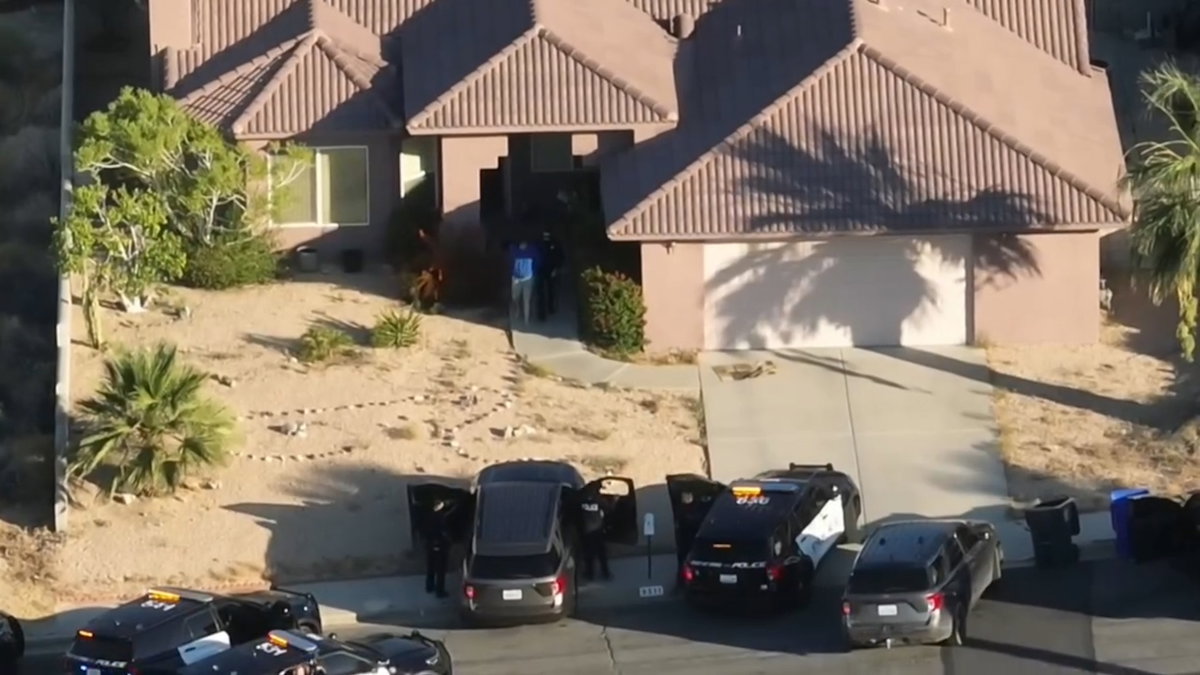
Ian Whitney was arrested on June 16 in Desert Hot Springs after an extensive investigation conducted by Desert Hot Springs Police Department detectives assigned to the Riverside County Child Exploitation Team.

At the Larson Justice Center in Indio, Superior Court Judge Dean Benjamini had been set to hear a defense motion for bail reduction, but Whitney’s public defender asked for a delay in the hearing, so the judge rescheduled it to July 22. It was unclear why the matter wasn’t heard.

Whitney remains held without bail at the Smith Correctional Facility in Banning.

DESERT HOT SPRINGS, Calif. (KESQ)- A 35-year-old man has pleaded not guilty to various child sexual abuse charges after being arrested earlier this month in Desert Hot Springs.

Ian Whitney was arrested on June 16 in Desert Hot Springs after an extensive investigation conducted by Desert Hot Springs Police Department detectives assigned to the Riverside County Child Exploitation Team.

According to DHSPD, Detectives began investigating Whitney after receiving information that he was allegedly in possession of and distributing child sexual abuse material online. Police alleged Whitney was in “possession of more than 600 images of child sexual abuse material,” all of which was seized.

The defendant’s alleged efforts to meet up with minors were documented during his online activity, investigators said.

The basis for the indecent exposure count was unclear.

DHSPD released a video of Whitney’s arrest on its social media page on Tuesday.

Whitney was charged with Possess Matter of Minor in Sexual Act, Arranged Meeting w/Minor, two counts of Contact Minor w/Intent Commit Specific Crimes, and Indecent Exposure to Minor, court records show. There is also an additional enhancement of Possess Matter with Images Involving Minor Under 12 Years, and an aggravating factor of taking advantage of a position of trust.

Court records also show that the charges for crimes range from 2009 to May 2026.

Whitney pleaded not guilty to all the charges at his arraignment on June 18.

Riverside County court records

His public defender submitted a motion to Superior Court Judge Dean Benjamini asking for a bail review hearing to determine whether the defendant might qualify for a reduction. The hearing is slated for Thursday morning.

Whitney remains in custody at the Smith Correctional Facility in Banning.

Stay with News Channel 3 for any updates.

Click here to follow the original article.

Good Samaritan Creates New Paths Forward

Patricia Martellotti

SANTA BARBARA COUNTY, Calif. (KEYT) – Every day, meals are prepared inside the kitchen at Hedges House of Hope, where workers cook together and share a few laughs along the way.

For Jessica Sanders, the kitchen is more than a place to work. It is a place to start over.

“I’m at Good Samaritan working in the kitchen. I have a job here. I’m in the culinary arts program and I just like it. It gives me something to do during the day. I stay away from the outside and just stay positive and productive.”

Getting there was not easy.

“Yeah, it had been really tough before I got here. I was on the street because I really didn’t know much about Santa Barbara.”

Sanders is one of many rebuilding their lives through programs offered by Good Samaritan Shelter.

Juan Carbajal found a similar opportunity through Good Samwich.

“It was pretty tough with no job … no income.”

The challenges Sanders and Carbajal faced are familiar to Good Samaritan Shelter Founder and CEO Sylvia Barnard.

“It was difficult to be a single mom on welfare. I know I didn’t have anyone really guiding me through where I was gonna get to.”

Those struggles inspired Barnard to help others facing difficult circumstances.

“So I decided that I wanted to not only get an education, but I wanted to give back to others.”

Today, Good Samaritan Shelter is the largest provider of homeless services and substance use treatment programs in Santa Barbara County.

“We provide everything from sobering centers to detox to residential treatment to outpatient. We provide everything from warming centers to emergency shelter to transitional housing to permanent housing.”

One of the organization’s newest programs is Good Samwich, a food truck that serves customers while creating employment opportunities for people working to move forward.

For Carbajal, the job has provided stability and a sense of purpose.

“I was really happy getting a job. I got money coming in. I can pay the bills. It keeps me busy, out of trouble. I like it. I love this job.”

Food Truck Lead Angela Brooks described the program as a pathway into the restaurant industry.

“They’re getting jobs. We’re giving food and these guys are able to get their foot in the door to restaurant experience, which is such a great career.”

Both Sanders and Carbajal have their sights set on becoming chefs.

“I love to cook. I would like to become a chef.”

“Yeah, that’s my hope. To be a chef and get my own place … my own restaurant.”

For Barnard, those goals are a reminder of why the work continues.

“To see more people housed. To see less people struggle. Maybe one day I’ll be out of a job and that would be a celebration.”

Sanders hopes others facing hardship keep moving forward.

“Don’t give up because even during hard times, it’s always gonna get better.”

Good Samaritan Shelter leaders hope programs like Good Samwich will create even more opportunities for those seeking a second chance and a path toward long-term stability.

The Latest Breaking News, Weather Alerts, Sports and More Anytime On Our Mobile Apps. Keep Up With the Latest Articles by Signing Up for the News Channel 3-12 Newsletter.

Click here to follow the original article.

Behind America’s microreactor revolution: The technology and energy entrepreneurs driving the U.S. nuclear renaissance

David Pace

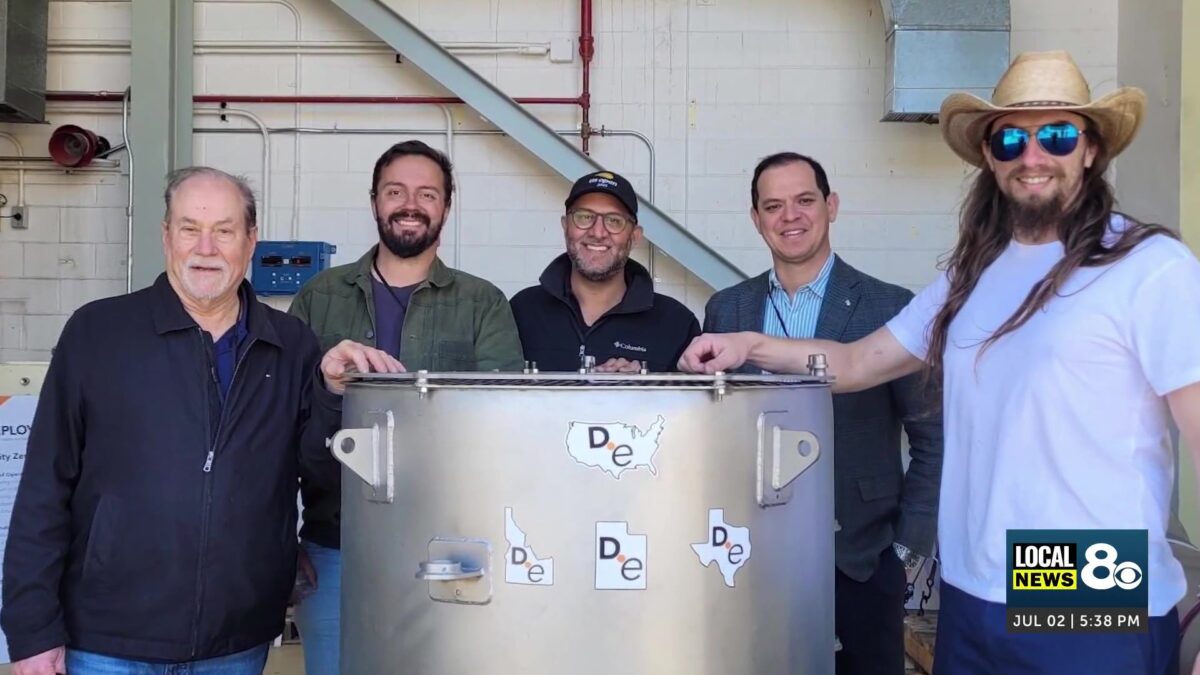
IDAHO FALLS, Idaho (KIFI) – Less than 48 hours after the third U.S. reactor achieved criticality this year, the founders of Deployable Energy offered an in-depth look at the technology driving America’s microreactor revolution.

The new Unity reactor core is small enough to fit inside the bed of an F-150 truck, yet generates enough electricity to power 700 homes for five years.

“The Unity Nuclear Battery is a one megawatt microreactor,” said Deployable Energy CEO Bobby Gallacher. “It’s a five percent Low-Enriched Uranium fueled reactor that’s light, water-moderated and helium-cooled.”

The advanced reactor’s design is transformational for its size and scalability.

“It fits within a 20-foot container that can be rapidly deployed on site,” Gallacher said. “That gives us near universal site ability to be able to meet the challenges required for energy in the future.”

Antares Nuclear’s Mark-0 reactor and Valar Atomics’ Ward 250 reactor were the first two advanced reactors to reach criticality in June through the Department of Energy’s Reactor Pilot Program.

“We created a system that has a self-sustaining, nuclear reaction,” said Deployable Energy Co-Founder and Chief Commercial Officer (CCO) Sanjay Mukhi. “This is what is needed for providing power to energy needs.”

The achievement allowed the company to “close out” President Donald Trump’s May 2025 executive order to successfully fire up three advanced reactors by America’s 250th anniversary.

“This is an exciting time for the nuclear industry,” Mukhi said. “Having three reactors go critical by the 4th of July – this order that President Trump set last year was a very bold move, and it really inspired the industry to move forward on pace, on time and deliver for the American people.”

While the executive order was issued fourteen months ago, Deployable Energyobtained its strategic partnership projects contract with the U.S. Department of Energy in January 2026.

“We started month nine and came in third,” said Gallagher, an Australian-born, technological entrepreneur. “Just imagine if we started month one.”

Deployable Energy manufactured the reactor core in April in Houston, placed it in the back of a pickup truck and drove it to Idaho National Laboratory.

“This is something that’s fantastic, and it’s never been done before – being able to miniaturize a nuclear reactor to that size and put it in the back of a car and drive it up to where it needed to go,” Mukhi explained. “Keep in mind, this was an unfueled system, and we were driving up just the reactor core, but this shows you how portable a system can be.”

The company is laser-focused on bringing down the cost of nuclear energy for consumers.

“In terms of costs, we’re talking about $0.15 to $0.20 a kilowatt hour for the first units to be delivered,” Gallagher said. “We believe by mid-2030, we’ll be under $0.05 a kilowatt hour. At those prices, that would be transformational to U.S. energy and the pathway to ensuring that we have not just the energy that we need now, but 10x more energy that we need in the future.”

Deployable Energy’s dozen engineers, researchers and scientists were supported by a team of 100 staff at Idaho National Laboratory in achieving criticality.

“INL has been a fantastic partner, along with the Department of Energy, to make a moment like this happen.”

The race to bring more advanced reactors online continues, with additional projects expected to achieve criticality in the near future.

“Now we look forward to the next step of bringing power to the grid with these advanced reactors,” Gallagher said.

Deployable Energy CEO and Co-Founder Bobby Gallagher demonstrates the Unity microreactor’s technology to U.S. Energy Secretary Chris Wright.

Click here to follow the original article.

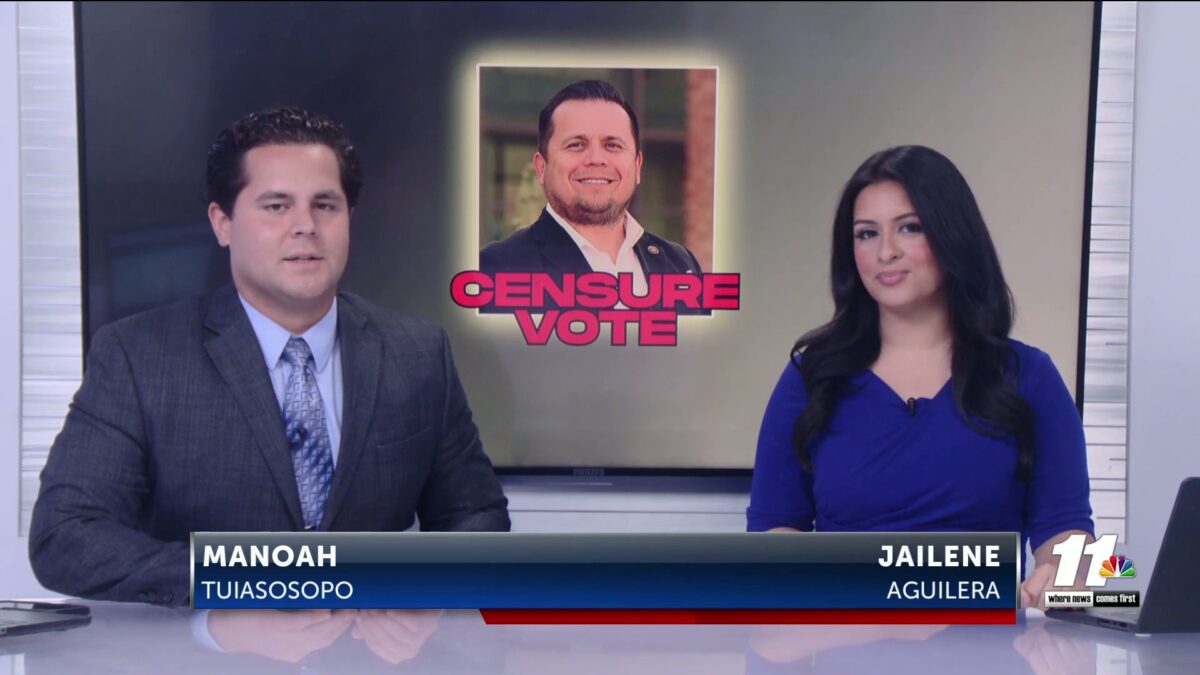
Yuma City Council votes to censure Council member Art Morales

Moses Femino

YUMA, Ariz. (KYMA) – The Yuma City Council has formally censured Council member Art Morales following allegations that he shared information discussed during an executive session.

The vote took place during Wednesday’s City Council meeting and was approved by every counci lmember except Morales himself.

The censure does not remove Morales from office or affect his ability to vote on city business, but it does limit certain discretionary privileges, including some outside activities representing the City of Yuma. The censure will remain in effect through the end of Morales’ term.

During the meeting, Morales denied any wrongdoing and expressed disappointment with the council’s decision. Despite the outcome, he said he remains committed to serving the residents who elected him.

“Of course I’m disappointed,” Morales said. “But look, the most important thing for me is that I still get to serve the Yuma community. Still get to vote 100% on the dais. Fulfill my term and fulfill my obligation to the residents of Yuma that voted for me or supported me so I’m thankful for that opportunity.”

Mayor Doug Nicholls said the decision was rooted in accountability and maintaining public trust in city government.

“We take our responsibilities very, very seriously,” Nicholls said. “Particularly in the business of the city. We don’t want even an appearance that something is off. So when something comes up, you have to find ways to hold each other accountable.”

Morales said he hopes the community remains focused on the city’s priorities moving forward rather than the controversy surrounding the censure.

“Let’s stay focused on running the city. Let’s stay focused on what’s important,” Morales said. “Because today this is a hot topic, tomorrow it’s something else. But the most important thing here is the City of Yuma, the operations, serving the families, first responders and just making sure we do our job that we were voted to do.”

City leaders said they hope the matter can now be put behind them as they continue addressing issues facing the community.

Click here to follow the original article.

Onvida Health inspires future healthcare professionals

Lauren Duffel

YUMA, Ariz. (KYMA) – Onvida Health gave high school and college students a chance to connect with healthcare professionals to discover the many pathways the healthcare field has to offer.

Students had the opportunity to learn more from healthcare professionals about their specific profession, networking opportunities, and a chance to see demonstrations. 

“It’s very important as we are growing we want to bring the highest quality healthcare and we want to bring and educate and empower our younger and interested students to a healthcare career,” said Dr. Marc Chasin, CIO of Onvida Health.

As Onvida Health continues working to inspire the next generation of healthcare professionals, students left with a better understanding of the wide range of careers available in healthcare and the opportunities that lie ahead.

Click here to follow the original article.

Yuma Territorial Prison marks 150 years with time capsule celebration

Lauren Duffel

YUMA, Ariz. (KYMA) – 150 years ago Wednesday, the Yuma Territorial Prison opened its doors for the first time.

In celebration of the historic day, the prison placed a time capsule containing a variety of items that reflect the memories of our present day.

Among the items included are a roll of pennies, photographs, and greeting cards from tonight’s guests, all preserved for future visitors in the year 2076.

Yanna Kruse, Yuma Territorial Prison manager, said, “This is a historic landmark deserving of preservation, deserving of celebration, and that is what tonight is all about. We are celebrating the past, but this is also a bright future for our prison.”

The time capsule will be on display at the Yuma Territorial Prison, where it will stand as a lasting reminder of this historic celebration.

Click here to follow the original article.

Las Cruces woman killed while trying to stop son’s possible suicide attempt

Gabrielle Lopez

UPDATE (June 3, 2026) — Lopez told police he had been taking methamphetamine and had paranoid thoughts before the shooting, according to documents ABC-7 obtained.

Before the shooting, Lawrence Lopez, his mother, Tina Lucero, and other family members went out for dinner, documents said.

When they got home, Lopez’ brother said Lopez had recently been using methamphetamines and had become increasingly paranoid, according to documents. He reportedly believed people, vehicles and drones followed him, documents said.

According to documents, Lopez admitted to authorities he used methamphetamines and thought he was being followed. Documents said Lopez also thought people hacked his phones.

Lopez reportedly expressed his worries about being followed and other issues while he was at home with his mom, documents said. He told authorities he wanted his family to believe him but “did not feel as if they did.”

He told authorities he sat in a shed and felt he was “just like dying,” according to documents.

Lopez then asked his mom why she wouldn’t believe him, to which she said she did. Documents said he didn’t believe her.

He then reportedly made threats about killing himself, documents said. She later walked off and said she needed air “to get away” from Lopez.

Lopez allegedly followed his mother to the front door of the house and said, “I’m gonna make you remember this for the rest of your life.”

He then allegedly pulled out a gun, and his mother tried to grab it from him, documents said.

The gun fired while the two fought over it, according to documents.

Lopez noticed he shot his hand but also saw blood on his mother’s shirt. He reportedly called 911, documents said.

He also called his brother and said, “the gun went off and hit mom,” documents said.

Officers went to the home and found Lopez with a handgun. Documents said an officer told him to drop the gun and arrested him.

Lucero had a gunshot wound on her chest, according to documents. Her other son tried giving her CPR. She died at the scene.

Lopez went to a medical center for the wound on his hand, according to documents.

UPDATE (5:31 p.m.) — Police charged 32-year-old Lawrence Lopez with one count of involuntary manslaughter, which is a fourth-degree felony. The woman shot and killed Wednesday was his mother, according to LCPD.

Police identified his mother as 58-year-old Tina Lucero.

Lucero died after life-saving measures were attempted.

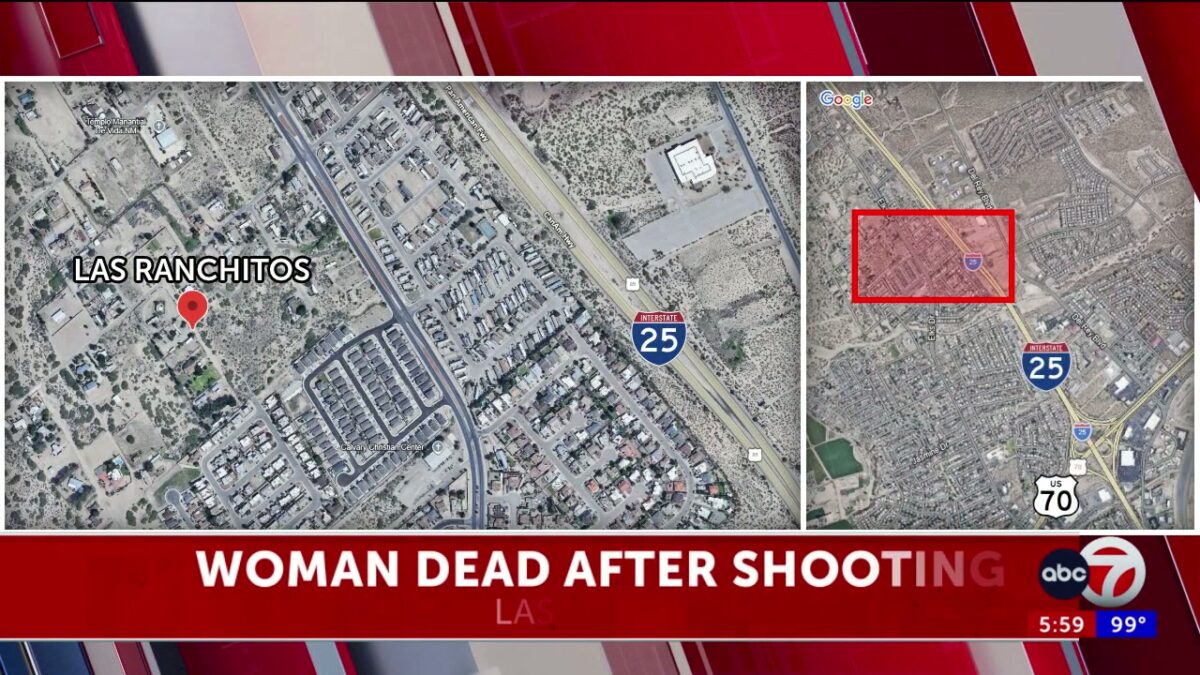
LAS CRUCES, N.M. (KVIA) — A woman was shot and killed Wednesday and a 32-year-old man was hospitalized after a possible attempted suicide, the Las Cruces Police Department said Thursday.

At about 9:30 p.m., Las Cruces police and fire crews went to a home at Los Ranchitos off Elks Drive after a reported gunshot victim.

First responders found a 58-year-old woman with a gunshot wound, police said. She died to her injuries.

Police said they won’t identify the woman until her family has been notified.

Police arrested the 32-year-old man at the home, according to a news release. He had a self-inflicted gunshot wound in his hand and went to a hospital.

Preliminary investigation revealed the man allegedly threatened to commit suicide and pulled out a handgun.

The woman tried to stop him, according to police, and that’s when the gun fired, hit the man’s hand and killed the woman.

LCPD said the investigation is ongoing and charges are pending. They didn’t identify the man.

Click here to follow the original article.

The Valley’s Forgotten: What happens when a case goes cold?

Jessamyn Dodd

IMPERIAL COUNTY, Calif. (KYMA) – For criminals in Imperial County there are a million places to disappear. The Valley stretches for miles with vast desert terrains, mountains, and fields.

When a homicide happens, investigators follow every lead they can, but eventually some cases hit a dead end. The files are stored away, waiting for new evidence, a new witness, or a new break.

“Witnesses’ memories fade. They move, they change address, they change names. As the years pass, the challenges grow,” Imperial County Judge Ben Salorio said in an interview with KYMA.

Many of these cases were investigated long before digital records were common. Evidence logs were kept on paper, files were stored in boxes, and sometimes important information becomes harder to track down.

“Papers get lost, people forget where things are placed, or sometimes just a clerical error where somebody checked out a piece of evidence to document and they forgot to check in or out in the log,” Judge Solario explained.

But a cold case doesn’t mean a closed case. Advances in DNA technology, digital forensics, and new investigative techniques have helped solve murders decades after they happened.

So, what kind of evidence can reopen an investigation, and what does it take to finally identify a killer?

Det. Daniel Schleyer has been investigating several unsolved murders in Imperial Valley.

“If there’s any new information that comes up from the public or something that we decide to have DNA come back from the Department of Justice or anything that would spark the case to be reopened. And the possibility of identifying suspects is there, then we make a decision to open up the case and continue the investigation,” Det. Schleyer shared.

Next Wednesday in part two of The Valley’s Forgotten, we hear from one mother who is still waiting for answers and why she refuses to give up hope that her daughter’s case might still be solved.

Click here to follow the original article.

A waterless AI data center? A big experiment is under way in rural Utah

Fox13

Originally Published: 02 JUL 26 13:23 ET

By Ben Winslow

Click here for updates on this story

    ORANGEVILLE, Utah (KSTU) — A nuclear power startup and an artificial intelligence computing company are partnering to try to create a “waterless” data center.

At an event here on Wednesday, NVIDIA debuted a chip fully powered by Valar Atomics’ small modular nuclear reactor. It was used to launch a website to demonstrate its capabilities when scaled up. The website is accessible here when the reactor is powered up.

Valar Atomics founder Isaiah Taylor said it would not use water. Instead, helium cools it.

“Our architecture reactor that we’ve built here operates at higher temperatures which does not make water cooling necessary,” he told FOX 13 News. “On NVIDIA’s side, they’ve worked out an architecture for their cooling systems which operates at higher temperatures as well, once again allowing for air cooling and a closed-loop system.”

Valar Atomics has been working on its small modular reactor in a sandbox environment at the state of Utah’s San Rafael Energy Lab. The company announced last month it had achieved “criticality,” a milestone for nuclear power development and beating President Trump’s July 4 deadline for nuclear power pilot projects.

Under his “Operation Gigawatt” initiative to expand energy production in Utah, Governor Spencer Cox has pushed to introduce nuclear power to meet growing energy demands. Companies have been setting up various projects related to nuclear power across the state. So far, Valar Atomics is the first to have a working reactor.

As of Wednesday, when FOX 13 News toured the reactor, company officials said it was only generating 100 kilowatts of electricity. But Taylor said the plan was to begin scaling up.

“Over the next couple of years here in Emery County, you’ll see us take the next steps towards have a full commercial system,” he said.

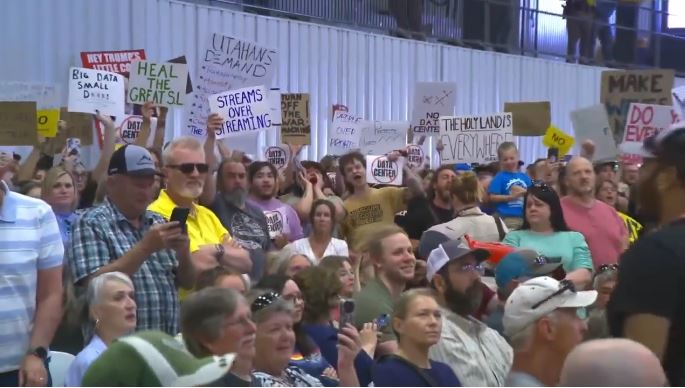
Valar Atomics and NVIDIA’s partnership for a waterless AI data center is something being watched by Gov. Cox’s Office of Energy Development. The state has seen large public protests over celebrity investor Kevin O’Leary’s “Stratos Project” data center development in Box Elder County. The public pushback, with concerns about impacts to the environment and the Great Salt Lake in particular, has forced the governor to issue an executive order setting guardrails around data center development.

“You have to use our resources responsibly, or else we’re not going to let you do it. It’s always been that way and it’s going to continue to be that way,” said Emy Lesofski, the director of Utah’s Office of Energy Development.

Asked if she believed Valar Atomics and NVIDIA could achieve what they wanted to with a “waterless data center,” she told FOX 13 News: “We’re standing here today. A lot of people had skepticism about what we could do if we worked together, and we’re standing today at the San Rafael Energy Lab where we have a test reactor that is producing power and a power a chip. I would never say no.”

Taylor said he believed it could be a solution to data center concerns.

“We believe that this is the way forward. We know that the United States needs to be competitive in artificial intelligence,” he told FOX 13 News. “AI factories and scaling it out is a national strategic priority for the United States. But we need to do it without taxing local communities of water and power and that’s exactly what we’re proving today.”

NVIDIA went further in announcing plans for a future AI factory in Emery County, something that generated huge cheers from the crowd (though no timeline has been set for it). Community leaders have been largely supportive of Valar Atomics’ project, saying they have communicated extensively about their plans.

“It’s great for our local community, not only the job base but the tax base as well,” said Emery County Commissioner Jordan Leonard. “They’re hiring our local folks and just excited they’re here and the new technology with energy.”

Rep. Carl Albrecht, R-Richfield, who sponsored the legislation to allow nuclear power development in the state, told FOX 13 News he believed this is a good idea.

“We’re going to save water for you guys up north in the Great Salt Lake and we’re going to build some AI data centers down here in rural Utah that’ll help the economy,” he said. “I think it can be done.”

Please note: This story was provided to CNN Wire by an affiliate and does not contain original CNN reporting. This content carries a strict local market embargo. If you share the same market as the contributor of this article, you may not use it on any platform.

The-CNN-Wire™ & © 2026 Cable News Network, Inc., a Warner Bros. Discovery Company. All rights reserved.

Click here to follow the original article.

Plane tied to Mexican drug lords’ arrests on display at War Eagles Air Museum

Heriberto Perez Lara

SANTA TERESA, N.M. (KVIA) — The War Eagles Air Museum will display a plane connected to the arrest of Joaquín Guzmán López and Ismael “El Mayo” Zambada Garcia, one of the founders of the Sinaloa Cartel. The display comes after the museum entered a memorandum of understanding with the FBI El Paso Field Office.

The plane on display brought the two to the Borderland, where they were arrested.

“El Mayo” Zambada Garcia was arrested during a coordinated federal investigation, according to U.S. federal law enforcement agencies. The plane, a King Air aircraft, became a key element of that case.

The son of Joaquin “El Chapo” Guzmán Loera, Joaquín Guzmán López, was also arrested.

The museum said the display and partnership with the FBI in the El Paso Field Office teach people how aviation plays a role in crime prevention and criminal use. It has also been nearly two years since Zambada Garcia’s arrest in July 2025.

Visitors can see the plane at the museum, which is at the Dona Ana County International Jetport in Santa Teresa, New Mexico.

You can find more information about museum visits here.

Click here to follow the original article.