Linn man dies in Osage County ATV crash

Ryan Shiner

COLUMBIA, Mo. (KMIZ)

A 69-year-old man from Linn died Tuesday night in an ATV cash near a residence in Osage County, according to a crash report from the Missouri State Highway Patrol.

The report says the crash occurred as a 2025 Honda Rancher started to slide and then overturned. The man was ejected from the vehicle. He was not wearing a helmet, the report says.

He was pronounced dead at the scene by the Osage County coroner, according to the report. The man’s body was brought to Morton Funeral Home, according to the report.

MSHP reports do not name those involved in crashes.

Click here to follow the original article.

Troopers arrest Kansas man accused of child abduction after chase on I-70

Ryan Shiner

COLUMBIA, Mo. (KMIZ)

A Kansas man was arrested and charged after a short chase on Tuesday that began in Cooper County and ended just before the Stadium Boulevard exit on Interstate 70 in Columbia.

Jonathan Myles, 36, of Topeka, Kansas, was charged in Cooper County with aggravated fleeing, first-degree endangering the welfare of a child, misdemeanor speeding and an infraction of endangering a highway worker. He is being held at the Cooper County Jail on a $100,000 bond. A court date has not been set.

The Missouri State Highway Patrol wrote on Troop F’s social media that a plane was used to find Myles’ Dodge Durango. MSHP wrote that Myles was wanted out of Kansas on suspicion of child endangerment. New charges have not appeared in Kansas online court records as of Tuesday evening.

The probable cause statement says that the gray Dodge with temporary tags from Kansas was found on the shoulder of the rest area at the 104-mile marker of I-70. Myles allegedly sped off eastward after seeing the trooper, the statement says.

Myles’ vehicle allegedly went 96 miles per hour at one point through a 55-mph construction zone, the statement says.

Spike strips were used near the 121-mile marker and Myles stopped the vehicle while it was smoking at mile marker 123, which is just west of the Stadium Boulevard exit in Columbia.

Myles’ 2-year-old son was found inside the vehicle “unrestrained,” court documents say.

Click here to follow the original article.

Cole County Commission approves contract for emergency communications study

Ryan Shiner

COLUMBIA, Mo. (KMIZ)

The Cole County Commission on Tuesday unanimously approved a contract for a strategic assessment study of emergency communications.

The consulting contract with TUSA will cost $29,725. A packet from the county shows TUSA have assisted agencies in Jasper, Grundy, Johnson, Christian, Jackson, Platte, Clay, Gentry and Newton counties as well as the University of Missouri-Kansas City, North Kansas City Pleasant Valley, Raytown, Riverside, Independence, Kansas City, Lexington, Liberty, Gladstone and Grandview.

TUSA will evaluate whether Cole County EMS Emergency Communications Center can “feasibly assume dispatch services for the County Sheriff,” the packet says.

The study is expected to help the county get a better idea on expenses, which includes money paid to Jefferson City.  The study is expected to last 145 project hours at an hourly rate of $205.

Click here to follow the original article.

At Coors Field “It’s tarps off shirts off”

Rob Namnoum

“Tarps off shirts off. Yeah, I love it,” says Rockies manager Warren Schaeffer. Yeah in the upper deck of Coors Field it’s tarps off, shirts off, “It’s funny because when I’m in the outfield, I can see it starting, like in the fifth inning. You see like four or five kids with their shirts off,” says Rockies outfielder Jake McCarthy. As the game goes on the section of shirtless fans swells, “There’s been a few times where it’s like, maybe the, the upper deck is a little more empty. So I could literally see people migrating over to like, what is it that there’s a right center to the right to a corner? So it’s funny and it’s been funny to see it like, I think it’s good for the sport, the fans are into it.” says McCarthy.

Fans are into it. The first time the shirts came off was during the Rockies sixth home game of the season in April, “The first time I saw it was a home game was against the Astros. The day game. It’s pretty cool, I think. I think we’re doing pretty well here,” says McCarthy The kids do it well and the Rockies say well done, “Anything to help us win. I love that we have fans that are enthusiastic and want to do that I love it,” says Schaeffer.

Jake McCarthy says he would need a little liquid courage to part of the tarps off shirts off movement. “Probably need a few drinks, but, yeah, I think it looks, like fun.” The Rockies skipper adds, “Come out. Take your shirt off.”

Click here to follow the original article.

Summer work lays the groundwork for Yuma’s winter vegetable harvest

Manoah Tuiasosopo

YUMA, Ariz. (KYMA) – While Yuma is known around the world as the Winter Vegetable Capital of the World, the work that makes those crops possible begins long before the first seeds are planted.

At the University of Arizona Yuma Agricultural Center, crews are spending the hottest months of the year preparing research fields for the upcoming fall and winter growing season.

The fields are used to support research projects for major agricultural companies, with the goal of improving crop production and farming practices.

Before vegetables such as lettuce, broccoli, carrots, and cauliflower can be planted, crews carefully prepare the soil by disking, chiseling, and leveling the fields.

According to farm managers, proper land preparation is one of the most important steps in producing a successful crop.

“It all starts with the ground,” said Mesa Farm Manager Angel Perez. “If the soil isn’t prepared correctly, everything that comes afterward becomes more difficult.”

In addition to soil preparation, the center plants rotational crops such as Sudan grass and teff during the summer.

The crops help restore nutrients to the soil, reduce wind erosion, and suppress plant diseases before the next vegetable season begins.

Water conservation is another major focus. Using GPS-guided laser-leveling technology, crews create uniform fields that allow irrigation water to flow more efficiently while helping flush excess salts below the root zone.

The process improves soil conditions while maximizing every drop of water in Yuma’s desert climate.

The agricultural center has also added new tractors equipped with advanced technology to improve precision and productivity as research fields are prepared.

Valley Farm Manager Stuart Bennett said technology continues to play a critical role in modern agriculture.

“Technology is big in farming,” Bennett said. “You have to keep up with technology.”

From precision irrigation and soil management to crop rotation and modern equipment, the work taking place during Yuma’s hottest months helps lay the foundation for the region’s world-renowned winter vegetable industry and the harvests that will follow.

Click here to follow the original article.

Desert Hot Springs extends temporary ban on new data centers, calls for more research

Luis Avila

DESERT HOT SPRINGS, Calif. (KESQ) – The Desert Hot Springs city council unanimously voted Tuesday to extend its temporary moratorium on new data centers, saying the city needs more time to study the potential impacts before deciding whether the facilities should be allowed.

The extension prevents the city from accepting or approving permits, licenses and other development applications for new data centers and similar high-intensity computing facilities while staff conducts additional research.

The vote comes as data centers continue to spark debate across the Coachella Valley. Earlier this year, a proposed project in Coachella drew widespread public opposition over concerns about water use, electricity demand, noise and environmental impacts.

Tuesday’s meeting drew residents who applauded the council’s decision.

“I think a lot of data centers target communities like ours,” said one resident. “Our community is more disenfranchised, people vote less, have less political power… I think we’ve seen a lot of support and activism around data centers.”

Mayor Scott Matas emphasized that Desert Hot Springs is not currently considering a specific data center proposal.

“This is much different than what Coachella went through,” Matas said. “We don’t have a specific project, but I understand the concerns from the community.”

He proposed sending the issue back to the Planning Commission for a thorough review that would include researching both the benefits and concerns surrounding data centers, working with local agencies and groups, and documenting those findings before the council considers any long-term policy.

“There’s a lot of good arguments out there,” Matas said. “If we work with our water district, power company, residents on both sides of the aisle and find out where the facts really lie… then we’ll be able to support saying no… or has technology in two years gotten better? We don’t know that until we do this study.”

City officials say the city’s current zoning regulations do not adequately address issues unique to data centers, including electricity demand, water use for cooling, backup power systems, infrastructure capacity, noise, air quality, greenhouse gas emissions and compatibility with nearby neighborhoods.

Some residents argued the research will reinforce concerns that data centers are not a good fit for Desert Hot Springs.

“The desert, we already have too little water, we have too little electricity, and we have too many environmental concerns,” said a resident. “Data centers aren’t going to create those sorts of jobs… it’s not going to be beneficial to our community.”

The moratorium will remain in effect for up to 22 months and 15 days, bringing the city’s total moratorium period to two years while officials complete their review.

Stay with News Channel 3 for more.

Click here to follow the original article.

Man accuses Jefferson City nursing home of medical neglect in wrongful death lawsuit

Olivia Hayes

JEFFERSON CITY, Mo. (KMIZ)

A Jefferson City man filed a wrongful death lawsuit on Tuesday against a local senior care facility.

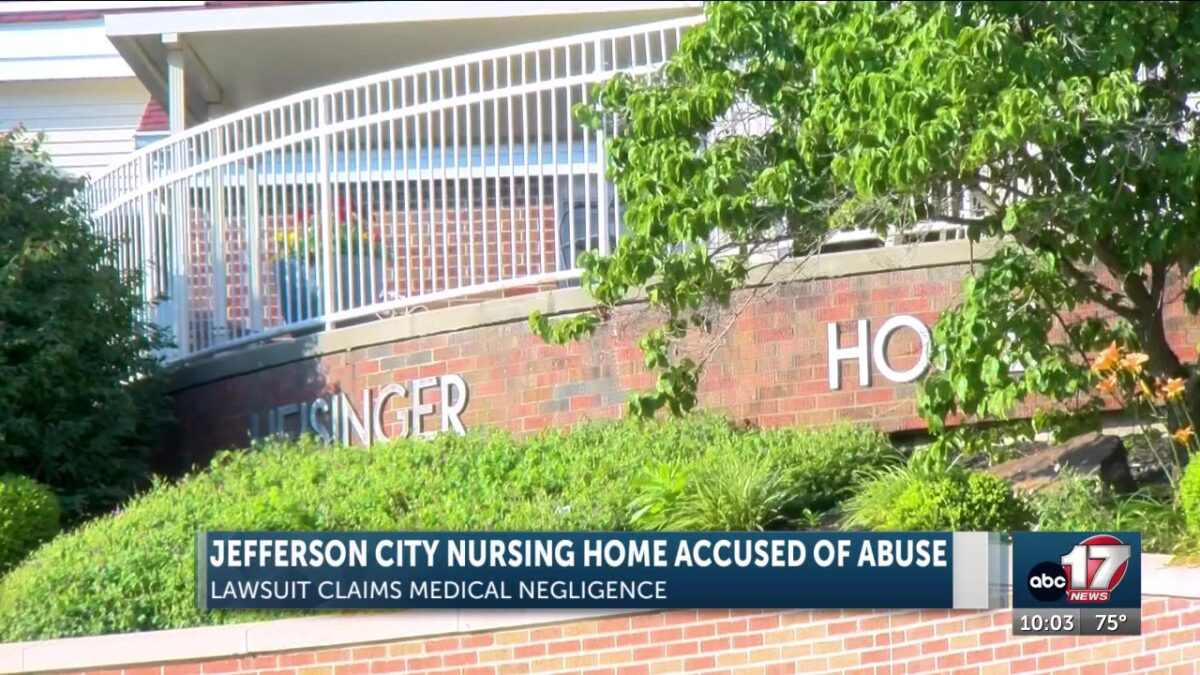
James Callison’s mother Mary Carter was admitted to Heisinger Bluffs Senior Living Community on Aug. 6, 2024, after being hospitalized from a fall while facing other medical diagnoses, like dementia, the petition says. She died May 2025.

Callison has accused Heisinger Bluffs Senior Rehab and Health Care Center, along with Green Tree Healthcare Management MO and HB Operations Holdco, of medical negligence, such as improper wound care, not ensuring employees were properly trained and not properly monitoring her food and water intake. It also makes allegations of violating the Missouri Omnibus Nursing Home Act.

Court filings say Carter was documented as “at-risk” and “high-risk” on the Braden Scale. The Braden Scale is the standard health are scale for predicting an individual’s risk for pressure injuries, like bed sores.

The lawsuit claims Heisinger Bluffs failed to develop or implement an effective pressure injury prevention care plan for Carter and did not monitor or document her skin integrity in a timely manner. The claims go onto say staff was not consistently turning or repositioning Carter in appropriately.

On Feb. 18, 2025, the petition says Callison first documented a Stage III pressure injury to Carter’s sacrum. Court documents note sometime around late April 2025, Carter’s pressure injury progressed from Stage III to Stage IV. Carter died not long after on May 10, 2025, at Heisinger Bluffs while under hospice care, with the Stage IV pressure injury still present.

The petition calls Carter’s pressure wound “avoidable” and said it caused her severe pain, anxiety, mental distress and put her at risk of an infection. Callisons claims the lack of proper care and neglect caused or contributed to her death.

Concerns were also raised around the training of Heisinger Bluffs’ staff. The lawsuit says the facility did not provide proper oversight and failed to properly discipline employees. Competency of the caregivers was also questioned in court documents.

Along with the allegations of poor medical treatment and unqualified staff, Callisons claims the facility also failed to provide proper nutritional and hydration support for Carter. Court documents state meals and fluids were not placed within reach and staff was not making sure Carter finished her food.

This is also listed as playing a role in Carter’s eventual death.

Callison is requesting a jury trial in the case. ABC 17 News reached out to Heisinger Bluffs for comment, a spokesperson for the facility said it would work to provide one after familiarizing themselves with the lawsuit.

Summons were issued for the defendants on Tuesday.

Heisinger Bluffs settled a different wrongful death lawsuit in May.

That lawsuit – which was filed in December 2023 by Bryan Tracy and the estate of Oma Tracy – accused the facility of wrongful death, lost chance of survival, negligence and violating the Missouri Omnibus Nursing Home Act. It was settled on May 13 and eventually dismissed on May 29.

Check back for updates.

Click here to follow the original article.

IVC president accepts job at Mira-Costa College in San Diego

Jessamyn Dodd

IMPERIAL COUNTY, Calif. (KYMA) – Imperial Valley College (IVC) will soon be searching for a new leader as the current president of IVC is moving on to his next adventure.

Dr. Lennor M. Johnson, Superintendent and President of IVC, has accepted the same role at Mira-Costa College in San Diego.

Dr. Johnson has led IVC for the past decade, and he leaves some words of encouragement to incoming and current students.

“Continue to pursue your dreams. You know there’s nothing that you cant accomplish if you put your mind to it and you’re willing to work hard for it,” Johnson expressed. “And many of our students are doing that every single day. But knowing that you have the potential, you have the gift within you, push, push, push your limits because that’s what we have to do as a society.”

Johnson has overseen major initiatives which include the college earning national recognition and expanding student and workforce programs.

He also helped bridge the divide for cross-border students.

“We reach across the border to establish relationships, connections with those individuals. Many of our students reside in Mexico, or visit Mexico, have family in Mexico,” Johnson shared. “And many of our students either work over there. So it’s just so many things that are unique to this county.”

Johnson says he hopes whoever takes up the reins as IVC’s president will continue pushing ahead to create opportunities for the valley.

In addition, he touted the college’s 2030 Plan, which will expand technology and equity while also expanding the campus.

“I think a picture says a thousand words, so I’m going to point to this,” Johnson remarked. “We’re constantly fighting to remove barriers to increase student access to success with the ultimate goal  of eradicating poverty.”

The IVC District Board of Trustees is expected to appoint an interim president as they search for a permanent replacement.

Click here to follow the original article.

El Paso Water reassures public on Meta data center’s water usage

Nina Gallegos

EL PASO, Texas (KVIA) – Monday, El Paso Water addressed ongoing community concerns regarding the water demand of Meta’s new data center under construction in Northeast El Paso.

During a City Council work session, officials from El Paso Water said the facility’s water usage is projected to be lower than many residents believe, ensuring existing customers will not be negatively impacted.

The data center, being built near the state line, prompted worries among some El Pasoans about the strain it could place on the region’s water supply.

El Paso Water shared details on its long-term water planning, which focuses on population, supply and demand.

El Paso Water gets its supply from four primary sources: the Hueco Bolson, the Mesilla Bolson, the Rio Grande and reclaimed water.

John Balliew, president and CEO of El Paso Water, explained when the city developed its master plan in 2006, large data centers were not anticipated. The plan projected daily water use of 2.3 million gallons for residential development and 3.7 million gallons for high-density residential and commercial development.

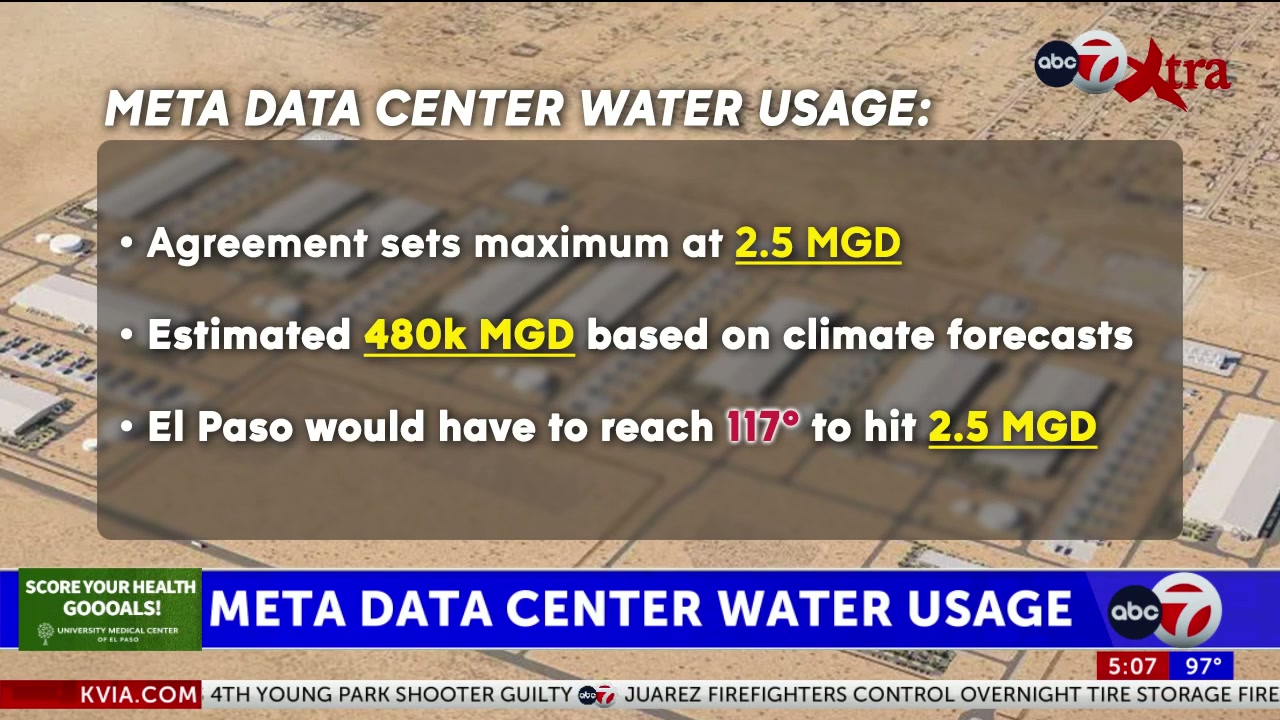
Balliew noted the Meta data center’s maximum allowable water use of 2.5 million gallons per day falls within these original projections. Balliew clarified Meta would only reach its maximum water use if temperatures in El Paso hit 117 degrees, a temperature the city has never recorded.

He estimated the project’s expected daily water use to be closer to 480,000 gallons — a figure he said is comparable to other large commercial water users like golf courses, large hospitals, industrial laundries, housing authorities and the Marathon Refinery.

“If this were a residential development or even if it was a golf course, nobody would be complaining about it even though it was the same amount of water. So in terms of the of of taxing the overall water supply for the future generations of El Paso, tiny tiny impact on that,” Balliew said in the meeting.

However, El Paso City Council Member Josh Acevedo expressed concerns in a statement:

“While El Paso Water maintains they have sufficient water resources to accommodate the Meta data center, I continue to be concerned. Current demand may not account for major changes in the climate as we continue to face drought conditions.

My issue is not with El Paso Water, but rather with Meta as they have the ability to change the size and scope of their project with almost zero oversight by the city.

The agreement between the City and Meta also fails to address environmental concerns that I share with the public around the inefficient gas power plants for the demand induced by the hyper scale data center, including negative impacts to our air quality and noise pollution. The project has already surpassed its original scope, and the agreement with El Paso Water only serves to benefit them further.”

Meta plans to use a water-efficient, closed-loop, liquid-cooled system that recirculates the same water and will use zero water for a majority of the year, according to background information provided by Meta.

This design aims to minimize water use in their data centers. Meta has a goal to be water positive by 2030, meaning the company intends to restore more water than it consumes.

In El Paso, Meta plans to restore water consumed by the data center to local watersheds by supporting local projects that boost water supply, enhance water quality, provide safe drinking water and help restore local habitats.

These projects include deploying irrigation technologies for agriculture in the immediate area and supporting initiatives to bring safe, clean, affordable running water to underserved Colonias.

Meta said it worked closely with El Paso Water to plan for and meet its water and wastewater needs. Agreements with El Paso Water govern Meta’s operations and ensure the company pays the full costs associated with serving its data center, to avoid negatively impacting other customers or the local water supply.

Meta plans to disclose the water withdrawal for the El Paso facility annually once it becomes operational.

Click here to follow the original article.

City of Columbia landfill worker recovering after machine accident

Marie Moyer

COLUMBIA, Mo. (KMIZ)

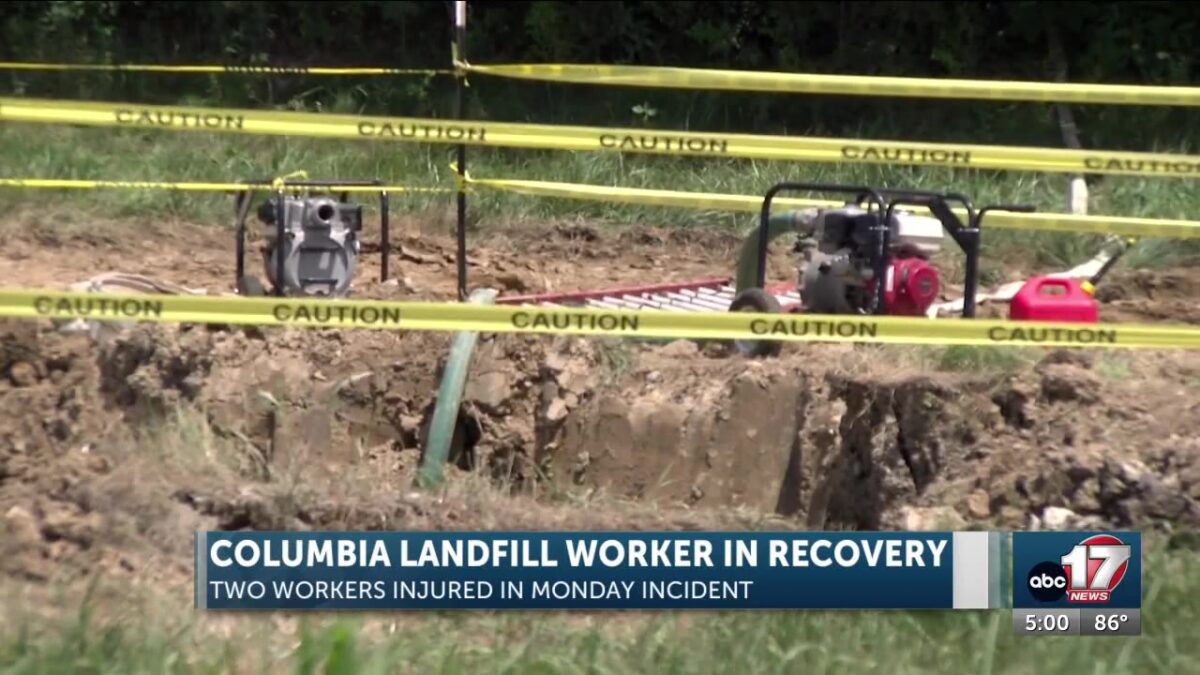
One City of Columbia landfill worker is in recovery Tuesday after he was seriously injured Monday in a machinery accident.

The worker who was seriously injured was operating a hydroseeder that was being pulled by a tractor when it fell into a large hole. The worker using the tractor also reportedly had some bruises following the incident.

 “We were really thankful when the fire department and EMS showed up  to lend a hand,” City Landfill Superintendent Adam White said. “We’re happy that the employee’s, recovering and getting the medical treatment that he needs.”

Crews were tending to a leachate seep, a leak in the side of a landfill that occurs when decomposing water becomes trapped in the landfill and seeps out. Ideally, water that collects inside of the landfill drains naturally through the dirt and trash and is collected at the bottom, where it is processed and put back into the water.

“Think of a layer cake: you have different sections of the layer cake and then you have the icing in between, those icing sections are the soil, we don’t want a layer cake,” White said. “We want that material to be continuous trash, no soil and our mix so that way that liquid has that free path to move vertically down.”

White said seeps are not common. When treating a leak, White said, crews dig out the area to get to the water, where it is either pumped out or a line is dug to drain it to the bottom of the landfill. Crews use the hydroseeder to spray the sides of the hole with an adhesive material to prevent trash from blowing away during the work.

“It was a combination of weight and angle,” city utilities spokesman Jason West said. “The tractor was backing down a slope, which redistributed the weight of the trailer. The pull of the trailer became too much for the tractor and it began to slide into the trench.”

White added the tractor is still operational and only had minor damage. The department is inspecting the hydroseeder which had the most damage, specifically around it’s motor. The hole is expected to be drained by the end of the day Tuesday and filled by Wednesday.

Click here to follow the original article.