Columbia to begin using parking boots for enforcement next week

Ryan Shiner

COLUMBIA, Mo. (KMIZ)

The City of Columbia announced in a Friday press release that it is expanding its parking enforcement devices.

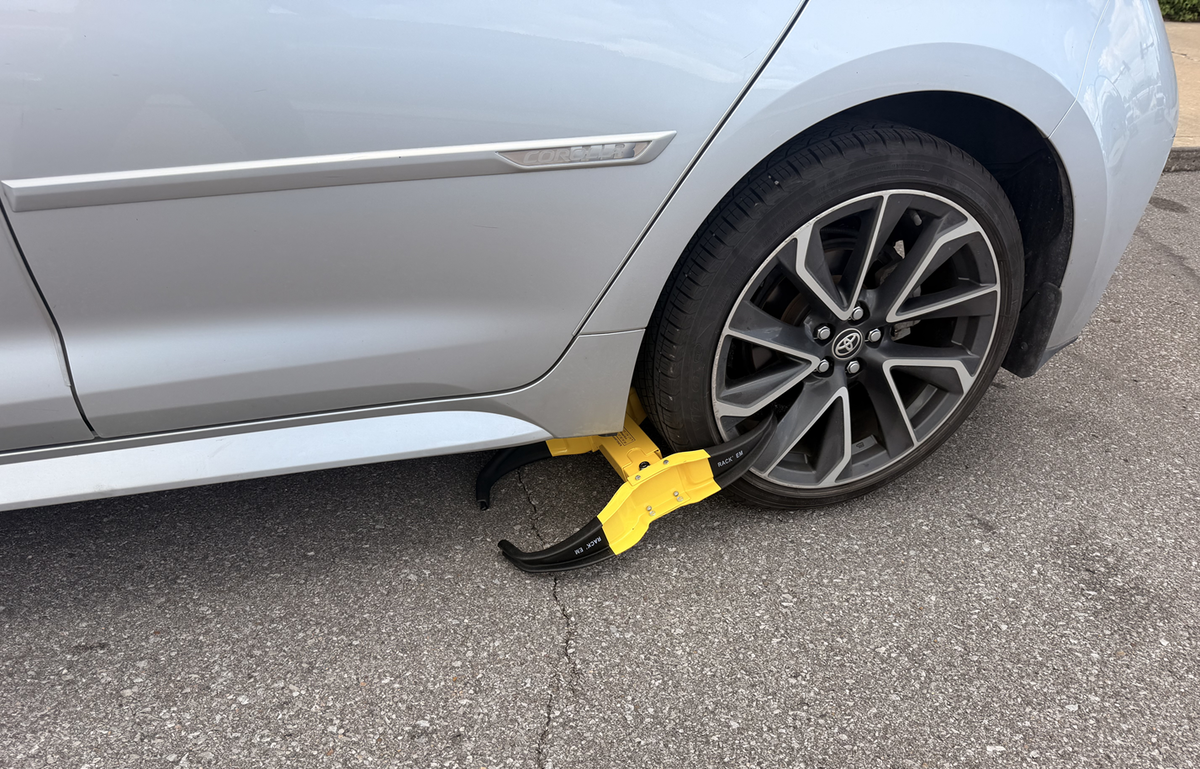
The city will start using “wheel immobilization devices,” beginning on Monday. This is in additional to the parking barnacles the city started using last year.

The release says it will be used for people with four or more outstanding parking tickets and will not be used for first-time offenders.  The release says vehicles fitting that criteria will first get a green warning notice.

“Wheel immobilization devices function similarly to the Barnacle by preventing a vehicle from being driven until outstanding citations have been addressed,” the release says. “Once the required fines are paid or other arrangements are made through the Municipal Court process, Parking Enforcement staff remove the device, allowing the driver to immediately continue on their way.”

Click here to follow the original article.

Al Green’s H.R. 8291 Puts People Before Paperwork in America’s Disaster Recovery

By Francis Page Jr.

Click here for updates on this story

    July 10, 2026 (Houston Style Magazine) — Houston knows the weather can turn a blue-sky afternoon into a history lesson before dinner. From Hurricane Harvey and the Memorial Day floods to Winter Storm Uri, the 2024 derecho and Hurricane Beryl, our region has learned that surviving the storm is only chapter one. The harder chapter is rebuilding homes, restoring neighborhoods and making sure working families are not left navigating a federal maze while mold, bills and uncertainty move in rent-free.

That is why Congressman Al Green’s H.R. 8291, the Reforming Disaster Recovery Act, deserves serious applause. Introduced April 15, 2026, the measure seeks to transform the U.S. Department of Housing and Urban Development’s Community Development Block Grant–Disaster Recovery program from an improvised, disaster-by-disaster response into a more dependable national system. The bill was incorporated as Section 504 of the bipartisan 21st Century ROAD to Housing Act, which passed Congress and, as of July 10, was expected to become law without the president’s signature.

That journey matters. Democracy is not merely the drama of Election Day; it is the daily work of turning public pain into public policy. H.R. 8291 does exactly that. It reflects years of hard lessons from communities where federal assistance arrived too slowly, rules shifted from one disaster to the next, and local governments had to build recovery programs while residents were already waiting at the door. That is the cross-aisle governing voters want: durable solutions before the next emergency tests the system.

The reform authorizes CDBG-DR for three years and creates a Long-Term Disaster Recovery Fund, giving HUD a clearer structure for directing resources after catastrophic disasters. It also establishes an Office of Disaster Management and Resiliency within HUD to coordinate long-term recovery, housing restoration, and mitigation. In plain Houston English: fewer agencies stepping on one another’s boots, more coordination, and a better chance that help reaches the block before the next storm reaches the Gulf.

Speed is one of the bill’s strongest features. HUD would generally have 90 days after a presidential disaster declaration to determine whether an event qualifies as catastrophic, with a 120-day outer limit when data is insufficient. The legislation also permits preliminary grants of up to $5 million to help affected local governments assess needs, build capacity and prepare responsible recovery plans. That early money may sound administrative, but good administration is what turns promises into repaired roofs, reopened businesses, and families returning home.

Equity is built into the framework rather than sprinkled on afterward. At least 70 percent of a grant would ordinarily support activities benefiting low- and moderate-income residents. The measure prioritizes vulnerable households, affordable rental housing, resilient infrastructure, economic revitalization and protections against repeated losses. For Houston’s Black and Brown neighborhoods, seniors, renters and small-business owners—communities too often hit first and restored last—that focus is not charity. It is fairness with a timetable.

Accountability also gets a welcome upgrade. Grantees must develop recovery plans, consult the public and explain how dollars will address housing, infrastructure, mitigation, and unmet needs. Residents would receive at least 14 days to comment on proposed plans, while HUD would publish annual information on a public-facing dashboard showing where funds are allocated, how much has been spent, and whether low- and moderate-income communities are benefiting. Sunshine may not dry drywall, but it can keep public dollars from disappearing into bureaucratic fog.

The Houston and Harris County stakes are enormous. Harris County has managed federal disaster-recovery programs involving home repair, reconstruction, buyouts, affordable rental housing, and infrastructure improvements. Following Harvey, HUD allocated more than $5 billion in CDBG-DR funding to Texas, including a direct allocation of more than $1.1 billion to Harris County through the state’s action plan. Those numbers are large because the need is large—and because recovery delayed can become recovery denied.

Congressman Green’s victory is therefore more than a legislative line item. It is a reminder that representation matters, persistence matters and democracy works best when lawmakers carry the lived experiences of their districts into the halls of Congress. H.R. 8291 says disaster survivors should not have to become federal-policy experts to rebuild their lives.

Houston has always known how to rise. With the Reforming Disaster Recovery Act, Washington may finally be learning how to rise with us.

Please note: This story was provided to CNN Wire by an affiliate and does not contain original CNN reporting. This content carries a strict local market embargo. If you share the same market as the contributor of this article, you may not use it on any platform.

Kierra Lee
KIELEESTYLE@GMAIL.COM
4096658446

Mayor Whitmire and Chief Diaz Choose Transparency and Cooperation After Canal Street ICE Shooting

By Francis Page Jr.

Click here for updates on this story

    July 10, 2026 (Houston Style Magazine) — Houston has never been a city that looks away when hard questions arrive at its doorstep. Following the fatal July 7, 2026, shooting involving an on-duty U.S. Immigration and Customs Enforcement agent in the 6800 block of Canal Street, Mayor John Whitmire and Houston Police Chief J. Noe Diaz Jr. moved to make the City’s position unmistakably clear: Houston wants facts, accountability and a thorough investigation—not a jurisdictional wrestling match.

On Friday, July 10, Chief Diaz sent formal letters to FBI Houston Special Agent in Charge Jason Hudson and Department of Homeland Security Inspector General Joseph V. Cuffari. The letters pledged that HPD would make all appropriate resources available to support the FBI and the DHS Office of Inspector General as they investigate the shooting. Diaz said the work should be “timely, transparent, and thorough,” language that speaks directly to a community seeking answers.

photo

That response matters. The man killed, Lorenzo Salgado Araujo, was a 52-year-old Mexican national and longtime Houston-area worker whose family described him as a devoted provider. Federal officials said an ICE agent fired after Salgado allegedly used his vehicle in a threatening manner. Attorneys and surviving witnesses have disputed portions of that account, making independent evidence, witness protection and careful fact-finding especially important.

The evidentiary stakes are even higher because DHS acknowledged that the ICE personnel involved were not wearing body cameras. Surveillance video from nearby properties may help establish the sequence of events, but it cannot replace a complete review of forensic evidence, communications, witness statements and agency procedures.

Mayor Whitmire called the shooting a tragedy, expressed condolences to the family and emphasized that Houston police officers were not involved. He also publicly pressed for a transparent investigation while acknowledging the legal limits confronting a municipal police department when federal personnel are acting within their official duties.

Some may mistake jurisdictional discipline for inaction. It is not. Good policing is not measured by who grabs the microphone first or who plants a flag at the crime scene. It is measured by whether evidence is preserved, witnesses are heard, agencies cooperate and conclusions are based on facts rather than political heat. In this case, Whitmire and Diaz are choosing cooperation over competition—and that is the grown-up lane.

Chief Diaz’s letters also protect HPD’s credibility. By formally placing the FBI and DHS-OIG on notice that Houston expects a serious investigation, the City created a clear public record. It also offered local expertise, personnel and resources without muddying lines of authority or giving federal investigators an excuse to blame delays on interagency confusion.

Houston’s Latino community, civil-rights advocates, elected officials and the Salgado family deserve answers. They deserve to know what happened before, during and after the encounter. They deserve confidence that available surveillance footage, forensic evidence, dispatch records and firsthand accounts will be reviewed with care. Transparency should not be treated as a favor; it is the foundation of public trust.

Mayor Whitmire and Chief Diaz are not declaring a verdict. They are demanding a process worthy of Houston. That distinction is important. Leadership sometimes means stepping forward; other times it means making certain the right investigators step up, while the City stands ready with every lawful resource available.

In a moment filled with grief, anger and competing narratives, Houston’s message is steady: investigate thoroughly, report honestly and let the evidence speak. That is not retreat. That is responsible leadership—and HPD’s badge is strengthened, not diminished, when it insists that accountability follow the facts wherever they lead.

More HPD info, go to: houstontx.gov/police

More DHS-Houston info, go to: houstontx.gov/publicsafety

More FBI-Houston info, go to: fbi.gov/contact-us/field-offices/houston/about

Please note: This story was provided to CNN Wire by an affiliate and does not contain original CNN reporting. This content carries a strict local market embargo. If you share the same market as the contributor of this article, you may not use it on any platform.

Kierra Lee
KIELEESTYLE@GMAIL.COM
4096658446

Houston Gets Into “Good Trouble” as Urban League Launches Civic Video Challenge

By Francis Page Jr.

Click here for updates on this story

    July 10, 2026 (Houston Style Magazine) — HOUSTON, TX — A 20-second video may seem small, but history has never measured courage by the clock.

The Houston Area Urban League is calling on Greater Houston to turn smartphones into instruments of civic purpose through its “I’m Getting Into Good Trouble” Video Challenge, a community-wide digital campaign honoring the enduring legacy of Congressman John Lewis.

photo

The challenge leads into the national Good Trouble Lives On Weekend of Action, July 17–19, 2026, when communities across America will promote voting-rights awareness, civic education and peaceful, nonpartisan participation. The national initiative is built around three energetic words—Teach, Reach and Preach—and emphasizes lawful, nonviolent action rather than support for any candidate or ballot measure.

To participate, Houstonians should record a 10- to 20-second vertical video beginning:

“I’m [Your Name], and I’m getting into Good Trouble with the Houston Area Urban League…”

Participants can then explain why voting rights, informed citizenship, neighborhood involvement or community leadership matter to them. Videos must be emailed to events@haul.org by July 14. Selected submissions will appear across HAUL’s Facebook, Instagram, LinkedIn and X platforms throughout Good Trouble Weekend, united by the hashtag #GoodTroubleLivesOn.

That is democracy with good lighting—and preferably no shaky camera.

The challenge is especially fitting in Houston, a city built by people who understand that progress rarely arrives with its sleeves clean. Founded in 1968, the Houston Area Urban League has spent more than five decades expanding opportunity through workforce development, housing, education, entrepreneurship, health programs and civil-rights advocacy. In 2021, HAUL deepened that work by opening its Center for Social Justice & Education, creating a year-round home for civic engagement, advocacy, literacy and public education.

“Congressman John Lewis taught us that democracy is not something we inherit, it is something we must actively protect,” said Judson W. Robinson III, HAUL President and CEO. Robinson has led the organization since 2008, carrying forward a Houston tradition of service that connects economic opportunity with civic power.

Lewis understood that connection better than most. Born to Alabama sharecroppers in 1940, he became chairman of the Student Nonviolent Coordinating Committee, participated in the Freedom Rides and helped organize the 1963 March on Washington.

On March 7, 1965—Bloody Sunday—Lewis and fellow marchers were assaulted by Alabama state troopers while crossing Selma’s Edmund Pettus Bridge to demand voting rights. The televised violence helped build national momentum for passage of the Voting Rights Act of 1965.

Lewis later served in the U.S. House of Representatives from 1987 until his death on July 17, 2020. Yet even after more than three decades in Congress, he never traded movement for monument. He continued urging Americans to speak up, organize peacefully and create what he famously called “good trouble”—necessary trouble in the service of justice.

HAUL’s challenge brings that history directly into the digital age. No bus ticket to Selma is required. No podium is necessary. A student, pastor, business owner, neighborhood leader, retiree or first-time voter can use a phone, a clear message and a few honest seconds to remind others that citizenship is a verb.

Houston residents are encouraged to learn about voting requirements, verify their voter registration, encourage relatives and neighbors to become informed and discuss civic issues respectfully. Most importantly, the challenge asks people to see themselves not as spectators of democracy, but as its daily caretakers.

Good trouble does not always begin on a bridge. Sometimes, it begins in portrait mode.

Video submissions: events@haul.org Media inquiries: khodges@haul.org Social media: @HouUrbanLeague

Please note: This story was provided to CNN Wire by an affiliate and does not contain original CNN reporting. This content carries a strict local market embargo. If you share the same market as the contributor of this article, you may not use it on any platform.

Kierra Lee
KIELEESTYLE@GMAIL.COM
4096658446

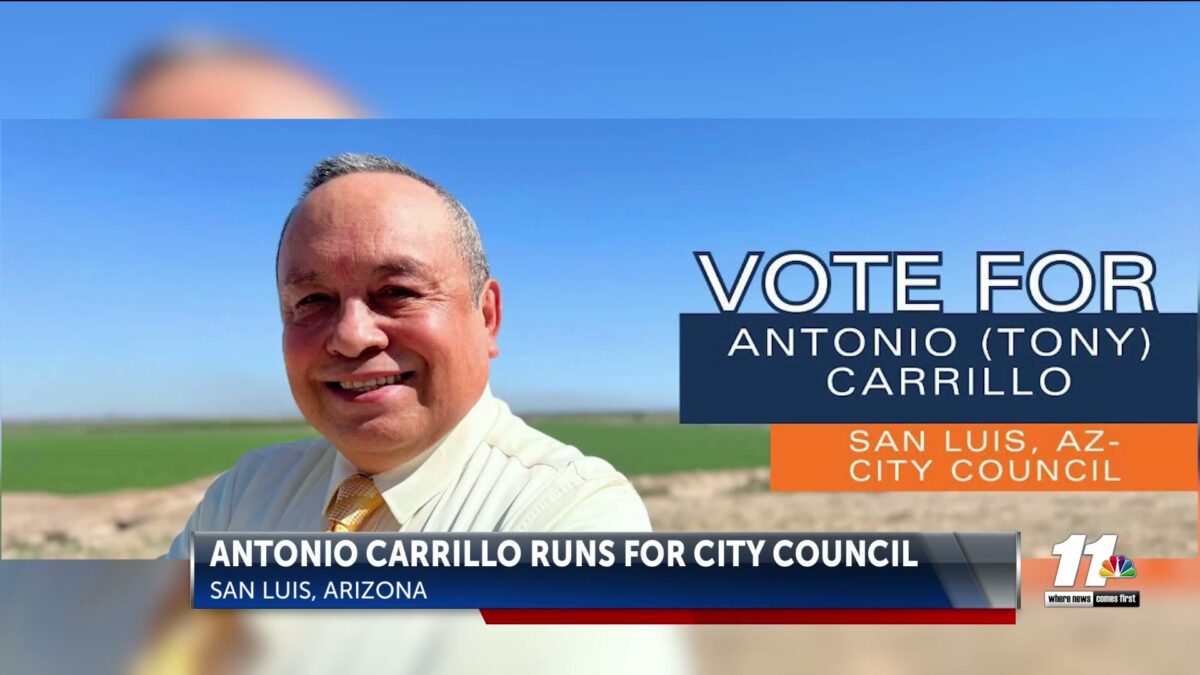
Antonio Carrillo runs for San Luis City Council

Abigahil Padilla

SAN LUIS, Ariz. (KYMA) – We’re less than two weeks away from the Arizona Primary Election, and KYMA is focusing on another candidate running for the San Luis City Council.

Antonio Carrillo has lived in San Luis, Arizona for more than three decades.

His platform focuses on supporting economic development, strengthening binational cooperation and reviewing existing city plans to identify what is working and what can be improved.

“I would no like to try to impose my vision on the other council members…I would love to sit with them and analyze what is going on,” Carrillo shared.

The Arizona Primary Election is taking place Tuesday, July 21, 2026, and early voting is now underway.

To find out more about Carrillo and the other candidates running for the San Luis City Council, click here.

Click here to follow the original article.

Man falls off border wall in Sunland Park

Gabrielle Lopez

SUNLAND PARK, N.M. (KVIA) — Friday, the Sunland Park Fire Department said a man fell off the border wall.

It happened Friday morning around 3:15 a.m. at 1000 Camino Real Dr. by a landfill near the wall, officials said.

In a Facebook post, the fire department said a man in his 40s fell 20 feet off the wall and injured himself. They transported him to the hospital.

Click here to follow the original article.

National Weather Service confirms tornado traveled through Rolla on Thursday night

Alison Patton

ROLLA, Mo. (KMIZ)

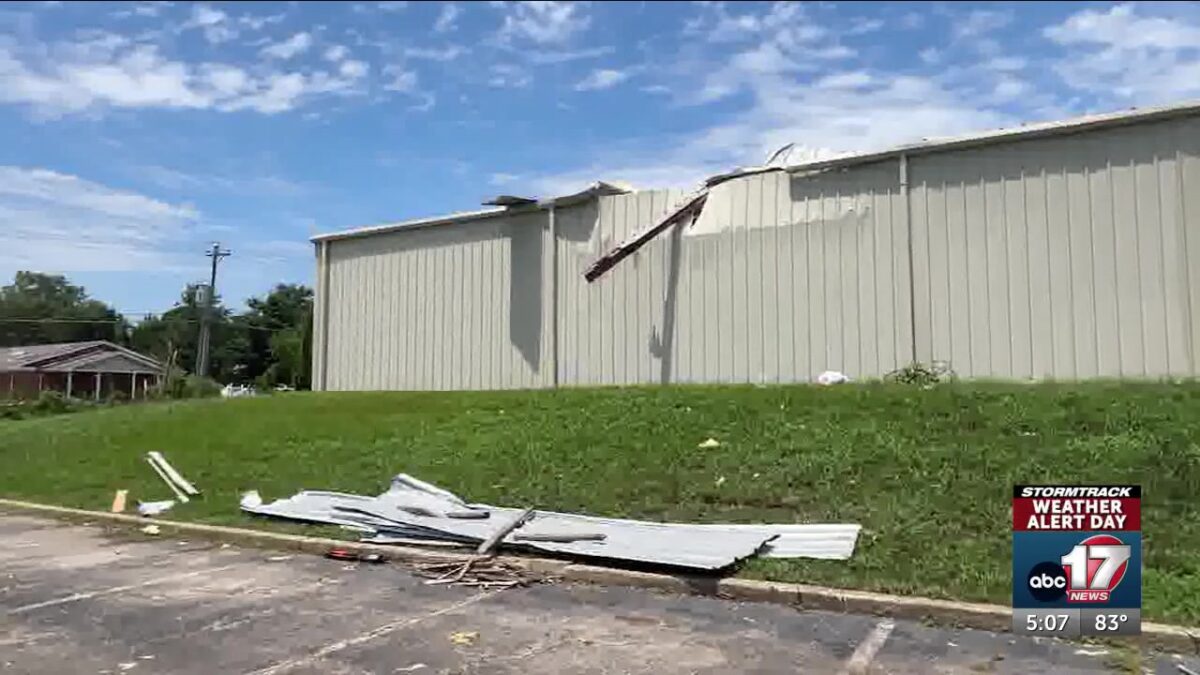
The National Weather Service Office in Springfield confirmed on Friday afternoon that an EF-0 tornado traveled through Rolla for about a minute on Thursday night.

The maximum width of the tornado was 200 yards and it traveled more than a half mile from 10:02-03 p.m., the NWS shared on social media. Winds peaked between 80-85 miles per hour.

The tornado began along Homelife Plaza and went south before “lifting near” Soest Road, the :NWS says. “However it could not be determined as tornadic from that point on due to the lack of convergent damage,” the post says.

Damage was caused to trees and several businesses, including Dollar General and a smoke shop.

The Phelps County Central Communications said in a Thursday night social media post that it set off tornado sirens after residents had reported a tornado, even though a tornado warning wasn’t issued.

“We had a citizens report of a tornado on the ground and that is why we set off the tornado sirens,” the post says.

Communications Chief Stacey Smith said that typically, the storm sirens aren’t set off for a thunderstorm warning, but Thursday’s storms were an exception.

“In an event like that, where we feel like the public needs to take cover, we can activate those storm sirens. It doesn’t happen very often because the National Weather Service typically is able to see this stuff before it gets to us,” Smith said.

She said there were other funnel cloud sightings in the county too.

“We did have several first responders last night report rotation in other areas, at least two others, but that never touched down. Sounds like we got lucky,” Smith said.

The National Weather Service did not issue a tornado watch or warning for Phelps County, but it did issue a thunderstorm watch and warning, along with a flash flood warning.

Kristina Fryer, a Rolla resident who sent ABC 17 News a video of the storm, said it seemed similar to the EF-2 tornado that hit the city in March 2025.

“I was waiting for the tornado sirens because with the way things were looking, it was very similar to the storm we had last year in March when the tornado did come through,” Fryer said.

Another resident who also sent a video in, Isaiah Campbell, said he saw a funnel cloud, but it didn’t seem like it was strong.

“This one wasn’t that bad. It hit a small area this time. I don’t think it was really on the ground that long but it did, it caused some damage over there,” Campbell said.

According to a Facebook post, Rolla Public Schools observed debris from trees, with one tree on a fence, but minor damage overall. No buses or buildings were damaged.

There were 80 Intercounty Electric Cooperative Association members without power as of 11 a.m.

Click here to follow the original article.

Missouri Task Force 1 deploys to Sikeston for flood response

Ryan Shiner

COLUMBIA, Mo. (KMIZ)

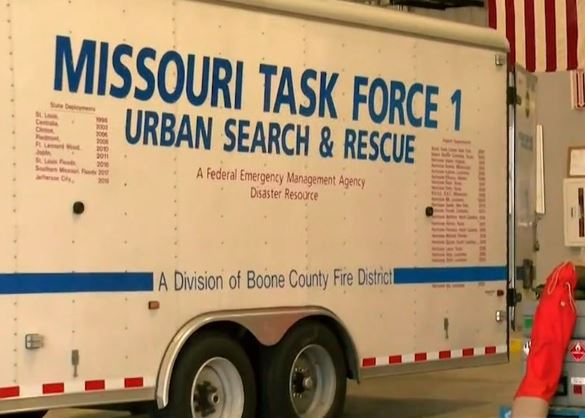
Missouri Task Force 1 has been activated and will be deployed to Sikeston for a flood response, the Boone County Fire Protection District wrote in a Friday morning social media post.

BCFPD said it was activated by SEMA to head to the Scott County town “as a Type III Task Force with embedded swift water rescue capabilities to assist with the ongoing catastrophic flooding in southeast Missouri.”

BCFPD expected to arrive at 10 a.m.

“Additionally, MO-TF1 is deploying a Disaster Situation Awareness and Reconnaissance (DSAR) Mission Ready Package. The DSAR team provides real-time aerial reconnaissance, disaster mapping, and situational awareness using Small Unmanned Aircraft Systems (sUAS) and Geographic Information System (GIS) technology. This capability provides incident commanders with critical intelligence to support operational decision-making and resource deployment,” the release says.

Click here to follow the original article.

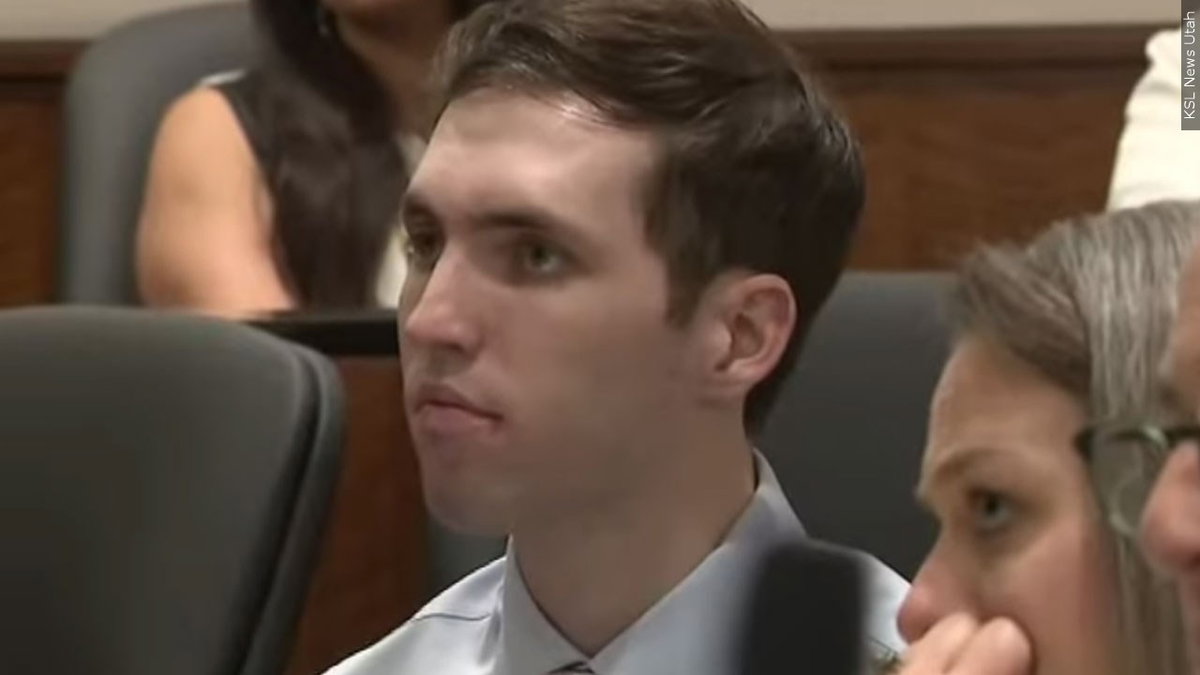
Robinson Hearing Day 5: Man accused of killing Charlie Kirk returns to court

Seth Ratliff

PROVO, Utah (KIF) — The man accused of killing conservative activist Charlie Kirk is scheduled to return to a Utah courtroom today for the fifth and final day of his preliminary hearing.

Friday’s hearing has now ended. You can watch the recorded proceedings in the video player above.

Tyler Robinson, 23, faces multiple severe charges, including aggravated murder, in connection with the Sept. 10, 2025, shooting on the Utah Valley University campus. Prosecutors have already signaled their intent to seek the death penalty if the case goes to trial.

On Thursday, Utah prosecutors played portions of a videotaped interview with Robinson’s former roommate, Lance Twiggs. According to the footage shown in court, Twiggs told investigators that Robinson expressed immediate regret the day after the fatal shooting, reports CNN.

“He started crying a little bit and said he wishes he hadn’t done it, and then kept going around and just doing stuff, I think to keep himself busy or distracted or something,” Twiggs said in the video.

In addition to the interview, prosecutors presented what they characterized as a late-night text conversation between Robinson and Twiggs sent on the night of the killing, according to CNN. The state alleges these messages amount to a confession by the defendant.

The court was also shown photographs of the suspected murder weapon, alongside images of bullets and cartridges that had been engraved with various messages.

Robinson surrendered to police the day after the shooting and has not yet entered a formal plea.

Click here to follow the original article.

D.C. Rogers Recreation Area in Fayette reopens; Peters Lake still closed

Ryan Shiner

COLUMBIA, Mo. (KMIZ)

The D.C. Rogers Recreation Area in Fayette has reopened, according to a Thursday social media post from the City of Fayette.

D.C. Rogers Lake closed on June 4 after significant rainfall affected the area. Peters Lake closed days before and will remain closed.

Previous reporting shows D.C. Rogers Lake need to be lowered by 5-7 inches. The road leading to the lake needed to be closed as a result.

Click here to follow the original article.