Body of missing North Carolina man found near Palisades Reservoir after week-long search

News Team

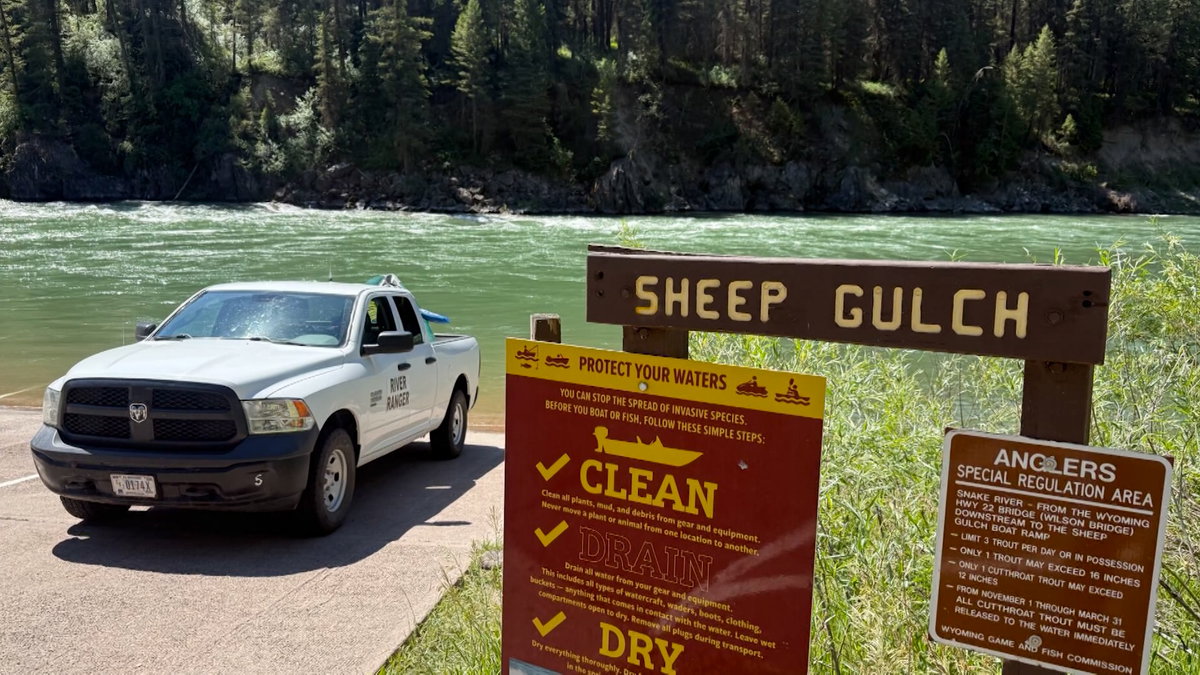
STAR VALLEY, Wyo (KIFI) — The search for a missing North Carolina man ended over the weekend after a group of campers discovered his body along the shore of the Palisades Reservoir on Saturday, July 11.

The Bonneville County Sheriff’s Office assisted in recovering the body of 55-year-old Tory J. Raether, of Charlotte, N.C., ending a week-long search that began over the Fourth of July holiday.

RELATED: Search continues for missing man in Snake River Canyon

According to Star Valley Search and Rescue (SVS&R) Commander Matt McMurdo, on Saturday, July 4th, Raether was part of a group recreating near the Sheep Gulch Boat ram when he jumped into the river without a life jacket. Investigators believe he was quickly caught in a swift, powerful current and began struggling. While members of his group made several desperate attempts to pull him to safety, the current ultimately swept him away.

A call was made to the Star Valley Search and Rescue team and Alpine Volunteer Fire Department shortly after 7:00pm on Saturday, July 4, reporting that a man from North Carolina had fallen into the Snake River near Sheep Gulch near Alpine. VS&R Commander Matt McMurdo said the group the man was with was enjoying the Fourth of July festivities at Jumping Rock, a popular spot to jump into the Snake River above the Sheep Gulch Boat Ramp, roughly 3 1/2 miles east of Alpine.

The initial search began that night, but had to be suspended due to the extreme safety risks of operating on the river after dark.

The search continued throughout the following week until Raether’s body was found on Saturday by campers along the reservoir shoreline, miles downstream from where he initially entered the water.

Editor’s Note: This story was adapted from an original on-air broadcast report with the assistance of AI. All content is thoroughly reviewed and verified for accuracy by the Local News 8 editorial team.

Click here to follow the original article.

“I just started drowning”: Woman recounts rescue on Kuna’s Indian Creek

By Brady Caskey

Click here for updates on this story

    KUNA, Idaho (KIVI) — What was supposed to be a fun weekend float down Indian Creek in Kuna quickly turned into a life-or-death situation for a Caldwell woman when her raft flipped and she became stranded in trees along the creek.

“I went over a rapid thinking I’ll be fine and I wasn’t. I flipped over backwards in my tube and just started drowning,” said Ashlynn Monroe

She believes she was stuck underwater for about 40 seconds before grabbing a branch strong enough to pull herself up.

“I was panicking. I was panicking like my first thought when I first flipped is you’re gonna die, you’re gonna die like this is it,” said Monroe.

Monroe held onto the trees and yelled for help while a nearby neighbor called Kuna Fire. Crews then began setting up a rescue operation.

“I introduce myself actually just like how you were a normal person at the grocery store. Hi hi my name is Trenton. What’s yours?,” said Firefighter Trenton Hogan — the who swam across the rapids to rescue Monroe.

“The way I found her was she was lodged under some debris with trees, so her main issue was that the current was pushing her into trees and overhang on the creek and she couldn’t get out herself,” said Hogan.

After getting Monroe into a life jacket, Hogan and his team used a rope rescue technique known as a pendulum to bring her to safety.

“They hold on as anchors on the other side so basically they stay stationary we become loose and then we swing on over through the current,” said Hogan.

Crews were able to safely bring Monroe to dry land, where paramedics made sure she was okay.

“This is what we trained for, and I felt confident in myself and I’m really thankful that we have the right equipment to do so,” said Hogan.

Just weeks ago, Kuna Fire conducted training exercises for water rescues ahead of float season.

RELATED | Kuna Fire trains for swift water rescues ahead of busy summer on Indian Creek

“It was scary. It was the scariest thing I’ve ever experienced in my life,” said Monroe.

While filming the story, Neighborhood Reporter Brady Caskey watched as a family capsized at the same spot where Monroe got into trouble, sending a baby wearing a life jacket into the water and leaving several people stranded in different areas of the creek. The family appears to have self-rescued from the situation.

Kuna Fire says the safest option is to avoid floating Indian Creek altogether. For those who choose to float, firefighters recommend wearing a properly fitted life jacket and going with an experienced guide.

Please note: This story was provided to CNN Wire by an affiliate and does not contain original CNN reporting. This content carries a strict local market embargo. If you share the same market as the contributor of this article, you may not use it on any platform.

WATCH: Arizona man still lacing up for ice hockey at 80 years old

By Cameron Polom

Click here for updates on this story

    PHOENIX, Arizona (KNXV) — Most people approaching 80 years old are slowing down, but Valley resident Mike McConnell is lacing up his skates.

Just weeks before his 80th birthday, McConnell is still taking the ice every Thursday night at the Peoria rink, competing in a recreational hockey league where he’s often 20 to 30 years older than everyone else on the ice.

And he’s not stopping there.

Later this month, he’ll travel to California to compete in the prestigious Snoopy Hockey Tournament in Santa Rosa, skating against other players in the 70-and-over division for the second time.

His wife says he’s become an inspiration not only to family and friends, but also to strangers who can’t believe his age when they see him flying across the ice.

ABC15’s Cameron Polom learned about what keeps him motivated, how he stays healthy enough to keep playing, and why he’s not ready to hang up his skates anytime soon. Watch the full Uplifting Arizona story in the video player above.

Please note: This story was provided to CNN Wire by an affiliate and does not contain original CNN reporting. This content carries a strict local market embargo. If you share the same market as the contributor of this article, you may not use it on any platform.

Preparing for monsoon season in the Coachella Valley

Dakota Makinen

COACHELLA VALLEY, Calif. (KESQ) – Monsoon season can bring flash flooding, strong winds, blowing dust and dangerous travel conditions to the Coachella Valley.

News Channel 3 spoke with the Coachella Valley Disaster Preparedness Network about how families can prepare before severe weather arrives.

Experts recommend having an emergency plan, staying informed through weather alerts, and keeping an emergency kit stocked with essentials such as water, nonperishable food, flashlights, batteries and important documents.

Stay with News Channel 3 for the latest updates.

Click here to follow the original article.

Wetmore fire evacuees in Custer County expected to return home Monday morning

Scott Harrison

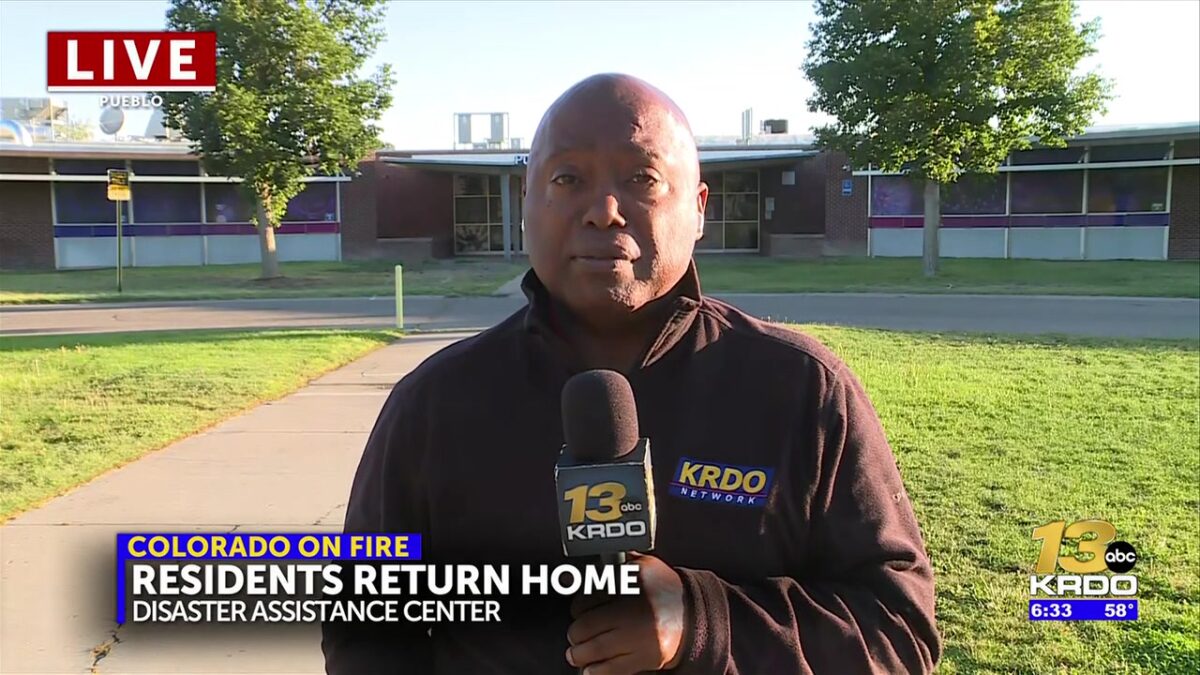
CUSTER COUNTY, Colo. (KRDO) — A segment of Highway 96 that had been closed during the Aspen Acres Fire will reopen on Monday so that evacuees can return to their homes, authorities said during a Sunday evening community meeting.

At 9 a.m., the highway between Siloam Road and County Road 305 is scheduled to reopen to provide access for residents of the town of Wetmore.

Twice during the fire, fire crews worked feverishly to protect the town from advancing flames, and authorities said that no homes were damaged there.

“There are no power lines or downed buildings,” said Erik Sillitoe, the county’s emergency management director. “100% re-entry, no ID cards. Wetmore will switch from a mandatory evacuation status to a pre-evacuation status.”

The Greenwood area south of Wetmore remains under mandatory evacuation, Sillitoe explained, as high fire danger persists there.

He also said that later this week, authorities hope to allow residents to visit their homes in neighborhoods along Highway 165, north of Colorado City, which has been closed for most of the fire.

The protocol, Sillitoe said, will be for residents to meet at Mackenzie Junction (the intersection of Highways 165 and 96) and be escorted by sheriff’s deputies into their neighborhoods via bus or van.

Re-entry passes will be available at Lange Hall (Hope Lutheran Church) in Westcliffe.

Highway 96 remains closed from Highway 67 west of Wetmore to Silver Cliff.

Click here to follow the original article.

From Cavite to the CT Suite: Leland Bautista’s HCC Coleman Journey Comes Full Circle

By Francis Page Jr.

Click here for updates on this story

    July 13, 2026 (Houston Style Magazine) — Some success stories are measured in diplomas. Others are measured in doors opened, patients comforted and students inspired. For Leland Bautista, a 2019 graduate of Houston City College’s Coleman College for Health Sciences, success includes all three—and perhaps a few remarkably detailed CT images along the way.

Bautista’s journey began in Cavite, Philippines, where he completed his initial radiography education before relocating to Houston. He arrived with healthcare experience, ambition and a clear goal: build upon his professional foundation and practice radiography in the United States.

HCC Coleman College provided the bridge.

“I have always known that I would work in healthcare,” Bautista explained. He entered Coleman’s Radiography program as an advanced-placement student, allowing him to strengthen his previous training while learning the standards, technologies and patient-care practices required in the American healthcare system.

Founded in 2004, HCC Coleman College offers degrees and certificates in more than 20 health-science fields. As a member institution of the Texas Medical Center, the college connects students with educational resources and healthcare environments that can turn classroom preparation into real-world opportunity. Its two-year Radiography program combines lectures, laboratory instruction and clinical experience, while its Computed Tomography Enhanced Skills Certificate offers additional preparation in advanced medical imaging.

photo

For Bautista, Coleman’s appeal extended beyond equipment, laboratories and course catalogs. What impressed him most was the human touch.

He remembers receiving accessible information, timely responses and reassuring support throughout the enrollment process. Once classes began, Coleman staff members and Radiography instructors remained committed to helping students succeed.

That support mattered because healthcare education is not exactly a leisurely stroll with a stethoscope. It requires long hours, technical precision, emotional discipline and enough determination to keep going when the coffee has stopped cooperating.

Bautista’s motivation came from remembering his starting point.

“When I am tired, I always look back to where I started and see how far I’ve come,” he said.

That perseverance has produced an impressive career. Today, Bautista serves as a Diagnostic Imaging CT Supervisor at MD Anderson Cancer Center. He has also returned to HCC Coleman as an adjunct instructor of Computed Tomography, helping prepare students for the profession that changed his own life.

His journey is continuing academically as well. Bautista is pursuing a Master of Science in Radiologic Sciences, specializing in Medical Imaging Informatics, at the UT MD Anderson School of Health Professions, with an expected graduation date in 2027. The graduate program includes tracks in medical imaging informatics, administrative leadership and educational leadership—areas that reflect the expanding relationship between imaging technology, healthcare data, management and instruction.

Yet Bautista’s greatest satisfaction is not found in a title alone. He values helping patients during moments when answers, compassion and accurate imaging matter deeply. As a supervisor and instructor, he also finds fulfillment in mentoring professionals and watching students grow.

His story represents education at its best: knowledge received, opportunity earned and experience returned to the next generation.

For Houston’s international and immigrant communities, Bautista’s path carries an especially encouraging message. A degree earned in another country does not have to represent the end of a professional chapter. With the right institution, resources and determination, it can become the opening paragraph of an even greater American success story.

His advice to future students is direct: stay focused and use the college’s resources.

“My education at HCC Coleman College opened so many doors and opportunities in the radiology field,” Bautista said.

Now, as a healthcare leader, graduate student and HCC instructor, Leland Bautista is holding those doors open for others—and that may be the clearest image of success any technology could produce. photo

More info: hccs.edu/about-us/colleges/coleman-college-for-health-sciences

Please note: This story was provided to CNN Wire by an affiliate and does not contain original CNN reporting. This content carries a strict local market embargo. If you share the same market as the contributor of this article, you may not use it on any platform.

Kierra Lee
KIELEESTYLE@GMAIL.COM
4096658446

Arizona mom watches son lose everything to kratom sold at gas stations

By Kamilah Williams

Click here for updates on this story

    TUSCON, Arizona (KNXV) — Suzanne Sierra never heard of kratom before her 28-year-old son Christopher started buying small bottles of it from a smoke shop.

At first, he was taking it just to feel better. Then he needed it just to function. Within two years, Christopher was spending nearly $1,000 a day on the product, and had lost his job, his girlfriend, and his home.

“He shakes, he shakes really bad,” Sierra said. “He’s 28, and his whole life is ahead of him, and it destroyed it. For something that was called Feel Free.”

A Surge in Poisonings

Calls to poison centers about kratom have surged more than 1,200% over the past decade, according to a new CDC study. Last year alone, there were more than 3,400 reports of kratom poisoning across the country. Symptoms can range from vomiting and high blood pressure to seizures and hallucinations.

Kratom, pronounced KRAY-tom, is a psychoactive herb derived from a tropical tree native to Southeast Asia. In the United States, it is sold openly at gas stations and smoke shops in pill, powder, and liquid extract form. It is currently unregulated at the federal level, meaning there are no standard doses and no oversight of what goes into the products on shelves.

ABC15 found a Facebook group for people recovering from kratom addiction and met Ryan Wood of West Tennessee. He says he picked up kratom at a gas station five years ago thinking it was just another energy drink.

“I just ran across it, you know, I like energy drinks and stuff like that and just thought it was another pick me up,” Wood said.

Within one to two years, Wood was taking up to 100 pills a day. He has been to rehab three times. He says withdrawal was the hardest thing he has ever been through, including hallucinations, violent body tremors, and multiple emergency room visits that triggered pancreatitis.

“It’s very unsafe, it’s very unhealthy, and yes, people are losing their lives,” Wood said.

The Other Side

Not everyone believes kratom should be banned.

Fadi Fod is the owner of Kawana, an alcohol-free bar and cafe in the Valley that serves botanical beverages made with kratom. He says the problem is not kratom itself, but the synthetic, lab-made products that are often grouped with it, like a form known as 7-hydroxy.

“Please do not mix natural leaf kratom with other synthetic products like 7 hydroxy,” Fod said. “This is a natural leaf that grows naturally in nature, where this is synthetically made in a lab, synthesized by a human.”

Fod says at Kawana, every drink is carefully measured by portion and customers are educated before they order.

“Here at Kawana we work at education, not just selling, informing the customers the difference between the kratom leaves, and each cup of our drinks is measured per portion, so we know how much kratom, so it’s not being over poured,” Fod said.

The Push to Regulate

Arizona Attorney General Kris Mayes has said she plans to work with legislators to strengthen laws against kratom and similar products. It is currently illegal to sell kratom to anyone under the age of 18 in Arizona.

Tennessee banned all kratom products as of July 1. Wood says the rest of the country should follow.

“I think it needs to be banned all across the United States,” Wood said.

Sierra, who started a Facebook group for families affected by kratom, says she has heard from countless people with stories just like her son’s. She says she went to every store in her town that sold the product and asked them not to sell it to Christopher.

“I didn’t know what else to do,” she said.

Christopher is now living back home with his mother. Sierra says he still struggles every day.

“He doesn’t feel like he has any hope,” she said.

If you or someone you know needs help, call Poison Control at 1-800-222-1222.

This story was reported on-air by a journalist and has been converted to this platform with the assistance of AI. Scripps editorial team verifies all reporting on all platforms for fairness and accuracy.

Please note: This story was provided to CNN Wire by an affiliate and does not contain original CNN reporting. This content carries a strict local market embargo. If you share the same market as the contributor of this article, you may not use it on any platform.

Voluntary Action Center fully opens new Opportunity Campus in Columbia

Jazsmin Halliburton

COLUMBIA, Mo. (KMIZ)

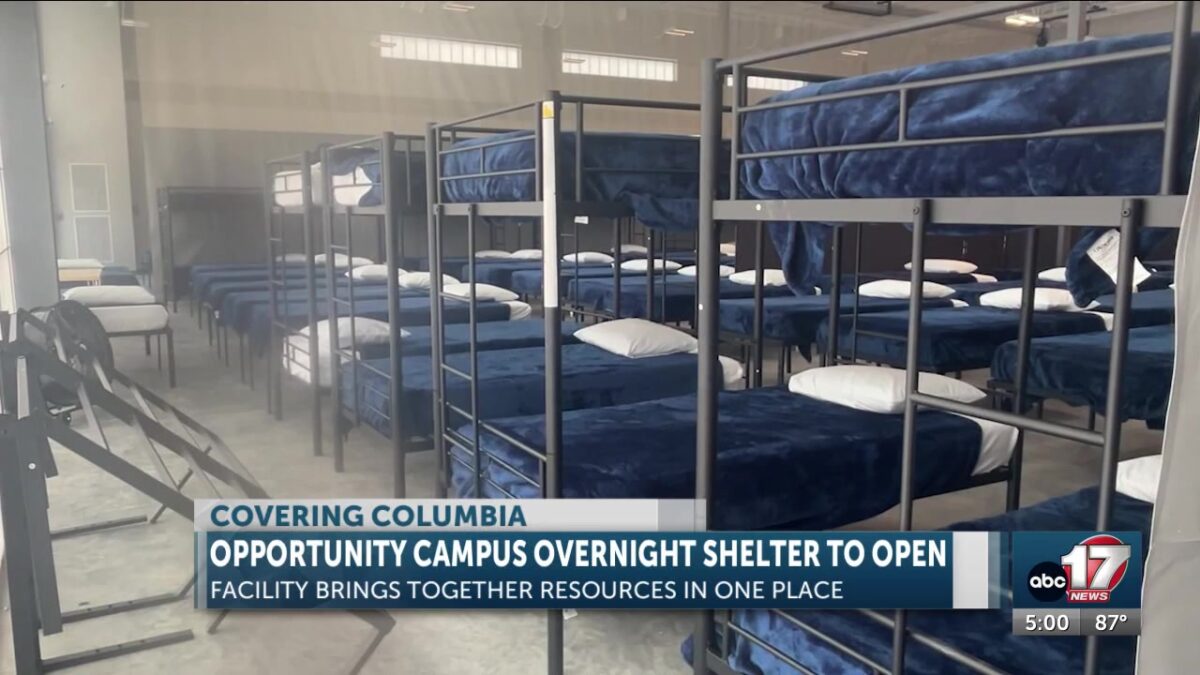
The Voluntary Action Center’s Opportunity Campus in Columbia officially opened the doors to its overnight shelter Monday to support people experiencing hardship and homelessness.

“I would not be at all surprised if we reached 150 overnight guests tonight,” Voluntary Action Center Executive Director Ed Stansberry said.

The 30,000-plus-square-foot facility, capable of serving over 7,000 people a year, is located in the 1300 block of Bowling Street. Construction on the $18.6 million facility began in February 2024 and part of the Opportunity Campus opened its doors as an overnight cooling center earlier this month.

“New Day, formerly Turning Point, just today started their third week of day services here,” Stansberry said. “A week ago today, Loaves and Fishes came down and started providing meal services. So the third component is the overnight shelter.”

The campus includes 150 beds, an overflow bed area with private rooms for sick individuals, a commercial kitchen and dining room area, showers and more.

“The day shelter’s had somewhere between 80 and probably 120 [visitors],” Stansberry said. “Our unsheltered neighbors have been kind of shower starved. And one of the things we designed in here was a significant amount of showers.”

The day center has been reporting about 40 showers a day, according to Stansberry.

The overnight Waypoint Shelter will now open doors to more people. It can divide up sleeping spaces for veterans, visitors with sensory issues, pet owners, etc.

While most shelters in Missouri don’t allow pets, the Opportunity Campus offers a veterinary exam area, a pet washing station, indoor/outdoor kennel runs, and more for those with pets.

“If they can’t take their fur baby, they’re not going to come. So that’s an additional group that we’ve eliminated a barrier for,” Stansberry said.

People will also have access to an on-site medical center run by Centerstone, mail delivery, laundry services, computer access and secure storage spaces.

According to Columbia’s 2025 State of Homelessness Report, 309 people experienced homelessness last year. The city’s homeless population has hovered around the 300 mark for at least three years, with 323 reported in 2024 and 270 in 2023. The report was not done during the pandemic from 2020-22.

Opportunity Campus leadership and Ward 3 Columbia City Council Member Jacque Sample believe the facility can truly transform the homeless community in the city.

“To me, success is going to be seeing the number of unhoused persons in our community decrease,” Sample said. “I think with the consolidation of these services in one place, it’s going to be a much more organized effort.”

Stanberry previously told ABC 17 News that about 30 nonprofits and organizations will be offering resources at the campus. Having a centralized location to get help, he said, is something the city hasn’t tried before.

“Communities that are most successful at addressing homelessness are those that have radical collaboration between the nonprofits in those communities,” Stansberry said.

Visitors will also work with “case managers” during their time at the Opportunity Campus.

“Case managers will begin to form relationships, and already have with our unsheltered neighbors, to make sure that we are getting them the services they need and then not duplicating those services across other nonprofits in the community,” Stansberry said.

Half an hour before the overnight shelter opened at 6:30 p.m., an ABC 17 News crew saw a line of about 20 out the door. A shuttle was also seen bringing people to the campus.

Click here to follow the original article.

The Place Where the Rainbow Never Ends A brick, a beach, and a lesson that never stopped moving

By Ben Jealous

Click here for updates on this story

    July 13, 2026 (Houston Style Magazine) — (TriceEdneyWire.com) – There is an old man in the movement who still brims with the courage and love forged on a Chicago beach.

His eyes do not work well anymore. It seems to bother him less than you would think. Norman Hill has always seen more with his head and his heart than most of us ever see with our eyes.

I met Norman in the summer of 1993, at the convention of the A. Philip Randolph Institute. He was its president. He and the labor leaders Bill Lucy, Richard Womack and Clayola Brown gathered two dozen young Black organizers who shared their vision. Lucy had helped lead the sanitation workers’ strike in Memphis the week King was killed.

Stacey Abrams was one of us. Derrick Johnson was one. Jena Roscoe was one. I was one.

They passed down what A. Philip Randolph and Bayard Rustin had taught them. Civil rights and workers’ rights are one fight. Racism splits working people apart. Economic injustice profits from that division. Our answer has to take on both.

Norman learned that from those two men. He also learned it on a Chicago beach.

In 1960, Rainbow Beach was public by law and White by custom. Velma Murphy was 21 years old and president of the South Side NAACP Youth Council. She decided to test it. If students in the South could sit down at a lunch counter, young people in Chicago could wade into Lake Michigan.

Norman helped her build a group, Black and White together. Some wanted an all-Black action. Norman and Velma said no. Black leadership and Black and White people standing side by side were not rival ideas. Together they were the plan.

In late August 1960, they walked onto Rainbow Beach. They spread blankets. They read books. They played checkers. They walked into the water.

A White mob gathered. Rocks and bricks flew. A brick hit Velma in the head and knocked her out cold. Norman picked her up and carried her off that beach. It took 17 stitches to close the wound.

They went back anyway. Again and again, through the next summer, they claimed their beach. The papers carried Velma’s story, and the crowds that came to stand with them grew. The city was forced to protect them. Rainbow Beach became a beach for everybody.

That victory was a blueprint. Black-led. Black and White together. Built on working people standing as one. Brave enough to take a beating. Disciplined enough to come back.

The lesson did not stay on the beach.

Soon after that summer, Stacey, Derrick, Jena and I went to Mississippi. Governor Kirk Fordice wanted to be rid of the state’s three Black public universities. He had already threatened to call out the National Guard rather than spend another dollar on them. Now he wanted to shut down Mississippi Valley State and put a prison on the campus.

He wanted Alcorn State gone. He wanted Jackson State made over into something else.

Alcorn is where Medgar Evers met Myrlie Beasley. They married on Christmas Eve. They worked side by side in the Mississippi NAACP office until the night Medgar was shot dead in his own driveway.

Saving Alcorn meant saving the ground where that love began.

We organized. We pulled in White Mississippians who understood that a state that shuts down its Black colleges will not stop there. Norman’s theory, tested again, 700 miles from the lake.

The plan died. All three schools are open today.

Derrick stayed in Mississippi and went deeper into the place where labor, civil rights and politics meet. Today he is president and CEO of the NAACP. One of his early mentors down there was Charlie Horhn. Charlie brought Black and White workers at a Jackson factory into one union. He started the state’s first Randolph Institute chapter. In 1993 he ran the campaign that sent Bennie Thompson to Congress.

Charlie is 91 now. His son John is the mayor of Jackson.

Clayola Brown is the president of the A. Philip Randolph Institute now. She sits in Norman’s chair. She was there in that room too, already carrying the same lesson forward.

The women and men Norman trained across the decades will gather in Chicago at the end of this week. Legions from labor. Leaders in civil rights and politics as well. Our titles have changed. The bond has not.

The late Rev. Jesse Jackson built the Rainbow Coalition into a national force. In Chicago’s moral history, there is no Rainbow Coalition without Rainbow Beach.

And then there is the love story.

Velma Murphy became Velma Hill. They married the year after the brick. More than six decades of love, labor and civil rights.

But the marriage was never the point. It was the workshop.

Two dozen of us sat in that room in 1993 because Norman and Velma had spent thirty years building something strong enough to hold us. That is what a movement marriage does. Medgar and Myrlie did it in Mississippi. Myrlie carried the work for decades after they killed him, and went on to lead the NAACP herself. The love did not end in that driveway. It went out into the world and made leaders.

It is what Derrick and Letitia do now, pouring into the organizers coming up behind them the way Norman poured into us.

I once asked Norman how he and Velma lasted so long.

“Find a woman who is as much of a warrior as you are,” he told me, “and marry her.”

What he built with her raised us. Stacey. Derrick. Jena. Me. Legions more across the decades. We came to them as students and they sent us out as leaders, and every one of us is proud to count ourselves among Norman and Velma’s children in the movement.

The rainbow did not stop at the water’s edge. It ran through Randolph and Rustin. It ran through Medgar and Myrlie. It ran through Norman and Velma. It reached two dozen students in 1993. It runs through Derrick and Letitia. And it runs all through the NAACP family.

Norman’s eyesight has dimmed. His vision has not. At Rainbow Beach, and in every life it still touches, the rainbow never ends.  Ben Jealous is a professor of practice at the University of Pennsylvania and former national president and CEO of the NAACP.

Please note: This story was provided to CNN Wire by an affiliate and does not contain original CNN reporting. This content carries a strict local market embargo. If you share the same market as the contributor of this article, you may not use it on any platform.

Kierra Lee
KIELEESTYLE@GMAIL.COM
4096658446

What Does America 250 Mean to the Black Family?

By Frederick Nickens, Coretta Graham

Click here for updates on this story

    July 13, 2026 (Houston Style Magazine) — America turned 250 on July 4, 2026, marking two and a half centuries since the signing of the Declaration of Independence. The official America250 observance invited the country to reflect on its past, honor the contributions of all Americans and imagine a stronger future. For Black families, however, this anniversary cannot be reduced to fireworks, flags and a birthday cake large enough for 50 states. It must also become an honest family meeting about the promise, progress and unfinished business of American democracy.

The Declaration proclaimed equality in 1776, but millions of Black people were denied liberty, citizenship and legal protection for generations. In August 1619, the White Lion brought captive Africans to Point Comfort in English-occupied Virginia—one of the defining beginnings of the Black experience in what became the United States. They arrived with names, families, skills, faith, intelligence and dreams, even as an emerging system attempted to reduce human beings to property.

Yet Black history is not simply a record of what America did to Black people. It is also the record of what Black people did for America.

Black labor helped build the nation’s wealth. Black soldiers defended American freedom, even when freedom did not fully defend them. Black churches sheltered movements, Black teachers opened minds, Black entrepreneurs created opportunity, and Black families turned survival into strategy.

During Reconstruction, newly freed citizens demanded a broader democracy grounded in racial equality. The 15th Amendment extended voting rights to Black men in 1870, although poll taxes, literacy tests, intimidation and Jim Crow later stripped that promise from millions. The Voting Rights Act of 1965 became a landmark federal response to that long betrayal.

That history answers the central question: America 250 means Black families have earned more than an invitation to the celebration. We are co-authors of the American story.

Houston knows that truth. From neighborhood churches and family businesses to Texas Southern University and Barbara Jordan—the Fifth Ward daughter who carried her commanding constitutional voice into Congress—Black leadership has continually strengthened both community and country.

But authorship carries responsibility. The next chapter must be written through education, voting, entrepreneurship, home and land ownership, mentorship, family stability and informed civic participation.

Democracy is not a spectator sport, and progress does not arrive by same-day delivery.

Communities gain influence when they organize, attend public meetings, study policy, support responsible institutions, question elected officials and prepare young people to lead.

This is the peaceful revolution America 250 should inspire: a revolution of reading, building, investing, voting and remembering. It should include serious discussion of the lasting economic consequences of slavery and discrimination, along with practical policies that expand opportunity, protect civil rights and help families create generational wealth.

Accountability must apply to government, corporations, schools, political parties—and to us.

Not every Black family will interpret America 250 in exactly the same way. That diversity of thought is itself part of democracy. Still, common ground remains: our history deserves truth, our children deserve preparation, our communities deserve investment, and our votes deserve protection.

For Black America, the 250th anniversary should be both celebration and summons. We may honor the nation without pretending its history was perfect. Honest patriotism loves America enough to tell the truth, and courageous democracy believes America can still improve.

Our ancestors survived conditions designed to erase their future. The task before this generation is not merely to inherit their resilience, but to convert it into lasting power and shared prosperity.

America 250 asks what kind of nation enters its next 250 years. Black families should answer clearly: one where our history is taught, our voices are heard, our businesses are supported, our children are prepared and our humanity is never negotiable.

The previous chapters were too often written about us.

This next one must be written by us.

Texas Democratic Black Caucus

photo

“Honoring Our Past. Empowering Our Future. Building the Next Generation of Leadership.”

Facebook: @TXBlackDems X: @TXBlackDems Instagram: @TXBlackDems Threads: @TXBlackDems TikTok: @TXBlackDems

Please note: This story was provided to CNN Wire by an affiliate and does not contain original CNN reporting. This content carries a strict local market embargo. If you share the same market as the contributor of this article, you may not use it on any platform.

Kierra Lee
KIELEESTYLE@GMAIL.COM
4096658446