Parasite that causes explosive diarrhea detected in El Paso, but risk remains low

El Paso Matters

by Priscilla Totiyapungprasert

El Paso health officials have confirmed one case of cyclosporiasis, an intestinal illness caused by a parasite, this year. The report comes during a multi-state outbreak that has prompted the Federal Drug Administration to investigate contaminated produce.

The cyclospora parasite, known for causing severe diarrhea, is not new to the region. Isolated cases of cyclospora infections occur each year in El Paso, said Dr. Hector Ocaranza, city and county health authority. The El Paso Department of Public Health is monitoring the situation and the level of concern for the community remains low, he said.

This year’s case, a man in his 60s, was reported to city epidemiologists June 16. The man was not hospitalized and epidemiologists did not identify a confirmed source of exposure. This was the first case of cyclosporiasis reported in El Paso since July 2025.

The Centers for Disease Control and Prevention reported 1,645 cases across 34 states, including Texas, as of July 13. But national reporting lags significantly behind state reporting, resulting in an undercount of cases.

“Because no single source has yet been identified, the investigation remains active and continues to receive significant attention,” Ocaranza said.

What is cyclospora?

Cyclospora is a microscopic parasite that infects the small intestine, causing watery and explosive diarrhea. The parasite spreads when people eat raw produce or drink water contaminated by infected feces. Unlike other stomach bugs, cyclosporiasis does not transmit directly from person to person.

(Courtesy: El Paso Matters)

The parasite is endemic to tropical and subtropical regions. Cases tend to rise in the summer because cyclospora requires a warm environment to mature to an infectious stage, it is the peak season for many fruits and vegetables, and people are spending more time in pools, lakes and splash pads.

Many people recover from cyclospora infections without seeking medical care, which contributes to the undercount of cases, Ocaranza said. 

Diagnosing cyclosporiasis requires health care providers to order a stool test, which is not routine. The diarrhea caused by cyclospora often cannot be distinguished from other common gastrointestinal illnesses, such as norovirus or rotavirus, based on symptoms alone, Ocaranza said.

What makes the parasite infections so bad this year?

A sudden surge in cyclosporiasis cases and hospitalizations, starting in the Midwest, has stumped investigators and revealed gaps in surveillance. More than 3,000 cases have been reported in Michigan and Ohio alone, where contaminated lettuce is a suspected source, but state health officials have not identified a specific type, grower or supplier.

In July 2025, the Trump administration scaled back the CDC’ Foodborne Diseases Active Surveillance Network and made monitoring cyclosporiasis optional for states, though Texas continues to report cases as a notifiable condition. The administration last year also made massive budget and staffing cuts to the FDA, the agency in charge of investigating foodborne illness outbreaks along with the CDC and U.S. Department of Agriculture.

The CDC and FDA did not immediately respond to requests for comment.

How can I protect myself from the diarrhea outbreak?

The El Paso Department of Public Health recommends the following measures to reduce the risk of cyclospora infection and spread:

Wash fresh fruits and vegetables thoroughly under running water before consumption.

Cook foods to their recommended internal temperatures.

Avoid drinking untreated water from recreational or natural water sources, including lakes and creeks.

Wash your hands thoroughly before preparing or eating food and after using the restroom.

Avoid swimming or participating in recreational water activities if you are experiencing gastrointestinal symptoms.

When traveling, use caution when consuming raw produce or food from unregulated street vendors.

If you develop persistent gastrointestinal symptoms, contact your healthcare provider and be sure to share any recent travel history, particularly to areas experiencing outbreaks or where cyclospora is endemic.

If you care for someone with a weakened immune system, avoid providing care while experiencing gastrointestinal symptoms.

Ocaranza said the health department is conducting outreach with healthcare providers. 

If patterns or potential sources of illness are identified, the department may coordinate with the city’s Food Inspection Division to collect samples for testing and request help from the state health department’s rapid response team, which investigates food contamination, traces the source of infection in outbreaks and implements measures to control transmission.

Click here to follow the original article.

Letter shows list of downtown Columbia businesses that support ‘urban camping ordinance’

Sutton Parker

COLUMBIA, Mo. (KMIZ)

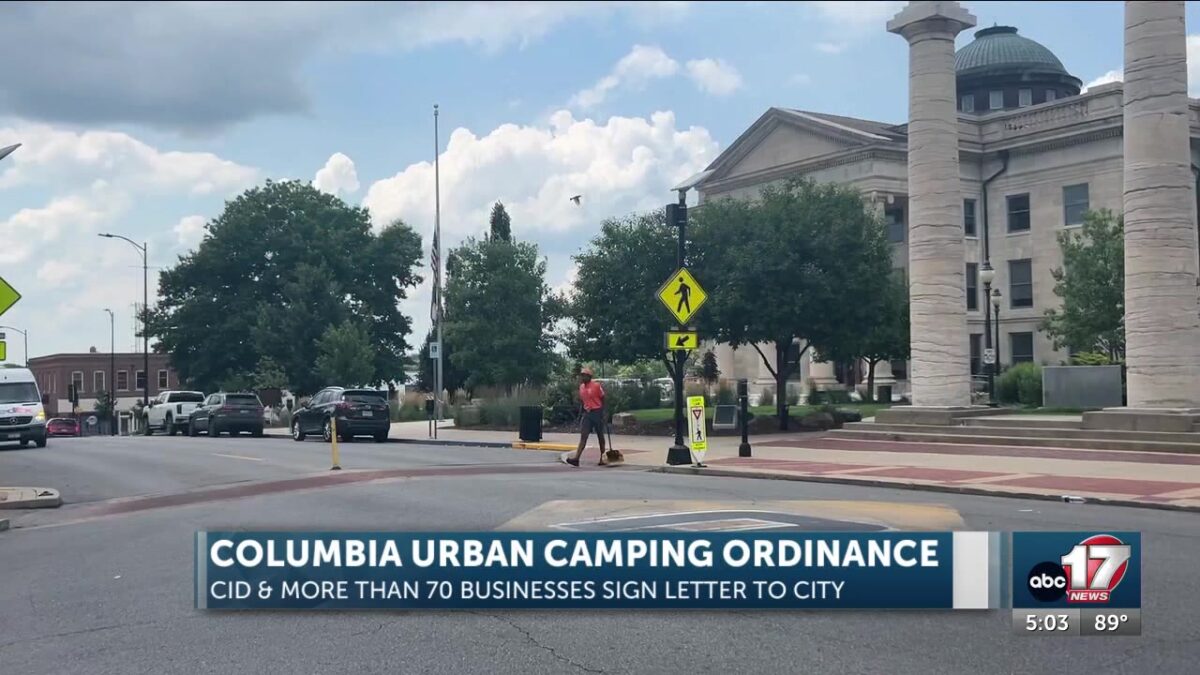
Columbia’s Downtown Community Improvement District sent a letter requesting the City Council to develop an enforceable “urban camping ordinance.”

CID Executive Director Nickie Davis told ABC 17 News on Tuesday about the letter being sent to the council and the number of businesses that signed in support. She said it is expected to be discussed at the next City Council meeting.

The letter has support from nearly 70 business owners and organizations. It aims to address concerns of public camping, sidewalk obstructions, encampments and sanitation issues.

Davis said the growing unhoused population has struck a heavy blow to local businesses for years.

“It definitely hurts our small businesses when customers walk up and don’t feel comfortable enough to even go into a small business because someone might be sitting or sleeping there,” she said.

The District wrote in the letter the initiative is not intended to criminalize homelessness.

“Currently, existing ordinances appear fragmented, broad, and difficult to locate or interpret. This creates confusion for residents, businesses, law enforcement, outreach providers, and individuals seeking services,” the letter says.

After visiting Columbia, South Carolina, Davis said the city’s specific definition of urban camping – along with its tiered approach – is what put their letter in motion.

“We’re hoping for a kind of a citation, a citation kind of warning. So the first one would be a warning. The second one might be a warning with a citation, and then the third one would be a little bit more,” she said.

The letter urges the city to pair the requested ordinance with compassionate outreach, like shelter referrals and mental health support. Adding that many communities have adopted a tiered enforcement model that prioritizes education and voluntary compliance over immediate penalties.

“So we’re not immediately going to, you know, you’re lying on a sidewalk, you’re arrested or anything like that. We’re hoping for a kind of a citation, a warning. So the first one would be a warning.The second one might be a warning with a citation, and then the third one would be a little bit more,” Davis said.

The district said that with the launch of the new Block by Block Safety Ambassador Program, clear laws are essential in helping them deescalate issues and connect people with services before emergency services need to be called.

Brenda Porter, the director of the Child Advocacy Center of Central Missouri, said her organization signed onto the letter.

Porter said the decision to sign on wasn’t easy, but was ultimately made to protect the vulnerable children and families they serve daily.

She says their building is right by Flat Branch Park, and they have allegedly ran into issues with unhoused individuals in their parking lot after hours.

“We have to be careful that the children don’t arrive to see, used needles in our parking lot. Airplane shots, beer cans, things like that. So, our intentions of signing on to that letter is to help provide some type of control, to to the folks, that tend to frequent our property,” Porter said.

Ward 1 Councilwoman Valerie Carrol said right now she is focusing on the 1% public safety tax.

“At this exact moment, I really think it’s a lot more important for us to be focused on public safety at this time. I really think it’s a lot more important for us to focus on the %1 public safety tax, in the discussion of how to best support our officers and our city ordinances,” Carrol said.

Adding that she would want to review the existing city ordinances before deciding if any changes are needed.

“We have a number of ordinances that are meant to address the issues surrounding potential public nuisances. I would like to review those existing ordinances to determine if and where any revisions are necessary,” she added.

The proposal has been met with criticism online, with some questioning the effectiveness of similar rules around the country.

The full list of downtown businesses who signed in support of the ordinance can be viewed below:

Letter of Support – UC SignaturesDownload

The letter can be found below:

Letter of Support – Camping (2)Download

Click here to follow the original article.

CV Firebirds hire Scott Ford as new assistant coach

Jesus Reyes

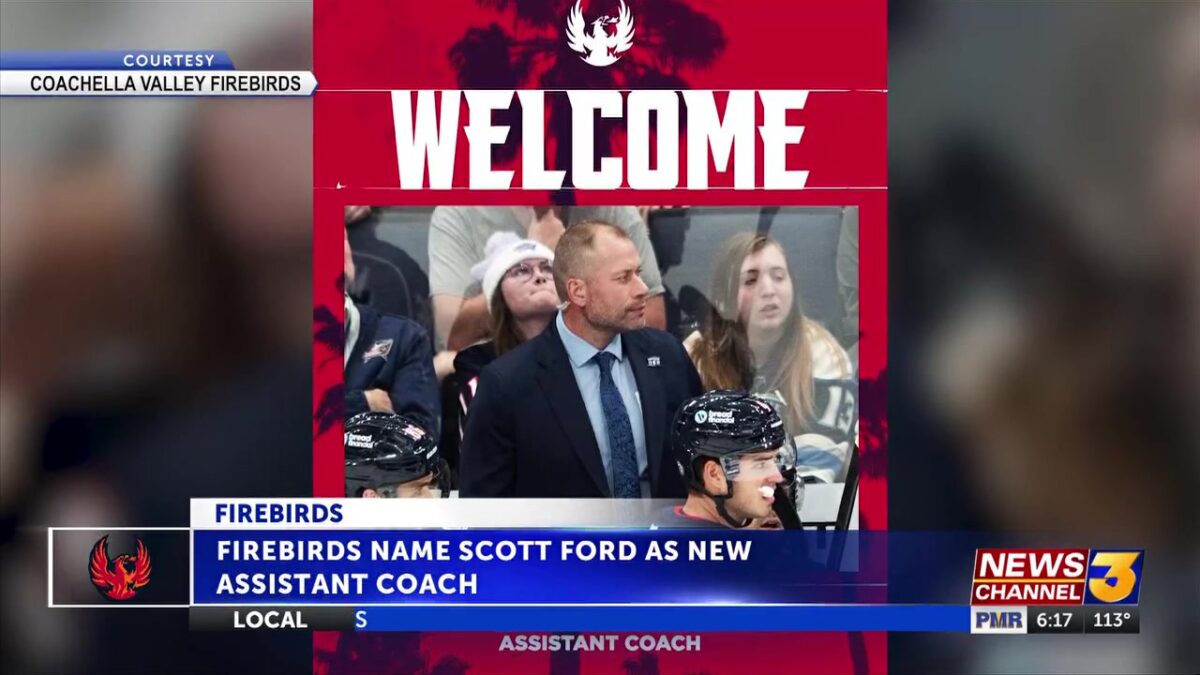
PALM DESERT, Calif. (KESQ) – The Coachella Valley Firebirds have hired Scott Ford as their new assistant coach.

Ford spent the last two seasons as an assistant coach for the NHL’s Columbus Blue Jackets.

Prior to his stint in Columbus, Ford coached for nearly a decade with the AHL’s Milwaukee Admirals and was behind the Admirals’ bench during their back-to-back Western Conference Finals appearances against the Firebirds (2023 and 2024).

Ford replaces Stu Bickel, who departed the Firebirds earlier in the summer to become the head coach of the AHL’s Iowa Wild.

The Firebirds kick off the 2026-27 season at home on Friday, Oct. 2. Stay with News Channel 3 for full coverage all season long.

Click here to follow the original article.

Palm Springs Police release critical incident debrief on fatal officer-involved shooting

Tommy Gallegos

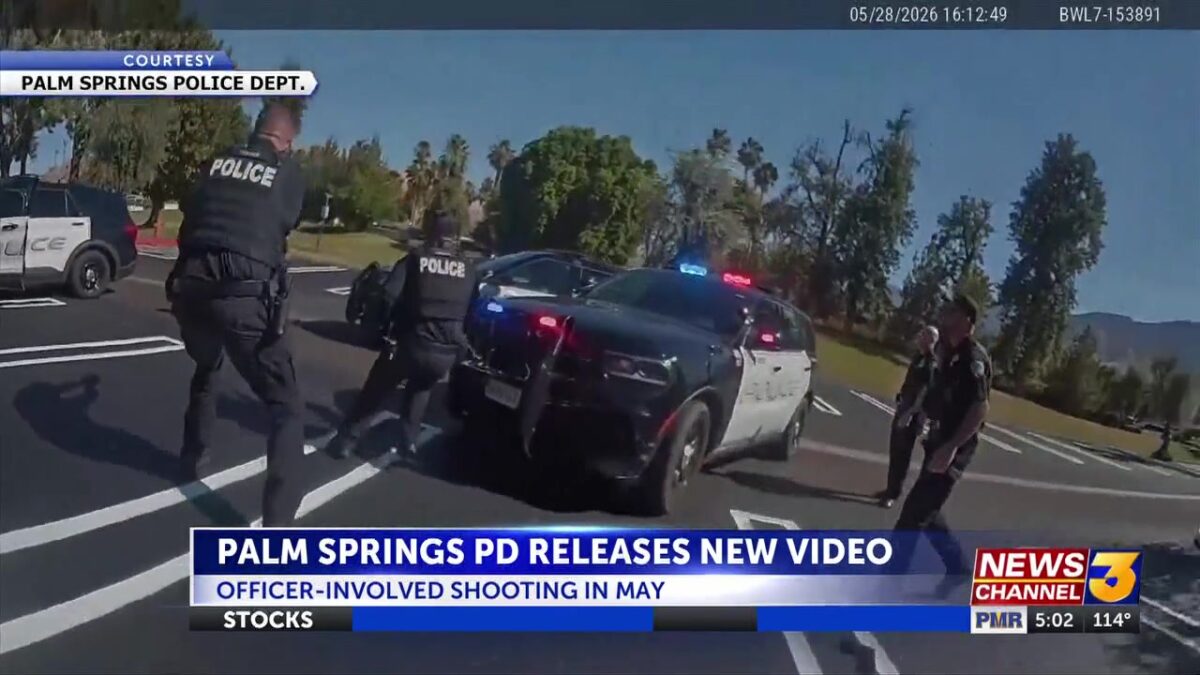
PALM SPRINGS, Calif. — The Palm Springs Police Department has released a critical incident debrief video detailing the events surrounding an officer-involved shooting that occurred on May 28, 2026, that left one person dead.

The incident began at approximately 3:41 p.m. in the 1200 block of East Palm Canyon Drive, after officers responded to multiple reports of a man allegedly acting erratically and threatening employees at a local business with a knife. According to police, dispatchers received information that the suspect was armed and behaving aggressively, prompting an emergency response.

Upon arrival, officers located the suspect, now identified as Gilberto Flores, of Desert Hot Springs, and attempted to de-escalate the situation, speaking with Flores for over 40 minutes. Authorities say officers issued repeated verbal commands and employed less-lethal options in an effort to gain compliance.

“However much time it takes to get that resolved peacefully is what we try to do,” said Capt. Gustavo Araiza with the Palm Springs Police Department in an interview with News Channel 3.

Officers employed two tasers and one less lethal 40mm sponge round in an effort to disarm Flores. Police state Flores continued advancing while armed with a knife, leading officers to discharge their firearms.

Flores was struck during the encounter and transported to a local hospital, where he later died from his injuries. No officers or members of the public were injured during the incident.

The newly released critical incident debrief includes body-worn camera footage, drone footage, radio communications, and an overview of the timeline leading up to the shooting. The department said the video is intended to provide transparency while acknowledging that the investigation remains ongoing.

Police said anyone who wanted more information about any officer-involved shootings in Palm Springs could visit its transparency portal, which you can find by clicking here.

In the incident video released by the department, Chief Andy Mills spoke of the unfortunate end to the incident: “We use time, talk and tactics to be able to resolve these things as peacefully as possible. Unfortunately, it’s not always possible.”

The chief continued, “When you put one of our officers in immediate jeopardy of being stabbed, our officers had to respond with lethal force. It’s important for our officers to go home every night at the end of their watch to their families. And unfortunately, sometimes people won’t allow us to make any other decision.”

In the aftermath of the shooting, the department hopes to create more resources and teams capable of handling mental health crises as they look towards resolving situations like these peacefully.

In the 40 minutes officers spent trying to talk Flores down from the second floor of the building, officers with the department’s CBAT (Community Behavioral Assessment Team) were also on scene. Capt. Araiza said that team is comprised of two people: an officer, well-trained in crisis negotiation, and a clinician from Riverside County. News Channel 3 covered the beginning of that partnership in 2025.

Now, though, Capt. Araiza and Lt. Michael Torres said they want to see additional resources to be devoted towards those in crisis. They pointed to teams that could respond to similar situations and provide a full suite of mental health services, from clinicians to defuse a mental health crisis to a nurse who could administer medication. Then, afterwards, they hoped that team could help conduct aftercare and check-in appointments.

Capt. Araiza said that model was showing signs of success elsewhere in Riverside County: “That onsite response is something that we’re looking at to bring. It’s already in the county, but we’re trying to bring it to the east end of the county. A lot of the agencies on the west end are already looking and deploying these these types of tools.”

As is standard protocol for officer-involved shootings in Riverside County, the investigation is being conducted by the Riverside County Sheriff’s Office Force Investigation Detail. Following the investigation, the Riverside County District Attorney’s office will independently review the findings to determine whether the officers’ actions complied with department policy and California law.

The Palm Springs Police Department will also conduct an administrative review to determine if department personal acted in accordance with policy, training and professional standards.

Police have encouraged anyone with additional information, photographs, or video of the incident to contact investigators.

Click here to follow the original article.

1 sent to hospital after crash on I-10 West at Travel Information Center

Gabrielle Lopez

UPDATE (1:46 p.m.) — El Paso police said I-10 West after Vinton reopened at 12:40 p.m.

UPDATE (12:23 p.m.) — The El Paso County Sheriff’s Office said one person was sent to a local hospital with minor injuries.

Deputies said several vehicles are invovled.

According to TxDOT’s El Paso map, the lane is still closed.

EL PASO, Texas (KVIA) — The right lane on I-10 West at Travel Information Center closed after a crash, according to the Texas Department of Transportation (TxDOT) Wednesday.

According to TxDOT’s map, the crash was confirmed at 10:08 a.m.

According to the El Paso Police Department, the area should be cleared within an hour. There’s currently backup to Vinton.

(Courtesy: TxDOT)

(Courtesy: TxDOT)

Click here to follow the original article.

Full interview with House District 59 candidate Glenn Reynolds

Alison Patton

ABC 17 News is interviewing candidates heading into the Aug. 4 election. On the Republican ticket for the Missouri state house District 59 seat, The race is between Blair Oaks School Board member Glenn Reynolds, former Jefferson City Mayor Carrie Tergin and retired engineer Vic Rackers. The seat represents Cole County. ABC 17 News reporter Alison Patton interviewed all candidates. Read the transcript of the interview with Reynolds below.

EDITOR’S NOTE: A small portions of the recorded and written interview were edited to remove technical issues.

JEFFERSON CITY, Mo. (KMIZ)

ALISON PATTON: Can you tell me a little bit about yourself?

GLENN REYNOLDS: Well, good morning, Alison, this is Glenn Reynolds. I’m the candidate for the 59th District for the House of Representatives here in Missouri. And that covers Cole County and a little bit of Jefferson City. Not most of it. And so, with that, I’ve been here for a long time. I really love Cole County. I love our state. And so with the opportunity here, I thought I would step up. I heard a lot of people complaining, but no one really steps in to take that role. So, I thought I would take the opportunity to see if I can help our community and help our state be prosperous.

PATTON: And tell me, what do you do for work?

REYNOLDS: So I own Central Missouri Power Wash. I go out and I wash buildings and homes and parking lots and all kinds of things that need to be cleaned. And I make the world just a little bit brighter.

PATTON: OK. And then you are also the Blair Oak School school board president.

REYNOLDS: Yes. So I’m currently the Blair School board president. I’m actually president of– I’m sorry, I take that back. I am just now stepping off of being the Blair Oaks School Board president. I am just a school board member. I was the president up until April of last year, so I apologize about that. But I am the president of the Cole County Republican Club, do that. And then actually an assistant wrestling coach for the kids wrestling club at Blair Oaks.

PATTON: OK, now tell me, as you’re kind of campaigning and everything. How do you think that your experience as a former school board president as well as the president of the Cole County Republican Party, how do you think that might help you if you get the role?

REYNOLDS: So, if I get the role, I think it will help me a great deal just from a focus on our community needs standpoint. So I do view one of our fundamental roles is to prepare the next generation to be successful. And that’s part of the reason that drove me to run for the Blair Oaks School Board. Plus, I have a vested interest. I have three boys and all of them are coming through currently. And again, I just want that next generation to have every opportunity they can to be successful in life. And so yeah, a robust educational system absolutely feeds into that. And then the community buy in, which was what we were truly blessed with there is the community buy in with the educational system. If we can get that throughout the state, the parents making sure that students are doing what they need to from an educational and academic standpoint, as I can’t express how much that helps. And where we’re at currently, we’re blessed with that. We’re actually one of the top, top schools in the state. And it’s I attribute most, of that to the parental and community involvement. And so again, that involvement can cross lines and go into the state legislator. I’m a community, just a one of your regular community members, but I want to come here and be able to be successful and help our community prosper.

PATTON: And now one of the big things I’ve got–I’ve got quite a bit for the questions, which we’ll probably jump around here. 

REYNOLDS: Sure. 

PATTON: But one of the things that’s kind of going on right now, or at least recently, Governor [Mike] Kehoe recently passed the budget and he kind of froze some things and vetoed some others. But he says that the state has a spending problem. What are kind of your thoughts on the state budget? 

REYNOLDS: So yeah. I would tend to agree with that. A lot of levels of government have spending problems. But with that we have to take a look at the budget. And if we don’t have the funds coming in, unfortunately–as a business owner, I get put in the same situation I have to look, and say if I don’t have the funds coming in, how is that going to affect me? And where do I need to make changes to be able to meet what budget I do have and still be successful and accomplish the goals that I need to accomplish? And so, it’s the same way in the school systems. Our district currently, we’re sitting at a budget shortfall. And so we’re going through the process of planning that out and what that may look like if the revenue doesn’t show up and where we’re going to be, unfortunately, that’s why we’re put in this situation. We already have to make hard choices. And when you get placed into a realistic situation where we’re not going to have the funding that historically we had been given, then we have to make, whether it’s, cuts and what that looks like. So, yeah, you have to make hard, hard choices.

PATTON: And that was another one of my questions. Public school funding kind of stayed stagnant this year. Kind of based on the state side of things. How do you think that can–do you think that that’s fair, especially when costs and inflation is rising for schools? 

REYNOLDS: So I’m not sure that it stayed stagnant more than it was reduced. And so with that, I think that stems back to a number of things that we’ve had in issues that have passed that were supposed to send money to the schools–whether it’s the marijuana items that passed, we were supposed to get funding from that, whether it’s the lottery, that we’re supposed to get funding from. There seems to be a reduction in that. And there was money that I think the governor expected that money to come in, but it never showed up. The schools actually are receiving less money and it’s not necessarily stagnant. It’s actually a reduction. And so with that, I think some of the private schools may have gotten more money. And in this world, we have both private schools and public schools, and we can live together. But we got to figure out what that looks like.

PATTON: OK. Tell me a little bit more about the private school aspect.

REYNOLDS: So, Governor Kehoe has added funding in there, the voucher program that helps fund, portions of private school. And I don’t know, if some of that came away from the public schools or not but I know that there’s a great deal of money that went into that. And I am all for helping out kids where we can. But, I also want to fund the public schools and make sure that they’re getting what they need to be able to be successful, because by and large, most of our students here in the state are a product of the public school system. I’m a product of the public school system. And so, I want to see what we can–as I always say, we go back to we need these children to be able to be successful and be productive members of our society.

And so by doing that, the public school system sets up most of them for success or failure. And so we have to work to try and make all those successful.

PATTON: OK. Now what kind of, should you get elected, what kind of committees are you interested in joining?

REYNOLDS: So committee wise, one of them is the education and family resources I believe, is  one of the committees that covers education. And that’s one of my top priorities, is making sure that we have a solid educational system. And then the other one is infrastructure and I can’t remember the other or the portion of it, but basically conservation. I’m a volunteer now. I was a volunteer naturalist at Runge Nature Center, and I’m a hunter and fisher, and I love–that’s one of the things I love about Missouri is the opportunities that we have to go to spend time outdoors. And I would love to be able to help make work on that and manage that portion of it, because we’re really blessed here in Missouri, more so than other states. And so I want to make sure that we continue to keep, keep those blessings and manage them appropriately.

PATTON: OK, and then that was kind of one of my questions here as well. Amazon and Google are kind of making plans to settle down in Montgomery County. What are your thoughts on that, especially as you had said, you had mentioned that you were a volunteer? 

REYNOLDS: Naturalist. That’s all right. So, a naturalist is someone who helps others enjoy the outdoors and teaches them about nature and what that–all the different aspects. I used to lead adventure birding trips, actually, up not far from where the data center is going in at. And so, with that, what was your question on?

PATTON: So, I mean, data centers, how do you think that those are going to affect the one, the economy, and two, the environment? 

REYNOLDS: So and I feel like each data center needs to be taken as its own individual project. You have to weigh the both the cost and the benefits out on them. And my biggest thing is making sure that we’re not going to be a net drain on our economy, whether that’s through the water resources or through the electrical grid pulling down and then driving our prices up.

Missourians here currently, we’re feeling the crunch as far as– just from an inflationary aspect. Our dollars just not going as far as they have been and everything costing more. Well, add another 10% onto the electrical grid. That’s 10% more that people are having to pay that they don’t have in their pocket to spend on whatever they else there are. So, again, I want to look at each of these and make sure that they’re a net positive and that they’re not draining our resources. Now, there’s plenty of jobs that will be brought in from them. I don’t know what the sustained jobs will be. I’m still just like everyone else. I’m still doing my research on this. I try not to be a knee-jerk reactionist because I don’t feel like that serves people well. I want to be as educated as possible. So I’m still doing research on this. Again, I just go back to we need it to be a net positive for our community, if we were to do that. Otherwise, we don’t need a drain on the resources.

PATTON: And talk to me kind of about this environmental aspect of data centers as well. .

REYNOLDS: So data centers, the biggest thing in my research is from that I’m picking picking up on is that there’s a large water usage, but I think that they have solved that problem through a basically recycling the same water, being able to circulate, cool the water, circulate it back to, and reuse it. So that seems to be coming around. The other thing is just the energy usage. And so, data centers are basically big server storage warehouses where people either store their information or use it as a cloud-based system to access all kinds of different things across the net. And so with that, servers require a lot of energy to keep them cool. And when you have so many of them together–now, I forgot what the term is for these mega data centers, like the one that’s going into–potentially–going into Montgomery County. But then there’s also other smaller data centers that maybe they ran a small warehouse and house the servers in those. They still have energy needs. And it’s above and beyond what your typical household or typical business goes. It’s actually quite the draw. And so we need to make sure that we have both the infrastructure to be able to handle that and the resources to be able to handle that. And so producing that type of energy in Montgomery, say, Montgomery City. Well, we have the nuclear factory close by there that actually produces energy for most of Central Missouri. But, I don’t know that… All right. So we have the nuclear reactor there in actually in Callaway County, but not terribly far from there. That produces most of the energy for the central Missouri area. And nuclear is a very efficient form of energy. And I think we’ve talked about it in the past, potentially, building a second reactor, but that never came through. But if we have these data centers the reality is, they probably will need a great deal more energy in the area. So we have to have the infrastructure to be able to handle that. The questions I always ask is who’s paying for it, who’s benefiting from it, and who’s receiving the negative portion of that? And we have to weigh all of that out before we make the final decision.

PATTON: Kind of talk to me about the state-income tax because this is another kind of budget–it eventually becomes another budget aspect, accounting aspect of Missouri.

REYNOLDS: Absolutely, absolutely. And this is–seems to be one of the larger talking points that people want to talk about and learn about as I go and do, as I go and talk to people, meet them out in the field–in the field, so to speak. Well, knocking door to door, but in doing that,  we’ve talked about sales tax, but it’s actually the current one. It appears to be an income-tax removal, with the possibility of a sales tax. And so I have read the bill, I’ve been in to meet with reps to have discussions about it, and then I’ve been to the community meetings to educate myself. Again, I don’t want to be a knee-jerk reactionist, but I tried–I tried to weigh everything out and get the most of it before I make my decision. The good news about all of this, is this is going to be decided by our elect–or by our citizens. And so with that, with that, they’ll make the final decision. I always encourage absolutely everyone to go online, find the original bills and read the full bills. This one is a four page bill. HJR 173, HJR 174. You go through and read them and you can come up with your own either decision on whether it’s good or bad, or if you have questions and you go and find out the answers to those. Now, with that, I will support whatever we vote. I will get behind it. Whatever my personal opinions are, I’m concerned about the–It appears to be a lack of planning. After we reduce or after we remove the income tax. There doesn’t seem to be a set plan on what’s going to be coming after that. They talk about sales tax, and that’s fine. That seems to be the way. But there doesn’t seem to be any real guardrails or plans come in on that, and that concerns me. I know that things change once you get in and start going through these decisions, but it doesn’t appear that we have a true, oh, just a true plan. I want to make sure that before we make our decisions, we know what’s going on, but that’s just my personal opinion on it, again I’ll get behind whatever we vote. 

PATTON: And you mentioned that you were out door-knocking. What do the people you door-knock with or your constituents, what are they saying about income tax and some of the other things we’ve talking about? 

REYNOLDS: What are they saying about–Can you repeat that please?

PATTON: What are the folks that you’re talking to? What are they saying about income tax?

REYNOLDS: So I’ve ran into a number of–in my area and the people that I’ve talked to, there’s been also a great deal of concern about what the final product looks like. And a lot of people don’t trust government. And given the fact our history, I can’t say that I blame them. But the biggest thing, again, I stress to everyone, go and educate yourself. Read these bills so that you truly understand what we’re facing and what the changes are. And I look at these bills and just one of my philosophies in life is one side is going to sell you the pipe dream, another side is going to sell you that the world is going to end on it. The reality is, it all ends up landing in the middle somewhere and it’s up to us to determine what that middle looks like and go and pay for it.

PATTON: OK. And tell me a little bit about–you said that you were door-knocking. What are some of your other campaign strategies?

REYNOLDS: So, door-knocking, I attend a lot of events out there. Just the biggest thing is I want to make sure that people know that they can talk to me, because in the end, this campaign really isn’t about me. It’s about our community. And how do we best benefit our community so that we can all get out and be prosperous? And so I would say the typical normal standard strategies of Facebook posts, door knocking, attending events, those are the main things. But again, I stress that I want people to know that they can talk to me and feel confident in expressing their opinions, and that I value their opinions.

PATTON: Now you’re also coming in, or I guess all of the candidates are coming in behind long standing Rudy Veit. How do you think that you will kind of come in and fill his shoes? 

REYNOLDS: So coming into this, my first year, I plan on learning how to be the most-effective rep that I can be. I don’t have any delusions of grandeur. I’m coming in as someone who freely admits, I don’t know what I don’t know…. And then I want to fight and stand up and do what’s best for our community.

PATTON: OK. Let’s see, I didn’t write them in any particular order. Well, I did but the conversation kind of shifts. OK. I believe we just have one more left, and then–I guess two more technically. And then we’ll all kind of open up to you. Let’s talk a little bit about amendment three, which I was just told that it will be on the November.

REYNOLDS: I was I almost sent that to you, but I decided to let you to. Yeah, it’s the November ballot.

PATTON: For some reason I thought it was on August. My apologies, but we’ll talk about Amendment 3, and then we’ll shift to Amendment four, I think, is what I was actually thinking of, but Amendment 3, talking about health care. Tell me a little bit about where you stand on health care, on reproductive health care? 

REYNOLDS: I’m pro-life. 

PATTON: You’re prolife, tell me a little bit more about that.

REYNOLDS: So I believe in saving as many of the babies as we can, as we can out there. That’s, I feel like I have absolute community support on that. We feel the same, same way in our district about that. And I would say that I am absolutely pro-life and willing to fight for that. 

PATTON: OK. Now let’s switch gears and talk about Amendment 4, which would change the initiative petition process. 

REYNOLDS: Yes, the initiative petition reform process.

PATTON: What are your thoughts?

REYNOLDS: So I, again, we’re blessed with this is going to be on the ballot. Excuse me. We’re blessed with this because it’s going to be on the ballot, and our voters get to truly decide what it is. What we’re going to do, whether we’re going to stick with the simple majority or if we’re going to make that process much more difficult for the citizens, to get the initiative petition Form. Some people say that it prevents dark money from adding bills to our Constitution…I’ve read it. We will end up dividing the state into eight, eight different districts, and one of those districts can veto any initiative petition. So, I tend to be a little bit more concerned. I’m afraid that it’s taking it too far. I like where it’s going. So, I do feel like we probably need a little bit stricter rules on how we add things to our Constitution, whether that’s just a 60% vote or a 65%, or if we keep the framework that they’ve built, and instead of having all eight, we drop it back to five of eight or something like that. So my concern is money can be spent in one district to completely take down any initiative petition. And I fear that that might take the voice away from the people also. And I want we’re not–we’re a representative republic, and we want people to have their voice too.

PATTON: Is there anything else that you would like to say or mention that I didn’t ask?

REYNOLDS: Well, for me, having my children has opened my eyes to a lot in this world. And so, selfishly or not, I want, again, want to make sure that the next generation coming through has the best opportunity to be successful as they can. And I know here in Missouri, we deal–or most of the people typically that get ahead, they’re going to have a regular job and a second job. And so that’s tough when you have to work those extra hours to be able to–and being away from your family, from your family. And as a small business owner myself, it’s tough to get one started. So I want to take away some of the regulations from the small business aspect, if we can, to make those small businesses easier to be successful. It’s absolutely tough to get a business from zero to producing a profit. And I’ve been down that road. I’ve been doing that for the last ten years. And I know people, a lot of people out there, they have their small businesses and things, and we have so many innovative people here in our community that, given the opportunity, they can create some amazing things or provide some amazing services. So I want to make sure that they have that opportunity to be able to, to be able to do that and also teach their children the value of a dollar….

Well, I’ve been telling people that I want to bring family values back to the capital. And so I feel like a lot of what we’re facing has stemmed from the breakdown of the nuclear family. And I applaud the people who stick together for that and be able to make it work because it helps our community and our society. And so with that, I appreciate your time.

PATTON: Thank you so much.

Click here to follow the original article.

Full interview with House District 59 candidate Carrie Tergin

Alison Patton

ABC 17 News is interviewing candidates heading into the Aug. 4 election. On the Republican ticket for the Missouri state house District 59 seat, The race is between Blair Oaks School Board member Glenn Reynolds, former Jefferson City Mayor Carrie Tergin and retired engineer Vic Rackers. The seat represents Cole County. ABC 17 News reporter Alison Patton interviewed all candidates. Read the transcript of the interview with Tergin below.

EDITOR’S NOTE: A small part of this interview that didn’t pertain to the House race wasn’t transcribed

JEFFERSON CITY, Mo. (KMIZ)

ALISON PATTON: Tell me a little about yourself and why you’re running.

CARRIE TERGIN: Yes, so,  I’m a lifelong resident here, and I love being in Mid-Missouri. It’s a great place to be and grow up. And I served as mayor of Jefferson City for eight years. I was on the City Council for six years before that, so really got involved and want to continue to make a difference. So I want to get into the Missouri House and use that experience for good. And I’m really all about results, not rhetoric. So I want to take that message and take that into the Capitol. 

PATTON: OK. Now, how do you think that—you mentioned that you were mayor of [Jefferson] City and then also served on the City Council– How do you think those experiences are going to help you in the state House, should you be elected?

TERGIN: Yes. Being the mayor and having the eight years of experience leading the city, it really gives me a great experience to lead the entire district and people know exactly what I’m capable of. They’ve seen all those tough situations come up. They know how I’ve handled the city budget. They know that I’ve been very close on making sure expenses don’t get out of control, keeping the budget and where we can really fund our public safety and the things that matter and the services that they really need most.And really being able to focus on that with the budget. So I think that I really did a great job with that, but also just working with the people to get things done and economic growth projects and development in our city. And they know exactly how I am under pressure, because during the tornado, when we had all of the, you know, rebuilding of the city and all that had to be done, and being able to go into that with confidence that we were going to build and come back stronger, and we did. And so turning those situations into something that we were able as a city to come together, grow stronger. And it’s evident today, and I want to be able to continue that legacy and take it into the capital, into the Missouri House.

PATTON: And you said earlier, before we started recording,  that you’ve been door-knocking, sometimes folks recognize you. How do you think that being the mayor kind of gives you, maybe an advantage, compared to the other candidates? 

TERGIN: You know, people know exactly what they’re getting. They know I’ve been very active, very visible and in the community. And so people know what they’re getting with me as mayor. So, I feel that that’s definitely been very helpful and an advantage. They know that. I’m proven. They know I’ll get results. They know that I’ll work hard. They know what I’m capable of. And, I want to see that continue. 

PATTON: You said that you were out door-knocking. Tell me, how do you think that being the mayor or the being the former mayor gives you a leg up compared to some of the other candidates? 

TERGIN: People really appreciate that the former mayor is coming to their door, and I enjoy talking to people and seeing what they have on their mind. But, most of all, they know who I am. They know that I’m proven. They know my leadership. They know that I get results that, And it’s been wonderful to talk to people from that perspective. Already leading the city for eight years now. What I can do for the entire district. So it’s been very helpful and very positive. 

PATTON: OK. And then you’re coming in after a long standing Rep. Rudy Veit, and how do you think you kind of tackle covering for him, and filling his shoes?

TERGIN: Sure. I think being able to take what has been done so far and really taking that to the next level. So I have the experience to hit the ground running. I’ve led the city for eight years now. I’m able to come into the district and really be able to make things happen. I will get those results. I will not just be about talk, it will be action, and I’m proven to do that. So I feel like it will be a very seamless transition. 

PATTON: OK. And then let’s kind of switch gears. If you’re elected, what kind of House committees are you interested in? 

TERGIN: Sure. Well, as a small business owner, I would be very interested in a small business committee, and I’ve owned a business now. We’ve been in business for 50 years and been very successful. And I know firsthand what it takes for businesses, what we need. I mean, we’re providing jobs, economic growth and development. We’re collecting sales tax. We’re doing so many things that impact our community. Small business is really the backbone of our community. And if we want to see things grow and we want success, it’s important that we can really have some experience at that level. And I know that I definitely bring that to the table. OK.

PATTON: And remind me what is your small business’ name?

TERGIN: Carrie’s Hallmark Shop, which has been here now 50 years. And, it’s been wonderful to be a third-generation family business right here in the heart of our community. 

PATTON: And it’s been open for 50 years, you said, 50 years. 

TERGIN: Yes, yes.

PATTON: OK. Let’s kind of switch gears, talk about some of the big things going on right now. The state budget Governor [Mike] Kehoe just recently passed it. Now, Kehoe says the state has a spending problem. What’s your take on the state budget?

TERGIN: You know, I think that spending does need to be under control, and that is something that I would look forward to doing. I did that as mayor. I looked very hard at our budget, and there were a lot of things that I cut out of the mayor’s budget, because I really felt that we have to focus on what we truly need, and people want more of their money. They don’t want to be spending it on things that we don’t need. So we have to really focus on that and make sure that we’re spending it on the services that we need the most, and our public safety and keeping our streets and things that are most important to people. And I think it’s important that we really focus on that.

PATTON: And what do you think some of those kind of budget items would be for the House District 59?

TERGIN: You know, from what I’m hearing in the district, people really want to maintain the level of life that they have. I mean, they’re very happy there. They want to make sure. And we have a lot of families that want to live very comfortably. They want to keep more of their money. They want to make sure that, their lifestyle maintains what it currently is. And so I think we need to make sure that we continue the services they want a good, safe community. They want a community that they feel like their children and grandchildren are going to want to come back and live, that there are opportunities there. So we need to make sure that our budget aligns with that and those values that we have in our district.

PATTON: And I think one of the things that are on, kind of on the forefront of some folks minds’ is, eliminating the state-income tax. I know I read a news article the other day that said Rudy Veit his voters weren’t quite on board. What have you been hearing, what is your take on this? 

TERGIN: As I’ve been knocking on doors, I’m hearing the same thing. I believe that most people tend to agree that income tax does need to be reformed. However, there are a lot of concerns about what the implementation will actually look like. And unless the voters have a clear vision of what that’s going to be, it can be very difficult for them to want to get on board. So that’s what I hear as I’m knocking on doors. And truly, it will be in the hands of the voters to decide.

PATTON: OK. And then the other thing that’s on the ballot is Amendment 3, which, would undo what voters have approved a couple years ago. 

TERGIN: Well, and that will be on the November ballot. So, Amendment 3 is not on the, August primary. I don’t mind answering it, and we can talk about pro-life a little bit–but you may be thinking— so [Amendment] 4 is on, which is the initiative petition reform. But 3, I believe and I mean, I’m pretty sure it is November. So we may we, you know, we may confuse voters just a little bit because it won’t be on the August [ballot]. But to speak to that and depending on what direction your story goes with that, I am pro-life, and I think it’s important that we can help support these women and families as they are dealing with situations. And I think that there’s a lot of organizations here, even when you look at Missouri and Vitae is right here in our state, and it’s a worldwide organization now that helps people that are, you know, have had situations with, you know, learning some of the best practices and best methods that we can share with people.

And being pro-life, I think it’s important that we incorporate some of those organizations that really can help and really stay focused on how truly important the value of life is. We need to make that very clear and strong. And and so, you know, I really do believe that. 

PATTON: So, let’s talk about Amendment 4. 

TERGIN: So, and what I’m hearing in the district and as I’m talking with people is that a lot of people are not really happy with that. And I think they want to feel that they have a level of trust in that their vote really matters. And so when you’re talking about initiative petition, they want to really feel that, that it is done fairly.So there are a lot of concerns and people may not be happy with that. But ultimately the voters will decide that as well. 

PATTON: Let’s go ahead and talk about public school funding. There was no school funding increase, but inflation and the just the cost of living has really rose. Do you think it’s, I guess, do you think it’s fair that public schools haven’t seen that increase?

TERGIN: You know, when I worked sometimes with the city budget, there were times when the budget remained flat. We can’t always expect an increase. We have to learn to do with what we have sometimes. And sometimes flat can be good. At least it’s not going down. So we have to look at at the benefits of that. So flat doesn’t necessarily mean bad. We have to live within the means and make the decisions that we can still live with what we have. And you know, when it comes to education, it’s important that, parents and families are having a say in what’s happening with their children. And we want to make sure that that’s also very an important part of, of our education process as well.

PATTON: OK. And when you say parents should have a say what do you mean by that? 

TERGIN: I think that there’s so many times when we look at just education in general and there are a lot of different topics that come up with it, whether it’s budget or other things. I know you’re talking more budget related, but I think it’s important that parents stay involved, that they are involved and that they’re, you know, able to make sure that their child has the best opportunities for good education.

PATTON: And then the final question before I can I open it up to you, Amazon and Google are kind of making plans in Montgomery County. What I guess is your stance on data centers, especially if they come to Cole County?

TERGIN: I think that it’s important that the restrictions are in place so that things aren’t disrupted. I know that they can be disruptive when it comes to power and other things that are important to our community. So while they may work in some areas, in some communities, it’s going to be important that they are the right fit and that restrictions are very clearly in place. So there are a lot of concerns that I’m hearing. And and I can see why there would be. So I think it’s important that they’re very closely monitored if they happen 

PATTON: And tell me what are some of these concerns that you’re hearing?

TERGIN: I hear a lot of concerns, mostly about resources. And we need to make sure that the consumption of resources is clearly restricted or monitored or that they are able to provide the resources themselves, and that we are not losing resources for our communities. And perhaps they can be good in some areas, but certainly it will really depend also on the community. And if they really find that the benefit is truly there. But regardless, they need to be monitored and make sure that they are monitored and make sure the resources

PATTON: OK. And then so we can talk about a lot today, is there anything that we didn’t hit or we didn’t talk about that you would like to?

TERGIN: You know, I think that you covered a lot of it very well. But I, I really want to get the opportunity to serve because I want to, really make a difference in the Missouri House. My experience leading the city for eight years as mayor is something that is. Truly a benefit in being able to get in there and make a difference, make things happen, get the results. And I know that that’s truly something that I bring to the table. We want to make the District 59 an area that our children and grandchildren, the next generation, want to come back to and have a thriving life. We want to make sure that they have great opportunities to work and make a good living and keep more of their money and not have the government taking or spending it, make sure that they get a good say in that.

PATTON: OK, I think those are all my questions, thank you so much, Carrie. 

TERGIN: Yeah. You’re welcome. 

Click here to follow the original article.

Full interview with House District 59 candidate Vic Rackers

Alison Patton

ABC 17 News is interviewing candidates heading into the Aug. 4 election. On the Republican ticket for the Missouri state house District 59 seat, The race is between Blair Oaks School Board member Glenn Reynolds, former Jefferson City Mayor Carrie Tergin and retired engineer Vic Rackers. The seat represents Cole County. ABC 17 News reporter Alison Patton interviewed all candidates. Read the transcript of the interview with Rackers below.

Editors note: A small portion of repeated information was cut from transcript. The video is lightly edited to cut out and fix lighting issues. 

JEFFERSON CITY, Mo. (KMIZ)

ALISON PATTON: Why don’t you go ahead and tell me a little bit about yourself?

VIC RACKERS: I’m a native of Cole County. I grew up on a farm on the east side, and we currently live on a farm on the east side, and married to my wife of 37 years. We raised three adult children who are also married, and we have seven grandchildren. I’m a retired civil engineer from the state of Missouri. We farm, we maintain two different farms, and we raise a commercial herd of 30 cattle, and we make hay, and I’ve been trying to be a good citizen. I’m active locally on several boards. I volunteer on several different organizations. I’m proud to say I’m a member of the Cole County 250th Committee, which we’ve been very active lately, and just through this past weekend. I have been active in Republican politics and working for campaigns for quite a while. I was elected to the Republican Central Committee in 2024, and that sort of spurred me on to seek a representative district 59.

PATTON: Why are you running for House District 59?

RACKERS: Yes, I’m running mainly to protect our rural way of life in Cole County. I’m also running to protect the lives of the innocent unborn, I’m running to limit government, and I’m running to protect our personal freedoms and our way of life that I grew up with and that I currently enjoy, and that I want to see extended to our children and our grandchildren.

PATTON: OK. And you’re on quite a few boards. You’re locally active in the community. How do you think that experience will help you if you are elected to this position?

RACKERS: I had the opportunity to meet a lot of people, to work with a lot of people, to volunteer for veterans. I’m on the Bugle Boy, which is a tremendous organization for our veterans. We do a veterans’ appreciation night every year. I’ve been very active in laying wreaths for heroes, and I’m active in our Knights of Columbus. I’m a member of our Mizzou Cole County Extension Board. Just, it sort of builds– it builds a toolbox of networking, and also how to work together to get things done. How the processes of getting things done, working together and sharing ideas using your background. I’m proud of what I have accomplished in my life, and with my wife and my amount of general knowledge that I think I maintain with being a civil engineer, being a hunter, being a fisherman, being a landowner, owning property. And I think those are just good tools that would serve me well, were I’d be fortunate enough to be elected and to be serving here in this building.

PATTON: OK. And if you were to be elected, and maybe, hopefully, you’ve kind of looked into this a little bit, but what kind of committees would you be interested in serving on?

RACKERS: Yes, I have for sure. I’d like to serve on the Agriculture Committee, Natural Resources and Conservation, Transportation and Infrastructure and possibly Energy. And those work into my background. And I think I would be a good advocate on those committees. 

PATTON: OK, and you mentioned you wanted to serve on the energy committee. Now, Amazon and Google have some plans to settle down in Montgomery County. What are your thoughts on data centers in general and how they affect the environment and local economy? 

RACKERS: I definitely have some concerns on the data centers and why they’re coming here. For one, I’m not totally sold on our need for them in Missouri for one. I’m concerned they’re taking up so much rural farmland or our cropland for another. I’m very concerned about how much energy they’re going to demand; there may be electricity, water, natural resources. And then I’m concerned about this loss of supply and demand, when if the demand goes up for energy, how it’s going to affect all the local citizens in the area and in the state of Missouri. And, I just wonder and question what these data centers—how are they going to help our average Missouri citizen and how they’re going to affect them? Other than possibly raising the price and the cost of their cost of living. 

PATTON: And then one of the other things that I guess we can kind of shift gears to talk about is what’s happening right now, especially with this past legislative session. The budget, it has taken kind of a center stage after Governor [Mike] Kehoe signed it off; he froze certain things and vetoed other expenses. And he says that the state has a spending problem. What’s kind of your take on the state budget?

RACKERS: I agree totally with that statement by the governor. I believe, or I want– One of the other reasons I’m running is to limit the growth of government. I want to make sure government lives within its means, like all, every everyday Missourian and has to, as he said, we don’t have a revenue problem, we have a spending problem. And that is controlled by the supermajority Republican Party. And we need to, we need to take care of our own house, and we need to, and act conservatively and limit the growth and take care of needs, take care of needs, and not necessarily all at once. So I definitely agree with that, and want to limit the growth and cut spending.

PATTON: And one of the things on this on the August ballot is eliminating or phasing out the state income tax. What are your thoughts on that?

RACKERS: I am wholeheartedly in favor of the concept of eliminating or reducing income tax. And I believe people can spend their own money better than giving it to the government to reallocate and spend. But I do have reservations with the execution. And I believe that the execution of the sales tax and the implementation is undefined. So I encourage all voters to be educated and informed when they go to the ballot box, and make an informed decision on that issue. I’m in favor of the concept, I wish it was better defined, better defined, for us to vote on. 

PATTON: OK. Some of the other candidates you’re running against have said that they’ve gone out and door-knocked, and they’ve had these conversations with folks in the community or district.  Have you had these conversations, and what are your constituents or potential constituents thoughts on this? 

RACKERS: Yes. People sort of have the same feeling that I just mentioned. They definitely have reservations, and they’re concerned about sales tax running, you know, running out of control that we could get into 10s, 11s in sales tax [percentage]. But I trust the people that have developed it and the limitations, but still it’s sort of undefined until it gets back into session and is set in stone and set in concrete to what actually will be implemented.

PATTON: OK. And then the other budget question is public school funding– it was supposed to stay stagnant, and then, one of the other candidates told me that the lottery, the money from the lottery, didn’t quite come in as high as it’s anticipated to. But do you think that it’s fair that public schools either were supposed to receive stagnant funding or even a little less money this year compared to last? 

RACKERS: I believe they’re working on redoing the foundation formula, and that should hopefully take care of that. But just like everyone and the government, I believe that the schools need to live within their means. I believe schools need to be held more accountable and produce a better product. I believe they need to have more focus on the fundamentals of academics and make sure that they are teaching our children to read. The statistics are troubling, that a lot of children, a lot of kids can’t read by the time they get out of fourth grade. And I just think we need to have more accountability. I mean, we had more interaction with our parents. I support the Parents’ Bill of Rights. And we just, we need to work together. Parents need to be more responsible and accountable, but they need to work as a team with their school, because I believe in my kids and my wife, and our kids are the absolute–the best thing that we have to invest in, and their quality, their education, and the environment which they are getting that education. 

PATTON: OK. We have two more questions left. We’re gonna go ahead and get this one out of the way. I told you I wanted to talk about Amendment 3 today, it’s not on the August ballot. It’s on the November ballot, so we’ll switch the question around. Tell me about–you work with pro-life groups. What are your thoughts, opinions on it, and we can extend it to Amendment 3 in November, or we can talk about it just in general. 

RACKERS: Sure. I am a strong proponent of Amendment 3. Once a baby is conceived, we need to do everything to nourish and protect that innocent human, unborn human life. Just like we do with other animals, puppies, eagles, we need to cherish human life, and I agree, but we need to plan or we don’t want unplanned pregnancies. We want planned pregnancies. But to that end, there’s always going to be unplanned pregnancies. But we need to sponsor adoption rather than abortion. We need to make every child wanted. But if that child is not wanted, bring that child available for adoption. In 2026, I don’t believe we should be killing our unborn, innocent unborn children.

PATTON: And then with the other candidates, we’ve talked about Amendment 3. It turns out it’s in November. So we kind of switched that one to Amendment 4 as well. Are you familiar with this?

RACKERS: Yes, I’m familiar with all the amendments. It took to follow up with Amendment 3, and Amendment 3, it also limits transgender surgeries. And I don’t believe any, any child, any minor should be getting any type of sex change, any type of transgender surgeries. I believe the parents shouldn’t be advocating that, and no one should be advocating. I think that a person should be a full adult to make those decisions when they’re an adult. But I don’t think we should be doing those type of experiments on our youth. But Amendment 4. So, I mean, I haven’t advocated for initiative petition reform for a long time. We wouldn’t have abortion legal in Missouri currently. And we wouldn’t have marijuana legal in Missouri currently, if we would have had some sort of initiative petition reform in the past. 50% plus one, only one vote, to me is way too low of a threshold to change our constitution. I would have been all right with 57%, 60%, just a larger majority to change our Constitution. And also Amendment 4 will limit initiative petitions and make it harder for them to get passed on the ballot. But it also limits out-of-state participation and funding into those. So, for example, if the voters, hopefully, decide to limit, curtail abortion in November. Well, if we don’t pass Amendment 4, well, initiative petition could be brought up again next year or the year after that, just to override or redo this current Amendment 3. So, I just think the legislator is elected to vet laws. And, you know, there’s a difference between the process of the initiative petitions that come through a referendum and then ones that come from the legislature. And so I’m all right with that. Our Constitution is larger than the United States Constitution. Marijuana has 44 pages of our current Constitution, which is 20% of our Constitution. So, I just think that the outside groups and that special interest groups are controlling our initiative petition process. And I don’t believe that the average Missourian has a burning desire to change our Constitution, other than that which I do today to get legalized abortion out of our Constitution.

PATTON: Some of the other candidates I’ve talked to today have said that initiative petitions need to be reformed, but they have some reservations about how strong that Amendment 4–or how hard it is to change. Is that a concern for you?  

RACKERS: It wouldn’t have been my choice to do eight out of eight districts. But I’m OK with that. Like I said, 57, 60% or even two-thirds majority, I would have been all right with that. This current plan wouldn’t have been my choice, but I’m in favor of it. We need to limit outside interest and just repeat initiative petitions, getting on the ballot, and being passed by 50% plus one vote. I mean, marijuana only passed, abortion only passed by 51.6 [percent]. And marijuana passed by a simple, smaller, simple majority also. So, I’m OK with and I’m definitely in favor of it.

PATTON: I’ve got two more questions for you. You’re coming in after long-standing Rep. Rudy Veit. How do you think that you will kind of fill his position? 

RACKERS: I will be more conservative than our current representative. I think I reflect better with the values of our rural Missourians. I’m a farmer and an engineer. Where our current is an attorney and nothing against attorneys, but I think I just reflect and share the same values of our rural Cole County residents.

PATTON: OK, and then last question, I’ll open it up to you. Is there anything else that you would want to talk about today that we– I didn’t ask you, or we didn’t get to?

RACKERS: Yes, we are invested in Cole County, and, I want to advocate for the citizens of Taos and Wardsville and all the other, Saint Thomas, and towns in between. And I wanted to be an accountable and accessible representative at the Capitol for all for residents of rural Cole County. 

PATTON: All right, thank you so much. 

RACKERS: Thank you.

Click here to follow the original article.

Income tax amendment, data centers on House District 59 candidates minds ahead of midterm

Alison Patton

JEFFERSON CITY, Mo. (KMIZ)

Candidates running to replace long-standing Rep. Rudy Veit, who termed out of House District 59, have Amendment 5 and data centers on their minds as they talk with potential constituents.

Three Republicans are running to fill the spot, including former Jefferson City Mayor Carrie Tergin, former Blair Oaks School Board member Glenn Reynolds and retired engineer Vic Rackers.

If approved by voters in August, Amendment 5 would allow lawmakers in the next legislative session to phase out the state-income tax. To replace the lost revenue, it’s likely that the sales tax will increase. However, voters are only giving their consent for lawmakers to adjust taxes.

Tergin said the people she talks with while door-knocking agree that income tax needs to be reformed.

“However, there are a lot of concerns about what the implementation will actually look, and unless voters have a clear vision of what that’s going to be, it can be very difficult for them to want to get on board,” Tergin said.

Reynolds said the laws, HJR 173 and 174, don’t outline the steps to replace the income tax.

“It appears to be a lack of planning after we reduce or after we remove the income tax. There doesn’t seem to be a set plan on what’s going to be coming after that,” Reynolds said.

Rackers said he backs the amendment, but echoed that the people he’s talked with seem to have reservations about implementation.

“They’re concerned about the sales tax running out of control, that we could get into 10-11% sales tax,” Rackers said. “But I trust the people that have developed it and the limitation, but still it’s sort of undefined until it gets back into session and is set in stone and set in concrete to what actually will be implemented.”

He and Reynolds told an ABC 17 News reporter that voters should take a look into the law behind Amendment 5 before heading to the ballot box.

Another rising topic of discussion in Missouri politics is data centers, after Amazon and Google took interest in building in Montgomery County.

All three candidates are skeptical about how data centers will use resources, including energy and natural resources.

“I feel like each data center needs to be taken as its own individual project,” Reynolds said. “You have to weigh both the cost and the benefits out of them, and my biggest thing is making sure we’re not going to be a net drain on our economy.”

Rackers said he’s concerned that data centers will take up rural farmland and energy.

“I just wonder and question what these data centers–how are they going to help our average Missouri citizen and how they’re going to affect them?” Rackers said.

Tergin said there needs to be restrictions.

“I know that they can be disruptive when it comes to power and other things that are important to our community. So while they may work in some areas, in some communities, it’s going to be important that they are the right fit and that restrictions are clearly in place,” Tergin said.

Click here to follow the original article.

Train hits, kills woman in Las Cruces

Gabrielle Lopez

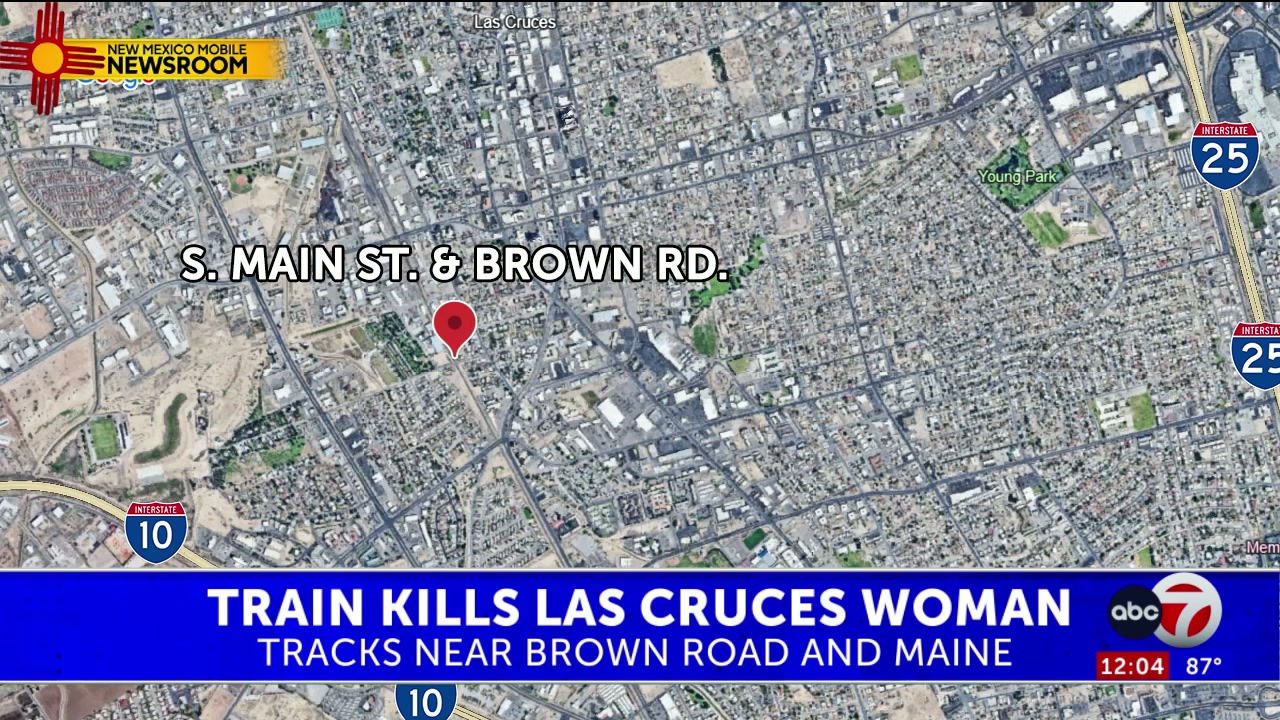
LAS CRUCES, N.M. (KVIA) — A 35-year-old woman died Tuesday after a train hit her in Las Cruces, according to police.

It happened at about 11:45 p.m. at the railroad tracks near Brown Road, Las Cruces Police said. The tracks are near S Main Street.

Police said a BNSF train hit the woman while she walked along the tracks. She was pronounced dead at the scene.

The train reportedly came to a stop and temporarily blocked several intersections while police investigated, police said.

The woman’s name won’t be released until her family is notified, police said.

Click here to follow the original article.