After nearly 250 years, final Revolutionary War cannon fragment recovered from Lake Champlain

By Lucy Cherry
Click here for updates on this story
PERU, New York (WPTZ) — After spending nearly 250 years at the bottom of Lake Champlain, the final major missing piece of an exploded Revolutionary War cannon has been recovered, marking what researchers believe is the end of a decades-long search.
The artifact is believed to be the last major missing fragment of a cannon that exploded during the Battle of Valcour Island in 1776 — the first major fleet-on-fleet naval battle of the American Revolution.
The explosion aboard the gunboat New York killed Patriot sailor Thomas Rogers and injured two other crew members.
For more than 25 years, the Valcour Bay Research Project has searched the lake bottom in Northern New York for the cannon’s missing pieces. This summer, researchers from Texas A&M University’s Maritime Archaeology and Conservation Center used remote sensing technology to locate what they believed was the final missing fragment.
Buried beneath more than four feet of mud off the coast of Peru, New York, the piece was found almost exactly where researchers predicted the explosion would have sent it.
“It’s really exceptional,” said Dr. Christopher Dostal, director of Texas A&M’s Maritime Archaeology and Conservation Center. “Preservation is unbelievable up here. You’ve got cold, dark, anoxic clay. Things like this just don’t happen.”
Once the artifact reached shore, the discovery was put to the test.
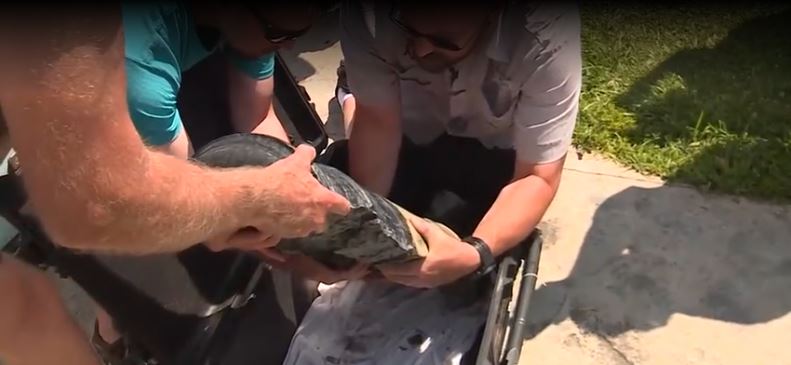
The diver who recovered the first piece of the cannon nearly three decades ago carefully aligned the newly recovered fragment with a 3D-printed replica created from that original discovery. The pieces matched, providing another confirmation that researchers had finally recovered the last major missing section of the cannon.
“It’s a completion of the puzzle,” said Ed Scollon, who recovered the first cannon fragment about 27 years ago. “Our goal was to find this gun and to find out what had happened, and we did all of that and more. It just shows that with this kind of a collaboration, you can learn from not only the stories in books, but from the archaeological evidence that’s still there.”
Researchers say the recovered fragment will now undergo conservation before eventually joining the rest of the original cannon at the Lake Champlain Maritime Museum, where the complete artifact will be preserved and displayed for the public.
Please note: This story was provided to CNN Wire by an affiliate and does not contain original CNN reporting. This content carries a strict local market embargo. If you share the same market as the contributor of this article, you may not use it on any platform.