Yuma researchers fight resurgence of destructive crop pest

Manoah Tuiasosopo
YUMA, AZ – (KYMA, KECY) A destructive crop pest is making a comeback in Yuma, putting some of the region’s most valuable vegetable crops at risk.
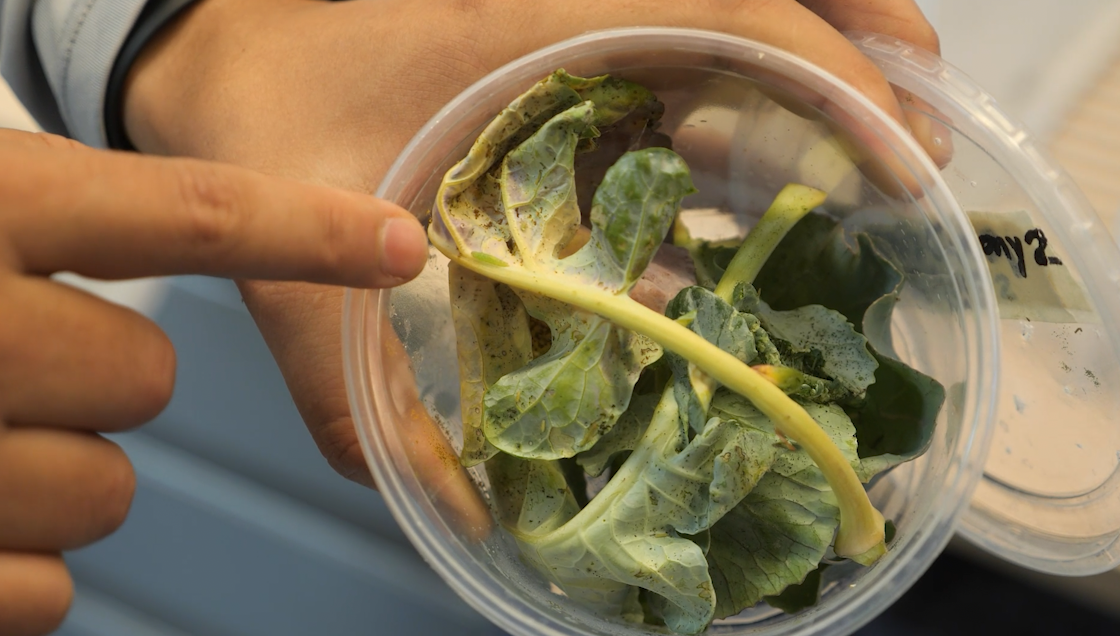
Researchers at the University of Arizona’s Yuma Agricultural Center are studying the resurgence of the Diamondback Moth (DBM) — a pest known for damaging brassica crops like broccoli, cauliflower, and cabbage.
The pest previously caused major problems for growers during a widespread outbreak in 2016. After several years of lower activity, researchers say the Diamondback Moth returned in large numbers starting in late 2023.
“Growers are consistently telling us there is a control failure with insecticides,” said Rosan Adhikari, a postdoctoral researcher at the University of Arizona. “They are discarding their whole field because of the DBM damage.”
Researchers say controlling the pest has become increasingly challenging. While Yuma’s extreme summer heat creates a natural break when crop production slows, the moths can return during the fall and spring growing seasons.
Scientists believe the pests may be entering the region through two main pathways: incoming vegetable transplants from areas with year-round production, and weather patterns that carry moths north from Mexico.
To better understand the problem, Assistant Professor and Extension Specialist Wilfrid Calvin’s research team is collecting live Diamondback Moth larvae from infested fields and testing how they respond to commonly used insecticides.
The team uses two laboratory testing methods to measure the pest’s response. One exposes larvae to the maximum legal field rate of a chemical, while another tests different chemical strengths to determine how much is needed to kill half of the population.
Early results show diamides — a widely used class of insecticides — are becoming less effective against Diamondback Moth larvae in laboratory tests.
Researchers say the pest’s ability to adapt is a major concern, making prevention and management strategies critical for growers.
One recommendation is rotating insecticide groups, since different chemicals target different parts of the insect’s biology.
“Rotate the insecticide group,” Adhikari said. “Some target the nervous system, some target muscles, some target the digestive system. Growers need to rotate those so insects cannot adapt.”
The research team is continuing to study Diamondback Moth populations across Arizona and California, with plans to conduct additional field trials.
The goal is to create a seasonal guide for growers, helping them determine which treatments to use and when to switch strategies to better protect Yuma’s vegetable industry.