Snowy Plover & Southern Sea Otter Now Part of Santa Barbara Zoo Conservation Hub


John Palminteri

SANTA BARBARA, Calif. (KEYT) – The Santa Barbara Zoo has added the Western Snowy Plover and the Southern Sea Otter to the newly redesigned Richard Block Conservation Hub.

This is an all-ages interactive learning space. There will be researchers and educators there daily near displays, along with actual equipment that is used in both field work and inside habitats.

The zoo is visited by thousands of guests and many school students on field trips annually.   For many visitors it is a chance to see an animal, learn about it and find out about research efforts.

Santa Barbara Zoo CEO Charles Hopper said, “we have species here in California that exist here and nowhere else in the world and what an opportunity to care for them in your back yard.”

The goal is to teach those who see the exhibits more about the otter and plover which they may see in the wild. This hands-on program will create a sense of understanding about the native species and the need to be gentle on their environment. On the South Coast plovers have a known habitat on Coal Oil Point west of Isla Vista. Otters are very visible in areas such as the coast of Cambria and in Morro Bay but have found new areas they enjoy south of Point Conception and at times in areas of the Channel Islands.

The zoo is hoping everyone who comes in becomes more knowledgeable and has a sense of caring through wildlife conservation after having these personal experiences.

Santa Barbara Zoo Conservation Science Associate Nadya Seal Faith said, “so often in zoos,  you are looking and not touching. We want you to  touch please, please come in get hands on learning.”

She also has a strong report card on what’s happening in the wild. “This year we have had a higher count that we have ever had for an otter survey with our partners.” Looking ahead, ” the population is doing what it is supposed to do. “

There is no age specific plan for the new exhibits and research interactions, but the goal is both on the site and off.    “Seeing it in the wild sparks this curiosity  and amazement that makes you care for it even more,” said Hopper. “That creates the sense of amazement and wonderment and changes the minds of our young future conservationists and who knows what they are going to do.”

In the newly refreshed Conservation Hub, at the top of the property, the zoo says their guests will experience:

Community Conservation – Guests will be encouraged to initiate their own coastal conservation activity by participating in beach and creek clean-ups and transforming their trash into a community marine debris art piece that will be displayed on the room’s central podium.

Custom Interactive Water Table – An immersive, hands-on exploration of coastal habitats and watershed connections. Think touch tank meets video game!

Plover Conservation Experience – Guests will learn how conservation organizations support snowy plovers from intake through release, explore simulated nests and incubators, and learn ways they can contribute to plover conservation efforts.

Otter Spotter Activity – Guests will learn how researchers identify and track sea otters and understand why monitoring populations is critical to conservation success.

Choose Your Own Adventure Activities – Interactive decision-making experiences that allow guests to explore the many ways humans connect with and impact coastal ecosystems.

Conservation Action Opportunities – Guests will discover local conservation partnerships, learn more about Southern California’s marine ecosystems, and explore practical ways they can make a difference in their own communities.

For more information go to: sbzoo.org

The Latest Breaking News, Weather Alerts, Sports and More Anytime On Our Mobile Apps. Keep Up With the Latest Articles by Signing Up for the News Channel 3-12 Newsletter.

Click here to follow the original article.

Imperial County Board of Supervisors vote on opposing Air District overhaul bill

Lynette Niebla

IMPERIAL COUNTY, Calif. (KYMA) – The Imperial County Board of Supervisors gathered Tuesday at 10:00 a.m. for their regular meeting to formalize their unified opposition against a contentious state bill targeting the region’s air quality governance.

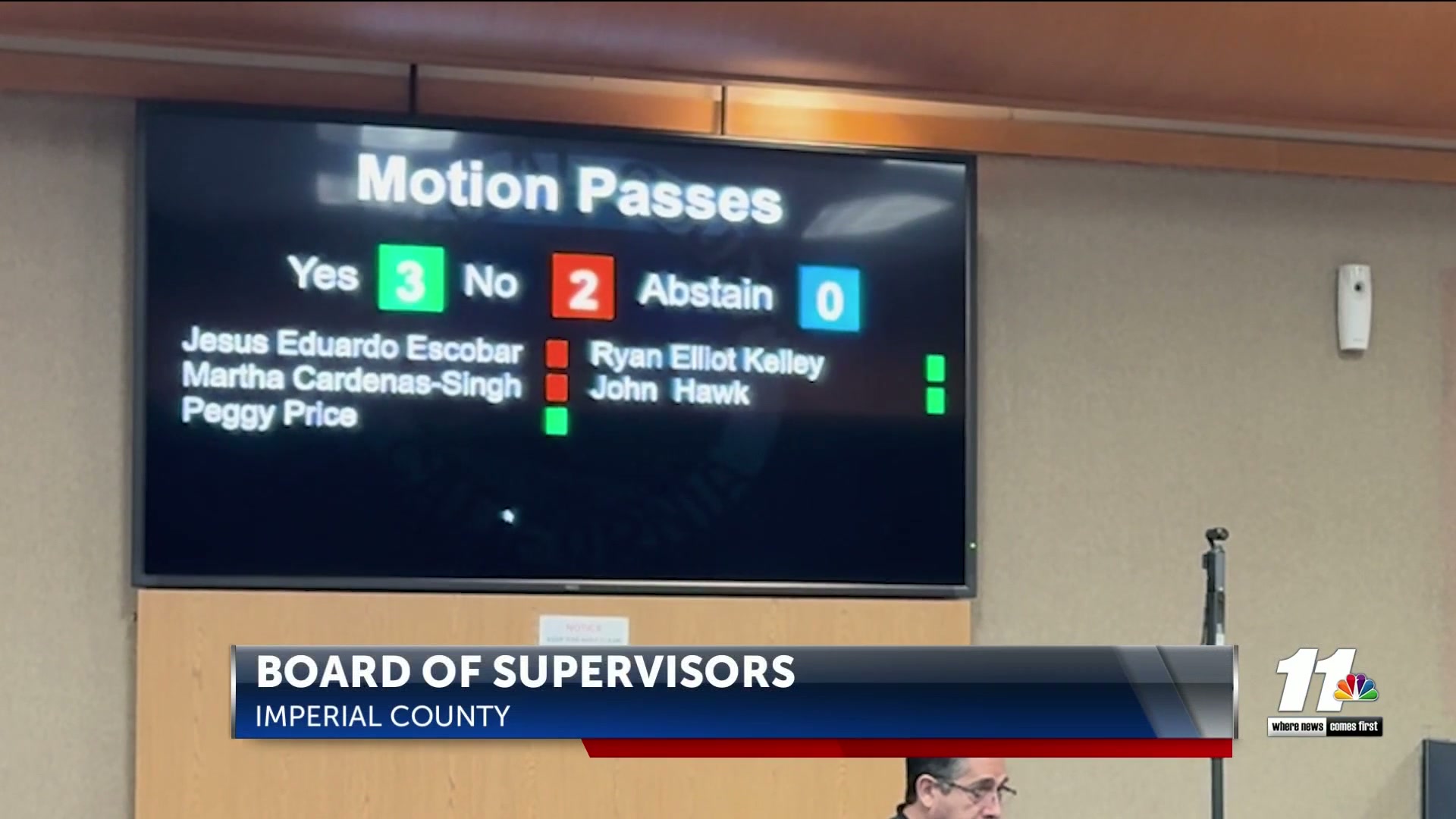
In two separate three-to-two votes, supervisors officially ratified a June 2, 2026, letter signed by the Chairwoman opposing Senate Bill 675 and approved a critical follow-up letter to the California Assembly Appropriations Committee, cementing the county’s continuous “oppose unless amended” stance.

Introduced by State Sen. Steve Padilla (D-District 18), SB 675 is an active legislative proposal designed to overhaul the Imperial County Air Pollution Control District.

If passed, the bill would dissolve the current five-member regulatory board, composed entirely of the sitting county supervisors, and replace it with a brand new 10-member panel.

The new structure mandates equal representation split between the county, incorporated local cities, and community members.

The bill aims to diversify the board by adding city council members and community representatives.

“It makes sure that there are people sitting on the board who actually have some professional credentials and a background in the science of dealing with air pollution,” Sen. Padilla said regarding the restructuring.

Supporters argue the transformation is vital to boosting public transparency and local representation in a region long plagued by air quality challenges.

Under the provisions of SB 675, the air district would be legally required to launch an independent tracking website, post all permit applications online within three business days, and enforce stricter rules on high-polluting industrial operations known as Title V sources.

During public comment, residents in favor of the expansion voiced their support for a change in governance.

“We’re asking for an advisory council to help you make decisions,” one community member stated.

Another added, “It’s silly to think that this same group of people, none of whom are experts in air pollution, would sit on the APCB board.”

However, county supervisors and local opponents argue the sweeping state mandate overreaches and directly threatens local governance. Opponents argue it will trigger expensive new permits, potentially crippling local farmers.

“Agriculture is the backbone of this community…we must help protect our culture’s sustainability,” an agricultural advocate testified. Another echoed the sentiment, stating, “If you’re not in the ag business…you don’t have a say.”

County leaders also warn that the state-mandated expansion will heavily strain local budgets and stretch administrative resources thin.

“This legislation brings more regulation and cost to a struggling business and farming economy in the valley,” one supervisor noted during the debate. Another member added, “Greater representation, that’s fine. But anything that’s gonna have a burden of cost on business in Imperial Valley, I’m against.”

Sen. Padilla quickly dismissed those financial concerns, stating, “Some of the folks out there who have been arguing about cost are throwing around wild, crazy numbers that have no basis in reality at all.”

The dissenting supervisors on the board urged their colleagues to negotiate amendments with Sacramento rather than outright blocking the legislation.

“We should be proactive in working with our state senator and try to make this a bill that makes sense for everyone involved,” one dissenting supervisor argued.

Another stated, “I believe that it’s premature to oppose a bill without having further information.”

It is a conversation Sen. Padilla says he is willing to have.

Tuesday’s split votes authorize the Chairwoman to sign the official follow-up letter to the state legislature on behalf of the board, following final non-substantive adjustments by the County Executive Officer, County Counsel, and the Air Pollution Control Officer.

Though opposed by the local board, the bill could still be signed into law. SB 675 remains pending on the fast-moving Assembly Appropriations Committee file following its second reading and recent amendments.

Click here to follow the original article.

Special Olympics Yuma to host First Bowling Tournament

Dillon Fuhrman

YUMA, Ariz. (KYMA) – Special Olympics Yuma is hosting the First Bowling Tournament later this summer.

The tournament is taking place at Inca Lanes, located at 1250 W. 16th Street, Saturday, August 15, 2026, from 1 p.m. to 4 p.m.

There will also be raffles and a silent auction during the tournament.

For more information about the tournament, call 928-580-1404 or email mnielsen@soaz.org.

Courtesy: Special Olympics Yuma

Click here to follow the original article.

Nichols Street in Fulton reopens to limited traffic nearly a week after building collapse

Ryan Shiner

COLUMBIA, Mo. (KMIZ)

A street in the Brick District in Fulton has reopened to limited traffic nearly a week after a building collapsed, according to a press release from the Fulton Fire Department.

The front of a building at 505 Nichols St. collapsed Wednesday, June 17. It led to the closure of the 500 block of the road for several days.

The release says the street and a parking lot were reopened after an inspection report from a structural engineer determined “there does not appear to be an immediate concern regarding the overall stability of the remaining structure, and therefore the east side of S. Nichols Street can be reopened to traffic.”

On-street parking near the collapsed building is still restricted, per the release. The city issued a 10-day nuisance notice to the property owner to remove debris from the sidewalk, the release says.

Click here to follow the original article.

Hiking necessities with summer’s warmer temperatures

Matthew Pearce

PALM SPRINGS, Calif. (KESQ) — Hiking is a prominent activity in the Coachella Valley, with people walking trails year round. However, during the summer months things can quickly become dangerous if you are not correctly prepared.

The Palm Springs Fire Department rescues people off trails year round, but these numbers spike during hotter times of year.

There are multiple ways to prepare for a hike from hydrating, proper clothing, monitoring symptoms and more. We caught up with Ronnie Skyberg of the Palm Springs Fire Department to hear more about how people should prepare so hikes can be enjoyable, not dangerous. Stay tuned for more.

Click here to follow the original article.

Inside a Palm Desert coffee shop taking advantage of World Cup action

Gavin Nguyen

PALM DESERT, Calif. (KESQ) – A Palm Desert coffee shop has gone all-in on the World Cup!

Rutina Coffee, located along San Pablo Avenue in Palm Desert, just north of El Paseo, is Latin-owned. With the World Cup well underway, they’re fully taking advantage of the opportunity to provide a space for coffee lovers and soccer fans to enjoy the fun.

With flags hanging from the ceiling and a projector constantly lighting up the walls, customers have enjoyed every second of play since players took the pitch. The baristas set up a projector to play World Cup matches from open to close, so customers never miss a minute.

One college student, originally from La Quinta, made her first visit to Rutina on Tuesday. “This is actually my first time ever at Rutina Coffee. So when I walked in, it was a pleasant surprise to see the game being played,” said Avery Ballew, a big fan of Portugal’s soccer team.

She’s been following along closely, especially since she played during her time at La Quinta High School. Now in college, she was delighted to see Portugal win its match against Uzbekistan as she worked on assignments for summer courses.

It gets even more engaging, though, when fans show out for their favorite teams. The shop is hosting a watch party for Wednesday night’s match between Mexico and Czechia. Judging by the hundreds of likes on an Instagram post promoting it, it’s set to draw a big crowd. Rutina is even offering a discount for customers who walk in wearing a soccer jersey.

Gisselle Ortiz, the events coordinator at Rutina, was the one who came up with the idea. From a business standpoint, it’s been successful.

Caleb Calderon, the assistant to the manager, chimed in, “That’s drawn in a lot more people. I see a lot of jerseys in the morning and people head to work after that. So it’s nice to have something to excite people and bring them in.”

The staff at Rutina said the traffic they have seen through the first couple of weeks of World Cup play have been comparable to Coachella, where lines would commonly wrap around the building. They’re certainly enjoying the business boom, especially when the summer slowdown is a hurdle for any desert business.

Revenue aside, though, Ortiz said she was happy she was able to combine coffee with community and culture.

“This spot is super welcoming. So, like, all of our cultures, it’s been like that since day one,” Ortiz said. Gesturing to the flags hanging from the ceiling, “Front and center – [it is] just the first thing you see when you walk in. I think it is great, beautiful. It’s very simple but, you know, it represents everyone.”

And while soccer and coffee might be an unorthodox pair to some, Calderon said it represents Rutina’s roots, which are woven into the cafe’s menu.

“Our owners are very proud of their Latino roots. So I think the way we present our drinks and our recipes tie in pretty well,” Calderon explained. “I mean, I’d say soccer is a Latin-dominated sport, so it is a strange combination, but they end up mixing pretty well.”

From the customers who only briefly stop in and notice the World Cup decor to those who stay a while and soak in the atmosphere, the sentiment is clear: Rutina scored a winning goal by playing into the tournament buzz.

“The World Cup is heavily revolving around culture, and it’s the same thing with this coffee shop. So it makes you feel great that they’re able to merge both,” said Ballew with a smile.

Click here to follow the original article.

Grover Beach voters to decide on building height limits in November election

Dave Alley

GROVER BEACH, Calif. (KEYT) – A citizen initiative to limit building heights in Grover Beach will appear on the ballot during the upcoming General Election on Nov. 3, 2026.

The Grover Beach City Council recently voted to place the initiative on the ballot after a community group gathered the required amount of signatures for the measure to move forward.

If approved, the initiative measure will limit building heights and establish a minimum commercial component of 33% in mixed-used developments.

Currently, Grover Beach Municipal Code allows for building heights up to 55 feet in certain commercial zones and 40 feet in industrial zones.

The initiative would limit heights to three stories and 40 feet in commercial zones and 33 feet in industrial zones.

In addition, the measure would require a minimum commercial component for mixed-use developments, which the city currently does not require.

“The goal of the initiative is to preserve our public views, scenic views and vistas,” said Kelvin Coveduck, a supporter of the initiative. “Grover Beach is known to have these beautiful views from their public streets such as Grand (Avenue) Ramona (Avenue), Brighton (Avenue). These are public thoroughfares where the views are going to be obstructed by buildings such as these. When you drive by these buildings that are going 55 to 60 feet tall, you’re losing the small town beach atmosphere that Grover Beach is known for.”

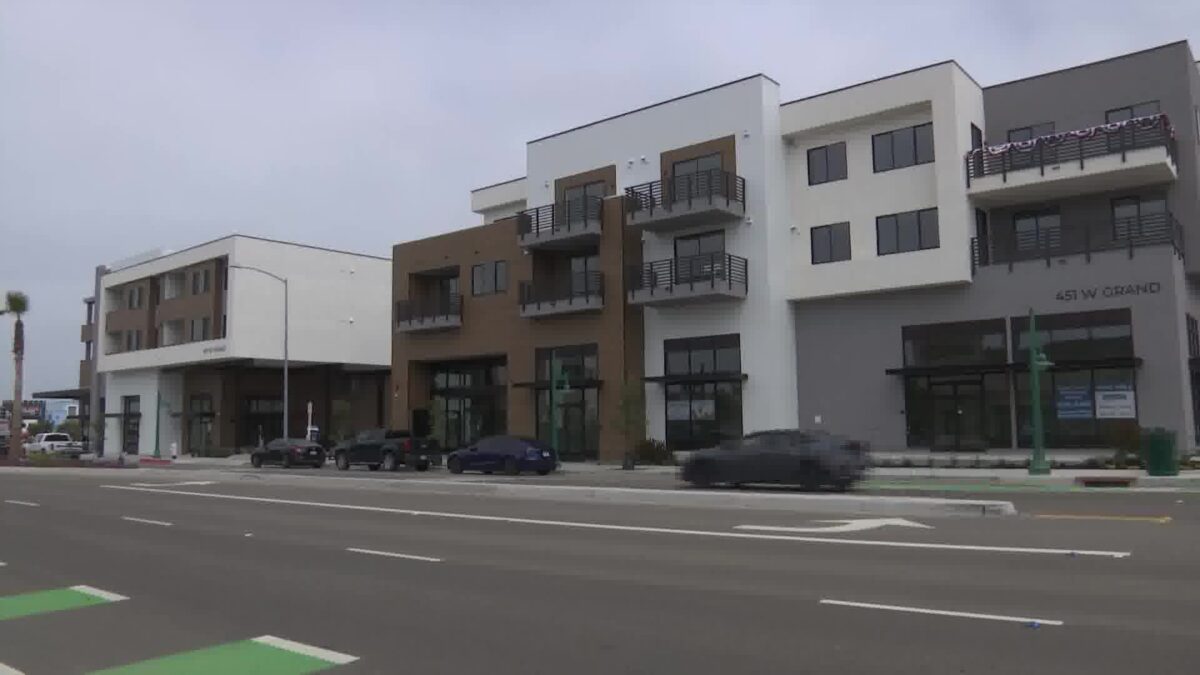
The ballot initiative comes at the same Grover Beach currently going through a building boom, most notably along the West Grand Avenue corridor.

In particular, two multi-story mixed-use housing developments have risen over the past two years at the busy intersection of West Grand Avenue and 4th Street.

There is also another multi-level residential development under construction two blocks away to the west along Grand Avenue adjacent to the railroad tracks.

The new buildings have captured a lot attention throughout the community, with some concerned about the size, scope and scale of recent developments.

“We’re not against growth,” said Coveduck. “We love to see responsible growth, but it’s going too far. The citizens saw that the City Council didn’t acknowledge it. And so the citizens went to direct democracy.”

The initiative measure will need a majority of the vote to earn approval.

Click here to follow the original article.

Idaho Falls Power employees volunteer along Riverwalk

Par Kermani

IDAHO FALLS, Idaho (KIFI) — Idaho Falls Power employees spent Monday giving back to the community by helping improve public spaces along the Idaho Falls Riverwalk.

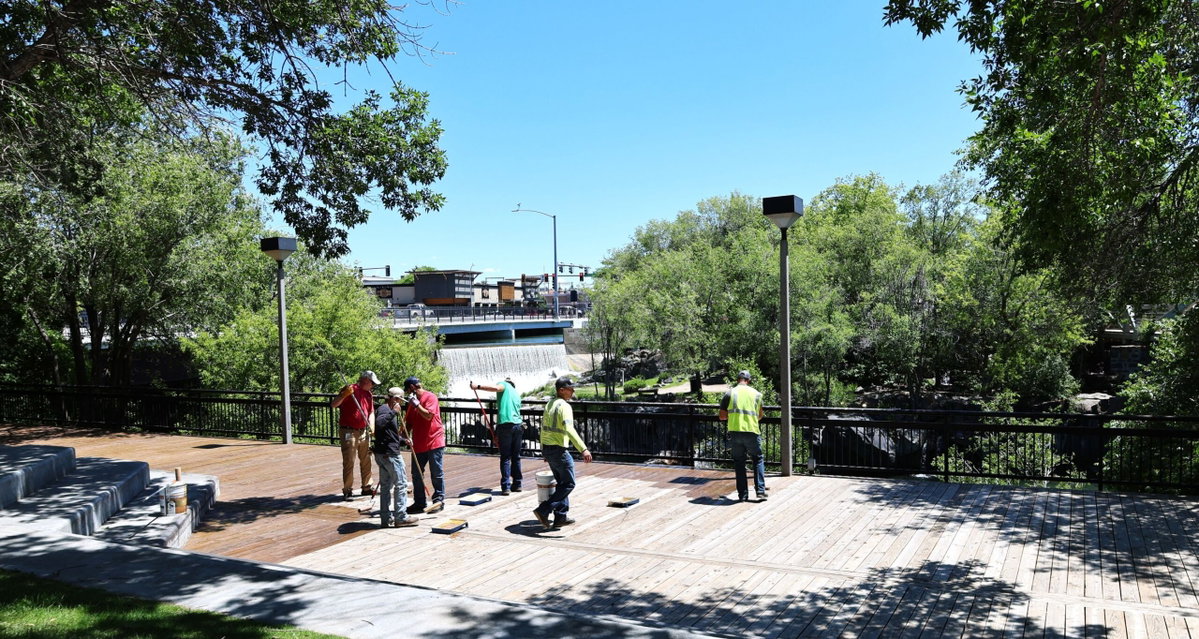
About 40 employees participated in Idaho Falls Power’s first Public Power Day of Giving, volunteering on several beautification projects throughout the Greenbelt and Riverwalk areas.

Projects included staining Riverwalk viewing decks overlooking the Snake River, installing bark mulch in landscape planters, cleaning and maintaining rock gardens, and trimming brush along pathways between South Tourist Park and Sunnyside ahead of Fourth of July festivities.

“One of the things that makes public power unique is that we’re owned by the people we serve,” said Chris Fredericksen, general manager of Idaho Falls Power and Idaho Falls Fiber. “This Day of Giving is an opportunity for us to demonstrate that commitment in a hands-on way while helping care for the community assets that residents and visitors enjoy every day.”

The volunteer effort was held in partnership with Idaho Falls Parks and Recreation.

“We’re incredibly grateful to Idaho Falls Parks and Recreation for partnering with us on this event and for the tremendous work they do year-round to maintain the Riverwalk, Greenbelt, parks and public spaces that make Idaho Falls such a special place to live,” Fredericksen said.

The event was part of the American Public Power Association’s Public Power Month of Giving, a nationwide initiative encouraging public power utilities to support their communities through volunteer service and community engagement.

Idaho Falls Power officials say the effort reflects the utility’s commitment to serving the community beyond providing electricity and broadband services.

Click here to follow the original article.

City Council votes to begin negotiating Community Benefits Agreement for Meta data center

Carpio Griego

UPDATE (4:45 p.m.) — El Paso City Council unanimously voted to negotiate a CBA with meta for the data center planned for Northeast El Paso.

EL PASO, Texas (KVIA) — Item 35 on El Paso City Council’s Tuesday agenda is to begin negotiations with Meta Platforms Inc. for a Community Benefits Agreement (CBA) through the city manager and attorney. The CBA will look at regarding hiring practices, environmental protections, Meta’s spending agreements and other elements.

According to City Representative Cynthia Boyar Trejo, the agreement should include “El Paso First” hiring commitments on 300 operational jobs tied to the data center in Northeast El Paso.

The agreement would direct the city manager to have community roundtables through a moderator with representatives of El Paso Water, El Paso Electric, El Paso Chamber, Greater El Paso Association of REALTORS, environmental advocate, a resident representative and Meta. The roundtables would assist in developing the final CBA, Rep. Trejo said.

Staff would then return to City Council within 45 days with a draft agreement, he added.

Regarding water, part of the CBA would include upgrading, repairing, purifying and recycling infrastructure. It also calls for a timeline to create a pipeline connecting the data center’s cooling towers to El Paso’s groundwater, Rep. Trejo said. He said this would help leave more water for residents in the local aquifer.

For 214 homes located a mile from the data center, the CBA would help fund sewer infrastructure.

In terms of the environment, part of the CBA negotiations included in Item 35 is to create an ‘Emissions Reduction Fund’ to build solar powered battery infrastructure to reduce emissions.

Another part of the CBA is more funding to imporve El Paso’s solar and battery grid to reduce the amount of ‘brownouts’.

There would also be a ‘Ratepayer Protection Fund’ for Meta to invest in and distributed by the City of El Paso to help El Paso Electric customers with any bill increases as a result of the data centers operation.

This item also includes plans for an advanced training center in partnership with school districts, Workforce Solutions and El Paso Community College to train students and workers for high-demand careers. Rep. Trejo said the careers include fiber optic technicians, utility professionals, engineers and server technicians.

If approved, item 35 gives the City Manager and City Attorney 45 days to create a draft and present it to City Council.

Click here to follow the original article.

Faith vs. Border Fence

Angela Kocherga

Editor’s Note: This article is co-published published by Puente News Collaborative, a bilingual nonprofit newsroom that covers stories from Mexico and the U.S.-Mexico border and KTEP public radio .

By Angela Kocherga 

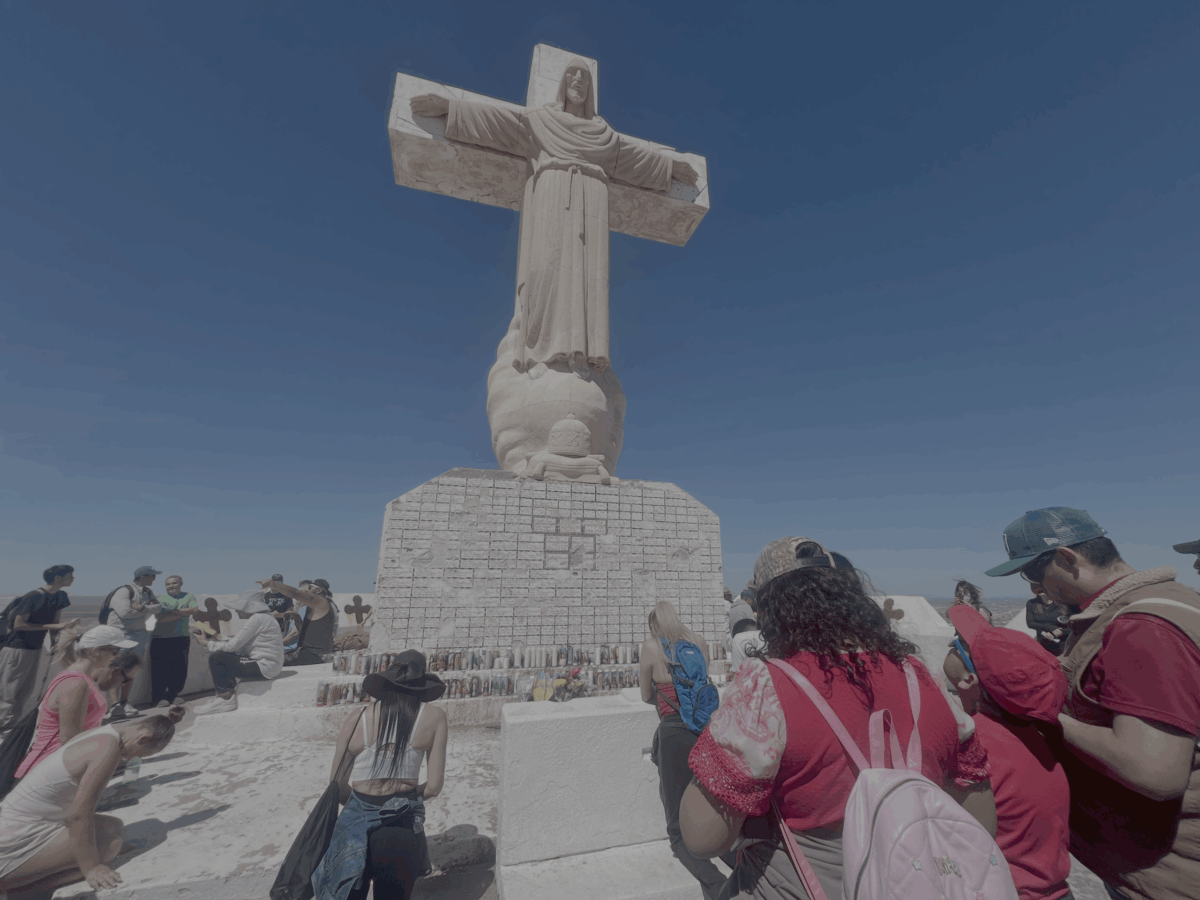
SUNLAND PARK, N.M. — The gleaming white sculpture of Jesus Christ at the top of windswept Mount Cristo Rey towers over this tiny border town, yet it looms large in the region, seen from miles away in Texas, New Mexico and the Mexican state of Chihuahua.

The federal government, in an eminent domain lawsuit, and in its effort to “wall off” the entire United States from Mexico, is now determined to seize about 14 acres of land at the foot of the mountain facing its southern neighbor. A hearing on the Trump administration’s motion to take “immediate possession” of the land, owned by the Catholic Diocese of Las Cruces, New Mexico, is scheduled for July 23rd in federal court. 

Long a symbol of faith and unity along this stretch of rugged borderland, Mount Cristo Rey is now at the center of a bitter legal battle over religious freedom and border security. The diocese calls the land a “holy site.” 

For generations countless thousands of pilgrims have hiked up to the 29-foot limestone figure of Jesus with outstretched arms, anchoring a site considered holy by the diocese, which owns the property. 

They’ve trekked to pray, tidy up the area, or simply take in the stunning view of the United States southern border and Mexico’s northern frontier. The faithful aren’t happy.

“STEALING THE LAND”

“I give thanks for all my blessings,” said Ramon Garcia, 73, who along with thousands makes the pilgrimage every Good Friday. He said there is no need for a wall, and admonished the Trump administration for “just stealing the land, land that belongs to us.”

The fight over building barriers in sensitive locations is happening all along the border in areas that include wildlife corridors and national park land in Texas, habitat for endangered cross border species like Jaguars and ancient tribal sites in Arizona and now in New Mexico. 

The diocese turned down the Trump administration’s effort to pay $183,071.00 to take property. In its suit filed in May, the diocese said the government is violating the First Amendment’s Free Exercise Clause and the Religious Freedom Restoration Act.

“The United States government’s effort to condemn diocesan land to build a border wall is an affront to religious liberty,” said attorney William Powell, senior counsel with the Institute for Constitutional Advocacy and Protection at Georgetown Law School in Washington, D.C. Powell described the government’s actions as “heavy-handed tactics.”

ILLEGAL CROSSINGS DECLINE DRAMATICALLY

In response, a Department of Homeland Security spokesperson said, “Access to the shrine will not be affected, as all attendees enter from the U.S. side.” 

According to the DHS statement, “The only individuals who could POSSIBLY be impacted by the border wall are illegal aliens attempting to illegally enter our country.” The agency maintains that the mountain is a well-worn smuggling route. 

In the lawsuit, the federal government said it needs the property “to construct, install, operate, and maintain roads, fencing, vehicle barriers, security lighting, cameras, sensors, and related structures designed to help secure the United States/Mexico border within the state of New Mexico.”

These days, Mount Cristo Rey is heavily guarded by the U.S. Border Patrol agents on horseback, helicopters, and by drones overhead. Ground sensors and cameras permeate the desert landscape.

Illegal crossings are down by more than 90 percent since the peak in 2023, according to the U.S. Customs and Border Protection.

This stretch of borderland has long been a backdrop for high-profile border wall projects since Trump supporters erected a half-mile steel barrier on private property in Sunland Park in 2019.

“We Build the Wall” organizers raised about $25 million in a crowdfunding campaign. The founder and two other organizers were later convicted or pleaded guilty to defrauding donors and pocketing hundreds of thousands of dollars after promising 100 percent of the money would go to build a wall on the border in New Mexico and Texas. Steve Bannon was also charged in connection with the scheme. Trump later pardoned him.

DOING IT BACKWARDS

The iconic limestone statue, completed in 1940, was the idea of a local parish priest and the work of famed sculptor Urbici Soler. Each year, at least 40,000 faithful and tourists make the more than 2-mile, sinuous hike to the Christ sculpture. During the Good Friday pilgrimage, some people take it further, finishing the trail barefoot or on their knees. Others carry home-made wooden crosses. 

“It’s a religious icon. It’s also a cultural icon. And it’s an artistic icon,” said Ruben Escandon with the Mount Cristo Rey Restoration Committee, a volunteer group that relies on donations to maintain the monument.

The hike is an Easter tradition for Lulu Alvarado’s family. Recently, as she approached the top of Mount Cristo Rey, she looked down disapprovingly at construction crews clearing land for the border wall with noisy heavy equipment.

“It really shows the divide between people,” she said.

April Fincher’s family moved to this area in 2023. She brings a different viewpoint. During her first hike up the mountain, walking with her 14-year-old daughter, she offered one quick observation: “Can you still get all the way up? OK, then build the wall.”

The court battle could take months, said legal experts familiar with the lawsuit. Construction started in January, signaled by controlled explosions to open land for the wall’s foundation, startling locals. 

Escandon said he understands the need for border enforcement but questions the way the federal government is carrying out the project.

“I think they’re doing it backwards and starting the construction, and now they’re covering their behinds and saying now we need to take the property.”

Angela Kocherga is news director and reports for KTEP public media.

Click here to follow the original article.